4407 resultados
19052 gr. voll. in-4, pp. XVIII, 397; 411, bross. edit. Poderosa opera che raccoglie oltre tremila nominativi di italiani che, per diversi motivi, operarono in Polonia. Perfetto esempl. nella veste editoriale originale e in barbe. Raro. [015]
1979ref. 41929Warszawa Warsaw: Pan´stw. Wydawn. Naukowe 1979. 1st Edition. Original black printed portfolio 8vo. Portfolio of seven large folding maps on on 4 sheets of heavy paper 3 are double sided 1 is singled sided. Primarily black and white with some color. Text in Polish. Title translates to “Nazi camps in Poland 1939 - 1945. An Encyclopaedic Reference Book: Maps." Collection of 7 maps each 84 cm x 60 cm 33 x 24 inches produced by Jan Laskowski at the Main Commission for the Investigation of Nazi Crimes in Poland. The maps comprise Volume II of the work; Volume I is a heavily illustrated 676-page book of the same title which we offer separately. The Seven maps all present are: - Map 1 Single Sided: Hitlerowskie obozy na ziemiach polskich w latach 1939 - 1945. “Nazi camps in Poland in the years 1939 - 1945”. Showing: concentration and extermination camps sub-camps of concentration camps extermination centers POW camps more important sub-camps working divisions commandos and temporary POW camps penal labor camps major labor camps prisons transit camps & ghettos. - Map 2A: Getta na ziemiach polskich w okresie okupacji hitlerowskiej w latach 1939 - 1945 “Ghettos in Poland during the Nazi occupation in 1939 - 1945”. - Map 2B: Hitlerowskie obozy przejsciowe na ziemiach polskich w latach 1939 - 1945 “Nazi transit camps in Poland in 1939-1945”. - Map 3A: Hitlerowskie wiezienia i areszty na ziemiach polskich w latach 1939 - 1945 “Nazi prisons and arrests in Poland in 1939 - 1945”. - Map 3B: Hitlerowskie obozy pracy na ziemiach polskich w latach 1939 - 1945 “Nazi labor camps in Poland in the years 1939 - 1945”. - Map 4A: Hitlerowskie obozy jenieckie na ziemiach polskich w latach 1939 - 1945 “Nazi POW camps in Poland in 1939 - 1945”. - Map 4B: Hitlerowskie obozy koncentracyjne i osrodki zaglady na ziemiach polskich w latach 1939 - 1945 “Nazi concentration camps and extermination centers in Poland in 1939 - 1945”. Maps 2A & 2B have been described as a “Terrifying pair of maps showing the locations of German POW and internment camps in Poland during World War II highlighting the widespread locations of these establishments. In some parts of the map the information becomes so dense that three inset maps are shown. This map was designed by Jan Laskowski and printed in 1979 as part of a work on the Nazi extermination machine produced by PWN Warsaw a state-owned research-focused publishing house in Poland. The map on the front is particularly interesting for its depiction of symbols used to classify internees in German camps. The uppermost of these depictions shows the combinations that can be made for different types of prisoners of different levels of importance. The armbands that would have been worn by these prisoners is shown as well as the prison uniforms. Other details are also shown. The map lists hundreds of sites run by Nazi operators throughout the country. These include concentration camps death camps transitional camps and ghettos. The map is divided according to Poland's voivodeships with a key in the lower left. Names of cities too long to spell are also provided in the lower left. This map was produced during a point in Poland's history during which it was actively revisiting the period during the Second World War. Leading social scientists devoted their time to trying to gather all the living as well as the recorded history of the events of the Holocaust and related atrocities before this information vanished. Leading these efforts particularly during the 1960s and 1970s was the Glówna Komisja Scigania Zbrodni przeciwko Narodowi Polskiemu known as the Chief Commission for the Prosecution of Crimes against the Polish Nation. They were active in publishing maps both for domestic educational purposes and for international remembrance and diplomatic efforts regarding the Holocaust. Jan Laskowski was a leading cartographer who produced a number of maps in this field. These maps were produced as part of a series of maps that purported to combine to form an atlas of all of Hitler's crimes in Poland. Many of the large wall maps produced during this period could only show a fraction of the crimes or only the atrocities committed in one region. Thus a series of maps was needed to show all the points necessary which this present work contributes to. Polish Reinterpretations of the Holocaust: Studying the effects of German occupation in Poland is a delicate subject. While it is certain that Poland suffered at least as badly as any other European nation during the Second World War reinterpretations of the Holocaust in the country have also been used to satisfy nationalistic tendencies. It has become evident to Western observers in the last several years that there is a strong nationalist movement in Poland that seeks to place blame for the Holocaust solely on the shoulders of non-Polish actors a movement originally fostered under Soviet rule. This movement has gone so far as to limit freedom of speech criminalizing with a three-year sentence the suggestion that Poland or its citizens in any form participated in the murders committed by Nazis. As such the term ‘Polish concentration camps’ has been deemed unacceptable with the government-approved term being ‘concentration camps on Polish territory.’ All lines of evidence show that this map 2A & 2B was produced using the most accurate and impartial historical sources. The language on the map is simple naming only ‘Hitler's Atrocities’ and there is no evidence of a clear anti-German bias. However it is impossible to separate this map one of the most important productions of the remembrance movement during this period from the social situation in which it was produced. Maps like these can easily be converted into propaganda instruments and today's Polish leaders most of whom grew up during Soviet occupation will have formed their understanding of the Holocaust through maps like these. Soviet Censorship: While the content of the map appears to have been produced free from bias the map still had to go through Soviet censorship. Mentioning prisoner of war camps in which primarily Soviet troops were interned would have been a prerequisite condition upon which the publication of the map rested. Further the lack of mention of any Soviet killings or camps requires no explanation….The map unlike many later maps makes no differentiation between the populations who suffered at the various camps. This represents the Soviet agenda that all nations suffered fought and won equally which sought to limit divisions in this post-identity state” Ruderman 2022. SUBJECTS: World War 1939-1945 -- Prisoners and prisons German. -- Concentration camps -- Poland. Guerre mondiale 1939-1945 -- Prisonniers et prisons des Allemands. -- Camps d'internement -- Pologne. Obozy koncentracyjne -- Polska -- 1900-1945. OCLC: 830885973. Light shelf wear to portfolio as expected. All maps in pristine condition with normal folds as issued. Very Good Condition. Complete and dramatic BR5 holo2-147-19-'cc. Warszawa (Warsaw): Pan´stw. Wydawn. Naukowe unknown
1760ref. 340901760 Paris - Paris - La Compagnie des Libraires - 1742 - 4 volume in8 de 355; 501; 411; 432 pages - Reliures plein veau blond d'époque - coins un peu émoussés - toutes tranches dorées - Dos cinq nerfs - Mors un peu frottés - Triple filet doré d'encadrement et Chiffre couronné sur les plats - Taille de premier volume légérement inférieure à celle des autres -
ref. 977Voyage de deux Français en Allemagne, Danemarck, Suède, Russie et Pologne, fait en 1790-1792. I. Allemagne et Danemarck. - II. Suède. - III. & IV. Russie. - V. Pologne et Autriche. FORTIA DE PILES Alphonse-Toussaint-Joseph de] Description du livre: Paris, Desenne, 1796, 1796. 5 vol. in-8, [4]-VIII-391, VIII-556, VIII-372, [4]-400 et [4]-299 pp., avec 6 tabl. dépl., basane marbrée, dos lisses ornés, encadrement de dent-de-rat dorée sur les plats, tranches jaunes (reliure de l'époque).Edition originale de ce récit d'un voyage lié à l'émigration : en effet, le comte Fortia de Piles (1758-1826), lieutenant des chevau-légers de la Garde du Roi lorsqu'éclata la Révolution, décida de quitter la France, et il entreprit un long voyage à travers l'Europe en compagnie de son ami le chevalier de Boisgelin (c'est lui le second Français du récit). Une fois revenus en France, et la situation politique un peu stabilisée, ils publièrent cette relation, qui se recommande par l'exactitude des détails et l'ampleur des matières abordées.
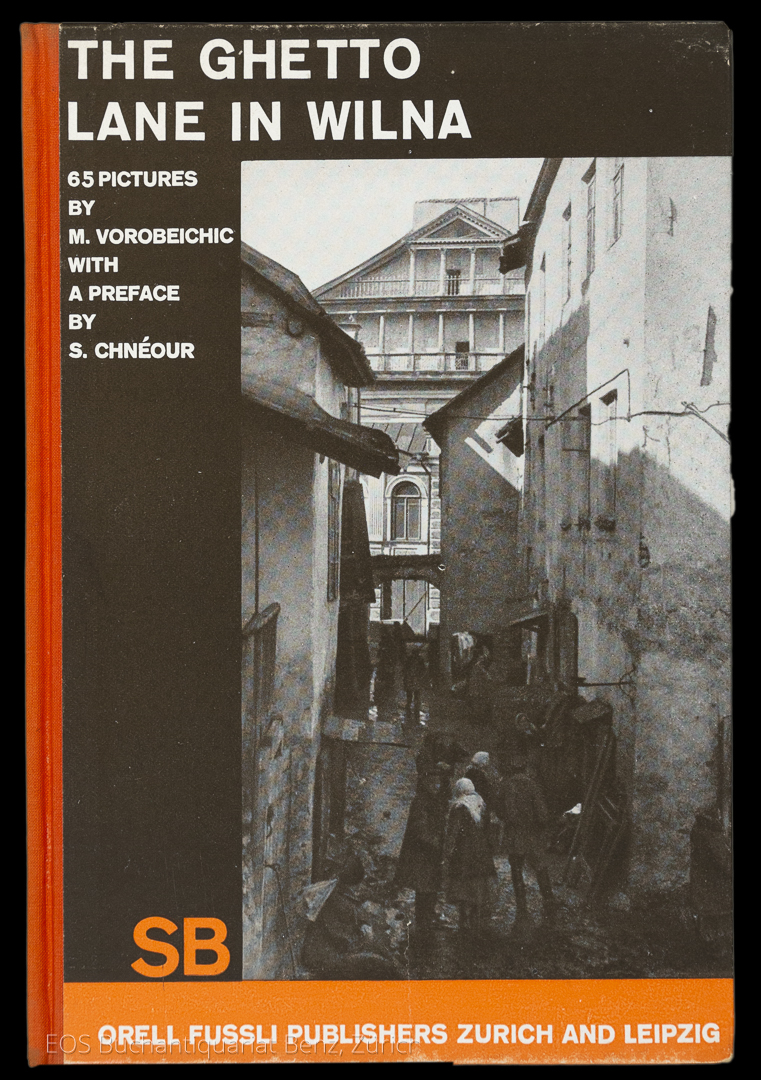
1931ref. 223BBZürich, Leipzig, Orell Füssli Verlag, 1931. 8°. 8 S., (english), 7 S. (hebrew). Mit 65 Abb. nach Photos von M. Vorobeichic. Illustr. Orig.-Halbleinenband + Wichtig: Für unsere Kunden in der EU erfolgt der Versand alle 14 Tage verzollt ab Deutschland / Postbank-Konto in Deutschland vorhanden +, 223BB (berieben und bestossen). = "Schaubücher", Bd. 27.
1940261 pages. "Nazi theory has evolved the concept of 'Lebensraum' (living space) - Nazi practice has realised the fact of 'Todesraum' (death space)" - subtitle. Author conversed with scores of Polish refugees in Paris. "As I listened to their stories I saw with searing vividness the similarity between what is happening in Poland today and what happened in Belgium 25 years ago; the similarity and the difference, which lies in the fact that the Germans today are even more brutal, more bestial than they were in 1914-1918. I decided to publish these stories, together with an essay comparing German conduct during the last war and during the present one, and showing that if they have changed at all it has been for the worse. Some of the stories are so horrible that they exhaust all ordinary human capacity for horror and indignation. However, some, at least, of the victims of German blood lust have escaped death. Let them speak." - Publisher's Statement, pages 6-7. Heavy soiling to publisher's yellow cloth. Front hinge starting. Moderate foxing to and near endpapers. Dust jacket not included. A worthy reference copy of this grim testament to the suffering of the Poles in WWII. Enser p.341. Book
ref. GF28391Amsterdam - Henri Desbordes - 1732 - 2 volumes in8 de 410 -7 et 336 - 6 pages - Reliure pleine basane d'époque - Coiffes un peu usées - Mors légérement frottés - Un mors fendu sur 3 cm - dos cinq nerfs ornés -
1786in-8° (200x124 mm); leg. in piena pelle di colore bruno chiaro maculata in bruno scuro; tagli dei piatti finemente decorati in oro, dorso liscio con preziosi decori dorati a formare sei compartimenti, compreso quello ove si trova il titolo dorato su pelle rosso bordeaux, numerazione dei tomi dorata su ovale in pelle verde entro uno dei compartimenti; guardie marmorizzate, tagli di color giallo chiaro; 4 Tomi legati in 2 vol.; pp. VIII-380-(4), 404; 393-(1), 303-(1); ogni tomo ha il suo frontespizio, preceduto dall'occhietto; ill. calc., cornici e fregi xil., 19 carte di tav. incise su rame di cui qualcuna più volte ripiegata: 5 carte (Polonia, Russia, Mar Caspio, Svezia e Danimarca), 7 piante (Mosca, San Pietroburgo, Canale di Vishnei-Voloshok, Stoccolma, Canale di Trolhoetta, Copenhaghen e Canale di Kiel), 4 ritratti (Stanislas-Auguste de Pologne, Catherine II, Pugatchev e Gustave III de Suède) e altre 3 tav. (uccelli, scritture cirilliche e costumi). Interessante opera geografica riportante i resoconti di viaggi effettuati dal Coxe in Polonia, Russia, Svezia, Danimarca e Norvegia, tradotta in francese dal Mallet. Un particolare risalto è dato alla Russia (dalla fine del I tomo all'inizio del III); la parte aggiuntiva relativa alla Norvegia (p. 159 - IV tomo) è stata curata direttamente dal Mallet. William Coxe (1747-1828), è stato uno storico inglese e sacerdote che ha servito come compagno di viaggio e tutore di nobiltà dal 1771 al 1786. Scrisse numerose opere storiche e cronache di viaggio. Ordinato diacono nel 1771, ha lavorato come rettore e poi arcidiacono di Bemerton vicino a Salisbury dal 1786 fino alla sua morte. Paul Henri Mallet (1730-1807), scrittore e traduttore svizzero, è stato professore di lingua e letteratura francese in Danimarca. Rif.: IT\ICCU\IEIE\005989-005990-005991-005992-005993 (5 copie). OCLC, 9997601. Cond.: Leggerissime macchie d'umidità su alcune pp.; opera completa ed in perfette condizioni generali. -- Veau raciné de l'époque, dos lisses à compartiments fil. et fleuronnés dorés (lég. passés, minimes frottements), étiq. de cuir rouge ou vert, coiffes et coupes guillochées dorées, tr. jaunes, (qqs défauts marginaux, qqs lég. souill. et bruniss., mouill. angulaire aux 1ers ff. du t. III). Bel ex. Edition in-8 (après une in-4) de cette traduction par Paul-Henri Mallet de "Travels into Poland, Sweden and Denmark" (Londres 1784) du voyageur et historien anglais William Coxe (1747-1828). Ex. complet des 19 planches gravées sur cuivre dont qqs-unes dépliantes: 5 cartes (Pologne, Russie (1 déchir. rest.), mer Caspienne, Suède & Danemark), 7 plans (Moscou, Saint-Pétersbourg, canal de Vishnei-Voloshok, Stockholm, canal de Trolhoetta, Copenhague & canal de Kiel), 4 portraits (Stanislas-Auguste de Pologne, Catherine II, Pugatchev & Gustave III de Suède) et 3 autres pl. (oiseaux, écriture cyrillique et costumes). L'ouvrage concerne surtout la Russie (fin du t. I, t. II et début du t. III); la partie relative à la Norvège (p. 159 sq. du t. IV) est due au suisse Paul-Henri Mallet (1730-1807), un temps professeur de langue et littér. française au Danemark. -- FIRST FRENCH EDITION OF THIS INTERESTING GEOGRAPHICAL WORK SHOWING THE ACCOUNTS OF TRAVELS MADE BY COXE IN POLAND, RUSSIA, SWEDEN, DENMARK AND NORWAY. Very light water stains at some pp .; complete copy, in perfect conditions.
ref. 35097Nancy Vigneron 24 mai 1757 in-8 en feuille
1931ref. 223BBZürich, Leipzig, Orell Füssli Verlag, 1931. 8°. 8 S., (english), 7 S. (hebrew). Mit 65 Abb. nach Photos von M. Vorobeichic. Illustr. Orig.-Halbleinenband (berieben und bestossen). = "Schaubücher", Bd. 27.
18901st edition. Period boards with gilt lettering. 4to. [272 pages], 33 cm. In Hebrew. Title translates to The Time: A Periodical of Politics, Literature, and Science for All Matters Related to Jews and Judaism. One of the early Haskalah Hebrew literary journals published out of Galicia. Issued a weekly basis (September 1890 - May 1891) . The periodical appeared under the names Ha-Zeman and Ru'a? Ha-Zeman in alternate weeks, to avoid paying the duty levied on a weekly. (EJ, 2007) . As YIVO notes, even after the center of the Hebrew Haskalah movement had passed to Russia, animated literary life persisted in Galicia until the beginning of the twentieth century, though it was mainly local and provincial in character. This activity found expression in a broad spectrum of periodicals including Ha-Zeman. YIVO, 2018) Not to be confused with the later-published Hebrew newspaper of the same name, but published from 1903-1915. SUBJECTS: Hebrew periodicals -- Poland. OCLC lists 3 copies worldwide (Oxford, HUC, NLI) , none on the East Coast. Ex-library with usual markings. Some pages are brittle and chipping. Pages browning and fragile but in good condition. Overall Good Condition. (YID-30-22)
ref. 242326Paris, Ambroise Dupont et Cie, 1828 in-8, [4]-270 pp., demi-chagrin rouge, dos à nerfs, couv. cons. (reliure moderne).
1916in-4, pp. 226, broch. edit. fig. (dorso allentato). Bel volume impresso su carta pesante, interamente consacrato da Ettore Cozzani alla Polonia, una delle ''nazioni martire'' della prima guerra mondiale. E' corredato di numerose silografie a piena pag. e di 35 ornamenti silogr. originali dell'artista Alessandro Pandolfi (Pescara 1887 – Pavia 1953; cfr. Servolini 596) e molte riproduz. di opere di artisti polacchi. Contiene anche scritti dello stesso Cozzani e di vari saggisti polacchi sulla storia, la cultura e l'arte della loro nazione. Importantissima pubblicazione sia dal punto di vista artistico che storico-politico.. .
ref. 013852Marc Myron ou Miron (?-1608), médecin né à Tours, reçu docteur en 1558, médecin du duc d'Anjou en Pologne (futur Henri III), premier médecin du roi Henri III et son confident, docteur de la faculté de médecine de Paris en 1558. Il est le médecin qui a publié faussement qu'Henri III était malade pour favoriser son retour en France. P.S. avec note vraisemblablement autographe au dos, 15 (?) mai 1582, 1p in-4 oblong. Sur parchemin. Reçu pour le paiement des frais d'un voyage aux bains de Bourbon-Lancy. La note au dos : « pour servir de Reçu. » (3 lignes) Rare signature. [329-2]
1831In-8 p. (mm. 223x141), 2 volumi, mz. pelle coeva, dorso a cordoni con filetti e tit. oro, pp. XII,439; 732,(8); molto ben illustrati da 107 pregevoli tavole f.t. (come da Indice), disegnate e inc. in rame da valenti artisti, di cui: 11 tavv. di uniformi e costumi popolari, 2 con stemnmi e ordini cavallereschi, 1 molto bella che raffigura una fiera polacca (più volte ripieg.), 1 con un bisonte e 2 grandi carte geografiche (situazione della Polonia prima del 1772 - situazione attuale al 1831) sono finemente colorate a mano d'epoca; le restanti immagini in b.n. (molte ripieg.) raffigurano scene di battaglia, fatti storici, ritratti di personaggi illustri, vedute di città, monumenti, incluse le piante delle città di Cracovia e Warsavia (più volte ripieg.). Affascinante opera soprattutto per la parte iconografica. "Prima edizione". Cfr. CLIO,VI, p. 4902. Con fiorit. o lievi arross. ma complessivam. discreto esemplare. Raro trovarlo completo delle tavole.
18312 voll. in 8°(mm 224x140); pagg. (4), pagg. XII, 439, (1), con 64 tavole f.t. di cui 2 ripiegate e 15 acquarellate, (1); pagg. 732, (8 di indice), 43 tavole f.t. di cui 2 acquarellate e 9 ripiegate, (8). Molto ricco l'apparato iconografico completo complessivamente di 107 tavole, finemente incise in rame f.t. (molte in coloritura coeva) così costituito: 2 grandi carte geografiche della Polonia, ripiegate più volte, la pianta di Varsavia e quella di Cracovia anch'esse ripiegate; numerose tavole fuori testo finemente incise in rame, con vedute di città, scene di battaglia, medaglie, stemmi gentilizi, prospetti architettonici, fiere, ritratti dei vari regnanti, etc. Elegante mezza pelle di vitello color nocciola, piatti in cartone marezzato, titoli impressi in oro su doppio tassello al dorso in rosso e verde, dorso con quattro nervi, ricchi fregi dorati agli scomparti e cuffie. Prima edizione italiana. Le belle tavole corredano il testo magnificando l'opera di Zaydler, che tratta la storia della Polonia dalle sue origini fino al 1831. Pregievole e bell'esemplare, raro da trovare completo di tutte le tavole; minime saltuarie fioriture e tracce d'uso agli spigoli
1945ref. 47189Krakow: Spóldzielnia Wydawnicza "Czytelnik" Czytelnik Publishing Cooperative 1945. First edition. Softcover. g to von-. Octavo 8 1/4 x 6". 93pp. 13 leaves of double sided photographic plates interleaved and unpaginated. Illustrated tan red and black wrappers with black lettering on the front cover. Photographic b/w frontispiece. Spóldzielnia Wydawnicza "Czytelnik." Possibly an earlier publication on lower quality paper compare to a slightly smaller publication by the "Library of the Union of Polish Patriots in the USSR" Biblioteczka Zwiazku Patriotów Polskich w ZSRR with the same text in different layout. That publication issued on higher quality paper and with twenty-eight photogravures three more than in this publication with twelve photographs appearing in both publications though in lesser quality here. Court Proceedings of the Polish-Soviet Special Criminal Court established in Lublin in August 1944 in order to investigate the crimes committed by the Germans in the Majdanek extermination camp. Despite the importance of this document it must be mentioned that the Commission made erroneous assumptions regarding the duration of the camp and the number of people killed at Majdanek. The Publishing cooperative "Czytelnik" was established behind Soviet front lines in 1944. It became the first post-World War II. publisher in Poland. The total numbers of the victims is still controversial: In this report 1.5 million victims of different nationalities were counted however according to the latest researches there were 79000 victims 59000 of whom were Jews See: Kranz T.: "Bookkeeping of Death and Prisoner Mortality at Majdanek." pp. 81-110. In: Silberklang D. Ed.: Yad Vashem Studies. Vol. 35:1. Jerusalem 2007. Illustrated with 25 pages of b/w photographic reproductions including a frontispiece on 13 double-sided interleaved plates altogether thirty-two photographs depicting members of the Commission Nazi guards now prisoners who used to run the camp and survivors alike testifying before the Commission. Also includes views of the actual concentration camp piles of suitcases Zyklon B poison gas pellets gas chambers ovens and survivors amid corpses. Wrappers with some chipping rubbing creasing and/or closed tears to extremities. Small stain on the back cover and side edge of book block. Verso of frontispiece with a vertical crease. Some pages throughout with some light age toning or small water spots. Overall text and images clear and vibrant. Wrappers in good interior in very good- condition overall. One of two editions of this work published in Moscow and Krakow in 1945. It is not certain which was released first. Each has different wrappers size pagination and publishers. Spóldzielnia Wydawnicza "Czytelnik" (Czytelnik Publishing Cooperative) unknown
1945ref. 47189Krakow: Spóldzielnia Wydawnicza "Czytelnik" Czytelnik Publishing Cooperative 1945. First edition. Softcover. g to von-. Octavo 8 1/4 x 6". 93pp. 13 leaves of double sided photographic plates interleaved and unpaginated. Illustrated tan red and black wrappers with black lettering on the front cover. Photographic b/w frontispiece. Spóldzielnia Wydawnicza "Czytelnik." Possibly an earlier publication on lower quality paper compare to a slightly smaller publication by the "Library of the Union of Polish Patriots in the USSR" Biblioteczka Zwiazku Patriotów Polskich w ZSRR with the same text in different layout. That publication issued on higher quality paper and with twenty-eight photogravures three more than in this publication with twelve photographs appearing in both publications though in lesser quality here. Court Proceedings of the Polish-Soviet Special Criminal Court established in Lublin in August 1944 in order to investigate the crimes committed by the Germans in the Majdanek extermination camp. Despite the importance of this document it must be mentioned that the Commission made erroneous assumptions regarding the duration of the camp and the number of people killed at Majdanek. The Publishing cooperative "Czytelnik" was established behind Soviet front lines in 1944. It became the first post-World War II. publisher in Poland. The total numbers of the victims is still controversial: In this report 1.5 million victims of different nationalities were counted however according to the latest researches there were 79000 victims 59000 of whom were Jews See: Kranz T.: "Bookkeeping of Death and Prisoner Mortality at Majdanek." pp. 81-110. In: Silberklang D. Ed.: Yad Vashem Studies. Vol. 35:1. Jerusalem 2007. Illustrated with 25 pages of b/w photographic reproductions including a frontispiece on 13 double-sided interleaved plates altogether thirty-two photographs depicting members of the Commission Nazi guards now prisoners who used to run the camp and survivors alike testifying before the Commission. Also includes views of the actual concentration camp piles of suitcases Zyklon B poison gas pellets gas chambers ovens and survivors amid corpses. Wrappers with some chipping rubbing creasing and/or closed tears to extremities. Small stain on the back cover and side edge of book block. Verso of frontispiece with a vertical crease. Some pages throughout with some light age toning or small water spots. Overall text and images clear and vibrant. Wrappers in good interior in very good- condition overall. One of two editions of this work published in Moscow and Krakow in 1945. It is not certain which was released first. Each has different wrappers size pagination and publishers. Spóldzielnia Wydawnicza "Czytelnik" (Czytelnik Publishing Cooperative) unknown books
ref. 226917Varsovie, Thorn, 1807 in-4, 1 à 4 pp. chacune,
ref. 9542Paris, Galland, 1806. In 8, pleine basane racinée, dos lisse ornée CIV-215 pp. avec deux cartes dépliantes (Varsovie et Théâtre de la Guerre).
ref. 594174Kraków-Warszawa, Druk. W. L. Anczyca i Spolki, 1904. 3 vol. in-folio, rel. moderne demi-papier velours blanc à coins, dos lisse, titre & tomaison rouge et noir en long, tête dorée ; 308-XXXVII pp. en continu, texte sur 2 colonnes, qq. figures dans le texte, très nombr. planches de dessins, dont quelques-unes colorées.
19461st edition. Original Paper Wrappers, 8vo 32 pages. In Hungarian. Title translates as, Those who Died and Fought for the Honor of our People. Heavily illustrated catalog of an exhibit in Budapest, 1946, to illustrate the persecution of the Hungarian Jews during World War II. Printed entirely on glossy paper, this catalog includes 55 photos, facsimiles, and other images from the exhibition, primarily anti-Nazi Hungarian Jewish artwork and posters, but also anti-Semitic posters, death cam photos, and scenes of new life in Palestine. The picture material was collected by the Jewish Agency for Palestine Documentation Department in January 1946 (translated from page 2) . The Foreword notes (translated) that The first anniversary of the liberation of the Budapest ghetto has arrived. It is time to bring to the world the terrible documents of the tragedy of Judaism and put the still unbelievers who turn their heads into thinking; those who do not believe because they do not want to believe. But not only the persuasion of the doubters is the goal of this attempt, but also of recalling over and over again for those who forget quickly. This is the purpose of this sad picture book, with all the cries, complaints and death blows coming from all sides. These pictures are just dull shadows of reality. Subjects: Jews--Persecutions--Hungary--History--20th century. Holocaust, Jewish (1939-1945) --Hungary--Exhibitions. OCLC: 1022126577. OCLC lists just one copy anywhere (NLI) . Light wear to wrappers, old dampstains to margins, but no images or text affected. Very Rare and important. (HOLO2-139-13U)
19471st edition. 4to, Original Paper Wrappers, 8 pages each issue, 13 numbers in 12 separate issues, as published. In Yiddish. Title translates as Bulletin of the Bund. Complete run of this early post-Holocaust iteration the Bunds monthly newsletter (also serving Kindred Jewish Socilaist Organizations), reflecting the concerns of its membership of secular Polish Holocaust survivors as well as pre-war immigrants to the US. Full of interesting articles including: Reports and declarations from the World Bund Conference in Brussels, including declarations on Antisemitism the workers movement, etc; The 1947 Socialist conference in Zurich; Bund activity in postwar-Poland, Belgium, Italy, France, Brazil, and Argentina; Jewish Socialists in Rumania; Bund Resolutions on the Camps; German Socialists and the Jewish Question; Professor Hirsh and Palestine; Discussion in the Bun on the Status of Palestine; On the Bundist Youth Movement in Poland; Special Camps; The Bulletin of the Bund [ie this periodical] in the [DP] Camps; Five Years in the Warsaw Ghetto, by Bernard Goldshtein; Bundist Academy in the Gan Eden Camp in New York; A Memorial for the Bund at the Congress of the French Socialists; etc. The General Jewish Labour Bund in Lithuania, Poland and Russia (Yiddish: algemeyner yidisher arbeter-bund in lite, poyln un rusland), generally called The Bund or the Jewish Labour Bund, was a secular Jewish socialist party.... founded in Vilnius on October 7, 1897 ..In 1917 the Polish part of the Bund, which dated to the times when Poland was a Russian territory, seceded from the Russian Bund and created a new Polish General Labor Bund which continued to operate in Poland in the years between the two world wars .The Bund sought to unite all Jewish workers in the Russian Empire into a united socialist party, and also to ally itself with the wider Russian social democratic movement to achieve a democratic and socialist Russia. The Russian Empire then included Lithuania, Latvia, Belarus, Ukraine and most of present-day Poland, areas where the majority of the world's Jews then lived. They hoped to see the Jews achieve a legal minority status in Russia. Of all Jewish political parties of the time, the Bund was the most progressive regarding gender equality, with women making up more than one-third of all members. The Bund actively campaigned against anti-Semitism. It defended Jewish civil and cultural rights and rejected assimilation. However, the close promotion of Jewish sectional interests and support for the concept of Jewish national unity (klal yisrael) was prevented by the socialist universalism of the Bund. The Bund avoided any automatic solidarity with Jews of the middle and upper classes and generally rejected political cooperation with Jewish groups that held religious, Zionist or conservative views. Even the anthem of the Bund, known as "the oath" (di shvue in Yiddish), written in 1902 by Sh. An-ski, contained no explicit reference to Jews or Jewish suffering. At the heart of the vision of the future of the Bund was the idea that there is no contradiction between the national aspect on the one hand and the socialist aspect on the other. As a strictly secular organization, the Bund renounced the Holy Land and the sacred language (Hebrew) and chose to speak Yiddish .In its early years the Bund had remarkable success, gaining an estimated 30,000 members in 1903 and an estimated 40,000 supporters in 1906, making it the largest socialist group in the Russian Empire . the Bund was a founding collective member at the RSDLP's first congress in Minsk in March 1898. For the next 5 years, the Bund was recognized as the sole representative of the Jewish workers in the RSDLP, although many Russian socialists of Jewish descent, especially outside of the Pale of Settlement, joined the RSDLP directly .The Bund generally sided with the party's Menshevik faction led by Julius Martov and against the Bolshevik faction led by Vladimir Lenin during the factional struggles in the run-up to the Russian Revolution of 1917 .In the Polish areas of the [Russian] empire, the Bund was a leading force in the 1905 revolution. At that time the organization probably reached the height of its influence. It called for an improvement in living standards, a more democratic political system and the introduction of equal rights for Jews. At least in the early stages of the first Russian Revolution, the armed groups of the "Bund" were likely the strongest revolutionary force in Western Russia. During the following years, the Bund went into a period of decay .The Bund eventually came to strongly oppose Zionism, arguing that emigration to Palestine was a form of escapism. The Bund did not advocate separatism. Instead, it focused on culture, rather than a state or a place, as the glue of Jewish nationalism. . The Bund also promoted the use of Yiddish as a Jewish national language and to some extent opposed the Zionist project of reviving Hebrew. The Bund won converts mainly among Jewish artisans and workers, but also among the growing Jewish intelligentsia. It led a trade union movement of its own. It joined with the Poalei Zion (Labour Zionists) and other groups to form self-defense organisations to protect Jewish communities against pogroms and government troops. During the Russian Revolution of 1905 the Bund headed the revolutionary movement in the Jewish towns, particularly in Belarus and Ukraine ..In 1921, the Communist Bund [in the USSR] dissolved itself and its members sought admission to the Communist Party....Many former Bundists, like Mikhail Liber and David Petrovsky, perished during Stalin's purges in the 1930s. The Polish Bundists continued their activities until 1948. During the latter half of the 20th century the Bundist legacy was represented through the International Jewish Labor Bund, a federation of local Bundist groups around the world .Among the exiled Bundists who went on with Socialist politics in America was Baruch Charney Vladeck (18861938), elected to the New York Board of Aldermen as a Socialist in 1917 [and] 1937 [and] manager of The Jewish Daily Forward Moishe Lewis (18881950)....the father of David Lewis (19091981), a leader of the New Democratic Party in Canada .David Dubinsky (18921982), though never formally a member of the party, had joined the bakers' union, which was controlled by the Bund, and was elected assistant secretary within the union by 1906 ..He later became a member of the Socialist Party of America, helped found the American Labor Party in 1936 and was from 1932 till 1966 the leader of the International Ladies' Garment Workers' Union ..under the name Max Goldfarb, David Petrovsky (18861937) was a member of the Central Committee of the Jewish Socialist Federation of America, a member of the Socialist Party of America, and the labor editor of The Forward (Wikipedia). SUBJECT(S): Jews -- United States -- Periodicals. Jewish socialists -- New York (State). Jewish labor unions. OCLC: 234327189. OCLC: 234327189. OCLC-Worldcat lists 6 holdings worldwide (NYPL, NLI, YIVO, Harvard, Yale, USHMM), though some listings may be for partial runs. Light wear, Very Good Condition. Rare and important complete set. (Yid-33-51)
In Venetia, per Giovan. Griffio, 1569, in-4, pergamena coeva con residui di laccetti, pp. 254. Piatti semi-staccati, qualche mancanza, sciolte le prime carte, con difetti minori. Iniziali, diagrammi di formazioni di battaglia e 12 figure xilografiche nel testo. Una nota coeva (formula apotropaica a difesa del volume?) manoscritta in inchiostro al piatto anteriore. Nonostante all'esemplare manchino l'intera segnatura a8 (contenente frontespizio, dedicatorie al duca di Parma Ottavio Farnese e al nobiluomo Marc' Antonio Fiubbi, Accademico Stordito come l'autore) e le carte 2E2 e 2I4 (c. bianca) siamo riusciti a stabilire tramite impronta che si tratta della rara 1a edizione di quest'opera apparsa in 3 versioni: questa, stampata nel 1569 da Griffio; quella del 1570, che a partire dall'invenduto acquistato da Giolito di Ferrarij, ristampa con dedicatoria invariata al Farnese ma con 2a prefazione indirizzata al marchese Malaspina, a cura di Tommaso Porcacchi; infine una 3a formata da alcune copie di questa edizione che apparirono anche con marca dell'editore Vincenzo Valgrisio. Assai rara perchè quasi tutte le copie sopravvissute riportano il frontespizio del Giolitti. Il bolognese Mora (c. 1536-1610?), che vantava origini nobiliari nel Cantone dei Grigioni, fu scrittore di militaria (la sua 1a opera, del 1567 è dedicata a Cosimo de' Medici), ma sopratutto uomo d'armi al servizio di Stefan Batory e Sigismund III Vasa; fervente cattolico, considerò suo dovere di militare la difesa della fede cristiana contro l'eresia protestante e contro Turchi e Tatari.
Anton Koberger, Norimberga, 1493. Anton Koberger, Norimberga, 1493. Dal “Liber Chronicarum Nurembergensi”, xilografia, b/n, cm 47,5 x 67,5 circa (il foglio). Difetti nella parte superiore del foglio, al testo e in parte nella zona bianca dell'inciso, peraltro ottima. .