347 résultats
1988réf. 4465Wiley Law 1988. First edition. Hardcover. Very Good. 4to348 pages red cloth Trial Practice Library series. Edited by Warsaw who edited WOMEN TRIAL LAWYERS and formerly "Trial Diplomacy Journal". "That trial lawyering is an art rather than a science is acknowledged by nearly all who try to teach trial advocacy. . Those with advocacy teaching experience testify that trial tactics skills and techniques that lead to success . CAN be learned by deicated study and practice. . This is down-to-earth plain lawyering talk full of the kind of information that would pass from a senior partner to an associate during a coffee break conference in a top trial firm - Foreword." Contributors include Rudy Giuliani Philip Corboy Robert Habush Gerry Spence Leonard Ring Jill Wine-Banks etc. Wiley Law hardcover
19468vo., First Edition; red cloth, backstrip lettered in black, a near fine copy in unclipped dustwrapper. EXTREMELY SCARCE IN THIS CONDITION. Enser, p.345.
20028vo., First Edition thus, page-edges very slightly browning; original black cloth, backstrip lettered in silver, a near fine copy in price-clipped dustwrapper. Bright copy of the book that forms the basis of Roman Polanski's Oscar-winning feature film (2002) starring Adrien Brody. SCARCE IN THIS CONDITION.
réf. 16638Varsovie , 1975 135 p., reproductions N/B in-texte, relié sous jaquette. 23 x 28,5
réf. 0365462268.Ghardcover. Good. Access codes and supplements are not guaranteed with used items. May be an ex-library book. hardcover
réf. LFA00912Un ouvrage de 325 pages, format 150 x 220 mm, broché, 3 planches de blasons en couleurs, réimpression de l'édition de 1862, bon état
réf. 1024389561.Ghardcover. Good. Access codes and supplements are not guaranteed with used items. May be an ex-library book. hardcover
réf. 1396761489.Ghardcover. Good. Access codes and supplements are not guaranteed with used items. May be an ex-library book. hardcover
1982réf. 23277Washington DC: Defense Intelligence Agency 1982. fair to good. Quarto approx. 250 wraps profusely illus. appendices covers somewhat worn & soiled sm tears at spine lower corner fr cover & some pgs bent. This unclassified guide to Soviet Navy surface ships covers aircraft carriers principal surface combatants patrol combatants amphibious warfare ships mine warfare ships coastal patrol--river/roadstead craft amphibious warfare craft mine warfare craft underway replenishment ships material support ships fleet support ships and other auxiliaries. Defense Intelligence Agency paperback
19468vo., First Edition; blue cloth, backstrip lettered in darker blue, uncut, backstrip lightly faded else a very good, bright, clean copy in unclipped dustwrapper. One of the best first-hand accounts, harrowing and moving by turns. EXTREMELY SCARCE IN THIS CONDITION. Enser, p.468.
1987réf. DBS-9780139623745Prentice Hall 1987. 1st. Hardcover. New. Prentice Hall hardcover
réf. ria9780198892915_inpHardback. New. New Book; Fast Shipping from UK; Not signed; Not First Edition; Drawing on a rich variety of ideas theories empirical cases real and fictitious stories as well as examples and images from art and literature Monika Kostera demonstrates the splendid complexity of academic ecosystems. hardcover
19748vo., Second Impression, with map in the text; brown cloth, gilt back, a near fine copy in unclipped dustwrapper. Arguably the leading academic record to date. Published a year after the first edition. Enser p.468.
2026réf. x-100986565XCambridge University Press 2026. Paperback. New. 250 pages. 6.00x0.52x9.00 inches. Cambridge University Press paperback
19668vo., First Edition thus, with frontispiece and endpaper maps; blue cloth, gilt back, a very good, bright, clean copy in dustwrapper. Kaplan's astonishingly detailed diary was found hidden in a paraffin tin more that twenty years after the destruction of the Warsaw Ghetto. It is a unique and harrowing day-by-day account of life in the Ghetto from September 1939 to August 1942 when Kaplan saved his diary even when he knew he could not save himself.
réf. 18-5237Warsaw Poland: CSW Zamek Ujazdowski 2003. . 12mo. 47 pp. Stiff glossy black and white photographic wraps with French folds. Very good. Color plates. Includes text by Grzegorz Laszuk. Catalogue created on occasion of exhibition at the Ujazdowski Castle in Warsaw Poland from April 17 through April 27 2003. Po Polsku. Warsaw, Poland: CSW Zamek Ujazdowski, 2003. paperback
réf. 18-6358Warsaw Poland: Centrum Sztuki Wspolczesnej 2001. . Exhibition catalogue. 12mo. 34 pp. Stiff stapled black and white wraps. As new. Black and white illustrations. Includes text by curator Marta Pejda and artist interviews. Catalog of exhibition held at the Centrum Sztuki Wspolczesnej in Warsaw Poland from May 12 through June 10 2001. Pa Polsku and in English. Scarce.From the Collection of the Art Historian Peter Selz. Warsaw, Poland: Centrum Sztuki Wspolczesnej, 2001. paperback
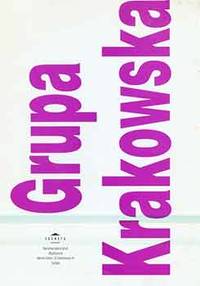
réf. 18-7126Warsaw Poland: Zacheta National Gallery of Contemporary Art 1994. . Exhibition catalogue. 4to. 7 pp. Soft stapled white wraps with purple and black lettering. Very good with marginal soiling along top of front and back wraps. Black and white plates. Includes texts by Mieczyslaw Porebski and Anna Baranowa. Catalogue created on occasion of exhibition “Grupa Krakowska 1932-1994” held from April 15 through May 22 1994 at the Zacheta Gallery in Warsaw Poland. Scarce. From the Collection of the Art Historian Peter Selz. Warsaw, Poland: Zacheta National Gallery of Contemporary Art, 1994. paperback
réf. 18-4626Warsaw Poland: Desa-Unicum 2015. . 4to. 79 pp. Stiff color wraps. Very good with marginal edgewear. Color plates and xolor photographic endpapers. Includes works by Tadeus Brzozowski Aleksander Kobzdej Teresa Rudowicz et al. Text by Peter Selz. Scarce. Po Polsku.From the Collection of the Art Historian Peter Selz. Warsaw, Poland: Desa-Unicum, 2015. paperback
1976réf. 49668Washington DC: Defense Intelligence Agency 1976. good. Approx. 50 wraps illus. diagrams recommended reading. DDI-1100-128-76. This Intelligence Handbook supersedes Department of the Army Pamphlet No. 20-236 Historical Study Night Combat dated June 1953. The information in this Handbook has been obtained principally from Soviet open-source publications. It was written for the general orientation of members of the United States Armed Forces and for the training of troops both in the field and in the classroom in night combat operations. Defense Intelligence Agency paperback
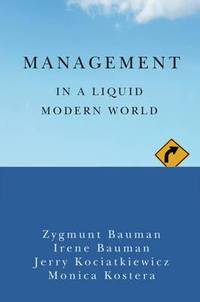
réf. ria9781509502219_inpHardback. New. New Book; Fast Shipping from UK; Not signed; Not First Edition; Management has been one of the driving forces of the last century indeed an idea and a language that colonized most other institutions areas of human activity and walks of life even those that had until recently been regarded as comp hardcover
1804105 p. Woodcut illustrated title page stained and slightly chipped at fore edge. Text woodcuts in Bewick style. Second leaf and page 9 torn without loss. Age stain. 12mo. 175 mm. Original full leather binding, rubbed at extremities. Original leather spine label. S&S/AI 5978. Hardbound. Very good. AI BX 6
1977Features: The MIG-Hunting School (part II); Invincible launced; Bourget '77 - pictures from a show; The USSR and the Warsaw Pact - the Soviet Union's post-war strategies, from defense of the national territory to world expansion; Survey of the air forces of the Warsaw Pact Countries - the ever-increasing power of these forces; The Navies of Warsaw Pact Countries - their strength and strategy, upperly subservient to Soviet strategy; Sabres in Korea; Kaiten Guided Torpedoes (Part III); Many additional illustrated stories. Clean and unmarked with light wear. Quality copy. Book
1951In 8° (18,5×12 cm); 50, (2) pp. Brossura editoriale con titolo, autore e stampatori impressi entro cornice nera al frontespizio. Qualche lievissimo segno del tempo ma nel complesso esemplare in buone-ottime condizioni di conservazione, in buona parte ancora a fogli chiusi. Prima edizione di questa celebre raccolta di componimenti di uno dei più famosi e non convenzionali poeti ed artisti polacchi, Konstanty Ildefons Galczynski (Varsavia, 23 gennaio 1905 – Varsavia, 6 dicembre 1953). Allo scoppio della Prima Guerra Mondiale si trasferì a Mosca dove suo padre lavorava come impiegato e vi rimase fino al 1918. Tornato a Varsavia, seguì gli studi classici all’Università non disdegnando però gli studi musicali che tanta importanza avranno poi nella sua composizione letteraria ricca di liriche e di neologismi. Proprio la stravaganza dei suoi versi ha reso difficili la traduzione degli stessi in altre lingue. A 23 anni si avvicinò al circolo culturale Kwadryga dove venivano diffuse le idee e ideali innovativi ispirati dal Futurismo italiano e al costruttivismo russo che segnarono in modo decisivo la produzione poetica polacca d’avanguardia. Il suo debutto letterario risale al 1930 con il poema folkloristico La fine del mondo. Dal 1931 al 1933 soggiornò a Berlino, mentre dal 1934 al 1938 si trasferì a Vilnius. Durante la Seconda Guerra Mondiale venne catturato dai nazisti e internato nel lager di Altengrabov. La fine della guerra gli permise di viaggiare per l’Europa, soggiornando a Parigi, Bruxelles e Roma. Fin dall’origine della sua produzione letteraria l’umorismo fu la base della sua poesia accentuato da una forte vena satirica che prendeva in giro il mondo politico contemporaneo. Nella sua poesia si trovano in perfetto equilibrio una visione realistica del mondo ed un illogicità dirompente esaltate da veri e propri virtuosismi lessicali. Trattò temi di grande importanza sociale in farse, racconti grotteschi, e favole esopiche. Intorno al 1950 le sue opere divennero il centro di un acceso dibattito ideologico e alcuni suoi lavori vennero denunciati all’autorità per sospetto deviazionismo politico ed iniziarono così a diventare sempre meno comuni da reperire sul mercato librario. La musicalità del suoi componimenti ancora oggi inspirano autori di ballate e musica popolare polacca. Niobe (Lo Slittino) è una delle sue opere principali. Galczynski si può considerare come il giullare della poesia polacca del novecento, un giullare che con il suo atteggiamento giocoso e incostante, veniva perdonato per una polemica politica, sempre coperta sotto il manto salvifico dell’umorismo, dei neologismi e dei giochi di parole. Prima edizione illustrata. First edition, good copy.