[Siberia]Biblio.com

509 Ergebnisse
1918Best.-Nr. 140212Washington: Governemnt Printing Office 1918. Hardcover. very good. 1st Edition. 103xv; 180xv; 121xv; 162xvpp. Four volumes. 16mo. Original green cloth with fold over right hand board and button snap. Title imprinted on spine and front board. Minor wear and soiling to exterior. Russian alphabet tipped onto pastedown in each volume. 33 Figures in Vol. 1; 106 figures in Vol. 2; 49 figures in Vol. 3 and 24 figures in Vol. 4. The figures consist of black and white illustrations and maps many folding. Each volume has a section of blanck pages for notes with a number of the pages filled at an early date. Limitation page unused on the reverse of the title page. very good A very interesting publication marked "Confidential for Official Use Only" on the top of the title page. The limitation page states there wer 3000 copies printed and each were assigned to a specific individual of which this set seems not to have been named. The general use would have been intended for military purposes and thus many were probably destroyed after the First World War. Each volume was given a copy no. On the front board with this being a mixed set with the numbers 429 211 143 and 143. A great set filled with information about Russia before World War I. 1918 Governemnt Printing Office hardcover
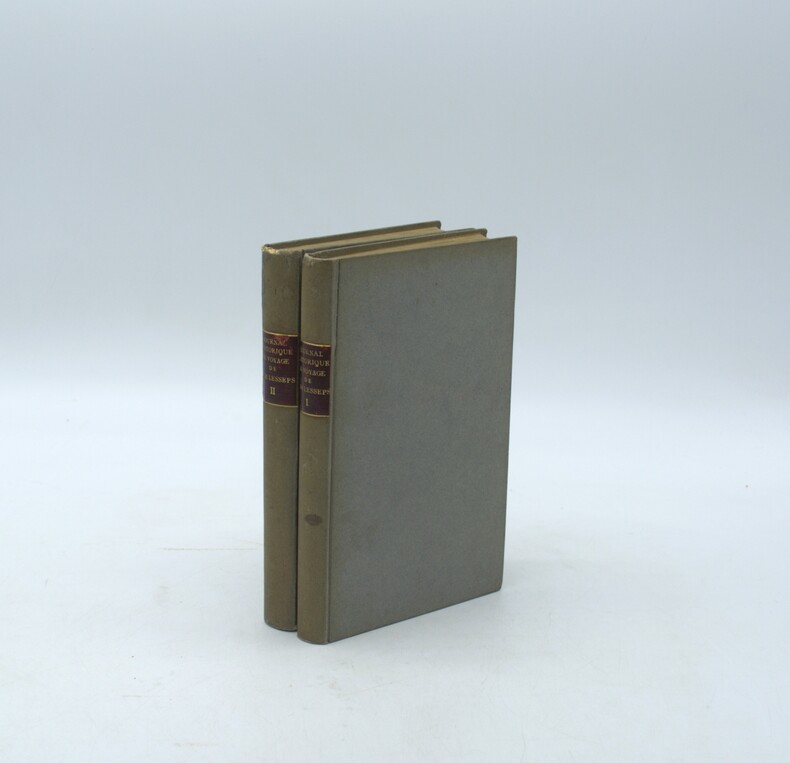
1790Best.-Nr. PHO-2142Paris, de l’Imprimerie Royale, 1790. 2 volumes in-8° (20 × 13,5 cm), reliés en cartonnage postérieur, dos lisse avec pièces de titre, d’auteur et de tomaison, (6)-VII-1-280 pp. ; 4 ff., 380 pp., VI pp. d’errata. Illustré de deux cartes dépliantes (Kamtschatka ; Route de M. de Lesseps) et d’une planche dépliante (Caravane kamtschadale). Petits défauts, réparations aux faux-titre, titre et 1er feuillet.
1899Best.-Nr. F0313Krasnojarsk Axelrodt 1899. 124 Textillustrationen auf Tafeln in Autotypie, 1 Bl., 124 S. Farbig illustrierter Leinenband. Zustand 1, tadellos!
1781In-8 gr. (mm. 256x192), p. vitellino coevo (con aloni, restauro a una cerniera per spacco), dorso a cordoni con decoraz. e tit. oro su tassello, tagli rossi, pp. (4),XXII,314, con 4 carte geografiche, inc. in rame e più volte ripieg. (carte générale de l’Empire Russe - Voyage de Krenitzin et de Levasheff aux Isles des Renards, en 1768 et 1769 - Carte du voyage de Synd vers les Parages de Tschukotikoi: partie Nord Est de la Sibérie - Carte du voyage de Shalaurof: Mer Glaciale) e 1 bellissima grande tavola (più volte ripieg.) con la veduta di “Maimatschin ville frontière chinoise et du ruisseau de Kiachta, prise de l’Ouest”, pure inc. in rame. "Prima edizione della versione francese". Cfr. Brunet,II,399 - The Hill Collection of Pacific Voyages,391 per la prima ediz. inglese del 1780: “The Reverend William Coxe was an English historian who traveled widely in Europe and Russia.. Coxe recounts (from 1745 on) the principal Russian discoveries and explorations made in northwestern America in their attempts to open communications with Alaska and the Aleutia Islands. The voyages and discoveries of Nevodsikoff, Serebranikoff, Trapesnikoff, Drusinin, Korovin, Glottoff, Solovioff, Krenitzin, Levasheff, Synd, Bering, Shalauroff, and several others are included.. Coxe made suggestions which led the Russians to promote expeditions of discovery to the northern parts of Siberia. Notable in the present work are a useful bibliography and pertinent observations on the fur trade between the Russians and the Chinese”. Lievi arross. o aloni al margine esterno bianco, ma buon esemplare.
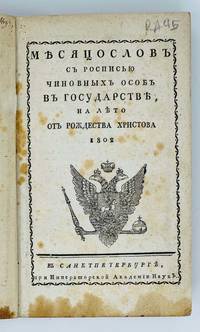
Best.-Nr. RA45Octavo. xxiv 514 viii pp. Title page with a woodcut vignette Pp. 261-262 bound at pp. 513-514 and vice versa but all pages present. Original period marbled papered wrappers. Owner’s inscription in English on the inner side of the front wrapper dated “Jan. 1802”. Wrappers slightly rubbed minor staining of the title page but overall a very good copy. Very rare early edition of the “address-calendar” – an official directory of the government and public institutions of the Russian Empire with names and ranks of all state officials. General “address calendars” covering the entire territory of the Russian Empire were published annually from 1765 until 1916 first by the Imperial Academy of Sciences after 1867 – by the special department of the Governing Senate of the Russian Empire. This is a rare copy of the first issue of the address calendar resumed after a five-year prohibition to publish during the reign of Emperor Paul I of Russia 1796-1801. Shortly after his son Alexander I had become the new Emperor of Russia a special decree was issued “to publish Mesiatseslov with the list of state officials exactly the same way as it used to be issued before 1797 with full names of the statesmen” Imperial Decree from June 14 1801. Worldcat indicates only one copy of this edition in the collection of early Russian address calendars 1765-1806 of the University of Göttingen Library. The Mesiatseslov opens with a detailed calendar for 1802 a list of state and church holidays and information about post office schedules and tariffs. The first part pp. 1-232 contains lists of officials of all Imperial state bodies in Saint Petersburg: the State Council Emperor’s Court and Cabinet Office commanders and officers of all regiments of the Emperor’s Life Guard Preobrazhensky Semenovsky Izmailovsky Cavalry Cossacks and others the Governing Senate the Holy Synod and all Imperial Collegiums/Ministries Foreign Affairs – with the staff of all embassies and consulates abroad Military Admiralty Medical Berg/Mining Commerce Manufacture supplemented with a list of foreign ambassadors and consuls in Russia. There are also lists of managers and staff of Russian state banks post offices Saint Petersburg wharf State Mint Police Department Imperial Academy of Sciences and Academy of Arts Moscow University Free Economic Society the Cadet Corps State Archives several educational and charity institutions &c. The second part pp. 234-514 contains names and ranks of the state officials in all Russian provinces and governing territories over 40 including Georgia officially annexed by Russia in 1801. Eight pages pp. 287-294 record the officials of the Irkutsk Gubernia province which then included the territories of Eastern Siberia Yakutia Chukotka and Kamchatka. The list starts with the military governor Nikolay Lebedev 1750-1813 his deputies and office and staff of the criminal and civil courts. Then follow the directory of state officials mayor judge treasurer and their associates in the province’s main cities: Irkutsk Verkheudinsk since 1934 - Ulan-Ude Nizhneudinsk Kirensk Nerchinsk Barguzin Buryatia Yakutsk Olyokminsk Olensk now Vilyuysk Yakutia Zhigansk Yakutia and Okhotsk Khabarovsk Krai. Three directories record the officials of the cities which disappeared or were abandoned in the late 19th or 20th century: Zashiversk a settlement on the Indigirka River suffered during measles epidemics in the 19th century; abandoned since the 1880s Gizhiginsk was located on the coast of the Okhotsk Sea in modern-day Magadan Oblast of Russia abandoned in the 1920s and Nizhnekamchatsk east coast of Kamchatka near the mouth of the Kamchatka river abandoned in 1968. There is also a list of the officials responsible for the “border affairs” in Troitsko-Savsk Kyakhta and the settlement of the lands beyond Lake Baikal. The alphabetical index at the rear pp. i-viii lists the names of provinces and territories principal cities and state institutions. The title page is decorated with a woodcut vignette with the coat of arms of the Russian Empire; the inner side of the front wrapper is inscribed by the owner who apparently acquired the Mesiatseslov shortly after it had been printed in January 1802. Overall a very good copy of this rare Russian directory of state officials preserved in its original state. unknown
1922Best.-Nr. 3735Mainly Vladivostok 1922. Very good. 261 images about half real photo postcards and half vernacular photographs between 2.5 x 1.5 inches and 3.5 x 5.5 inches. Oblong folio. Contemporary brown leather photograph album string-tied. Lacking fore-edge flap spine chipped moderate rubbing and scuffing to boards. Minor occasional wear to photographs. A unique collection of photographs documenting the joint military expedition by Allied Forces into Vladivostok in southeastern Russia after the conclusion of World War I the October Revolution and the Russian Civil War most likely assembled by an American soldier serving there at the time. The American contingent of the incursion was called the American Expeditionary Force Siberia which partnered with nine other countries to attempt to bring stability to the region rescue 40000 members of the Czechoslovakian Legion being held up by Bolsheviks outside Vladivostok protect and retrieve American supplies in eastern Russia and stem the early spread of Communism. A similar expedition to northern Russia now known as the Polar Bear Expedition was attempted in Archangel. By practically every standard the joint missions failed and in fact damaged relations between the Allied Forces and Russia especially for the United States for decades to come. The present collection of photographs and real-photo postcards opens with several photo postcards with printed captions showing parades of the military forces of the various Allied countries who participated in the expedition to Vladivostok as they arrived in the city. These include the British Army landing in Vladivostok the Imperial Japanese Expedition marching in front of the Czech Headquarters the Japanese Vanguard relieving the Imperial Japanese Naval Party the French Army landing in the city the Allied Naval Fleet in the Vladivostok harbor and two views of the landing of the American Army. Two additional captioned postcards show the Czech forces joining the French Army and a rather shocking image of about ten dead Czech soldiers with the image captioned "Czech victims in vicinity of Nicholoske former Bolshevik Head-quarters at Vladivostok." The remainder of the photo postcards and photographs capture additional parades numerous street scenes but also scores of images showing the outskirts and countryside around Vladivostok ships from various countries anchored in the harbor or trying to navigate the icy conditions military patrols often carrying weapons American and other soldiers interacting with the locals scenes along the railway views of refugees fleeing the region and much more. Upon arriving in Vladivostok American soldiers were tasked with guarding segments of the rail lines of the Trans-Siberian Railroad running into and out of Vladivostok. American forces are seen here performing those duties but also overseeing a temporary dormitory of beds in an evacuation hospital patrolling the area around the city as well as the refugees along the railway hanging out in their makeshift barracks and more with one image even showing a group of American soldiers posing in baseball uniforms. Particularly striking are the images of the indigenous refugees posed near the railroad and in other locations. Some of the subjects appear to be Siberian nomads but others traveling along the rail line are almost certainly Czech refugees fleeing Russia after their role in fighting for their own freedom against the new Russian regime. Several photos here capture groups of people obviously en route to somewhere else along the railroad at train depots and resting in makeshift encampments or tent cities overseen by military personnel. Historical material from the Vladivostok expedition is exceedingly rare especially images of soldiers with boots on the ground. The present collection provides a fascinating glimpse of life in Vladivostok during this volatile moment in Russian history as well as a notable instance when American and Allied gunboat diplomacy utterly failed. unknown
1922Best.-Nr. 3735Mainly Vladivostok 1922. Very good. 261 images about half real photo postcards and half vernacular photographs between 2.5 x 1.5 inches and 3.5 x 5.5 inches. Oblong folio. Contemporary brown leather photograph album string-tied. Lacking fore-edge flap spine chipped moderate rubbing and scuffing to boards. Minor occasional wear to photographs. A unique collection of photographs documenting the joint military expedition by Allied Forces into Vladivostok in southeastern Russia after the conclusion of World War I the October Revolution and the Russian Civil War most likely assembled by an American soldier serving there at the time. The American contingent of the incursion was called the American Expeditionary Force Siberia which partnered with nine other countries to attempt to bring stability to the region rescue 40000 members of the Czechoslovakian Legion being held up by Bolsheviks outside Vladivostok protect and retrieve American supplies in eastern Russia and stem the early spread of Communism. A similar expedition to northern Russia now known as the Polar Bear Expedition was attempted in Archangel. By practically every standard the joint missions failed and in fact damaged relations between the Allied Forces and Russia especially for the United States for decades to come. The present collection of photographs and real-photo postcards opens with several photo postcards with printed captions showing parades of the military forces of the various Allied countries who participated in the expedition to Vladivostok as they arrived in the city. These include the British Army landing in Vladivostok the Imperial Japanese Expedition marching in front of the Czech Headquarters the Japanese Vanguard relieving the Imperial Japanese Naval Party the French Army landing in the city the Allied Naval Fleet in the Vladivostok harbor and two views of the landing of the American Army. Two additional captioned postcards show the Czech forces joining the French Army and a rather shocking image of about ten dead Czech soldiers with the image captioned "Czech victims in vicinity of Nicholoske former Bolshevik Head-quarters at Vladivostok." The remainder of the photo postcards and photographs capture additional parades numerous street scenes but also scores of images showing the outskirts and countryside around Vladivostok ships from various countries anchored in the harbor or trying to navigate the icy conditions military patrols often carrying weapons American and other soldiers interacting with the locals scenes along the railway views of refugees fleeing the region and much more. Upon arriving in Vladivostok American soldiers were tasked with guarding segments of the rail lines of the Trans-Siberian Railroad running into and out of Vladivostok. American forces are seen here performing those duties but also overseeing a temporary dormitory of beds in an evacuation hospital patrolling the area around the city as well as the refugees along the railway hanging out in their makeshift barracks and more with one image even showing a group of American soldiers posing in baseball uniforms. Particularly striking are the images of the indigenous refugees posed near the railroad and in other locations. Some of the subjects appear to be Siberian nomads but others traveling along the rail line are almost certainly Czech refugees fleeing Russia after their role in fighting for their own freedom against the new Russian regime. Several photos here capture groups of people obviously en route to somewhere else along the railroad at train depots and resting in makeshift encampments or tent cities overseen by military personnel. Historical material from the Vladivostok expedition is exceedingly rare especially images of soldiers with boots on the ground. The present collection provides a fascinating glimpse of life in Vladivostok during this volatile moment in Russian history as well as a notable instance when American and Allied gunboat diplomacy utterly failed. unknown books
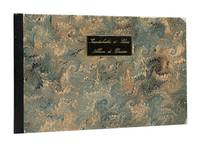
1808Best.-Nr. 365162Netherlands 1808. Six watercolors on individual sheets measuring approx. 10-1/2 x 16-1/4 inches. Five of the six watercolors titled in manuscript below the image and with extensive Dutch-language notes on the verso of each sheet. Oblong folio. Bound into modern half morocco and marbled boards oblong quarto in size gilt morocco label on front board reading: KAMTSCHATKA ET SIBERIE ALBUM DE DESSINS. Very minor wear or soiling in the edges of the margins else fine. Six watercolors on individual sheets measuring approx. 10-1/2 x 16-1/4 inches. Five of the six watercolors titled in manuscript below the image and with extensive Dutch-language notes on the verso of each sheet. Oblong folio. An atlas of splendid watercolors by an unknown artist showing scenes in Kamchatka and Siberia in the late 18th century. The paintings are quite well done. While the artist's facility for drawing human figures is not of the highest magnitude his ability in rendering places topography and villages is excellent. The identity of the artist is unknown but it seems likely that he was a Dutchman of some means who owned or had access to a collection of the most important accounts of 18th-century travel in eastern Russia and the Kamchatka peninsula. The watercolors show scenes of village and seaside life as originally depicted in the plates to the travels of Cook Sarychev and Chappe D'Auteroche which all took place between 1760 and 1795. Though undated a manuscript note on the verso of the final watercolor carries the date of 1808 and likely indicates when one or all of these images were painted. The images contained in this atlas are faithful detailed and accomplished watercolor renderings of printed plates from the atlas to James Cook's third voyage; the atlas to the voyage of Gavrila Sarychev; and the account of Jean Chappe D'Auteroche's travels to Siberia in the early 1760s. The artist has taken great care to retain interesting ethnographic details from the original sources showing details of clothing and decoration as well as animals dwellings from thatched huts to wooden structures buildings churches sleds and local boats and canoes. Two of the images feature fishing scenes and all but one of them shows a locations near a river or the sea. The interest and usefulness of the album is further heightened by the extensive manuscript notes in Dutch on the verso of each view. In some cases the notes give details of the source of an illustration but they also provide information about the region depicted the people who live there the natural resources and topography and much more. Further study of the album could lead to more information about the artist and the circumstances of its creation. The illustrations with their original manuscript captions are as follows: 1 "Gericht der stad Bolcheretskoi in Kamtschatka en ein Man Reirende in en Winter." This winter scene in Kamchatka is a combination of two plates from the atlas to Cook's voyages "A Man of Kamtschatka Travelling in Winter" and "A View at Bolcheretzkoi in Kamtschatka." It shows a small village of wooden buildings with thatched roofs while a family of natives bundled against the cold stand in the foreground. Two cows are shown in a pen and farm dogs and sled dogs mill about. 2 "Gerigt van de Stad en Haven van St. Petrus en St. Paulus aan Kamtschatka." This image copies a plate from the atlas to Cook's voyages entitled "A View of the Town and Harbour at St. Peter and St. Paul in Kamtschatka." An interesting scene of a small fishing village featuring a group of men casting large nets and other groups in canoes. Larger sailing vessels are in the water in the background and snow-capped peaks are seen in the distance. In the left foreground are a native husband and wife with an infant strapped to the woman's back. 3 "Gericht der Stad Tobolsk in Siberien." Copies a plate from Chappe D'Auteroche's VOYAGE EN SIBERIE Paris 1768. A very nice and well-done scene of a largish seaside town with several whitewashed buildings with tall spires along the waterfront and on a cliff. Workers are shown storing casks of goods by the waterside. 4 "Gericht der Vesting auf Sterkte Sueden - Kolymsk en der Rivier Kolyma." This image copies a plate from the atlas to Sarychev's voyage PUTESHESTVIE FLOTA KAPITANA SARYCHEVA. St. Petersburg 1802. An attractive scene of a small village of wooden buildings in a waterside setting. This scene is most interesting for the details of the structures including a Russian Orthodox Church. 5 Untitled. This is a version of the Cook atlas plate titled "Summer and Winter Habitations in Kamtschatka." This interesting scene gives great details of the dwellings used in Kamchatka. Located along a river they are built on stilts so as to withstand floods. 6 "Gericht van de Sterkte of Vesting Werchue - Koymsk en van de Rivier Jasjaschna." This image copies a plate from the atlas to Sarychev's voyage PUTESHESTVIE FLOTA KAPITANA SARYCHEVA. St. Petersburg 1802. Another view of a small fishing village with men casting nets at the shoreline a mid-size sailing ship in the water and a small group of one- and two-story buildings on the shore opposite. A very interesting suite of watercolors showing evocative scenes of village life in Siberia and Kamchatka at the time when European explorers were first visiting that remote area. unknown
1808Best.-Nr. 365162Netherlands 1808. Six watercolors on individual sheets measuring approx. 10-1/2 x 16-1/4 inches. Five of the six watercolors titled in manuscript below the image and with extensive Dutch-language notes on the verso of each sheet. Oblong folio. Bound into modern half morocco and marbled boards oblong quarto in size gilt morocco label on front board reading: KAMTSCHATKA ET SIBERIE ALBUM DE DESSINS. Very minor wear or soiling in the edges of the margins else fine. Six watercolors on individual sheets measuring approx. 10-1/2 x 16-1/4 inches. Five of the six watercolors titled in manuscript below the image and with extensive Dutch-language notes on the verso of each sheet. Oblong folio. An atlas of splendid watercolors by an unknown artist showing scenes in Kamchatka and Siberia in the late 18th century. The paintings are quite well done. While the artist's facility for drawing human figures is not of the highest magnitude his ability in rendering places topography and villages is excellent. The identity of the artist is unknown but it seems likely that he was a Dutchman of some means who owned or had access to a collection of the most important accounts of 18th-century travel in eastern Russia and the Kamchatka peninsula. The watercolors show scenes of village and seaside life as originally depicted in the plates to the travels of Cook Sarychev and Chappe D'Auteroche which all took place between 1760 and 1795. Though undated a manuscript note on the verso of the final watercolor carries the date of 1808 and likely indicates when one or all of these images were painted. The images contained in this atlas are faithful detailed and accomplished watercolor renderings of printed plates from the atlas to James Cook's third voyage; the atlas to the voyage of Gavrila Sarychev; and the account of Jean Chappe D'Auteroche's travels to Siberia in the early 1760s. The artist has taken great care to retain interesting ethnographic details from the original sources showing details of clothing and decoration as well as animals dwellings from thatched huts to wooden structures buildings churches sleds and local boats and canoes. Two of the images feature fishing scenes and all but one of them shows a locations near a river or the sea. The interest and usefulness of the album is further heightened by the extensive manuscript notes in Dutch on the verso of each view. In some cases the notes give details of the source of an illustration but they also provide information about the region depicted the people who live there the natural resources and topography and much more. Further study of the album could lead to more information about the artist and the circumstances of its creation. The illustrations with their original manuscript captions are as follows: 1 "Gericht der stad Bolcheretskoi in Kamtschatka en ein Man Reirende in en Winter." This winter scene in Kamchatka is a combination of two plates from the atlas to Cook's voyages "A Man of Kamtschatka Travelling in Winter" and "A View at Bolcheretzkoi in Kamtschatka." It shows a small village of wooden buildings with thatched roofs while a family of natives bundled against the cold stand in the foreground. Two cows are shown in a pen and farm dogs and sled dogs mill about. 2 "Gerigt van de Stad en Haven van St. Petrus en St. Paulus aan Kamtschatka." This image copies a plate from the atlas to Cook's voyages entitled "A View of the Town and Harbour at St. Peter and St. Paul in Kamtschatka." An interesting scene of a small fishing village featuring a group of men casting large nets and other groups in canoes. Larger sailing vessels are in the water in the background and snow-capped peaks are seen in the distance. In the left foreground are a native husband and wife with an infant strapped to the woman's back. 3 "Gericht der Stad Tobolsk in Siberien." Copies a plate from Chappe D'Auteroche's VOYAGE EN SIBERIE Paris 1768. A very nice and well-done scene of a largish seaside town with several whitewashed buildings with tall spires along the waterfront and on a cliff. Workers are shown storing casks of goods by the waterside. 4 "Gericht der Vesting auf Sterkte Sueden - Kolymsk en der Rivier Kolyma." This image copies a plate from the atlas to Sarychev's voyage PUTESHESTVIE FLOTA KAPITANA SARYCHEVA. St. Petersburg 1802. An attractive scene of a small village of wooden buildings in a waterside setting. This scene is most interesting for the details of the structures including a Russian Orthodox Church. 5 Untitled. This is a version of the Cook atlas plate titled "Summer and Winter Habitations in Kamtschatka." This interesting scene gives great details of the dwellings used in Kamchatka. Located along a river they are built on stilts so as to withstand floods. 6 "Gericht van de Sterkte of Vesting Werchue - Koymsk en van de Rivier Jasjaschna." This image copies a plate from the atlas to Sarychev's voyage PUTESHESTVIE FLOTA KAPITANA SARYCHEVA. St. Petersburg 1802. Another view of a small fishing village with men casting nets at the shoreline a mid-size sailing ship in the water and a small group of one- and two-story buildings on the shore opposite. A very interesting suite of watercolors showing evocative scenes of village life in Siberia and Kamchatka at the time when European explorers were first visiting that remote area. unknown books