3214 risultati
1958rif. 58805Edinburgh Scotland: National Gallery of Scotland. As New. Paperback. FREE UPGRADE to Courier/Priority Shipping Upon Request – – IN STOCK AND IMMEDIATELY AVAILABLE FOR SHIPMENT - AS NEW THE TEXT BLOCK IS PRISTINE CLEAN UNMARKED AND IN EXCELLENT CONDITION - - 64 pp. With 60 ills. 25 x 19 cm. -- with a bonus offer-- . 1958. National Gallery of Scotland paperback
1963rif. 58748Edinburgh Scotland: National Gallery of Scotland. As New. Paperback. FREE UPGRADE to Courier/Priority Shipping Upon Request – – IN STOCK AND IMMEDIATELY AVAILABLE FOR SHIPMENT - AS NEW THE TEXT BLOCK IS PRISTINE CLEAN UNMARKED AND IN EXCELLENT CONDITION - - 56 pp. With 38 ills. 11 col. . 25 x 19 cm. -- with a bonus offer-- . 1963. National Gallery of Scotland paperback
1963rif. 28410Edinburgh Scotland: Trustees of the National Galleries of Scotland. As New. Paperback. FREE UPGRADE to Courier/Priority Shipping Upon Request - IN STOCK AND IMMEDIATELY AVAILABLE FOR SHIPMENT - AS NEW THE TEXT BLOCK IS PRISTINE CLEAN UNMARKED AND IN EXCELLENT CONDITION - -- with a bonus offer--; T-Maitl . 1963. Trustees of the National Galleries of Scotland paperback
1968rif. 58875Edinburgh Scotland: Royal Scottish Academy. As New. Paperback. FREE UPGRADE to Courier/Priority Shipping Upon Request – – IN STOCK AND IMMEDIATELY AVAILABLE FOR SHIPMENT - AS NEW THE TEXT BLOCK IS PRISTINE CLEAN UNMARKED AND IN EXCELLENT CONDITION - - 44 pp. With 42 ills. 16 col. . 25 x 19 cm. -- with a bonus offer-- . 1968. Royal Scottish Academy paperback
rif. Z1-U-023-01741HM Inspectorate of Education. Used - Good. Ships from UK in 48 hours or less usually same day. Your purchase helps support Sri Lankan Children's Charity 'The Rainbow Centre'. Ex-library so some stamps and wear but in good overall condition. 100% money back guarantee. We are a world class secondhand bookstore based in Hertfordshire United Kingdom and specialize in high quality textbooks across an enormous variety of subjects. We aim to provide a vast range of textbooks rare and collectible books at a great price. Our donations to The Rainbow Centre have helped provide an education and a safe haven to hundreds of children who live in appalling conditions. We provide a 100% money back guarantee and are dedicated to providing our customers with the highest standards of service in the bookselling industry. HM Inspectorate of Education unknown
rif. Z1-C-036-02383Scottish Executive. Used - Good. Ships from UK in 48 hours or less usually same day. Your purchase helps support Sri Lankan Children's Charity 'The Rainbow Centre'. Ex-library so some stamps and wear but in good overall condition. 100% money back guarantee. We are a world class secondhand bookstore based in Hertfordshire United Kingdom and specialize in high quality textbooks across an enormous variety of subjects. We aim to provide a vast range of textbooks rare and collectible books at a great price. Our donations to The Rainbow Centre have helped provide an education and a safe haven to hundreds of children who live in appalling conditions. We provide a 100% money back guarantee and are dedicated to providing our customers with the highest standards of service in the bookselling industry. Scottish Executive unknown
rif. Z1-C-040-02352Scottish Executive. Used - Good. Ships from UK in 48 hours or less usually same day. Your purchase helps support Sri Lankan Children's Charity 'The Rainbow Centre'. Ex-library so some stamps and wear but in good overall condition. 100% money back guarantee. We are a world class secondhand bookstore based in Hertfordshire United Kingdom and specialize in high quality textbooks across an enormous variety of subjects. We aim to provide a vast range of textbooks rare and collectible books at a great price. Our donations to The Rainbow Centre have helped provide an education and a safe haven to hundreds of children who live in appalling conditions. We provide a 100% money back guarantee and are dedicated to providing our customers with the highest standards of service in the bookselling industry. Scottish Executive unknown
rif. Z1-C-036-02384Scottish Executive. Used - Good. Ships from UK in 48 hours or less usually same day. Your purchase helps support Sri Lankan Children's Charity 'The Rainbow Centre'. Ex-library so some stamps and wear but in good overall condition. 100% money back guarantee. We are a world class secondhand bookstore based in Hertfordshire United Kingdom and specialize in high quality textbooks across an enormous variety of subjects. We aim to provide a vast range of textbooks rare and collectible books at a great price. Our donations to The Rainbow Centre have helped provide an education and a safe haven to hundreds of children who live in appalling conditions. We provide a 100% money back guarantee and are dedicated to providing our customers with the highest standards of service in the bookselling industry. Scottish Executive unknown
18832 vols., [of 3], roy. 8vo., First Edition, HEAVILY CORRECTED AND ANNOTATED IN MS THROUGHOUT; red faux-morocco cloth, sides framed and lettered 'PRESS COPY' in gilt, gilt backs, green endpapers, expertly rebacked to style with old backstrips laid down, both very good, bright, clean copies. EDITION LIMITED TO 150 NUMBERED COPIES (THIS COPY NO. 47). WITH THE AUTHOR'S SEPARATE PRESENTATION CERTIFICATE NUMBERED AND COMPLETED IN MS (Certificate lightly frayed at edges). THIS COPY IS PRESENTED BY THE EARL OF SEAFIELD [the author's son] TO THE HON. JAMES OGILVIE GRANT OF GRANT. Tragically, this copy is wanting the first volume. It is unclear whether the copious amendments were made before or after presentation, but given the volume of revision it seems likely that they were made after scrutiny by the recipient. RARE AND POSSIBLY UNIQUE. Thomson p.73.
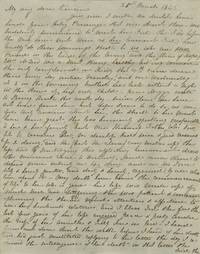
1845rif. BK0036Isle of Mull Scotland 1845. Autograph letter signed by a female member of the MacLeod family with an additional message signed "Mary McLeod" to the Rev. John Neil MacLeod in New York. 4pp measuring 9 x 7 inches. Addressed to "The Rev'd J. N. Macleod D.D. Presbyterian Minister New York United States North America." Postmarked at Tobermory prepaid "1/-" with London transit markings and intact black wax seal. Folded with very small holes at folds; excellent. A Scottish family and ecclesiastical letter containing an early direct condemnation of the Free Church of Scotland's acceptance of donations from slaveholding Presbyterians in the American South. Written in March 1845 the letter predates Frederick Douglass's arrival in Scotland and the public campaign urging the Free Church to "Send Back the Money." It demonstrates that criticism of the church's American fundraising was already circulating privately within Scottish Presbyterian networks before Douglass helped transform the controversy into a major transatlantic abolitionist cause. Following the Disruption of 1843 the newly established Free Church sent representatives to the United States to raise money. Contributions from southern churches and slaveholding ministers generated growing criticism particularly because the Free Church presented itself as a purer and more principled form of Presbyterianism. The writer identifies what she regarded as the central contradiction: the church refused communion with ministers who remained in the established Church of Scotland while recognizing slaveholding American ministers as Christian brethren and accepting their money. She writes: "What can you think now of their disclaiming to hold communion with any of their Bretheren in the Establishment and avowedly & publicly countenancing and holding communion with the Slave holding Ministers in your Southern States. Their coffers have been largely augmented by donations from these States and the leaders of the Free recognize them as Bretheren and write and speak of them with the greatest respect." Her criticism is directed as much at the church's financial expediency as at its inconsistency: "This has opened the eyes of some as to what they will resort to get money-this Church that professed to be a pure Church. Oh does it not clearly show the inconsistencies of man nay even of Christians what a different view these leaders may take of Slavery from what your respected Father had." Douglass began his Scottish campaign the following year when he and other abolitionists repeatedly challenged the Free Church to return the money received from American slaveholders. Writing to William Lloyd Garrison in April 1846 Douglass declared "Scotland is a blaze of anti-slavery agitation-the Free Church and Slavery are the all-engrossing topics."1 The present letter records essentially the same moral argument a year earlier made from within the church's own extended religious and family networks: that accepting southern funds compromised the Free Church's authority and exposed the limits of its professed purity. Addressed to the Rev. John Neil MacLeod in New York the letter places the dispute within a transatlantic Presbyterian context. The writer invokes the antislavery views of MacLeod's father and questions whether the recipient understood that a minister whom he had permitted to preach from his pulpit "advocated the course of the Southern Slave State Ministers so much" remarking "I should think not." The letter also contains news of a bereavement and other family and church news about Scotland and America. An important private response to the Free Church's American fundraising campaign written before the controversy reached its fullest public expression through Frederick Douglass's "Send Back the Money" campaign. The letter documents the early moral opposition of Scottish Presbyterians who believed that a church claiming spiritual independence and purity had compromised both by accepting the support of American slaveholders. . unknown
1845rif. BK0036Isle of Mull Scotland 1845. Autograph letter signed by a female member of the MacLeod family with an additional message signed "Mary McLeod" to the Rev. John Neil MacLeod in New York. 4pp measuring 9 x 7 inches. Addressed to "The Rev'd J. N. Macleod D.D. Presbyterian Minister New York United States North America." Postmarked at Tobermory prepaid "1/-" with London transit markings and intact black wax seal. Folded with very small holes at folds; excellent. A Scottish family and ecclesiastical letter containing an early direct condemnation of the Free Church of Scotland's acceptance of donations from slaveholding Presbyterians in the American South. Written in March 1845 the letter predates Frederick Douglass's arrival in Scotland and the public campaign urging the Free Church to "Send Back the Money." It demonstrates that criticism of the church's American fundraising was already circulating privately within Scottish Presbyterian networks before Douglass helped transform the controversy into a major transatlantic abolitionist cause. Following the Disruption of 1843 the newly established Free Church sent representatives to the United States to raise money. Contributions from southern churches and slaveholding ministers generated growing criticism particularly because the Free Church presented itself as a purer and more principled form of Presbyterianism. The writer identifies what she regarded as the central contradiction: the church refused communion with ministers who remained in the established Church of Scotland while recognizing slaveholding American ministers as Christian brethren and accepting their money. She writes: "What can you think now of their disclaiming to hold communion with any of their Bretheren in the Establishment and avowedly & publicly countenancing and holding communion with the Slave holding Ministers in your Southern States. Their coffers have been largely augmented by donations from these States and the leaders of the Free recognize them as Bretheren and write and speak of them with the greatest respect." Her criticism is directed as much at the church's financial expediency as at its inconsistency: "This has opened the eyes of some as to what they will resort to get money-this Church that professed to be a pure Church. Oh does it not clearly show the inconsistencies of man nay even of Christians what a different view these leaders may take of Slavery from what your respected Father had." Douglass began his Scottish campaign the following year when he and other abolitionists repeatedly challenged the Free Church to return the money received from American slaveholders. Writing to William Lloyd Garrison in April 1846 Douglass declared "Scotland is a blaze of anti-slavery agitation-the Free Church and Slavery are the all-engrossing topics."1 The present letter records essentially the same moral argument a year earlier made from within the church's own extended religious and family networks: that accepting southern funds compromised the Free Church's authority and exposed the limits of its professed purity. Addressed to the Rev. John Neil MacLeod in New York the letter places the dispute within a transatlantic Presbyterian context. The writer invokes the antislavery views of MacLeod's father and questions whether the recipient understood that a minister whom he had permitted to preach from his pulpit "advocated the course of the Southern Slave State Ministers so much" remarking "I should think not." The letter also contains news of a bereavement and other family and church news about Scotland and America. An important private response to the Free Church's American fundraising campaign written before the controversy reached its fullest public expression through Frederick Douglass's "Send Back the Money" campaign. The letter documents the early moral opposition of Scottish Presbyterians who believed that a church claiming spiritual independence and purity had compromised both by accepting the support of American slaveholders. . unknown books
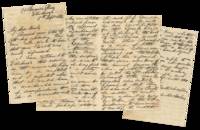
1903rif. List2990Dover and Chatham Ontario; Edinburgh and Blairgowrie Scotland 1903. Seventy-eight pieces: seven 2.5 x 4" photographs mounted on heavy cardstock; with seventeen letters from Alexander to James Macfarlane fifty-two from James to Alexander Macfarlane and two from others to Alexander Macfarlane. Fourteen from 1853-1882; eleven from 1883-1885; thirteen from 1886; twelve from 1887; thirteen from 1888; eight from 1889-1903. Sorted chronologically. Envelopes good to very good; letters generally near fine. Alexander Macfarlane 1851-1913 was a Scottish physicist mathematician and logician. He earned a D.Sc. from the University of Edinburgh in 1878; following this he would teach at the University of St. Andrews the University of Edinburgh the University of Texas at Austin and Lehigh University. Macfarlane earned a number of accolades including elections to many scientific and mathematical societies and an honorary doctorate from the University of Michigan. After his retirement in 1894 Alexander Macfarlane moved to a farm in Ontario left to him by his uncle James who is his correspondent herein. Much less is known about James Macfarlane; born in Scotland in 1806 he immigrated to North America by way of New York in 1835. He purchased land in Dover Township now Chatham Ontario in 1853 and was elected the town's reeve in 1879. At the time of this correspondence he was a farmer by occupation. The photographs in the collection-portraits of unknown individuals-are likely his as they are from photography studios in the Brantford and Toronto area and seem to date from before Alexander Macfarlane's arrival in the colony. James Macfarlane's letters to his nephew mainly written between 1886 and 1889 give detailed descriptions of farm life and logistics in 19th-century Ontario. He grew corn wheat beans clover and hay raised pigs and cows and kept a number of workhorses alongside a few seasonal employees. The elder Macfarlane describes the state of his crops the health of his animals and especially his finances taxes and employees' wages; he writes of "a constant fear of running aground" March 17 1887. However he also occasionally discusses academic or political affairs - it is unclear what education Macfarlane had or what political experience besides his reeveship but from his writing it seems not insignificant. One prohibition-related incident in 1887 especially stands out: "During the night between last Saturday & Sunday there was a dynamite explosion in front of the handsome residence of H. Cummings Esq. of Chatham - damage but no one hurt. It is believed it was the doing of the Chatham grogocracy - Mr. C. favours prohibition - Tories do not". August 10 1887 This letter dates the incident to late on the 6th or early on the 7th of August 1887; we do not find the explosion mentioned in local newspapers from the time. Alexander Macfarlane's letters which comprise most of the earlier letters in the group focus on his burgeoning academic career. In 1882 when the majority of his letters were written he had applied and was waiting to hear about a position as Chair of Mathematics at University College Dundee now the University of Dundee which was then just being formed. Besides occasional discussions of work in which he is currently engaged Macfarlane writes about his tactics for bettering his chances at the Chair; for example: "I have just received some information which indicates that I shall have an excellent chance of being successful. Rev. Mr. Tait who was our minister before he left Blairgowrie for Newport opposite Dundee happens to be a very intimate friend of the founder of the College Miss Baxter of Balgavies. I saw from the first that it would be important to secure his cooperation; he has been very active in his support. Recently he was staying at Balgavies and when the College was discussed he spoke highly in my favour. He has persuaded Miss Baxter to take some active steps in my favour. Copies of all the applications etc. are sent to her which seems to indicate that a proposed appointment is submitted to her for approval." September 19 1882 The wait is difficult for Macfarlane and he frequently comments with displeasure on related workplace politics. For instance he is upset by the choice of William Peterson-whom he describes as "a fop" October 3 1882-for Principal of the new university: "Peterson had this advantage that many of the electors had a bias in favour of a Classical man for the office of Principal. He got only a second class at Oxford. I say nothing on the subject but I have heard others express an opinion that a mistake has been made." August 13 1882 And later: "Most people express themselves as greatly surprised at the choice the Dundee Council made of a Principal. My theory of the matter is that Professor Donaldson with the view of furthering his own candidature wished to ingratiate himself with Professor Sellars after he saw that Mr Porter would not be accepted by the Council. I feel that the Council may do anything as they seem nearly incapable of forming an independent opinion." September 27 1882 When he does not receive the Chair Macfarlane shares his thoughts with his uncle about the state of Scottish Universities especially that they "have no reputation for scholarship" and that the Scottish people "need not expect learning to flourish at their Universities" November 23 1882. Of course Macfarlane's career turned out fine despite this setback; in 1895 he tells James not unfairly that "I am considered one of the foremost thinkers of the day in the field of exact science" March 21. Overall a look at the lives and activities of an uncle and nephew with extremely different careers; of interest both to scholars of Ontario history and farming and to historians of science and higher education. unknown
1903rif. List2990Dover and Chatham Ontario; Edinburgh and Blairgowrie Scotland 1903. Seventy-eight pieces: seven 2.5 x 4" photographs mounted on heavy cardstock; with seventeen letters from Alexander to James Macfarlane fifty-two from James to Alexander Macfarlane and two from others to Alexander Macfarlane. Fourteen from 1853-1882; eleven from 1883-1885; thirteen from 1886; twelve from 1887; thirteen from 1888; eight from 1889-1903. Sorted chronologically. Envelopes good to very good; letters generally near fine. Alexander Macfarlane 1851-1913 was a Scottish physicist mathematician and logician. He earned a D.Sc. from the University of Edinburgh in 1878; following this he would teach at the University of St. Andrews the University of Edinburgh the University of Texas at Austin and Lehigh University. Macfarlane earned a number of accolades including elections to many scientific and mathematical societies and an honorary doctorate from the University of Michigan. After his retirement in 1894 Alexander Macfarlane moved to a farm in Ontario left to him by his uncle James who is his correspondent herein. Much less is known about James Macfarlane; born in Scotland in 1806 he immigrated to North America by way of New York in 1835. He purchased land in Dover Township now Chatham Ontario in 1853 and was elected the town's reeve in 1879. At the time of this correspondence he was a farmer by occupation. The photographs in the collection-portraits of unknown individuals-are likely his as they are from photography studios in the Brantford and Toronto area and seem to date from before Alexander Macfarlane's arrival in the colony. James Macfarlane's letters to his nephew mainly written between 1886 and 1889 give detailed descriptions of farm life and logistics in 19th-century Ontario. He grew corn wheat beans clover and hay raised pigs and cows and kept a number of workhorses alongside a few seasonal employees. The elder Macfarlane describes the state of his crops the health of his animals and especially his finances taxes and employees' wages; he writes of "a constant fear of running aground" March 17 1887. However he also occasionally discusses academic or political affairs - it is unclear what education Macfarlane had or what political experience besides his reeveship but from his writing it seems not insignificant. One prohibition-related incident in 1887 especially stands out: "During the night between last Saturday & Sunday there was a dynamite explosion in front of the handsome residence of H. Cummings Esq. of Chatham - damage but no one hurt. It is believed it was the doing of the Chatham grogocracy - Mr. C. favours prohibition - Tories do not". August 10 1887 This letter dates the incident to late on the 6th or early on the 7th of August 1887; we do not find the explosion mentioned in local newspapers from the time. Alexander Macfarlane's letters which comprise most of the earlier letters in the group focus on his burgeoning academic career. In 1882 when the majority of his letters were written he had applied and was waiting to hear about a position as Chair of Mathematics at University College Dundee now the University of Dundee which was then just being formed. Besides occasional discussions of work in which he is currently engaged Macfarlane writes about his tactics for bettering his chances at the Chair; for example: "I have just received some information which indicates that I shall have an excellent chance of being successful. Rev. Mr. Tait who was our minister before he left Blairgowrie for Newport opposite Dundee happens to be a very intimate friend of the founder of the College Miss Baxter of Balgavies. I saw from the first that it would be important to secure his cooperation; he has been very active in his support. Recently he was staying at Balgavies and when the College was discussed he spoke highly in my favour. He has persuaded Miss Baxter to take some active steps in my favour. Copies of all the applications etc. are sent to her which seems to indicate that a proposed appointment is submitted to her for approval." September 19 1882 The wait is difficult for Macfarlane and he frequently comments with displeasure on related workplace politics. For instance he is upset by the choice of William Peterson-whom he describes as "a fop" October 3 1882-for Principal of the new university: "Peterson had this advantage that many of the electors had a bias in favour of a Classical man for the office of Principal. He got only a second class at Oxford. I say nothing on the subject but I have heard others express an opinion that a mistake has been made." August 13 1882 And later: "Most people express themselves as greatly surprised at the choice the Dundee Council made of a Principal. My theory of the matter is that Professor Donaldson with the view of furthering his own candidature wished to ingratiate himself with Professor Sellars after he saw that Mr Porter would not be accepted by the Council. I feel that the Council may do anything as they seem nearly incapable of forming an independent opinion." September 27 1882 When he does not receive the Chair Macfarlane shares his thoughts with his uncle about the state of Scottish Universities especially that they "have no reputation for scholarship" and that the Scottish people "need not expect learning to flourish at their Universities" November 23 1882. Of course Macfarlane's career turned out fine despite this setback; in 1895 he tells James not unfairly that "I am considered one of the foremost thinkers of the day in the field of exact science" March 21. Overall a look at the lives and activities of an uncle and nephew with extremely different careers; of interest both to scholars of Ontario history and farming and to historians of science and higher education. unknown books
rif. 74479c.1920. . Silver gelatin print. Very good tonal range and in good condition pasted on card. [c.1920]. unknown
1838rif. 23272Edinburgh, Hugh Paton and London, Smith, Elder & Co., 1838. XIX, II, 430, IX SS., 170 Radierungen; Titel, 472, IV, XI SS. und 160 Radierungen. Alle 330 Radierungen von den Original-Platten mit Plattenrändern und tls. Plattenschmutz. Die Abzüge sauber und kräftig, auf stärkerem Papier. 4° (ca. 21 x 27 cm), Halbleder der Zeit, ornamentale Rückenvergoldung und goldgepr. Rückentitel. Marmorierte Deckelbezüge, Goldschnitt. - Ecken und Kanten berieben und tls. bestoßen, Deckel stärker berieben.
1701Sm. 8vo., First Edition, eighteenth century inscription on title, title and several following leaves age-stained, title neatly mounted without loss of text, final leaf of Appendix mounted with loss of half text; strongly and attractively bound in half calf, marbled boards, back with five flat gilt bands, second compartment with red leather label lettered and ruled in gilt, a most attractive copy. This copy was formerly in the McIntosh Library, Dunkeld, and carries the MS press-mark A8.51 and bookplate (numbered 493) on front paste-down. A sound and complete (save last leaf) copy of the first dedicated published account of Orkney and Zetland. RARE. Anderson, p.402.
1693rif. 16116(No place, no date(1693)). Very large engraved seechart, measuring 60 x 86,5 cm. in original outline colouring. The chart showing the Northern part of England from Lancaster to Banf, of Ireland from Blackrock to Carlingford and all the Islands to the north: Shetland, Orkney, Faroe etc. etc. A fine impression on good thick paper with the watermark: BYCOLUMBIER. Folded down the center.
1693rif. 16116No place no date1693. Very large engraved seechart measuring 60 x 865 cm. in original outline colouring. The chart showing the Northern part of England from Lancaster to Banf of Ireland from Blackrock to Carlingford and all the Islands to the north: Shetland Orkney Faroe etc. etc. A fine impression on good thick paper with the watermark: BYCOLUMBIER. Folded down the center. The "Neptune Francois" was published in 1693 and its charts are larger and more lavishly decorated than those of any preceding book of its kind. The chart is without year place and "par Ordre du Roi" pointing to a later impression but issued from the original copperplate. It is also without "Imprimerie Royale" belonging to the imprints from 1792. Koeman IV425:9. unknown
rif. Z1-G-020-00987Education Dept. Used - Good. Ships from UK in 48 hours or less usually same day. Your purchase helps support Sri Lankan Children's Charity 'The Rainbow Centre'. Ex-library so some stamps and wear and may have sticker on cover but in good overall condition. 100% money back guarantee. We are a world class secondhand bookstore based in Hertfordshire United Kingdom and specialize in high quality textbooks across an enormous variety of subjects. We aim to provide a vast range of textbooks rare and collectible books at a great price. Our donations to The Rainbow Centre have helped provide an education and a safe haven to hundreds of children who live in appalling conditions. We provide a 100% money back guarantee and are dedicated to providing our customers with the highest standards of service in the bookselling industry. Education Dept unknown
rif. Z1-F-022-01782Rarebooksclub.com. Used - Like New. Used - Like New. This is a reproduction of an out of print title. This book may have occasional imperfections such as missing or blurred pages poor pictures errant marks etc. that were either part of the original artifact or were introduced by the scanning process. Ships from UK in 48 hours or less usually same day. Your purchase helps support Sri Lankan Children's Charity 'The Rainbow Centre'. 100% money back guarantee. We are a world class secondhand bookstore based in Hertfordshire United Kingdom and specialize in high quality textbooks across an enormous variety of subjects. We aim to provide a vast range of textbooks rare and collectible books at a great price. Our donations to The Rainbow Centre have helped provide an education and a safe haven to hundreds of children who live in appalling conditions. We provide a 100% money back guarantee and are dedicated to providing our customers with the highest standards of service in the bookselling industry. Rarebooksclub.com unknown
1723rif. 23751723 London: Printed by C. Meere, and sold by A. Bettefworth, 1723-1725. Deux vol. in-16: 8 x 13 cm. 5ème édition pour le Ier vol. [Nobility of England], deuxième édition pour le 2ème vol. [Origin of the Scots]. I/ 1 fr., 1 f. [Titre], 2 ff. n. ch. [Preface], pp. 1-120 [armoiries gravées], pp. 3-541[1], 4 ff. [Index & Addenda]. II/ 1 fr., VIII pp., pp. 1-86 [armoiries gravées], 511[1] pp., 13 ff. de planches gravées hors-texte. Reliures d'époque en plein veau marron, dos à quatre nerfs. Couvertures fortement frottées, le t. II a les coiffes arasées, les mors abîmés, les coins émoussés et le premier plat détaché du reste de l'ouvrage. Quelques feuillets déchirés dans les deux volumes, sans manque. Mouillures et rousseurs éparses. Ex-libris manuscrits au début de chacun des volumes. Assemblage d'époque complet de toutes ses planches. Exemplaire captivant de ce classique de l'héraldique britannique du XVIIIe siècle.
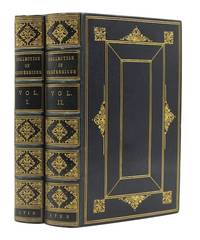
1719rif. AQ33177Edinburgh: Printed by James Watson 1719. In two volumes. clxvii 1 458 26; 16 815pp 1. Vol. II dated 1722. A third volume is called for in the advertisement to Vol. II; no more published. The various parts have separate title pages pagination and register are continuous. The preface was published separately in 1720 as A preface to an addition sic of the Westminster confession. Handsomely bound by Henderson and Bisset of Edinburgh in nineteenth century panelled black morocco richly tooled in gilt A.E.G. Marbled endpapers later pencilled ownership inscription to foot of p. cxliv trimmed contemporary inked ownership inscription of Archibald Stewart to head of first divisional title page later naive paper repairs to second divisional title page ownership inscription of Archibald Denham dated 1770 to Vol. II half- title brocade paper strip pasted to head of p.21 Vol. II. very small holes to leaves H1 and H4 Vol. II later paper repair to lower corner of leaf T8 short tears to leaves Z7-8 without loss paper repair to lower corner of leaf Ss1 inked ownership inscriptions of James Noble to FFEPs. A remarkably handsome copy of a monumental work on the confession of faith in the Church of Scotland edited by Church of Scotland minister and university teacher William Dunlop 1692-1720. This valuable collection sponsored by the General Assembly contains - in addition to the Westminster Standards - the Confession of Faith of the English Congregation at Geneva the Scotch Confession of 1560 the Scotch Confession of 1580 the National Covenant of 1638 Calvin's Catechism and the Heidelberg Catechism. Intriguingly material relating to the Solemn League and Covenant - the attempt by covenanters to secure Presbyterianism across Britain - is entirely excluded. This omission prompted complaints at the 1723 Assembly though no action was taken. The matter was raised once more at the 1725 Assembly by prominent Evangelical members of the synods of Fife and Perth and Stirling. In the subsequent debate it was argued that the Solemn League could be included in the projected third volume. The Kirk ultimately refused to sanction publication conscious that a 1661 statute condemning the oath remained in force. The third volume never materialised and in 1725 the General Assembly went so far as to officially refute responsibility for the omission. Provenance: Sir Archibald Steuart Denham sixth Baronet of Coltness and Baronet of Denham of Westshield 1683-1773; James Noble 1800-1848 Scottish minister antiquarian geologist and fossil collector. ESTC T78533. 8vo. Printed by James Watson unknown
1777rif. 303387Aberdeen: Printed for and sold by J. Boyle 1777. 395 1 pp. 12mo. Contemp. sheep covers off. 395 1 pp. 12mo. with at end: Translations and Paraphrases of Several Passages of Sacred Scripture.Edinburgh: Printed in 1774 incomplete only 1-36 of 40 pp ESTC T208251 2 copies Nat. Lib. Scotland; Aberdeen Univ. Library. Not in ESTC Printed for, and sold by J. Boyle unknown
1777rif. 303387Aberdeen: Printed for and sold by J. Boyle 1777. 395 1 pp. 12mo. Contemp. sheep covers off. 395 1 pp. 12mo. with at end: Translations and Paraphrases of Several Passages of Sacred Scripture.Edinburgh: Printed in 1774 incomplete only 1-36 of 40 pp ESTC T208251 2 copies Nat. Lib. Scotland; Aberdeen Univ. Library. Not in ESTC Printed for, and sold by J. Boyle unknown books
1994rif. SBBIH-VHVYGSQQCUD6Stationery Office Books 1994. paperback. Good. Our good condition books are generally good for reading but not for gifting or collecting. They could have imperfections such as creasing fanning inscriptions margin notes yellowing staining on edge or cover or pages bumps scuffs etc etc sometimes multiple of these. It's a wide category that encompasses anything that isn't almost-new down to anything that is slightly better than poor. We would NOT recommend gifting Good books - these should be considered reading copies. Our books are dispatched from a Yorkshire former cotton mill. We list via barcode/ISBN so please note that the images are stock images and may not be the exact copy you receive furthermore the details about edition and year might not be accurate as many publishers reuse the same ISBN for multiple editions and as we simply scan a barcode or enter an ISBN we do not check the validity of the edition data when listing. If you're looking for an exact edition please don't order at least not without checking with us first although we don't always have time to check. We aim to dispatch prompty the service used will depend on order value and book size. We can ship to most countries see our shipping policies. Payment is via Abe only. Stationery Office Books paperback