ScotlandABAA

2840 risultati
1900rif. 209291900. United Kingdom. The Scots Statutes Revised. The Public General Statutes Affecting Scotland 1707-1900. Edinburgh: William Green & Sons 1899-1902. 10 vols. Original green gilt stamped starched buckram. $150. unknown books
1917rif. 18824London: Hodder and Stoughton 1917. Cloth. Very Good /Very Good. The elusive 1917 1st edition IN ITS UNCOMMON PICTORIAL DUSTJACKET. Solid and VG "Royal Midland Counties Home for Incurables" stamp on the front free endpaper in a bright VG example of the scarce dustjacket with light chipping at the spine ends including 1" of loss to the foot of the spine and light spotting and soiling to the panels. Still though very presentable and uncommon as such. Hodder and Stoughton unknown books
1777rif. 303387Aberdeen: Printed for and sold by J. Boyle 1777. 395 1 pp. 12mo. Contemp. sheep covers off. 395 1 pp. 12mo. with at end: Translations and Paraphrases of Several Passages of Sacred Scripture.Edinburgh: Printed in 1774 incomplete only 1-36 of 40 pp ESTC T208251 2 copies Nat. Lib. Scotland; Aberdeen Univ. Library. Not in ESTC Printed for, and sold by J. Boyle unknown books
1826rif. 24587Edinburgh: Printed for W. and C. Tait by W. Aitken; Printed by George Ramsay for Archibald Constable and Company 1826. First editions. Only 120 copies were printed of the last work according to a contemporary manuscript note. Handcolored initial on frontispiece engravings engraving at the back of the second work. Frontispiece of the third volume loose. 3 vols. 8vo. Uniformly bound in brown calf spine decorated in blind and gilt with arabesque lozenge on each cover from the library of William Gordon of Fybie with bookplate. Spines and joints quite rubbed upper joints starting some offsetting or spotting mostly at front and back else a very attractive work in a brown cloth box. First editions. Only 120 copies were printed of the last work according to a contemporary manuscript note. Handcolored initial on frontispiece engravings engraving at the back of the second work. Frontispiece of the third volume loose. 3 vols. 8vo. Printed for W. and C. Tait by W. Aitken; Printed by George Ramsay for Archibald Constable and Company unknown books
1821rif. 221500Edinburgh: William Blackwood 1821. First Editions of both First and Second Series. 2 vols. 8vo. Original boards paper spine labels. Spine chipped joints shaky else Very Good. First Editions of both First and Second Series. 2 vols. 8vo. William Blackwood unknown books
1826rif. 229498Edinburgh: Printed by James Ballantyne and Company for William Blackwood Edinburgh: and T. Cadell Strand London 1826. Second edition of the first two Letters First edition of the Third Letter. 60; 86 2 blank; 39 pp. 1 vols. 8vo. Half red morocco preserving nineteenth-century marbled boards. Fine. Second edition of the first two Letters First edition of the Third Letter. 60; 86 2 blank; 39 pp. 1 vols. 8vo. "In this series of 'Letters' defending the issuance of Scottish banknotes Scott benefits from his work on Swift by patterning the Malachi Malagrowther letters on Swift's Drapier's Letters" Todd & Bowden p. 621. "In February 1826 there may have been a degree of calculation in Scott's entering the debate on a government measure introduced to deal with the economic crisis which would have restricted the rights of the Scottish banks to issue their own notes but Scott represented it as a nationalist issue 'the late disposition to change every thing in Scotland to an English model' Journal 94. In February and March he wrote three letters to the editor of the Edinburgh Weekly Journal in which he used the currency issue as an exemplum for the larger tendency. The letters caused a sensation. Ministerial friends were very angry but withdrew the measure. The banks were grateful; taking a lead from his old rival in love William Forbes they agreed to the creation of a trust for the settling of Scott's debts and The Letters of Malachi Malagrowther as the letters are now known is recognized as a classic in political argument" DNB. A complete set uncommon. Todd & Bowden 186Ac 187Ac 188Ab. Kress III C1778 C1781 C1784 Printed by James Ballantyne and Company for William Blackwood, Edinburgh: and T. Cadell, Strand, London unknown books
1823rif. 25421np 1823. 3pp. 1 vols. Folio. Later cloth. 3pp. 1 vols. Folio. unknown books
1827rif. 66800Perth: printed by Crerar and Son 1827. 12mo pp. 295 1; largely unopened; original brown paper-covered boards red paper shelfback printed paper label on spine Forbes clan coat of arms "Grace me Guide" stamped on the upper board; spine sunned edges rubbed inscription on title page reading "Ruth Forbes One Hund. & Seventy six" light toning to a couple of leaves and the occasional very light spotting very good. Includes dissertations on the life and writings of James I the Scots language and Scottish music. Much of the book is taken up with his best-known poem the King's Quair nearly 1400 lines which was "composed by him while he was a prisoner in the castle of Windsor upon the Lady Jane a princess of the blood royal of England to whom he was afterwards espoused" preface. The boards on the book are slight and appear recycled. John Price notes that his copy in boards reuses "discarded leaves for a temporary binding. printed by Crerar and Son unknown books
1832rif. 729711832. Executed after a Failed Insurrection Trial. Scotland. Mackenzie Peter 1799-1875. Wilson James Defendant 1760-1820. The Trial of James Wilson For High Treason With an Account of His Execution at Glasgow September 1820 Etc. Etc. Now Respectfully Submitted to the Consideration of the Reformers of Glasgow By Their Faithful and Devoted Servant The Exposer of the Spy System &c. &c. Glasgow: Printed and Published by Muir Gowans & Co. 1832. 48 pp. 3 parts in one with continuous pagination. Octavo 8" x 5". Disbound stab-stitched pamphlet. Light toning more moderate to pp. 17-32 light foxing and soiling in a few places. $450. Only edition issued first as three parts and then a composite edition. Wilson a Scottish radical and would-be revolutionary led a march on Glasgow after being fed information by British government spies who claimed that England was in the midst of an insurrection and that the French were assisting the rebels. This was not the case and upon his return Wilson was arrested and executed in August of 1820. Mackenzie was a journalist who wrote about the British infiltration of radical networks. OCLC locates 11 copies of this title 4 in North America Harvard Princeton New York Public Library Queens University. Goldsmiths' Library of Economic Literature 27585. unknown books
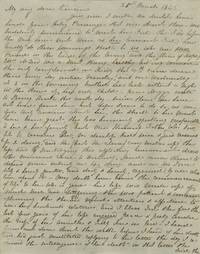
1845rif. BK0036Isle of Mull Scotland 1845. Autograph letter signed by a female member of the MacLeod family with an additional message signed "Mary McLeod" to the Rev. John Neil MacLeod in New York. 4pp measuring 9 x 7 inches. Addressed to "The Rev'd J. N. Macleod D.D. Presbyterian Minister New York United States North America." Postmarked at Tobermory prepaid "1/-" with London transit markings and intact black wax seal. Folded with very small holes at folds; excellent. A Scottish family and ecclesiastical letter containing an early direct condemnation of the Free Church of Scotland's acceptance of donations from slaveholding Presbyterians in the American South. Written in March 1845 the letter predates Frederick Douglass's arrival in Scotland and the public campaign urging the Free Church to "Send Back the Money." It demonstrates that criticism of the church's American fundraising was already circulating privately within Scottish Presbyterian networks before Douglass helped transform the controversy into a major transatlantic abolitionist cause. Following the Disruption of 1843 the newly established Free Church sent representatives to the United States to raise money. Contributions from southern churches and slaveholding ministers generated growing criticism particularly because the Free Church presented itself as a purer and more principled form of Presbyterianism. The writer identifies what she regarded as the central contradiction: the church refused communion with ministers who remained in the established Church of Scotland while recognizing slaveholding American ministers as Christian brethren and accepting their money. She writes: "What can you think now of their disclaiming to hold communion with any of their Bretheren in the Establishment and avowedly & publicly countenancing and holding communion with the Slave holding Ministers in your Southern States. Their coffers have been largely augmented by donations from these States and the leaders of the Free recognize them as Bretheren and write and speak of them with the greatest respect." Her criticism is directed as much at the church's financial expediency as at its inconsistency: "This has opened the eyes of some as to what they will resort to get money-this Church that professed to be a pure Church. Oh does it not clearly show the inconsistencies of man nay even of Christians what a different view these leaders may take of Slavery from what your respected Father had." Douglass began his Scottish campaign the following year when he and other abolitionists repeatedly challenged the Free Church to return the money received from American slaveholders. Writing to William Lloyd Garrison in April 1846 Douglass declared "Scotland is a blaze of anti-slavery agitation-the Free Church and Slavery are the all-engrossing topics."1 The present letter records essentially the same moral argument a year earlier made from within the church's own extended religious and family networks: that accepting southern funds compromised the Free Church's authority and exposed the limits of its professed purity. Addressed to the Rev. John Neil MacLeod in New York the letter places the dispute within a transatlantic Presbyterian context. The writer invokes the antislavery views of MacLeod's father and questions whether the recipient understood that a minister whom he had permitted to preach from his pulpit "advocated the course of the Southern Slave State Ministers so much" remarking "I should think not." The letter also contains news of a bereavement and other family and church news about Scotland and America. An important private response to the Free Church's American fundraising campaign written before the controversy reached its fullest public expression through Frederick Douglass's "Send Back the Money" campaign. The letter documents the early moral opposition of Scottish Presbyterians who believed that a church claiming spiritual independence and purity had compromised both by accepting the support of American slaveholders. . unknown books
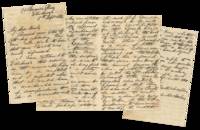
1903rif. List2990Dover and Chatham Ontario; Edinburgh and Blairgowrie Scotland 1903. Seventy-eight pieces: seven 2.5 x 4" photographs mounted on heavy cardstock; with seventeen letters from Alexander to James Macfarlane fifty-two from James to Alexander Macfarlane and two from others to Alexander Macfarlane. Fourteen from 1853-1882; eleven from 1883-1885; thirteen from 1886; twelve from 1887; thirteen from 1888; eight from 1889-1903. Sorted chronologically. Envelopes good to very good; letters generally near fine. Alexander Macfarlane 1851-1913 was a Scottish physicist mathematician and logician. He earned a D.Sc. from the University of Edinburgh in 1878; following this he would teach at the University of St. Andrews the University of Edinburgh the University of Texas at Austin and Lehigh University. Macfarlane earned a number of accolades including elections to many scientific and mathematical societies and an honorary doctorate from the University of Michigan. After his retirement in 1894 Alexander Macfarlane moved to a farm in Ontario left to him by his uncle James who is his correspondent herein. Much less is known about James Macfarlane; born in Scotland in 1806 he immigrated to North America by way of New York in 1835. He purchased land in Dover Township now Chatham Ontario in 1853 and was elected the town's reeve in 1879. At the time of this correspondence he was a farmer by occupation. The photographs in the collection-portraits of unknown individuals-are likely his as they are from photography studios in the Brantford and Toronto area and seem to date from before Alexander Macfarlane's arrival in the colony. James Macfarlane's letters to his nephew mainly written between 1886 and 1889 give detailed descriptions of farm life and logistics in 19th-century Ontario. He grew corn wheat beans clover and hay raised pigs and cows and kept a number of workhorses alongside a few seasonal employees. The elder Macfarlane describes the state of his crops the health of his animals and especially his finances taxes and employees' wages; he writes of "a constant fear of running aground" March 17 1887. However he also occasionally discusses academic or political affairs - it is unclear what education Macfarlane had or what political experience besides his reeveship but from his writing it seems not insignificant. One prohibition-related incident in 1887 especially stands out: "During the night between last Saturday & Sunday there was a dynamite explosion in front of the handsome residence of H. Cummings Esq. of Chatham - damage but no one hurt. It is believed it was the doing of the Chatham grogocracy - Mr. C. favours prohibition - Tories do not". August 10 1887 This letter dates the incident to late on the 6th or early on the 7th of August 1887; we do not find the explosion mentioned in local newspapers from the time. Alexander Macfarlane's letters which comprise most of the earlier letters in the group focus on his burgeoning academic career. In 1882 when the majority of his letters were written he had applied and was waiting to hear about a position as Chair of Mathematics at University College Dundee now the University of Dundee which was then just being formed. Besides occasional discussions of work in which he is currently engaged Macfarlane writes about his tactics for bettering his chances at the Chair; for example: "I have just received some information which indicates that I shall have an excellent chance of being successful. Rev. Mr. Tait who was our minister before he left Blairgowrie for Newport opposite Dundee happens to be a very intimate friend of the founder of the College Miss Baxter of Balgavies. I saw from the first that it would be important to secure his cooperation; he has been very active in his support. Recently he was staying at Balgavies and when the College was discussed he spoke highly in my favour. He has persuaded Miss Baxter to take some active steps in my favour. Copies of all the applications etc. are sent to her which seems to indicate that a proposed appointment is submitted to her for approval." September 19 1882 The wait is difficult for Macfarlane and he frequently comments with displeasure on related workplace politics. For instance he is upset by the choice of William Peterson-whom he describes as "a fop" October 3 1882-for Principal of the new university: "Peterson had this advantage that many of the electors had a bias in favour of a Classical man for the office of Principal. He got only a second class at Oxford. I say nothing on the subject but I have heard others express an opinion that a mistake has been made." August 13 1882 And later: "Most people express themselves as greatly surprised at the choice the Dundee Council made of a Principal. My theory of the matter is that Professor Donaldson with the view of furthering his own candidature wished to ingratiate himself with Professor Sellars after he saw that Mr Porter would not be accepted by the Council. I feel that the Council may do anything as they seem nearly incapable of forming an independent opinion." September 27 1882 When he does not receive the Chair Macfarlane shares his thoughts with his uncle about the state of Scottish Universities especially that they "have no reputation for scholarship" and that the Scottish people "need not expect learning to flourish at their Universities" November 23 1882. Of course Macfarlane's career turned out fine despite this setback; in 1895 he tells James not unfairly that "I am considered one of the foremost thinkers of the day in the field of exact science" March 21. Overall a look at the lives and activities of an uncle and nephew with extremely different careers; of interest both to scholars of Ontario history and farming and to historians of science and higher education. unknown books
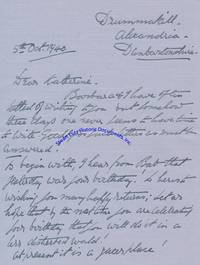
rif. 5554WORLD WAR II IN SCOTLAND. ALS. 6pgs. October 5 1940. Drummakill Alexandria Dunbartonshire. An autograph letter signed Hector and written during World War Two. The author discusses hosting evacuated children and the fact that Scotland has so far been lucky in avoiding air raids. Our first lot of 3 boys are no longer with us. One of them the nicest lad died last Xmas from appendicitis the other two took themselves off to a farm as they objected to being kept in order! But lately I hear they returned home to Clydebank. Whether we get others depends on the severity of air raids! So far Scotland has really been lucky in this respect. Of course there are some here & there. We hear the hum sometimes usually at night and have heard bombs exploding but quite a bit away! But you never can tell when it might not be a bigger affair!! It is wonderful how England is standing up to her ordeal & the amazing cheerfulness of people with it all. I have a cousin & her husband in London & she writes now & then saying that life is noisy in London! But she manages to do a lot of war work often taking it to their air raid shelter. But I believe people get used even to the sound of many guns!. Clydebank where the two remaining boys had returned home would suffer a deadly blitz the following year. In fine condition and including the original mailing envelope sent to Chevy Chase Maryland. unknown books
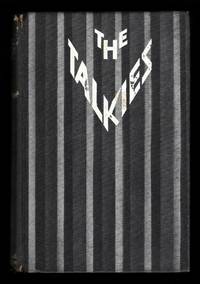
rif. 35235SCOTLAND John. THE TALKIES. London: Crosby Lockwood 1930. 8vo. Publisher's cloth. xvi 194 1 pages 36 plates. First edition. An early technical and historical survey of early talking pictures with photographs of early equipment and movie sets. An attractive bright copy. unknown books
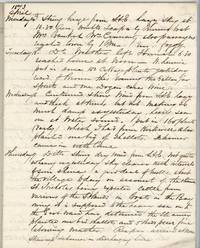
1873rif. 46421Kirkwall Orkney Scotland 1873. Paper wrappers. A near fine copy. 56 pp. 4to. A rare daily diary from April 14th 1873 to January 27th 1874 detailing the weather storms the growing of crops cattle shipments plantings the comings & goings of the islanders of ships some large mostly smaller Reaper class to & from Inverness Edinburgh Wales and beyond including the author's trip to Edinburgh concerning the author's acceptance as clerk treasurer and officer of the board of the church. The journal ends with his note that he "must down to Kara Are of Kara and brake the sad news to his sister about a death.and followed by "moderate wind with a slight drizzling rain." A wealth of information on a remote area of the Orkney Islands. unknown books
1891rif. 2638Various locations in Missouri: May to June 1891. Very good. 54pp. rectos only. Small quarto. Contemporary limp dark brown leather thin gilt borders and gilt lining on spine. Minor wear spine head a bit tender. Clean internally. An interesting collection of observations on American business politics and more from the standpoint of a Scottish lawyer and businessman working in the American Midwest in 1891. According to an 1891 Scottish directory George D. Ballingall was one of three partners in Fraser Stodart and Ballingall of 16 Castle Street in Edinburgh which matches the address he records on the front free endpaper of the present diary. Ballingall and his partners were managing secretaries for a few companies including the Missouri Land and Live Stock Company Limited which provides easy justification for why he was visiting Missouri here. Ballingall himself is listed in the same directory as a member of the Society of Writers to Her Majesty's Signet a private society of notable Scottish solicitors. The present diary covers Ballingall's time in various locations in Missouri in May and June 1891. He discusses politics real estate farming mining prospects and most intensely the law. He records his experiences in St. Louis Joplin Pierce City and other locations visiting mines taking meetings and providing consultations gathering his own legal advice and more. Ballingall devotes the last several pages of the diary to various legal acts in the Missouri legislature and ponders how they will affect his business interests in the state the affairs of corporations foreign reporting requirements and so forth. He also discusses the evergreen topic involving the struggle between federal and state powers. He concludes by discussing how Missouri farmers organized as did the farmers in Kansas and how this new faction of the "people's party" controls the legislature now. May to June unknown books
1990rif. 13076Glasgow: Hunterian Art Gallery 1990. Softcover. G May have minor damage to wraps; Interior is clean and tight. Black wraps. 56 pp. 7 bw 28 color plates. Two-page introduction biography extensively annotated selection of lovely plates and chronology. [Hunterian Art Gallery] paperback books
1996rif. 196078Edinburgh: The Stationery Office 1996. Paperback. VG- Wraps are lightly edgeworn/scuffed/smudged; back cover has a sticker on it; textblock edges are scuffed/smudged/foxed; interior is clean; binding is solid. Yellow and blue wraps with yellow and blue lettering and photo-illustration; xii 241 pp.; richly illustrated in black & white. The Stationery Office paperback books
2000rif. 213552000. Softcover. VG: Exlibrary book. Stamp on first page. Stamp sticker and due date card on back inside cover. Color wraps. 101 pp. 112 color plates. Includes a seven-page essay by Patrick Elliot "Alan Davie: An Introduction" numerous very colorful illustrations and the catalogue. paperback books
1983rif. 165121983. Softcover. VG sticker on spine very slight wear. Color wraps. 96 pp. 9 bw 22 color plates. paperback books
1966rif. 133561966. Softcover. VG- ink on cover. Color wraps. 62 pp. 69 bw plates. Six-page introduction by John Russell catalogue of 158 annotated works several illustrated in striking plates. paperback books
1931rif. 29833London/New York: Crosby Lockwood & Son / The Industrial Book Co. Good. 1931. First American Edition. Hardcover. patterned cloth; no dust jacket worn and a bit frayed at the spine ends minor exposure of boards at several tips age-toning to edges of text block white spine lettering largely worn away hinges a little loosey-goosey binding starting to separate mid-volume. B&W photographic plates A survey of the technical and aesthetic conditions of sound motion pictures just a few years into the talkie era. Chapters: Development of the Sound Film; The Writing of Sound; Revolution; Theatre Installations; Colour Projection; Some Opinions of Talking Pictures. The Foreword is by British film pioneer Cecil Hepworth who even though he was only in his late 50s was already well into his cinematic dotage at the time. His production firm had gone belly-up in 1923. . Crosby Lockwood & Son / The Industrial Book Co. hardcover books
2003rif. 295155Edinburgh: Society of Antiquaries 2003. hardcover. very good. With papers by several authors. Illustrated. iv 442 pages 4to blue cloth. Edinburgh: Society of Antiquaries of Scotland 2003. A very good copy. Society of Antiquaries unknown books
1993rif. 295800New York: Viking 1993. First. hardcover. near fine. Illustrated in black and white. 186 pages. 8vo. red cloth. New York: Viking 1993. A near fine copy. Viking unknown books
rif. 48327Glasgow: Maclehose. hardcover. very good. 31 plates and 287 text wood-engr. of medals coins manuscripts weapons seals drinking vessels etc. 359pp. Thick small folio blue cloth gilt arms on cover g.t. Glasgow: Maclehose 1890. Very good . A superb collection of Scottish relics from the 1888 Glasgow International Exhibition. Edited by James Paton with authoritative text by Sir Arthur Mitchell D. H. Fleming and other Caledonians. Maclehose unknown books
1965rif. 22680Edinburgh: National Library of Scotland 1965. Large 8vo 120 plates. Paper wraps. VG. A book of illustrations showing highlights from the Library's accessions. National Library of Scotland unknown books