2 144 résultats
1997réf. x-0419229906Spon Pr 1997. Hardcover. New. 1st edition. 375 pages. 9.25x6.25x1.25 inches. Spon Pr hardcover
1992réf. 140947594Boston: Perineum Press 1992. First Thus. Near Fine. First Alyson edition first printing. Signed by Phil Andros on the front free endpaper and inscribed to the recipient "in souvenir of a hot night at St Tropez." xii 128 4 pp. with three advertising pages at rear. Bound in publisher's printed wraps with cover art by Tom of Finland. Near Fine with light edgewear and minimal creasing near head and tail of spine. "Phil Andros" was the name Samuel Steward used when he began writing gay pornographic novels in the late 1960s. The university English professor turned Hell's Angels tattoo artist first published Below the Belt in 1982 and there is an author's note to the 1992 edition: This book was written before the Plague arrived. Please remember to use safe-sex methods. The life you save may be your own. Perineum Press unknown
1992réf. 140947594Boston: Perineum Press 1992. First Thus. Near Fine. First Alyson edition first printing. Signed by Phil Andros on the front free endpaper and inscribed to the recipient "in souvenir of a hot night at St Tropez." xii 128 4 pp. with three advertising pages at rear. Bound in publisher's printed wraps with cover art by Tom of Finland. Near Fine with light edgewear and minimal creasing near head and tail of spine. "Phil Andros" was the name Samuel Steward used when he began writing gay pornographic novels in the late 1960s. The university English professor turned Hell's Angels tattoo artist first published Below the Belt in 1982 and there is an author's note to the 1992 edition: This book was written before the Plague arrived. Please remember to use safe-sex methods. The life you save may be your own. Perineum Press unknown books
1989réf. 140948983Los Angeles: Tom of Finland Foundation 1989. Second Printing. Very Good. Second printing. Signed by Tom of Finland on the title page. Very Good with creasing to spine color correction at spine ends joints and a few spots along the edges front cover lightly toned with foxing. Amateur repair to the binding at early pages fragile inner gutter as a result. A black and white collection of Finnish artist Touko Valio Laaksonen's homoerotic fetish work who published under the pseudonym Tom of Finland. He is hailed as "the most influential creator of gay pornographic images" with several of his works acquired by New York's Museum of Modern Art; uncommon signed. Tom of Finland Foundation unknown
1989réf. 140948983Los Angeles: Tom of Finland Foundation 1989. Second Printing. Very Good. Second printing. Signed by Tom of Finland on the title page. Very Good with creasing to spine color correction at spine ends joints and a few spots along the edges front cover lightly toned with foxing. Amateur repair to the binding at early pages fragile inner gutter as a result. A black and white collection of Finnish artist Touko Valio Laaksonen's homoerotic fetish work who published under the pseudonym Tom of Finland. He is hailed as "the most influential creator of gay pornographic images" with several of his works acquired by New York's Museum of Modern Art; uncommon signed. Tom of Finland Foundation unknown books
réf. 21957Earlier letters on letterheads of his Helsinki publishing house Eurographica; later letters on his personal Helsinki letterhead. Between 1984 and 1996. 43 letters in 8vo and 12mo making a total of 44 pp. Signed 'Rolando Pieraccini' and latterly 'Rolando'. Thirteen of the letters 1984-1986; all 8vo on 'Eurographica' letterhead the others 1986-1996; 27 in 12mo and 3 in 8vo on Pieraccini's personal letterhead. Also present is a carbon copy of a two-page letter from Pieraccini to Penny Eckley of Oxford University Press regarding copyright matters. The collection in good condition lightly-aged. Pieraccini published several limited editions of Fry's works for the Finnish market and the correspondence is by turns businesslike courteous and personal. Pieraccini begins by introducing himself: 'I am a publisher of art books. During recent years I have also started publishing a series of short stories in different languages in Signed Limited Editions 350 copies printed in Italy on special hand-made paper. I have already published a Play in one act by Graham Greene short stories by Erskine Caldwell Alan Paton Leonardo Sciascia Norman Mailer also a play Luise Rinser and am now working on short stories and plays by Ionesco Heinrich Böll John Updike Italo Calvino Halldor Laxness Anthony Burgess etc.' He explains that he will be 'very pleased and honoured to publish any play or short story' if Fry has 'something suitable for my project'. He explains the specifications including the way in which the 'signing operation is made simple'. On 23 December 1984 he writes in response to Fry's reply stating that he has 'read the three plays with great interest and curiosity and that 'A Phoenix Too Frequent' will make a beautiful and valuable book'. He discusses the terms noting that Fry is 'very generously not overvaluing your signature and the time you will need to sign 350 frontispiece pages which with no hurry should not be more than two hours'. Regarding his 'outright fee' he states: 'I must tell you that only in one case I have paid $3.00 per copy but it was in the case of perhaps the greatest contemporary author Graham Greene who is among other things giving a very high value to his signature.' Subsequent letters discuss the practicalities of printing and publishing: proofs payment arrangement with Fry's British publisher Oxford University Press difficulties with Italian customs and other matters. On 15 January 1985 following a mix-up over payment in dollars rather than pounds he writes: 'I hope you and your agent will be satisfied with my offer anyway if you like I am prepared to print 12 extra copies of the book for your personal use as I have done for Mr. Graham Greene. Have you perhaps still the original manuscripts of this play It would be a wonderful idea to have a few pages of it reproduced as well in my Signed Limited Edition as again I have done in the case of Mr. Greene play YES AND NO.' In March 1985 he asks Fry to inscribe copies 'one for Mrs. Tellervo Koivisto wife of the President of the Republic of Finland; one for the Helsinki University or Helsinki University Library and one for myself'. In April 1985 he asks if it might be possible for him to have a signed photograph as 'Every year in December I hold an exhibition of the books I have published during the year together with manuscripts proofs photographs etc. relating to the authors published during the year'. Three months later he asks for another signed photograph 'that I could have kept after the exhibition for myself the greedy collector'. On 27 May 1985 he asks him 'to write for me by hand on one of your small letterheads a few lines from A Phoenix Too Frequent For instance what Dynamene says at the very end of the comedy This short “manuscript” would go very well on the exhibition together with the photograph.' Letters between 1986 and 1987 relate to a similar edition of 'The Lady's Not for Burning' and on 8 June 1987 he explains difficulties in typesetting the text. Subsequent letters discuss the practicalities of printing and publishing: proofs payment arrangement with Fry's British publisher Oxford University Press difficulties with Italian customs and other matters. On 15 July 1987 he suggests delivering Fry's copies in person on 'a short afternoon visit' to Chichester but it is only in 1991 that such a visit takes place with Pieraccini thanking Fry 30 July 1991 for his hospitality and adding: 'You live in a most beautiful place in a very charming village a real discovery for me.' In 1989 an edition of 'The Dark is Light Enough' is mooted but plans have still not been finalised two years later. On 30 December 1990 he asks Fry whether he would like to contribute to 'another important project' a book 'as a tribute/homage to Julian Symons on the occasion of his 80th birthday May 1982'. He lists the numerous contributors he has lined up 'I have just started enquiring'. On 30 July 1991 he writes regarding another of Fry's plays: 'I have read Venus Observed and enjoyed it very much. It would certainly make a good book. However as I have already mentioned to you when I first saw it it is a rather long play and it would need even more pages than The Lady's which was itself a little bulky with the kind of paper we use. If only possible I would really like to do something else with you this time particularly in consideration of the special occasion next year we know. i.e. Fry's 85th birthday' As there is no time for a 'larger project' previously discussed he asks: 'Could we think of something different A selection of poems for instance a short story a collection of thoughts or “philosophical” notes or similar something you have already written or you might have time to write by February-March next year'. An edition of Venus Observed is planned and then dropped at the beginning of 1994 due to 'such economic difficulties that the kind of books I produce do not sell anymore at all. I think the many thousands I still have in stock will suffice at least for my next three lives' 23 January 1994. He asks Fry if he would consider leaving the typescript of the play 'with my archives and book collection which will one day go to the Helsinki University Library'. On 22 March 1994 Pieraccini thanks Fry for being allowed 'to keep the manuscript of Venus Observed a most valuable contribution to my collection'. Following another meeting at Fry's home The Toft Pieraccini gives 22 April 1996 three suggestions for 'another project' to celebrate Fry's forthcoming ninetieth birthday including 'A story of The Toft which could also mention East Dean and its inhabitants. With one/two photographs of the house and/or an etching by your artist-friend I've forgotten his name the one you collect'. In the last letter 13 July 1997 he expresses regret that 'our exciting project has fallen. It sounded so nice: 90 copies of 90 lines for your 90th birthday. Well it will be for your 100th. With some inspiration and a little more time to spare I am sure you can write 100 beautiful verses.' Several letters veer into the personal. On 8 September 1986 he explains that his 'real first name the one I still have in my Italian passport is Rolando; but having spent almost half of my life 20-22 years abroad I got used to and I actually prefer to use the more European version of it Roland'. On 8 January 1987 'a lot of snow -30º' Pieraccini writes of one of his art books: 'Onni Oja Finnish artist 1909-2004 was very pleased to know that you liked his work. Your good and generous words were also the best reward for me as editor and publisher of the book. To complete one of such volumes I usually need about two years. Well yesterday I have mailed to you the other volume published in the same series dedicated to the work of Veikko Vionoja one of the greatest contemporary Finnish artists. I hope you like it as well and I'll be curious to know which of the two you and your family prefer.' On 27 November 1987 he complains of 'a hard autumn which besides the usual business rush included also a painful illness kidney stones or renal calculus which took me to hospital'. On 5 December 1988 he states that he has 'recently attended a lecture on Peter Brook here in Helsinki' ad that he 'had the opportunity of mentioning his production of your play The Dark is Light Enough in 1954. Although he had already proved his talent Peter Brook was still quite young then'. He asks 'what kind of experience' it was to work with Brook. Earlier letters on letterheads of his Helsinki publishing house Eurographica; later letters on his personal Helsinki letterhead. unknown
19378vo. Includes 11 volumes, for years 1937-1944, 1946, 1949, 1956. Heavily Finnish. SUBJECT (S) : Cooperative societies - United States - statistics - periodicals; Agriculture, cooperative - United States - statistics - periodicals; Central Co-operative Wholesale (U. S. ) . OCLC lists 16 copies worldwide. Some volumes have mildly soiled and worn covers, overall good condition. (FIN-8-11)
1911Very Good Turkish, Ottoman (1500-1928) Fine red leather reward binding with art-nouveau decorations and Sultan Mehmed Resad tughra. 'Mükâfât' [i.e. Reward] written on board in very calligraphic Turkish with Arabic letters. Title gilt on spine. Light chipped on extremities of binding. Marbled endpapers. Blindstamped colophon. A finely printed book, a special paper. Cr. 8vo. (20 x 14 cm). In Ottoman script. (Old Turkish with Arabic letters). 181, [3] p., 1 errata, richly illustrated. The reverse side of the first pages including the portrait of Gustav V has a letter by Selim Sirri Tarcan bilingual in Swedish and Ottoman Turkish sent to Gustaf V, The King of Sweden, written in Pangalti, Constantinople. The book has a brilliant travel account to Sweden from a Turkish perspective. Only three institutional copies in Turkey (2) and Netherlands (1, Leiden) libraries in OCLC: 949541692.; Özege 2474. First and Only Edition. Swedish gymnastics gained institutional structure by the courtesy of Ling in the early 19th century and forced the dominance areas of German, French, and British systems, which were used in school physical education in Europe from the middle of the century, due to their fully defined and justified pedagogical, psychological, military and medical functions, and increased its impact in a short time. Civil or military personnel sent by European governments received education in Stockholm's Royal Central Institute of Gymnastics, which provided Swedish gymnastics education from 1813, and proved to be the most important, leading, and exemplary institution of its genre. On their return to their homelands, they pioneered and tried to introduce Swedish gymnastics in/into their own countries. Military and political conditions in his country would turn a soldier-engineer into a physical educator and pave the way for Selim Sirri Tarcan's travel to Sweden in 1909. German Gymnastics (Turnen) based French Amoros Gymnastics is one of the physical education movements which Turkey met after political reforms of 1839 (Tanzimat) and it was incorporated into first military school then civil school curricula as from mid-19th century. Selim Sirri Tarcan encountered this apparatus gymnastics course at Mekteb-i Sultani (today Galatasaray High School), whose curriculum was created according to the French system and came to the forefront with his skills. After his graduation from Military Engineering School, he put effort into teaching and promotion via media of this gymnastics, rather than dealing with his military duties. However, the posture caused by his muscular body he developed by strength exercises and liked to show on every occasion, and his general health problems would make him question the gymnastics system he was governed by. The problem was also in Europe's agenda, and physical education entered the area of interest of public health policies, and the opinion that it is the most convenient and economical means to improve individual and public health became widespread, which popularized Swedish gymnastics appealing to this field. As of the late-19th century, Swedish-style gymnastics began to be promoted by medical-gymnastics institutes founded in the Ottoman capital as well as by published articles on this system by physicians and intellectuals knowledgeable on a sport-health relationship. Selim Sirri Bey, who was also attracted by Swedish gymnastics, turned his penalty of being sent abroad due to his active participation as a soldier in the constitutional movement of 1908 to opportunity and asked authorities to send him to Stockholm's Royal Central Institute of Gymnastics. During his higher education on gymnastics, he was also impressed by Sweden's healthy social structure into which physical education was integrated, heard of Zander, whose therapeutic gymnastics exercises were being applied in clinics opened on his behalf in European cities, and took medical gymnastics and massage classes at Zander's clinic in Stockholm. Selim Sirri Bey recognized pedagogical and scie
1999réf. 573405Los Angeles California: Tom of Finland Company 1999. Softcover. Fine. Magazine. Two volume set. Pictorial wrappers. Quartos. 64pp. 64pp. A fine set with illustrations in both color and black-and-white. Containing tributes to the American homoerotic artist Etienne by Jeff Kincaid Bob Yuhnke and Durk Dehner. Scarce gay erotica art with OCLC showing only 4 copies of Book 2 and only 1 copy of Book 1. Seldom found in trade. Tom of Finland Company unknown
1999réf. 573405Los Angeles California: Tom of Finland Company 1999. Softcover. Fine. Magazine. Two volume set. Pictorial wrappers. Quartos. 64pp. 64pp. A fine set with illustrations in both color and black-and-white. Containing tributes to the American homoerotic artist Etienne by Jeff Kincaid Bob Yuhnke and Durk Dehner. Scarce gay erotica art with OCLC showing only 4 copies of Book 2 and only 1 copy of Book 1. Seldom found in trade. Tom of Finland Company unknown books
1804réf. 14526Paris, Levrault, Schoell et comp., An XII - 1804. 3 volumes in-8 reliés en demi-basane brune, dos lisses ornés de filets dorés, pièces de titre chamois, et de tomaison ovales et noires, de XLIV-320; [4]-XIV-429; [4]-VI-382 pages et un volume d'atlas in-4 relié en demi-chagrin rouge, de 8 pages et 28 planches. Petit manque p. XLI et p. 98 au tome I et aux planches initiales de l'atlas; quelques mouillures marginales. Supra-libris au dos: G. Roman.
réf. 140947596Boston: Perineum Press 1982. Reprint. Near Fine. First Alyson edition fourth printing. Signed by Phil Andros on the front free endpaper and inscribed to the recipient "in souvenir of a hot night in a cave on Capri." 212 4 pp. with four advertising pages at rear. Bound in publisher's printed wraps with cover art by Tom of Finland. Near Fine with light edgewear spot of soiling and light indentations to front cover and slight bump to lower corner. Foxing to upper edge of textblock. "Phil Andros" was the name Samuel Steward used when he began writing gay pornographic novels in the late 1960s. Stud was the first published in 1966 after a Supreme Court ruling restricted the power of obscenity laws. Steward entering his third career after spending a few decades as an English professor and tattoo artist had previously been limited to publishing in European gay magazines. Perineum Press unknown
réf. 140947596Boston: Perineum Press 1982. Reprint. Near Fine. First Alyson edition fourth printing. Signed by Phil Andros on the front free endpaper and inscribed to the recipient "in souvenir of a hot night in a cave on Capri." 212 4 pp. with four advertising pages at rear. Bound in publisher's printed wraps with cover art by Tom of Finland. Near Fine with light edgewear spot of soiling and light indentations to front cover and slight bump to lower corner. Foxing to upper edge of textblock. "Phil Andros" was the name Samuel Steward used when he began writing gay pornographic novels in the late 1960s. Stud was the first published in 1966 after a Supreme Court ruling restricted the power of obscenity laws. Steward entering his third career after spending a few decades as an English professor and tattoo artist had previously been limited to publishing in European gay magazines. Perineum Press unknown books
1922In 4' leg. in pelle con nervi al dorso, fregio al piatto ant. pp. 729, illustrazioni di Gallen Kallela. Opera in 100 esemplari.Usura al dorso e ai bordi dei piatti, per il resto ottime condizioni.Luogo di pubblicazione PorvooEditore Werner Soderstrom Osakeyhtio Anno pubblicazione 1922Materia/Argomento Letteratura, Finlandia
réf. 49788West Hollywood CA : The Parker Sisters Division of Fire Island Games Inc. 1983. Board game in the original box 26 x 51 x 4 cm as new in shrink-wrap complete as issued; the contents of which our images show components from an already opened example of the game include the illustrated game board card tray housing instruction booklet and based on the other complete example we have had previously 6 tokens 2 dice 30 Ollie's Bar tokens 12 bathhouses 21 Family Pride cards 16 Manhipulation cards 28 property title cards 31 Ollie's Sleaze Bag cards complete bank of ""In Gays We Trust"" play money $1x21 $3x40 $10x20 $20x40 $50x40 $100x21 $500x20; a rare board game which is almost impossible to find unopened and in such fine condition. A fabulous celebration of gay life in the early eighties styled on the world's most popular family board game. In 1983 the 'Parker Sisters' published this pirated version of Parker Brother's game of Monopoly with 'Profits donated to AIDS Research and Support groups' quote from the box. The Sisters were promptly sued by the Brothers and for nearly forty years Gay Monopoly has been coming out of the closet for a queer take on the classic board game. The game board features a large illustration by Tom of Finland and bears his printed signature. The publishers paid Tom of Finland a licensing fee for the use of his image in the design of the game. It is a notable example of Tom's imagery being used in an authorised manner for a commercially produced object at a time when there was mass piracy of his artworks. We thank Durk Dehner Founder Tom of Finland Foundation for his assistance in confirming the authorised involvement of Tom of Finland in this publication. Collections: Duke University University of Colorado Stanford University  unknown
2005réf. 32222Helsinki Finland: Bukowskis. New. Paperback. FREE UPGRADE to Courier/Priority Shipping Upon Request - IN STOCK AND IMMEDIATELY AVAILABLE FOR SHIPMENT - FLAWLESS COPY BRAND NEW PRISTINE NEVER OPENED - 926 lots including works by Japy I. Wacklin and many others. -- with a bonus offer--; T-Buk112605; Bukowskis Helsinki Finland Kansainvalinen Syyshuutokauppa - Internationella Hostauktion - Bukowskis Helsinki - November 26 - 27 2005 - Helsinki Finland - International Autumn Auction - Art Finnish Masters Foreign Masters Furniture Textiles Carpets Design & More Japy I. Wacklin and many others. . 2005. Bukowskis paperback
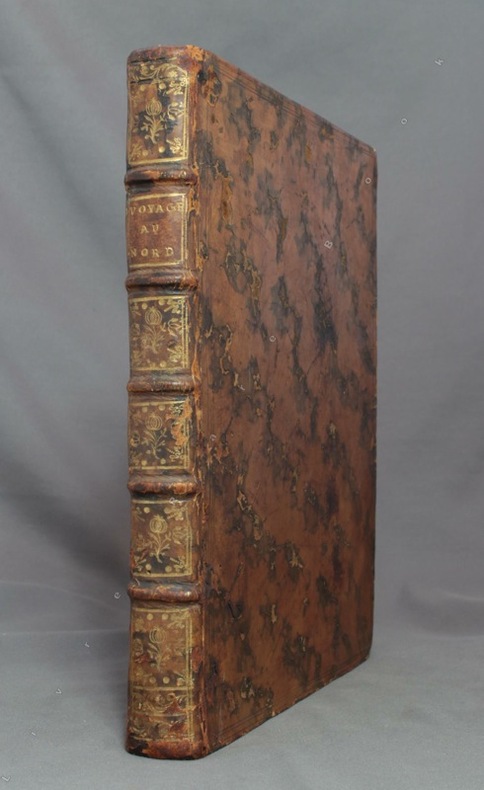
1744réf. 8781Paris, Piget; Durand, 1744. In-4 de [8]-238-[2] pages, plein veau marbré brun, dos à nerfs orné de filets et fleurons dorés, pièce de titre brune, tranches rouges.
réf. 2512290007Gay Power Incorporated NY Joel Fabricant 1970. First Edition. Paperback. Good. Robert Mapplethorpe's earliest published photograph the iconic 'Bull's Eye' Illustrated Cover: Rare Early Newspaper from the Gay Liberation Post-Stonewall Era 10 issues. Marginal cover tears. Softcover. Clean unmarked pages. Issues includes: 6 7 8 9 11 12 13 14 15 16 18. No 6 cover features a cover photo of Warhol superstar Jackie Curtis by Leee Black Childers. No. 13's cover has a drawing by Tom of Finland. Robert Mapplethorpe received his first camera in 1970 and was enrolled as a student at the Pratt Institute of Design studying graphic art when he made the collage entitled "Bull's Eye" reproduced on the cover of issue 16. "Variety is the spice of life and Gay Power is by and for all people." - Gay Power's mission statement. New York City's first post-Stonewall gay newspaper had a brief run covering the city's gay culture and politics. "During its run of 24 issues Gay Power was known for its striking covers with psychedelic art and contemporary photography including one by Robert Mapplethorpe current accounts of gay activism sexual photographs and drawings and regular columns by such contributors as Arthur Bell Charles Ludlam Pudgy Roberts Bill Vehr Pat Maxwell and Clayton Cole. Writer actor and performer Taylor Mead wrote a total of 15 columns for the publication. It also included columns by New York-based activist groups such as the Mattachine Society and the newly formed Gay Liberation Front and illustrations by Touka Laaksonen better known as Tom of Finland." - NYC LGBTQ Historic Sites Project. Gay Power Incorporated, NY, Joel Fabricant paperback
1881réf. 29268Paris, G. Masson, 1881. Un vol. au format in-folio (473 x 338 mm) de 1 f. bl., 2 ff. n. fol., [34] photographies et 1 f. bl. Reliure moderne de demi-cartonnage gris-perle à l'imitation de chagrin, dos lisse orné de triples filets dorés et en noir, pièce de titre de maroquin marine, titre doré.