1926réf. List3141Quincy Massachusetts: unpublished 1926. 201 pp cardstock wraps. Normal wear to wraps; overall Near Fine. Alice Brackett White Coolidge 1864–1927 was a Boston socialite of the prominent Richardson family; her grandfather was merchant and Massachusetts State Legislator Jeffrey Richardson. Coolidge was also the author of three children’s books: The Bunnies of Evergreen Village 1917 The Refugees in Evergreen Village 1918 and Evergreen Village to the Rescue 1922. Offered here is Coolidge’s unpublished memoir of her early life written in 1926 titled My Early Reminiscences. The memoir recalls Coolidge’s childhood and teen years spent mainly in Massachusetts New Hampshire and Maine. Her recollections typically involve extensive descriptions of the houses at which her family stayed the scenery around them and the various families they met and visited with. Given her position in society her acquaintances are sometimes quite influential people: Princeton president John Grier Hibben enjoys Coolidge’s fishcakes; Trinity Church rector Phillips Brooks gives her grandfather an “excellent pew” in the newly-finished church; pioneering doctor Alfred Worcester mistakes red pepper for mercury in a scientific demonstration at her school; and she recalls brief correspondences with John Greenleaf Whittier and William James. Coolidge also took dance lessons from Augustus Papanti whom she describes as “one of the thinnest men I ever saw” who was “very melancholy. I hardly remember his ever smiling”; and remembers Judge Charles Devens for “his great stature his charming face his courtliness of manner and his really boyish simplicity in entering into our evening games” including a game of “mind reading” which Devens played “with zest.” One of her longtime friends was Rear Admiral John E. Pillsbury. She recalls: “Mr. Pillsbury as a young naval man a brother-in-law of my uncle Dr. Richardson used to take me out in the swan-boats on the Public Garden Pond. Later he went through all the ranks up to being retired as a Rear Admiral but time and circumstances never changed him. We always met at Thanksgiving and Christmas dinners and always talked at great length. . He was a wonderfully interesting lovable man and very modest and unassuming and shy. I always considered him one of my best friends though older by many years than I.” Another interesting New England figure Coolidge encountered was Joseph Lee. She describes Lee’s hotel in Newton: “The house where we stayed was kept by a remarkable man named Joseph Lee. He was a mulatto much above many of his kind and his wife was a handsome woman partly Indian. They did the cooking and he waited on table with a colored maid to help him. In fact there were no white women in the house. The cooking was delicious.” Lee was born enslaved in South Carolina freed in 1865 and went on to invent the automatic bread kneading and bread crumbing machines. Though nearly all of her childhood was spent in New England she also remembers being invited to visit Charles Joseph Bonaparte in Baltimore: “We had never been so far south except to Washington and I felt a curious feeling of being in a different atmosphere from any I had known. . We were met at the station by Mrs. Bonaparte in a large roomy covered vehicle with two horses. The coachman and footman were in the Bonaparte colors -- a deep wine color. The footman I well remember. He was a light-colored young negro very handsome and smiling and excited over having young ladies from the North. . All the servants were colored and lived in cabins near the house. . I never knew Mr. Bonaparte in public life so my memories of him are quite intimate and I fancy I saw much of his real self. . His mind was very active. He used to talk or listen as he walked and he moved his head in a curious way from one side to the other with a slightly rolling motion which was distinctly individual. . I never saw him irritated or excited and he was always very simple. In the group picture we had taken at the Maplewood he sat down cross-legged on the piazza floor like a boy. That was in about 1887. I suppose in public life or in law he was different but he was very equable and charming as we met him in his home and at the mountains. Most of all I admired his sweet tender ways with his flower-like wife.” This was not too long after the end of Reconstruction and Coolidge remarks on the tense atmosphere: “Mrs. Bonaparte had warned me to be careful about questions regarding the North and South as the ‘feeling’ had not yet died away. I was so glad she had warned me. A gentleman slipped in and sat down beside me to watch a parade and whispered in my ear as the bands had been playing ‘Dixie’ how glad he was to meet a Northerner. I was glad to meet him too although I remember neither his name nor face but I felt I breathed freer in his sympathetic locality. . I had no idea that this feeling still remained as far North as Baltimore and of course I remembered how our Massachusetts troops had been fired upon in Baltimore at the outset of the war but I was admonished and very wise and only returned my unremembered neighbor’s greeting with a sympathetic word and look.” Besides individuals Coolidge does cover a few historical events including the Great Boston Fire of 1872: “Oh! a horrible sight met our eyes. Back of the opposite houses in Park Square was a background of sheets of red flames and heavy black smoke rising high into the air. . On the Parade Ground all was in confusion and the sight was very sad and never-to-be-forgotten. It was literally covered with boxes and bales of furniture and sad forlorn desperate looking people crouching or sitting or standing amidst what they had saved from their homes . At night . the whole city was in darkness as there was no gas.” The family also frequently stayed at hotels in the White Mountains of New Hampshire and Coolidge recalls the “overwhelmingly tragic” effects of the 1867 sale of this land to logging companies; she writes that looking out from the Flume House in Franconia “all about were brown scarred places marking the woodchoppers’ work which was cutting away our beautiful trees for lumber”. In this memoir Coolidge supplies detailed remembrances of the private personalities of influential figures of Gilded Age New England. We find two copies of My Early Reminiscences on OCLC. Of interest to historians of the era especially as told through the perspective of a young woman. unpublished unknown
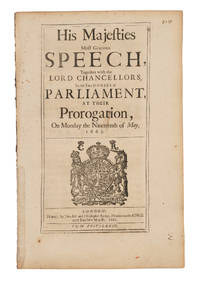
1662réf. 751521662. Charles II and the Earl of Clarendon Address the Cavalier Parliament Charles II 1630-1685 King of England. Hyde Edward 1st Earl of Clarendon. His Majesties Most Gracious Speech Together with the Lord Chancellors To the Two Houses of Parliament At their Prorogation On Monday the Nineteenth of May 1662. London: Printed by John Bill and Christopher Barker 1662. 23 1 pp. Folio 10-3/4" x 7". Disbound stab-stitched pamphlet. Moderate toning light foxing leaves separating but secure first leaf reinforced at gutter on recto handwritten folio numbers in ink to upper right corners. $650. Only edition. Delivered at the end of the first session of the Cavalier Parliament this speech followed the passage of many acts consolidating the king's power and restricting religious freedom including the Corporation Act the Act of Uniformity and the Quaker Act. Charles II's speech primarily focuses on the "Affection and Kindness" of Parliament in awarding him generous revenue while the longer speech of Edward Hyde cites Machiavelli "an Author much studied of late in this Kingdom" in a warning to listeners against being complacent during peacetime. English Short-Title Catalogue R16202. unknown
1628réf. 1354293London: Bonham Norton and John Bill 1628. Presumed First. Hardcover. Small Quarto 5.75 in x 7.5 in; VG; Bound in modern marbled boards; Text block with only the slightest age-toning; 4 45 1 pages. RW Consignment. 1354293. Special Collections - Downstairs. Bonham Norton and John Bill hardcover
1902réf. 408491Cambridge: Harvard Illustrated Magazine 1902. Unbound. Near Fine. Broadside. Measuring 8" x 14". Printed in red and yellow on thin card stock. Modest age-toning and three tiny tack holes near fine. Decorated with a very attractive illustration of the Egyptian goddess Isis with wings spread over the word "Jan." presumably indicating the January issue. The illustration is signed in print "George Allan England '02" along with two Chinese characters. England attended Harvard University where he received Bachelor of Arts and Master of Arts degrees. However he is better known as a socialist politician and writer; he was the author of several books of speculative fiction and science fiction as well as collections of detective stories. His story "The Thing from - 'Outside'" appeared in the first issue of the first science fiction magazine Amazing Stories. In his day he was considered one of the closest rivals to Edgar Rice Burroughs. This advertising poster exhibiting his artistic skill is presumably very uncommon. Harvard Illustrated Magazine unknown
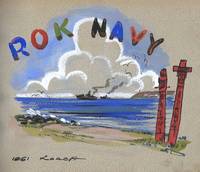
1961réf. 41436np 1961. Near fine. Album belonging to Sergeant John A. England United States Army from his 1960 trans-Pacific cruise aboard the U.S.N.S. General Edwin D. Patrick a WWII-era transport ship based out of San Francisco. A contingent from the Republic of Korea Navy was aboard and the album focuses heavily on the Korean sailors and their interactions with American servicemen. A brilliant hand-painted title illustration in acrylic titled 'ROK NAVY' and two additional vignette works in the same medium illuminate the album. The images are clear and well composed creating a significant record of U.S.-Korean relations and of the Edwin D. Patrick which was the longest surviving of the P2 carriers in the U.S. fleet launched in 1945 decommissioned in 1968 and sent to scrap in 2010. Hardcover. Oblong folio commercial album measuring approximately 10.5" x 14.5". Green faux-leather covered boards string bound. 24 card leaves 21 with 77 black and white snapshot photographs each measuring approximately 5" x 3.5" recto mounted loosely in corners. Final 3 leaves blank an additional 3 photographs laid-in; 80 prints total. Hand-painted title illustration to first endpaper two vignette scenes on first and fourth leaves. Mild edge wear to album exterior otherwise generally near fine. unknown
1863réf. 37487Boston 1863. Folio broadside 9-1/4" x 13-1/2". Printed beneath the caption in three columns each column separated by a rule. Blank upper left corner with a slight smudge. Very Good plus. The Society founded in 1863 published numerous articles supporting the Union emancipation and victory. Its folio broadsides are far scarcer than the octavo imprints of the Loyal Publication Society in Philadelphia. The first of several articles reports on the stunning election results in Pennsylvania and Ohio: "The people of this country-- the great democratic masses-- without regard to parties or prejudices are determined to maintain their government in all its integrity and strength. Both the peace men of the North and the war men of the South received a stunning blow yesterday." In Ohio the traitor Vallandigham "has been beaten by an unprecedented majority." And in Pennsylvania the Copperhead Woodward has been repudiated. Another article expresses hope that the small farmers of the South and "are thoroughly tired of the war." The final article reports on Kentucky's Joseph Holt's advocacy of the use of Negro soldiers. Sabin 52696 reference. unknown
1688réf. 758771688. A Call to Allow "Willing and Able" Protestants to Hold Public Office William III 1650-1702 King of England. His Majesties Most Gracious Speech to Both Houses of Parliament On Saturday the Sixteenth of March 1688. London: Printed by Charles Bill and Thomas Newcomb 1688 i.e. 1689. 4 pp. Folio 10-3/4" x 6-3/4". Disbound bifolium pamphlet. Light toning leaves nearly separated faint dampstain to bottom margin. $650. Only edition one of two issues. A request by William III that Parliament might "leave Room for the Admission of all Protestants that are willing and able to Serve" in public office while continuing to "sufficiently Provide against Papists." This ultimately resulted in the Act of Toleration which allowed certain groups of nonconformist Protestants freedom of worship but continued to exclude dissenters and Roman Catholics from public office. English Short-Title Catalogue R507163. unknown
1926réf. List3141Quincy Massachusetts: unpublished 1926. 201 pp cardstock wraps. Normal wear to wraps; overall Near Fine. Alice Brackett White Coolidge 1864–1927 was a Boston socialite of the prominent Richardson family; her grandfather was merchant and Massachusetts State Legislator Jeffrey Richardson. Coolidge was also the author of three children’s books: The Bunnies of Evergreen Village 1917 The Refugees in Evergreen Village 1918 and Evergreen Village to the Rescue 1922. Offered here is Coolidge’s unpublished memoir of her early life written in 1926 titled My Early Reminiscences. The memoir recalls Coolidge’s childhood and teen years spent mainly in Massachusetts New Hampshire and Maine. Her recollections typically involve extensive descriptions of the houses at which her family stayed the scenery around them and the various families they met and visited with. Given her position in society her acquaintances are sometimes quite influential people: Princeton president John Grier Hibben enjoys Coolidge’s fishcakes; Trinity Church rector Phillips Brooks gives her grandfather an “excellent pew” in the newly-finished church; pioneering doctor Alfred Worcester mistakes red pepper for mercury in a scientific demonstration at her school; and she recalls brief correspondences with John Greenleaf Whittier and William James. Coolidge also took dance lessons from Augustus Papanti whom she describes as “one of the thinnest men I ever saw” who was “very melancholy. I hardly remember his ever smiling”; and remembers Judge Charles Devens for “his great stature his charming face his courtliness of manner and his really boyish simplicity in entering into our evening games” including a game of “mind reading” which Devens played “with zest.” One of her longtime friends was Rear Admiral John E. Pillsbury. She recalls: “Mr. Pillsbury as a young naval man a brother-in-law of my uncle Dr. Richardson used to take me out in the swan-boats on the Public Garden Pond. Later he went through all the ranks up to being retired as a Rear Admiral but time and circumstances never changed him. We always met at Thanksgiving and Christmas dinners and always talked at great length. . He was a wonderfully interesting lovable man and very modest and unassuming and shy. I always considered him one of my best friends though older by many years than I.” Another interesting New England figure Coolidge encountered was Joseph Lee. She describes Lee’s hotel in Newton: “The house where we stayed was kept by a remarkable man named Joseph Lee. He was a mulatto much above many of his kind and his wife was a handsome woman partly Indian. They did the cooking and he waited on table with a colored maid to help him. In fact there were no white women in the house. The cooking was delicious.” Lee was born enslaved in South Carolina freed in 1865 and went on to invent the automatic bread kneading and bread crumbing machines. Though nearly all of her childhood was spent in New England she also remembers being invited to visit Charles Joseph Bonaparte in Baltimore: “We had never been so far south except to Washington and I felt a curious feeling of being in a different atmosphere from any I had known. . We were met at the station by Mrs. Bonaparte in a large roomy covered vehicle with two horses. The coachman and footman were in the Bonaparte colors -- a deep wine color. The footman I well remember. He was a light-colored young negro very handsome and smiling and excited over having young ladies from the North. . All the servants were colored and lived in cabins near the house. . I never knew Mr. Bonaparte in public life so my memories of him are quite intimate and I fancy I saw much of his real self. . His mind was very active. He used to talk or listen as he walked and he moved his head in a curious way from one side to the other with a slightly rolling motion which was distinctly individual. . I never saw him irritated or excited and he was always very simple. In the group picture we had taken at the Maplewood he sat down cross-legged on the piazza floor like a boy. That was in about 1887. I suppose in public life or in law he was different but he was very equable and charming as we met him in his home and at the mountains. Most of all I admired his sweet tender ways with his flower-like wife.” This was not too long after the end of Reconstruction and Coolidge remarks on the tense atmosphere: “Mrs. Bonaparte had warned me to be careful about questions regarding the North and South as the ‘feeling’ had not yet died away. I was so glad she had warned me. A gentleman slipped in and sat down beside me to watch a parade and whispered in my ear as the bands had been playing ‘Dixie’ how glad he was to meet a Northerner. I was glad to meet him too although I remember neither his name nor face but I felt I breathed freer in his sympathetic locality. . I had no idea that this feeling still remained as far North as Baltimore and of course I remembered how our Massachusetts troops had been fired upon in Baltimore at the outset of the war but I was admonished and very wise and only returned my unremembered neighbor’s greeting with a sympathetic word and look.” Besides individuals Coolidge does cover a few historical events including the Great Boston Fire of 1872: “Oh! a horrible sight met our eyes. Back of the opposite houses in Park Square was a background of sheets of red flames and heavy black smoke rising high into the air. . On the Parade Ground all was in confusion and the sight was very sad and never-to-be-forgotten. It was literally covered with boxes and bales of furniture and sad forlorn desperate looking people crouching or sitting or standing amidst what they had saved from their homes . At night . the whole city was in darkness as there was no gas.” The family also frequently stayed at hotels in the White Mountains of New Hampshire and Coolidge recalls the “overwhelmingly tragic” effects of the 1867 sale of this land to logging companies; she writes that looking out from the Flume House in Franconia “all about were brown scarred places marking the woodchoppers’ work which was cutting away our beautiful trees for lumber”. In this memoir Coolidge supplies detailed remembrances of the private personalities of influential figures of Gilded Age New England. We find two copies of My Early Reminiscences on OCLC. Of interest to historians of the era especially as told through the perspective of a young woman. unpublished unknown books
1662réf. 751521662. Charles II and the Earl of Clarendon Address the Cavalier Parliament Charles II 1630-1685 King of England. Hyde Edward 1st Earl of Clarendon. His Majesties Most Gracious Speech Together with the Lord Chancellors To the Two Houses of Parliament At their Prorogation On Monday the Nineteenth of May 1662. London: Printed by John Bill and Christopher Barker 1662. 23 1 pp. Folio 10-3/4" x 7". Disbound stab-stitched pamphlet. Moderate toning light foxing leaves separating but secure first leaf reinforced at gutter on recto handwritten folio numbers in ink to upper right corners. $650. Only edition. Delivered at the end of the first session of the Cavalier Parliament this speech followed the passage of many acts consolidating the king's power and restricting religious freedom including the Corporation Act the Act of Uniformity and the Quaker Act. Charles II's speech primarily focuses on the "Affection and Kindness" of Parliament in awarding him generous revenue while the longer speech of Edward Hyde cites Machiavelli "an Author much studied of late in this Kingdom" in a warning to listeners against being complacent during peacetime. English Short-Title Catalogue R16202. unknown books
1628réf. 1354293London: Bonham Norton and John Bill 1628. Presumed First. Hardcover. Small Quarto 5.75 in x 7.5 in; VG; Bound in modern marbled boards; Text block with only the slightest age-toning; 4 45 1 pages. RW Consignment. 1354293. Special Collections - Downstairs. Bonham Norton and John Bill hardcover books
1902réf. 408491Cambridge: Harvard Illustrated Magazine 1902. Unbound. Near Fine. Broadside. Measuring 8" x 14". Printed in red and yellow on thin card stock. Modest age-toning and three tiny tack holes near fine. Decorated with a very attractive illustration of the Egyptian goddess Isis with wings spread over the word "Jan." presumably indicating the January issue. The illustration is signed in print "George Allan England '02" along with two Chinese characters. England attended Harvard University where he received Bachelor of Arts and Master of Arts degrees. However he is better known as a socialist politician and writer; he was the author of several books of speculative fiction and science fiction as well as collections of detective stories. His story "The Thing from - 'Outside'" appeared in the first issue of the first science fiction magazine Amazing Stories. In his day he was considered one of the closest rivals to Edgar Rice Burroughs. This advertising poster exhibiting his artistic skill is presumably very uncommon. Harvard Illustrated Magazine unknown books
1961réf. 41436np 1961. Near fine. Album belonging to Sergeant John A. England United States Army from his 1960 trans-Pacific cruise aboard the U.S.N.S. General Edwin D. Patrick a WWII-era transport ship based out of San Francisco. A contingent from the Republic of Korea Navy was aboard and the album focuses heavily on the Korean sailors and their interactions with American servicemen. A brilliant hand-painted title illustration in acrylic titled 'ROK NAVY' and two additional vignette works in the same medium illuminate the album. The images are clear and well composed creating a significant record of U.S.-Korean relations and of the Edwin D. Patrick which was the longest surviving of the P2 carriers in the U.S. fleet launched in 1945 decommissioned in 1968 and sent to scrap in 2010. Hardcover. Oblong folio commercial album measuring approximately 10.5" x 14.5". Green faux-leather covered boards string bound. 24 card leaves 21 with 77 black and white snapshot photographs each measuring approximately 5" x 3.5" recto mounted loosely in corners. Final 3 leaves blank an additional 3 photographs laid-in; 80 prints total. Hand-painted title illustration to first endpaper two vignette scenes on first and fourth leaves. Mild edge wear to album exterior otherwise generally near fine. unknown books
1863réf. 37487Boston 1863. Folio broadside 9-1/4" x 13-1/2". Printed beneath the caption in three columns each column separated by a rule. Blank upper left corner with a slight smudge. Very Good plus. The Society founded in 1863 published numerous articles supporting the Union emancipation and victory. Its folio broadsides are far scarcer than the octavo imprints of the Loyal Publication Society in Philadelphia. The first of several articles reports on the stunning election results in Pennsylvania and Ohio: "The people of this country-- the great democratic masses-- without regard to parties or prejudices are determined to maintain their government in all its integrity and strength. Both the peace men of the North and the war men of the South received a stunning blow yesterday." In Ohio the traitor Vallandigham "has been beaten by an unprecedented majority." And in Pennsylvania the Copperhead Woodward has been repudiated. Another article expresses hope that the small farmers of the South and "are thoroughly tired of the war." The final article reports on Kentucky's Joseph Holt's advocacy of the use of Negro soldiers. Sabin 52696 reference. unknown books
1688réf. 758771688. A Call to Allow "Willing and Able" Protestants to Hold Public Office William III 1650-1702 King of England. His Majesties Most Gracious Speech to Both Houses of Parliament On Saturday the Sixteenth of March 1688. London: Printed by Charles Bill and Thomas Newcomb 1688 i.e. 1689. 4 pp. Folio 10-3/4" x 6-3/4". Disbound bifolium pamphlet. Light toning leaves nearly separated faint dampstain to bottom margin. $650. Only edition one of two issues. A request by William III that Parliament might "leave Room for the Admission of all Protestants that are willing and able to Serve" in public office while continuing to "sufficiently Provide against Papists." This ultimately resulted in the Act of Toleration which allowed certain groups of nonconformist Protestants freedom of worship but continued to exclude dissenters and Roman Catholics from public office. English Short-Title Catalogue R507163. unknown books
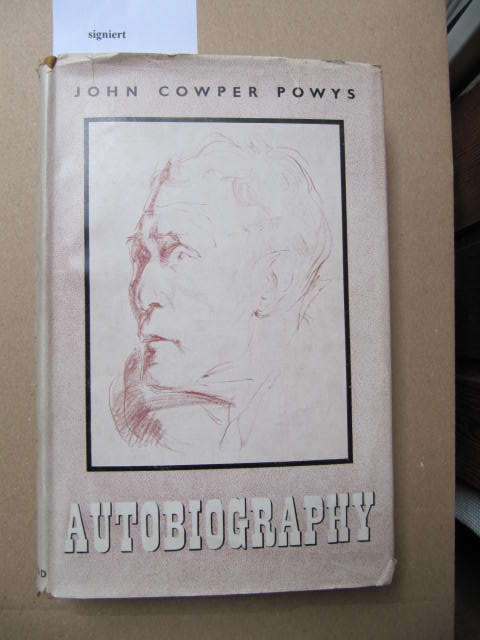
1949réf. 4920John Lane The Bodley Head, London, 1949. 652 S., OLeinen m. OU (dieser mit Randläsuren). Mit einem Porträt des Autors. 3. Auflage. Handschriftliche Widmung vom Powys: `For Rolf Italiaander from his grateful John Cowper Powys, March 28, 1956`. Darunter in der gleichen Schrift einige Zeilen in Alt-Griechisch und nochmals in Englisch. Gutes Exemplar. Good copy. With a handsigned dedication by Powys to Italiaander. Unicat.
1992réf. 40229ABBerlin, Wasmuth, 1992. 8°, XXI, 423 S. + 42 Tafelseiten, grüner original Pappband mit goldener Deckel- und Rückenbeschriftung, schönes, sauberes Exemplar.
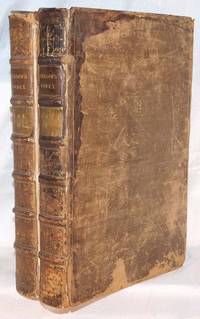
1713réf. 1503260035London : Printed by J. Baskett 1713-01-01. Hardcover. Good. Folio. 2 Volumes. iv xxxi i xxx 1-712; 665-1291 82 xcviii tables index subscribers and addenda. Bound in contemporary full leather. Gilt lettering and modern red leather spine labels. 5 raised bands. Hinges and extremities repaired. Good bindings and covers. Soiling to title page. Dampstaining occurring to first few pages of Volume I. Repair to first few pages of Vol. I. Worming occurring to margins of pages. Pages with tanning and toning. Ships daily. This is an oversized or heavy book that requires additional postage for international delivery outside of Canada and the US. London : Printed by J. Baskett hardcover
1713réf. 1203230056London : printed by J. Baskett 1713. Leather Bound. Good. Complete in two volumes. London : printed by J. Baskett; and by the assigns of Thomas Newcomb and Henry Hills deceas'd. And are to be sold by R. Whitledge 1713. Folio. 1291 pp Appendix of Instruments Tables Index. Contemporary full leather boards. Spine has 6 bands red and tan title plates intricate giltwork on spine and borders. Front board of volume 2 detached cracking to hinges binding starting. Red speckled page edges. Red and black title page in volume 1. Title page missing from volume 2. Foxing mostly around end pages. Ownership inked in classic hand on title page. This is an oversized or heavy book that requires additional postage for international delivery outside of Canada and the US. London : printed by J. Baskett hardcover
réf. 13975914-nnew. unknown
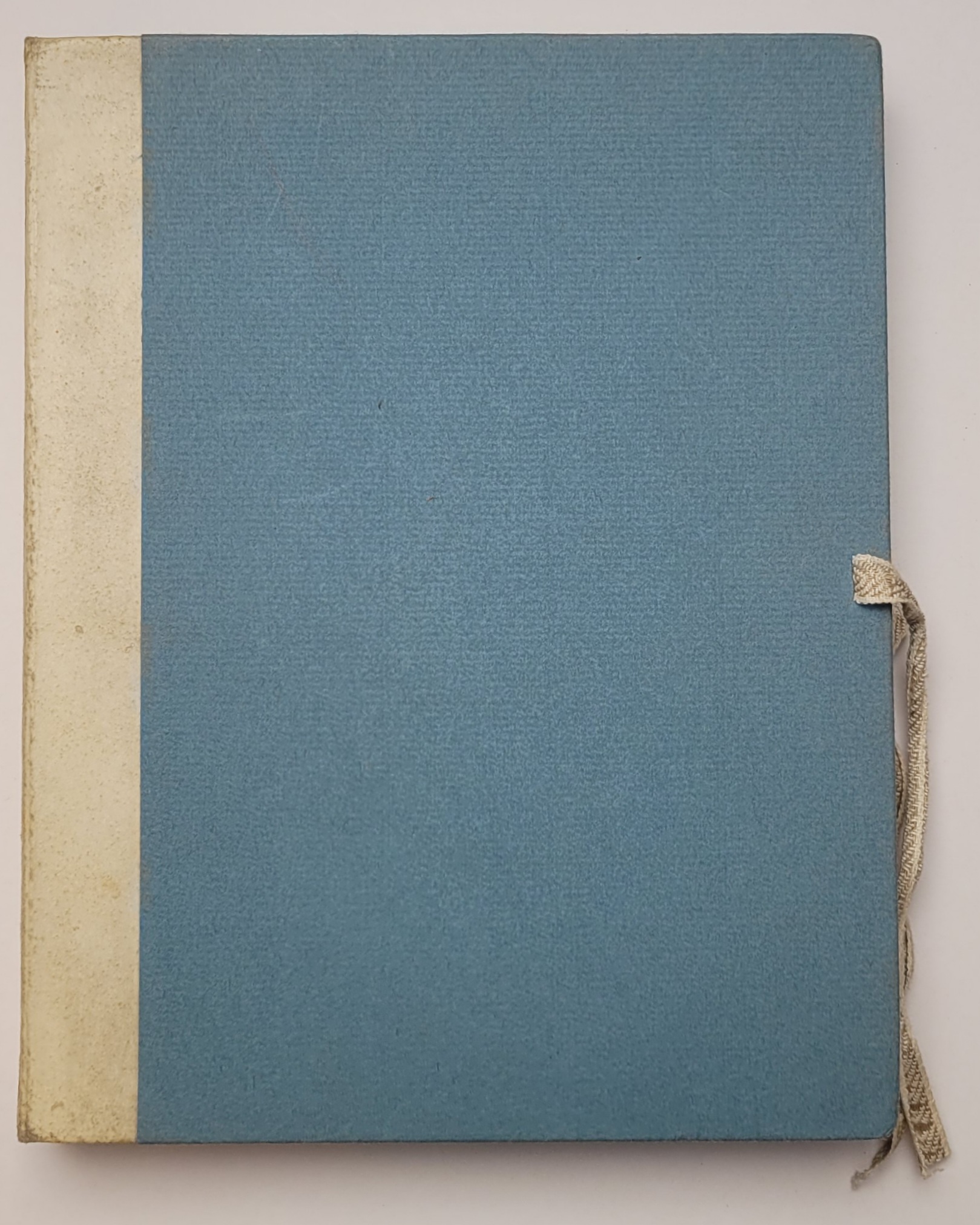
1891réf. 260291891. Elkin Mathews, London, Erste Auflage. Mit 39 Illustrationen von Walter Crane. Lose Bögen in Originalflügelmappe mit Schließbändchen in Halbpergament mit Rückenvergoldung. XIII, 162 Seiten. 24 x 18,5 cm.
1742réf. Y1343London, J. Nourse, at the lamb, wihout temple-bar, 1742. Pappband, 8°, 128 S., 1. Auflage, Doctrine of Annuities and Reversions, deduced from General and Evident Principöes with useful Tables. To which is added, a Method of investigating the Value of Annuities by Approximation, without the help of Tables. The Whole explain'd in a plain and simple Manner, and illustrated by great variety of Exemples-
1857réf. 19030Paris, Jules Tardieu - Bruxelles, E. Guyot et Stapleaux Fils & Charles Tanera 1857 In-8 relié 27,5 cm. Bon état d’occasion.
1986A clean, unmarked book with a tight binding. Very slight bump to corner of rear cover and slight wear to top page ends. Slightest discoloration to dust jacket. First Edition with the number "1" present in the number line. Inscribed by Margaret Atwood on the title page. Includes Houghton Mifflin Bookcard.
1902réf. 422381London : Issued to subscribers 1902. 1st edition. Hardcover. Fine copies in modern gilt-blocked cloth. Slightest suggestion only of dust-dulling to the panel edges. The set remains particularly well-preserved overall; tight bright clean and strong. Physical description: 31 issues bound in 7 volumes 23 cm. Contents: From volume 1 part 1 1930-1634 inclusive to volume 3 part 3 1654-1655. Subjects: Church of England. Province of Canterbury; Probate records Great Britain; Wills; Wills Great Britain Canterbury Indexes. London : Issued to subscribers hardcover
1995réf. 391277Bristol : Faculty of Art Media and Design University of the West of England 1995. 1st edition. Hardcover. Near fine cloth copy. Slightest suggestion only of dust-dulling to the spine bands and panel edges. Impressively illustrated with letterpress prints. Remains particularly well-preserved overall; tight bright clean and strong. Physical description; approximately 100 pp.: illustrations ; 40 x 57 cm. Subjects; Bestiaries. Pen drawing British. Animals Mythical in art. Bristol : Faculty of Art, Media and Design, University of the West of England hardcover