25.083 Ergebnisse
1909Boards with moderate edgewear. Light fraying to spine ends. First and last few pages browned and brittle. Hinges started. Small hole to outer spine covering; Quite scarce. Light blue boards with gilt lettering and gilt design of two castle towers. Tissue guarded watercolors by Thomas Tyndale; 8vo 8" - 9" tall; viii, 181 pages
1950Best.-Nr. 106591Leigh-on-Sea, Lewis Publ. Ltd. 1950. 1950. 4°, xvi, 193 p. and 164 b/w plates, with a colour frontispiece, clothbound.
Best.-Nr. 32529London, Nimmo (Waverley Novels Border Edition), 1898, fort in 8° relié pleine percaline verte de léditeur, LXVIII-703 pages et 46 pages de Glossary ; quelques traces dhumidité et mouillures en début et fin douvrage ; cartonnage défraichi.
1846Best.-Nr. 89883Leipzig, Verlag der Gebrüder Schumann, 1846. 642 S. 12° Duodez, Hardcover/Pappeinband
1826Best.-Nr. 16863Stuttgart, Gebrüder Franck, 1826. 12°. Mit 5 gestochenen Frontispizen. 126; 148; 148; 148; 144 S. Halblederband der Zeit mit goldgeprägten Rückenschildchen.
1816Best.-Nr. 30753London Printed by J. M'Creery, Published for the Proprietor by George Jones 1816
1971Light wear to DJ; No fewer than four hundred eighty different lesser known landmarks of Great Britain are here described and located for the intrepid traveller; B&W Illustrations; 8vo; 196 pages
[Vervolg van titel: "Vertoonende de beweeg-redenen die hem hebben gebrogt tot het verlaeten der ketterye, tot het aennemen van het habyt der Capucynen, etc. Eerst beschreven in het Italaens door den aerts-bisschop ende prince van Ferme, daer naer 't Frans door den eerw.p. Franciscus Barraut, ende nu in 't Vlaems door f. Gregorius van Brugge, capucyn predicant"], [12] + 243 + [i] pp., 16cm., contemporaine lederen band met titel in gouopdruk op rug, wat sljtage aan randen en hoekjes, wat roestplekjes, vage stempel op titelblad, goede staat, zeldzaam, cfr. Bibliogr. gantoise nr.2129, [pagina's 5 t.e.m.8 van het voorwoord zijn verkeerdelijk achteraan ingebonden], R90265
Best.-Nr. R90265Tot Brugge, by Joos Vander Meulen. Men vint-se te koopen tot Gent by Cornelis Meyer s.d. [Vervolg van titel: "Vertoonende de beweeg-redenen die hem hebben gebrogt tot het verlaeten der ketterye, tot het aennemen van het habyt der Capucynen, etc. Eerst beschreven in het Italaens door den aerts-bisschop ende prince van Ferme, daer naer 't Frans door den eerw.p. Franciscus Barraut, ende nu in 't Vlaems door f. Gregorius van Brugge, capucyn predicant"], [12] + 243 + [i] pp., 16cm., contemporaine lederen band met titel in gouopdruk op rug, wat sljtage aan randen en hoekjes, wat roestplekjes, vage stempel op titelblad, goede staat, zeldzaam, cfr. Bibliogr. gantoise nr.2129, [pagina's 5 t.e.m.8 van het voorwoord zijn verkeerdelijk achteraan ingebonden], R90265
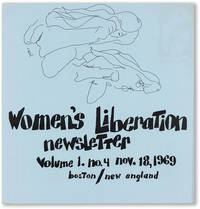
1969Best.-Nr. 46193Boston: New England Free Press 1969. First Edition. One-sheet newsletter offset printed on blue stock folded twice to create an eight-panel publication; measures 45.5cm x 43.25cm 17 15/16" x 17" when fully-opened. Hint of sunning to folds else very Near Fine. New England feminist publication printing lengthy statements from Lucia Montague and Diana Gerrity; the newsletter opens into an illustrated poster printing letters quotes poems women's lib news items and movement events. A list of suggested literature appears on rear wrapper. New England Free Press unknown books
1841Best.-Nr. 164511841. Catholic Girls' School Ugbrooke. Regulations for the Catholic Girls' School at Ugbrook 1841 a formal rule book documenting the provision and governance of Catholic education for girls from working and dependent families associated with the Ugbrooke estate in Devon. Founded in 1824 by Lady Clifford the school was principally financed by Lord Clifford with teachers reporting directly to him; surviving research indicates that tuition was effectively free for families unable to contribute and that Lord Clifford also provided medical attention and clothing for pupils. The 1841 regulations define this educational system more precisely stating that the school was intended "solely for the education of the female children" of present or former tenants servants and laborers of the Clifford family as well as tradesmen employed by the family. As such the pamphlet provides primary-source evidence for the study of girls' education Catholic schooling estate paternalism class and the institutional regulation of female childhood in early Victorian England. Catholic Girls' School Ugbrooke. Regulations for the Catholic Girls' School at Ugbrook. Chudleigh: J. E. Searle 1841. First edition. 8 2 pages. 8vo. The regulations were approved by the Right Reverend Vicar Apostolic of the Western District of England for the Catholic Girls' School at Ugbrooke Devon which was placed under the protection of the Blessed Virgin Mary and St. Joseph; the rules are dated March 25 1841. The pamphlet establishes who qualified for admission and records the formal ecclesiastical and estate framework governing the school demonstrating how educational access for girls was organized through relationships among the Catholic Church the Clifford household estate employees and their families. Ugbrooke itself had a particularly longstanding Catholic identity: the Clifford family's chapel was rededicated for Catholic worship in 1673 and Mass continued there through the period in which the girls' school operated. The regulations appeared well before universal elementary education in Britain and document a localized model in which girls from tenant servant laboring and tradesmen's families received schooling through the patronage of a Catholic landed family. The school's adoption of Joseph Lancaster's teaching system further places it within contemporary experiments in economical mass elementary instruction while its governance remained distinctly tied to the Clifford estate and Catholic religious authority. Earlier bibliographic cataloging located only two institutional copies at Emory University and the National Library of Australia although institutional holdings can change and this should not be treated as a definitive current census. No specific physical defects are supplied; overall very good. A focused primary source showing how class gender religion and estate patronage shaped access to formal education for girls in early Victorian Devon. unknown books
1903Best.-Nr. 180101903. Association of Head Mistresses. List of Public Secondary Schools for Girls 1903 and 1905 records the geographic extent of secondary schooling available to girls in Britain during the early twentieth-century expansion of women's education. Founded in 1874 by Frances Mary Buss and other headmistresses of endowed and proprietary schools the Association developed from efforts to improve the standards and institutional position of girls' secondary education. These two successive lists arrange schools by county providing contemporary evidence of where public secondary education for girls was available and allowing comparison across localities and between the two publication years. Their dates follow three decades in which girls gained broader access to academically oriented schools and universities although educational equality remained contested; in 1897 Cambridge rejected a proposal granting women the titles of degrees followed by riotous celebrations by male undergraduates. Women were not admitted to full membership of Cambridge until 1948. Two pamphlets issued by the Association of Head Mistresses dated 1903 and 1905 each measuring 8.5 x 5.5 inches. Soft blue covers are printed "One Shilling Published by the Educational Supply Association 42 Holborn Viaduct E.C." Entries within each pamphlet are organized by county and identify public secondary schools open to girls at the time of publication. The format turns the changing institutional landscape of girls' education into a contemporary directory recording individual schools by place rather than describing educational reform retrospectively. Both front covers bear stamps reading "Board of Education Library" and "Supplied Public Service" each incorporating the royal crown; the back covers retain red "Board of Education Reference Library" stickers. These official library markings document their presence within a government educational reference collection. 1 Association of Head Mistresses. List of Public Secondary Schools for Girls. London: Educational Supply Association 1903. Arranged geographically by county the pamphlet enumerates secondary schools then available to girls and provides a contemporary reference point for the distribution of female secondary education at the beginning of the Edwardian period. Its Board of Education Library markings also preserve evidence of institutional reference use. 2 Association of Head Mistresses. List of Public Secondary Schools for Girls. London: Educational Supply Association 1905. Issued two years after the first pamphlet this updated county-by-county listing permits direct comparison of the provision of girls' secondary schools between 1903 and 1905. The directory appeared during the continuing expansion of educational opportunities that connected secondary schooling with women's increasing access to higher education; the University of London had begun awarding degrees to women on equal terms with men in 1878 while access elsewhere remained uneven. Textblocks tight bright and clean. Both pamphlets overall very good condition. The consecutive editions preserve a measurable record of girls' secondary education by county at a time when women educators and school leaders were establishing institutions capable of preparing girls for examinations professional training and higher education. unknown books
1841Best.-Nr. 164511841. Catholic Girls' School Ugbrooke. Regulations for the Catholic Girls' School at Ugbrook 1841 a formal rule book documenting the provision and governance of Catholic education for girls from working and dependent families associated with the Ugbrooke estate in Devon. Founded in 1824 by Lady Clifford the school was principally financed by Lord Clifford with teachers reporting directly to him; surviving research indicates that tuition was effectively free for families unable to contribute and that Lord Clifford also provided medical attention and clothing for pupils. The 1841 regulations define this educational system more precisely stating that the school was intended "solely for the education of the female children" of present or former tenants servants and laborers of the Clifford family as well as tradesmen employed by the family. As such the pamphlet provides primary-source evidence for the study of girls' education Catholic schooling estate paternalism class and the institutional regulation of female childhood in early Victorian England. Catholic Girls' School Ugbrooke. Regulations for the Catholic Girls' School at Ugbrook. Chudleigh: J. E. Searle 1841. First edition. 8 2 pages. 8vo. The regulations were approved by the Right Reverend Vicar Apostolic of the Western District of England for the Catholic Girls' School at Ugbrooke Devon which was placed under the protection of the Blessed Virgin Mary and St. Joseph; the rules are dated March 25 1841. The pamphlet establishes who qualified for admission and records the formal ecclesiastical and estate framework governing the school demonstrating how educational access for girls was organized through relationships among the Catholic Church the Clifford household estate employees and their families. Ugbrooke itself had a particularly longstanding Catholic identity: the Clifford family's chapel was rededicated for Catholic worship in 1673 and Mass continued there through the period in which the girls' school operated. The regulations appeared well before universal elementary education in Britain and document a localized model in which girls from tenant servant laboring and tradesmen's families received schooling through the patronage of a Catholic landed family. The school's adoption of Joseph Lancaster's teaching system further places it within contemporary experiments in economical mass elementary instruction while its governance remained distinctly tied to the Clifford estate and Catholic religious authority. Earlier bibliographic cataloging located only two institutional copies at Emory University and the National Library of Australia although institutional holdings can change and this should not be treated as a definitive current census. No specific physical defects are supplied; overall very good. A focused primary source showing how class gender religion and estate patronage shaped access to formal education for girls in early Victorian Devon. unknown
1903Best.-Nr. 180101903. Association of Head Mistresses. List of Public Secondary Schools for Girls 1903 and 1905 records the geographic extent of secondary schooling available to girls in Britain during the early twentieth-century expansion of women's education. Founded in 1874 by Frances Mary Buss and other headmistresses of endowed and proprietary schools the Association developed from efforts to improve the standards and institutional position of girls' secondary education. These two successive lists arrange schools by county providing contemporary evidence of where public secondary education for girls was available and allowing comparison across localities and between the two publication years. Their dates follow three decades in which girls gained broader access to academically oriented schools and universities although educational equality remained contested; in 1897 Cambridge rejected a proposal granting women the titles of degrees followed by riotous celebrations by male undergraduates. Women were not admitted to full membership of Cambridge until 1948. Two pamphlets issued by the Association of Head Mistresses dated 1903 and 1905 each measuring 8.5 x 5.5 inches. Soft blue covers are printed "One Shilling Published by the Educational Supply Association 42 Holborn Viaduct E.C." Entries within each pamphlet are organized by county and identify public secondary schools open to girls at the time of publication. The format turns the changing institutional landscape of girls' education into a contemporary directory recording individual schools by place rather than describing educational reform retrospectively. Both front covers bear stamps reading "Board of Education Library" and "Supplied Public Service" each incorporating the royal crown; the back covers retain red "Board of Education Reference Library" stickers. These official library markings document their presence within a government educational reference collection. 1 Association of Head Mistresses. List of Public Secondary Schools for Girls. London: Educational Supply Association 1903. Arranged geographically by county the pamphlet enumerates secondary schools then available to girls and provides a contemporary reference point for the distribution of female secondary education at the beginning of the Edwardian period. Its Board of Education Library markings also preserve evidence of institutional reference use. 2 Association of Head Mistresses. List of Public Secondary Schools for Girls. London: Educational Supply Association 1905. Issued two years after the first pamphlet this updated county-by-county listing permits direct comparison of the provision of girls' secondary schools between 1903 and 1905. The directory appeared during the continuing expansion of educational opportunities that connected secondary schooling with women's increasing access to higher education; the University of London had begun awarding degrees to women on equal terms with men in 1878 while access elsewhere remained uneven. Textblocks tight bright and clean. Both pamphlets overall very good condition. The consecutive editions preserve a measurable record of girls' secondary education by county at a time when women educators and school leaders were establishing institutions capable of preparing girls for examinations professional training and higher education. unknown
196818x11. 540p. Lomo algo rozado.
1979Best.-Nr. 18082ABNew York, Pantheon, 1979. 30 : 21 cm. 232 pages with many b/w illustrations. Coloured illustrated original boards.
1999Best.-Nr. V7604Bergisch Gladbach (Bastei Lübbe) 1999 (= Bastei 12959, Erste Ausgabe). 8°, illustrierte Originalbroschur (TB), 346 S.,
1995Best.-Nr. V8940Reinbek (Rowohlt) 1995 (= rororo 12937, Erste deutsche Ausgabe). 8°, illustrierte Originalbroschur (TB), 318 S.,
2000Best.-Nr. 472232000 Fort in-8 reliure toile rouge éditeur - 2000 - 724 pages - Ed. Librairie Droz S. A. Genève - coll. Travaux d'Humanisme et Renaissance N° CCCXLIII
1989Best.-Nr. 63626Hildesheim: Gerstenberg 1989. 159 S.: überwiegend Ill.; 29 cm Pappe 0
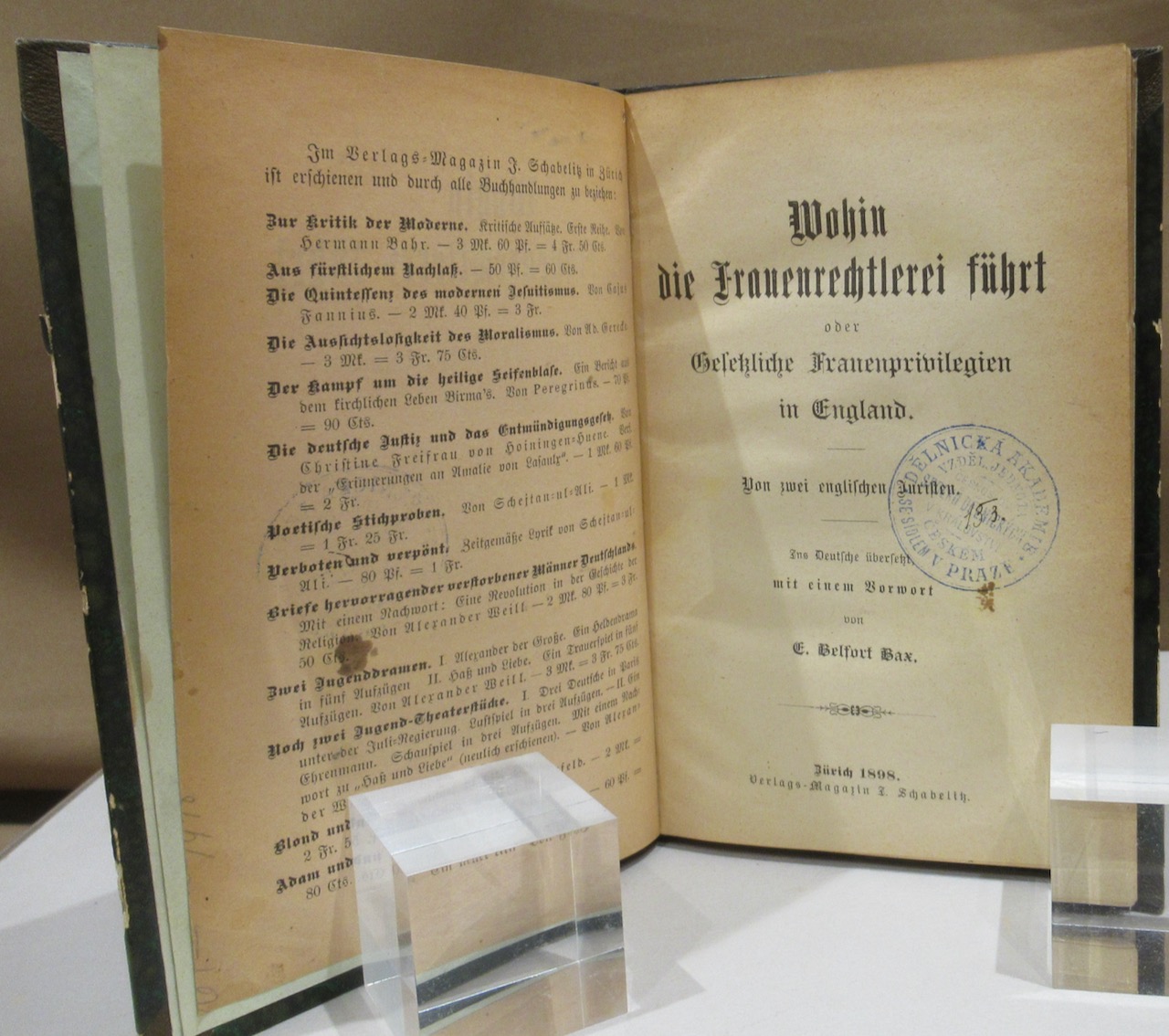
1898Best.-Nr. 97483Zürich, Schabelitz 1898. 1898. 102 S., 2 Bll. Verlagsanzeigen, Bibliotheks- Halbleinenband.
Best.-Nr. 23432Eltville am Rhein, Lothar Hempe 1954, 235x165mm, 97Seiten, Verlegereinband. 23/500. cachet de bibliothèque. Schönes Exemplar.
1847Best.-Nr. 030908Stuttgart., Verlag: Die Expedition der Wochenbände., 1847. Enthält: Die Menagerie der Tiere oder Beschreibung und Abbildung der vierfüßigen Thiere nach lebendigen Exemplaren. Nach der zweiten Auflage aus dem Englischen übersetzt von Wm. Drugulin. Vierter Band: Naturgeschichte der Affen, Meerkatzen und Paviane. 234S. Mit 20 Illustrationen (Holzschnitten) im Text.; Das Leben des Kapitain Cook. Aus dem Englischen von Theodor Roth. 40S. ; Die Geschichte des Sklavenhandels. Aus dem Englischen von Theodor Roth. 40S.; Die Camisarden. Aus dem Englischen von Theodor Roth. 39S.; Die große Pest in London. Aus dem Englischen von Theodor Roth. 40S.; Die Schätze des Erdreichs. Aus dem Englischen von Franz Kottenkamp. 36S. ; Der Schiffbruch in der Geschichte des Untergangs der Medusa geschildert. Aus dem Englischen von Franz Kottenkamp. 38S.; Der Sklavenhandel Amerika's. Aus dem Englischen von Theodor Roth.43S. ; Die Fähigkeiten der Tauben, Stummen und Blinden. Aus dem Englischen von Franz Kottenkamp. 38S.; Die Mauren in Spanien. Aus dem Englischen von Franz Kottenkamp. 36S.; Die Hindus und ihr Aberglaube. Aus dem Englischen von Franz Kottenkamp. 36S.; Die berühmtesten Bauwerke. Aus dem Englischen von Franz Kottenkamp. 39S. ; Die Wunder der Pflanzenwelt. Aus dem Englischen von Franz Kottenkamp.40S.; Die Wunder der Ameisenwelt. Aus dem Englischen von Franz Kottenkamp. 40S. ; Teilweise enthalten die Texte kleine Holzschnitte. Zustand: Einbandkanten bestoßen, Hinterer Vorsatz mit Eintragungen (Inhaltsverzeichnis , Tinteneinträge). Seitenränder leicht braunfleckig. Kl.-8°. Pappband.
2001Book is in excellent condition. Binding is solid and square, covers have sharp corners, exterior shows no blemishes, text/interior is clean and free of marking of any kind. Dust jacket shows the slightest signs of shelf wear only, no tears.
1987No inscriptions or marks to contents. No creasing to covers or to spine. A very clean crisp very tight copy with bright covers, tiny mark to top edge and no bumping to corners. 160pp. From the author's personal collection of old photographs of Witney in Oxfordshire including buildings, streets, industry, markets, war, military, leisure, businesses, people, fashions, sporting groups and transport from the mid-nineteenth century onwards.