26.518 resultados
1815ref. 181981815. Church of England The Cottager's Wife. Written by a clergyman of the Church of England. New England Tract Society: New York 1815. Tract number 63. First edition. 24 pages. 4.25 x 7 inches. Paper wrappers with illustration on cover showing a minister kneeling at the bedside of a woman in nightcap both of their hands clasped in prayer. Text beneath reads "At her earnest request I now prayed with her." The story of a minister's work with one parishioner this text captures the scope of service for ministers of the Church of England in the early 19th century. Foxing throughout and back wrapper detached. Overall in good condition. unknown books
1835ref. 177521835. Garrison William Lloyd associated. Third Annual Report of the Board of Managers of the New England Anti Slavery Society 1835 an early institutional document of organized abolitionism that records the structure leadership and expanding influence of the New England Anti Slavery Society during a formative stage of the movement. Issued four years after the Society's founding in 1831 under the leadership of William Lloyd Garrison editor of The Liberator the report documents the transition from localized reform efforts to a coordinated national campaign through affiliated societies. The text situates abolition as a moral and political imperative asserting the rapid growth of antislavery sentiment and anticipating legislative abolition. Garrison and Knapp. Third Annual Report of the Board of Managers of the New England Anti Slavery Society. Boston: Garrison and Knapp 1835. First edition. Pamphlet. The report includes the Society's constitution lists of officers detailed subscription and donation records and a treasurer's report alongside rosters of life and honorary members. Named figures include William Lloyd Garrison Moses Brown Thomas Clarkson Josiah Wedgwood and William Wilberforce linking American abolitionist organizing to transatlantic reform networks. The closing statement declares "Thousands and tens of thousands of conscientious persons are already beginning to look upon slaveholding in its true light as an atrocious crime. it will have been abolished by the State legislatures" expressing confidence in the accelerating spread of antislavery conviction. Published in 1835 the same year the New England Anti Slavery Society reorganized into the Massachusetts Anti Slavery Society the report documents a critical moment of institutional consolidation and expansion within the abolitionist movement. The inclusion of financial records and membership lists provides evidence of the material and social networks sustaining reform while the ideological language reflects the shift toward immediatism that defined Garrisonian abolitionism. Later plain wrappers; light wear with clean and stable text. Overall very good condition. unknown books
1903ref. 180101903. Association of Head Mistresses. List of Public Secondary Schools for Girls 1903 and 1905 records the geographic extent of secondary schooling available to girls in Britain during the early twentieth-century expansion of women's education. Founded in 1874 by Frances Mary Buss and other headmistresses of endowed and proprietary schools the Association developed from efforts to improve the standards and institutional position of girls' secondary education. These two successive lists arrange schools by county providing contemporary evidence of where public secondary education for girls was available and allowing comparison across localities and between the two publication years. Their dates follow three decades in which girls gained broader access to academically oriented schools and universities although educational equality remained contested; in 1897 Cambridge rejected a proposal granting women the titles of degrees followed by riotous celebrations by male undergraduates. Women were not admitted to full membership of Cambridge until 1948. Two pamphlets issued by the Association of Head Mistresses dated 1903 and 1905 each measuring 8.5 x 5.5 inches. Soft blue covers are printed "One Shilling Published by the Educational Supply Association 42 Holborn Viaduct E.C." Entries within each pamphlet are organized by county and identify public secondary schools open to girls at the time of publication. The format turns the changing institutional landscape of girls' education into a contemporary directory recording individual schools by place rather than describing educational reform retrospectively. Both front covers bear stamps reading "Board of Education Library" and "Supplied Public Service" each incorporating the royal crown; the back covers retain red "Board of Education Reference Library" stickers. These official library markings document their presence within a government educational reference collection. 1 Association of Head Mistresses. List of Public Secondary Schools for Girls. London: Educational Supply Association 1903. Arranged geographically by county the pamphlet enumerates secondary schools then available to girls and provides a contemporary reference point for the distribution of female secondary education at the beginning of the Edwardian period. Its Board of Education Library markings also preserve evidence of institutional reference use. 2 Association of Head Mistresses. List of Public Secondary Schools for Girls. London: Educational Supply Association 1905. Issued two years after the first pamphlet this updated county-by-county listing permits direct comparison of the provision of girls' secondary schools between 1903 and 1905. The directory appeared during the continuing expansion of educational opportunities that connected secondary schooling with women's increasing access to higher education; the University of London had begun awarding degrees to women on equal terms with men in 1878 while access elsewhere remained uneven. Textblocks tight bright and clean. Both pamphlets overall very good condition. The consecutive editions preserve a measurable record of girls' secondary education by county at a time when women educators and school leaders were establishing institutions capable of preparing girls for examinations professional training and higher education. unknown books
1977ref. 510590Nantucket: The Nantucket Review 1977. Unbound. Fine. Broadside. single sheet printed on heavy stock blue paper measuring 10" x 16". Illustrated. Issued as The Nantucket Review Broadside Series: #1. Folded once else fine. The Nantucket Review unknown books
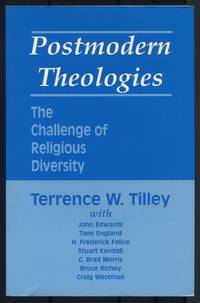
1996ref. 528901Maryknoll New York: Orbis Books 1996. Softcover. Near Fine. Second printing. x 182pp. Trade paperback. Wrappers lightly rubbed with tiny creases on the cover near fine. Orbis Books unknown books
1902ref. 408491Cambridge: Harvard Illustrated Magazine 1902. Unbound. Near Fine. Broadside. Measuring 8" x 14". Printed in red and yellow on thin card stock. Modest age-toning and three tiny tack holes near fine. Decorated with a very attractive illustration of the Egyptian goddess Isis with wings spread over the word "Jan." presumably indicating the January issue. The illustration is signed in print "George Allan England '02" along with two Chinese characters. England attended Harvard University where he received Bachelor of Arts and Master of Arts degrees. However he is better known as a socialist politician and writer; he was the author of several books of speculative fiction and science fiction as well as collections of detective stories. His story "The Thing from - 'Outside'" appeared in the first issue of the first science fiction magazine Amazing Stories. In his day he was considered one of the closest rivals to Edgar Rice Burroughs. This advertising poster exhibiting his artistic skill is presumably very uncommon. Harvard Illustrated Magazine unknown books
1919ref. 348420Boston: Small Maynard & Company 1919. Hardcover. Near Fine/Very Good. First edition. Slight mustiness else fine in very good dustwrapper with small nicks and tears and some overall soiling. Scarce in jacket. Small, Maynard & Company hardcover books
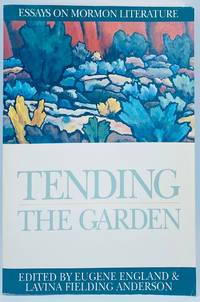
1996ref. 10378Salt Lake City: Signature Books 1996. First Edition. 219pp. Octavo 23 cm Illustrated wrappers. Near fine. - 'Mormon Storytellers' by Dale L. Morgan - 'On Words and the Word of God: The Delusions of a Mormon Literature' by Karl Keller - 'Mormondom's Lost Generation: The Novelists of the 1940s' by Edward A. Geary - 'Toward a More Perfect Order Within: Being the Confessions of an Unregenerate but not Unrepentant Mistruster of Mormon Literature' by Marden J. Clark - 'To Tell and Hear Stories: Let the Stranger Say' by Bruce W. Jorgensen - 'Just the Fiction Ma'am' by Tory C. Anderson - 'Desirable Fruit: Book of Mormon Imagery' by Richard Dilworth Rust - 'Literary Form and Historical Understanding: Joseph Smith's First Vision' by Neal E. Lambert and Richard H. Cracoft - 'The Autobiography of Parley P. Pratt: Some Literary Historical and Critical Reflections' by R.A. Christmas - 'The Didactic Heresy as Orthodox Tool: B.H. Roberts as Writer of Home Literature' by Richard H. Cracroft - 'Juanita Brooks: The Mormon Historian as Tragedian' by Levi S. Peterson - 'I Eye Aye: A Personal Essay on Personal Essays' by Mary Lythgoe Bradford - 'Beyond Jack Fiction: Recent Achievement in the Mormon Novel' by Eugene England - 'Mormon Folklore: Cut from the Marrow of Everday Experience' by William A. Wilson - 'From Walden Pond to the Great Salt Lake: Ecobiography and Endangered Species Acts in Walden and Refuge' by Cecilia Konchar Farr and Phillip A. Snyder. Part of Signature Books' Essays on Mormonism series Tending the Garden combines the insights of fifteen different authors on the history and direction of Mormon fiction. This first book-length collection of 15 essays on Mormon literature discusses such classic narratives as Joseph Smith's first vision and Parley P. Pratt's Autobiography more recent experiments such as Levi Peterson's The Backslider and Terry Tempest Williams's Refuge and addresses the question of what constitutes Mormon aesthetics. In addition to describing the historical development of Mormon letters essayists explore Mormon contributions to folklore personal essay home literature novels and historical tragedy. Signature Books unknown books
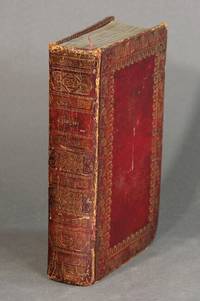
1713ref. 1394685London: Printed by John Baskett 1713-1717. First Editions. Hardcover. Folio 61-174 2179-191 6 203-206 2 211-218 2 223-270 2 275-357 3 361-362 2 367-382 2 387-422 4. In Good minus condition. Bound in full contemporary calf with banded spine and tooling to boards. Boards show moderate wear to edges moderate plus wear and bumping to corners and several gouges to the front board. Cracking to leather along joint of front board. A clear lacquer appears to have been applied to the boards. Text block has light age toning to edges. Ex-Library institutional plate appears on front paste down. Ex libris of former owner appears on front pastedown. Several ink "doodles" in an 18th-century hand appear on the front paste down and front free end page. Square-inch tear to fore-edge of front free end page. Pages tightly trimmed by binder impacting some of the printed marginal annotations. BB Consignment. Shelved in Room A Oversized. Appears to contain two collections of public statutes passed in 1713 and 1714 but printed between 1713 and 1717 each with a closing contents page. The first collection contains Acts II - XVIII of 18 acts and the second contains Acts II - XXIII of 23 acts. The acts cover a range of topics including duties tariffs and taxes; the paying and management of military personnel and militias; and the management of churches. The most significant of the acts however is Act 15 of the second set of acts entitled "An Act for Providing a Publick Reward for such Person or Persons as shall Discover the Longitude at Sea". This formally established the Commissioners of the Longitude and the reward of £20000 for "the first Author or Authors Discoverer or Discoverers of any such method ." that to the satisfaction of the committee accurately determined a ship's longitude at sea accurate to within 20 geographical miles. This reward would not be claimed until 1765 when clockmaker John Harrison developed his "time-keeper" or marine chronometer. 1394685. Special Collections - Upstairs. Printed by John Baskett hardcover books
1939ref. 59774Boston: Houghton Mifflin 1939. Hardcover. Very good. Hardcover. First Edition. 120pp index; folding map in rear pocket. Address label on front pastedown spine sunned with some rubbing to the boards else very good in publisher's orange cloth; lacking the jacket. Houghton Mifflin hardcover books
1735ref. 33237England 1735. Elephant folio 24-1/2" x 30-1/2". Completely in ink manuscript on stiff vellum some words written in larger lettering or bolder print. Bottom edge folded up and held with five red wax seals and vellum strips. Strip of three embossed blue Sixpence Royal tax stamps at left edge "Colony to Saml Clarke" in manuscript directly beneath it. The names of Joseph Lodge Elizabeth Lodge Jonathan Pickering Ann Pickering and John Hamblins written along the bottom edge between the seals. Docketed on verso: "The 9th October 1735/ Joseph Lodge & wife/ Jonathan Pickering/ To John Hamblin/ Joseph Rust." Old folds light spotting and dustsoiling of verso recto quite clean. Beautiful document. Near Fine. A deed from England: Wortham Hall Hopton Botesdale and Thelnetham are all of Suffolk County England. Joseph Lodge 1693-1759 lived and died in Needham Norfolk County England. Elizabeth his wife 1699-1739 died in Norfolk as well. unknown books
1915ref. 2180321915. unbound. Signed Christmas card with the royal crest signed "Mary R" and accompanied with a 5" x 7" black-and-white unsigned photograph of the Queen in an ostrich-plume hat and intricately embroidered and laced dress. Also a 7" x 9" card illustrated with a color engraving of royal forebears with a history and description inside. No place 1915. Very good condition. Queen of Great Britain married to George V. unknown books
1683ref. 65703Oxford: printed at the Theatre; London sold by Thomas Guy at ye Oxford Arms on ye westside of Royal Exchange in Cornhil 1683. Folio in 6s 1 leaf unsigned engraved title page a-bâ´ A-Mâ¶ N¹ Aa-Hhâ¶ Ii-Mmâ´ Nn-Ooâ¶ Ppâ´ Qq² Llâ‚ incorrectly signed L; engraved title page with top 1¼" excised likely to remove a previous owner's name pp. 306 15 7; contemporary and almost certainly original full black paneled goat with gilt floral sprays and lozenges the central gilt panel enclosing a gilt supralibros of a rampant lion holding a patriarchal cross; gilt-decorated spine in 7 compartments black leather label in 1 a.e.g.; small chips and cracks at spine ends joints starting at the ends corners a little smushed the whole rubbed and worn but the binding remains sound. Ostensibly Wing B-3672. Of this issue 328 pages only UCLA and the University of Bristol in OCLC. printed at the Theatre; London, sold by Thomas Guy at ye Oxford Arms on ye westside of Royal Exchange, in Cornhil unknown books
1762ref. 48821Cambridge: printed by John Baskerville printer to the university 1762. First duodecimo Baskerville edition 12mo 198 leaves collating as in Gaskell; the title a cancellans as described by Gaskell with the price of "five shillings unbound"; bound with: Sternhold Thomas & John Hopkins. The Whole Book of Psalms Collected into English Metre. Birmingham: printed by John Baskerville 1762. 55 of 61 leaves wanting K2-L6; first Baskerville edition; together in contemporary full red morocco elaborate gilt borders on covers gilt-decorated spine in 6 compartments without letters a.e.g.; extremities lightly rubbed but generally a very good copy in a nice binding. Gaskell 20 "Baskerville agreed with the University to print an edition of 4000 copies" and 21 respectively. printed by John Baskerville, printer to the university unknown books
1762ref. 48991Cambridge: printed by J. Baskerville printer to the University 1762. 12mo 198 leaves; this copy with the cancellans title page the last line reading "Price Five Shillings unbound" and without the star & lozenge slip pasted over the last line; bound with: Brady N. A New Version of the Psalms of David. Birmingham: printed by John Baskerville 1762 52 leaves; together in contemporary full green goat fancy gilt borders on covers with floral devices in the corners enclosing a central gilt lozenge gilt-decorated spine in 6 compartments unlettered a.e.g.; the binding is darkened and slightly worn and 2 old bookseller descriptions are tipped in at the front; all else quite good and sound. An old note in pencil on the verso of the front free endpaper proclaims this to be an "Irish binding." "Baskerville printed three octavo editions of The Book of Common Prayer. The first which appeared in 1760 was set in long lines of Great Primer. There were two impressions one with and the other without a border round each page . cancelled title pages were substituted later in 1760 and in 1761. The second edition appeared later in 1760 . and two impressions were printed with and without borders. It was first published at 7s. 6d but in 1761 the price was raised to 8s.6d. The Royal Prayers are found in the second state only as cancels. The third and final edition was published in 1762 set in long lines of Great Primer without borders" Gaskell. Gaskell 20 and 22. printed by J. Baskerville, printer to the University unknown books
1761ref. 49243Cambridge: John Baskerville 1761. First Baskerville edition third title impression with the price of 8s. 6d. on the title page 8vo without sections x2b 2N-2Q as often; contemporary blue goatskin with elaborate gilt border gilt-decorated spine in 7 compartments a.e.g. marbled endpapers; boards and spine worn armorial bookplate of the Hon. Charles Hope Weir followed by an inscription by his great great grandson Harry Lloyd Neruey under it. A good sound copy. Gaskell 12. John Baskerville unknown books
1820ref. 32724Oxford: printed at the Clarendon Press by J. Cooke and S. Collingwood 1820. Thick 8vo; inserted engraved title-p.; bound with A New Version of the Psalms of David 1825; contemporary full red straight-grain morocco covers with elaborate gilt borders gilt lettered direct on gilt-decorated spine a.e.g.; hinges strengthened extremities rubbed and worn 2 small ink spots on back cover; all else very good. With a large fore-edge painting showing Oxford from the countryside. printed at the Clarendon Press, by J. Cooke and S. Collingwood unknown books
1811ref. 25444Oxford: printed at the Clarendon Press by Bensley Cooke and Collingwood 1811. 4to unpaginated portions except for the title-p. lacking all before I4 2D1-4F4 and 2H1-3G4 2B and 2B2 with tears mended; bound in a dated binding of full black straight-grain morocco elaborately decorated in blind the central panel with "Nevedon Vincent Edwards A.M. Rector William Sparrow Church-Warden 1816" in gilt central on upper cover paneled spine also elaborately tooled in blind lettered in gilt a.e.g.; very good. printed at the Clarendon Press, by Bensley, Cooke, and Collingwood unknown books
1973ref. 11018Cambridge MA: New England Science Fiction Association 1973. First Edition. Staplebound. Very Good in Wraps. First Edition. Staplebound. Index of various science fiction and fantasy anthologies magazines serials 1970s . Cover by Mike Symes. Scarce reference list and bibliographies. Tight bright and unmarred. Some sunning. Staplebound 42pp. illus b/w in wrappers. New England Science Fiction Association unknown books
1707ref. 292146Oxford London: Printed by the University-Printers Printed by J. Heptinstall for the Company of Stationers 1707. Full Leather. Very Good binding. The Book of Common Prayer and Book of Psalms for the Church of England bound together in one volume; both were published in 1707. Complete with 53 numbered plates. Interestingly three of the plates are of a more political nature being the "Gun-Powder Treason" the "Martyrdom of King Charles I" and the "Restoration of King Charles II." Red ruling to the borders of the double-columned text title pages and plates. The Whole Book of Psalms Collected into English Metre by Thomas Sternhold John Hopkins and others . 'Printed by J. Heptinstall for the Company of Stationers. 1707" is not found in the ESTC. Neither text is paginated; the final leaf of the Book of Common Prayer is R4; the final leaf of The Whole Book of Psalms is I6. Front hinge reinforced with Japanese tissue. Slight loss at the bottom of the spine. Black straight grain morocco with gilt lettering and raised bands on the spine. All edges gilt. Very Good. ESTC T231335. Very Good binding. Printed by the University-Printers | Printed by J. Heptinstall, for the Company of Stationers unknown books
ref. TB32412A bifolium velum indenture measuring 21 1/2 by 28 inches in fine condition folded to make nine panels with the top edge of the first page cut in a scallop fashion written in long hand on the recto sides and witnessed on the verso side and signed by Ann Baddington. The signatures of both principals are sealed with two red wax seals and both pages have an embossed blue stamp affixes at the left margins of the document. Pinned to the first page is a letter from a Thomas Johnson to the principals of the document Ann nee Roe Boddington 1767 - 1836 was the widow of Simon Boddington 1756 - 1824 both of Dunton Bassett Leicestershire England. This indenture is very difficult to read; however picking out a number of words it appears to be an Indenture for the loan of 500 British Pounds to William Rendall "the younger" unknown books
1967ref. 009938New York: Avalon Books 1967. 1st Edition. Cloth. Fine/Fine. 8vo. 189pp.Beautiful First Edition of this abridgment of a five volume serial published in 1914 Currey. Square tight and clean throughout with little or no wear. Equally attractive unclipped dust-jacket $3.25 is fresh and bright with no creases chipping tears and none of the common fading to the spine whatsoever. A stunning collectable copy and quite uncommon in such condition. Avalon Books unknown books
1812ref. TB29956Boston: Printed by Chester Stebbins 1812. First Edition. Very good- in stab sewn wrapper with Bowdoin College and the name of an early prior owner Ezra Abbot Jr. written across the upper edge of the front page. An octavo of 9 by 5 7/8 inches with the fore edge and lower edge rough cut and shallow chipping to the fore edge of the front page. Written in pencil is the author's name surrounded in brackets just above the word "Boston". The contents are spotted with foxing throughout but primarily in the margins. 117 pages of text. The author John Lowell 1769-1840 was a Massachusetts lawyer agriculturist philanthropist and a well known Federalist who wrote many pamphlets in support of his point of view. He was often at odds with the Democratic Party and published many unsigned pieces critical of President James Madison's efforts to build a standing army and navy and the War of 1812. DAB Printed by Chester Stebbins unknown books
1995ref. 005889Baltimore Maryland: Genealogical Publishing Company 1995. Book. Near Fine. Cloth. Reprint. 8vo - over 7¾" - 9¾" tall. Near Fine two tiny spots of soiling to the edges of page block contents are clean tight and unmarked. 968 pp. Genealogical Publishing Company Hardcover books
1618ref. 5101Imprinted at Edinburgh: s.n. 1618. FIRST EDITION SECOND ISSUE. "A reissue of STC 140 Edinburgh: Thomas Finlason 1618. Hardcover. Fine. With cancel title page and dedication printed by A. Hart; Page 109-12 are a cancel bifolium printed in London by the Eliot's Court Press. Cf. STC. This copy is bound with bound with as often "Ta tÅn MusÅn exodia" see STC 142. There are two variants of Hart's issue the other with line 3 in the title reading "To the High and". A woodcut portrait of King James VI/I and the royal arms appears on the first leaf. The text is richly adorned with a variety of woodcut ornaments and elaborate initials. A fine copy in 19th c. straight-grain green morocco richly tooled in gold hinges rubbed with light wear at the head and foot of the spine. The text is in excellent condition with just some light stains on p. 142-3 a small natural paper flaw affecting a few letters on leaf Pp3 and a light water-stain to leaf Xx2. A splendid production promoted by King James VI and I himself commemorating the king's return to Scotland in 1617 where he was presented with poems of welcome and praise collected in this deluxe volume. In addition to the Latin poems the book features three English poems: William Drummond's "Forth Feasting" and two untitled poems by Alexander Craig ca. 1567-1624 delivered at Kinnaird and William Mure 1594-1657 presented at Hamilton; and a number of English speeches. There are also seven poems in Greek. "Each of the relevant stages in the king's progress is introduced with a few exceptions where space is tight on a separate and impressive title page with details of the date and place. "With over sixty individual contributors 'The Muses' Welcome to the High and Mightie Prince James' henceforth TMW was written on the occasion of the return of King James VI and I to Scotland after fourteen years in 1617. Its acclamations are delivered with considerable ingenuity and skill in more than 130 poems which range in length from short epigrams to much longer hexameter panegyrics. Such an assembly of verse to celebrate an itinerant sovereign has few if any parallels in any Neo-Latin context. Moreover TMW is presented as a travelogue: a record with precise dates of the king's journey or 'progress' through some fifteen towns and other places in his northern realm from Dundee to Drumlanrig two visits are noted for Stirling and at least two for Edinburgh. The poets form part of a landscape an unselfconsciously Latinised landscape which they rejoice to see rejuvenated by James' return. "TMW is a snapshot of Scotland in a particular summer or rather perhaps a group photograph one of the livelier kind. A real work of cerebration as well as celebration by the Scottish towns and cities TMW is testimony to Scotland's cultural and educational achievements at a moment which coincides with the zenith of Scottish Latin verse. Finally-though of course this is the first point that the reader experiences-TMW is a delight to handle and peruse because of its generous dimensions its use throughout of a large italic font its ample spacing and its clear and dignified announcement of each new place visited and the date of arrival. This fine appearance is hardly surprising for it was commissioned by the king himself evidently well pleased by the poetic homage presented to him in these three months and entrusted by him to Edinburgh's leading printers. He also made careful provision for the distribution of eighty copies which may or may not comprise the whole print run. "The King's itinerary according to TMW is as follows: Dunglass Seton Edinburgh Falkland Kinnaird Dundee Edinburgh a second time Dalkeith Stirling Perth St. Andrews Stirling a second time Glasgow Paisley Hamilton Sanquhar Drumlanrig Dumfries. It confines itself to the places where the king was welcomed with 'poesies' or occasionally just a speech. The McNeills "The Scottish progress of James VI 1617" add to this from their own viewpoint but only in a single place is there a significant difference. They add with good evidence James' journey to Cavard from Dunglass. "The arranging and organising of the ambitious poetic timetable and the 'call for poems' would have been no easy task. Suitable poets would have to be found involving local initiative but also tight central planning. And of course it was advisable that the eventual poetry be vetted for quality and sensitivity. Many of the writers in TMW are unknown or little-known though in some places we can see better-known poets contributing their talents. In no case do we find that a poem has been recycled from another location and although inevitably evidence of shared sentiments and sometimes similar verbal expression do appear the absence of overlap or borrowing let alone plagiarism is notable." At least 80 copies were printed at the King's request: "The dean of his majesty's chapel William bishop of Galloway was tasked with the provision of eighty copies with forty going to the king and forty to be distributed "amongst the prelattis nobilitie and counsellouris" of the kingdom. Whether the king's chosen printers named as Finlason and Hart to whom this directive was sent confined themselves to the eighty copies required by James is not certain; there was surely potential demand from people over and above the people specified such as teachers and university staff and other members of the general public who were familiar with Latin. "The picture of himself as a king outstanding in justice and virtue and in religious devotion and literary patronage will have cheered James when one imagines he dipped into TMW as time and health allowed. He would have found its recreation of the literary atmosphere of the great classical poets and the manipulation of the classical language in his honour gratifying perhaps inspiring. He valued Latin highly and the Latin of TMW is on the whole not particularly difficult for one with some experience of poetic vocabulary of the nature of poetic word-order and of the commoner figures of speech and thought and with access to details of classical mythology. "Like King James modern readers and researchers may not indeed should not try to read the work or even one or two particular sections in one go. But perseverance and one hopes increasing critical attention to TMW will show the attractions of this great assemblage of poetry ingenious in conception varied in expression skilful in metre expert in articulation and ornament astute in allusion and intertextuality and an outstanding addition to the Latinate Scottish delights of the Jacobean era."Gibson The King Returns: 'The Muses' Welcome' 1618 in Neo-Latin Literature and Literary Culture in Early Modern Scotland Ch. 5 p.126 ff. [s.n.] hardcover books