2 502 résultats
1787in-8, pp. 48, broch post. Edizione originale della lettera del Conte Mirabeau (1749-1791) a Federico Guglielmo II, Re di Prussia, nipote successore del grande Federico II nel momento della sua acensione al trono. L'autore elargisce consigli sulle riforme e sul giusto modo di regnare. A partire dal 1786 Mirabeau intrattenne rapporti con la Prussia in qualità di agente segreto, inviò diverse decine di lettere al ministro Calonne e nel 1789 pubblicò un carteggio con il titolo di : "Histoire secrete de la cour de Berlin", l'opera fece scandalo e venne censurata.. .
1959Slight foxing to small number of pages. No other marks or inscriptions. No creasing to covers or to spine. A very clean very tight copy with very slight sunning to extremeties of blue cloth boards and very minor bumping to corners. 452pp. A detailed study of the history of Germany from around 1500 AD up to the 1950s. Illustrated.
PARIS, Delaunay - 02/1817 - In-12 - Reliure 1/2chagrin -Dos lisse orné - signet - 2 pages détachées - IX-155 pages - Bon exemplaire
2009ALFREDO GUIDA 2009 274 PP. FONDO DI MAGAZZINO: PARI AL NUOVO, PERFETTO E INTONSO Il celebre giudizio del grande storico Ernest Renan sulla "nazione come plebiscito quotidiano" sintetizza felicemente il nesso, tradotto in principio dalla Grande Rivoluzione, tra la coscienza nazionale e il principio di sovranità popolare. Questo paradigma subisce però una radicale torsione nella seconda metà dell'Ottocento, quando si apre la strada al nazionalismo e al prevalere della geopolitica nella definizione dei confini statuali. L'autore parte da queste considerazioni per indagare sulla natura dell'antagonismo tra italiani e slavi nei territori adriatici. Il punto di vista prescelto è quello dei consoli francesi a Trieste, la cui cultura politica repubblicana li rendeva particolarmente attrezzati a valutare le opposte culture nazionali del luogo. D'altra parte, però, l'autore si mostra altrettanto avvertito del ruolo condizionante che sui giudizi dei rappresentanti di Francia aveva l'obiettivo di rafforzare la posizione internazionale del proprio Paese, frenando, attraverso una più stretta intesa tra Vienna e Parigi, le spinte pangermaniche di Berlino in direzione dell'Adriatico e agli italiani d'Austria non sempre sgradite. Alceo Riosa, professore ordinario di storia contemporanea nell'Università degli studi di Milano, ha al suo attivo numerosi studi sulla storia del movimento operaio italiano e sulle vicende della prima guerra mondiale. Attento, inoltre, ai problemi della metodologia storiografica, ha al suo attivo studi sul 'genere' biografico. INDICE Introduzione Parte prima I. Gli italiani adriatici e il canto delle sirene Trieste e dintorni sotto la lente francese - Una favilla - Pacifico Valussi - Ospiti non proprio graditi - Quale coscienza nazionale? - La luce che si spense - Il terzo Bonaparte e un’alleanza difficile - Un progetto europeo contro il barbaro d’Oriente - Né Prussia, né Francia, se Austria... II. Marienne tra italiani e slavi Trieste ai tempi dell’Affare Oberdan - Come essere italiani nella città ’’fedelissima’’ a Vienna - Oberdan e l’irredentismo garibaldino - Un irredentista transfuga a Milano e la diffusione del mito di Oberdan - L’immagine scolorita di Garibaldi III. La scelta di Marienne Una città ’’levantina’’ - Il risveglio allo specchio del consolato francese - Nel resto del Litorale e in Dalmazia - La sfinge austriaca - Tra Berlino e Vienna IV. ’’Il pericolo slavo’’ Italiani di prima e seconda categoria a Trieste - La Luogotenenza decennale di Rinaldini - ’’Abbasso la Francia’’ - I liberal-nazionali tra luci e ombre - La luogotenenza di Goëss - La profezia francese: gli italiani adriatici, ’’una minoranza votata all’impotenza’’ - Ma niente può arrestare la civiltà superiore V. Socialismo e questione nazionale nel Litorale Come uscirne? - Nuovi attori sociali - Un altro pomo di discordia: la questione universitaria - Bissolati e ’’l’irredentismo socialista’’ - Il dibattito nel partito socialista italiano - Il convegno socialista italo-austriaco e le sue conseguenze - La scarsa fortuna di Bissolati nel Litorale - La scena si complica anche agli occhi del consolato francese - Lo scacco della democrazia e del socialismo nel Litorale VI. Il dado è tratto: la Grande Guerra L’interventismo democratico e gli adriatici e Milano - Edoardo Schott - Un conotraltare: ’’Pagine triestine’’ - ’’Ricordare alla Francia Battisti’’ - Il ritorno nell’amara Trieste Indice dei nomi Parole e frasi comuni 13 Italiens 42 Trieste all'Austria Alpi Giulie amaaee amaaeef apih asburgico Austria austriaci autorità austriache Autriche Autriche-Hongrie Balcani Bissolati borghesia carattere certo Challet da Trieste Cisleitania città adriatica cittadina confronti considerazione Correspondance politique costituisce croati cultura culturale Dalmazia dell'Impero asburgico dell'irredentismo democratici Direction politique Nord economico Favilla favore Francesco Giuseppe francese a Trieste Francia Garibaldi Germania giornale GiuliaGorizia governo guerra infatti Innsbruck interessi internazionale irredentisti Istria italiani del Litorale l'Austria l'irredentismo l'Italia Laigue da Trieste liberal-nazionali liberale lingua italiana lingua slovena locale luglio luogotenente maggiore manifestazione medesimo Milano Napoleone nazionale nazione nuovo Oberdan Pacifico Valussi pangermanesimo pangermanica peraltro politica estera politique des consuls politique et commerciale polizia popolazioni slave posizione profughi propaganda proprio pubblica punto di vista regnicoli Reichsrat resto rispetto Rutheniens Schott Scipio Slataper sentimento situazione Slataper Slovaques socialdemocrazia socialista successo sviluppo tedeschi territorio Tommaseo Trentino Trieste il 20 triestini Valussi vede Venezia vicende Vienna Soggetti: Irredentismo, Storia contemporanea, Foibe, Guerre mondiali, Chabod, Vienna, Austria, Impero austro-ungarico, Mussolini, Fascismo, D'annunzio, Trieste, Fiume, Dalmazia, Leonida Bissolati, Austriaci, Grande Guerra, Belle Époque, 900, Joseph Roth, Mitteleuropa, Slavi, Oberdan, Prussia, Goess, Diplomazia, Edoardo Schott, Litorale
1983EDITORI RIUNITI 1983, 2 VOLUMI PER COMPLESSIVE 880 PAGINE, ALLO STATO DI NUOVO, INCELLOPHANATI, PERFETTI.
4°, br. muta, pp.40. Edizione originale.
1826[Figurato Prussia] (cm.15,5) Voll. 2, brossura originale a stampa.-- pp. 200;212. Con 6 tavv. f.t. in rame. Opera completa sulla Prussia che fa parte della storia universale del Segur. Ottimo esemplare con barbe. Libro
20011^edizione - in4° ( 32x28) - legatura editoriale telata con sovraccopertina illustrata - pp. 520 - riccamente illustrato - fotografie di Klaus Frahm e Hagen Immel - testo in italiano - condizioni: nuovo
1911Un volume di XII-453 pagine, tela editoriale con titolo in oro al dorso. Dimensioni: 16,5x23 cm. Minime tracce d'uso. Un ritratto in heliogravure, un autografo e quattordici incisioni in b/n fuori testo.
Bol., Tip. T. Loli, s.d. (1850/60 circa). Foglio di cm. 20,5x27,5. Axs
1957DISPONIBILITÀ GARANTITA AL 99%; SPEDIZIONE ENTRO 12 ORE DALL'ORDINE. LIEVI SEGNI DEL TEMPO; MACCHIETTE/FIORITURE; INTEGRO. Informazioni bibliografiche Titolo: Storia della Germania moderna Titolo originale: Deutsche Geschichte vom Ausgang des Mittelalters Collana: Volume 233 di Universale economica; Volume 68 di Serie Storie e Filosofia. Autore: Franz Mehring Prefazione di: Ernesto Ragionieri Traduzione dal tedesco di: Fausto Codino Editore: Milano: Feltrinelli, 1957 Lunghezza: 286 pagine, 19 cm Soggetti: Storia contemporanea, Germania, Prussia, Unificazione, Bismarck, Guerre Mondiali, Francia, Nazismo, Novecento, Ottocento, Stato, Repubblica di Weimar, Barricate a Berlino, Filosofia, Pangermanesimo, Cultura, Marxismo, Socialismo, Lezioni universitarie, Sinistra, Rosa Luxemburg, Rudolf Hilferding, Hermann Duncker, Emmanuel Wurm, Gustav Eckstein, Hugo Heinemann, Bernstein, Karl Kautsky, Heine, Rivoluzione, Comunismo, Operi tedeschi, Fabbriche, Reich, Costituzione, Kulturkampft, Partiti, Industrializzazione, Fabbriche, Crisi, Democrazia, Germany, social history, 19th, 20th century, socialism, socialist theories, Marx, Engels, Lassalle, Deutschland, Duitsland, geschiedenis der sociale toestanden, bewegingen, organisaties en ideën, de 18 tot 20, Socialisme, socialistische theorie, vrienden en volgelingen van Marx, saggi, storiografia
1999A CURA DI DOMENICO CONTE E MAURIZIO MARTIRANO FRIDERICIANA EDITRICE UNIVERSITARIA 1999 CLII-1380 PP. DUE VOLUMI, ALLO STATO DI NUOVO. L’opera raccoglie per la prima volta, in due ampi volumi, tutti gli scritti giornalistici (oltre 300) dati alle stampe da Cuoco nel corso della sua intensa attività pubblicistica (1801-1815). Il primo volume, a cura e con introduzione di Maurizio Martirano, riunisce gli articoli del periodo milanese (1801-1806), pubblicati nel «Redattore Cisalpino» e nel «Giornale Italiano»; il secondo, curato e introdotto da Domenico Conte, raccoglie quelli del periodo napoletano (1806-1815), apparsi nel «Corriere di Napoli» e nel «Monitore delle Due Sicilie». Questa pubblicazione costituisce una novità assoluta, perché raccoglie numerosi articoli mai più ripubblicati e quindi solo molto difficilmente accessibili, e offre uno strumento significativo per inquadrare in modo completo l’attività politica e culturale di uno dei protagonisti di un periodo di storia italiana fra i più complessi e convulsi. Attraverso la sua produzione giornalistica, Cuoco testimonia le speranze e i drammi di una generazione vissuta fra repubbliche giacobine, monarchie napoleoniche ed esigenze di indipendenza nazionale. Parole e frasi comuni abbiamo alcuni altre Anassagora Angioini antichi Archita arti articoli Atellana autore avea avvenuto barbarie belle bisogno Buonsanto cangiamento città cittadini civilizzazione colla commercio conoscere Corriere di Napoli costumi crede cuochianiCuoco d'Italia dice dimostra Domenico Conte dovea dritto egualmente erano favola feudalità filosofia forma forza Giornale Italiano giudice gloria governo gran grandissimo Grecia guerra idee incomincia infra istesso istituzioni italiana l'autore leggi lettere libroLongobardi maggiore Magna Grecia medesima memoria mente mezzo migliori militare molisano Monitore Montesquieu napoletano nazione neutrali nome numero nuovo oggi opere Orazio osservazioni pace di Tilsit palmi parliamo passato patria Periclepiccioli Platone pochi poco politica popoli possa potuto principj provincie pubblica Puglia ragione Regno di Napoli riunire Romani Sanniti sapere sarebbe scienze Scritti vari scrittori secolo Sibari Sicilie signor simo sistema soggetto spiritostabilimenti storia storico studj tale terra tratto trova umano uomini uomo utile Ventotene Vincenzo Cuoco virtù vizj
1982Collana storica Rizzoli a cura di Giorgio Borsa.Edizione illustrata da tavole in b / n nel testo e fuori testo e tavv.a colori fuori testo.In 8o,legatura rigida editoriale,titoli in oro al dorso,sopracoperta illustrata.ottima copia.Pp.579
Hachette 1871. 16°:pp.110n. bross.origin. copertina posteriore rifatta.
1875Tutte le materie d'insegnamento delle Università a carattere tecnico dell Impero Germanico: da Berlino a Friburgo a Brunswick ecc. Molto interessanti i progetti con planimetrie ( 8 ) per gli Istitui di Aix - La - Chapelle, Stuttgart, Dresde, Liege; piuttosto raro. Esemplare slegato a metà tomo e segni del tempo in copertina; interno molto buono. Brossura
Paris, Alcan 1893. 16°:pp.VIII+375n. Mezza tela coeva con titoli in oro al dorso.
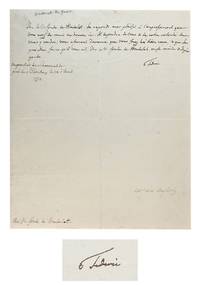
1778réf. 173569N: N 1778. dated 14th April 1778 Headquarters at Schonwalde near Silberberg expressing pleasure at his desire to come and join him. Single sheet 22.7 cm. x 19 cm. 7 lines written on one side with creases. Frederick II King of Prussia known as Frederick the Great 1712-1786 was ' a brilliant military campaigner who in a series of diplomatic stratagems and wars against Austria and other powers greatly enlarged Prussia's territories and made Prussia the foremost military power in Europe Britannica'. lang2057 The recipient probably Vicomte de Houdetot often spelled Houdelot belonged to a prominent French aristocratic family. N unknown
1912réf. 145443London: Hodder and Stoughton 1912. First Edition. Hardcover. Very Good. London Hodder and Stoughton 1912 first edition in English. Octavo xvi 132 pages with 9 illustrations plus 28 plates from photographs mounted on thick card leaves and a colour frontispiece with a tissue guard. Gilt-lettered green cloth sunned and a little flecked; binding a little shaken; some light offsetting from the plates; old prices markings in blue pencil on the half-title; a very good copy. A memoir of hunting in Asia and Europe by the eldest son of Kaiser Wilhelm II. It includes elephant and tiger hunting in India and Ceylon as well as ibex deer chamois and game birds in Europe. Translated by J.E. Hodder Williams. Hodder and Stoughton hardcover
réf. 1h15964J.G. Treuttel Straßburg 1787. 362/400/403 S. Interimsbroschur der Zeit unbeschnitten und breitrandig/Name auf Vorsatz/band 2 fehlt/Einband fleckig und mit Randläsuren. unknown
1928réf. 142106London: Macmillan and Co. Limited 1928. Hardcover. Very Good/Good. London Macmillan and Co. Limited December 1928 third reprint/ October 1928. Large octavo xxiv 494 2 publisher's list pages plus a frontispiece portrait and 3 plates all with tissue-guards. Gilt-decorated cloth; top edge gilt; an excellent copy with the very good dustwrapper a little marked creased and torn. A relevant newspaper clipping is mounted on the front free endpaper. Victoria Princess Royal 1840-1901 was the oldest child of Queen Victoria; in 1858 she married Prince Frederick of Prussia 1831-1888. He became Emperor of Germany and King of Prussia in March 1888 but died of cancer 99 days later. His Consort was subsequently known as The Empress Frederick. Macmillan and Co., Limited hardcover
1849réf. 93589London: David Bogue 1849. First Edition. Hardcover. Very Good. London David Bogue 1849 first edition in English. Octavo two volumes xvi 338 and vi 378 pages plus a frontispiece in the first volume and 3 small folding maps all with a little hand-colouring. Early half calf and marbled papered boards with all edges marbled and matching marbled endpapers; leather a little rubbed and marked with light tidemarks near the joints of the first volume; tidemark to the frontispiece; scattered foxing; an excellent set. The frontispiece with an image size 188 × 114 mm without any margins has been mounted on thick paper; presumably this was done at the time the book was bound in the nineteenth century. Prince Adalbert 1811-1873 was a Prussian naval theorist and admiral; several journeys led him between 1826 and 1842 to the Netherlands Britain Russia Turkey Greece and Brazil Wikipedia. He spent the last four months on 1842 in Brazil. Alexander von Humboldt makes the following comments in his three-page introduction to this translation: 'this interesting Work . conducts us through Brazil to the mouth of the Amazon River and through this into one of its important tributaries the Xingu the course of which is now explored for the first time. The Journal of Travels printed originally only for the perusal of his friends . is not in the strict sense of the word a scientific book; nevertheless it contains observations and views of nature and customs which reflect a vivid picture of the scenes which the Prince witnessed and passed through. Instruction is imparted in the most pleasing manner when an unaffected simplicity and an absence of all pretension pervade a work like this'. This set was purchased at the dispersal sale of the Hope family's historic property 'Wolta Wolta' at Clare in South Australia; there is some serendipity in this given the Schomburgk family's close connection with the state. Richard Schomburgk accompanied his explorer brother Robert on an expedition in 1840-44 to British Guiana as botanist and historian. He later published the three-volume account of the expedition before emigrating to South Australia where he was a pioneering vigneron and an influential head of the Adelaide Botanic Gardens 'Australian Dictionary of Biography'. 2 items. David Bogue hardcover
2014réf. x-0124081371Academic Pr 2014. Hardcover. New. 3rd edition. 564 pages. 9.50x7.75x1.50 inches. Academic Pr hardcover
2016réf. x-1374569011Wentworth Press 2016. Hardcover. New. 710 pages. German language. 6.14x1.50x9.21 inches. Wentworth Press hardcover
1900réf. 1649241900-01. Ten-thousand words of musings on democracy aristocracy and plutocracy An extensive manuscript being Kaiser Wilhelm's unpublished translation into German of an article covering political theory from the English journal The Quarterly Review. The original article by Goldsworthy Lowes Dickinson published in the October 1900 issue of the journal pp. 359-80 was nominally a review of eight recent books on political philosophy among them Heinrich von Treitschke's Politik E. L. Godkin's Problems of Modern Democracy and Theodore Roosevelt's American Ideals. In practice as standard for the Quarterly Review the article used the reviewed works as a starting point for a wider discourse. The article would have clearly appealed to the Kaiser. It begins by asking whether political philosophy even exists and the author notes that historically political philosophy is characterized by absolutism. However he observes that there is now a shift towards relativism. The trend in modern politics is the state's growing power and size those in control increasingly influenced by plutocracy. He argues that the House of Commons gradually ceded its power to the Cabinet risking a shift in British democracy towards the American plutocratic system. The solution is to preserve an aristocracy but one based on training and ability rather than birth. Wilhelm has dated the first page "25.12.1900" and "2.2.1901" and the last page "17.2.1901" presumably the dates between which he translated it. The lengthy project totalled around ten thousand words. He has made a few corrections and underlined some words for emphasis. Generally the manuscript is written confidently in Wilhelm's bold hand. Wilhelm had an English mother the eldest child of Queen Victoria and spoke English fluently though from his boyhood preferred the Prussian militarist and autocratic teachings of his tutors to the British liberalism of his mother. Wilhelm had been Kaiser for 13 years when he undertook the translation and his reasons for doing so are unknown. He was always deeply interested in political ideas the preservation of the German order and in Britain's development and its threat to German power. A typed transcript of the German translation and a photocopy of the Quarterly Review article is included. Manuscript 38 bifolia with full-page manuscript on 77 pages and running heading "Politik" on first page of each except the first; page size 235 x 202 mm; Wilhelm's coat of arms embossed in silver at head. Housed in custom quarter leather solander box. Very light soiling. In excellent condition. hardcover