28.711 risultati
2005rif. 9003195Barcelona: Poligrafa 2005. Hardcover. Book fine Dust jacket fine. With 218 illustrations in color. Bound in the publisher's original black cloth with the spine and front cover stamped in copper. Poligrafa hardcover books
1972rif. UROMNEW00acmfCrown Publishers 1972. Fair. Rome Carol Cheney. A New Look on Needlepoint. Devlin Georgia French. NY: Crown Publishers 1972. 229pp. Indexed. Illustrated. 8vo. Paperback. Book condition: Fair with bumped rubbed and yellowed edge. Laminate peeling and former owners' names and stamp on first blank leaf. Crown Publishers paperback books
1965rif. UGELTIM00tpmMonthly Review 1965. Very Good. Gelder Stuart. The Timely Rain: Travels in New Tibet. Gelder Roma; Snow Edgar. NY: Monthly Review 1965. 248pp. Indexed. Illustrated. 8vo. Red cloth with gilt embossing. Book condition: Very good with gently rubbed and bumped edges. The rear cover has some stains from water. Dust Jacket Condition: Very good with lightly bumped and slightly chipped edges. Slightly yellowed. Monthly Review hardcover books
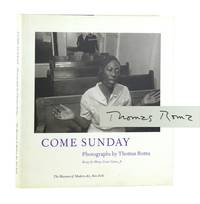
1996rif. UROMCOM00VJMuseum of Modern Art 1996. Fine. Roma Thomas. Come Sunday. New York: Museum of Modern Art 1996. 1st edition. 111pp. 4to. Purple cloth. Book condition: NF/NF. Dust Jacket Condition: . Essay by Henry Louis Gates Jr. Museum of Modern Art hardcover books
rif. B235453-2Roma 1990. 128pp. Prof. illus. mostly in color. Lrg. 4to. Wraps. Parallel texts in Italian and English. Roma, 1990. paperback books
1938rif. 1710831938. 171083 ROME. Il Gruppo Montecatini per l'autarchia mineraria. 72 pp. illustrated throughout with charts and photographs 10 pages on different coloured paper thumb-indexed with a loose map of the exhibition. Small 8vo publisher's silver wrappers in a new silver cloth box with an orange label. Rome: Mostra Autarchica del Minerale Italiano Anno XVII 1938. $2500.00 From the silver wrappers to the vari-coloured thumb index this is a small masterpiece and a splendid example of Italian interwar book design. A touch of foxing but overall a well-preserved copy of a rare work with OCLC listing only one copy in Italy. hardcover books
1938rif. 1699351938. ROME. La Milizia universitaria ai goliardi del mondo 1938-XVI. 240 pp. illustrated throughout with 12 additional plates on heavier paper present only in the first 200 copies. Folio 365 x 280 mm. publisher's full morocco. Milan: Italica editoriale 1938. Despite the overwhelming presence of Mussolini this is one of the most stunning Italian interwar photobooks with immense care taken with the design and layout. Although there is scattered foxing throughout it does not detract from the overall stunning impression made by the book. There is a little wear to the fragile boards which are not strong enough to support such a heavy book. One of the extra deluxe copies being No. 133 of 200 copies. OCLC lists only University of Siena presumably a trade version. Grillo Il Libro Fotografico Italiano 1931-1941. pp. 190-191. hardcover books
1938rif. 1711871938. ROME. Bozzetti di addobbo dell'urbe per la visita del Führer. Die Ausschmueckungsentwuerfe der Stadt Roms fuer den Besuch des Fuehrers. Folio 316 x 321 mm. publisher's cloth. Rome: n.p. 1938. An extremely pompous tome published to celebrate Hitler's visit to Rome. Perhaps the bad taste is a reflection of the visitor rather than the hosts. Signed by the governor of Rome Piero Colonna with his calling card laid in. OCLC lists only the Wolfsonian and Cleveland Public Library in the U.S. plus 5 in Europe. hardcover books
1954rif. 530328Rome: Apollon 1954. Softcover. Near Fine. First edition. Yellow wrappers. 77pp. Rubbing and slight edgewear else near fine. Apollon unknown books
1885rif. 138881885. Vintage albumen photograph of Castel Sant'Angelo identified in the caption by its ancient name "Mole Adriana" and Ponte Sant'Angelo in Rome dating from the nineteenth century. The view records two connected monuments spanning Roman antiquity papal Rome and the modern Italian capital: Emperor Hadrian constructed the original mausoleum in the second century CE while the adjoining ancient Pons Aelius now Ponte Sant'Angelo provided its monumental approach across the Tiber. Albumen photograph 9⅜ x 7¾ inches. Inscription on the lower border reads: "ROMA - Mole Adriana e Ponte S. Angelo." The Italian caption identifies the cylindrical Castel Sant'Angelo by reference to its original function as Hadrian's Mausoleum and names the bridge crossing the Tiber beside it. By the nineteenth century the former imperial tomb had undergone centuries of adaptation as a fortified stronghold papal residence and prison making its surviving ancient mass and later architectural additions a recurring subject for photographers documenting Rome. The photograph belongs to the nineteenth-century photographic record of Rome produced as the city underwent major political and urban change. Castel Sant'Angelo entered the property of the Italian state following the capture of Rome in 1870 and subsequently served as a military prison and barracks before becoming a national museum in 1925. The image preserves the appearance of the monument and its Tiber crossing before that final institutional transformation. Expected age wear and toning with a slight bend that is imperceptible when framed; very good condition. unknown books
1959rif. 423319New York: Florence Music Company / Chappell & Co. Inc 1959. Softcover. Very Good. Measuring 9" x 12". 6pp. Illustrated unstapled wrappers. About very good with some wear splitting along the spine and a dampstain to the topedge and the rear wrap. Inscribed on the front wrap to the show's stage manager by composer and lyricist Harold Rome: "For Ben Janney with thanks Harold Rome." It is additionally Signed by Leonard Gershe who wrote the book Lehman Engel musical director Michael Kidd director and choreography and David Merrick producer. Additionally laid in is the sheet music though not the outer wraps for the songs "Fair Warning" "Rose Lovejoy of Paradise Alley" "Anyone Would Love You" "Hoop De Dingle" and "Once Knew a Fella." A nice collection of autographs from this musical based on the classic 1939 western. Florence Music Company / Chappell & Co. Inc unknown books
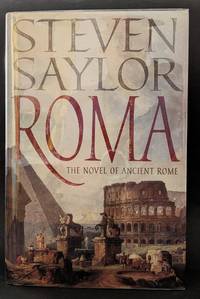
2007rif. 1484New York: St. Martin's Press 2007. 8vo. 240 x 165 mm. 9 ½ x 6 ½ inches. xviii 555 pp. Included in the preliminaries are: a Family Tree; a note on Roman Months and Days; a map of The Roman World; and a map of Rome as depicted in the novel. An author's note is included at the end. In addition to the two black and white maps in the preliminaries there are another ten black and white maps of Rome as depicted in the novel within the text. Publisher's maroon cloth over boards with gilt lettering on the spine; unclipped illustrated jacket. Book and Jacket are: As New: a seemingly unread copy. First Edition. Steven Saylor b. 1956 is an American writer of historical novels. His best-known series Roma Sub Rosa a historical mystery set in the final days of the Roman Republic began with Roman Blood in 1991 and spans thirteen novels. The present work Roma is the first in the Roma trilogy which was followed by Empire 2010 and Dominus 2021. It covers the thousand year history from the founding of Rome by Romulus and Remus to the collapse of the Roman Republic through the lens of two descendants of Rome's first families the Potitius and Pinarius clans. . St. Martin's Press unknown books
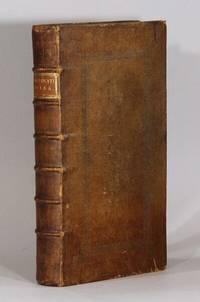
1716rif. 73616Hamburgi: sumtu Christiani Liebezeit 1716. First edition 2 volumes in 1 folio leaf 35.0 cm pp. xxii 2 284 52; 6 421 7; title pages printed in red and black Greek Latin and some Arabic in parallel columns; 3 engraved portraits engraved numismatic plate tables in the text woodcut initials and ornaments; title page in volume II with temoine; contemporary full paneled calf spine in 7 compartments morocco label in 1; slight cracking of the joints text a bit spotted and toned but in all a very good sound copy. Bookplate of Samuel James Baron Waring. Includes commentary of Claudius Salmasius Leo Allatius and Petrus Possinus. Hippolytus of Rome c. 165 - c. 235 AD was "one of the most important Christian thinkers of the second and third centuries. He was slain in Sardinia where he had been exiled for being elected as an antipope the first in the history of the Church" catholic.org/saints. Ebert 9770b. sumtu Christiani Liebezeit unknown books
1927rif. 30639London: The Nonesuch Press 1927. First edition 12mo pp. 6 136 4; decorative title-page printed in black and ocher decorative headpieces throughout; some offsetting to endpapers otherwise a very good clean copy enhanced by the presence of the fragile printed dust jacket with browned spine panel the ends chipped away about 1/2" a handful of small chips out along edges and light creasing to the bottom of the front panel. "The story of the strange friendship and stranger rivalry of an English gentleman and a Negro singer. A hectic story in fact with a saxophone accompaniment." dust jacket. Dreyfus 39. The Nonesuch Press unknown books
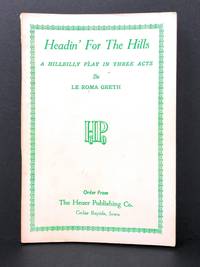
1952rif. 4382Cedar Rapids Iowa: The Heuer Publishing Co 1952. Paperback. Good. Paperback. 7 1/2" X 5". 80pp. Moderate wear to staplebound wraps with mild sunning soiling and edgewear. Binding is sound. Pencilled and color-pencilled marks and notations throughout. A solid 1952 printing of this play by Le Roma Greth. About Headin' for the Hills: "Cornelia Wellington Heister and her sister Dorthea are wealthy orphans whose only living relatives are a hillbilly family who run a general store in Lone Mule Tennessee. Their father's will insists that the girls spend their summers in Lone Mule with their Uncle Cyrus Goolus or forfeit their share of the fortune. Being a bit spoiled and accustomed to luxuries Cornelia in particular hates the arrangement and Uncle Cyrus is a miser who sees a chance to make himself some money. He decides to make life miserable for the girls so they'll run away and then he would inherit the entire fortune himself. In an avalanche of fun and laughter he shows the girls the absolute worst of hillbilly living. They don't discourage easily however and Cornelia even finds herself the object of adoration of Slim Hawkenshaw and begins to realize that perhaps mountaineers are human beings after all and her own way of life isn't so superior. Luckily Cornelia finds out about her Uncle's scam and decides two can play at that game! She and Dot pretend to go all out for the hillbilly life and even show Uncle Cyrus a thing or two. One interior set" publisher. The Heuer Publishing Co paperback books
1979rif. 432161979. Near fine. Large framed 4-color lithograph 75 x 55 cm / 29.5 x 21.5 in. used as the poster art for the 1979 world premiere of Williams' play Tiger Tail based on his film directed by Elia Kazan Baby Doll. The print is signed and inscribed by Williams: "For Marshall / ever -- / God be with you / Tennessee '79." The print is also signed by Rome with the designation "Tiger Proof." The play was produced and performed at the Hippodrome Theatre in Gainesville Florida where Williams was serving as artist-in-residence. The event was co-produced by the Joan Ling Gallery that held an exhibit of Rome's prints in the lobby during the run of the show. This artwork is offered along with a 25.5 x 19.5-in. poster at no extra cost mounted on foam core of the production at the Hippodrome running from Nov. 2 through Dec. 1. There is some scuffing to the frame and some very minor scratching to the glass but the lithograph is in near-fine to fine condition. The poster shows moderate scuffing and bumping. unknown books
1978rif. 28460Bridgewater CT: The Flume Press 1978. cloth leather spine label. Papermaking. 8vo. cloth leather spine label. 1011 pages. First edition. One of 450 copies printed by this private press of which this is one of 25 copies to be in a special binding and contains a specimen of paper made at The Red Mill located in Bridgewater CT. A charming essay about the joys and pitfalls of starting a papermaking mill. The book is illustrated by Elmer Garrett. Presentation on the half-title. Loosely inserted is a prospectus to the book a signed poem by Garrett a large newspaper clipping giving us history of the mill and two newspaper clippings listing the sale price of the mill. The Flume Press unknown books
1996rif. 49924New York: Museum of Modern Art / Harry N. Abrams 1996. Very Good/Very Good. New York: Museum of Modern Art / Harry N. Abrams 1996. Second 1997 Printing. Square quarto 26cm; publisher's cloth in white photo-illustrated dust jacket; 111pp.; halftone photographic illus. throughout. Jacket dust-soiled light foxing affecting external panels and early textblock leaves else Very Good and sound. Signed by the photographer on title page. Museum of Modern Art / Harry N. Abrams unknown books
1760rif. 5466Roma: A spese di Fausto Amidei Libraro al Corso sotto il Palazzo del Signor Marchese Raggi per Generoso Salomone 1760. EIGHTH EDITION EXPANDED. THIS IS THE SECOND ILLUSTRATED EDITION 1st 1750. Hardcover. Fine. TWO COPIES both bound in contemporary stiff vellum with speckled edges the first soiled; the second with small stains. Fine copies each with a little bit of light foxing and a few light stains. Second copy with light spots on plate 12 and a small stain on the half-title. The 30 folding plates are in excellent condition. This pairing each with variant plates provides a good opportunity for analysis of the composition of this edition. In the first copy there are twelve plates; in the second there are eighteen. Seven of the twelve plates in the second copy are different versions -two of them by Piranesi- of those in the first. These depict: the Campidoglio Piazza Trinità dei Monti the Lateran the Pantheon the Baths of Diocletian the Arch of Titus and Piazza Navona. In the eighteen-plate copy two plates the Belvedere and the Quirinal are by Piranesi; in the twelve-plate copy three are by Piranesi the aforementioned Belvedere the Lateran and Baths of Diocletian. The 1750 edition of "Mercurio Errante"the first with illustrations had twelve plates only though a number of them were not re-used for the 1760 edition. Some of the plates including those by Piranesi had been in use by the publisher Fausto Amadei since the 1740s. See for instance his "Roma moderna distinta per rioni" 1741; and "Varie vedute di Roma" 1745. The Piranesi plates among the artist's earliest were some of the only plates sold by Piranesi to other publishers. From 1748 on Piranesi would print his own works maintaining control of his plates. "Pietro Rossini an antiquarian from Pesaro and a professional guide for foreign visitors in Rome first published 'Il Mercurio Errante' in 1693. The guidebook quickly became very successful: ten more editions were published before 1788 including editions in 1704 1715 1739 1750 1760 1771 and 1776 according to Ludwig Schudt 1930. The structure of the book divided into three parts focused respectively on palaces villas and ancient Roman ruins and Christian churches remained unchanged through the 1715 edition which was expanded and revised by the author's son Giovanni Pietro Rossini. While the overall structure remained constant successive editions were updated like a Baedecker guide. For example new palaces are included and the current owners are identified for palaces that have changed hands. In the 1715 edition the buildings of Innocent XII are recorded in a separate chapter. Rossini's description of palaces is richer than those by his competitors and his expanded history of Roman private art collections is of greater importance. The discussion of antiquity is especially interesting for art historians since the transformation of ancient buildings into Christian churches is carefully charted. The nine principal churches are also dealt with in a separate chapter in the third part of the guide. The examination of current restorations makes Rossini's book an important document for archaeologists as well. "Schudt 1930 has shown how each successive edition offers additional material. The 1739 edition is important for the buildings sponsored by Clement XII; the second part includes not only the principal churches but also fifty more. In the 1750 edition the section on churches is further expanded including observations on Sant'Apollinare San Niccolo dei Lorenesi and San Lorenzo in Damaso as well as valuable information regarding the Lambertini pontificate. The 1760 edition adds further information about the pontificate of Benedict XIV describes the coffeehouse in the Quirinal Palace and includes Villa Albani. "The 1750 edition of the 'Mercurio errante' was rendered exceptional by the inclusion of a collection of remarkable illustrations. The authors of the plates are Giovanni Battista Piranesi Jean-Laurent Legeay and Philothee-François Duflos. "The structure of the guide in the 1750 edition and the 1760 edition that followed it is in two parts each divided into two books. The first book on palaces begins with a discussion of the foundation of Rome indelibly linked with the Capitoline whose palaces are the first to be described. Then follows the description of the Vatican beginning with the impressive statistics of the palace 12522 rooms and the library 35000 volumes; 1900 manuscripts from the collection of Christina the queen of Sweden bought by Alexander VIII and a more detailed examination of the painted wall decorations moving on to art objects whose origin and subsequent movements are often and usefully traced. Thus the bronze pineapple in the hemicycle of the Belvedere villa is traced to its previous locations in the atrium of Saint Peter's and on top of Hadrian's tomb now the fortress of the Vatican. "The sequence of palaces described does not follow any apparent order. However since the first one is the Palazzo Odescalchi the family palace of Innocent XI one could assume an attempt on Rossini's part to flatter the pope that was reigning when he began the composition of his guide to Rome. The painting collection in the Odescalchi bought from the heirs of Queen Christina was complemented by the family's distinguished collection of marble statues. Next Rossini examines the two residences of the duke of Parma in Rome the Farnesina villa and the Farnese palace both considered supreme examples of their building type architecturally and in their extraordinary decorations. Rossini explicitly appreciates the cornice of the Palazzo Farnese fashioned by Michelangelo from travertine taken from Vespasian's amphitheater the Colosseum. The Palazzo Giustiniani is distinguished by the largest art collection in Rome with its 1867 statues and 636 paintings. The Altieri palace across the street from the Gesù church another papal family residence is praised for its staircase and library. The Borghese palace is singled out for its seventy-two walnut doors and its one hundred columns of oriental granite supporting the porticoes of the ground floor as well as its collection of 1700 paintings. Rossini occasionally provides the price of a decorative object. He singles out the Chigi family palace for its design by Gian Lorenzo Bernini; the Colonna palace for its gallery paved in Sicilian jasper and giallo antico columns; the papal palace on the Quirinal for its superlative view; and the Barberini palace for its ten separate apartments the vault frescoed by Pietro da Cortona Poussin's Death of Germanicus which he considers the most beautiful painting in Rome and the silver furniture designed by Cortona. "From these heights of papal family houses and hilltops Rossini descends to the Corso and the Campo Marzio. He enjoys the staircase of the Palazzo Ruspoli the bibliophilic collections of the Palazzo Gualtieri eventually administered by his own son as librarian the paintings by Gentileschi then in the Palazzo Verospi and the gallery of Prince Pamphili frescoed by Cortona and mentions that the palace of the French Academy contained plaster copies of all the principal statues of Italy. "This dazzling tour of urban residences is followed in the third book by an equally impressive group of country houses located near Rome. The Villa Borghese just outside the city's walls is accorded the longest entry detailing the attractive grounds the grotto the flower garden and aviary as well as the highly ornate building by the mannerist architect Giovanni Vasanzio. Rossini claims that the Villa Borghese is richer and more beautiful than any ancient equivalents; he offers vivid anecdotes about the history of the collections. For example he explains that Cardinal Scipione Borghese obtained one of the two famed hermaphrodite statues found in the foundations of the new Santa Maria della Vittoria by paying for the facade of the church in exchange for the statue. "Like the palaces the villas were veritable museums of ancient and modern statuary. At the Villa Ludovisi was Bernini's Rape of Proserpina now in the Borghese collection. A statue of Neptune by the same artist decorated the Villa Montalto's fish farm while the Villa Mattei on the Celium had the largest number of marble urns with ancient inscriptions. The Farnese gardens on the Palatine Hill housed a triumphal arch in parts which was raised for every papal possesso at a cost of 3000 scudi each time; the gardens of the Villa Pamphili were and still are the largest in Rome surrounding a building that housed an armory with enough equipment for five hundred men. Rossini describes the muchadmired Aldobrandini wedding the ancient fresco that had been found in the baths of Titus now in the Vatican museum the battle of Lepanto frescoed by Antonio Tempesta in the Villa Medici and the view of Castro destroyed by Innocent X at the Villa Pamphili. The third book concludes with a section on villas further from Rome such as the Villa d'Este at Tivoli the Palazzo Farnese in Caprarola and the Villa Aldobrandini in Frascati. "The fourth book dealing with the antiquities of Rome is in some ways the most traditional. Reiterating the story of Rome's foundation Rossini now turns in the other direction to discuss the ancient public center of the city in the forum which at the end of the seventeenth century was still largely a handful of unexcavated ruins. In Rossini's time the arch of Septimius Severus for example was half buried but considered beautiful nonetheless since contemporaries understood that there was more to the monument than was visible. Rossini renders past glory vividly. In his account of the temple of Peace he explains that it had been the safe deposit for the property of the aristocrats serving as a storehouse for the spoils from the Temple of Solomon and when the Roman temple burned the great quantity of gold and silver melted and flowed like water from the fire. For Rossini the Colosseum of Vespasian named after the colossal statue of Nero that stood on the site was another imposing symbol of Roman conquest since it had been built by the twelve thousand Hebrews taken in slavery after the destruction of Jerusalem. As the reader of the first book on palaces would remember the Colosseum in turn served as a quarry for construction materials used in various Renaissance palaces such as the Cancelleria and the Farnese. "From the forum and its adjacent areas Rossini turns to a discussion of the hills of Rome providing an etymological history of each site and its most distinguished associations. Beyond the seven traditional sites he also includes the smaller Vatican Gianicolo Pincio Citorio Testaccio Giordano and Savelli hills largely associated with postclassical events and settlers. The topographic discussion of Roman hills concludes with a section on tombs and bridges connected through the Castel Sant' Angelo citadel and burial mound linked by the bridge over the Tiber to Rome. "The next large group of ancient buildings unified by type and discussed by Rossini are the baths which provide another opportunity to bandy large numbers about. Thus Rossini claims that the baths of Diocletian were built by forty thousand Christian slaves thirty thousand of whom perished during construction and that thirty-two hundred people could bathe there simultaneously. He continues with an extensive accounting of the forty-two obelisks of ancient Rome and a history of Rome's triumphal arches gates fountains and streets. Bringing to a close the 1750 edition is a chapter on the sacks of Rome with the cemeteries and sites of Christian martyrdom. "In the 1750 illustrated edition there is a separate section on churches. Previously included in the third part of the guide that discussed antiquities the Christian monuments now occupy the second book placed between palaces and villas. This discussion of churches is thus more substantial than in the previous editions with extensive sections on the nine principal basilicas followed by shorter entries on other churches arranged in alphabetical order and was perhaps prompted by the Jubilee Year. It includes a catalogue of the most beautiful places of worship in Rome. A breathtaking compendium Rossini's transformed book is more like a cultural history of the contemporary city than a mere topographical vade mecum to be used on visits through Rome."Millard Entry 117 p. 367-370. A spese di Fausto Amidei Libraro al Corso sotto il Palazzo del Signor Marchese Raggi, per Generoso Salomone hardcover books
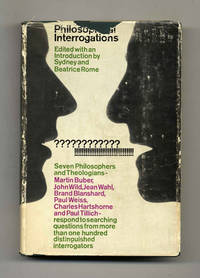
1964rif. 41989New York Chicago And San Francisco: Holt Rinehart and Winston. Very Good in Fair dust jacket. c1964. First Edition; First Printing. Hardcover. A first edition/first printing in Very Good condition with soiling and edgewear to the green boards in a price-clipped Fair dust-jacket with rubbing scuffing and edgewear with some large chips missing; Interrogations of Martin Buber John Wild Jean Wahl Brand Blanshard Paul Weiss Charles Hartshorne Paul Tillich; 8vo; 422 pages; FSA . Holt, Rinehart and Winston hardcover books
1912rif. 86703Oxford: At the Clarendon Press 1912. 1st ed. Hardcover. Very Good. This volume only. 94 black & white plates printed on one side and numbered 1-34 34A and 35-93. Original cloth-backed boards. 34 cm. Splitting along sides of backstrip. Other modest cover wear including some uneven cover fading and some small holes and other wear along rear joint. At the Clarendon Press hardcover books
1870rif. 30851Lemberg: Druckerei des Stauropigianischen Instituts 1870. Later edition. Hardcover. fair to g. 8vo. vi 239pp. Black pebbled cloth with gold-stamped design on cover. Hebrew and German title-pages. Hebrew introduction from the 1796 edition by the maskil Isaac Satanow. German introduction by M. Steinschneider. Collection of Hebrew poems by the fourteenth century poet Immanuel of Rome. A rare example of medieval Hebrew secular literature; this work was influenced by Dante's Divine Comedy. First published in 1491. Text in Hebrew. Spine missing. Binding in overall poor to fair interior in good to good condition. Title page information: "Mit erläuterndern Unmertungen und einer Lebensbeschreibung des Dischters von J. Wilheimer Religionslehrer in Eisenstadt. Nebst einer biografischen Skizze von Dr. M. Steinschneider herausgegeben von Michael Wolf. Druckerei des Stauropigianischen Instituts hardcover books
1892rif. 27946Viennae Vienna: Georg Brög 1892. Hardcover. g. Complete 8 volume set. Quarto. Original 3/4 morocco over red cloth with raised bands gold tooling and lettering on spines. All paper edges gilt. Title-pages in Latin and Hebrew. Fascinating work being the scientific edition of the Aruch a medieval lexicon of Talmud and Midrashic terms issued on the basis of the first editions and of seven manuscripts by Alexander Kohut. The Aruch is the work of a late eleventh century Italian scholar Nathan ben Jechiel of Rome and likely even influenced the commentaries of Rashi and the Tosafists. It was one of the first Hebrew books to be published. Contains an introduction and additions by the seventeenth century Hamburg physician Benjamin Musaphia. Text is mostly in Hebrew but contains Aramaic Latin Greek and German. Some age-wear on bindings with rubbing and minor abrasion along edges joints corners and head and tail of spines. Previous owner's bookplate on inside of each front cover Jewish Institute of Religion and previous owner's ex-libris on inside of each back cover Max Loewenthal and Helen Kohut Loewenthal. Slight age-toning throughout. Bindings in overall good- interior in good to very good condition. Title page info: "Auctore Nathane filio Jechielis Rabbino saec. XI celeberrimo Praeside scholarum Talmudicarum Romae; cum appendice ad discendum utili per Benjaminum Mussafiam medicum philosophum philogum et physicum ad contextum Aruchinum adjuncta. Ex disciplinis contextus Aruchini Venetiis anno 1531 editi et typis mandatorum optimi ita ex hujus cum editione princip ante 1480 nec non cum septem Aruchinis veteribus manuscriptis bono cum animo facta comparatione corrigit explet critice illustrat et edit Dr. Alexander Kohut Rabbinus V-Ecclesiis supremus. Propriis sumptibus Viennae 1878. Buchdruckerei von Georg Brõg in Wien IX. Maria Theresienstrasse 19. Unter der Leitung von P. Smolensky. Georg Brög hardcover books
1975rif. M15062Roma:: Edito dall'Accademia Medica di Roma 1975. 1975. Series: Bollettino ed atti della Accademia Medica di Roma. Figs. Original printed wrappers. Ownership stamp on title of Franco Crainz. Very good. The Medical Academy of Rome in its first century. Edito dall'Accademia Medica di Roma, 1975. unknown books
rif. 34413ARDENE Jean Paul. TRAITE DE LA CULTURE DES RENONCULES. Paris: Saugrain 1754. 12mo. Contemporary cat's paw calf. xxxviii 447 4 pages. First edition. A valuable work on the cultivation violets tulips and similar plants. Ardene was a French Jesuit. He describes the specific characteristics of the plants their cultivation places of growth and time of flowering. Very good in an ornately gilt handsome French binding. unknown books