SILVESTRE IsraelLivre Rare Book
30 005 résultats
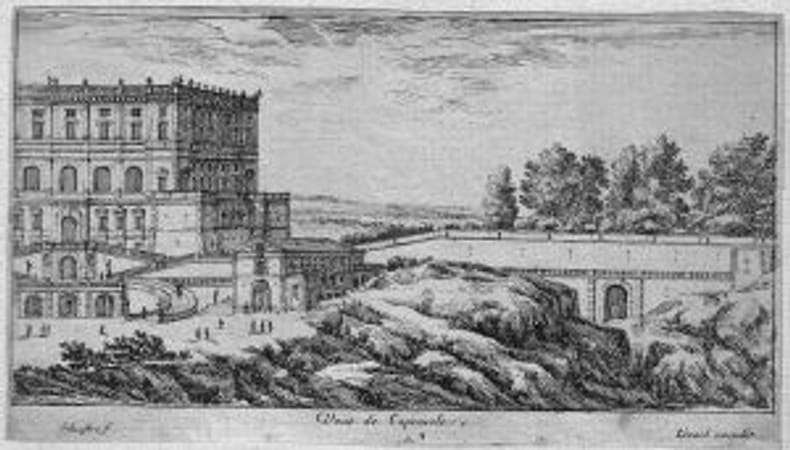
1650réf. 278931650 c. 1650, Paris.12.8 Veuë de Caprarole. Silvestre f. Israël excudit- H : 95 L : 170- de la Suite de 10 pièces sans numéros. Faucheux : 12.8 Baré : N° 723. Planche montée dans papier postérieur à grandes marges.
1650réf. 278941650 c. 1650, Paris.Veuë de l'Arc de Constantin a Rome. Silvestre F. Israël excudit- H : 98 L : 170 - Faucheux : 12.5 / Baré : N° 907- Cette image fait partie de la suite 12 : Vues de Rome et d'Italie.- de la Suite de 10 pièces sans numéros. Planche montée dans papier postérieur à grandes marges.
1900In 4? (cm 30), Brossura moderna in carta Varese, pagg.33 Stralcio di pagg. 33 (pagg. 469-502) con 37 ill. b.n. nt. contenente notizie relative alle scoperte archeolgiche presso: Vetulonia ("Scoperte di nuove sontuosi ripostigli, di circoli di pietre e di altre tombe ad inumazione e a cremazipone, durante gli scavi del 1899"); Castel Rubello; Roma ("Nuove scoperte nella citt? e nel suburbio"); Pompei ("relazione degli scavi fatti durante il mese di ottobre 1900"), ben conservato. L'articolo su Vetulonia (pagg. 28 ca.)? firmato da Isidoro Falchi ((Montopoli in Val d'Arno, 1838 ? Campiglia Marittima, 1914); quello su Castel Rubello da C. Franci; quello su Roma da Giuseppe Gatti (Roma, 1838 - Oriolo Romano, 1914); quello su Pompei da Antonio Sogliano (Napoli 1854 - ivi 1942).
1900In-4° pp. 34 con 7 tav. f.t. con le ill. dorate. Bross. edit. illustrata con rinforzo al dorso.
1725Pianta della città edita da Mattheus Seutter, inclusa nel suo "Atlas" del 1730. La pianta deriva da quella di Giovan Battista Falda del 1676, della quale è una fedele ed accurata riduzione. In alto a sinistra compare il ritratto del papa Benedetto XIII (1724-30) e a destra il suo stemma. In basso a sinistra un elenco del XIV rioni ed a destra una breve descrizione della città dal titolo di Rom. Sebbene stampata intorno al 1725, probabilmente in occasione del Giubileo visto l'inserimento delle Sette Basiliche, raffigura la città intorno al 1676. L'opera infatti non contempla le innovazioni architettoniche alla città durante il pontificato di Innocenzo XII e nemmeno il Porto di Ripetta del 1704. Matthäus Seutter (1678 - 1757) fu uno dei più importanti e prolifici editori tedeschi di mappe del XVIII secolo. Attivo, come incisore sotto la tutela dell'importante J. B. Homann. All'inizio del 1700 Seutter lasciò Homann per tornare ad Augusta, dove lavorò per l'importante editore d'arte Jeremia Wolff (1663 - 1724), per il quale incise mappe e altre stampe. Intorno al 1717 fondò la propria casa editrice cartografica indipendente ad Augusta. La maggior parte delle mappe di Seutter sono pesantemente basate, se non addirittura copie, di lavori precedenti fatti dalle calcografie Homann e De L'Isle. Ciononostante, dal 1731/32 Seutter era uno degli editori più prolifici del suo tempo e fu onorato dall'imperatore tedesco Carlo VI che gli diede il titolo di Geografo Imperiale, dopo il quale la maggior parte delle mappe successive includeva la denominazione Avec Privilege. Seutter continuò a pubblicare fino alla sua morte, all'apice della sua carriera, nel 1757. Incisione in rame, tipica coloritura a mano editoriale, in ottimo stato di conservazione. Map of the city edited by Mattheus Seutter, included in his "Atlas" of 1730. The map derives from that of Giovan Battista Falda of 1676, of which it is a faithful and accurate reduction. On the upper left is the portrait of Pope Benedetto XIII (1724-30) and on the right his coat of arms. In the lower left a list of the XIV districts and on the right a brief description of the city entitled Rom. Although printed around 1725, probably on the occasion of the Jubilee given the inclusion of the Seven Basilicas, it depicts the city around 1676. The work in fact does not contemplate the architectural innovations to the city during the pontificate of Innocenzo XII, nor the Port of Ripetta of 1704. Matthäus Seutter (1678 - 1757) was one of the most important and prolific German map publishers of the 18th century. Seutter was born the son of a goldsmith but apprenticed as a brewer. Apparently uninspired by the beer business, Seutter abandoned his apprenticeship and moved to Nuremberg where he apprenticed as an engraver under the tutelage of the prominent J. B. Homann. Sometime in the early 1700s Seutter left Homann to return to Augsburg, where he worked for the prominent art publisher jeremiad Wolff (1663 - 1724), for whom he engraved maps and other prints. Most of Seutter's maps are heavily based upon, if not copies of, earlier work done by the Homann and De L'Isle firms. Nonetheless, by 1731/32 Seutter was one of the most prolific publishers of his time and was honored by the German Emperor Karl VI who gave him the title of Imperial Geographer, after which most subsequent maps included the Avec Privilege designation. Copper engraving, typical editorial hand coloring, in excellent condition. Huelsen (1915): n. 121; Marigliani, Le Piante di Roma nelle Collezioni private, pag. 235, 140.
1725Pianta della città edita da Mattheus Seutter, inclusa nel suo Atlas Novus del 1730. La pianta deriva da quella di Giovan Battista Falda del 1676, della quale è una fedele ed accurata riduzione. Sebbene stampata intorno al 1725, probabilmente in occasione del Giubileo visto l'inserimento delle Sette Basiliche, raffigura la città intorno al 1676. L'opera infatti non contempla le innovazioni architettoniche alla città durante il pontificato di Innocenzo XII e nemmeno il Porto di Ripetta del 1704. E’ ancora riportato il terzo braccio di chiusura del colonnato di San Pietro, mai realizzzato. In alto a sinistra vedutine delle Sette Chiese principali e a destra stemma del papa Benedetto XIII (1724-1730). A sinistra in basso compare un elenco dei XIV rioni ed a destra una breve descrizione della città dal titolo Rom. In basso una scena allegorica con divinità fluviali. Matthäus Seutter (1678 - 1757) fu uno dei più importanti e prolifici editori tedeschi di mappe del XVIII secolo. Attivo, come incisore sotto la tutela dell'importante J. B. Homann. All'inizio del 1700 Seutter lasciò Homann per tornare ad Augusta, dove lavorò per l'importante editore d'arte Jeremia Wolff (1663 - 1724), per il quale incise mappe e altre stampe. Intorno al 1717 fondò la propria casa editrice cartografica indipendente ad Augusta. La maggior parte delle mappe di Seutter sono pesantemente basate, se non addirittura copie, di lavori precedenti fatti dalle calcografie Homann e De L'Isle. Ciononostante, dal 1731/32 Seutter era uno degli editori più prolifici del suo tempo e fu onorato dall'imperatore tedesco Carlo VI che gli diede il titolo di Geografo Imperiale, dopo il quale la maggior parte delle mappe successive includeva la denominazione Avec Privilege. Seutter continuò a pubblicare fino alla sua morte, all'apice della sua carriera, nel 1757. Acquaforte con coloritura editoriale, in ottimo stato di conservazione. Bibliografia Marigliani p. 234, n. 139; Scaccia Scarafoni n. 223. Map of the city edited by Mattheus Seutter, included in his "Atlas" of 1730. The map derives from that of Giovan Battista Falda of 1676, of which it is a faithful and accurate reduction. Although printed around 1725, probably on the occasion of the Jubilee given the inclusion of the Seven Basilicas, it depicts the city around 1676. The work in fact does not contemplate the architectural innovations to the city during the pontificate of Innocent XII, nor the Port of Ripetta of 1704. It still shows the third arm of the closing of the colonnade of St. Peter, never realized. In the upper left corner views of the Seven Main Churches and on the right the coat of arms of Pope Benedict XIII (1724-1730). On the lower left is a list of the XIV districts and on the right a brief description of the city entitled Rom. At the bottom an allegorical scene with river gods. Matthaeus Seutter (1678 - 1757) was one of the most important and prolific German map publishers of the 18th century. Seutter was born the son of a goldsmith but apprenticed as a brewer. Apparently uninspired by the beer business, Seutter abandoned his apprenticeship and moved to Nuremberg where he apprenticed as an engraver under the tutelage of the prominent J. B. Homann. Sometime in the early 1700s Seutter left Homann to return to Augsburg, where he worked for the prominent art publisher jeremiad Wolff (1663 - 1724), for whom he engraved maps and other prints. Most of Seutter's maps are heavily based upon, if not copies of, earlier work done by the Homann and De L'Isle firms. Nonetheless, by 1731/32 Seutter was one of the most prolific publishers of his time and was honored by the German Emperor Karl VI who gave him the title of Imperial Geographer, after which most subsequent maps included the Avec Privilege designation. Copper engraving, typical editorial hand coloring, in excellent condition. Bibliografia Marigliani p. 234, n. 139; Scaccia Scarafoni n. 223.
Folio (480 x 310 mm), engraved dedication portrait frontispiece, 44 ENGRAVINGS OF 46 (LACKING PLATES 9 & 10), 22 of which are double-page, the plates and the text pages are paginated continuously from 1 to 52, faint staining to blank upper margins, some light browning, nineteenth-century half calf, covers detached. Berlin Catatalogue, 1864.
1690Grande folio (490 x 320 mm), frontespizio, 52 cc. (incl. 5 carte di testo e 47 fogli con 49 tavole). Le tavole includono un ritratto calcografico del dedicatario dell'opera Cardinal Pietro Ottoboni, pro-nipote del papa Alessandro VIII disegnato da Pietro Lucatelli, 29 tavole disegnate e incise da Pietro Sancti Bartoli (4-8, 24- 45, 49, 50). Leggere fioriture, normalemente non prossime alle incisioni; legatura in piena pelle coeva con minori difetti alle cuffie e agli angoli. Bella copia, completa e genuina. Lo stampatore é indicato al colophon: 'Ex Typographia Io: Francisci de Buagnis'.
1998176 p., iil.; 24 cm. Brossura editoriale. Molto buono
1634réf. 3483Lugduni Batavorum, ex officina Elzeviriana. 1634. in-12 (13 x 7,7 cm), 8 ff., 310 pp., 17 ff., maroquin rouge, dos à cinq nerfs orné, triple filet encadrant les plats, roulette sur les coupes, dentelle intérieure, tranches dorées sur marbrures (reliure ancienne) titre-frontispice et portrait de l'auteur, bandeaux, cul-de-lampe, lettres ornées. Notes bibliophiques manuscrites en début d'ouvrage. Exemplaire aux armes sur les plats de Nicolas Lambert de Thorigny, Président du Parlement. Ex-Libris Mortimer L. Schiff.
réf. 8653Monaldini, Rome, 1779. 3 volumes in folio demi veau, pièces de titre maroquin rouge, texte en latin. «Volumen I statuas comprehendes»: lxiv, 115 pp., cvi planches; coiffes arasées et manque au caisson de queue, léger travail de vers sans atteinte au texte, mouillure claire en marge. «Volumen II continens protomas hermas clypeos et anaglypha»: viii, 109 pp., xc planches; légères épidermures. «Volumen III. continens anaglypha sarcophagos et inscriptiones»: viii, 193 pp., lcciv planches; mors fendu, léger manque à la coiffe supérieure. Au total, 9 vignettes, 4 lettrines, 3 frontispices, 1 dédicace, 270 planches gravées pleine page. Intérieur très frais.
1575Veduta tratta dall'opera I vestigi dell'antichità di Roma raccolti et ritratti in perspettiva da Stefano Du Perac parisino, pubblicata per la prima volta a Roma nel 1575 da Lorenzo Vaccari. Il volume consta di quaranta fogli tutti di tavole: il primo funge da frontespizio; nel secondo è ospitata la dedica a “Giacomo Buoncompagni governator generale di Santa Chiesa”. Étienne Du Pérac vi palesa le proprie intenzioni e in particolare sottolinea che “sarà dunque utile il libro […] et grato, et accetto agli studiosi dell’antichità per la diligenza che io ho usata in rappresentare fedelmente i residui della Romana grandezza”. Si affida poi all’ “autorità e virtù” del dedicatario perché possa favorire l’opera “bisognosa di molto lume” a causa dell’“oscurità dell’auttore”. In realtà, quando pubblica il libro, Étienne du Pérac è a Roma da oltre quindici anni, ed è noto se non altro per aver fornito la propria opera all’erudito veronese Onofrio Panvinio e aver dato alle stampe nel 1574 la pianta archeologica Urbis Romae Sciographia, ricostruzione topografica della Roma antica, cui sarebbe seguita, nel 1577, la pianta della Roma moderna, la Nova urbis Romae descriptio. Certo il mercato dell’editoria antiquaria era piuttosto affollato: nello stesso 1575 esce ad esempio per iniziativa di un altro francese, lo stampatore Antonio Lafreri (Antoine Lafréry), con il quale peraltro lo stesso Du Perac collabora, la raccolta iconografica Speculum Romanae Magnificentiae, che riunisce, incise da vari artisti, molte più immagini de I vestigi, non seguendo un’impostazione topografica e non, limitandosi agli edifici antichi ma inserendone di moderni nonché un repertorio di statue. Qui Du Pérac, partendo dal Campidoglio, scandisce il suo itinerario in trentanove tappe: in calce a ogni pagina una didascalia di poche righe fornisce le informazioni essenziali sugli edifici e le rovine. Non si tratta però di raffigurazioni di singoli monumenti, né tanto meno di ricostruzioni ideali, ma di vere e proprie vedute: immagini di grande qualità, paragonabili a quelle edite nel 1551 dall’incisore fiammingo Hieronymus Cock. Etienne Du Pérac o Duperac, nativo di Bordeaux o Parigi, si trasferisce presto a Venezia, dove apprende l’arte dell’incisione realizzando vari soggetti da Tiziano, principalmente per l’editore Giovanni Francesco Camocio. Arriva a Roma nel 1559 dove si dedica allo studio dell’architettura e delle antichità, con particolare attenzione alle opere di Michelangelo. A Roma conosce Onofrio Panvinio, archeologo ed antiquario, che lo influenza e lo introduce allo studio delle antichità romane. Come tutti gli artisti provenienti dal Nord Europa, rimane affascinato dalla maestosità delle rovine romane, decidendo di studiarle e raffigurarle. Le precedenti rappresentazioni dei monumenti di Roma, ad esempio quelle eseguite da Hieronimus Cock intorno al 1550, erano pittoriche ed arricchite da elementi di fantasia. La notevole importanza delle vedute di Roma del Duperac sta nel fatto che furono rappresentate con assoluta precisione archeologica e topografica, tanto da essere oggi studiate con grande attenzione dagli studiosi di archeologia, poiché spesso rappresentano monumenti e siti oggi andati perduti. L'opera ebbe ben 8 edizioni successive, alcune a cura della tipografia De Rossi. Incisione in rame, in ottimo stato di conservazione. View taken from the work I vestigi dell'antichità di Roma raccolti et ritratti in perspettiva da Stefano Du Perac parisino, published for the first time in Rome in 1575 by Lorenzo Vaccari. The volume consists of forty plates: the first serves as a frontispiece; the second contains the dedication to "Giacomo Buoncompagni governator generale di Santa Chiesa". Étienne Du Pérac expresses his intentions and in particular emphasizes that "the book [...] will therefore be useful and grateful, and accepted by scholars of antiquity for the diligence I have used in faithfully representing the remains of Roman grandeur". He then relies on the "authority and virtue" of the dedicatee so that he can encourage the work "in need of much light" because of the "obscurity of the author". When he published the book, Étienne du Pérac had been in Rome for more than fifteen years, and was known, if only for having supplied his work to the Veronese scholar Onofrio Panvinio and for having printed in 1574 the archaeological map Urbis Romae Sciographia, a topographical reconstruction of ancient Rome, which would be followed, in 1577, by the map of modern Rome, the Nova urbis Romae descriptio. Certainly the market of antiquarian publishing was quite crowded: in the same year 1575, for example, another Frenchman, the printer Antonio Lafreri (Antoine Lafréry), with whom Du Perac also collaborated, published the iconographic collection Speculum Romanae Magnificentiae, which brought together, engraved by various artists, many more images than I vestigi, not following a topographical approach and not limiting himself to ancient buildings but including modern ones as well as a repertoire of statues. Here Du Pérac, starting from the Capitol, outlines his itinerary in thirty-nine stages: at the bottom of each page a caption of a few lines provides essential information about the buildings and ruins. However, these are not representations of individual monuments, nor ideal reconstructions, but real views: images of great quality, comparable to those published in 1551 by the Flemish engraver Hieronymus Cock. Etienne Du Pérac or Duperac, born in Bordeaux or Paris, soon moved to Venice, where he learned the art of engraving by making various subjects from Titian, mainly for the publisher Giovanni Francesco Camocio. He arrived in Rome in 1559 where he devoted himself to the study of architecture and antiquities, with particular attention to the works of Michelangelo. In Rome he knows Onofrio Panvinio, archaeologist and antiquarian, who influences him and introduces him to the study of Roman antiquities. As all the artists coming from Northern Europe, he remains fascinated by the majesty of the Roman ruins, deciding to study and represent them. The previous representations of the monuments of Rome, for example those made by Hieronimus Cock around 1550, were pictorial and enriched with fantasy elements. The remarkable importance of the views of Rome by Duperac lies in the fact that they were represented with absolute archaeological and topographical precision, so as to be studied today with great attention by scholars of archaeology, since they often represent monuments and sites now lost. The work had 8 subsequent editions, some by the De Rossi printing house. Copper engraving, in excellent condition. Robert Dusmenil, Peintre Graveur Francais, vol. VIII, pp. 92-99, 1-40; Reed & Wallace, Italian Etchers of the Renaissance & Barocque, p. 83,84.
1575Veduta tratta dall'opera I vestigi dell'antichità di Roma raccolti et ritratti in perspettiva da Stefano Du Perac parisino, pubblicata per la prima volta a Roma nel 1575 da Lorenzo Vaccari. Il volume consta di quaranta fogli tutti di tavole: il primo funge da frontespizio; nel secondo è ospitata la dedica a “Giacomo Buoncompagni governator generale di Santa Chiesa”. Étienne Du Pérac vi palesa le proprie intenzioni e in particolare sottolinea che “sarà dunque utile il libro […] et grato, et accetto agli studiosi dell’antichità per la diligenza che io ho usata in rappresentare fedelmente i residui della Romana grandezza”. Si affida poi all’ “autorità e virtù” del dedicatario perché possa favorire l’opera “bisognosa di molto lume” a causa dell’“oscurità dell’auttore”. In realtà, quando pubblica il libro, Étienne du Pérac è a Roma da oltre quindici anni, ed è noto se non altro per aver fornito la propria opera all’erudito veronese Onofrio Panvinio e aver dato alle stampe nel 1574 la pianta archeologica Urbis Romae Sciographia, ricostruzione topografica della Roma antica, cui sarebbe seguita, nel 1577, la pianta della Roma moderna, la Nova urbis Romae descriptio. Certo il mercato dell’editoria antiquaria era piuttosto affollato: nello stesso 1575 esce ad esempio per iniziativa di un altro francese, lo stampatore Antonio Lafreri (Antoine Lafréry), con il quale peraltro lo stesso Du Perac collabora, la raccolta iconografica Speculum Romanae Magnificentiae, che riunisce, incise da vari artisti, molte più immagini de I vestigi, non seguendo un’impostazione topografica e non, limitandosi agli edifici antichi ma inserendone di moderni nonché un repertorio di statue. Qui Du Pérac, partendo dal Campidoglio, scandisce il suo itinerario in trentanove tappe: in calce a ogni pagina una didascalia di poche righe fornisce le informazioni essenziali sugli edifici e le rovine. Non si tratta però di raffigurazioni di singoli monumenti, né tanto meno di ricostruzioni ideali, ma di vere e proprie vedute: immagini di grande qualità, paragonabili a quelle edite nel 1551 dall’incisore fiammingo Hieronymus Cock. Etienne Du Pérac o Duperac, nativo di Bordeaux o Parigi, si trasferisce presto a Venezia, dove apprende l’arte dell’incisione realizzando vari soggetti da Tiziano, principalmente per l’editore Giovanni Francesco Camocio. Arriva a Roma nel 1559 dove si dedica allo studio dell’architettura e delle antichità, con particolare attenzione alle opere di Michelangelo. A Roma conosce Onofrio Panvinio, archeologo ed antiquario, che lo influenza e lo introduce allo studio delle antichità romane. Come tutti gli artisti provenienti dal Nord Europa, rimane affascinato dalla maestosità delle rovine romane, decidendo di studiarle e raffigurarle. Le precedenti rappresentazioni dei monumenti di Roma, ad esempio quelle eseguite da Hieronimus Cock intorno al 1550, erano pittoriche ed arricchite da elementi di fantasia. La notevole importanza delle vedute di Roma del Duperac sta nel fatto che furono rappresentate con assoluta precisione archeologica e topografica, tanto da essere oggi studiate con grande attenzione dagli studiosi di archeologia, poiché spesso rappresentano monumenti e siti oggi andati perduti. L'opera ebbe ben 8 edizioni successive, alcune a cura della tipografia De Rossi. Incisione in rame, in ottimo stato di conservazione. View taken from the work I vestigi dell'antichità di Roma raccolti et ritratti in perspettiva da Stefano Du Perac parisino, published for the first time in Rome in 1575 by Lorenzo Vaccari. The volume consists of forty plates: the first serves as a frontispiece; the second contains the dedication to "Giacomo Buoncompagni governator generale di Santa Chiesa". Étienne Du Pérac expresses his intentions and in particular emphasizes that "the book [...] will therefore be useful and grateful, and accepted by scholars of antiquity for the diligence I have used in faithfully representing the remains of Roman grandeur". He then relies on the "authority and virtue" of the dedicatee so that he can encourage the work "in need of much light" because of the "obscurity of the author". When he published the book, Étienne du Pérac had been in Rome for more than fifteen years, and was known, if only for having supplied his work to the Veronese scholar Onofrio Panvinio and for having printed in 1574 the archaeological map Urbis Romae Sciographia, a topographical reconstruction of ancient Rome, which would be followed, in 1577, by the map of modern Rome, the Nova urbis Romae descriptio. Certainly the market of antiquarian publishing was quite crowded: in the same year 1575, for example, another Frenchman, the printer Antonio Lafreri (Antoine Lafréry), with whom Du Perac also collaborated, published the iconographic collection Speculum Romanae Magnificentiae, which brought together, engraved by various artists, many more images than I vestigi, not following a topographical approach and not limiting himself to ancient buildings but including modern ones as well as a repertoire of statues. Here Du Pérac, starting from the Capitol, outlines his itinerary in thirty-nine stages: at the bottom of each page a caption of a few lines provides essential information about the buildings and ruins. However, these are not representations of individual monuments, nor ideal reconstructions, but real views: images of great quality, comparable to those published in 1551 by the Flemish engraver Hieronymus Cock. Etienne Du Pérac or Duperac, born in Bordeaux or Paris, soon moved to Venice, where he learned the art of engraving by making various subjects from Titian, mainly for the publisher Giovanni Francesco Camocio. He arrived in Rome in 1559 where he devoted himself to the study of architecture and antiquities, with particular attention to the works of Michelangelo. In Rome he knows Onofrio Panvinio, archaeologist and antiquarian, who influences him and introduces him to the study of Roman antiquities. As all the artists coming from Northern Europe, he remains fascinated by the majesty of the Roman ruins, deciding to study and represent them. The previous representations of the monuments of Rome, for example those made by Hieronimus Cock around 1550, were pictorial and enriched with fantasy elements. The remarkable importance of the views of Rome by Duperac lies in the fact that they were represented with absolute archaeological and topographical precision, so as to be studied today with great attention by scholars of archaeology, since they often represent monuments and sites now lost. The work had 8 subsequent editions, some by the De Rossi printing house. Copper engraving, in excellent condition.
1606Veduta tratta dalla serie "Vestigi delle Antichità di Roma Tivoli Pozzuolo et altri luoghi", che il Sadeler incide, riprendendole dalla serie del francese Stefano Du Pérac, con la tecnica del bulino e in formato ridotto.L'opera consta di 50 tavole pubblicate da Marco Sadeler nel 1606 a Praga, attivissimo centro culturale, con lo stesso titolo "Vestigi delle Antichità di Roma" e le medesime descrizioni del Du Pérac in lingua italiana, senza citare l'inventore.Incisore di corte presso Rodolfo II, il Sadeler aveva compiuto viaggi in Germania e in Italia, soggiornando a Roma nel 1593.Nella sua opera compaiono però anche vedute di "... Tivoli, Pozzuolo et altri luochi" che mancano in quella del Du Pérac (sono tredici le tavole nuove) nelle quali viene accentuato l'aspetto naturalistico.Bulino, impresso su carta vergata coeva, con margini, perfetto stato di conservazione. View taken from "Vestigi delle Antichità di Roma Tivoli Pozzuolo et altri luoghi", after Etienne Duperac.Lettered in lower margin, with publisher's address and with Italian key to letters from within composition: "Marco Sadeler excudit.".Engraving, 1606, second state with publisher's address. The work consists of 50 plates first published by Marco Sadeler in 1606 in Prague with the same title and the same descriptions of Du Pérac in Italian. After taht the plates are re issued in Rome by Domenico De'Rossi. Engraver at the court of Rudolf II, Sadeler had made trips to Germany and Italy, staying in Rome in 1593. In his work appear but also views of Tivoli and Pozzuoli lmissing in that of Du Pérac (are thirteen new plates) in which is emphasized naturalistic. A fine impression, printed on contemporary laid paper, with margins, good condition.
1606Veduta tratta dalla serie "Vestigi delle Antichità di Roma Tivoli Pozzuolo et altri luoghi", che il Sadeler incide, riprendendole dalla serie del francese Stefano Du Pérac, con la tecnica del bulino e in formato ridotto.L'opera consta di 50 tavole pubblicate da Marco Sadeler nel 1606 a Praga, attivissimo centro culturale, con lo stesso titolo "Vestigi delle Antichità di Roma" e le medesime descrizioni del Du Pérac in lingua italiana, senza citare l'inventore.Incisore di corte presso Rodolfo II, il Sadeler aveva compiuto viaggi in Germania e in Italia, soggiornando a Roma nel 1593.Nella sua opera compaiono però anche vedute di "... Tivoli, Pozzuolo et altri luochi" che mancano in quella del Du Pérac (sono tredici le tavole nuove) nelle quali viene accentuato l'aspetto naturalistico.Bulino, impresso su carta vergata coeva, con margini, perfetto stato di conservazione. View taken from "Vestigi delle Antichità di Roma Tivoli Pozzuolo et altri luoghi", after Etienne Duperac.Lettered in lower margin, with publisher's address and with Italian key to letters from within composition: "Marco Sadeler excudit.".Engraving, 1606, second state with publisher's address. The work consists of 50 plates first published by Marco Sadeler in 1606 in Prague with the same title and the same descriptions of Du Pérac in Italian. After taht the plates are re issued in Rome by Domenico De'Rossi. Engraver at the court of Rudolf II, Sadeler had made trips to Germany and Italy, staying in Rome in 1593. In his work appear but also views of Tivoli and Pozzuoli lmissing in that of Du Pérac (are thirteen new plates) in which is emphasized naturalistic. A fine impression, printed on contemporary laid paper, with margins, good condition.
1606Veduta tratta dalla serie "Vestigi delle Antichità di Roma Tivoli Pozzuolo et altri luoghi", che il Sadeler incide, riprendendole dalla serie del francese Stefano Du Pérac, con la tecnica del bulino e in formato ridotto.L'opera consta di 50 tavole pubblicate da Marco Sadeler nel 1606 a Praga, attivissimo centro culturale, con lo stesso titolo "Vestigi delle Antichità di Roma" e le medesime descrizioni del Du Pérac in lingua italiana, senza citare l'inventore.Incisore di corte presso Rodolfo II, il Sadeler aveva compiuto viaggi in Germania e in Italia, soggiornando a Roma nel 1593.Nella sua opera compaiono però anche vedute di "... Tivoli, Pozzuolo et altri luochi" che mancano in quella del Du Pérac (sono tredici le tavole nuove) nelle quali viene accentuato l'aspetto naturalistico.Bulino, impresso su carta vergata coeva, con margini, perfetto stato di conservazione. View taken from "Vestigi delle Antichità di Roma Tivoli Pozzuolo et altri luoghi", after Etienne Duperac.Lettered in lower margin, with publisher's address and with Italian key to letters from within composition: "Marco Sadeler excudit.".Engraving, 1606, second state with publisher's address. The work consists of 50 plates first published by Marco Sadeler in 1606 in Prague with the same title and the same descriptions of Du Pérac in Italian. After taht the plates are re issued in Rome by Domenico De'Rossi. Engraver at the court of Rudolf II, Sadeler had made trips to Germany and Italy, staying in Rome in 1593. In his work appear but also views of Tivoli and Pozzuoli lmissing in that of Du Pérac (are thirteen new plates) in which is emphasized naturalistic. A fine impression, printed on contemporary laid paper, with margins, good condition.
1606Veduta tratta dalla serie "Vestigi delle Antichità di Roma Tivoli Pozzuolo et altri luoghi", che il Sadeler incide, riprendendole dalla serie del francese Stefano Du Pérac, con la tecnica del bulino e in formato ridotto.L'opera consta di 50 tavole pubblicate da Marco Sadeler nel 1606 a Praga, attivissimo centro culturale, con lo stesso titolo "Vestigi delle Antichità di Roma" e le medesime descrizioni del Du Pérac in lingua italiana, senza citare l'inventore.Incisore di corte presso Rodolfo II, il Sadeler aveva compiuto viaggi in Germania e in Italia, soggiornando a Roma nel 1593.Nella sua opera compaiono però anche vedute di "... Tivoli, Pozzuolo et altri luochi" che mancano in quella del Du Pérac (sono tredici le tavole nuove) nelle quali viene accentuato l'aspetto naturalistico.Bulino, impresso su carta vergata coeva, con margini, perfetto stato di conservazione. View taken from "Vestigi delle Antichità di Roma Tivoli Pozzuolo et altri luoghi", after Etienne Duperac.Lettered in lower margin, with publisher's address and with Italian key to letters from within composition: "Marco Sadeler excudit.".Engraving, 1606, second state with publisher's address.The work consists of 50 plates first published by Marco Sadeler in 1606 in Prague with the same title and the same descriptions of Du Pérac in Italian.After taht the plates are re issued in Rome by Domenico De'Rossi. Engraver at the court of Rudolf II, Sadeler had made trips to Germany and Italy, staying in Rome in 1593. In his work appear but also views of Tivoli and Pozzuoli lmissing in that of Du Pérac (are thirteen new plates) in which is emphasized naturalistic.A fine impression, printed on contemporary laid paper, with margins, good condition. Hollstein, F W H, Dutch and Flemish etchings, engravings and woodcuts c.1450-1700, Amsterdam, 1949.
1606Veduta tratta dalla serie Vestigi delle Antichità di Roma Tivoli Pozzuolo et altri luoghi, che Sadeler incide, riprendendole dalla serie del francese Stefano Du Pérac, con la tecnica del bulino e in formato ridotto. L'opera consta di 50 tavole, pubblicate da Marco Sadeler nel 1606 a Praga, attivissimo centro culturale, con lo stesso titolo Vestigi delle Antichità di Roma e le medesime descrizioni di Du Pérac in lingua italiana, manca la citazione dell'inventore. Incisore di corte presso Rodolfo II, Sadeler aveva compiuto viaggi in Germania e in Italia, soggiornando a Roma nel 1593. Nella sua opera compaiono però anche vedute di “... Tivoli, Pozzuolo et altri luochi”, che mancano in quella di Du Pérac (sono tredici le tavole nuove), nelle quali viene accentuato l'aspetto naturalistico). Bulino, impresso su carta vergata coeva, con margini, perfetto stato di conservazione. View taken from Vestigi delle Antichità di Roma Tivoli Pozzuolo et altri luoghi, after Etienne Du Pérac. Lettered in lower margin, with publisher's address and with Italian key to letters from within composition: “Marco Sadeler excudit.”. Engraving, 1606, second state with publisher’s address. The work consists of 50 plates first published by Marco Sadeler in 1606 in Prague with the same title and the same descriptions of Du Pérac in Italian. After taht the plates are re issued in Rome by Domenico De’ Rossi. Engraver at the court of Rudolf II, Sadeler had made trips to Germany and Italy, staying in Rome in 1593. In his work appear also views of Tivoli and Pozzuoli missing in that of Du Pérac (are thirteen new plates) in which is emphasized naturalistic. A fine impression, printed on contemporary laid paper, with margins, good condition.
Sin lugar ni año (¿Roma?, hacia 1600), magnífoco grabado del Teatro de Marcelo de Roma, de 21,5 x 38 cm. (Margenes muy deteriorados y una pequeña restauraciónen parte blanca).
1606Veduta tratta dalla serie "Vestigi delle Antichità di Roma Tivoli Pozzuolo et altri luoghi", che il Sadeler incide, riprendendole dalla serie del francese Stefano Du Pérac, con la tecnica del bulino e in formato ridotto.L'opera consta di 50 tavole pubblicate da Marco Sadeler nel 1606 a Praga, attivissimo centro culturale, con lo stesso titolo "Vestigi delle Antichità di Roma" e le medesime descrizioni del Du Pérac in lingua italiana, senza citare l'inventore.Incisore di corte presso Rodolfo II, il Sadeler aveva compiuto viaggi in Germania e in Italia, soggiornando a Roma nel 1593.Nella sua opera compaiono però anche vedute di "... Tivoli, Pozzuolo et altri luochi" che mancano in quella del Du Pérac (sono tredici le tavole nuove) nelle quali viene accentuato l'aspetto naturalistico.Bulino, impresso su carta vergata coeva, con margini, perfetto stato di conservazione. View taken from "Vestigi delle Antichità di Roma Tivoli Pozzuolo et altri luoghi", after Etienne Duperac.Lettered in lower margin, with publisher's address and with Italian key to letters from within composition: "Marco Sadeler excudit.".Engraving, 1606, second state with publisher's address.The work consists of 50 plates first published by Marco Sadeler in 1606 in Prague with the same title and the same descriptions of Du Pérac in Italian.After taht the plates are re issued in Rome by Domenico De'Rossi. Engraver at the court of Rudolf II, Sadeler had made trips to Germany and Italy, staying in Rome in 1593. In his work appear but also views of Tivoli and Pozzuoli lmissing in that of Du Pérac (are thirteen new plates) in which is emphasized naturalistic.A fine impression, printed on contemporary laid paper, with margins, good condition. Hollstein, F W H, Dutch and Flemish etchings, engravings and woodcuts c.1450-1700, Amsterdam, 1949.
1606Veduta tratta dalla serie "Vestigi delle Antichità di Roma Tivoli Pozzuolo et altri luoghi", che il Sadeler incide, riprendendole dalla serie del francese Stefano Du Pérac, con la tecnica del bulino e in formato ridotto. L'opera consta di 50 tavole pubblicate da Marco Sadeler nel 1606 a Praga, attivissimo centro culturale, con lo stesso titolo "Vestigi delle Antichità di Roma" e le medesime descrizioni del Du Pérac in lingua italiana, senza citare l'inventore. Incisore di corte presso Rodolfo II, il Sadeler aveva compiuto viaggi in Germania e in Italia, soggiornando a Roma nel 1593. Nella sua opera compaiono però anche vedute di "... Tivoli, Pozzuolo et altri luochi" che mancano in quella del Du Pérac (sono tredici le tavole nuove) nelle quali viene accentuato l'aspetto naturalistico. Bulino, impresso su carta vergata coeva, con margini, perfetto stato di conservazione. View taken from "Vestigi delle Antichità di Roma Tivoli Pozzuolo et altri luoghi", after Etienne Duperac.Lettered in lower margin, with publisher's address and with Italian key to letters from within composition: "Marco Sadeler excudit.".Engraving, 1606, second state with publisher's address. The work consists of 50 plates first published by Marco Sadeler in 1606 in Prague with the same title and the same descriptions of Du Pérac in Italian. After taht the plates are re issued in Rome by Domenico De'Rossi. Engraver at the court of Rudolf II, Sadeler had made trips to Germany and Italy, staying in Rome in 1593. In his work appear but also views of Tivoli and Pozzuoli lmissing in that of Du Pérac (are thirteen new plates) in which is emphasized naturalistic. A fine impression, printed on contemporary laid paper, with margins, good condition. Hollstein, F W H, Dutch and Flemish etchings, engravings and woodcuts c.1450-1700, Amsterdam, 1949.
1606Veduta tratta dalla serie "Vestigi delle Antichità di Roma Tivoli Pozzuolo et altri luoghi", che il Sadeler incide, riprendendole dalla serie del francese Stefano Du Pérac, con la tecnica del bulino e in formato ridotto. L'opera consta di 50 tavole pubblicate da Marco Sadeler nel 1606 a Praga, attivissimo centro culturale, con lo stesso titolo "Vestigi delle Antichità di Roma" e le medesime descrizioni del Du Pérac in lingua italiana, senza citare l'inventore. Incisore di corte presso Rodolfo II, il Sadeler aveva compiuto viaggi in Germania e in Italia, soggiornando a Roma nel 1593. Nella sua opera compaiono però anche vedute di "... Tivoli, Pozzuolo et altri luochi" che mancano in quella del Du Pérac (sono tredici le tavole nuove) nelle quali viene accentuato l'aspetto naturalistico. Bulino, impresso su carta vergata coeva, con margini, perfetto stato di conservazione. View taken from "Vestigi delle Antichità di Roma Tivoli Pozzuolo et altri luoghi", after Etienne Duperac.Lettered in lower margin, with publisher's address and with Italian key to letters from within composition: "Marco Sadeler excudit.".Engraving, 1606, second state with publisher's address. The work consists of 50 plates first published by Marco Sadeler in 1606 in Prague with the same title and the same descriptions of Du Pérac in Italian. After taht the plates are re issued in Rome by Domenico De'Rossi. Engraver at the court of Rudolf II, Sadeler had made trips to Germany and Italy, staying in Rome in 1593. In his work appear but also views of Tivoli and Pozzuoli lmissing in that of Du Pérac (are thirteen new plates) in which is emphasized naturalistic. A fine impression, printed on contemporary laid paper, with margins, good condition. Hollstein, F W H, Dutch and Flemish etchings, engravings and woodcuts c.1450-1700, Amsterdam, 1949.
1606Veduta tratta dalla serie "Vestigi delle Antichità di Roma Tivoli Pozzuolo et altri luoghi", che il Sadeler incide, riprendendole dalla serie del francese Stefano Du Pérac, con la tecnica del bulino e in formato ridotto.L'opera consta di 50 tavole pubblicate da Marco Sadeler nel 1606 a Praga, attivissimo centro culturale, con lo stesso titolo "Vestigi delle Antichità di Roma" e le medesime descrizioni del Du Pérac in lingua italiana, senza citare l'inventore.Incisore di corte presso Rodolfo II, il Sadeler aveva compiuto viaggi in Germania e in Italia, soggiornando a Roma nel 1593.Nella sua opera compaiono però anche vedute di "... Tivoli, Pozzuolo et altri luochi" che mancano in quella del Du Pérac (sono tredici le tavole nuove) nelle quali viene accentuato l'aspetto naturalistico.Bulino, impresso su carta vergata coeva, con margini, perfetto stato di conservazione. View taken from "Vestigi delle Antichità di Roma Tivoli Pozzuolo et altri luoghi", after Etienne Duperac.Lettered in lower margin, with publisher's address and with Italian key to letters from within composition: "Marco Sadeler excudit.".Engraving, 1606, second state with publisher's address. The work consists of 50 plates first published by Marco Sadeler in 1606 in Prague with the same title and the same descriptions of Du Pérac in Italian. After taht the plates are re issued in Rome by Domenico De'Rossi. Engraver at the court of Rudolf II, Sadeler had made trips to Germany and Italy, staying in Rome in 1593. In his work appear but also views of Tivoli and Pozzuoli lmissing in that of Du Pérac (are thirteen new plates) in which is emphasized naturalistic. A fine impression, printed on contemporary laid paper, with margins, good condition.
1575Veduta tratta dall'opera I vestigi dell'antichità di Roma raccolti et ritratti in perspettiva da Stefano Du Perac parisino, pubblicata per la prima volta a Roma nel 1575 da Lorenzo Vaccari. Il volume consta di quaranta fogli tutti di tavole: il primo funge da frontespizio; nel secondo è ospitata la dedica a “Giacomo Buoncompagni governator generale di Santa Chiesa”. Étienne Du Pérac vi palesa le proprie intenzioni e in particolare sottolinea che “sarà dunque utile il libro […] et grato, et accetto agli studiosi dell’antichità per la diligenza che io ho usata in rappresentare fedelmente i residui della Romana grandezza”. Si affida poi all’ “autorità e virtù” del dedicatario perché possa favorire l’opera “bisognosa di molto lume” a causa dell’“oscurità dell’auttore”. In realtà, quando pubblica il libro, Étienne du Pérac è a Roma da oltre quindici anni, ed è noto se non altro per aver fornito la propria opera all’erudito veronese Onofrio Panvinio e aver dato alle stampe nel 1574 la pianta archeologica Urbis Romae Sciographia, ricostruzione topografica della Roma antica, cui sarebbe seguita, nel 1577, la pianta della Roma moderna, la Nova urbis Romae descriptio. Certo il mercato dell’editoria antiquaria era piuttosto affollato: nello stesso 1575 esce ad esempio per iniziativa di un altro francese, lo stampatore Antonio Lafreri (Antoine Lafréry), con il quale peraltro lo stesso Du Perac collabora, la raccolta iconografica Speculum Romanae Magnificentiae, che riunisce, incise da vari artisti, molte più immagini de I vestigi, non seguendo un’impostazione topografica e non, limitandosi agli edifici antichi ma inserendone di moderni nonché un repertorio di statue. Qui Du Pérac, partendo dal Campidoglio, scandisce il suo itinerario in trentanove tappe: in calce a ogni pagina una didascalia di poche righe fornisce le informazioni essenziali sugli edifici e le rovine. Non si tratta però di raffigurazioni di singoli monumenti, né tanto meno di ricostruzioni ideali, ma di vere e proprie vedute: immagini di grande qualità, paragonabili a quelle edite nel 1551 dall’incisore fiammingo Hieronymus Cock. Etienne Du Pérac o Duperac, nativo di Bordeaux o Parigi, si trasferisce presto a Venezia, dove apprende l’arte dell’incisione realizzando vari soggetti da Tiziano, principalmente per l’editore Giovanni Francesco Camocio. Arriva a Roma nel 1559 dove si dedica allo studio dell’architettura e delle antichità, con particolare attenzione alle opere di Michelangelo. A Roma conosce Onofrio Panvinio, archeologo ed antiquario, che lo influenza e lo introduce allo studio delle antichità romane. Come tutti gli artisti provenienti dal Nord Europa, rimane affascinato dalla maestosità delle rovine romane, decidendo di studiarle e raffigurarle. Le precedenti rappresentazioni dei monumenti di Roma, ad esempio quelle eseguite da Hieronimus Cock intorno al 1550, erano pittoriche ed arricchite da elementi di fantasia. La notevole importanza delle vedute di Roma del Duperac sta nel fatto che furono rappresentate con assoluta precisione archeologica e topografica, tanto da essere oggi studiate con grande attenzione dagli studiosi di archeologia, poiché spesso rappresentano monumenti e siti oggi andati perduti. L'opera ebbe ben 8 edizioni successive, alcune a cura della tipografia De Rossi. Incisione in rame, in ottimo stato di conservazione. View taken from the work I vestigi dell'antichità di Roma raccolti et ritratti in perspettiva da Stefano Du Perac parisino, published for the first time in Rome in 1575 by Lorenzo Vaccari. The volume consists of forty plates: the first serves as a frontispiece; the second contains the dedication to "Giacomo Buoncompagni governator generale di Santa Chiesa". Étienne Du Pérac expresses his intentions and in particular emphasizes that "the book [...] will therefore be useful and grateful, and accepted by scholars of antiquity for the diligence I have used in faithfully representing the remains of Roman grandeur". He then relies on the "authority and virtue" of the dedicatee so that he can encourage the work "in need of much light" because of the "obscurity of the author". When he published the book, Étienne du Pérac had been in Rome for more than fifteen years, and was known, if only for having supplied his work to the Veronese scholar Onofrio Panvinio and for having printed in 1574 the archaeological map Urbis Romae Sciographia, a topographical reconstruction of ancient Rome, which would be followed, in 1577, by the map of modern Rome, the Nova urbis Romae descriptio. Certainly the market of antiquarian publishing was quite crowded: in the same year 1575, for example, another Frenchman, the printer Antonio Lafreri (Antoine Lafréry), with whom Du Perac also collaborated, published the iconographic collection Speculum Romanae Magnificentiae, which brought together, engraved by various artists, many more images than I vestigi, not following a topographical approach and not limiting himself to ancient buildings but including modern ones as well as a repertoire of statues. Here Du Pérac, starting from the Capitol, outlines his itinerary in thirty-nine stages: at the bottom of each page a caption of a few lines provides essential information about the buildings and ruins. However, these are not representations of individual monuments, nor ideal reconstructions, but real views: images of great quality, comparable to those published in 1551 by the Flemish engraver Hieronymus Cock. Etienne Du Pérac or Duperac, born in Bordeaux or Paris, soon moved to Venice, where he learned the art of engraving by making various subjects from Titian, mainly for the publisher Giovanni Francesco Camocio. He arrived in Rome in 1559 where he devoted himself to the study of architecture and antiquities, with particular attention to the works of Michelangelo. In Rome he knows Onofrio Panvinio, archaeologist and antiquarian, who influences him and introduces him to the study of Roman antiquities. As all the artists coming from Northern Europe, he remains fascinated by the majesty of the Roman ruins, deciding to study and represent them. The previous representations of the monuments of Rome, for example those made by Hieronimus Cock around 1550, were pictorial and enriched with fantasy elements. The remarkable importance of the views of Rome by Duperac lies in the fact that they were represented with absolute archaeological and topographical precision, so as to be studied today with great attention by scholars of archaeology, since they often represent monuments and sites now lost. The work had 8 subsequent editions, some by the De Rossi printing house. Copper engraving, in excellent condition.
1606Veduta tratta dalla serie "Vestigi delle Antichità di Roma Tivoli Pozzuolo et altri luoghi", che il Sadeler incide, riprendendole dalla serie del francese Stefano Du Pérac, con la tecnica del bulino e in formato ridotto.L'opera consta di 50 tavole pubblicate da Marco Sadeler nel 1606 a Praga, attivissimo centro culturale, con lo stesso titolo "Vestigi delle Antichità di Roma" e le medesime descrizioni del Du Pérac in lingua italiana, senza citare l'inventore.Incisore di corte presso Rodolfo II, il Sadeler aveva compiuto viaggi in Germania e in Italia, soggiornando a Roma nel 1593.Nella sua opera compaiono però anche vedute di "... Tivoli, Pozzuolo et altri luochi" che mancano in quella del Du Pérac (sono tredici le tavole nuove) nelle quali viene accentuato l'aspetto naturalistico.Bulino, impresso su carta vergata coeva, con margini, perfetto stato di conservazione. View taken from "Vestigi delle Antichità di Roma Tivoli Pozzuolo et altri luoghi", after Etienne Duperac.Lettered in lower margin, with publisher's address and with Italian key to letters from within composition: "Marco Sadeler excudit.".Engraving, 1606, second state with publisher's address. The work consists of 50 plates first published by Marco Sadeler in 1606 in Prague with the same title and the same descriptions of Du Pérac in Italian. After taht the plates are re issued in Rome by Domenico De'Rossi. Engraver at the court of Rudolf II, Sadeler had made trips to Germany and Italy, staying in Rome in 1593. In his work appear but also views of Tivoli and Pozzuoli lmissing in that of Du Pérac (are thirteen new plates) in which is emphasized naturalistic. A fine impression, printed on contemporary laid paper, with margins, good condition.


