Danesi lit. & A. Lazzarini dis.MareMagnum

29 313 résultats
1841Raffigurazione di Castel S. Angelo, sullo sfondo la cupola di S. Pietro e in primo piano personaggi e imbarcazioni lungo il Tevere. Leggere gore ai margini
Foto in buono stato di dimensioni 23x30. La foto ritrae il ponte oggi molto trafficato in una versione insolita priva di traffico e frequentato da qualche passante
1941Tre volumi (16x22,5 cm) di 127; 127 e 127 pagine. Qualche tratto a matita ai margini. Brossure editoriali, nella collana Roma nel Cinquecento. Qualche difetto ai dorso, bruniti; un timbretto di proprietà alla copertina del primo volume. Prima edizione.
19412 Vol. In-8 pag. 127+127 alc.ill.f.t. Es. intonsi. Copt. stanche PROG 20833 CATT_ATT 50
2011réf. 2-2901952798Spm 2011. Paperback. New. 288 pages. French language. 9.37x6.06x0.87 inches. Spm paperback
1600Rarissima veduta, incisa da Giovanni Maggi, pubblicata nell’opera “Deliciae urbis Romae, divinae et humanae, anno sacro Jubilaei MDC...ex chalcographia Dominicj Custod. C. August ”, edita per la volta ad Augsburg nel 1600, dall’incisore ed editore Dominicus Custos, in occasione dell'anno giubilare. Della Città Eterna l’opera raffigura e descrive le "deliciae divinae", ovvero le chiese, e le "deliciae humanae", ovvero ponti, obelischi, colonne. L’incisione della maggior parte delle tavole è da attribuire al Maggi. Se alcune sono riferibili agli anni 1596-98, altre appaiono precedenti e maturate nel clima del giubileo sistino del 1590. Acquaforte e bulino , su carta vergata coeva, testo in latino al margine e al verso, in ottime condizioni. A very rare work, engraved by Giovanni Maggi, published in the "Deliciae Urbis Romae, divinae et Humanae, sacred year Jubilaei former MDC ... chalcographia Dominicj Custod. C. August", published for the first time in Augsburg, 1600, by the engraver and publisher Dominicus Custos, on the occasion of the Jubilee Year. Of the Eternal City's work depicts and describes the "deliciae divinae", or churches, and the "deliciae Humanae", or bridges, obelisks, columns. The engraving of most of the plates is to be attributed to Giovanni Maggi. If some are referring to the years 1596-98, others appear earlier and matured in the climate of the Sistine jubilee of 1590. Etching and engraving, on contemporary laid paper, text in Latin at the margin and on verso, in very good conditions. S. Borsi, Roma di Urbano VIII: la pianta di Giovanni Maggi, 1625, in Officina, 1990, p. 24; Rossetti 2080, Cicognara 3693, Kissner 100, Olschki 16789.
1587Veduta tratta dalla raccolta Ruinarum varii prospectus, ruriumque aliquot delineationes pubblicato da Philip Galle con incisioni tratte da disegni di Hendrick van Cleve o Cliven III. Figlio e allievo di William van Cleve, si trasferisce in Italia nella metà del XVI secolo; oltre ad un dipinto raffigurante una veduta di Roma, datato 1550, realizza un cospicuo numero di disegni che serviranno come modelli per l’opera incisa, realizzata al ritorno ad Anversa e pubblicata nel 1587. Le vedute, che raffigurano principalmente Roma ma anche altre città europee, recano in basso l’iscrizione “Henri. Cliven. inven." o "Henri Cliven pingebat" che ne attestano la derivazione ma non l'autografia. È certo che Hendrick viaggiò in Italia. Gli studiosi non sono d'accordo sui tempi del suo soggiorno, che alcuni collocano prima del 1551, anno in cui divenne maestro della Gilda, mentre altri lo collocano tra il 1551 e il 1555, data in cui si sposò. In Italia fece molti disegni di vedute di montagne, edifici e paesaggi urbani, che poi utilizzò nelle sue opere. Sulla base dei suoi disegni noti di città italiane, probabilmente trascorse del tempo a Roma, Firenze e Napoli. Hendrick van Cleve era un artista di paesaggio, creando sia vedute topografiche che paesaggi immaginari. I suoi paesaggi sono in stile italianizzante e tipicamente raffigurano ampie vedute con rovine che possono essere o meno interamente immaginarie. Le rovine sono di solito una compilazione di elementi caratteristici dell'architettura classica. Alcune sono basate su rovine esistenti che possono essere identificate, mentre altre sono costruzioni completamente di fantasia dell’artista. I disegni di Hendrik van Cleve furono quindi usati dai tipografi contemporanei di Anversa. Due serie di stampe secondo i disegni di van Cleve furono pubblicate dal famoso incisore ed editore Philips Galle. La prima serie, Regionem, rurium, fundormumq[ue], varii atove amoeni prospectus fu pubblicata nel 1587. Consiste di 10 tavole che raffigurano principalmente paesaggi pastorali immaginari con rovine. Hendrik van Cleve è menzionato come disegnatore su ogni stampa e Philip Galle come incisore. La seconda serie intitolata Ruinarum varii prospectus, ruriumq[ue] aliquot delineationes non è datata ma fu probabilmente pubblicata intorno allo stesso periodo della prima. Le 38 stampe mostrano vedute mediterranee. Non è chiaro chi abbia inciso questa serie. La firma con il monogramma di H. van Cleve appare su tutte le 38 incisioni, ad eccezione dell'incisione n. 22 della serie. Anche la firma di Philip Galle appare su tutte le incisioni mentre quella di suo figlio Theodoor appare solo su una. Anche Hendrick van Cleve stesso potrebbe essere stato l'incisore della serie. Incisione al bulino, bella impressione su carta vergata coeva, in ottimo stato di conservazione. A nice view taken from the rare Ruinarum vari prospectus ruriumq. Aliquot delinationes. Hendrick van Cleve or Cliven III, son and pupil of William van Cleve, moved to Italy in the second half of the XVI century; besides a painting depicting a view of Rome (1550), he realized a considerable amount of drawing which he afterwards used as preparatory for the engravings he realized in Antwerp and published by Philip Galle in 1587. The views, whose main subject is Rome but there are also other European cities, bear the inscription “Henri. Cliven. inven" or "Henri Cliven pingebat" on lower part, which testify their origin, but not necessarily the fact that he realized them. It is certain that Hendrick travelled to Italy. Scholars disagree about the timing of his stay in Italy. Some place it before 1551, the year in which he became a master of the Guild, while others place it between 1551 and 1555, the date on which he got married. In Italy he made many drawings of mountain views, buildings and cityscapes, which he later used in his works. Based on his known drawings of Italian cities, he likely spent time in Rome, Florence and Naples. Hendrick van Cleve was a landscape artist. He created topographical views as well as imaginary landscapes. His landscapes are in the Italianising style and typically depict wide views with ruins that may or may not be entirely imaginary. The ruins are usually a compilation of characteristic elements from classical architecture. Some are based on existing ruins which can be identified. Others are completely fabricated constructions Hendrik van Cleve's drawings were used by contemporary printmakers in Antwerp as designs. Two series of prints after van Cleve's designs were published by the renowned engraver and publisher, Philips Galle. The first series, Regionem, rurium, fundormumq[ue], varii atove amoeni prospectus was published in 1587. It consists of 10 plates that mainly depict imaginary pastoral landscapes with ruins. Hendrik van Cleve is mentioned as the designer on each print and Philip Galle as the engraver. The second series entitled Ruinarum varii prospectus, ruriumq[ue] aliquot delineationes is undated but was likely published around the same time as the first one. The 38 prints show Mediterranean views. It is not clear who engraved this series. H. van Cleve's signature and monogram appear on all 38 engravings with the exception of engraving n.22 of the set which lacks the monogram. Philip Galle's signature also appears on all the engravings while that of his son Theodoor appears on engraving only. Hendrick van Cleve III may also have been the engraver as his monogram is present on the print. Engraving, good impression on contemporary laid paper, very good conditions. Hollstein, F. W. H. Dutch and Flemish Etchings, Engravings, and Woodcuts, v.4, pl.170, n.1-38 and v.7, p.80, n.423-460.
1600Rarissima veduta, incisa da Giovanni Maggi, pubblicata nell’opera “Deliciae urbis Romae, divinae et humanae, anno sacro Jubilaei MDC...ex chalcographia Dominicj Custod. C. August ”, edita per la volta ad Augsburg nel 1600, dall’incisore ed editore Dominicus Custos, in occasione dell'anno giubilare. Della Città Eterna l’opera raffigura e descrive le "deliciae divinae", ovvero le chiese, e le "deliciae humanae", ovvero ponti, obelischi, colonne. L’incisione della maggior parte delle tavole è da attribuire al Maggi. Se alcune sono riferibili agli anni 1596-98, altre appaiono precedenti e maturate nel clima del giubileo sistino del 1590. Acquaforte e bulino , su carta vergata coeva, testo in latino al margine e al verso, in ottime condizioni. A very rare work, engraved by Giovanni Maggi, published in the "Deliciae Urbis Romae, divinae et Humanae, sacred year Jubilaei former MDC ... chalcographia Dominicj Custod. C. August", published for the first time in Augsburg, 1600, by the engraver and publisher Dominicus Custos, on the occasion of the Jubilee Year. Of the Eternal City's work depicts and describes the "deliciae divinae", or churches, and the "deliciae Humanae", or bridges, obelisks, columns. The engraving of most of the plates is to be attributed to Giovanni Maggi. If some are referring to the years 1596-98, others appear earlier and matured in the climate of the Sistine jubilee of 1590. Etching and engraving, on contemporary laid paper, text in Latin at the margin and on verso, in very good conditions. S. Borsi, Roma di Urbano VIII: la pianta di Giovanni Maggi, 1625, in Officina, 1990, p. 24; Rossetti 2080, Cicognara 3693, Kissner 100, Olschki 16789.
1600Rarissima veduta, incisa da Giovanni Maggi, pubblicata nell’opera “Deliciae urbis Romae, divinae et humanae, anno sacro Jubilaei MDC...ex chalcographia Dominicj Custod. C. August ”, edita per la volta ad Augsburg nel 1600, dall’incisore ed editore Dominicus Custos, in occasione dell'anno giubilare. Della Città Eterna l’opera raffigura e descrive le "deliciae divinae", ovvero le chiese, e le "deliciae humanae", ovvero ponti, obelischi, colonne. L’incisione della maggior parte delle tavole è da attribuire al Maggi. Se alcune sono riferibili agli anni 1596-98, altre appaiono precedenti e maturate nel clima del giubileo sistino del 1590. Acquaforte e bulino , su carta vergata coeva, testo in latino al margine e al verso, in ottime condizioni. A very rare work, engraved by Giovanni Maggi, published in the "Deliciae Urbis Romae, divinae et Humanae, sacred year Jubilaei former MDC ... chalcographia Dominicj Custod. C. August", published for the first time in Augsburg, 1600, by the engraver and publisher Dominicus Custos, on the occasion of the Jubilee Year. Of the Eternal City's work depicts and describes the "deliciae divinae", or churches, and the "deliciae Humanae", or bridges, obelisks, columns. The engraving of most of the plates is to be attributed to Giovanni Maggi. If some are referring to the years 1596-98, others appear earlier and matured in the climate of the Sistine jubilee of 1590. Etching and engraving, on contemporary laid paper, text in Latin at the margin and on verso, in very good conditions. S. Borsi, Roma di Urbano VIII: la pianta di Giovanni Maggi, 1625, in Officina, 1990, p. 24; Rossetti 2080, Cicognara 3693, Kissner 100, Olschki 16789.
1600Rarissima veduta, incisa da Giovanni Maggi, pubblicata nell’opera “Deliciae urbis Romae, divinae et humanae, anno sacro Jubilaei MDC...ex chalcographia Dominicj Custod. C. August ”, edita per la volta ad Augsburg nel 1600, dall’incisore ed editore Dominicus Custos, in occasione dell'anno giubilare. Della Città Eterna l’opera raffigura e descrive le "deliciae divinae", ovvero le chiese, e le "deliciae humanae", ovvero ponti, obelischi, colonne. L’incisione della maggior parte delle tavole è da attribuire al Maggi. Se alcune sono riferibili agli anni 1596-98, altre appaiono precedenti e maturate nel clima del giubileo sistino del 1590. Acquaforte e bulino , su carta vergata coeva, testo in latino al margine e al verso, in ottime condizioni. A very rare work, engraved by Giovanni Maggi, published in the "Deliciae Urbis Romae, divinae et Humanae, sacred year Jubilaei former MDC ... chalcographia Dominicj Custod. C. August", published for the first time in Augsburg, 1600, by the engraver and publisher Dominicus Custos, on the occasion of the Jubilee Year. Of the Eternal City's work depicts and describes the "deliciae divinae", or churches, and the "deliciae Humanae", or bridges, obelisks, columns. The engraving of most of the plates is to be attributed to Giovanni Maggi. If some are referring to the years 1596-98, others appear earlier and matured in the climate of the Sistine jubilee of 1590. Etching and engraving, on contemporary laid paper, text in Latin at the margin and on verso, in very good conditions. S. Borsi, Roma di Urbano VIII: la pianta di Giovanni Maggi, 1625, in Officina, 1990, p. 24; Rossetti 2080, Cicognara 3693, Kissner 100, Olschki 16789.
1971In 8 (27x22) cartonato in tela con legatura in tela, stemmi d'oro al piatto e scritte d'oro sul dorso, sovracoperta illustrata a colori; tavole a colori e bn; pp.507; buono
1928Ex-seminary library with usual markings. Original wraps rebound in stiff brown card covers. Wraps are a bit worn, minor foxing of endpapers. Underlining in colored pencil to front wrap (bound in). ; 148pp, 75 illustrations, 1 plan. ; Les Villes D'Art Célèbres; 148 pages
1981Ink note on front pastedown, else unmarked. Bumping to lower corner of book. Light edgewear to wraps. ; Exhibition catalog. 373pp, nicely illustrated in color and b+w. ; Large 8vo; 373 pages
1981Light edgewear to wraps. Minor shelfwear. ; Exhibition catalog. 373pp, nicely illustrated in color and b+w.; Large 8vo; 373 pages
153815 cm, rilegatura coeva in piena pergamena, titolo ben manoscritto al dorso che è diviso da tre nervi,1538 Mense Martio; p. (36) di indice delle antichità memorabili di Roma, p. 257, 1 c.b. Capilettera figurati. Omessa nella numerazione la carta 239-240. Firmetta di possesso al retro del frontespizio. Qualche maccietta alla seconda cop. Bell' esemplare.
198426x20. 109p. Ilstr. Fotgr. Plano.
1981Red pen line along bottom of textblock. Dustjacket has minor shelfwear and rubbing. ; Authoritative account of Pompey the Great from 58 B. C. Down to his murder in Egypt ten years later. Illustrated with photographs of coins and sculptures. ; 320 pages
1973In-16° pp. 257, con 12 tav. f.t. e la riproduzione di una moneta applicata all'ultimo foglio. Leg. edit. con titolo e medaglione in oro.
1910réf. 3436088Neapel, (etwa 1910). 2 Bll, 27 Tafeln. OKart. 4to.
1973Pencil notes in the table of contents and bibliography (checkmarks). Minor wear to corners with 1 small chip. Spine creased. Light foxing. ; 284pp, nicely illustrated. Exhibition catalog. ; 284 pages
1908Bound in 1/2 leather, marbled boards and endpapers. Spine and corners rubbed, small tears at top of backstrip. Frontispiece foxed, else internally Very Good. ; 2nd ed. 564pp, profusely illustrated. ; 564 pages
1982Light creasing. Minor colour loss to rear wrap. ; 148pp + plates with 54 illustrations. ; Beiträge Der Winckelmann-Gesellschaft Band 11; 148 pages
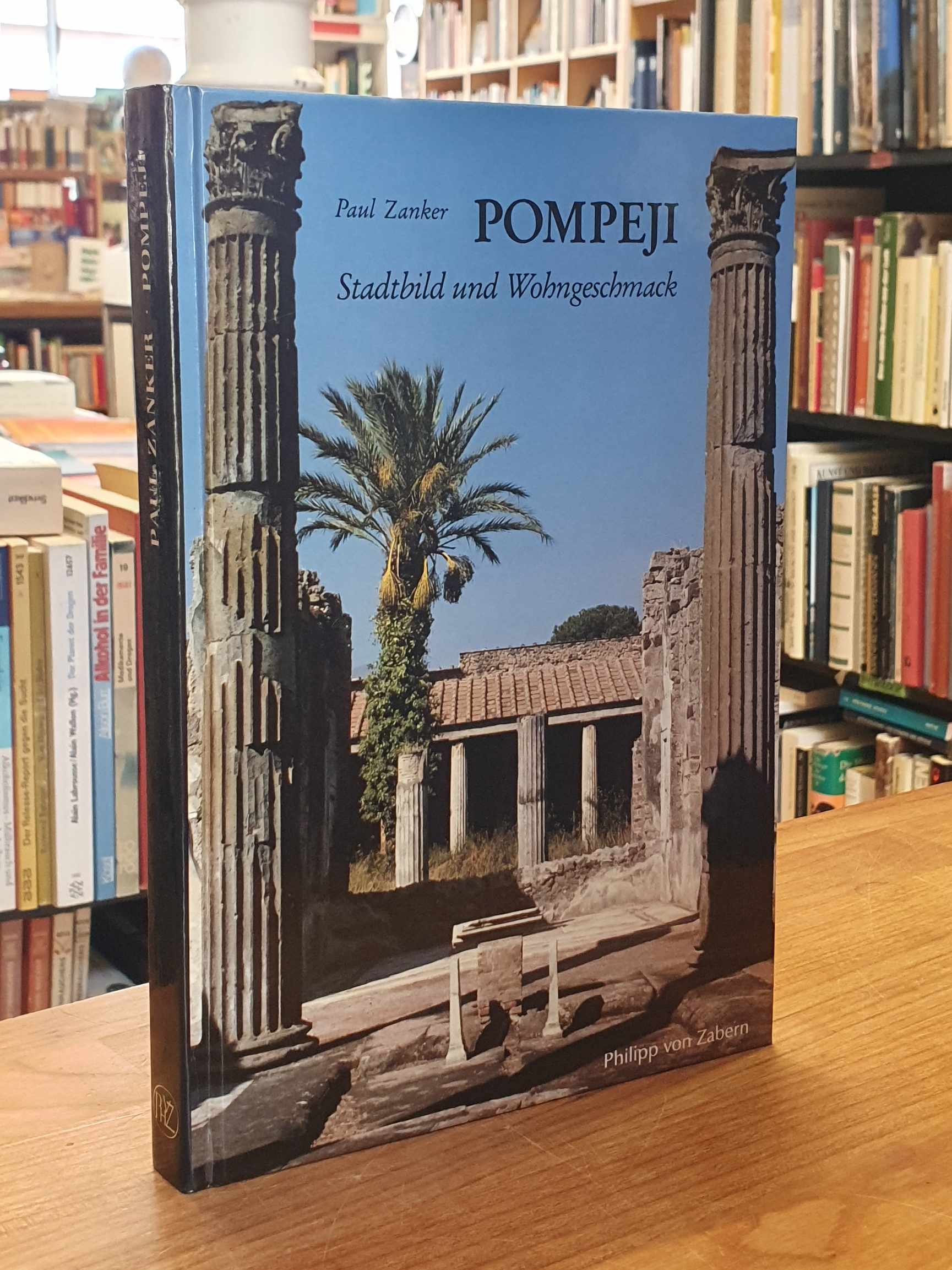
1995réf. 19907CBMainz, Philipp von Zabern (= Kulturgeschichte der antiken Welt, Band 61), 1995. gr.8°, 238 S. mit zahlr. Farb- und s/w-Abb., Illustr., Grundrissen, Architekturdetails etc., farbig illustr. original Pappband (Hardcover), Erstausgabe tadelloses Exemplar für den anspruchsvollen Sammler
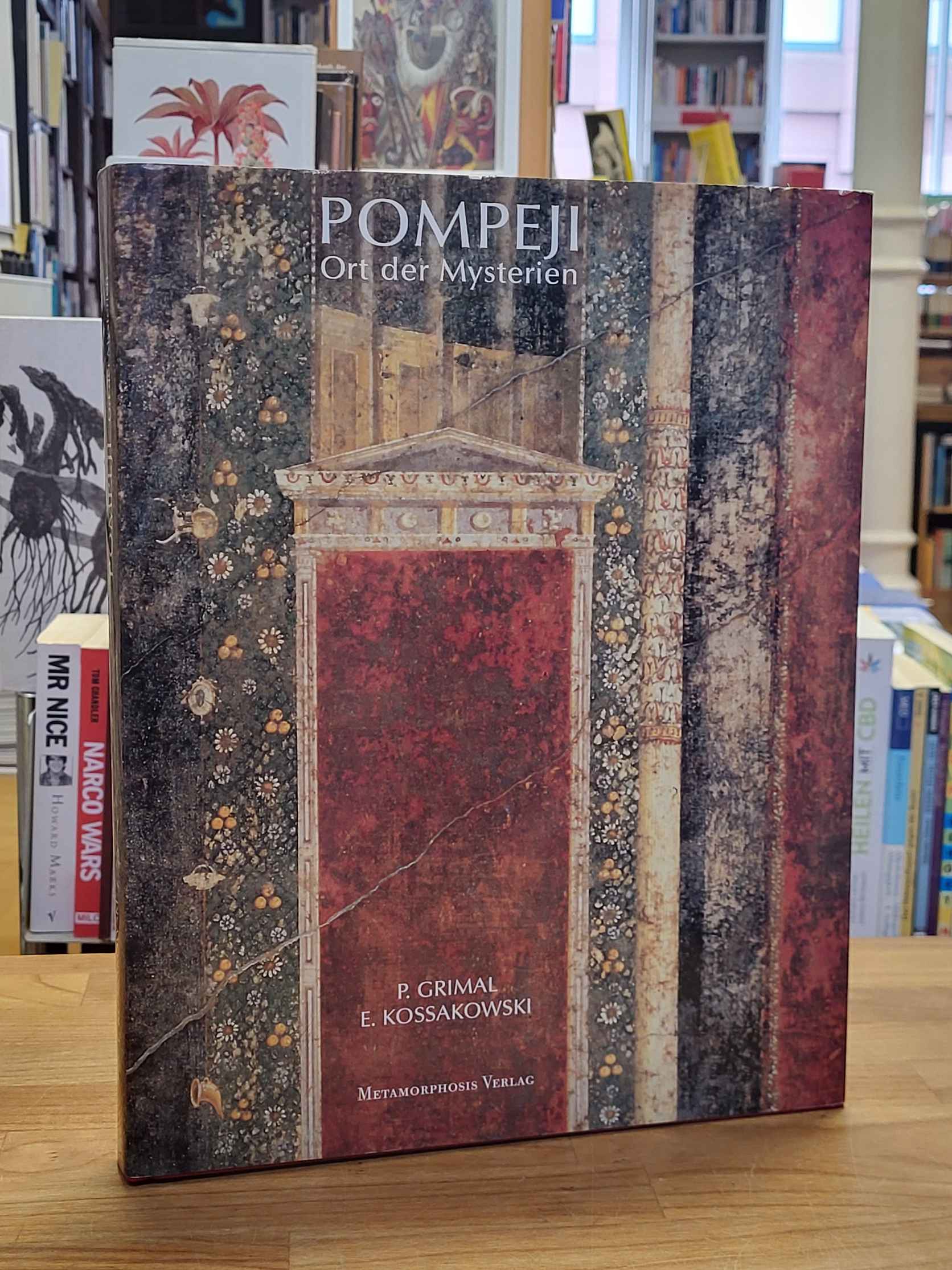
1993réf. 23034CBMünchen, Metamorphosis Verlag, 1993. gr.4°, 158 S. mit zahlreichen s/w- und Farbabbildungen, mit Lesebändchen, original Leineneinband (Hardcover) mit original Schutzumschlag, deutsche Erstausgabe schönes, sauberes Exemplar.
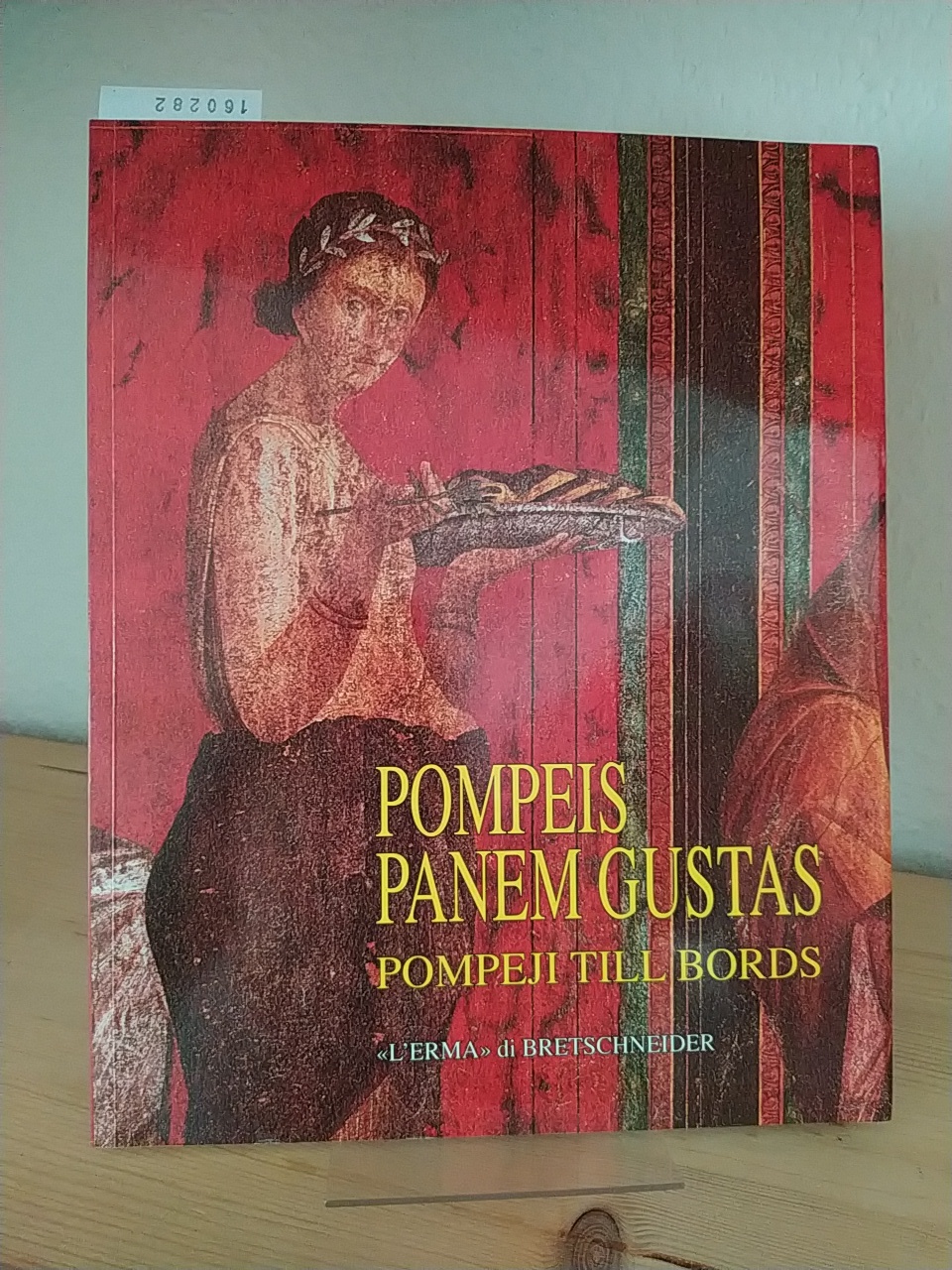
2008réf. 160282Roma: "L'Erma" di Bretschneider 2008. 168 Seiten. Mit 184 farbigen Abbildungen im Text. 4° (25-35 cm). Orig.-Klappenbroschur. [Softcover / Paperback].