NIGHTINGALE, FLORENCEBiblio.com
11 827 résultats
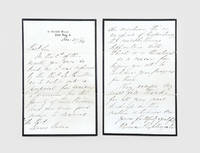
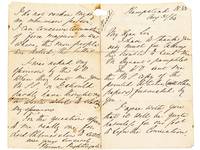
1864réf. 3103Hampstead: np 1864. First edition. nb. Good. FLORENCE NIGHTINGALE REJECTS THE FIRST GENEVA CONVENTION NINE DAYS AFTER ITS SIGNING: "IT IS LIKE AN OPERA CHORUS". A foundation-era manuscript of international humanitarian law: Florence Nightingale's private rejection of the First Geneva Convention written to Britain's Geneva delegate nine days after its signing-the primary source the ICRC's own historians have long identified as the more accurate record of her views and which the Collected Works anticipated without having. -------- This letter sits at the precise intersection of everything Florence Nightingale most fundamentally believed and everything for which she is remembered. Her life's work rested on a single conviction: that the mass death of soldiers from disease neglect and institutional failure was preventable and that the remedy was systemic reform not charitable supplementation.The Geneva Convention of 1864 proposed a different answer to the same problem. She thought it was wrong and this letter says so privately and without diplomatic qualification to Thomas Longmore the man who had just helped negotiate it. On August 22 1864 twelve European states signed the Geneva Convention for the Amelioration of the Condition of the Wounded in Armies in the Field. The Convention established the neutrality and protection of wounded soldiers medical personnel and hospitals and adopted the red cross on a white ground as their identifying emblem. It represented a revolutionary proposition: that even in war international law could impose limits upon belligerent states. Nine days later Nightingale rejected the premise that such an agreement could meaningfully alter the conduct of war. The War Office had sent her the manuscript copy of the Convention's articles - materials furnished to them by the letter's recipient Longmore from the Geneva Conference - and asked for her opinion before Britain's accession was finalized. She was the obvious person to ask: no one alive had more direct experience of the conditions the Convention was designed to address. Her response in this letter is devastating: "It amounts to nothing more than a declaration that humanity to the wounded is a good thing. It is like an Opera chorus. And if the principal European characters sing 'We never will be cruel more' I am sure if England likes to sing too 'We never will be cruel more' I see no objection." For Nightingale the fundamental problem was enforcement. A promise of humane conduct had little value because governments willing to observe it required no treaty while governments unwilling to observe it would simply disregard one: "But it is like vows. People who keep a vow would do the thing without the vow. And if people will not do it without the vow they will not do it with." She applies that reasoning directly to the signatories: "England & France will not be more humane to the enemy wounded for having signed the Convention. And the Convention will not keep semi-barbarous nations like Russia from being inhuman." And Nightingale refuses to disguise the realities of warfare beneath humanitarian rhetoric: "I do not reckon myself an inhuman person I can conceive circumstances of 'force majeure' in war where the more people are killed the better." Her conclusion is political and administrative. The question ultimately belongs not to humanitarian volunteers but to government: "For the question appears to me really one for Lord Palmerston to settle." NIGHTINGALE AGAINST HENRY DUNANT: The letter captures one of the fundamental disagreements at the birth of modern humanitarianism. Nightingale and Henry Dunant Swiss humanitarian co-founder of the Red Cross had confronted essentially the same problem-the catastrophic failure of military systems to care for wounded and sick soldiers-but arrived at profoundly different solutions. Nightingale believed the answer was to reform the state and its military medical administration; Dunant believed the inadequacy of those systems required an independent humanitarian structure capable of supplementing them. Nightingale had already objected to Dunant's proposal for voluntary relief societies arguing that such organizations would assume responsibilities properly belonging to governments. Contemporary accounts record her warning that this would relieve governments of duties "which they alone are in a position to assume." The present letter goes further. Written after the Geneva Convention had actually been signed it addresses not merely Dunant's voluntary relief societies but the international legal mechanism intended to protect the wounded. Her objection was fundamental: no treaty could conjure humane conduct in governments that lacked the will or the administrative capacity to provide it. Critically this was not a position confined to her private correspondence. Lynn McDonald's scholarly edition of the Collected Works records that Nightingale communicated the force majeure argument directly to Dunant himself warning him simultaneously of "the very great danger of taking the responsibility off governments of providing for wounded and sick." The present letter to Longmore is the only known primary document in which she makes this argument in full in her own hand to the man who had negotiated the instrument she was critiquing. It has not previously appeared in the scholarly record. THE SYSTEMS REFORMER BEHIND THE "LADY WITH THE LAMP": The letter also exposes the inadequacy of the sentimental popular image of Nightingale as merely the compassionate "Lady with the Lamp." Nightingale was a formidable researcher statistician administrator and systems reformer. She pioneered the use of statistical information and data visualization to demonstrate preventable military mortality and became the first woman elected a Fellow of the Royal Statistical Society in 1858. Her experience during and after the Crimean War convinced her that preventable military suffering resulted principally from failures of administration sanitation organization and accountability. Her solution was therefore not to create a parallel charitable apparatus but to force governments and military institutions to perform their existing responsibilities. That distinction remains central to scholarship on Nightingale and the Red Cross. The International Committee of the Red Cross ICRC itself acknowledges that although she and Dunant shared the objective of alleviating wartime suffering their "values and approaches differed significantly" and specifically recognizes her skepticism that an international convention protecting the wounded would actually be respected on the battlefield. The ICRC further cautions scholars against confusing "the public declarations of a woman well versed in the art of public relations with her private opinions." The present letter is precisely the private opinion the ICRC's own historians have flagged as the more accurate record of her views. NIGHTINGALE AND THE RED CROSS - PUBLIC MYTH AND PRIVATE OPINION: The historical irony is considerable. In 1872 Henri Dunant publicly credited Nightingale as an inspiration for his humanitarian work declaring that although he was known as founder of the Red Cross and originator of the Geneva Convention "it is to an Englishwoman that all the honour is due." Nightingale consequently became associated in popular memory with the humanitarian movement whose foundational assumptions she had challenged. The International Red Cross Conference of 1907 sent her a formal message saluting her as "the pioneer of the first Red Cross movement." She spent forty years privately maintaining that the movement was built on a false premise. That distinction gives the present manuscript particular force. Written "Private" to Britain's representative at Geneva while the Convention was scarcely a week old it records Nightingale without commemorative hindsight or diplomatic polish. She calls the new international agreement an "Opera chorus" compares its promises to ineffectual vows predicts that civilized powers will behave according to circumstances regardless of their signatures and argues that states inclined toward brutality will simply ignore it. The document thus places one of the nineteenth century's greatest humanitarian reformers at the precise historical moment when two competing models for alleviating suffering in war confronted one another: Dunant's international humanitarian law and voluntary relief movement versus Nightingale's insistence upon state responsibility and systemic military reform. History ultimately incorporated both. Modern military medical systems bear Nightingale's legacy while the Geneva Conventions and the Red Cross embody Dunant's. Their apparently contrary paths ultimately became complementary. This letter captures the disagreement at its source. PROVENANCE: From the personal papers of Sir Thomas Longmore 1816-1895 Professor of Military Surgery at Netley and British delegate to the Geneva Conference of August 1864; thence by family descent. Marked "Private" by Nightingale herself the letter remained among Longmore's papers. Autograph Letter Signed "Florence Nightingale" to Sir Thomas Longmore rejecting the First Geneva Convention nine days after its signing. Hampstead N.W.: August 31 1864. One sheet 7x9 in folded into four pages. Hole at top center. Originally folded to create six panels. Top two panels completely separated at both folds bottom panels separated along vertical fold; other panels just barely attached. There is no loss at the folds and when the panels are placed together everything appears complete and attached. Text throughout legible and unfaded. Signature crisp and fully legible. References: Boissier Pierre. "Florence Nightingale and Henry Dunant: Similarities and Differences." International Review of the Red Cross 1964. McDonald Lynn ed. Florence Nightingale and the European Wars: From the Crimean to the Franco-Prussian War. The Collected Works of Florence Nightingale University of Guelph. Mohr Charlotte. "Florence Nightingale: Portrait of a Pioneer of Modern Nursing in Writings." ICRC Library / Cross-Files August 2018. Angela Countess of Limerick. "Florence Nightingale." International Review of the Red Cross 1964. np unknown
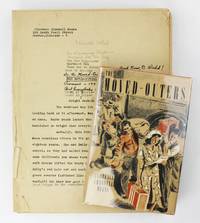
1945réf. 6500Boston: Riverside Press 1945. Overall very good. 233 i.e. 231pp. plus four small sheets. Typescript on letter-sized sheets printed on rectos only. Contemporary manuscript and typed annotations throughout. Tanned somewhat brittle. Some chipping and tape repair. with: 6154pp. plus five plates including frontispiece. Orange publisher's boards in illustrated dust jacket. Minor rubbing and wear to corners and spine ends. Light wear along edges of jacket. Tanned but otherwise clean internally. An original typescript with contemporary manuscript and typed corrections as well as alternative titles for The Moved-Outers the first full-length literary work to address the plight of Japanese Americans sent to internment camps by the U.S. government during World War II. Published by Houghton Mifflin in February 1945 this young adult novel was written by Florence Crannell Means who befriended a Japanese American family that resettled in her hometown Denver. The novel won a Newberry Medal honor award in 1946. The plot of The Moved-Outers centers on Sumiko Sue Ohara a high school senior from Cordova California who has two brothers one who is in the U.S. Army and later dies in combat and an older sister an honor student at a midwestern university. After Pearl Harbor Sue's father a florist is arrested and imprisoned. Sure her second brother Kim and their mother are detained at the Santa Anita holding center and then sent to the Granada War Relocation Center also known as Camp Amache in southeastern Colorado. Sue and her mother try to make the best of things while Kim goes sullen and gets involved with a "zoot-suit gang." The book ends in 1943 with Sue being released to go to college and her brother enlisting in the U.S. Army. The novel was released in early 1945 just as the internment camps were beginning to close and Japanese Americans were returning to the West Coast. The 231-page typescript here is evidently an earlier draft of the novel as there are significant differences between it and the final printed text a copy of which is also present. The typescript includes numerous manuscript and typed corrections to the text and several possible titles added to the first page in manuscript. The typescript and book are accompanied by three printer's proofs of illustrations for the book and an updated but pre-publication typed letter signed by Means to illustrator Helen Blair. In the letter Means mulls her options over a quick publication of The Moved-Outers which is in danger due to a paper shortage across the country because of the war. "Of course I'm thrilled that they want the book for I was always afraid they wouldn't risk that theme" she writes. "In all this I'm trying to think in terms of service to the evacuee and to our own democracy. Means credited the influence of her father a Baptist minister for her ambition to promote interracial understanding or as she often put it to teach that "folks are folks." She often spent months living among the people she wrote about. For this novel she interviewed many Japanese Americans imprisoned in Colorado and her papers at the University of Colorado include a series of questionnaires that Nisei in Denver filled out to give Means details of their removal and their daily life in the camps. Among her other works dealing with issues of race and minority life in America are her first published novel Rainbow Bridge 1934 called one of the first sympathetic portraits of Japanese Americans in mainstream fiction; Tangled Waters 1936 which tells the story of a teenage Navajo girl living with her family on the reservation in Arizona; and Shuttered Windows 1938 which features a Black female teenager as its protagonist. In all a fascinating and unique group of materials relating to this significant novel and its author. Riverside Press unknown
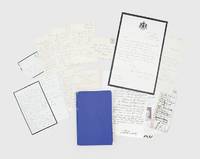
1892réf. 184236London: 1892-1938. I do not for a moment doubt that you will master or mistress the situation A group of encouraging letters to a younger nurse and mentee. De Laney trained at Nightingale's school for nurses and afterwards held senior positions in hospitals around the country. Nightingale's letters came at critical points of her career offering considered advice support and sympathy. They are accompanied by documents from de Laney's second occupation as housekeeper for the House of Lords. Amelia de Laney 1848-1940 attended the Nightingale Training School at St Thomas's Hospital between 1883 and 1886. Nightingale sent the first letter in 1891 when de Laney was considering leaving the Birmingham Workhouse Infirmary for a more senior role at the Royal Hospital for Consumption in Ventnor. Nightingale was cautiously supportive of the move. She wrote that de Laney "should have the promotion which you have well earned" but observed that the role came with a long list of duties: in addition to managing the care of patients and supervising her staff she would need to hire and train nurses look after the ten buildings and oversee the washing and cooking. Regardless Nightingale affirmed that "I do not for a moment doubt that you will master or mistress the situation if you are appointed". Nightingale provided Ventnor with an excellent reference for de Laney but the board rejected her for being insufficiently well-born. Instead de Laney moved in 1894 to a position as matron at the newly founded Epileptic Colony in Chalfont St Peter. Nightingale privately expressed her concerns to her friend Henry Bonham Carter commenting that the work was "entirely new. It is not hospital work at all. It seems to me an immense responsibility" McDonald pp. 230-31. Her concerns were proved valid. Nightingale's second letter dated April 1897 enquired after reports that de Laney had left her post. In her third letter dated May the same year Nightingale wrote to de Laney that "I grieve that you were obliged to resign & that you so much need rest" reassuring her that "you have done a good work & you will do much more good work for our cause". The fourth letter sent a month after extended Nightingale's ongoing sympathy for de Laney's "grief and distress". De Laney ultimately left nursing altogether. In 1902 she began working in the House of Lords holding the position until retirement in 1919. The correspondence here includes notices of appreciation sent on behalf of the Archduchess Maria Annunciata and Queen Alexandra. Other items include a letter from Nightingale seeking de Laney's address; an invitation card for an event at the Nightingale Training school; a document granting de Laney rooms in Westminster; a copy of Cecil Woodham-Smith's Florence Nightingale 1820-1910 1950; and a collection of clippings on Nightingale. Together 10 items: 5 autograph letters signed in black ink and pencil 1 across 2 single sheets with mourning borders 223 x 125 mm and four on bifolia 177 x 115 mm with 11 sides of writing; typed letter signed on single sheet notepaper; facsimile letter from the Home Office; invitation card; group of ephemera including newspaper cuttings and manuscript list; book octavo original blue cloth spine lettered in silver top edge blue. Modern bookplate of historian Arnold Daly Briscoe to front pastedown of volume extremities rubbed with occasional spots of wear; letters lightly creased from folding some lightly foxed one partially split along former folds. Overall a very well-preserved collection. Lynn McDonald ed. Florence Nightingale: Extending Nursing. Collected Works of Florence Nightingale vol. 13 2009. hardcover
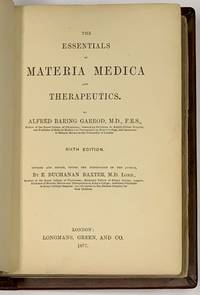
1877réf. 49092London: Longmans Green and Co 1877. Sixth Edition. INSCRIBED PRESENTATION COPY SIGNED by Nightingale all in pencil on the half-title page. Modern binding of full brown calf stamped in blind. Binding - Fine. Textblock - VG tideline visible to top edge. xxxi 1 blank 517 3 pp. 8vo. 8-1/8" x 5-1/2" Nightingale presents the book to "Nurse Webb" adding "delivered from ship wreck by our almighty Father's care & entering on a new post of usefulness at Lincoln Hospital". Followed by her full signature and dated "Nov. 1878" We know of this incident for on August 16 1878 Florence Nightingale wrote to her local church pastor at Crich Reverend Acraman recounting the ordeal: "Dear Sir Four of our trained Nurses have been wrecked on their way home from Canada where they had been nursing for us at the Montreal General Hospital & were returning for further Nursing employment under us. The steamer was wrecked upon a reef two days out from Canada on July 2. All night she was beaten about & in danger of going to pieces. At day break the Captain lowered the passengers into a life boat but she drifted out to sea & again they were with difficulty saved. For a whole week till the 28th they were on an island whence an officer made his way to the nearest light house swimming two rivers which the crew would not cross or battened down in the hold of a small fish schooner without food or air in a terrific storm. On July 28 they were rescued by the Erl King Capt. Ed. Scott whose kindness we can never forget bound for Glasgow where they landed safe on Aug 9. Would you allow me to return thanks for them our four Nurses in your church next Sunday Their names are: Nurse Styring Nurse Wilson “ Cross “ Webb" Might I say in any terms you would be good enough to use: Florence Nightingale desires to return the most humble & hearty thanks to Almighty God for four trained Nurses returning home on duty from Canada who were wrecked on July 21 were saved three times from a watery grave & after severe sufferings for a week from exposure & hardship were rescued on the 28th by a vessel bound for Glasgow & safely landed on August 9 thro’ a merciful Providence. Pray believe me Sir ever your faithful servt Florence Nightingale" Cf. "Parish life with a troubled Vicar: Crich 1875-1900". Longmans, Green, and Co unknown books
réf. 13765BRUNELLESCHI Les masques et les personnages de la Comédie Italienne. Expliqués par GERARD D’ HOUVILLE et interprêtés par BRUNELLESCHI en douze estampes coloriées. A Paris aux bureaux du journal DES DAMES ET DES MODES éditeur 1914. Edition numérotée :Un des Exemplaire sur vélin d'Arches, numéroté à la plume à la plume. Faux titre en rouge, au verso justification du tirage, titre 5 pages, dont 4 d’introduction par GERARD D’ HOUVILLE « celles dont le portait n’est pas là » et Suite de douze estampes superbement coloriées au pochoir d’après BRUNELLESCHI gravées par REIDEL. 1) Arlequin 2) le docteur Balanzone 3) Brighella 4) Coralline 5) Florindo 6) Giacometta 7) Mezzetin et colombine 8) Pantalon 9) Rosauro10) Scaramouche 11) Tartaglia 12) Trivellino. Chemise avec titre imprimé- portefeuille cartonné à rabats, l’ensemble dans un étui cartonné pièce de titre imprimée en long contrecollée. Fermoirs à rubans absents. 510x380mm fermé- 105x380 ouvert. Quelques traces d’usures à l’étui. Cet ouvrage a été chevé d’imprimer pour le Journal des Dames et des Modes le 10 mars 1914, par les soins de MM. BRAUN pour les estampes GRENIN Gaine Fils & Cie pour les coloris POZZOLI pour la typographies qui a été exécutée avec les caractères M OLDIER & Cie. Chef d’œuvre emblématique de BRUNELLESCHI.
1496réf. 33734colophon: Argentina i.e. Strassburg: Johannem Reinhard Grüninger 1496. Folio 32.5 cm; 12.5". Vols. I & II in one volume of V. I: 173 of 174 ff. lacking first leaf of vol. 1; II: 225 of 226 ff. without the final blank. The Summa Theologica 1477 more properly the Summa Moralis is the work upon which St. Antoninus's theological fame chiefly rests . . . it is probably the first certainly the most comprehensive treatment from a practical point of view of Christian ethics asceticism and sociology in the Middle Ages" NCE I 647. After his ordination in 1413 at Cortona where he was sent for the Dominican novitiate along with artists Fra Angelico and Fra Bartolommeo! Antoninus 13891459 swiftly attained prominence in the Church; returning to his native Florence he consecrated the Convent of San Marco in 1443 and was appointed Archbishop of that city just a few years later. A great yet humble reformer whose writings were widely published even in the incunable period Antoninus was => hailed as a Doctor of the Church in the bull for his canonization. The Summa completed shortly before his death is divided into four parts: the first is concerned with the soul and its faculties passions sin and law; the second addresses different types of sin and redress; the third considers various states and professions in life with treatises on ecclesiastical offices and censures; and the fourth contemplates the cardinal virtues religious morals and gifts of the Holy Spirit. Although the text draws heavily on earlier theological works by St. Thomas Aquinas among others it is regarded as => "a new and very considerable development in moral theology" NCE online and it contains => a wealth of matter for the student of 15th-century history. Printed in Gothic type double-column format with most capitals supplied in red or blue manuscript in plain style the text here has red markings to aid in reading and navigation. Topics addressed in these volumes include sin penance canon law will original sin privilege lying pride avarice anger and infidelity among several others. Goff and ISTC find only one complete set of all volumes in American libraries at the Countway in Boston. All other U.S. libraries save the Newberry report owning one or two of the volumes. The Newberry has volumes IIV. Provenance: Old illegible European library stamp in lower margin of first leaf of vol. I; in 20th and early 21st century in the library of the Pacific School of Religion properly deaccessioned. ISTC ia00878000; Goff A878; BMC I 109; GKW 2192. Contemporary calf over bevelled wood boards recently rebacked and new endpapers supplied; lacks a blank and a title leaf. Leather of boards elaborately and richly tooled in blind using rolls rules and individual stamps of a rose a fleur de lis and a saint; small area of leather on front board missing and substitute leather inserted. Evidence of brass and leather clasps remnants of vellum guide tabs. Text and boards of binding wormed mostly with many pinhole wormholes and text with some meandering; no great losses. Some small tears in a few margins and one lower margin with an old repair; stamp as above; browning to many margins. A good solid volume one with some condition issues but at the same time a good example of these productions and the era's printing. Johannem {Reinhard} Grüninger hardcover books
1890réf. 2308170019London: Lyne & Sons for R.H. Porter 1890 1896. 1890. First Edition. Hardcover. Good. Orchidology: Great Flower Books Rare perhaps only 150 copies were printed. Complete in 9 parts bound in one volume. Folio 45 x 32 cm. Bound in contemporary green half morocco. Gilt spine. Crack at front cover joint. Includes 87 hand-colored lithographic plates a double-page map of Central and South America and 61 wood-engraved text illustrations. Nine original printed wrappers bound in at end. "The person who makes the original drawings from nature should also lithograph the plates and indicate the colours to be used by the colourist for by this means the works passes through fewer hands and is more likely to turn out accurate. I have therefore pursued this method throughout the present work and have besides touched up the colouring of every plate sent out numbering nearly 9000" Introduction. Great Flower Books p 152; Nissen BBI 2185; Stafleu & Cowan TL2 18.284. London: Lyne & Sons for R.H. Porter, 1890, 1896. hardcover
1865réf. 187671London: Emily Faithfull Printer and publisher in ordinary to Her Majesty Victoria Press 1865. The work of destruction has at the same time begun First edition offprint issue of Nightingale's study of the treatment of indigenous Australians in British hospitals. Amid the European expansion and settler conflict of 19th-century Australia the Aboriginal population declined rapidly. British hospitals continued to provide treatment to indigenous Australians whose survival in the colony was viewed as a matter of national concern. By 1865 Nightingale was working to implement her reforms on an institutional scale and had contributed several commissions examining public health in British colonies. Much of her data for the current paper was gathered by missionaries: a key recommendation was an official infrastructure for collecting mortality statistics. Nightingale concludes that poor sanitation and alcohol were among the primary causes for higher death rates but she also notes that European contact itself was damaging the Aboriginal population: "as soon as native habits and customs begin to undergo change under European influences the work of destruction has at the same time begun" p. 3. Nightingale's paper was originally published in Transactions of the National Association for the Promotion of Social Science the same year: Bishop and Goldie list the journal issue first but no formal priority has been established. Octavo pp. 8. Original printed wrappers. Front wrapper re-attached otherwise a very good copy indeed. Belt 15; Bishop & Goldie 95 ii. Lynn McDonald Florence Nightingale: An Introduction to Her Life and Family 2010. unknown
1864réf. 177463London: 21 December 1864. Your great kindness on behalf of this good man's family Nightingale writes to Davis 1820-1883 a clergyman and headmaster to rally support for the family of the recently deceased Lutheran minister Theodor Fliedner 1800-1864 Nightingale's old friend and tutor whom she viewed as a father figure. Fliedner founded and ran 30 deaconess houses where women could train in theology and nursing and his family required financial aid to continue his work. Nightingale met Theodor Fliedner in 1841 and in 1850 became a temporary resident at his flagship deaconess community the Kaiserswerther Diakonie. The women who resided there had committed to a holy life and taken vows. However they were not enclosed as they were trained to go out into the community to care for the sick. Further they could leave at any point if they wished. It was an ideal place for Nightingale for whom nursing was a religious vocation and the time she spent there was "key in the development of her mission" Macdonald p. 7. In 1851 she wrote her first publication issued anonymously titled The Institute of Kaiserswerth on the Rhine in which she recommended Fliedner's deaconess houses to English women. She commented on "the delicacy the cheerfulness the grace of Christian kindness the moral atmosphere" in the hospitals and "the kindness of the sisters in imparting their own knowledge" Nightingale p. 19. The Fliedners and Nightingale remained close long after her stay. In 1853 she became godmother to their child and upon Fliedner's death Nightingale felt that she had lost a father. Determined to support his family in their "continuance of the work" Nightingale wrote and printed an appeal and engaged a network of clergymen to promote the cause. To this end she writes to Reverend Davis that "you were so kind. as to enter into a proposal for sending a provision for the family" and asks that he circulate her pamphlets "amongst the likeliest members" of his community. Bifolium and single sheet 177 x 113 mm. Autograph letter written across 3 pages letterhead of 27 Norfolk Street Park Lane mourning borders. Previously folded occasional small splits at ends of folds: in very good condition. McDonald Lynn ed. Florence Nightingale's Spirital Journey: Biblical Annotations Sermons and Journal Notes 2001; Nightingale Florence The institution of Kaiserswerth on the Rhine for the practical training of deaconesses under the direction of the Rev. Pastor Fliedner 1851. unknown
1860réf. 193206London: Harrison bookseller to the Queen 1860. The greatest figure in the history of nursing" Garrison & Morton First edition early state of this landmark text. Published six months before the opening of the Nightingale School at St Thomas's Hospital Notes on Nursing was intended as a book of hints for those working in public and private care. Nightingale "indicated a new and more responsible role for nurses one that required proper training and medical knowledge" Hook & Norman p. 260. Having examined more than 100 copies of Notes on Nursing the bibliographer Victor Skretkowicz recommends using the term "group" rather than "issue" when discussing differences as mixtures of sheets in different states were bound together almost immediately pp. 29-30. The binding and endpapers of this copy correspond with Skretkowicz's group 5 of the 32 that he distinguishes the combination of Binding 1 and Endpapers 2 with the required more condensed resetting of "Summary" on page 73 note 1. Octavo. Original black bead-grain cloth over limp boards covers panelled in blind front lettered in gilt yellow endpapers printed with advertisements in black edges sprinkled red. Ink ownership inscription dated January 1860 on title page. Spine ends and corners gently bumped cloth bright foot of front inner hinge just starting. A near-fine copy. Cushing N98; Garrison & Morton 1613; Grolier One Hundred Books Famous in Medicine 71; Heirs of Hippocrates 1007; Norman 1600; Osler 7737; Victor Skretkowicz "Florence Nightingale's Notes on Nursing: The First Version and Edition" The Library Sixth Series vol. 15 issue 1 Mar. 1993 pp. 24-46. hardcover
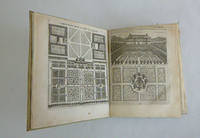
réf. 51-6506Amsterdam: Marc Doornick 1669-1670. 4to. 16.5 x 20.5cm. 4to Contemporary vellum. .5 parts in 1. Illustrated with 12 of 15 full-page copper-engraved plates plus 3 large engraved title vignettes and numerous large and full-page woodcuts. Text in French and German. Each with separate title page register continuous. Lacks leaves B4 and C1 with plates 7-8 and likely lacks a frontispiece or another plate. The first bilingual edition issued the same year as the first Dutch edition. Important early gardening book illustrating famous gardens including those of Honsholredyk Ryswyck and Huis ten Bosch in early states. Treats a wide range of topics including beekeeping husbandry sundials and description and care for foreign plants such as the aloe plant from America p.42 and datura/jimsonweed p.68. Index bound at front.OCLC Number / Unique Identifier:504764839:Notes:French and German. With an additional titlepage engraved in Dutch from the edition as part of "Het vermakelijck landt-leven". "Boutique à remedes enseignant de quelle maniere il faut preparer les medecines pour guerir les maladies des animaux. Vieh-Apoteeck etc. By Pieter Nyland.": pp. 87-104. "TraiteÌ des abeilles . Der fleissige Bienenhalter etc. By Pieter Nyland": pp. 105-127. "24 nouveaux & curieux modelles de parterres . 24 neue . Garten-Modellen etc.": page not numbered. The titlepages of the additional works are dated 1670OCLC Number / Unique Identifier:496284071Notes:Texte sur 2 colonnesOn trouve une 2e p. de titre plus complète après le privilège et le frontispice. La "Boutique à remèdes" occupe les pp. 87-104 et le "TraiteÌ des abeilles" les pp. 105-129. Ces deux textes traductions de Petrus Nylandt ont des p. de titre particulières dateÌes de 1670. A leur suite on trouve deux recueils de planches non pagineÌs mais chacun avec une page de titre particulière: "24 nouveaux et curieux modelles de parterre à la françoise pour embellir touts sorte de jardins et autres lieux de plaisance 24 neue kunstartige Garten-Modellen". avec la date de 1670 en 4 ff. et "Deux cens modelles pour ceux qui se plaisent au jardinage servant utilement a dresser & disposer toutes sortes de parterres à fleurs & à buissons". Zwey hundert Garten-Modellen. avec la date de 1669 en 28 ff. dont 1 frontispice.Provenance: Florence Yoch 1890–1972 and Lucile Council 1898–1964 were among the most prolific and influential landscape architects in Southern California during the early and mid-20th century. Partners both in business and in life they completed more than 250 landscape commissions over a period of roughly four decades—projects that included landmark public gardens and private gardens for Hollywood elites. The Huntington is home to the Florence Yoch Papers a trove of drawings photographs research files and office records that tell the story of the couple’s firm and provide a tremendous resource for researchers. Amsterdam,: Marc Doornick, 1669-1670 hardcover
1791réf. 1909070003Florence: Niccolo Pagni and Giuseppe Bardi 1791 & 1795 1791. First Edition. Hardcover. Good. A Monumental Work of 18th century Italian engraving 2 volumes. Large folios 51 x 35 cm 19 3/4 x 13 in. 1st edition. Bound in contemporary 1/2 vellum over marbled boards. Some cover wear. Rear joint of v.1 cracked. Hinges of v. 2 cracked. Text in Italian and French printed in parallel columns. Collation: v.1 Engraved title frontispiece 64 leaves 60 plates. v.2 Engraved title 62 leaves 60 plates. Many of the plates are printed in colored ink: siena shades of brown or green and blue. 120 artists' portraits. A gorgeous and large format work on Tuscan painting beginning with Guido da Siena and considering all the great painters of Florence such as Buffalmaco Cimabue Giotto Paolo Uccello Andrea Verrocchio Masaccio Fra fifilppo Lippi Andrea del Castagno Pollaiolo Botticelli Leonardo da Vinci Michelangelo Andrea del Sarto Antonio Tempesta Giuseppe Grisoni etc. Carlo Lasinio 1759-1838 was responsible for many of the engravings. Other engravers included: Giovanni Francisco Ravenet Marco Lastri Giuseppe Bardi Niccolo Pagni Matteo Carboni Ferdinando Gregori Gaetano Vascellini and Cosomo Colombini. Refs: "Pregevole opera" Cicognara 3387. Cohen-Ricci 366. Thieme-Becker XXII 404. Brunet II 1095. Graesse II 509. Moreni I 509: "Ciascuno di questi volumi racchiude 60 articoli di notizie di altrettanti pittori toscani scritti in italiano da M.L. promotore di questa eccellente impresa e tradotti in francese da Bartolomeo Renard. Ognuno di essi ha una stampa incisa in rame scelta dalle Opere le piu stimate di quel pittore." Armorial bookplates of Paul Beilby Thompson 1784-1852. Thompson was a Whig MP for Wenlock and East Riding; later made a Baron. This is an oversized or heavy book which requires additional postage for international delivery outside the US. Florence: Niccolo Pagni and Giuseppe Bardi, 1791 & 1795 hardcover
Serie di 14 stampe al bulino, con frontespizio e il ritratto di Andrea del Sarto, stemma mediceo al frontespizio e dedica a Cosimo II de’ Medici, legatura in vitello marmorizzato, alle armi dei Duchi di Beauvilliers su entrambi i piatti, nervi e titolo al dorso, buone condizioni. Le stampe illustrano la vita di san Giovanni Battista Series of 14 prints, with title-page and portrait of Andrea del Sarto, Medici coat of arms on the title-page and dedication to Cosimo II de 'Medici, contemporary calf binding, coat of arms of Dukes of Beauvilliers on both boards, bands and title on the spine , good conditions. The prints illustrate the life of Saint John the Baptist.
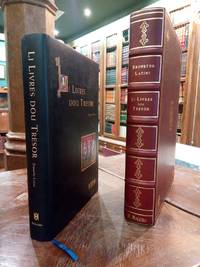
2000réf. 46223EDICIÓN FACSIMIL DEL CODICE ORIGINAL CONSERVADO EN LA BIBLIOTECA NACIONAL DE RUSIA SAN PETESBURGO. ms. Fr. F.v. III Nº 4. Este códice esta datado después de 1268.- Barcelona: M. Moleiro Editor S. A. 2000.- 2 VOLS. Facsímil del códice con 1 h. 149 Folios 1 h. y traducción al español y estudios con 496 p. 1 h.: El facsímil con Profusión de preciosas miniaturas a todo color y los dorados con pan de oro auténtico; El volumen de estudios es bilingüe en español e inglés; Facsímil en Gran Folio 342 x 25 cm el estudio complementario en Folio Mayor 318 x 225 cm; Facsímil en gran papel de gruesa factura imitando la vitela pergamino fino del códice magníficamente logrado y siendo cada hoja reproducida en su tamaño y contorno original el tomo de estudios impreso sobre papel offset de gran calidad; El códice va encuadernado en Plena Piel de color marrón rojizo con las tapas estampadas en seco artísticamente a igual que el lomo con un estuche cuyos planos están dorados con un grueso filete con águilas en las esquinas y hierro al centro con un águila enmarcada por un exágono todo ello dorado al igual que el lomo del estuche también dorado y con cinco nervios. El tomo de estudios va encuadernado en Plena Tela Ed. en raso de seda azul con el título estampado en negro y camisa ilustrada.- Acompañado del acta notarial del Notario D. Arturo Pérez Morente: "DOY FE: De que al presente ejemplar facsímil del Libro del Tesoro cuyo original se conserva en la Biblioteca Nacional de Rúsia en San Petesburgo bajo la referencia ms. Fr. F.v. III Nº 4 le corresponde el Nº 472 de la edición única e irrepetible numerada en arábigo y limitada a 987 ejemplares realizada bajo la dirección de Manuel Moleiro Rodríguez y editada por: M. Moleiro Editor S. A. Forman parte de esta misma edición 55 ejemplares con numeración romana destinados al Depósito Legal y al editor.Barcelona veintidós de diciembre de 1999". Siguen los sellos y la firma del notario. Obra en impecable estado de conservación. El libro constituye una preciosa edición facsímil casi igual al códice original realizado con una gran maestría. Va acompañado por un tomo con el estudio exhaustivo del códice por eminentes especialistas y conocedores del mismo. EDAD MEDIA EUROPEA Libro en latín M. Moleiro Editor, S. A. hardcover
In-4°; edizione originale; cc. 91, 1 cb, bel ritratto xilografico dell’autore al frontespizio. Mezza pelle rossa. Niccolò Martelli (1498- fiorentino di nascita studiò e visse a Roma dove fu introdotto da Pietro Aretino nella cerchia letteraria di papa Leone X. Gran parte della sua produzione è costituita dal ricco epistolario che intrattenne con i maggiori esponenti della cultura umanistica del tempo (Bembo, Aretino, Brucioli, Varchi, Doni, Alamanni, Firenzuola), e artisti primi fra tutti Michelangelo Buonarroti e Cellini. Questo Primo libro delle lettere ci restituisce una straordinaria ricchezza di notizie sulla società dell’epoca.
réf. 15510Florence Nightingale was an English social reformer and the founder of modern nursing. Nightingale came to prominence while serving as a manager and trainer of nurses during the Crimean War in which she organised care for wounded soldiers. ALS London 1864. on her '115 Park Street W' stationery. To Richard Baggallay. Dated July 21 1864 Nightingale writes 4 pages in her hand 7" x 4.5". Black rule borders to pages. She writes: "My dear sir I was extremely sorry to hear of your approaching resignation of the post of Treasurer of St. Thomas' Hospital. It seems to me poor St Thomas' is in such a "fix" & has so many bad friends that he ought to keep all his good ones. But I was not so much sorry as shocked & surprised to hear the language used concerning Mr. Whitfield. Those persons may rest assured that I should never have placed my Probationers at St. Thomas but that Mr Whitfield & Mrs Wardroper were there. and when St Thomas' with its ample income has not contributed one farthing to but has profited by the services of my Training School." The Nightingale Home and Training School for Nurses opened its doors to trainees in July 1860 as part of the newly built St. Thomas's Hospital in London. One of the first institutions to teach nursing and midwifery as a formal profession the training school was dedicated to communicating the philosophy and practice of its founder and patron Florence Nightingale. The Nightingale Home and Training School is now part of King's College London and known as The Florence Nightingale School of Nursing and Midwifery. Important content. unknown books
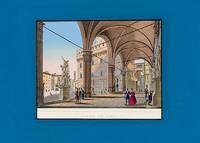
1820réf. 100050AG1820. Florence / Pisa c.1820. Original Aquatint hand-applied water-colouring over copper engraving. Plate Sizes vary: 31 cm x 22.1 cm. Sheet Sizes vary: 34.6 cm x 26.5 cm. Original Gouache-Aquatint hand-applied water-colouring over copper engraving. Florence/Pisa c.1820. Plate-Sizes vary: c. 31 cm x 22.1 cm. Sheet Sizes vary: c. 34.6 cm x 26.5 cm. Besides some smaller damages to the Ponte S. Trinita-artwork in very good actually stunning condition. Clean crisp and brightly coloured. All of these artworks are beautifully framed and the price includes worldwide free shipping per UPS - courier. The Longing for Italy the Italiensehnsucht of the german - speaking countries was forced by Johann Wolfgang von Goethe's Italian Travels and sent scores of young and old to Italy's shores countryside and cities. The Grand Tour was the 17th- and 18th-century custom of a traditional trip of Europe undertaken by upper-class young European men and women of sufficient means and rank typically accompanied by a chaperone such as a family member when they had come of age about 21 years old. The custom - which flourished from about 1660 until the advent of large-scale rail transport in the 1840s and was associated with a standard itinerary - served as an educational rite of passage. Though the Grand Tour was primarily associated with the British nobility and wealthy landed gentry similar trips were made by wealthy young men of other Protestant Northern European nations and from the second half of the 18th century by some South and North Americans. By the mid 18th century the Grand Tour had become a regular feature of aristocratic education in Central Europe as well although it was restricted to the higher nobility. The tradition declined as enthusiasm for neo-classical culture waned and with the advent of accessible rail and steamship travel. Wikipedia unknown
1950réf. 29414Portrait de Churchill par Florence Vivienne.Tirage signé. [London: Vivienne, 20th Century Studios Ltd., 1950]. 1 tirage original, monté sur carton fort, encadré. Tirage original. Le premier portrait de Churchill par Florence Vivienne. Rare tirage offert par Winston Churchill : il porte, en marge inférieure, la signature de Churchill à E. M. Pommier, un résistant français. Une lettre du secrétaire privé de Churchill a été conservée au verso, certifiant que cette photographie et la signature ont été envoyées à Pommier avec les compliments du Prime Minister.
réf. LDM0058814We ship worldwide. 100% guarentee. BRAND NEW unknown
In-folio, antiporta calcografico con ritratto di Giovambattista Nelli, disegnato da Gian Domenico Ferretti e inciso da Vincenzo Franceschini, frontespizio in rosso e nero con vignetta calcografica con lo stemma mediceo disegnato dal Campiglia e inciso da Sgrilli; 18 tavole numerate I-XVII (la XIII è bis), veduta del Duomo e Battistero a cB2, varie testate, finalini e iniziali calcografici. Legatura in mezza pelle coeva con piccoli restauri agli angoli, titolo in oro su tassello al dorso, nervature. Girolamo Ticciati architetto e scultore si adopera per descrivere il Duomo di Firenze nei suoi particolari. Bell’esemplare in carta forte con sparse gore d’acqua Moreni, II, 338. Cicognara n.4096. Berlin Kat., n.2694 In-folio, copper engraved frontispiece with portrait of Giovambattista Nelli, drawn by Gian Domenico Ferretti and engraved by Vincenzo Franceschini, red and black title page with copper engraved vignette with the Medici coat of arms drawn by Campiglia and engraved by Sgrilli; 18 plates numbered I-XVII (the XIII is bis), view of the Cathedral and Baptistery on lB2, copper engraved initials and tails. Coeval half calf binding with small restorations on the corners, gilt title on the spine with label, bands. Architect and sculptor Girolamo Ticciati describes the Cathedral of Florence in its details. Beautiful copy on strong paper with scattered water stains. Moreni, II, 338. Cicognara n.4096. Berlin Kat., No. 2694
1810réf. 3732018/10/1894. The letter is to Amelia de Laney who had attended the Nightingale Training School in the 1880s Being religious she tells de Laney “God bless you & prosper your work” In the Crimean War Florence Nightingale led a team of nurses to the military hospitals where British soldiers were dying in horrifying conditions - far more from disease and poor sanitation than from battle wounds. She transformed the hospitals dramatically cutting the death rate from around 43% down to just 2%. She became known as ""The Lady with the Lamp"" for walking the wards at night checking on patients. After the war she returned home a national hero but threw herself straight back into work rather than enjoying her fame. She spent the rest of her life campaigning for better sanitation in military and civilian hospitals public health reform and the professionalization of nursing. In 1860 she founded the first professional nursing school at St. Thomas' Hospital in London using money donated by a grateful public. Nurses trained there went on to reform healthcare across the world. Nightingale wrote over 200 works including Notes on Nursing which became a worldwide bestseller and extensive writings on theology public health and hospital reform. By 1894 Florence Nightingale was 74 years old and had been an invalid for decades suffering from what is now believed was chronic brucellosis or ""Crimean fever"" contracted during the Crimean War. This severe bacterial illness caused her debilitating fatigue chronic pain and intermittent fevers severely restricting her mobility. But despite being often confined to her room in South Street London she had by 1894 reached a period where her depression lifted allowing her to occasionally receive visitors. Invitations to visit her at home were however hard to obtain. Even under these trying circumstances she remained an active healthcare pioneer. In 1894 she prepared and submitted a seminal paper titled ""Sick-Nursing and Health-Nursing"" for the International Congress of Charities Correction and Philanthropy in Chicago. Amelia de Laney attended the Nightingale Training School at St. Thomas's Hospital between 1883 and 1886. In 1894 Florence Nightingale gifted a heavily annotated copy of Gray's Anatomy to de Laney who she regarded highly. The inscription dated Easter 1894 contained her ""love & prayers for her highest success.” Though when de Laney moved in 1894 to a position as matron at the newly founded Epileptic Colony in Chalfont St Peter Nightingale privately expressed her concerns to her friend Henry Bonham Carter commenting that the work was ""entirely new. It is not hospital work at all. It seems to me an immense responsibility.” Autograph letter signed 10 South St. Mayfair London October 18 1894 to de Laney whom she addresses as “Dear Miss de Laney” wishing that her work will prosper but declining to see her because of her pressing workload. “I was so glad to hear from you tho’ as you say there is not much settled yet. But if there is patience you may augur good things. I wish I could see you now as you kindly offer. But doctor has strictly forbidden my seeing anyone. And tho’ i cannot adhere to this because there is so much pressing work I dare not however unwillingly stay to add another just now. I am sure you would not wish it. I have not left my room for above a twelvemonth. And my kind doctor comes now every day. I very much hope to see you later on. God bless you & prosper your work. Yours sincerely F. Nightingale.” It is interesting to note that Nightingale who was religious ends the letter to her old student de Laney “God bless you & prosper your work.” It is also fascinating that Nightingale in her 70s continued to have “much pressing work.” An uncommon letter of Nightingale touching on her encouragement to her protege and on her faith and health. <img class=""alignnone wp-image-25018 size-post-window"" src=""https://cdn.raabcollection.com/wp-content/uploads/20231204144051/Folder-site-11-1600x1327.jpg"" alt=""historical memorabilia dealer"" width=""1600"" height=""1327"" /> unknown
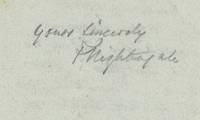
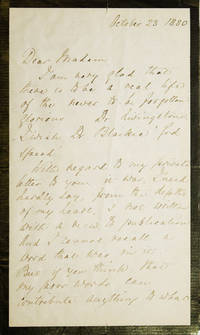
1880réf. 320579Derby 1880. 3pp. folded sheet mourning stationery. With the original mailing envelope. Usual fold. Old tape repair on conjugate leaf with resulting stain affecting a few words of text but not affecting signature. 3pp. folded sheet mourning stationery. With the original mailing envelope. "I am very glad that there is to be a real life of the never to be forgotten glorious Dr. Livingstone. I wish Dr. Blaikie God speed. With regard to my private letter to you it was I need hardly say from the depths of my heart & not written with a view to publication and I cannot recall a word that was in it. But if you think that my poor words can contribute anything to what must be the object of every English speaking nation & not only this but of every man woman & child all over the world viz. to make known one who has opened the way of peace & not terror to those who were 'lying in darkness & the shadow of death' on so large a portion of the globe. I feel that I cannot decline what otherwise is so repugnant to me . And pray believe me ever the faithful servant of yourself & the great memory of as true a hero saint as ever lived ." Written on the occasion of the preparation for imminent publication of William Garden Blaikie's biography of Livingstone published 1880 the letter gives permission for a letter of hers to be published in which she said of Livingstone: "We cannot console ourselves for our loss. He is irreplaceable" p. 458 and called him "the greatest man of his generation unknown
1923réf. 90960Librairie Armand Colin. As New. 1923. Paperback. FREE UPGRADE to Courier/Priority Shipping Upon Request - IN STOCK AND IMMEDIATELY AVAILABLE FOR SHIPMENT - AS NEW THE TEXT BLOCK IS PRISTINE CLEAN UNMARKED AND IN EXCELLENT CONDITION - - Text in French. 156 pages; 8 black and white plates. Catalogue Raisonne Catalog Raisonné Complete Works La Vie et L'uvre Oeuvre Raisonnee Librairie Armand Colin paperback
2010réf. 91008Rizzoli. New. 2010. Hardcover. 0847857999 . FREE UPGRADE to Courier/Priority Shipping Upon Request - IN STOCK AND IMMEDIATELY AVAILABLE FOR SHIPMENT - FLAWLESS COPY BRAND NEW PRISTINE NEVER OPENED -- - INCLUDES CD. 652 pages. Catalogue Raisonne Catalog Raisonné Complete Works Life and Work Raisonnee -- with a bonus offer . Rizzoli hardcover
Ediz. orig. In-4°; pp. 7, (1), al frontespizio un legno raffigura la cupola di Santa Maria del Fiore a Firenze; un capolettera inciso su legno, alcune note manoscritte. Legatura in cartonato colorato. L’opera è dedicata a Filippo Valori, l'ambasciatore fiorentino del papa. Edizione originale, assai rara. L'opuscolo di Franscesco Bocchi prende spunto dall'episodio di un fulmine abbattutosi sulla cupola di Santa Maria del Fiore a Firenze, per indirizzare il suo racconto sul tema del restauro di quello che era considerato il manufatto simbolo della città. Sebbene pubblicato solo nel 1604 la lettera è datata in calce Firenze Febbraio 1600, subito dopo che la lanterna era stata danneggiata. Il restauro di quella fu affidato a Gherardo Mechini, che lo completò in un tempo assai breve; utilizzò un complesso sistema di ponteggi e dispositivi di sollevamento. In un contesto di generale esaltazione della storia dell’arte fiorentina, in queste pagine si leggono parole di estrema lode per la bellezza e lo splendore della cupola e della lanterna, un'opera di altissimo ingegno la cui maestà suscita in chi la guarda "primo laetitia, deinde, cum appropinquant, admiratio, postremo stupor". L'esaltazione si estende ovviamente all'artefice, Filippo Brunelleschi, che, si dice, esprime la razionalità nell'arte attraverso l'esempio degli antichi. A sostegno di una teoria che esalta le origini del rinascimento fiorentino, Bocchi sembra chiamare in causa anche Michelangelo Buonarroti "iure optimo" che, accingendosi alla costruzione della cupola del Sacrario Laurenziano, afferma, rispondendo a chi glielo chiedeva, che nessun architetto aveva fatto di meglio dopo l'artificio di Filippo. Francesco Bocchi (1548-1618) fu un erudito italiano che, soggiornando a Firenze, scrisse una guida delle bellezze della città di Firenze, e fu autore anche di un'opera sulla musica e di una sulla statua di San Giorgio di Donatello. (Vedi voce in DBI). Filippo Brunelleschi (1377-1446), architetto, ingegnere escultore fiorentino, attende ai lavori della cupola del Duomo di Firenze a partire dal 1418 e fino alla sua morte, al principio offrendo la sua consulenza per risolvere la soluzione della costruzione della cupola assieme al Ghiberti e a Battista d'Antonio, in qualità di "provveditore alla costruzione della cupola". La cupola presentava un tamburo ottagono che insisteva su una struttura gotica, il cui sistema di forze Brunelleschi volle coordinare e risolvere, attraverso la cupola, nella lanterna che la chiude.