Florence / Pisa - Carocci, G et alBiblio.com
16 089 résultats
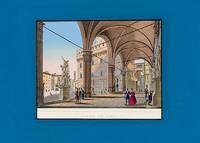
1820réf. 100050AG1820. Florence / Pisa c.1820. Original Aquatint hand-applied water-colouring over copper engraving. Plate Sizes vary: 31 cm x 22.1 cm. Sheet Sizes vary: 34.6 cm x 26.5 cm. Original Gouache-Aquatint hand-applied water-colouring over copper engraving. Florence/Pisa c.1820. Plate-Sizes vary: c. 31 cm x 22.1 cm. Sheet Sizes vary: c. 34.6 cm x 26.5 cm. Besides some smaller damages to the Ponte S. Trinita-artwork in very good actually stunning condition. Clean crisp and brightly coloured. All of these artworks are beautifully framed and the price includes worldwide free shipping per UPS - courier. The Longing for Italy the Italiensehnsucht of the german - speaking countries was forced by Johann Wolfgang von Goethe's Italian Travels and sent scores of young and old to Italy's shores countryside and cities. The Grand Tour was the 17th- and 18th-century custom of a traditional trip of Europe undertaken by upper-class young European men and women of sufficient means and rank typically accompanied by a chaperone such as a family member when they had come of age about 21 years old. The custom - which flourished from about 1660 until the advent of large-scale rail transport in the 1840s and was associated with a standard itinerary - served as an educational rite of passage. Though the Grand Tour was primarily associated with the British nobility and wealthy landed gentry similar trips were made by wealthy young men of other Protestant Northern European nations and from the second half of the 18th century by some South and North Americans. By the mid 18th century the Grand Tour had become a regular feature of aristocratic education in Central Europe as well although it was restricted to the higher nobility. The tradition declined as enthusiasm for neo-classical culture waned and with the advent of accessible rail and steamship travel. Wikipedia unknown
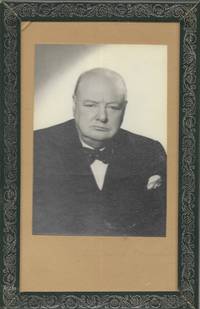
1950réf. 29414Portrait de Churchill par Florence Vivienne.Tirage signé. [London: Vivienne, 20th Century Studios Ltd., 1950]. 1 tirage original, monté sur carton fort, encadré. Tirage original. Le premier portrait de Churchill par Florence Vivienne. Rare tirage offert par Winston Churchill : il porte, en marge inférieure, la signature de Churchill à E. M. Pommier, un résistant français. Une lettre du secrétaire privé de Churchill a été conservée au verso, certifiant que cette photographie et la signature ont été envoyées à Pommier avec les compliments du Prime Minister.
réf. 29414London: Vivienne 20th Century Studios Ltd. 1950. 1 tirage original monté sur carton fort encadré. . Tirage original. Le premier portrait de Churchill par Florence Vivienne. Rare tirage offert par Winston Churchill : il porte en marge inférieure la signature de Churchill à E. M. Pommier un résistant français. Une lettre du secrétaire privé de Churchill a été conservée au verso certifiant que cette photographie et la signature ont été envoyées à Pommier avec les compliments du Prime Minister. . Florence Vivienne Entwistle débuta dans la photographie en aidant en 1934 son mari Ernest Entwistle et son fils Antony. Elle créa son propre studio à la fin des années 1930 et se spécialisa dans les portraits de personnalités. Les relations avec les Churchill dépassèrent le strict cadre professionnel puisque en octobre 1949 la fille des Churchill Sarah épouse le fils de Vivienne Antony. Les Churchill « apprendra le mariage. par les journaux et en furent très contrariés. surtout Clémentine qui le prend très mal ». Néanmoins le 19 décembre 1949 le couple Churchill rencontre le couple Vivienne et « après un agréable déjeuner ensemble Florence Vivienne réalise le portraits de Winston Churchill dans son studio de Piccadilly » Gilbert Vol. VIII p. 496. Le portrait plut tant à Churchill qu'il l'utilisera dès l'année suivante pour la campagne des élections générales de février 1950 et qu'il deviendra l'un des plus célèbres du Prime Minister. Florence Vivienne était connue pour exiger de ses sujets qu'ils viennent dans son studio et la jaquette qui orne son autobiographie They Came to My Studio publiée en 1956 est illustrée par cette photographie. Vivienne rappelle p. 16 combien cette image est devenue iconique et qu'elle était alors la seule qu'elle ait prise de Churchill. La National Portrait Gallery conserve 214 portraits de Vivienne dont celui-ci 14 en tout pour la famille Churchill la plupart ayant été pris dans leur maison de campagne Chartwell. [London: Vivienne, 20th Century Studios Ltd., 1950]. 1 tirage original, monté sur carton fort, encadré. unknown
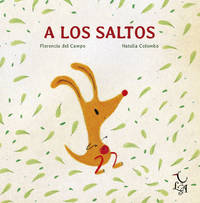
réf. LDM0058814We ship worldwide. 100% guarentee. BRAND NEW unknown
1733In-folio, antiporta calcografico con ritratto di Giovambattista Nelli, disegnato da Gian Domenico Ferretti e inciso da Vincenzo Franceschini, frontespizio in rosso e nero con vignetta calcografica con lo stemma mediceo disegnato dal Campiglia e inciso da Sgrilli; 18 tavole numerate I-XVII (la XIII è bis), veduta del Duomo e Battistero a cB2, varie testate, finalini e iniziali calcografici. Legatura in mezza pelle coeva con piccoli restauri agli angoli, titolo in oro su tassello al dorso, nervature. Girolamo Ticciati architetto e scultore si adopera per descrivere il Duomo di Firenze nei suoi particolari. Bell’esemplare in carta forte con sparse gore d’acqua Moreni, II, 338. Cicognara n.4096. Berlin Kat., n.2694 In-folio, copper engraved frontispiece with portrait of Giovambattista Nelli, drawn by Gian Domenico Ferretti and engraved by Vincenzo Franceschini, red and black title page with copper engraved vignette with the Medici coat of arms drawn by Campiglia and engraved by Sgrilli; 18 plates numbered I-XVII (the XIII is bis), view of the Cathedral and Baptistery on lB2, copper engraved initials and tails. Coeval half calf binding with small restorations on the corners, gilt title on the spine with label, bands. Architect and sculptor Girolamo Ticciati describes the Cathedral of Florence in its details. Beautiful copy on strong paper with scattered water stains. Moreni, II, 338. Cicognara n.4096. Berlin Kat., No. 2694
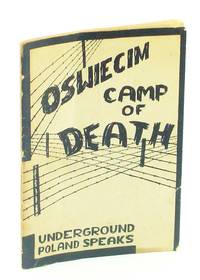
1944réf. 214h1991New York: Poland Fights. Fair. 1944. First American Edition. Paperback. "The moving and almost incredible story of Oswiecim Auschwitz concentration camp. Written under the tension of the vibrant poignancy that is an inseparable part of the miseries Poland has endured. Written by a Polish Underground Labor 'historian' experienced in the underground struggle who drew his material from actual contact with persons who underwent and saw others suffer the things that he describes. A compilation of the viciousness of Nazism as seen at Oswiecim so that all who read might understand and make a just evaluation of that which Poland faces of the problem of ridding all Europe of a scourge that gives rise to such things as Oswiecim." - Foreword. 48 page stapled booklet. Includes a one-page facsimile of the cover of the 1942 Polish first edition published underground. Full-page map shows locations of major concentration camps in Poland. According to Wikipedia this book was written by Natalia Zarembina 1895-1973 and was the first documentary about the Auschwitz concentration camp based on reports from refugees or people dismissed from the camp mainly Eryk Lipinski Henryk Swiatkowski and Edward Bugajski. Also includes information about the network of slave camps in Poland including Camp Districts Temporary Concentration Camps General Concentration Camps Forced Labor Camps Concentration Camps for Clergy Concentration Camps for Women Concentration Camps for Jews Camps for "Improvement of the Race" where "the only duty that is absolutely enforced of the young defect-free Polish and German inmates is the regular performance of sexual intercourse with the partner assigned" Camps for "Correction of Youth" and Concentration Camps for Children So-Called "Educational Institutes". Front cover loose but present. Lacking back cover. Unmarked with somewhat above-average wear. Moderate tanning to contents. Binding intact. A rare copy of this early Auschwitz exposé. 8.25" x 5.4". Weiner Library Cat. Series 7 - #1660.; Cover Art; 8vo . Poland Fights paperback
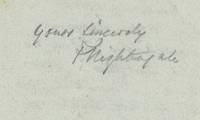
1810réf. 3732018/10/1894. The letter is to Amelia de Laney who had attended the Nightingale Training School in the 1880s Being religious she tells de Laney “God bless you & prosper your work” In the Crimean War Florence Nightingale led a team of nurses to the military hospitals where British soldiers were dying in horrifying conditions - far more from disease and poor sanitation than from battle wounds. She transformed the hospitals dramatically cutting the death rate from around 43% down to just 2%. She became known as ""The Lady with the Lamp"" for walking the wards at night checking on patients. After the war she returned home a national hero but threw herself straight back into work rather than enjoying her fame. She spent the rest of her life campaigning for better sanitation in military and civilian hospitals public health reform and the professionalization of nursing. In 1860 she founded the first professional nursing school at St. Thomas' Hospital in London using money donated by a grateful public. Nurses trained there went on to reform healthcare across the world. Nightingale wrote over 200 works including Notes on Nursing which became a worldwide bestseller and extensive writings on theology public health and hospital reform. By 1894 Florence Nightingale was 74 years old and had been an invalid for decades suffering from what is now believed was chronic brucellosis or ""Crimean fever"" contracted during the Crimean War. This severe bacterial illness caused her debilitating fatigue chronic pain and intermittent fevers severely restricting her mobility. But despite being often confined to her room in South Street London she had by 1894 reached a period where her depression lifted allowing her to occasionally receive visitors. Invitations to visit her at home were however hard to obtain. Even under these trying circumstances she remained an active healthcare pioneer. In 1894 she prepared and submitted a seminal paper titled ""Sick-Nursing and Health-Nursing"" for the International Congress of Charities Correction and Philanthropy in Chicago. Amelia de Laney attended the Nightingale Training School at St. Thomas's Hospital between 1883 and 1886. In 1894 Florence Nightingale gifted a heavily annotated copy of Gray's Anatomy to de Laney who she regarded highly. The inscription dated Easter 1894 contained her ""love & prayers for her highest success.” Though when de Laney moved in 1894 to a position as matron at the newly founded Epileptic Colony in Chalfont St Peter Nightingale privately expressed her concerns to her friend Henry Bonham Carter commenting that the work was ""entirely new. It is not hospital work at all. It seems to me an immense responsibility.” Autograph letter signed 10 South St. Mayfair London October 18 1894 to de Laney whom she addresses as “Dear Miss de Laney” wishing that her work will prosper but declining to see her because of her pressing workload. “I was so glad to hear from you tho’ as you say there is not much settled yet. But if there is patience you may augur good things. I wish I could see you now as you kindly offer. But doctor has strictly forbidden my seeing anyone. And tho’ i cannot adhere to this because there is so much pressing work I dare not however unwillingly stay to add another just now. I am sure you would not wish it. I have not left my room for above a twelvemonth. And my kind doctor comes now every day. I very much hope to see you later on. God bless you & prosper your work. Yours sincerely F. Nightingale.” It is interesting to note that Nightingale who was religious ends the letter to her old student de Laney “God bless you & prosper your work.” It is also fascinating that Nightingale in her 70s continued to have “much pressing work.” An uncommon letter of Nightingale touching on her encouragement to her protege and on her faith and health. <img class=""alignnone wp-image-25018 size-post-window"" src=""https://cdn.raabcollection.com/wp-content/uploads/20231204144051/Folder-site-11-1600x1327.jpg"" alt=""historical memorabilia dealer"" width=""1600"" height=""1327"" /> unknown
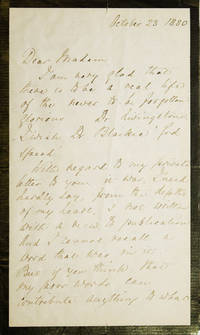
1880réf. 320579Derby 1880. 3pp. folded sheet mourning stationery. With the original mailing envelope. Usual fold. Old tape repair on conjugate leaf with resulting stain affecting a few words of text but not affecting signature. 3pp. folded sheet mourning stationery. With the original mailing envelope. "I am very glad that there is to be a real life of the never to be forgotten glorious Dr. Livingstone. I wish Dr. Blaikie God speed. With regard to my private letter to you it was I need hardly say from the depths of my heart & not written with a view to publication and I cannot recall a word that was in it. But if you think that my poor words can contribute anything to what must be the object of every English speaking nation & not only this but of every man woman & child all over the world viz. to make known one who has opened the way of peace & not terror to those who were 'lying in darkness & the shadow of death' on so large a portion of the globe. I feel that I cannot decline what otherwise is so repugnant to me . And pray believe me ever the faithful servant of yourself & the great memory of as true a hero saint as ever lived ." Written on the occasion of the preparation for imminent publication of William Garden Blaikie's biography of Livingstone published 1880 the letter gives permission for a letter of hers to be published in which she said of Livingstone: "We cannot console ourselves for our loss. He is irreplaceable" p. 458 and called him "the greatest man of his generation unknown
1923réf. 90960Librairie Armand Colin. As New. 1923. Paperback. FREE UPGRADE to Courier/Priority Shipping Upon Request - IN STOCK AND IMMEDIATELY AVAILABLE FOR SHIPMENT - AS NEW THE TEXT BLOCK IS PRISTINE CLEAN UNMARKED AND IN EXCELLENT CONDITION - - Text in French. 156 pages; 8 black and white plates. Catalogue Raisonne Catalog Raisonné Complete Works La Vie et L'uvre Oeuvre Raisonnee Librairie Armand Colin paperback
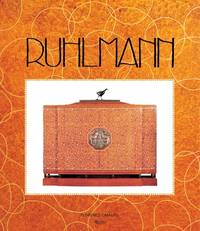
2010réf. 91008Rizzoli. New. 2010. Hardcover. 0847857999 . FREE UPGRADE to Courier/Priority Shipping Upon Request - IN STOCK AND IMMEDIATELY AVAILABLE FOR SHIPMENT - FLAWLESS COPY BRAND NEW PRISTINE NEVER OPENED -- - INCLUDES CD. 652 pages. Catalogue Raisonne Catalog Raisonné Complete Works Life and Work Raisonnee -- with a bonus offer . Rizzoli hardcover
1604Ediz. orig. In-4°; pp. 7, (1), al frontespizio un legno raffigura la cupola di Santa Maria del Fiore a Firenze; un capolettera inciso su legno, alcune note manoscritte. Legatura in cartonato colorato. L’opera è dedicata a Filippo Valori, l'ambasciatore fiorentino del papa. Edizione originale, assai rara. L'opuscolo di Franscesco Bocchi prende spunto dall'episodio di un fulmine abbattutosi sulla cupola di Santa Maria del Fiore a Firenze, per indirizzare il suo racconto sul tema del restauro di quello che era considerato il manufatto simbolo della città. Sebbene pubblicato solo nel 1604 la lettera è datata in calce Firenze Febbraio 1600, subito dopo che la lanterna era stata danneggiata. Il restauro di quella fu affidato a Gherardo Mechini, che lo completò in un tempo assai breve; utilizzò un complesso sistema di ponteggi e dispositivi di sollevamento. In un contesto di generale esaltazione della storia dell’arte fiorentina, in queste pagine si leggono parole di estrema lode per la bellezza e lo splendore della cupola e della lanterna, un'opera di altissimo ingegno la cui maestà suscita in chi la guarda "primo laetitia, deinde, cum appropinquant, admiratio, postremo stupor". L'esaltazione si estende ovviamente all'artefice, Filippo Brunelleschi, che, si dice, esprime la razionalità nell'arte attraverso l'esempio degli antichi. A sostegno di una teoria che esalta le origini del rinascimento fiorentino, Bocchi sembra chiamare in causa anche Michelangelo Buonarroti "iure optimo" che, accingendosi alla costruzione della cupola del Sacrario Laurenziano, afferma, rispondendo a chi glielo chiedeva, che nessun architetto aveva fatto di meglio dopo l'artificio di Filippo. Francesco Bocchi (1548-1618) fu un erudito italiano che, soggiornando a Firenze, scrisse una guida delle bellezze della città di Firenze, e fu autore anche di un'opera sulla musica e di una sulla statua di San Giorgio di Donatello. (Vedi voce in DBI). Filippo Brunelleschi (1377-1446), architetto, ingegnere escultore fiorentino, attende ai lavori della cupola del Duomo di Firenze a partire dal 1418 e fino alla sua morte, al principio offrendo la sua consulenza per risolvere la soluzione della costruzione della cupola assieme al Ghiberti e a Battista d'Antonio, in qualità di "provveditore alla costruzione della cupola". La cupola presentava un tamburo ottagono che insisteva su una struttura gotica, il cui sistema di forze Brunelleschi volle coordinare e risolvere, attraverso la cupola, nella lanterna che la chiude.
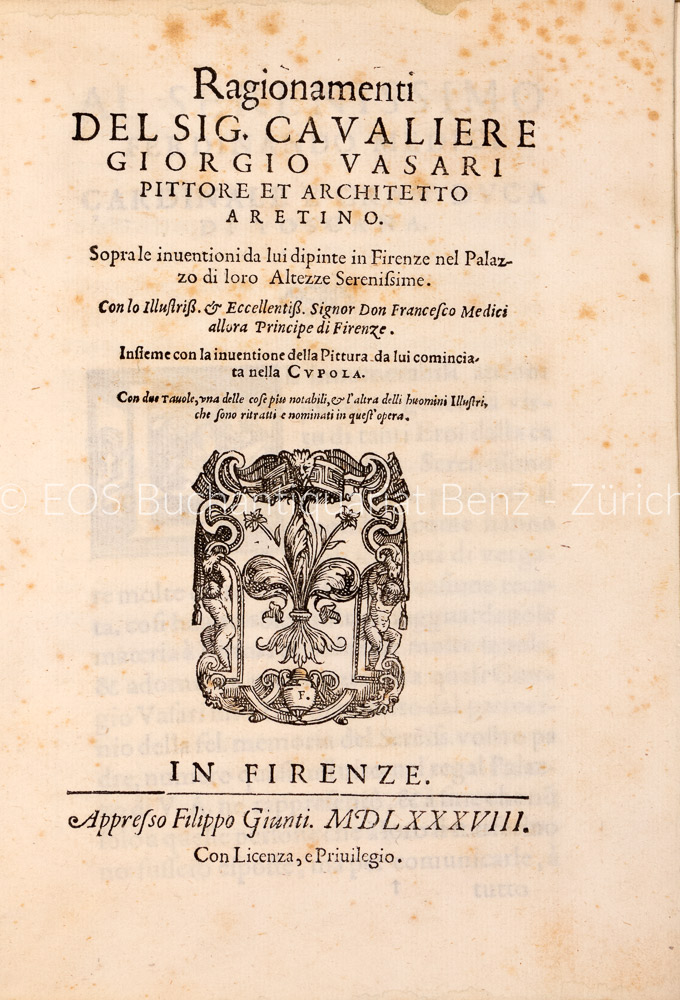
1588réf. 6821CBFlorenz, Filippo Giunti, 1588. Kl.-4°. (4) Bl., 186 S., (9) Bl. Mit Holzschnitt-Portrait, 2 versch. Holzschnittdruckermarken und zahlr. Holzschnitt-Initialen. Flexibler Pergamentband der Zeit mit 2 Schliessbändern (2 Seiten ausgerissen), handschr. Rückentitel und Papierrückenschild. + Wichtig: Für unsere Kunden in der EU erfolgt der Versand alle 14 Tage verzollt ab Deutschland / Postbank-Konto in Deutschland vorhanden +, A|B|C|D [4 Warenabbildungen]
1880réf. 320579Derby 1880. 3pp. folded sheet mourning stationery. With the original mailing envelope. Usual fold. Old tape repair on conjugate leaf with resulting stain affecting a few words of text but not affecting signature. 3pp. folded sheet mourning stationery. With the original mailing envelope. "I am very glad that there is to be a real life of the never to be forgotten glorious Dr. Livingstone. I wish Dr. Blaikie God speed. With regard to my private letter to you it was I need hardly say from the depths of my heart & not written with a view to publication and I cannot recall a word that was in it. But if you think that my poor words can contribute anything to what must be the object of every English speaking nation & not only this but of every man woman & child all over the world viz. to make known one who has opened the way of peace & not terror to those who were 'lying in darkness & the shadow of death' on so large a portion of the globe. I feel that I cannot decline what otherwise is so repugnant to me . And pray believe me ever the faithful servant of yourself & the great memory of as true a hero saint as ever lived ." Written on the occasion of the preparation for imminent publication of William Garden Blaikie's biography of Livingstone published 1880 the letter gives permission for a letter of hers to be published in which she said of Livingstone: "We cannot console ourselves for our loss. He is irreplaceable" p. 458 and called him "the greatest man of his generation. unknown books
1859réf. 47915London: John W. Parker and Son West Strand 1859. First Edition Bishop & Goldie 100 iii; Garrison - Morrison 1611. Original publisher's brown cloth binding with gilt stamped lettering to front board. Rust colored eps. Cloth along joints splitting. Rub mark to front paste-down. Prior owner signature to h.t. Withal a VG copy. 8 108 8 pp. 8 page publisher catalogue at rear. Charts including one fold-out 8 intra-textual figures & 4 fold-out plates at rear. 8vo. 9" x 5-5/8" Per B & G "One result of the publication of Notes on Hospitals was to bring upon Miss Nightingale requests for advice on the building of hospitals and infirmaries from all over the world. She devoted much time and endless trouble to dealing with such requests ."Somewhat uncommon title in the trade. John W. Parker and Son, West Strand hardcover books
réf. Juanpebooks069977WE ship worldwide. Brand new 100%guarentee unknown
1969réf. c2305150105xbvkBerlin, überwiegend 1961-1969, minimal auch 2. Hälfte 50er bzw. Anfang 70er Jahre. Insgesamt etwas über 1.500 Original-Fotografien, meist 2 oder 3 meist (seltener 1 oder 4) einseitig auf schwarzen Kartons (meist lose in transparente Fotoecken gesteckt), ausserdem wenige Fotos von Hilfsmittel-Konstruktionszeichnungen und einige Typoskriptblätter zu deren Detailbeschreibung. - Die insgesamt ca. 500 gelochten Trägerkartons befinden sich in 8 grossen Leitz-Ordnern mit handschriftlichen Rückentiteln wie 'Fotos - Dysmelien - u.a.', 'Fotos - Hilfsmittel - Dysmelien' oder 'Fotos - Dysmeliehaus - Jan. 1969'; die Ordner überwiegend alphabetisch nach den Namen der abgebildeten Kinder sortiert.
1740réf. 38135En Sevilla: En la Imprenta de las Siete Revueltas 1740. 4to 20 cm 8". 8 194 4 pp.; illus. Beautifully printed this is the second edition of a major account of a New World wonder by the first Florida-born author Francisco de Florencia 161995 who entered the Jesuit Order in 1642 and became a noted preacher as well as a highly regarded writer. First published in 1692 in Seville the Narracion essays the apparition in 1631 of St. Michael to an Indian named Diego Lázaro de San Francisco who lived in Santa María Nativitas on the PuebaTlaxcala border in Mexico. Miracles were attributed to the apparition to the spot of the manifestation and to nearby water as well; the miracles included various forms of spiritual healing including via holy water administered at a distance as recounted here. The work received the patronage of Manuel Fernández de Santa Cruz the bishop of Puebla Mexico. It contains a => full-page woodcut of St. Michael offers novenas specific to his chapel and of course gives a full account of the apparition. =>That long account includes a few lines in Nahuatl on p. 119. Provenance: 18th-century ownership signature of Francisco Antonio Ximenez del Arenal on front free endpaper. Unidentified marca de fuego on top edge of volume. Handsome 20th-century bookplate of Jose Rodriguez Familiar on front pastedown. => There seems to have been NO Mexico-printed edition of this work. DeBacker-Sommervogel III 798; Palau 92347; Sabin 24815; Alden & Landis 740/121; Medina BHA 6467. Publisher's limp vellum with evidence of ties now perished title in old ink on spine all edges speckled red; stain on front cover and another on rear. Bookplate and markings as above. => Overall a clean crisp copy in very good condition. En la Imprenta de las Siete Revueltas hardcover books
réf. WB17838Hardcover. Very Good. A charming pair of sketchbooks illustrating life in India circa 1890. 2 volumes 10 x 7½ in.; 254 x 190 mm. Together 2 manuscript title pages 24 sepia ink and ink wash sketches on tabs interleaved with printed captions; minor foxing and toning occasional offsetting onto verso of caption leaves. The Sal Forests of Mundla: Full green textured cloth covers gilt lettered; recased. The Banjar Valley Forest: Half green morocco over green textured cloth spine with raised bands in six compartments gilt-lettered red morocco label to second. These accomplished sketches were accomplished by Florence and Mary Fosterlikely sistersdepict in detailed fashion felling trees building camps and rafts floating down the Banjar River. hardcover books
1686In-folio, (8), 46pp (ultima bianca), occhietto (Mare magnum), frontespizio con stemma , ritratto calcografico di Ferdinando III principe d’Etruria inciso da Jacques Blondeau. Legatura medicea restaurata coeva in marocchino con globi medicei e gigli in cornice. Nervature al dorso. Copia donata da Antonio Magliabechi.
1923réf. C90960Librairie Armand Colin. As New. Paperback. FREE UPGRADE to Courier/Priority Shipping Upon Request - IN STOCK AND IMMEDIATELY AVAILABLE FOR SHIPMENT - AS NEW THE TEXT BLOCK IS PRISTINE CLEAN UNMARKED AND IN EXCELLENT CONDITION - - Text in French. 156 pages; 8 black and white plates. Catalogue Raisonne Catalog Raisonné Complete Works La Vie et L'Œuvre Oeuvre Raisonnee -- with a bonus offer-- - May be EITHER: out of print OOP and extremely rare in this pristine condition; signed by author or contributor; or a first or special edition; inquire for details . 1923. Librairie Armand Colin paperback
2010réf. C91008Rizzoli. As New. Hardcover. FREE UPGRADE to Courier/Priority Shipping Upon Request - IN STOCK AND IMMEDIATELY AVAILABLE FOR SHIPMENT - FLAWLESS COPY BRAND NEW PRISTINE NEVER OPENED -- - INCLUDES CD. 652 pages. Catalogue Raisonne Catalog Raisonné Complete Works Life and Work Raisonnee -- with a bonus offer-- - May be EITHER: out of print OOP and extremely rare in this pristine condition; signed by author or contributor; or a first or special edition; inquire for details; The most comprehensive and authoritative monograph to be published about the prolific master of art deco interior design. Jacques-Emile Ruhlmann 1879–1933 was one of the most celebrated art deco interior and furniture designers. A tastemaker and a style setter he worked and associated with the best artists in the worlds of fashion architecture and the decorative arts and catered to an international clientele of diplomats wealthy businessmen and artistocrats. Known as "The Master of Art Deco" Ruhlmann created opulent exquisitely designed furniture homes and showrooms for the Parisian beau monde in the ’20s and ’30s and was known for his use of rare woods with exquisite ornamentation provided by ivory tortoiseshell lacquer mirrors silk and tooled metals. In addition to his interiors Ruhlmann also designed lamps rugs wall coverings cigar boxes and unusually shaped beds and divans. Today his objects are highly sought by collectors and connoisseurs. Encompassing examples from all areas of Ruhlmann’s output this book expands upon the author’s previous work originally published in 1984 and contains much new information sketches and drawings and additional archival material never previously seen. This volume is the product of more than twenty years of research and the author worked closely with the Ruhlmann family art dealers collectors and curators in preparing this truly comprehensive and exhaustive monograph. . 2010. 0847857999 . Rizzoli hardcover
réf. 121183Liverpool Florence Nightingale 1865. . First edition; 8vo; engraved frontispiece 2 plates of building plans map within the text contents faintly toned with a little light spotting plates more tanned; original limp blue cloth titles to upper board gilt rebacked retaining most of the original spine hinges strengthened cloth a little rubbed and darkened very good condition; 103pp. First edition and an attractive copy of this uncommon title on the Liverpool Nurse's Training School published in the same year that it was formally established under Nightingale's influence. 'The Liverpool Training School and Home for Nurses was founded by William Rathbone in 1862 after consultation with Miss Nightingale. This was the beginning of a long and fruitful association which was to result in the organization and development of district nursing and workhouse infirmary nursing both of which were first tried out in Liverpool and later extended to other parts of the country' Bishop & Goldie Florence Nightingale: A Bio-Bibliography p. 28. Bishop & Goldie Florence Nightingale: A Bio-Bibliography pp. 27-28. Liverpool, Florence Nightingale, 1865. hardcover
réf. 121184London Harrison 1860. . First edition second issue; 8vo; chart within the text small tape repair on the verso of the title short closed tear in the margin of D4; original limp brown pebble-grain cloth title to upper board gilt yellow endpapers printed with publisher's ads spine rebacked to style cloth lightly rubbed with tiny worn spots at the corners very good condition; 79pp. First edition second issue with advertisements on the endpapers dated 1860 and 'the right of translation is reserved' on the title. An attractive copy. 'Defining nursing as "helping the patient to live" Nightingale "introduced the modern standards of training and esprit de corps and early grasped the idea that diseases are not 'separate entities'. but altered conditions qualitative disturbances of normal physiological processes through which the patient is passing. While she did not know the bacterial theory of infectious diseases she realized that absolute cleanliness fresh air pure water light and efficient drainage are the surest means of preventing them"' Garrison History of Medicine p. 773 quoted in Norman Library of Science and Medicine 1600. On her return from the Crimean War a public subscription was raised to found a school of nursing. Notes on Nursing was published six months before the school opened and was intended 'not as a textbook but as a book of hints for those nursing in the hospital ward and in the domestic sick room. The principles of hygiene and sanitation which Nightingale had applied with such success in the military hospital at Scutari in the Crimea were fundamental. Notes on Nursing described in great practical detail the nurse's duties in supplying her patient's needs and it indicated a new and more responsible role for nurses one that required proper training and medical knowledge. Notes on Nursing was the first major work on it subject and remained influential for many years' Grolier One Hundred Book Famous in Medicine 71. Bishop & Goldie Florence Nightingale: A Bio-Bibliography pp. 15-18; Grolier One Hundred Books Famous in Medicine 71; Hook & Norman The Norman Library of Science and Medicine 1600-1602. London, Harrison, [1860]. hardcover
1992réf. M95241Firenze, Giunti Editore (Libr. Musicale Italiana) 1992 Complete facsimile edition in full-size and full-colour reproduction of the complete original manuscript, publisher's hardcover binding (29x41cm., facsimile of the original binding) with small defect on front board and on lower end of front joint, together with a text volume (290pp. containing studies and commentaries) printed on handcrafted paper and bound in Fabriano paper, Limited edition of 998 numbered copies only ; this is nr. 528/998, protected by a publisher's box (46x32cm., cloth boards with gilt stamping, spine in leather), good condition, interior and texts in very good condition, rare, weight: 12kg., [This 'Squarcialupi Codex' is most probably the finest produced and most refined facsimile of a music manuscript ever. The codex contains an anthology of Italian music compiled in Florence (Firenze) during the first twenty years of the 15th century, with over 300 songs from the 14th till early 15th cy. by famous composers such as Francesco Landini, Andrea dei Servi, Gherardello da Firenze, Donato da Firenze, Niccolo da Perugia, and others. Its name is derived from the previous owner's name Antonio Squarcialupi, Florentine organist 1417-1480, attested by an inscription on the opening leaf. Later on it passed to Giuliano de Medici, then it passed to the Palatine Library and at the end of the 18th cy. it went to the Laurentian Library where it is kept up till present. The magnificent miniatures and illuminations in colour and gold - reproduced in the facsimile as well - were produced in the Florentine scriptorium of Santa Maria degli Angeli around 1410-'15. An indispensable source of early Renaissance music in Italy], M95241
1992Complete facsimile edition in full-size and full-colour reproduction of the complete original manuscript, publisher's hardcover binding (29x41cm., facsimile of the original binding) with small defect on front board and on lower end of front joint, together with a text volume (290pp. containing studies and commentaries) printed on handcrafted paper and bound in Fabriano paper, Limited edition of 998 numbered copies only ; this is nr. 528/998, protected by a publisher's box (46x32cm., cloth boards with gilt stamping, spine in leather), good condition, interior and texts in very good condition, rare, weight: 12kg., [This 'Squarcialupi Codex' is most probably the finest produced and most refined facsimile of a music manuscript ever. The codex contains an anthology of Italian music compiled in Florence (Firenze) during the first twenty years of the 15th century, with over 300 songs from the 14th till early 15th cy. by famous composers such as Francesco Landini, Andrea dei Servi, Gherardello da Firenze, Donato da Firenze, Niccolo da Perugia, and others. Its name is derived from the previous owner's name Antonio Squarcialupi, Florentine organist 1417-1480, attested by an inscription on the opening leaf. Later on it passed to Giuliano de Medici, then it passed to the Palatine Library and at the end of the 18th cy. it went to the Laurentian Library where it is kept up till present. The magnificent miniatures and illuminations in colour and gold - reproduced in the facsimile as well - were produced in the Florentine scriptorium of Santa Maria degli Angeli around 1410-'15. An indispensable source of early Renaissance music in Italy], M95241