Barclay Florence L.Livre Rare Book

1925réf. RO80244168Librairie Plon. 1925. In-12. Broché. Etat d'usage, Couv. défraîchie, Dos plié, Quelques rousseurs. 245 pages.. . . . Classification Dewey : 820-Littératures anglaise et anglo-saxonne
1933réf. R160025339Bibliothèque Reliée Plon sans jaquette avec abeille sur le dos n° 139. 1933. In-12. Relié. Etat d'usage, Couv. convenable, Dos abîmé, Intérieur frais. 253 pages.. . . . Classification Dewey : 840-Littératures des langues romanes. Littérature française
1929réf. RO80045403PLON et NOURRIT. 1929. In-12. Relié. Très bon état, Couv. fraîche, Dos impeccable, Intérieur frais. 248 pages.. . . . Classification Dewey : 820-Littératures anglaise et anglo-saxonne
1925réf. RO80113006PLON-NOURRIT et Cie. 1925. In-12. Relié demi-cuir. Etat d'usage, Couv. défraîchie, Dos satisfaisant, Intérieur acceptable. 248 pages. Reliure de bibliothèque : étiquette de code sur la coiffe en-tête et tampons sur la page de titre et dans quelques marges.. . . . Classification Dewey : 820-Littératures anglaise et anglo-saxonne
réf. 14992,Paris, Librairie Plon 1925, 248 pp., 1 vol. in 12 br. edition originale sur papier d'alfa
réf. 3845broché - 12x19 - 245 pp - 1925 - éditions PLON , Paris.traduit de l'anglais par E. DE SAINT-SEGOND.
1951réf. R160012822PAYOT. 1951. In-12. Broché. Bon état, Couv. convenable, Dos satisfaisant, Intérieur frais. 299 pages.. . . . Classification Dewey : 820-Littératures anglaise et anglo-saxonne
1922réf. RO80011065PAYOT. 1922. In-12. Relié demi-cuir. Bon état, Couv. convenable, Dos à nerfs, Intérieur frais. 300 pages. Plats de couverture brochés, conservés. Titre, filets et fleurons dorés sur le dos cuir marron à 4 nerfs.. . . . Classification Dewey : 820-Littératures anglaise et anglo-saxonne
1925réf. 28153Couverture souple. Broché. 301 pages.
1948réf. 28704Couverture souple. Broché. 300 pages.
1928réf. 92107Couverture souple. Broché. 301 pages.
1929réf. R160017915PLON. 1929. In-12. Broché. Etat d'usage, Couv. légèrement passée, Dos abîmé, Quelques rousseurs. 294 pages.. . . . Classification Dewey : 820-Littératures anglaise et anglo-saxonne
1929réf. RO80055420PLON-NOURRIT et Cie. 1929. In-12. Broché. Etat d'usage, Couv. défraîchie, Mors fendus, Intérieur acceptable. 294 pages. Charnières fendues. 1er plat et dos non-originaux.. . . . Classification Dewey : 820-Littératures anglaise et anglo-saxonne
1935réf. RO80134199BIBLIOTHEQUE RELIEE PLON N°188. 1935. In-16. Cartonné. Etat d'usage, Couv. convenable, Dos satisfaisant, Intérieur acceptable. 252 pages. Abeille sur le dos. Petites déchirures sur les bords de la jaquette, en état d'usage.. Avec Jaquette. . . Classification Dewey : 820-Littératures anglaise et anglo-saxonne
1928réf. R160160336PLON. 1928. In-8. Broché. Bon état, Couv. convenable, Dos satisfaisant, Intérieur frais. II+266 Pages - Coiffes abîmées. . . . Classification Dewey : 820-Littératures anglaise et anglo-saxonne
1943réf. RO60019228Arne Gimnes. 1943. In-12. Relié. Bon état, Couv. convenable, Dos satisfaisant, Intérieur frais. 245 pages. Texte en norvégien. Tranche de tête grise. Jaquette abîmée.. Avec Jaquette. . . Classification Dewey : 490-Autres langues
1989réf. RO40137289Flore. 1989. In-12. Broché. Etat d'usage, Couv. défraîchie, Dos abîmé, Quelques rousseurs. 187 pages. Dos très abîmé. 1er plat détaché.. . . . Classification Dewey : 820-Littératures anglaise et anglo-saxonne
1947réf. RO60141460Putnam. 1947. In-12. Relié. Etat d'usage, Couv. convenable, Dos fané, Intérieur acceptable. 432 pages. Dos sali. Jaquette manquante.. . . . Classification Dewey : 420-Langue anglaise. Anglo-saxon
réf. ORD-765Roman. Payot. 1948. In-8 br. 300pp. Exemplaire un peu fatigué.
1930réf. RO60151549Ediciones Edita. 1930. In-12. Relié. Etat passable, Coins frottés, Dos satisfaisant, Papier jauni. 350 pages. Texte en Espagnol. Nombreuses rousseurs. Jaquette passable.. Avec Jaquette. . . Classification Dewey : 460-Langues espagnole et portugaise
1930réf. R260257086Plon. 1930. In-8. Broché. Bon état, Couv. convenable, Coiffe en pied abîmée, Intérieur acceptable. 248 pages.. . . . Classification Dewey : 820-Littératures anglaise et anglo-saxonne
1947réf. ROD0039733Payot. 1947. In-12. Broché. Bon état, Couv. convenable, Dos satisfaisant, Intérieur frais. 299 pp.. . . . Classification Dewey : 820-Littératures anglaise et anglo-saxonne
1911réf. ROD0113573G. P. PUTNAM'S SONS. 1911. In-8. Broché. Etat d'usage, Couv. convenable, Dos satisfaisant, Rousseurs. VI+389 pages. Une annotation sur le premier contre-plat.. . . . Classification Dewey : 420-Langue anglaise. Anglo-saxon
réf. 9786558811282NACIONAL EDITORA. new. Ap��s ter o cora��o partido pelo amor de sua vida Rodney Steele decide viajar o mundo e acaba se tornando um escritor de sucesso. Dez anos depois de volta a Londres ele recebe uma liga��o por engano de uma mo��a cuja voz doce lhe lembra da mulher que amava. Sentindo-se solitǭrio ele implora que a mo��a lhe fa��a um simples mas peculiar favor: ligar para ele ��s dez e quinze durante seis noites consecutivas. Entre confiss��es desabafos e discuss��es literǭrias o la��o entre eles vai ficando cada vez mais forte com o passar dos dias. O que Rodney n�o sabe Ǹ que o amor estǭ mais perto do que imagina: no apartamento ao lado separado por uma mera parede. NACIONAL EDITORA unknown
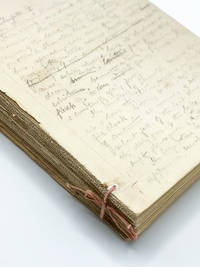
1910réf. 44643n.p.: n.p. 1910. Very good. Original draft entirely written out by hand of the sequel to the international sensation THE ROSARY. While Florence Barclay was working on this manuscript she was in the midst of a life-changing experience: her romance novel THE ROSARY had just become one of the biggest blockbuster novels of the Edwardian era. It was not only a runaway bestseller for years on end but also parodied by PUNCH made into at least five films and described by the Queen of England herself as her favorite book of the year. According to Rachel Anderson it was "said to have been read and wept over by every housemaid in the British Isles." THE MISTRESS OF SHENSTONE was something of its sequel featuring characters first introduced in THE ROSARY. THE MISTRESS OF SHENSTONE is an exquisite romance between a widow and the man who accidentally killed her husband: like THE ROSARY it combines a moving arc of emotional development with an alluring charisma between the main characters. When Barclay arrived in the United States for a book tour of SHENSTONE she was greeted as a celebrity much in the way that Charles Dickens had been on his first trip to the country. In addition to photographers and journalists she was met right off the boat by a crush of fans holding welcome banners. This experience was so unlike what was expected for English authors in the period that her daughter makes special remark upon it in her biography of the author: "To English readers it may seem a surprising outburst and very different to anything that can be imagined as taking place in England by way of reception accorded to a private individual" 220. In 1921 SHENSTONE also became the first of Barclay's books before THE ROSARY to be turned into a film. This manuscript offers a window into the writing process of a famous romance author at the height of her power. In addition to the entire base text in Barclay's hand essentially every page is revised in the same hand in some cases extensively. Common editorial markings include crossed out words and sentences some replaced with new text additions to punctuation and rearranged phrases. It is illuminating to compare the manuscript itself with the details of Barclay's writing as described in her daughter's book LIFE OF FLORENCE L. BARCLAY 1921. In seeking to champion her mother as an author for "ordinary readers" her daughter asserts that Barclay "had no eye to the literary connoisseur the seeker after mere artistic effect" 242. Yet many of the revisions made by Barclay in this draft suggest that she cared much more about the art of her work than the biography claims. Altered words often reflect the author's stylistic refinements seeking a more accurate or elevated word in place of the original e.g. "empty" changed to "desolate". Other changes show a focused eye for paring down. For instance "she poured out the doctor's tea" and "passed it across the folding tea table between them" has been changed simply to "handed it to him." These decisions reflect more than a desire to "supply them her readers with that they wanted" 242: they show an author spending hours refining her craft. A manuscript offering the opportunity to research further into the working process of a major popular romance writer - a topic that has thus far been rarely recorded or studied. 9'' x 6.75''. 386 individual lines sheets thread-bound by hand with pink ribbon filled out in pencil on rectos only. Text begins with Chapter I "On the terrace of Shenstone" and ends with the phrase sentence of the final chapter "Mrs. Jim Airth" in larger script an effect reproduced in the printed final. Editorial markings throughout. Housed in later waxed canvas wrapper with two printed labels "The Mistress of Shenstone" and one handwritten annotation "1st M S of Mistress of Shenstone." Provenance: by descent from author's family. n.p. unknown