15 570 résultats
1896réf. 08466Boston/London: Robert Bros./John Lane 1896. First American Edition. Hard Cover. Near Fine. Small Octavo. First American Edition issued as the 26th title of 33 in the "Keynotes Series" published by John Lane in London and by Roberts Bros. in Boston. Near fine copy bound in original light blue cloth decoated in green gilt lettering spine. Binding design by Patten Wilson. Illustrated tite page. 210 pp 10 pp. Ads. Robert Bros./John Lane hardcover books
1924Boards with light rubbing to extremities and slight sunning to spine. Former owner's name on front free endpaper. ; Color fold-out map in front. Rear ad section; 16mo 6" - 7" tall; 118 pages
1943réf. 5466Florence Alabama: The Church 1943. Octavo 23 x 15.5 cm. 171 v pages. Advertisements. Errata list page 1. Cover title. Table of contents. Third Edition. A generous helping of more than nine hundred recipes clearly an act of perseverance to review and produce during wartime. Southern favorites stand in relief: Cracklin Bread Hush Puppies Ambrosia Daube Glacé Cabbage Au Gratin Creole Peas Fried Bananas Black Bottom Pie Pecan Cake. But this is a substantial revision of the second edition and the Women of Trinity Guild were noting with interest recipes from beyond their immediate sphere as much as was the case anywhere else. Three early instances of Italian-American spaghetti exemplify the cuisine's transition from "peasant" food to household staple. Florence is a well-known constituent municipality of The Shoals in Alabama's northwestern corner the birthplace of W. C. Handy and by extension it is often said the birthplace of the Blues. The seat of Lauderdale County the city and the surrounding region had become prosperous through its abundant access to water power early in the nineteenth century. Though not the first Episcopalian congregation established in Alabama – Anglicans had already settled in Mobile and Tuscaloosa – Trinity Church founded in 1836 and still an active community lays claim to the title of oldest parish in the Tennessee Valley. Several handwritten corrections in pencil otherwise clean and bright internally. In stapled black-lettered red wrappers worn at the corners and with some good sized chips to the spine. Front panel of wrapper is illustrated with a photograph of Wesleyan Hall University of North Alabama. Good only. Scarce. OCLC locates three copies of the present revised edition and one copy of the first edition 1929; a copy of the second edition 1931 is also known; none of these editions is included in Brown Cagle or Cather. [The Church] unknown
1931réf. 5467Florence Ala: The Church 1931. Octavo 22.5 x 14.5 cm. x 151 xxix pages. Advertisements. Table of contents. Stated Second Edition likely a corrected printing of the first edition. An evidently well-received collection of nine hundred recipes following closely upon the first edition of only two years previous with the same 151 pages. Southern favorites stand in relief: Southern Egg Bread Okra Gumbo Bishop Whipple Pudding Ambrosia Owendaw Asparagus Loaf Blackeye Peas Elder Blossom Wine Creole Pralines. But it would be misleading to truncate the story there for the Women of Trinity Guild could venture out as eagerly as their counterparts elsewhere from Almond Bisque and Lobster Canapes to Queen of Trifles and Banberry sic Tarts. Marginalia on page 110 comments on the Sponge Cake fine “…grand but a lot of work”. For more local color an advertisement on the rear of wrappers is for “Dowdy’s Pit Bar-B-Q Fish-Chili Lee Highway.” ~ Florence is a well-known constituent municipality of The Shoals in Alabama’s northwestern corner the birthplace of W. C. Handy and by extension it is often said the birthplace of the Blues. The seat of Lauderdale County the city and the surrounding region had become prosperous through its abundant access to water power early in the nineteenth century. Though not the first Episcopalian congregation established in Alabama – Anglicans had already settled in Mobile and Tuscaloosa – Trinity Church founded in 1836 and still an active community lays claim to the title of oldest parish in the Tennessee Valley. ~ Several pages splash-stained but text unobscured throughout. Stapled in blue wrappers titled in black; stained and faded but nonetheless intact. Good. A lengthy gift presentation handwritten in ink on page ix addressed to “a bride” as per page 48 with corresponding recommendations marking several recipes. Scarce. OCLC locates no copies of this second edition though one copy of the first edition and three copies of the revised third edition of 1943 are reported; none of these editions in Brown Cagle or Cather. [The Church] unknown
1943réf. 5466Florence Alabama: The Church 1943. Octavo 23 x 15.5 cm. 171 v pages. Advertisements. Errata list page 1. Cover title. Table of contents. Third Edition. A generous helping of more than nine hundred recipes clearly an act of perseverance to review and produce during wartime. Southern favorites stand in relief: Cracklin Bread Hush Puppies Ambrosia Daube Glacé Cabbage Au Gratin Creole Peas Fried Bananas Black Bottom Pie Pecan Cake. But this is a substantial revision of the second edition and the Women of Trinity Guild were noting with interest recipes from beyond their immediate sphere as much as was the case anywhere else. Three early instances of Italian-American spaghetti exemplify the cuisine's transition from "peasant" food to household staple. Florence is a well-known constituent municipality of The Shoals in Alabama's northwestern corner the birthplace of W. C. Handy and by extension it is often said the birthplace of the Blues. The seat of Lauderdale County the city and the surrounding region had become prosperous through its abundant access to water power early in the nineteenth century. Though not the first Episcopalian congregation established in Alabama – Anglicans had already settled in Mobile and Tuscaloosa – Trinity Church founded in 1836 and still an active community lays claim to the title of oldest parish in the Tennessee Valley. Several handwritten corrections in pencil otherwise clean and bright internally. In stapled black-lettered red wrappers worn at the corners and with some good sized chips to the spine. Front panel of wrapper is illustrated with a photograph of Wesleyan Hall University of North Alabama. Good only. Scarce. OCLC locates three copies of the present revised edition and one copy of the first edition 1929; a copy of the second edition 1931 is also known; none of these editions is included in Brown Cagle or Cather. [The Church] unknown books
1931réf. 5467Florence Ala: The Church 1931. Octavo 22.5 x 14.5 cm. x 151 xxix pages. Advertisements. Table of contents. Stated Second Edition likely a corrected printing of the first edition. An evidently well-received collection of nine hundred recipes following closely upon the first edition of only two years previous with the same 151 pages. Southern favorites stand in relief: Southern Egg Bread Okra Gumbo Bishop Whipple Pudding Ambrosia Owendaw Asparagus Loaf Blackeye Peas Elder Blossom Wine Creole Pralines. But it would be misleading to truncate the story there for the Women of Trinity Guild could venture out as eagerly as their counterparts elsewhere from Almond Bisque and Lobster Canapes to Queen of Trifles and Banberry sic Tarts. Marginalia on page 110 comments on the Sponge Cake fine “…grand but a lot of work”. For more local color an advertisement on the rear of wrappers is for “Dowdy’s Pit Bar-B-Q Fish-Chili Lee Highway.” ~ Florence is a well-known constituent municipality of The Shoals in Alabama’s northwestern corner the birthplace of W. C. Handy and by extension it is often said the birthplace of the Blues. The seat of Lauderdale County the city and the surrounding region had become prosperous through its abundant access to water power early in the nineteenth century. Though not the first Episcopalian congregation established in Alabama – Anglicans had already settled in Mobile and Tuscaloosa – Trinity Church founded in 1836 and still an active community lays claim to the title of oldest parish in the Tennessee Valley. ~ Several pages splash-stained but text unobscured throughout. Stapled in blue wrappers titled in black; stained and faded but nonetheless intact. Good. A lengthy gift presentation handwritten in ink on page ix addressed to “a bride” as per page 48 with corresponding recommendations marking several recipes. Scarce. OCLC locates no copies of this second edition though one copy of the first edition and three copies of the revised third edition of 1943 are reported; none of these editions in Brown Cagle or Cather. [The Church] unknown books
1991réf. LFA-126739707Revue de 50 pages, format 205 x 285 mm, illustrée, brochée couverture couleurs, bon état
réf. LFA-126739710Revue de 50 pages, format 205 x 285 mm, illustrée, brochée couverture couleurs, bon état
1999réf. LFA-126739751Revue de 82 pages, format 220 x 280 mm, illustrée, brochée couverture couleurs, bon état
1920réf. 78918Binghamton N.Y.: no publisher indicated no date ca. 1920. self-wrappers. Very slight tanning to the first and last leaves; otherwise fine. . 8vo. Full-page color illustration and title on p. 1 four additional full-page color illustrations and six text illustrations. . P. 12 consists of Binghampton N.Y. advertisers actice ca. 1920. no publisher indicated, unknown
1896réf. C19Petit in-8° (13,5 x 18 cm.), relié en demi-maroquin rouge à coins, avec dos à nerfs orné de fleurons dorés et du titrage, tranches dorées et couvertures d’origine conservées un peu roussies, ex-dono manuscrit en partie effacé sur la page de titre. Non paginé (50 pages environ).
réf. 113973Paris Editions Recherche sur les Civilisation 1985. 4to. 8 388 1 pp. Illustrated with plates figures and photographs. Sewn as issued. With contributions by W. Y. Williams M. Azim B. Boyaval F Chamoux J.J. Clere W. A. Daszewasi F. Geus & P. Lenoble B. Gratien J. C. Grenier N. C Grimal A. Gutbub L. Habachi N. H. Henein A. Hesse F. W. Hinkel I. Hofmann J. Leclant L. Limme M. Malaise C. Meillier A. Mekhitarian B. Menu H. De Meulenaere A. Minault-Gout P. van Moorsel J. Reinold G. Roquet W.K. Simpson H. S. Smith & L.L. Giddy F. Thill B.C. Trigger M. Valloggia B. van de Walle and L. V. Zabkar. unknown
réf. 5721Collection dirigée par Bernard Ginestet. Jacques Legrand & Fernand Nathan, éditeurs. 1985. Grand in-8°, reliure pleine percaline rouge, jaquette illustrée. 200 pages. Nombreuses illustrations.
réf. 201509964Paris, Minerva, 2005 ; in-4, 179 pp., br.
réf. 202103022Paris, Albin Michel, 1992 ; in-8, 281 pp., br.
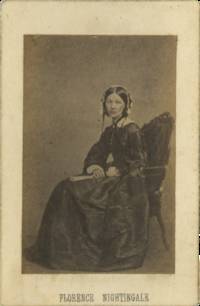
1870réf. List36105N.p. 1870. Carte After the original photograph by William Edward Kilburn 1818–1891 taken circa 1854 with later CDV issue probably circa 1870s. Albumen print mounted on card; sitter identified in print beneath image. Standard carte-de-visite format approximately 2½ x 4 inches. Excellent contrast with light surface wear. Seated three-quarter portrait of Nightingale in dark silk dress with white collar hands folded over a paper posed beside an upholstered Victorian chair. The image derives from a sitting arranged in London with William Edward Kilburn one of Britain’s early professional photographers and a former daguerreotypist who gained fame by exhibiting at the Great Exhibition of 1851. By the early 1850s Kilburn had established a reputation for photographing members of the aristocracy and prominent public figures. The Nightingale sitting happened shortly before her departure for the Crimea in October 1854 at a moment when her name was just entering the public press. The portrait predates her full transformation into the national icon later known as the “Lady with the Lamp.” Unlike later more romanticized images Kilburn’s photograph presents a composed unsentimental likeness more consistent with standard portraiture practices than her later photographs. Following Nightingale’s wartime service at Scutari 1854–1856 and the subsequent surge of public acclaim Kilburn’s image became the primary photographic source from which engravings lithographs and later carte-de-visite reproductions were made.1 1 Denis Pellerin “Florence Nightingale: The Mystery Behind Her Iconic Photographs” The Classic November 15 2020 https://theclassicphotomag.com/florence-nightingale-the-mysteries-behind-her-iconic-photographs/ accessed February 27 2026. unknown
1870réf. List36105N.p. 1870. Carte After the original photograph by William Edward Kilburn 1818–1891 taken circa 1854 with later CDV issue probably circa 1870s. Albumen print mounted on card; sitter identified in print beneath image. Standard carte-de-visite format approximately 2½ x 4 inches. Excellent contrast with light surface wear. Seated three-quarter portrait of Nightingale in dark silk dress with white collar hands folded over a paper posed beside an upholstered Victorian chair. The image derives from a sitting arranged in London with William Edward Kilburn one of Britain’s early professional photographers and a former daguerreotypist who gained fame by exhibiting at the Great Exhibition of 1851. By the early 1850s Kilburn had established a reputation for photographing members of the aristocracy and prominent public figures. The Nightingale sitting happened shortly before her departure for the Crimea in October 1854 at a moment when her name was just entering the public press. The portrait predates her full transformation into the national icon later known as the “Lady with the Lamp.” Unlike later more romanticized images Kilburn’s photograph presents a composed unsentimental likeness more consistent with standard portraiture practices than her later photographs. Following Nightingale’s wartime service at Scutari 1854–1856 and the subsequent surge of public acclaim Kilburn’s image became the primary photographic source from which engravings lithographs and later carte-de-visite reproductions were made.1 1 Denis Pellerin “Florence Nightingale: The Mystery Behind Her Iconic Photographs” The Classic November 15 2020 https://theclassicphotomag.com/florence-nightingale-the-mysteries-behind-her-iconic-photographs/ accessed February 27 2026. unknown books
1912réf. 4537New York New York; Salem Ohio 1912. Typed Letter Signed by Florence Woolston editor of The Woman Voter on letterhead; single page dated June 27 1912 measuring 8.5 x 11 inches with writing to recto and with by the transmittal envelope. Accompanied by a one page Autograph Letter unsigned but composed by the recipient Homer Boyle in response to Woolston's TLS; dated June 29 1912 on blank stationery measuring 5.25 x 8.5 inches with writing to recto. Together these letters give insight into the relationship between national suffrage publications and local grassroots organizations as the women's movement entered the final push toward the 19th Amendment. In her capacity as editor of The Woman Voter Florence Woolsten writes to Homer Boyle of Salem OH regarding his offer to "write something about the early Suffrage movement in Ohio"; and she notes that an acquaintance "Mrs. Peck is confident that you will give us a charming sketch." Much as her own letter is concise Woolston requests that Boyle be efficient as well: "I must ask you not to run over 1500 words. I should like you to have one illustration for your article but unless you can furnish cuts I am afraid I cannot do so our funds are very low." In many women's activist groups members themselves often took on the extra expenses of printing and distributing materials; and Woolston's appears to be in a similar state working on tight budgets. But because of the critical campaign happening in Ohio at the time she presses Boyle for a quick turnaround as "I hope that this effort of ours will help the campaign in Ohio a step toward victory." The Woman Voter a monthly periodical that ran from 1910 to 1917 was founded by Mary Ritter Beard before being run by Woolston in April of 1912. This letter sent only a few months into her leadership show her taking charge at a critical juncture and considering how to best use the journal as an organ for supporting the movement throughout the country. Ohio would vote to ratify the 19th Amendment in September of that year. Homer Boyle the proprietor of a plumbing shop according to the U.S. Census of 1910 also occasionally published progressive pieces in Salem's local newspaper. Within two days of receiving Woolston's letter he displays his serious commitment by "enclosing matter for your acceptance or rejection." Yet he also reveals a struggle to meet Woolston's professional requirements. "As to the 1500 word limit guess I have exceeded it but I couldn't think of giving up a word.As to cuts I could furnish one Sojourner Truth and as I say very little about her I do not send it." Seeming to recognize his possible missteps he closes by appealing to another more local female authority. "I imagine Miss Elizabeth Hauser must be preparing a Salem article for you. She was in town about 3 days; asked me what I had written you and commended it." A pair of letters ready to spark research into the role of men in the suffrage movement their responses to women's authority the publication and processes of woman suffrage journals the depiction of suffrage history and its key figures and the relationships among more grassroots contributors to the movement. unknown
1912réf. 4537New York New York; Salem Ohio 1912. Typed Letter Signed by Florence Woolston editor of The Woman Voter on letterhead; single page dated June 27 1912 measuring 8.5 x 11 inches with writing to recto and with by the transmittal envelope. Accompanied by a one page Autograph Letter unsigned but composed by the recipient Homer Boyle in response to Woolston's TLS; dated June 29 1912 on blank stationery measuring 5.25 x 8.5 inches with writing to recto. Together these letters give insight into the relationship between national suffrage publications and local grassroots organizations as the women's movement entered the final push toward the 19th Amendment. In her capacity as editor of The Woman Voter Florence Woolsten writes to Homer Boyle of Salem OH regarding his offer to "write something about the early Suffrage movement in Ohio"; and she notes that an acquaintance "Mrs. Peck is confident that you will give us a charming sketch." Much as her own letter is concise Woolston requests that Boyle be efficient as well: "I must ask you not to run over 1500 words. I should like you to have one illustration for your article but unless you can furnish cuts I am afraid I cannot do so our funds are very low." In many women's activist groups members themselves often took on the extra expenses of printing and distributing materials; and Woolston's appears to be in a similar state working on tight budgets. But because of the critical campaign happening in Ohio at the time she presses Boyle for a quick turnaround as "I hope that this effort of ours will help the campaign in Ohio a step toward victory." The Woman Voter a monthly periodical that ran from 1910 to 1917 was founded by Mary Ritter Beard before being run by Woolston in April of 1912. This letter sent only a few months into her leadership show her taking charge at a critical juncture and considering how to best use the journal as an organ for supporting the movement throughout the country. Ohio would vote to ratify the 19th Amendment in September of that year. Homer Boyle the proprietor of a plumbing shop according to the U.S. Census of 1910 also occasionally published progressive pieces in Salem's local newspaper. Within two days of receiving Woolston's letter he displays his serious commitment by "enclosing matter for your acceptance or rejection." Yet he also reveals a struggle to meet Woolston's professional requirements. "As to the 1500 word limit guess I have exceeded it but I couldn't think of giving up a word.As to cuts I could furnish one Sojourner Truth and as I say very little about her I do not send it." Seeming to recognize his possible missteps he closes by appealing to another more local female authority. "I imagine Miss Elizabeth Hauser must be preparing a Salem article for you. She was in town about 3 days; asked me what I had written you and commended it." A pair of letters ready to spark research into the role of men in the suffrage movement their responses to women's authority the publication and processes of woman suffrage journals the depiction of suffrage history and its key figures and the relationships among more grassroots contributors to the movement. unknown books
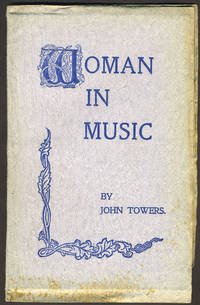
1897réf. 26346Winchester VA: John Towers 1897. Paperback. Very good condition. Mr. Towers speaks forcefully for the contribution of women as musicians and composers in his article in "The Musician" of April May and June 1897. Following the article is an alphabetical list of women musicians. He also apologizes to the "hundreds of Women who have done and are still doing excellent work in the field of music all the world over whose names are absent from the following list." This pamphlet memorializes the article and is dedicated to Florence Sutro a gifted musician artist and lawyer in New York City Society. She created the National Federation of Women's Music Clubs and was president of the Woman's department of the Music Teachers National Association. She and her husband Theodore were advocates for women's suffrage. Sml. 8vo 30pp printed photo of Florence Sutro. Publishers printed blue paper wrappers title in blue on cover and advertisement for the Estey Piano Rooms on verso. Tipped in at the rear is a one page testimonial of Estey Piano Co by Mrs Sutro. Printed on the last page of text is "By way of proof of the onward march of women in the elysian field of music." and goes on to praise the works of Florence Sutro the president of the newly created Woman's Department of the Music Teachers National Association. Light brown marking on lower edge of cover and first few pages and foredge of wrappers o/w very good condition. OCLC: 14545194. John Towers paperback
1942réf. 59629Washington D.C.: Work Projects Administration Federal Works Agency Government Printing Office 1942. 8vo. 2 54 pp. Self-printed softcovers WPA initials in outline on front cover minor age toning toning to fore-edges slight shelfwear still VG copy. First edition of this very scarce original printing of the famed WPA Catalogue detailing State-by-State the publications issued by the Writers’ Program launched under the New Deal sponsored Federal Works Agency. The catalogue carefully lists not only all the publications to date for the famed American Guide Series but also the lesser-known American Life Series. According to Ms. Kerr The American Life Series touched on “natural history the American Indian the Negro military and maritime history folklore ethnic groups national defense” and others. Also included in this catalogue are assorted publications such as the Health Pamphlets from Alabama the Arizona State Teachers Native American series the Illinois Recreational Activities series and many others. This original edition is quite scarce as opposed to the 1990 facsimile reprint often mistakenly catalogued as the original. Work Projects Administration, Federal Works Agency, Government Printing Office, paperback
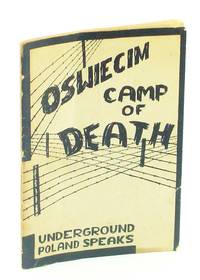
1944réf. 214h1991New York: Poland Fights. Fair. 1944. First American Edition. Paperback. "The moving and almost incredible story of Oswiecim Auschwitz concentration camp. Written under the tension of the vibrant poignancy that is an inseparable part of the miseries Poland has endured. Written by a Polish Underground Labor 'historian' experienced in the underground struggle who drew his material from actual contact with persons who underwent and saw others suffer the things that he describes. A compilation of the viciousness of Nazism as seen at Oswiecim so that all who read might understand and make a just evaluation of that which Poland faces of the problem of ridding all Europe of a scourge that gives rise to such things as Oswiecim." - Foreword. 48 page stapled booklet. Includes a one-page facsimile of the cover of the 1942 Polish first edition published underground. Full-page map shows locations of major concentration camps in Poland. According to Wikipedia this book was written by Natalia Zarembina 1895-1973 and was the first documentary about the Auschwitz concentration camp based on reports from refugees or people dismissed from the camp mainly Eryk Lipinski Henryk Swiatkowski and Edward Bugajski. Also includes information about the network of slave camps in Poland including Camp Districts Temporary Concentration Camps General Concentration Camps Forced Labor Camps Concentration Camps for Clergy Concentration Camps for Women Concentration Camps for Jews Camps for "Improvement of the Race" where "the only duty that is absolutely enforced of the young defect-free Polish and German inmates is the regular performance of sexual intercourse with the partner assigned" Camps for "Correction of Youth" and Concentration Camps for Children So-Called "Educational Institutes". Front cover loose but present. Lacking back cover. Unmarked with somewhat above-average wear. Moderate tanning to contents. Binding intact. A rare copy of this early Auschwitz exposé. 8.25" x 5.4". Weiner Library Cat. Series 7 - #1660.; Cover Art; 8vo . Poland Fights paperback
réf. 10717Philippe Lebaud, éditeur. 1987. In-4°, reliure pleine toile noire, titre frappé à l'or, vignette appliquée sur le premier plat. 32 planches hors texte en couleurs. 208 pages. Belle et savante édition de cet ensemble de textes sacrés souvent nommé " Livre des Morts ".
1988réf. 2-0582416310Longman 1988. Paperback. New. 240 pages. 8.54x5.47x1.06 inches. Longman paperback
réf. 2019219506.Gpaperback. Good. Access codes and supplements are not guaranteed with used items. May be an ex-library book. paperback