Museum het Rembrandthuis (Amsterdam, Netherlands)Livre Rare Book
Steyn, Cor:MareMagnum
The Amsterdam polka. Piano-accordeon-hammondorgel solo
3 p. Gr. 4°. Titel met foto kerk binnenstand Amsterdam.

Musikantiquariat Paul Van Kuik · Allemagne15,00 €
2 474 résultats
réf. AJ4529QLWBroché très bon état . Contenu propre. Coins légèrement érodés. 176 pages .
3 p. Gr. 4°. Titel met foto kerk binnenstand Amsterdam.
réf. 17-2097Amsterdam The Netherlands: Sotheby’s 2002. . 4to. 192 pp. Very Good. Soft Cover. Color plates throughout.Collection from San Francisco Museum of Modern Art. Amsterdam, The Netherlands: Sotheby’s, 2002. paperback
1976réf. 32521Amsterdam: Sotheby Mak Van Waay B. V. / Sotheby's. As New. Paperback. FREE UPGRADE to Courier/Priority Shipping Upon Request - IN STOCK AND IMMEDIATELY AVAILABLE FOR SHIPMENT - AS NEW THE TEXT BLOCK IS PRISTINE CLEAN UNMARKED AND IN EXCELLENT CONDITION - -- 208 pages; 382 lots catalogued a number illustrated. Includes a glossy brochure advertising the sale picturing several of the lots and listing the artists whose works are included in the sale. Among the artists represented: G. Dou Jozef Israels M. Hobbema Rembrandt Jongkind and many others. Mint condition. -- with a bonus offer--; T-Sotam42676; Sotheby Mak Van Waay B. V. / Sotheby's Amsterdam The B. De Geus Van Den Heuvel Collection - Kunstveilingen - Sotheby Mak Van Waay B. V. - April 26 & 27 1976 208 pages; 382 lots catalogued a number illustrated. Includes a glossy brochure advertising the sale picturng several of the lots and listing the artists whose works are included in the sale. Among the artists represented: G. Dou Jozef Israels M. Hobbema Rembrandt Jongkind and many others. . 1976. Sotheby Mak Van Waay B. V. / Sotheby's paperback
1991réf. 261689Den Haag: SDU 1991. 320 S. überaus zahlr. Abb. 4° Br. *gutes Expl.*.
réf. B48772-2Amsterdam 1990. 146 10pp. 200 illus. partly color. 4to. Wraps. Amsterdam, 1990. paperback books
1994réf. 38147Amsterdam The Netherlands: Sotheby's. New. Paperback. FREE UPGRADE to Courier/Priority Shipping Upon Request – – IN STOCK AND IMMEDIATELY AVAILABLE FOR SHIPMENT - FLAWLESS COPY BRAND NEW PRISTINE NEVER OPENED Text in English. 471 lots many illustrations most in black and white. Among the artists represented: P. Rousseau; J. Israels; N. Van der Waay; P. L. Kluyver; and many others. -- with a bonus offer--; T-Sot3194-1; Sotheby's Amsterdam The Collection Of the Late Dr. F. Gorissen Former Director of the Haus Koekkoek - Sotheby's Amsterdam - 1 March 1994 . 1994. Sotheby's paperback
1996réf. 160064Zwolle: Waanders 1996. 277 Seiten. Mit zahlreichen farbigen Abbildungen im Text. 4° (25-35 cm). Illustrierte Orig.-Broschur. [Softcover / Paperback].
réf. 3601217Contentum Ltd. Loose sheet. New. High-quality art print based on an original work from the Rijksmuseum. Created in the 16th century 1500. Professionally printed on premium fine-art paper Museum Etching museum quality in size A2. The artwork is printed with a white border museum-style presentation. Contentum Ltd. unknown
réf. 3601216Contentum Ltd. Loose sheet. New. High-quality art print based on an original work from the Rijksmuseum. Created in the 16th century 1500. Professionally printed on premium fine-art paper Photo Rag Bright White premium quality in size A2. The artwork is printed with a white border museum-style presentation. Contentum Ltd. unknown
réf. 3601214Contentum Ltd. Loose sheet. New. High-quality art print based on an original work from the Rijksmuseum. Created in the 16th century 1500. Professionally printed on premium fine-art paper Museum Etching museum quality in size A3. The artwork is printed with a white border museum-style presentation. Contentum Ltd. unknown
réf. 3601215Contentum Ltd. Loose sheet. New. High-quality art print based on an original work from the Rijksmuseum. Created in the 16th century 1500. Professionally printed on premium fine-art paper Photo Rag 308 in size A2. The artwork is printed with a white border museum-style presentation. Contentum Ltd. unknown
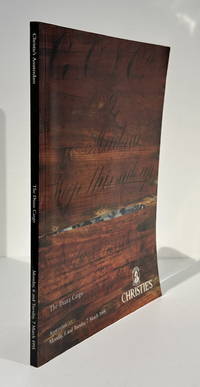
1995réf. 1522BChristie's Amsterdam 1995 Book. Good. Soft cover. English text; Paperback; 92 pages; 760 lots with colour illustrations; 27 x 21 cm; 0.6 kg; Catalogue from Christie's Amsterdam sale DIANA-2255 on the 6th and 7th of March 1995 with 1319 lots.; Includes loose pages with auction results that show some wear marks throughout namely yellowing.; Minor signs of wear on the exterior namely minor scuffs and scratches. Edge wear. Interior with signs of wear namely yellowing on the rear of the front cover and also on the rear of the back cover. The remaining interior show minor signs of wear.; "The bulk of the cargo was of course the porcelain. Over eleven tons of porcelain just under 24000 intact individual pieces were recovered from the wreck. Dinner plates saucers bowls cups bottles tureens serving dishes and jars comprising in total over 200 different shapes or patterns were brought ashore washed photographed inventorised and packed for shipment to Amsterdam. For me there were two great high-points in the salvage. One was finding the ship's bell. Nothing is so evocative of life on board ship for a mariner or a ship's historian as the bell which regulated all the daily routines. The watches the church services the meal-times. But recovering the porcelain gave us all just as much pleasure. The cargo contains porcelain from the early 19th Century of a type very familiar to ceramicists. It marks the revival of the China Trade after the ending of war; old established types of shape and pattern blend harmoniously with new innovations. Jingdezhen China's 'porcelain city' in Jiangxi Province always contained conservative potters producing wares are which they knew from long experience still remained in broad terms popular with western supercargoes in Canton. But there were new ingredients now in the complex Asian maritime trade. Americans were coming to Canton directly via California. This was a radical innovation after 1783 when the first Boston merchant by-passed the old English East India Company monopoly on Asian trade to the Colonies and sent a ship laden with ginseng to bring 'China goods' straight back to the Eastern seaboard. Many American collections contain this sort of blue and white export porcelain; some of it with the 'Fitzhugh' pattern much with the distinctive 'rain-cloud' border that evolves from 18th Century rim patterns. The porcelain was clearly popular in India too; this was being imported for the cream of Madrassi society the Anglo-Indian upper class which bought its fashionable China goods to use during the vast rounds of social events that marked the cool-weather 'Season'. The porcelain is slightly less familiar however to Europeans than its predecessor before the beginning of the Napoleonic Wars. The European market changed at the end of the 18th Century. Technology played a large part in this. New improved ceramic 'mixes' pioneered especially by Wedgwood in England- enabled cheaper stronger vessels to be potted for export all over Europe and to 'the colonies'. And accompanying this innovation of the 18th Century Industrial Revolution was another; the invention of 'transfer-printing. This made it possible for potters in Staffordshire and elsewhere to manufacture much more cheaply long runs of identical pots; because the design 'transferred' onto the undecorated pot from an engraved copper plate rather than hand-painted was almost infinitely reproducible to the same standard. This made manufacturing popular ceramics in Europe much cheaper and largely eliminated the production-cost advantages of Chinese export porcelain which had enabled it to maintain its huge share of the market in Europe as late as the 1770's. So the 'Diana Cargo' marks a moment of transition in taste and demand; one of the areas where this 'sealed time capsule' will continue to provide information for decades." Excerpt from the introduction by Dorian Ball. Christie's Amsterdam paperback
20188vo., with frontispiece, plates and floor-plan, printed endpapers; printed boards, red buckram back lettered in gilt, a fine copy in publisher's slip-case with printed label. The fabric design of the boards matches that of the original diary.
2003réf. 39775Amsterdam The Netherlands: Christie's. New. Paperback. FREE UPGRADE to Courier/Priority Shipping Upon Request – – IN STOCK AND IMMEDIATELY AVAILABLE FOR SHIPMENT - FLAWLESS COPY PRISTINE -- Lots 401 - 712; many lovely color illustrations -- with a bonus offer--; Small 4to 9" - 11" tall; 114 pages . 2003. Christie's paperback
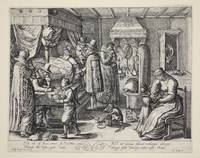
1618réf. 5161Utrecht: Cripsijn de Passe the Elder c. 1614- 1618. FIRST STATE. Hardcover. Fine. Signed in the lower margin with the names of the artist and publisher: “Crisp de pas inu inv et fe” / “C. de pas ex.” Numbered in the image lower center: 3. Four lines in Latin divided into two columns: “Haec alia est facies rerum sic vertitur ordo/ Post tot delicias subeunt morbusque dolorque./ Mutantur laetis tristia grata malis/ Nempe solet Nemesis redere iusta vices.”. Brilliant richly-inked early impression printing sharp and crisp with excellent contrasts and remarkable clarity with the support lines along the text distinct. Like most of the surviving copies with the number in the lower margin as described by Franken. Slim margins around the border in very fine condition. A print of great rarity especially in such fine condition. This plate by Crispijn de Passe II is one of a set of four illustrating the biblical parable of Lazarus and the rich man. The story from the Gospel of Luke 16:19-31 tells of an extremely wealthy man who shows no compassion when the poor leprous beggar Lazarus begs him for bread and water. After his death the rich man is sent to hell where he is punished for his greed and heartlessness whereas the pious and humble Lazarus is taken to heaven. It reminds us that earthly wealth is of no consequence after death and that those who suffer in this life will receive comfort in the next. The episode depicted here is The Dying Hour of the Rich Man. Even as the doctor attends the man on his deathbed the notary in the foreground is already dividing the old man’s estate while to the far left a demon cheerfully welcomes him to the hereafter with music. The inscription reads: “This is the other face of things. Thus is the order reversed. Sad things are turned to happy ones; good things to evil. After so many joys come pain and illness. / Indeed retribution Nemesis is wont to return just punishments.” The verses are possibly by the Dutch antiquarian and humanist Aernout van Buchel 1565-1641 whose monogram appears next to the verses on the second plate in the series. The other prints in the series Hollstein 3 4 and 6 depict: 1. Lazarus in the house of the rich man; 2. Feast in the house of the Rich Man; and 4. The Rich Man in Hell. The design for the fourth plate is the work of De Passe the Elder. “Parabole du mauvais riche. Quatre planches numérotées avec 4 l. de souscr. en 2 div. Suite intéressante pour les mœurs costumes et intérieurs qui sont des premières années du 17e siècle et parce que les estampes appartiennent aux meilleures productions des deux maîtres dont on peut en même temps comparer le burin. Il résulte de cette comparaison que Crispyn junior le gagne sur son père pour la taille fine et propre et qu'il a une science du clair obscur qui manque à Crispyn le vieux. Mais dans chacune des quatre estampes il y a des parties dignes des meilleurs maîtres du temps tant pour le dessin que pour la gravure.” Franken 1062-1065 The Artist: Crispijn de Passe the Younger came from a large distinguished Dutch family of professional engravers and was trained in the workshop of his father Cripsijn de Passe the Elder who published this print. He was known for his remarkable handling of the burin of which this engraving is an excellent example. The artist modeled both the interior and the figures in costume on contemporary tastes offering insights into the elegant lifestyle of the seventeenth-century upper classes. De Passe worked in his father’s Utrecht workshop beginning in 1612 until his departure for Paris around 1618. He worked in Paris with some interruptions until 1629 at which time he resumed work in Utrecht. In 1639 he removed to Amsterdam where he died circa 1670. The Dives and Lazarus series must have been made before 1618 when Crispijn the Younger left for Paris See Veldman Crispijn de Passe and his Progeny p. 221. The Publisher: “The elder De Passe 1565–1637 began his career as an engraver and publisher in Antwerp; forced to leave because of his Anabaptist faith he settled -after an interlude in Aachen- in 1589 in Cologne. He set up a print publishing house producing portraits of the European nobility as well as religious mythological and allegorical prints and books. In 1611 he and his family were exiled from Cologne and took refuge in Utrecht. With the assistance of his children he soon started another prosperous business. It is in Utrecht that this print was produced.”National Portrait Gallery He died in Utrecht in 1637. While publishing in Cologne the elder De Passe had engraved another series also of 4 prints on the Rich Man and Lazarus theme after drawings by Maarten de Vos Hollstein XV nos. 118-121. The second plate in that series shows the Rich Man being bathed by naked women. The other three plates are versions of the same scenes as those found in the series described here. Cripsijn de Passe the Elder, c. 1614- hardcover
1618réf. 5161Utrecht: Cripsijn de Passe the Elder c. 1614- 1618. FIRST STATE. Hardcover. Fine. Signed in the lower margin with the names of the artist and publisher: “Crisp de pas inu inv et fe” / “C. de pas ex.” Numbered in the image lower center: 3. Four lines in Latin divided into two columns: “Haec alia est facies rerum sic vertitur ordo/ Post tot delicias subeunt morbusque dolorque./ Mutantur laetis tristia grata malis/ Nempe solet Nemesis redere iusta vices.”. Brilliant richly-inked early impression printing sharp and crisp with excellent contrasts and remarkable clarity with the support lines along the text distinct. Like most of the surviving copies with the number in the lower margin as described by Franken. Slim margins around the border in very fine condition. A print of great rarity especially in such fine condition. This plate by Crispijn de Passe II is one of a set of four illustrating the biblical parable of Lazarus and the rich man. The story from the Gospel of Luke 16:19-31 tells of an extremely wealthy man who shows no compassion when the poor leprous beggar Lazarus begs him for bread and water. After his death the rich man is sent to hell where he is punished for his greed and heartlessness whereas the pious and humble Lazarus is taken to heaven. It reminds us that earthly wealth is of no consequence after death and that those who suffer in this life will receive comfort in the next. The episode depicted here is The Dying Hour of the Rich Man. Even as the doctor attends the man on his deathbed the notary in the foreground is already dividing the old man’s estate while to the far left a demon cheerfully welcomes him to the hereafter with music. The inscription reads: “This is the other face of things. Thus is the order reversed. Sad things are turned to happy ones; good things to evil. After so many joys come pain and illness. / Indeed retribution Nemesis is wont to return just punishments.” The verses are possibly by the Dutch antiquarian and humanist Aernout van Buchel 1565-1641 whose monogram appears next to the verses on the second plate in the series. The other prints in the series Hollstein 3 4 and 6 depict: 1. Lazarus in the house of the rich man; 2. Feast in the house of the Rich Man; and 4. The Rich Man in Hell. The design for the fourth plate is the work of De Passe the Elder. “Parabole du mauvais riche. Quatre planches numérotées avec 4 l. de souscr. en 2 div. Suite intéressante pour les mœurs costumes et intérieurs qui sont des premières années du 17e siècle et parce que les estampes appartiennent aux meilleures productions des deux maîtres dont on peut en même temps comparer le burin. Il résulte de cette comparaison que Crispyn junior le gagne sur son père pour la taille fine et propre et qu'il a une science du clair obscur qui manque à Crispyn le vieux. Mais dans chacune des quatre estampes il y a des parties dignes des meilleurs maîtres du temps tant pour le dessin que pour la gravure.” Franken 1062-1065 The Artist: Crispijn de Passe the Younger came from a large distinguished Dutch family of professional engravers and was trained in the workshop of his father Cripsijn de Passe the Elder who published this print. He was known for his remarkable handling of the burin of which this engraving is an excellent example. The artist modeled both the interior and the figures in costume on contemporary tastes offering insights into the elegant lifestyle of the seventeenth-century upper classes. De Passe worked in his father’s Utrecht workshop beginning in 1612 until his departure for Paris around 1618. He worked in Paris with some interruptions until 1629 at which time he resumed work in Utrecht. In 1639 he removed to Amsterdam where he died circa 1670. The Dives and Lazarus series must have been made before 1618 when Crispijn the Younger left for Paris See Veldman Crispijn de Passe and his Progeny p. 221. The Publisher: “The elder De Passe 1565–1637 began his career as an engraver and publisher in Antwerp; forced to leave because of his Anabaptist faith he settled -after an interlude in Aachen- in 1589 in Cologne. He set up a print publishing house producing portraits of the European nobility as well as religious mythological and allegorical prints and books. In 1611 he and his family were exiled from Cologne and took refuge in Utrecht. With the assistance of his children he soon started another prosperous business. It is in Utrecht that this print was produced.”National Portrait Gallery He died in Utrecht in 1637. While publishing in Cologne the elder De Passe had engraved another series also of 4 prints on the Rich Man and Lazarus theme after drawings by Maarten de Vos Hollstein XV nos. 118-121. The second plate in that series shows the Rich Man being bathed by naked women. The other three plates are versions of the same scenes as those found in the series described here. Cripsijn de Passe the Elder, c. 1614- hardcover books
2025réf. x-1041187815Taylor & Francis Ltd 2025. Paperback. New. 158 pages. 9.18x6.12x9.21 inches. Taylor & Francis Ltd paperback
19598vo., First English Edition, with 4 plates and a full-page facsimile in the text, wanting front free endpaper; cloth, gilt back, a good, clean copy in unclipped, lightly age-soiled dustwrapper. With the trade ticket of Gieves of Portsmouth on front paste-down. The work was first published in Germany in the preceding year. Enser, p.213.
réf. 9040094403.Gpaperback. Good. Access codes and supplements are not guaranteed with used items. May be an ex-library book. paperback
2000réf. 18074Amsterdam The Netherlands: Rijksmuseum Amsterdam / Waanders. New. Paperback. FREE UPGRADE to Courier/Priority Shipping Upon Request - IN STOCK AND IMMEDIATELY AVAILABLE FOR SHIPMENT - Flawless -- with a bonus offer--; 018074 . 2000. 9040094403 . Rijksmuseum, Amsterdam / Waanders paperback
1981In 4', cart. ed. ill. col. pp. 126, 311 ill. col. n.t.; in ottimo stato, minimi segni del tempo.Luogo di pubblicazione LausanneEditore Elsevier Publishing ProjectsAnno pubblicazione 1981Materia/Argomento Storia locale, Amsterdam, FotografiaScaffale 44/8Autore Van der Heyden, A.- Kroon, Ben- Land, Ton
2009réf. Q-158761345XCelestial Arts 2009-07-28. Paperback. New. New. In shrink wrap. Looks like an interesting title! Celestial Arts paperback
2004réf. 25880Amsterdam: Sotheby's. New. Paperback. FREE UPGRADE to Courier/Priority Shipping Upon Request - IN STOCK AND IMMEDIATELY AVAILABLE FOR SHIPMENT - FLAWLESS COPY BRAND NEW PRISTINE NEVER OPENED - Includes uniforms maps art objects paintings European and Chinese ceramics weapons and much more from the Graf Von Galen family collection. Features a brief very interesting history of the family and lovely color photos of many of the lots offered along with provenance exhibition history and literature citations for lots where available. Among the artists whose paintings are included are W. H. Ovelgonne Willem van Aelst Delft and Jan Pauwel Gillemans the Elder. -- with a bonus offer--; T-SOTAM5504-3; 4to - over 9¾" - 12" tall; Sotheby's Amsterdam The Graf Von Galen Collection - Sotheby's Amsterdam - 5 May 2004 AUCTION CATALOGUE Catalog Catalogs Catalogues . 2004. Sotheby's paperback
réf. 18-4315Amsterdam: Christie’s 1989. 4to. 116 pp. Hard Covers. Very Good. Black cloth covered boards with gilt lettering. Dust Jacket Good with one inch repaired tear at top edge. Color plates throughout. Auction results present. Amsterdam: Christie’s, 1989. hardcover