3 991 résultats
réf. 200410268Bruxelles, Lombard, 1972 ; in-4, 48 pp., cartonnage de l'éditeur.
réf. 200410273Bruxelles, Lombard, 1974 ; in-4, 30 pp., cartonnage de l'éditeur.
réf. 200410272Bruxelles, Lombard, 1974 ; in-4, 48 pp., cartonnage de l'éditeur.
réf. 200903716Bruxelles, Lombard, 1977 ; in-4, 48 pp., cartonnage de l'éditeur. Eo tome 10.
réf. 200900216Bruxelles, Lombard, 1973 ; in-4, 48 pp., cartonnage de l'éditeur. Eo couverture insolée en restauration chez paul.
réf. 200410235Bruxelles, Lombard - collection jeune europe, s.d. ; in-4, 46 pp., broché, couverture illustr(usures). (66).
réf. 562750Rio de Janeiro, Imp. Nacional, 1896. In-8, demi-percaline verte de l’époque, 539 pp., 16 planches dépliantes (cartes, graphiques, tableaux, etc.).
1755réf. LBW-7324Lisboa, 1755. In-4 de 12 pp. ; broché.
1951réf. LBW-8894S.l., 1951. Ensemble de 5 aquarelles originales sur papier (env. 41 x 29 cm.) signées et légendées par E. D. Galli.
1926réf. 781121926 Paris, Plon, 1926, in 12 broché, III-291 pages ; illustrations hors-texte ; couverture illustrée (effrangée).
réf. 201003273Paris, LES GUIDES BLEUS - les editions du pacifique, 1978 ; grand in-8, 152 pp., cartonnage d'éditeur avec jaquette. Très bon état.
réf. 50850P., Haton, sans date (vers 1900), in 8° broché, VIII-312 pages ; couverture fanée ; manque de papier au dos.
réf. 201309728Paris, Robert Laffont, 1965 ; in-8, 187 pp., br.
réf. 201608058S.l., Editions charles léopold mayer, 2003 ; in-8, 169 pp., br.
réf. 201005826Paris, Les presses francaises, 1936 ; in-8, 190 pp., broché. Tiré de cet ouvrage 100 exemplaires hors commerce sur papier madagascar des papeteries navarre numérotés de 1 à 100. Exemplaire n°47.
réf. 49983P., Lehuby, 1847, in 8° cartonnage pleine percaline décoré et doré de l'éditeur, tranches dorées, 355 pages ; reliure défraichie avec petits défauts ; rousseurs.
1889réf. 877981889 Paris, Delagrave, 1889, in 12 broché, 177 pages ; cachets ; couverture effrngée, dos renforcé au ruban adhésif.
réf. 69483Bruges, P., Desclée de Brouwer, 1928, in 8° broché, 186 pages ; couverture illustrée.
réf. 201112703Paris, Gallimard, 2008 ; in-4, 327 pp., br.
réf. 201806788Paris, Flammarion, 1979 ; in-8, 252 pp., br.
réf. 201207655Zurich, Editions ATLANTIS collection Orbis Terrarum, 1970 ; in-4, 176 pp., cartonnage de l'éditeur. Bon état (jaquette abimée ) livre en très bon état.
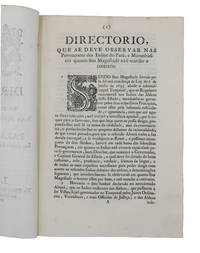
1758réf. 69200Lisboa: Miguel Rodrigues 1758. Integrating the Indigenous People of Brazil into Portuguese Society A scarce and monumentally important law in the history of the Indigenous peoples of Brazil. Far more than a simple reorganization of government and a step towards Jesuit expulsion this remarkable document prescribes the entire worldview of the Portuguese crown regarding the newly free Indigenous population in its colonies enumerating ninety-five articles which direct how they should live and work down to the most minute details of daily life. This decree following the June 6 decree which abolished the slavery of Native Brazilians was approved by King José I on August 7 1755. One piece in Marquis de Pombal's sweeping reforms Pombal's policy towards the American Indian was one of full integration with White society. The goal of this policy in Brazil was threefold—to curb the influence of the Jesuit order to encourage the "civilization" of Indigenous settlements and therefore their commercial and agricultural productivity and finally to draw a clear line between Natives now free and theoretically equal to Portuguese citizens and imported African slaves who would be the key to exploiting the New World's immense natural resources. This decree initially confined to Pará e Maranhão but soon extended to all of Brazil presents a complex and contradictory view of its newly free people subjects. The first article insists that a Portuguese Director is needed for each settlement as Indigenous leaders "due to the lamentable rusticity and ignorance with which they have been educated until now do not have the necessary aptitude required for government." The document is insistent beginning with the second article that the Directors are only there to advise and "may not in any case exercise coercive jurisdiction over the Indians" who are alternately referred to as equal to Whites and as idle immoral and childlike. Many of the articles herein are intended to transmute Indigenous Brazilians into good Portuguese citizens—Directors are to insist on the exclusive use of the Portuguese language in schools and business Articles 6-7 and each person is to be given a surname "with great care being taken by the Directors to introduce the same surnames as those of the families of Portugal" 11 our translation. Other articles enforce the restyling of homes to look more Portuguese the reorganization of households into the nuclear family unit and the adoption of Portuguese dress. Many others encourage agriculture and trading though the Director who receives one sixth of the produce of his settlement is required to supervise all transactions nominally to ensure that unscrupulous Portuguese merchants are not fleecing their poor naïve charges. Shockingly for the time Article 80 abolishes the enforced separation of the White and Indigenous populations and encourages the former to settle among the later. To prevent land runs care is taken that Native inhabitants should receive preference for land grants and "honorable positions" in local government. Perhaps most remarkable are Articles 88 and 89 which actively encourage miscegenation: "I recommend to the Directors that they apply unceasing care in facilitating and promoting on their part marriages between Whites and Indians….To facilitate said marriages the Directors will employ all the effectiveness of their zeal in persuading all White Persons who reside in their Settlements that the Indians are not of inferior quality to them that His Majesty deigning to qualify them for all those honors appropriate to the ranks of their posts consequently the same privileges will be enjoyed by persons who marry said Indians; thus banishing the most prejudicial imaginings of the Inhabitants of this State who have always considered such marriages to be infamous." The above is in stark contrast to Article 10 which reveals much about the true impetus of these reforms. That article reads in large part: "Among the lamentable principles and pernicious abuses that have resulted in the Indians' considerable decline one of them is undoubtedly the unjust and scandalous introduction of calling them Blacks; perhaps wanting with the infamy and vileness of this name to persuade them that nature had destined them to be the slaves of the Whites as is regularly imagined with respect to the Blacks of the African coast. And because besides being extremely detrimental to the civility of the Indians themselves this abominable abuse would be indecent to the Royal Laws of His Majesty to call Blacks men whom the said King was pleased to raise up and declare exempt from all infamy." This was all part of Pombal's plan and set the stage for vastly increased slave labor in Brazil. Indeed in 1761 Pombal banned the importation of slaves to Portugal and her eastern possessions instead routing the entirety of her share in the international slave trade to Brazil. By painting Whites and Native Brazilians as equals in direct opposition to Blacks the Portuguese administration created a clear and legally grounded distinction about which races were to be free and which to be enslaved. The strategy proved effective long outliving Portuguese dominion of Brazil—slavery was not abolished there until 1888 the last holdout in the Western Hemisphere. Despite the many articles encouraging Directors to be fair and theoretically putting limits on their ability to interfere with Indigenous autonomy the Directory system was unsurprisingly rife with abuse. Eventually corruption on behalf of the Directors was so frequent and so flagrant that the Directory was abolished in 1798. A crucial document of Portuguese colonial policy outlining a dramatically new and sometimes shockingly progressive attitude towards the Indigenous people of Brazil and with far-reaching consequences for Brazilian society and the role of slavery in its future. Folio. Disbound. Minimal staining along upper edge. Near fine. BORBA DE MORAES p.265. RODRIGUES 883 "Interesting and rare". unknown books
1758réf. 69200Lisboa: Miguel Rodrigues 1758. Integrating the Indigenous People of Brazil into Portuguese Society A scarce and monumentally important law in the history of the Indigenous peoples of Brazil. Far more than a simple reorganization of government and a step towards Jesuit expulsion this remarkable document prescribes the entire worldview of the Portuguese crown regarding the newly free Indigenous population in its colonies enumerating ninety-five articles which direct how they should live and work down to the most minute details of daily life. This decree following the June 6 decree which abolished the slavery of Native Brazilians was approved by King José I on August 7 1755. One piece in Marquis de Pombal's sweeping reforms Pombal's policy towards the American Indian was one of full integration with White society. The goal of this policy in Brazil was threefold—to curb the influence of the Jesuit order to encourage the "civilization" of Indigenous settlements and therefore their commercial and agricultural productivity and finally to draw a clear line between Natives now free and theoretically equal to Portuguese citizens and imported African slaves who would be the key to exploiting the New World's immense natural resources. This decree initially confined to Pará e Maranhão but soon extended to all of Brazil presents a complex and contradictory view of its newly free people subjects. The first article insists that a Portuguese Director is needed for each settlement as Indigenous leaders "due to the lamentable rusticity and ignorance with which they have been educated until now do not have the necessary aptitude required for government." The document is insistent beginning with the second article that the Directors are only there to advise and "may not in any case exercise coercive jurisdiction over the Indians" who are alternately referred to as equal to Whites and as idle immoral and childlike. Many of the articles herein are intended to transmute Indigenous Brazilians into good Portuguese citizens—Directors are to insist on the exclusive use of the Portuguese language in schools and business Articles 6-7 and each person is to be given a surname "with great care being taken by the Directors to introduce the same surnames as those of the families of Portugal" 11 our translation. Other articles enforce the restyling of homes to look more Portuguese the reorganization of households into the nuclear family unit and the adoption of Portuguese dress. Many others encourage agriculture and trading though the Director who receives one sixth of the produce of his settlement is required to supervise all transactions nominally to ensure that unscrupulous Portuguese merchants are not fleecing their poor naïve charges. Shockingly for the time Article 80 abolishes the enforced separation of the White and Indigenous populations and encourages the former to settle among the later. To prevent land runs care is taken that Native inhabitants should receive preference for land grants and "honorable positions" in local government. Perhaps most remarkable are Articles 88 and 89 which actively encourage miscegenation: "I recommend to the Directors that they apply unceasing care in facilitating and promoting on their part marriages between Whites and Indians….To facilitate said marriages the Directors will employ all the effectiveness of their zeal in persuading all White Persons who reside in their Settlements that the Indians are not of inferior quality to them that His Majesty deigning to qualify them for all those honors appropriate to the ranks of their posts consequently the same privileges will be enjoyed by persons who marry said Indians; thus banishing the most prejudicial imaginings of the Inhabitants of this State who have always considered such marriages to be infamous." The above is in stark contrast to Article 10 which reveals much about the true impetus of these reforms. That article reads in large part: "Among the lamentable principles and pernicious abuses that have resulted in the Indians' considerable decline one of them is undoubtedly the unjust and scandalous introduction of calling them Blacks; perhaps wanting with the infamy and vileness of this name to persuade them that nature had destined them to be the slaves of the Whites as is regularly imagined with respect to the Blacks of the African coast. And because besides being extremely detrimental to the civility of the Indians themselves this abominable abuse would be indecent to the Royal Laws of His Majesty to call Blacks men whom the said King was pleased to raise up and declare exempt from all infamy." This was all part of Pombal's plan and set the stage for vastly increased slave labor in Brazil. Indeed in 1761 Pombal banned the importation of slaves to Portugal and her eastern possessions instead routing the entirety of her share in the international slave trade to Brazil. By painting Whites and Native Brazilians as equals in direct opposition to Blacks the Portuguese administration created a clear and legally grounded distinction about which races were to be free and which to be enslaved. The strategy proved effective long outliving Portuguese dominion of Brazil—slavery was not abolished there until 1888 the last holdout in the Western Hemisphere. Despite the many articles encouraging Directors to be fair and theoretically putting limits on their ability to interfere with Indigenous autonomy the Directory system was unsurprisingly rife with abuse. Eventually corruption on behalf of the Directors was so frequent and so flagrant that the Directory was abolished in 1798. A crucial document of Portuguese colonial policy outlining a dramatically new and sometimes shockingly progressive attitude towards the Indigenous people of Brazil and with far-reaching consequences for Brazilian society and the role of slavery in its future. Folio. Disbound. Minimal staining along upper edge. Near fine. BORBA DE MORAES p.265. RODRIGUES 883 "Interesting and rare". unknown
1775réf. 15987Lisbon. 1775. A royal proclamation indended to prevent fraud in the export of tobacco and to encourage agriculture and commerce in general. 18pp. Large quarto. Stitched very good. unknown
1775réf. 15987Lisbon. 1775. A royal proclamation indended to prevent fraud in the export of tobacco and to encourage agriculture and commerce in general. 18pp. Large quarto. Stitched very good. unknown books