(Florrie, The Florida Co-Ed)Biblio.com
2 668 résultats
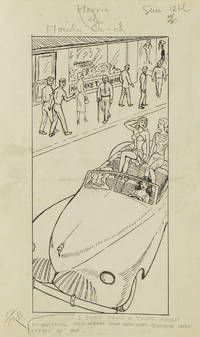
1949réf. 313357Gainesville Fla 1949. Aprox 77 pen and ink drawings with the newspaper cliping done generally for Wednesdays and Sundays. 8vo & 4to. In spiral rink notebook. Aprox 77 pen and ink drawings with the newspaper cliping done generally for Wednesdays and Sundays. 8vo & 4to. unknown
1949réf. 313357Gainesville Fla 1949. Aprox 77 pen and ink drawings with the newspaper cliping done generally for Wednesdays and Sundays. 8vo & 4to. In spiral rink notebook. Aprox 77 pen and ink drawings with the newspaper cliping done generally for Wednesdays and Sundays. 8vo & 4to. unknown books
1922réf. 64060Tallahassee FL & Buffalo & New York NY: Department of Agriculture Florida The Matthews-Northrup Works 1922. One large oblong double-atlas folio colour lithograph map sized 50 x 44 in. county lines and railroad lines demarcated in colours fold creases as issued minor dustsoiling edgewear to verso some very slight weakening to a couple fold creases otherwise a VG bright copy. First edition thus of this uncommon and updated sectional map of Florida incorporating the 1920 census numbers as well as updating the agricultural statistics farm properties and average acreage values at the outset of the Roaring 20’s. Also delineated are the railroads reaching into Florida including the Atlantic Coast Line Florida East Coast RR Seaboard Air Lines Georgia Southern & FLorida RR Louisville 7 Nashville RR and others. McRae 1870-1943 headed the Florida Department of Agriculture from 1912-1923. Worldcat locates 2 physical copies U of FL WI Hist. Soc. Department of Agriculture, Florida, The Matthews-Northrup Works, unknown
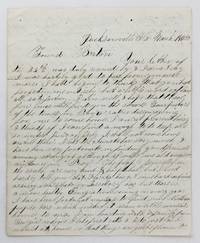
1858réf. 4106Jacksonville Fl: March 15 1858. Very good plus. 4pp. on a single folded sheet. Old mailing folds. An informative dispatch from antebellum Florida from A.C Scranton to "Friend Barton" in 1858. In his letter Scranton reports that despite some problems he is enjoying southern people and general life in Florida: "The people generally in the south are very kind & hospitibal but I need hardly to tell you that Florida has got some hard times as every new state or Territory has but thare is a more healthy Emigration coming in every year I have been fortunate anough to find some Northern people here which makes it seam a little more like home to me. I am boarding with a family from Georgia whome I like first rate & I do just as I would at home so that things are quite pleasant here considering I am amongst strangers." He then provides information on Jacksonville and then two disasters that hit his adopted hometown: "Jacksonville is the largest place in Florida & had at one time about 3000 inhabitants it is not as large as it was once some three years ago it was visited by a very destructive fire & burned nearly half of the town. Last summer there was some kind of Fever here that almost prostrated the place some called it the Yellow Fever & some the African but none could tell for certin.about a hundred & fifteen or twenty that died here in 3 months & a grate many left the town nearly all the stors wer closed not a sound of a hammer was to be heard. When cold weather came it stoped the sickness and it seams quite lively now. It has been for many years a grate resort in the winter season for invaleds but on account of the sickness last summer thare are but few this winter if it continus healthy this summer the place will revive but if not it will kill it entirely." Scranton also discusses the transportation system that served Jacksonville and the recent winding down of the Seminole Wars: "It is situated on the Johns River about 23 miles from the mouth and is connected with Charleston & Savana by a regular line of steamers that runs up the river a hundred miles to a place called Platka whare Emigrants land & then travel by land to the interior to settle the country thare is a railroad building from this place to Tallahasse the capital of the state a distance of a hundred & eighty miles which wen completed will be a little help to this place. There is also another in progress from Fernandina a new town that lays in the North East corner of the state to a place called cedar keys on the gulf side whare they intend to carry the US mail direct from New Orleans to New York insted of going round by Key west & will shorten the time considerable. Florida has cost Uncle Sam a large some of money.the government.will make a treaty with them & send them into the Indian Territory & then close the Indian war in Florida." Almost all of the Seminoles remaining in Florida relocated to Indian Territory in the year this letter was written. A wonderfully-detailed firsthand account of Jacksonville and its development and challenges during the late 1850s. A printed transcription accompanies the letter. March 15 unknown
1858réf. 4106Jacksonville Fl: March 15 1858. Very good plus. 4pp. on a single folded sheet. Old mailing folds. An informative dispatch from antebellum Florida from A.C Scranton to "Friend Barton" in 1858. In his letter Scranton reports that despite some problems he is enjoying southern people and general life in Florida: "The people generally in the south are very kind & hospitibal but I need hardly to tell you that Florida has got some hard times as every new state or Territory has but thare is a more healthy Emigration coming in every year I have been fortunate anough to find some Northern people here which makes it seam a little more like home to me. I am boarding with a family from Georgia whome I like first rate & I do just as I would at home so that things are quite pleasant here considering I am amongst strangers." He then provides information on Jacksonville and then two disasters that hit his adopted hometown: "Jacksonville is the largest place in Florida & had at one time about 3000 inhabitants it is not as large as it was once some three years ago it was visited by a very destructive fire & burned nearly half of the town. Last summer there was some kind of Fever here that almost prostrated the place some called it the Yellow Fever & some the African but none could tell for certin.about a hundred & fifteen or twenty that died here in 3 months & a grate many left the town nearly all the stors wer closed not a sound of a hammer was to be heard. When cold weather came it stoped the sickness and it seams quite lively now. It has been for many years a grate resort in the winter season for invaleds but on account of the sickness last summer thare are but few this winter if it continus healthy this summer the place will revive but if not it will kill it entirely." Scranton also discusses the transportation system that served Jacksonville and the recent winding down of the Seminole Wars: "It is situated on the Johns River about 23 miles from the mouth and is connected with Charleston & Savana by a regular line of steamers that runs up the river a hundred miles to a place called Platka whare Emigrants land & then travel by land to the interior to settle the country thare is a railroad building from this place to Tallahasse the capital of the state a distance of a hundred & eighty miles which wen completed will be a little help to this place. There is also another in progress from Fernandina a new town that lays in the North East corner of the state to a place called cedar keys on the gulf side whare they intend to carry the US mail direct from New Orleans to New York insted of going round by Key west & will shorten the time considerable. Florida has cost Uncle Sam a large some of money.the government.will make a treaty with them & send them into the Indian Territory & then close the Indian war in Florida." Almost all of the Seminoles remaining in Florida relocated to Indian Territory in the year this letter was written. A wonderfully-detailed firsthand account of Jacksonville and its development and challenges during the late 1850s. A printed transcription accompanies the letter. March 15 unknown books
réf. 3242Scarce. Black paper wraps. Photograph and title printed in silver to front cover. Front fly made of silver paper. Organized by architect featuring photographs renderings and floorplans of commercial and residential projects located in South Florida including Miami Miami Beach Coral Gables Ft. Lauderdale and Palm Beach; Hobe Sound and Winter Park circa mid/late 30's. Last third of book consists of advertisements for architects contractors designers landscapers and building materials and manufacturers. A nice clean crisp copy without previous owners' names or other markings. ; 4to 11" - 13" tall; 106 54 pages; All shipments through USPS insured Priority Mail. The Miami Visitor Publishing Co., Inc. paperback
1997réf. DADAX0926842617Rowman & Littlefield Publishers 1997-01-01. First Edition. paperback. New. 7.00x0.75x10.00. Buy with confidence. Excellent Customer Service & Return policy. Rowman & Littlefield Publishers paperback
Mm 220x320 Cinque volumi rilegati in mezza pelle, titolo e fregi in oro al dorso, piatti con carta marmorizzata con piccole abrasioni alla base. Legature tutte ben salde. Vol. I°, ( 2 Luglio - 24 dicembre 1968 ) di 414 pp. Vol. II°, ( 1° gennaio - 24 giugno 1969 ) di 414 pp. Vol. III°, ( 1° luglio - 30 dicembre 1869 ) di 430 pp. Vol. IV°, ( 6 gennaio - 30 giugno 1870 ) di 414 pp. Vol. V°, ( 7 luglio - 29 dicembre 1870 ). Tutti i volumi sono illustrati da xilografie con immagini anche a piena pagina. Alcune fioriture e bruniture in alcune pagine del testo, peraltro lo stato d'insieme di questo importante settimanale, di forte caratterizzazione eurocentrica, è ottimo. Raccolta di tutto il pubblicato della nota rivista a carattere geografico che seguì la edizione di lusso orientata ad un pubblico più facoltoso e che venne poi continuata e surrogata col nuovo anno dal " Giornale popolare di Viaggi". Spedizione in 24 ore dalla conferma dell'ordine.
1986réf. x-0471826456Wiley-Interscience 1986. Hardcover. New. 1st edition. 594 pages. 10.00x7.00x1.50 inches. Wiley-Interscience hardcover
1872réf. 31647Tallahassee: Charles H. Walton State Printer 1872. Stitched untrimmed and uncut. 350 2 blanks 76 pp. Except for a spotted title page which is chipped at the blank corners a clean Very Good copy. An informative Journal recounting Floridians' resistance to Radical Reconstruction. Governor Harrison Reed's Message addresses ongoing disturbances and "fatal and disgraceful violence. Nine-tenths of the suffering induced has fallen upon Republicans and mainly upon colored citizens-- giving unerring evidence that these excesses have been strongly tinctured by if they have not entirely originated in political prejudice." Many murders and disruptions had occurred in Calhoun and Jackson Counties forcing citizens to flee their homes and seek shelter in other parts of the State. A Committee of Five was appointed "to examine into the cause of said murders and to ascertain why the perpetrators have not been brought to justice." The Committee concluded that "there exists an organized band whose object is to resist the laws and who are the supposed authors of the many murders and outrages committed in the county." Threats of violence and a "reign of terror" had deterred witnesses from coming forward. In Jackson County "no less than one hundred and eighty -four murders fifteen of the number being women and children and almost the entire number being colored people brutally assassinated by this band of outlaws for daring to think for themselves." Similar outrages occurred in Lafayette and other counties. Governor Reed Florida's governor from 1868-73 faced impeachment charges from this Assembly as he had in 1868 and 1870. He was later charged in sixteen Articles with illegally issuing state bonds embezzlement and bribery. The charges were dismissed. The Assembly treated other matters of government including special elections marred by violence; "an act to incorporate Brown's Theological Institute" now Edward Waters College founded in 1866 to educate former slaves and considered the oldest historically black college in Florida. Senate Bill No 82 "to be entitled an act to incorporate the Buckingham Smith Asylum for the colored people of St. Augustine" was passed. Charles H. Walton, State Printer unknown
1872réf. 31647Tallahassee: Charles H. Walton State Printer 1872. Stitched untrimmed and uncut. 350 2 blanks 76 pp. Except for a spotted title page which is chipped at the blank corners a clean Very Good copy. An informative Journal recounting Floridians' resistance to Radical Reconstruction. Governor Harrison Reed's Message addresses ongoing disturbances and "fatal and disgraceful violence. Nine-tenths of the suffering induced has fallen upon Republicans and mainly upon colored citizens-- giving unerring evidence that these excesses have been strongly tinctured by if they have not entirely originated in political prejudice." Many murders and disruptions had occurred in Calhoun and Jackson Counties forcing citizens to flee their homes and seek shelter in other parts of the State. A Committee of Five was appointed "to examine into the cause of said murders and to ascertain why the perpetrators have not been brought to justice." The Committee concluded that "there exists an organized band whose object is to resist the laws and who are the supposed authors of the many murders and outrages committed in the county." Threats of violence and a "reign of terror" had deterred witnesses from coming forward. In Jackson County "no less than one hundred and eighty -four murders fifteen of the number being women and children and almost the entire number being colored people brutally assassinated by this band of outlaws for daring to think for themselves." Similar outrages occurred in Lafayette and other counties. Governor Reed Florida's governor from 1868-73 faced impeachment charges from this Assembly as he had in 1868 and 1870. He was later charged in sixteen Articles with illegally issuing state bonds embezzlement and bribery. The charges were dismissed. The Assembly treated other matters of government including special elections marred by violence; "an act to incorporate Brown's Theological Institute" now Edward Waters College founded in 1866 to educate former slaves and considered the oldest historically black college in Florida. Senate Bill No 82 "to be entitled an act to incorporate the Buckingham Smith Asylum for the colored people of St. Augustine" was passed. Charles H. Walton, State Printer unknown books
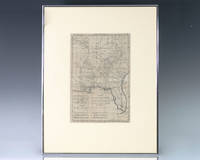
1797réf. 139014Paris: Rigobert Bonne 1797. Rare 18th century map of North America by Royal Hydrographer Rigobert Bonne. One page the engraved map extends from Illinois to Florida with one of the earliest insets of Kansas City. Born in the Lorraine region of France French cartographer Rigobert Bonne 1727-1794 was a skilled cartographer and hydrographer and succeeded Jacques Nicolas Bellin as Royal Hydrographer at the Depot de la Marine in 1773. He published many charts for the Depot including some of those for the Atlas Maritimeof 1762. In near fine condition. Matted and framed. The entire piece measures 17 inches by 16 inches. La Louisiane named after Louis XIV of France became a colony of the Kingdom of France in 1682 before passing to Spain in 1763. Louisiana was formed in part of the became part of the Louisiana Purchase from France in 1803. The U.S. would divide that area into two territories the Territory of Orleans which formed what would become the boundaries of Louisiana and the District of Louisiana. Louisiana was admitted as the 18th state of the United States on April 30 1812. Appointed hydrographer of the French Navy at the age of eighteen Jacques-Nicolas Bellin was appointed Hydrographer to the King in 1741. He published numerous sea atlases and charts which would be reprinted into the nineteenth century as well as many maps depicting French colonial territories in the New World. His craftsmanship and commitment to accuracy earned him a distinguished reputation as one of the world's leading cartographers and many other European mapmakers turned to him for source material. Rigobert Bonne unknown
1916réf. 40686Washington D.C.: Published by the United States Coast and Geodetic Survey 1916. Nautical chart printed on heavy paper stock. Colored. A rare coastal survey of the St. Johns River near Orlando with an inset map of the river continuation in the bottom left corner. Established by President Thomas Jefferson in 1807 as the Survey of the Coast the U.S. Coast and Geodetic Survey was the United States' first civilian scientific agency. This agency has followed its mission to survey the U.S. coastline create nautical charts of the coast and help increase maritime safety since its founding and has often played fascinating roles in significant chapters of U.S. history. It served in all theaters of the Civil War in the service of the Union Army and Navy pioneered acoustic exploration in the wake of the sinking of the Titanic and during WWI it worked to detect enemy submarines. In addition this agency worked to survey and produce detailed maps and renderings of the U.S. coast. These nautical survey maps commonly referred to as "T-sheets" provide fascinating insights into the history of the United States coastline which has and will continue to shift. These maps are the most important data source for understanding the physical and ecological characteristics of the U.S. shoreline. The present map is a highly detailed and accurate sea chart of the St Johns River and an important historical view of a developing Florida. Published by the United States Coast and Geodetic Survey unknown
1916réf. 40686Washington D.C.: Published by the United States Coast and Geodetic Survey 1916. Nautical chart printed on heavy paper stock. Colored. A rare coastal survey of the St. Johns River near Orlando with an inset map of the river continuation in the bottom left corner. Established by President Thomas Jefferson in 1807 as the Survey of the Coast the U.S. Coast and Geodetic Survey was the United States' first civilian scientific agency. This agency has followed its mission to survey the U.S. coastline create nautical charts of the coast and help increase maritime safety since its founding and has often played fascinating roles in significant chapters of U.S. history. It served in all theaters of the Civil War in the service of the Union Army and Navy pioneered acoustic exploration in the wake of the sinking of the Titanic and during WWI it worked to detect enemy submarines. In addition this agency worked to survey and produce detailed maps and renderings of the U.S. coast. These nautical survey maps commonly referred to as "T-sheets" provide fascinating insights into the history of the United States coastline which has and will continue to shift. These maps are the most important data source for understanding the physical and ecological characteristics of the U.S. shoreline. The present map is a highly detailed and accurate sea chart of the St Johns River and an important historical view of a developing Florida. Published by the United States Coast and Geodetic Survey unknown books
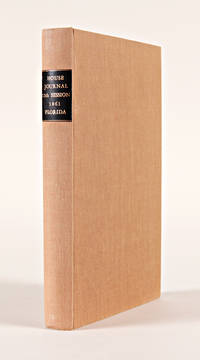
1861réf. 19664Tallahassee. 1861. Floridian Confederate imprint recording the House proceedings at the start of the Civil War. Modern cloth leather label. Very good. PARRISH & WILLINGHAM 2745. SERVIES 4586. hardcover
1861réf. 19664Tallahassee. 1861. Floridian Confederate imprint recording the House proceedings at the start of the Civil War. Modern cloth leather label. Very good. PARRISH & WILLINGHAM 2745. SERVIES 4586. hardcover books
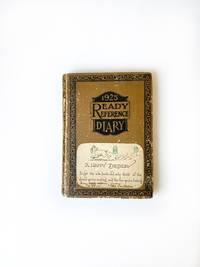
1969réf. 0010041Madison Georgia. Good with no dust jacket. 1969. Hardcover. On offer is a 1969-1970 American diary from 71-year-old Florida Lamar Poullain Campbell Prior of Madison Georgia. Prior was the descendant of the Poullain and Lamar families who have called Georgia home since the early 1700s. Prior was born in Madison in 1898 and lived her life in that community. She married Walter Truman Prior and had a daughter named Florida C. Prior Jr. Prior passed away in 1991 at the age of 93. Although her name is not inscribed on the book context and the individuals named in her entries point to Priors identity. This diary was printed in 1925 but entries were sporadically made between 1969 and 1970. Prior's writing paints a detailed picture of life in the American South at this time. Personal relationships were very important to Prior and her entries are replete with references to family and friends. She also describes the social events that she participates in and the simple pleasures she experiences in her daily life. "Roy M. Prior passed away around 6: 00 AM. Today. He was my sweet and true friend. We will miss him. Ruth has stayed with us some during his illness and Flo & I have enjoyed being with her" April 11. "Today Florida C Prior Jr & Myself watched astronauts Neil Armstrong & Edwin Aldrin Jr. Walk on the moon & heard Pres. Nixon talk to them from Washington and heard their reply to him. UNBELIEVABLE" July 20. "Claire Stovall Inez W. Kroger Georgia Mallory Marguerite Little Helen de Beaugrine Fanny Harris & Ruth Attaway had lunch with me at Ye Olde Colonial Restaurant. We missed Martha Rhoades & Sara Knight who could not be with us. I enjoyed these sweet friends" July 25. "Mell Burgess Paine invited Flo & I to come to Decater for the day & to go to new S. DeKalb Richs. We took morning train for Atlanta -- first time I have been on this train in over 45 years. It was a great experience" August 20. "Elizabeth Cochran Prior & Roy Prior were married this afternoon at the Apalachee Baptist Church. Martha & Paul Rhoades went with Flo & me. It was very sweet" November 8. The diary measures 7 inches by 5 inches contains 183 pages and is approximately 20 percent complete. The cover binding and pages are all in good condition and the handwriting is quite legible. This small diary offers an interesting grouping of family and friendship links that can flesh out genealogical lines in this historic community and county in Georgia. It also offers insight into life in the South at a time when Americans were landing on the moon and experiencing major social upheaval. ; Manuscripts; 7" x 5"; 183 pages; Keywords: Florida Campbell Prior; Lamar; Lamer; Madison Oaks Inn; 766 East Avenue; Poullain Heights; Morgan County; American South; Georgia; Madison; Historic; The South; Scull Shoals; Antoinne Poullain; Rebecca Lamar; Sarah Poullain Campbell; Thomas Poullain; Ye Olde Colonial Restaurant; Apalachee Baptist Church; Moon Landing; Moon Walk; Neil Armstrong; Edwin Aldrin Jr; Buzz Aldrin; AMERICANA; HANDWRITTEN; MANUSCRIPT; DOCUMENT; LETTER; AUTOGRAPH; WRITER; HAND WRITTEN; DOCUMENTS; SIGNED; LETTERS; MANUSCRIPTS; DIARY; DIARIES; JOURNALS; PERSONAL HISTORY; SOCIAL HISTORY; HISTORICAL; HOLOGRAPH; WRITERS; AUTOGRAPHS; PERSONAL; MEMOIR; MEMORIAL; ANTIQUITÉ CONTRAT; VÉLIN; DOCUMENT; MANUSCRIT; PAPIER ANTIKE; BRIEF; PERGAMENT; DOKUMENT; MANUSKRIPT; PAPIER OGGETTO D'ANTIQUARIATO; ATTO; VELINA; DOCUMENTO; MANOSCRITTO; CARTA ANTIGÜEDAD; HECHO; VITELA; DOCUMENTO; MANUSCRITO; PAPEL . hardcover
réf. 5557176-nnew. unknown
1776Interessante raffigurazione di buona parte orientale degli Stati Uniti. Si trovano raffigurati i territori di New Jersey, Delaware, Maryland, Virginie, Caroline, Georgie, Floride e Louisiane.Il titolo è iscritto in decorativo cartiglio nell'angolo in basso a destra.Coloritura confinale coeva all'acquerello. Alcuni segni del tempo che non compromettono l'ottimale stato di conservazione generale della carta.
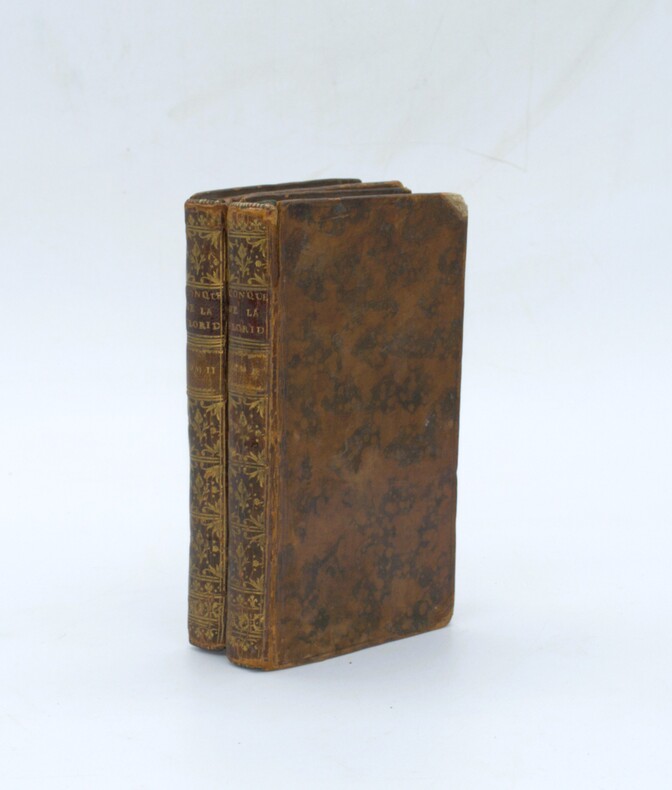
1731réf. PHO-2473Leiden, Chez Pierre Vander Aa, 1731, 2 volumes in-12 (17x10cm), 13ff.-290pp. et 293-582pp., veau marbré époque, dos lisse orné avec pièce de titre rouge et tomaison, tranches rouges, ex-libris gravé en page de garde (De Goderville). Frottements, coiffes arasées, coins usés, papier légèrement bruni, petits débuts de fentes. Illustré d’une carte, tirée de l’édition hollandaise de 1706 et de 9 planches dépliantes
193492 pages. Text in French. Features: Le Chapitre Des Chapeaux; Ensemble a Cape Pour Le Printemps; Le Mouvement Projete En Avant; L'Ecole De Ski; Sous Le Soleil De Sestrieres; Les Nouvelles Collections; A La Decouvert; Le Massage Facial; Idees Nouvelles Dans Les Bikoux; Accessoires; Fraicheir Du taffetas Quadrille; S.A.R. La Princesse Marina De grece; Mue De L'Homme, par Jean-Richard Bloch; Matins de Printemps; Sur La Cote De Floride; A Burlington House; Sur La Scene; Many gorgeous vintage ads. Above-average wear. Soiling to front cover. Binding intact. Missing pages 71-72. A worthy reference copy of this marvelous vintage issue. Book
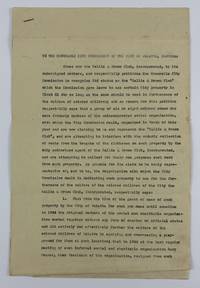
1947réf. 3905Palatka Fl 1947. Very good. 5pp. typed on folio sheets stapled. Old folds minor wear and creasing light dust-soiling. An unsigned petition from the Hallie Q. Brown Club asking "The Honourable City Commission of the City of Palatka Florida.to recognise its status as the 'Hattie Q Brown Club which the Commission gave leave to use certain City property in Block 81.in furtherance of the welfare of colored children." Apparently a splinter group of the club was also claiming to be the Hallie Q. Brown Club and was illegally collecting rents on the groups club house. In asking for official recognition the group details their history of helping African-American youth in the area "by equiping and over-seeing a playground for them." The authors then detail the internal conflicts which occurred amongst the club members the procession of club leadership including several named individuals and the circumstances which led to the club's incorporation ending with the filing of a charter with a Putnam County judge. The fourth section of the club's petition enumerates their activities and plans in "furtherance of the welfare of the colored children of Palatka." The first two points detail the land clearance and construction of the park and their further plans for same; the third point relates to a study the club has undertaken "of the problem of juvenile delinquency among the colored children." Part of their plan is to work with law enforcement "to work out a parole system for first offenders of tender age" as well as "provide a method and place for the incarceration of colored children accused of or guilty of infractions of the law who are less than 12 years of age so that such children may be kept safely in custody and yet not exposed to the bad example and toughening influence of imprisonment in the County jail." Hattie Quinn Brown was a pioneering African-American educator who actively sought the formation of African-American women's clubs throughout the country. unknown
1947réf. 3905Palatka Fl 1947. Very good. 5pp. typed on folio sheets stapled. Old folds minor wear and creasing light dust-soiling. An unsigned petition from the Hallie Q. Brown Club asking "The Honourable City Commission of the City of Palatka Florida.to recognise its status as the 'Hattie Q Brown Club which the Commission gave leave to use certain City property in Block 81.in furtherance of the welfare of colored children." Apparently a splinter group of the club was also claiming to be the Hallie Q. Brown Club and was illegally collecting rents on the groups club house. In asking for official recognition the group details their history of helping African-American youth in the area "by equiping and over-seeing a playground for them." The authors then detail the internal conflicts which occurred amongst the club members the procession of club leadership including several named individuals and the circumstances which led to the club's incorporation ending with the filing of a charter with a Putnam County judge. The fourth section of the club's petition enumerates their activities and plans in "furtherance of the welfare of the colored children of Palatka." The first two points detail the land clearance and construction of the park and their further plans for same; the third point relates to a study the club has undertaken "of the problem of juvenile delinquency among the colored children." Part of their plan is to work with law enforcement "to work out a parole system for first offenders of tender age" as well as "provide a method and place for the incarceration of colored children accused of or guilty of infractions of the law who are less than 12 years of age so that such children may be kept safely in custody and yet not exposed to the bad example and toughening influence of imprisonment in the County jail." Hattie Quinn Brown was a pioneering African-American educator who actively sought the formation of African-American women's clubs throughout the country. unknown books
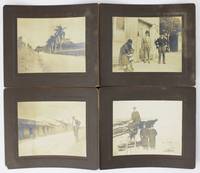
1890réf. 5287Various locations in Cuba and Florida 1890. Very good. Twelve cabinet card photographs each measuring 3.5 x 4.5 inches on matching mounts measuring 5.25 x 6.5 inches all with manuscript captions on verso. Moderate dust-soiling minor overall wear a few small unobtrusive chips to corners. A dozen original photographs picturing a group of men traveling in Florida and Cuba around the turn of the 20th century. The men seem relatively well-to-do and visit several different locations in each place. Four of the photos emanate from Florida while the remainder picture scenes in Cuba. The photographs are all captioned on the verso which read as follows: 1 "In the Court of Ponce De Leon Hotel St. Augustine" 2 "A frozen fountain in St. Augustine Florida - the white is ice" 3 "Fishing in St. Augustine" 4 "A Tree in Tampa Florida where one tree runs up on another takes root up in tree then runs down & takes root in the ground again" 5 "A Street in Nevaelas Cuba" 6 "A Country Road in Cuba" 7 "Natives in Havana" 8 "In Morro Castle Havana Cuba. Prisoners braking sic rocks" 9 "On top of Morro Castle Havana Cuba" 10 "Country Scene in Cuba" 11 "Country Scene in Cuba" different image 12 "Plaza at south of the Prado Havana unknown
1890réf. 5287Various locations in Cuba and Florida 1890. Very good. Twelve cabinet card photographs each measuring 3.5 x 4.5 inches on matching mounts measuring 5.25 x 6.5 inches all with manuscript captions on verso. Moderate dust-soiling minor overall wear a few small unobtrusive chips to corners. A dozen original photographs picturing a group of men traveling in Florida and Cuba around the turn of the 20th century. The men seem relatively well-to-do and visit several different locations in each place. Four of the photos emanate from Florida while the remainder picture scenes in Cuba. The photographs are all captioned on the verso which read as follows: 1 "In the Court of Ponce De Leon Hotel St. Augustine" 2 "A frozen fountain in St. Augustine Florida - the white is ice" 3 "Fishing in St. Augustine" 4 "A Tree in Tampa Florida where one tree runs up on another takes root up in tree then runs down & takes root in the ground again" 5 "A Street in Nevaelas Cuba" 6 "A Country Road in Cuba" 7 "Natives in Havana" 8 "In Morro Castle Havana Cuba. Prisoners braking sic rocks" 9 "On top of Morro Castle Havana Cuba" 10 "Country Scene in Cuba" 11 "Country Scene in Cuba" different image 12 "Plaza at south of the Prado Havana unknown books