1 439 résultats
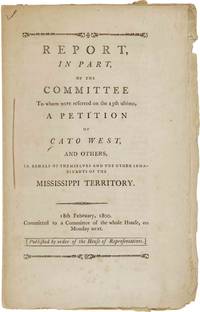
1800réf. 35085Philadelphia: Published by order of the House of Representatives 1800. Report from the House of Representatives regarding a petition for change of government in the Mississippi Territory. The Congress has resolved to defer the institution of changes until the population of the Territory has reached or exceeded five thousand free male inhabitants. Includes two pieces of correspondence from Naseworthy Hunter a fellow petitioner of Cato West to the Congress in early February. Printed self-wrappers stitched. Light tanning and edge wear. Very good untrimmed and partially unopened. EVANS 38817. unknown books
1869réf. 27439Vicksburg 1869. 3 1 blank pp. Folded. Toned old folds with a short closed margin tear. Title printed within a border. Good. Signed in ink by Brevet Major John Tyler Aide-de-Camp and Acting Assistant Adjutant General. The pamphlet lists Staff Officers Quartermasters at the Vicksburg Depot and Commanding Officers of troops stationed at Vicksburg Jackson Natchez Grenada Columbus Corinth Holly Springs and Lauderdale. Rare. See OCLC 48113898 1- NYPL. unknown
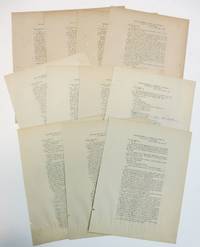
1869réf. 27316Jackson Miss. 1869. Eleven Special Orders May 6-8 10 12-18 1869. Each 2-4 pages. Special Orders Nos. 92 93 94 95 96 98 99 100 101 102 103. Several manuscript emendations. Each signed in type and manuscript at the end by William Atwood Aide-de-Camp and Acting Assistant Adjutant General. Light wear light spotting Very Good. Mississippi's Reconstruction occurred under military rule. As evidenced by these Special Orders the military authorities appointed and removed Justices of the Peace members of the Board of Police Marshals Constables District Attorneys Clerks County Treasurers Mayors and other officers normally elected by the people or appointed by civil authorities. Not located on OCLC as of March 2024. unknown
1869réf. 27316Jackson Miss. 1869. Eleven Special Orders May 6-8 10 12-18 1869. Each 2-4 pages. Special Orders Nos. 92 93 94 95 96 98 99 100 101 102 103. Several manuscript emendations. Each signed in type and manuscript at the end by William Atwood Aide-de-Camp and Acting Assistant Adjutant General. Light wear light spotting Very Good. Mississippi's Reconstruction occurred under military rule. As evidenced by these Special Orders the military authorities appointed and removed Justices of the Peace members of the Board of Police Marshals Constables District Attorneys Clerks County Treasurers Mayors and other officers normally elected by the people or appointed by civil authorities. Not located on OCLC as of March 2024. unknown books
1869réf. 27439Vicksburg 1869. 3 1 blank pp. Folded. Toned old folds with a short closed margin tear. Title printed within a border. Good. Signed in ink by Brevet Major John Tyler Aide-de-Camp and Acting Assistant Adjutant General. The pamphlet lists Staff Officers Quartermasters at the Vicksburg Depot and Commanding Officers of troops stationed at Vicksburg Jackson Natchez Grenada Columbus Corinth Holly Springs and Lauderdale. Rare. See OCLC 48113898 1- NYPL. unknown books
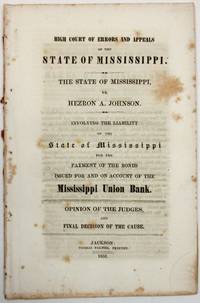
1853réf. 23122Jackson: Thomas Palmer Printer 1853. 55 1 blank pp. Disbound with scattered foxing else Very Good. The court held the State of Mississippi liable for the payment of a State Bond payable to the order of the directors of the Mississippi Union Bank. The bond executed under seal by Mississippi's Governor and Treasurer had been issued in accordance with a statute pledging the State's credit to secure loans to the Mississippi Union Bank. Mississippi refused to pay claiming that the bond had been issued irregularly and that the governing Act had been passed unconstitutionally. The Court rejects these defenses after examining the statute and its purposes the State Constitution and the business of the Bank. Sabin 49545. Not in Marke Harv. Law Cat. Owen Cohen. Thomas Palmer, Printer unknown
1853réf. 31456Davenport: Sanders & Davis 1853. 24pp. Stitched lightly foxed. Very Good. This pamphlet provides "elaborate details of the projected road across the State from Davenport to Council Bluffs" 130 Eberstadt 311. The incorporators included the well known civil engineer John Jervis of New York. 130 Eberstadt 312. Graff 2828. Not in Sabin Moffit Decker or BRE. Sanders & Davis unknown
1853réf. 23122Jackson: Thomas Palmer Printer 1853. 55 1 blank pp. Disbound with scattered foxing else Very Good. The court held the State of Mississippi liable for the payment of a State Bond payable to the order of the directors of the Mississippi Union Bank. The bond executed under seal by Mississippi's Governor and Treasurer had been issued in accordance with a statute pledging the State's credit to secure loans to the Mississippi Union Bank. Mississippi refused to pay claiming that the bond had been issued irregularly and that the governing Act had been passed unconstitutionally. The Court rejects these defenses after examining the statute and its purposes the State Constitution and the business of the Bank. Sabin 49545. Not in Marke Harv. Law Cat. Owen Cohen. Thomas Palmer, Printer unknown books
1853réf. 31456Davenport: Sanders & Davis 1853. 24pp. Stitched lightly foxed. Very Good. This pamphlet provides "elaborate details of the projected road across the State from Davenport to Council Bluffs" 130 Eberstadt 311. The incorporators included the well known civil engineer John Jervis of New York. 130 Eberstadt 312. Graff 2828. Not in Sabin Moffit Decker or BRE. Sanders & Davis unknown books
2026réf. x-153812453XBloomsbury Publishing Plc 2026. Hardcover. New. 2nd ed edition. 730 pages. 6.00x1.11x9.00 inches. Bloomsbury Publishing Plc hardcover
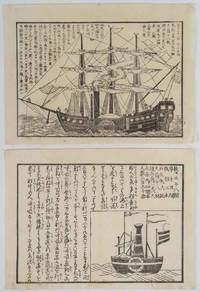
1853réf. 218388Japan. Circa1853. Two black and white woodblock kawarabans 18 x 24cm some light staining at margins but overall very good. A black-and-white kawaraban popular broadsheet woodblock print showing Commodore Matthew Perry's flagship the Mississippi at the time of his visit to Japan in 1853. The text accompanying the carefully depicted ship gives the dimensions of the vessel and other details including the number of crew. It then goes on to give an interesting summary of world geography explaining to readers that the world has four great oceans and six continents and that Japan is situated in the east of Asia. They are also told that America lies 5000 ri about 10500 miles to the east of Japan and that its capital is Washington. On the second sheet with an illustration of a steam ship it gives the sizes of the boat and its crew. It also refers to the speed and the distance a steam ship is able to cover and amazes with the vast distance the ship can travel. The kawaraban is a vivid illustration of the astonishment with which Japanese people responded to the coming of Perry and his "Black Ships" and of the curiosity about the outside world which this event generated. The Mississippi was particularly impressive because it was a steam-powered paddle ship. In this image we see not only the ship and its rigging and paddle-wheel but also the small figures of crew members including one starting to climb the mast and another apparently sounding the depth of the water. . unknown
1715réf. PHO-1389A La Haye : chez les frères L'Honoré, & compagnies, 1715 2 volumes in-12° (163x100 mm). 9ff-280-2ff-222-9ff., illustré d’un frontispice et 1 planche (sur 23), avec un dictionnaire de la langue des Algonkins et quelques mots de Hurons , reliure refaite , dos conservé avec ses manque , plats en cuir noir, coloriage sur la planche, ex-libris manuscrit sur la page de garde .
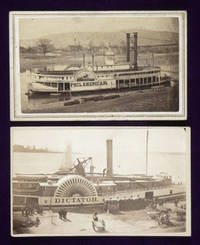
1870réf. 104901870. Steamboat Dictator photograph circa 1870s documenting Mississippi River transportation during the late nineteenth century when paddlewheel steamboats formed the central infrastructure of inland American commerce and travel. The image records the sidewheel steamboat Dictator at a river landing with passengers workers and horse drawn vehicles gathered nearby illustrating the role of river steam navigation in connecting towns and transporting goods throughout the Mississippi River system. Such vessels served as essential commercial and social conduits across the interior United States supporting regional trade networks passenger movement and communication between river communities during the decades following the Civil War. Silver gelatin photograph depicting the sidewheel steamboat Dictator moored at a river landing. The vessel's large paddlewheel housing prominently displays the name "Dictator" with the radial paddlewheel structure visible behind the decorative housing. The photograph shows numerous figures assembled along the dock area including groups of men standing near the landing and several horse drawn carriages positioned along the riverbank road. The steamboat's smokestack deck structures and railings are clearly visible while the surrounding landscape shows the wide river channel extending into the distance. The image captures a busy moment of docking activity with people gathered at the landing and transportation equipment indicating the movement of passengers and goods between riverboats and nearby communities. Steamboat transportation dominated commerce along the Mississippi River and its tributaries throughout the nineteenth century particularly in the decades following the Civil War when river trade remained vital to regional economies despite the rapid expansion of railroads. Paddlewheel steamers such as the Dictator carried passengers agricultural products and manufactured goods between river towns while serving as visible symbols of technological progress and regional connectivity. Photographs documenting individual vessels at work along river landings provide valuable visual evidence of how these transportation systems functioned within everyday commercial environments. Image measures approximately size not provided. Light edge wear and minor surface toning; overall condition good. An evocative visual document of Mississippi River transportation during the late nineteenth century. unknown
1870réf. 104901870. Steamboat Dictator photograph circa 1870s documenting Mississippi River transportation during the late nineteenth century when paddlewheel steamboats formed the central infrastructure of inland American commerce and travel. The image records the sidewheel steamboat Dictator at a river landing with passengers workers and horse drawn vehicles gathered nearby illustrating the role of river steam navigation in connecting towns and transporting goods throughout the Mississippi River system. Such vessels served as essential commercial and social conduits across the interior United States supporting regional trade networks passenger movement and communication between river communities during the decades following the Civil War. Silver gelatin photograph depicting the sidewheel steamboat Dictator moored at a river landing. The vessel's large paddlewheel housing prominently displays the name "Dictator" with the radial paddlewheel structure visible behind the decorative housing. The photograph shows numerous figures assembled along the dock area including groups of men standing near the landing and several horse drawn carriages positioned along the riverbank road. The steamboat's smokestack deck structures and railings are clearly visible while the surrounding landscape shows the wide river channel extending into the distance. The image captures a busy moment of docking activity with people gathered at the landing and transportation equipment indicating the movement of passengers and goods between riverboats and nearby communities. Steamboat transportation dominated commerce along the Mississippi River and its tributaries throughout the nineteenth century particularly in the decades following the Civil War when river trade remained vital to regional economies despite the rapid expansion of railroads. Paddlewheel steamers such as the Dictator carried passengers agricultural products and manufactured goods between river towns while serving as visible symbols of technological progress and regional connectivity. Photographs documenting individual vessels at work along river landings provide valuable visual evidence of how these transportation systems functioned within everyday commercial environments. Image measures approximately size not provided. Light edge wear and minor surface toning; overall condition good. An evocative visual document of Mississippi River transportation during the late nineteenth century. unknown books
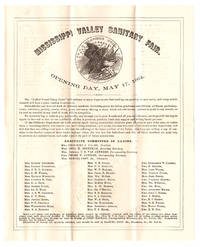
réf. 7128Mississippi Sanitary Fair 5 Feb.; 29 Feb.; 17 May 1864. 3 circulars 8" x 10" a total of 6 pp.: 1 3 pp. circular; 2 pp. listing of prizes etc.; 1 p. announcement of the fair illustrated. CONDITION: Very good one circular with tiny separations along old folds another circular with 1.5" and .5" tears along old fold. A group of three scarce circulars issued to promote a St. Louis Sanitary Fair in 1864. The Western Sanitary Commission's biggest fund-raising event was the Grand Mississippi Valley Sanitary Fair. The Commission was a private agency devoted to aiding the Union Army's sick and wounded soldiers. Led by abolitionists and also focused on the needs of Freedmen it provided clothing and places to stay for freedmen and refugees and set up schools for African American children. The Western Sanitary Commission handled all sanitary affairs west of the Mississippi. The Grand Mississippi Valley Sanitary Fair opened on 17 May 1864 and ran through 18 June. Women did most of the work. The fair raised some $550000. The first circular concerns a fair to be held in St. Louis on 17 May 1864. The stated object of the fair was to raise a sufficient fund for the sanitary uses of the armies in the Mississippi Valley and for relief of their sick and wounded. It is noted that while its sphere of action is geographically limited to the states west of the mountains the Commission treats all soldiers alike and so far as in its power permits no one to suffer or be neglected. Pages two and three list the Commission's President Vice-President and staff. A note at the end of the circular requests that all goods and packages of whatever kind to be "distinctly marked with the name of the donor and place from which sent and directed to James E. Yeatman. Donations of money are specially solicited." The second circular reproducing two letters between Mrs. Chuncey I. Filley President of the Ladies's Executive Committee of the fair and Warne Cheever & Co. concerns the same fair to be held in St. Louis on 17 May 1864 which is described here as presenting an opportunity to every lady in the U.S. to show in one way or another her sympathy for the sick and wounded soldiers of our army. In view of encouraging a "pleasant spirit of rivalry" among the ladies that will ensure success of the fair the circular proposes two valuable prizes which will be sold to benefit the Sanitary Commission to be awarded to the lady who contributed to the fair the best and second best gentlemen's shirt. The first prize was an elegant silver plated tea set while second prize was a complete set of superior quality table cutlery. Provided are directions for making gentlemen's shirts. The third circular published at the time of the 17 May 1864 fair notes that the Ladies's Grand Fancy Court accepted all donated articles including any of the following items: embroideries worsted work wardrobe furnishing goods for ladies perfumes books stationary jewelry trunks china and glass. The public is exhorted to contribute to the exhibition "all that a generous patriotic heart may suggest and willing hands prepare" and to contribute to the fair's Children's Department "whatever gives pleasure to your little ones or incites them to ennobling efforts." "All the children who visit or contribute to this department will feel that they are adding their mite to alleviate the suffering of the brave soldiers of the Union-that they are adding a ray of sunshine to the desolate homes of those tender orphans whom the war has left fatherless-and that these sacrifices are made only to preserve our national honor and make smooth the path of future generations." Listed are the members of the Executive Committee of Ladies. OCLC records only five copies of the Mississippi Valley Sanitary Fair. Circular 5 Feb.; two copies of Mississippi Valley Sanitary Fair. Magnificent Premiums for the Best Shirts. at New York Historical Society and AAS; and two copies of Mississippi Valley Sanitary Fair. Opening Day May 17 1864 at New York Historical Society and AAS. REFERENCES: O'Neil Tim. "A Look Back : Fair held here in 1864 raised $550000 to aid Union troops." St. Louis Post-Dispatch 17 May 2021 at St. Louis Today online. Mississippi Sanitary Fair, 5 Feb.; 29 Feb.; 17 May 1864 unknown
réf. 7128Mississippi Sanitary Fair 5 Feb.; 29 Feb.; 17 May 1864. 3 circulars 8" x 10" a total of 6 pp.: 1 3 pp. circular; 2 pp. listing of prizes etc.; 1 p. announcement of the fair illustrated. CONDITION: Very good one circular with tiny separations along old folds another circular with 1.5" and .5" tears along old fold. A group of three scarce circulars issued to promote a St. Louis Sanitary Fair in 1864. The Western Sanitary Commission's biggest fund-raising event was the Grand Mississippi Valley Sanitary Fair. The Commission was a private agency devoted to aiding the Union Army's sick and wounded soldiers. Led by abolitionists and also focused on the needs of Freedmen it provided clothing and places to stay for freedmen and refugees and set up schools for African American children. The Western Sanitary Commission handled all sanitary affairs west of the Mississippi. The Grand Mississippi Valley Sanitary Fair opened on 17 May 1864 and ran through 18 June. Women did most of the work. The fair raised some $550000. The first circular concerns a fair to be held in St. Louis on 17 May 1864. The stated object of the fair was to raise a sufficient fund for the sanitary uses of the armies in the Mississippi Valley and for relief of their sick and wounded. It is noted that while its sphere of action is geographically limited to the states west of the mountains the Commission treats all soldiers alike and so far as in its power permits no one to suffer or be neglected. Pages two and three list the Commission's President Vice-President and staff. A note at the end of the circular requests that all goods and packages of whatever kind to be "distinctly marked with the name of the donor and place from which sent and directed to James E. Yeatman. Donations of money are specially solicited." The second circular reproducing two letters between Mrs. Chuncey I. Filley President of the Ladies's Executive Committee of the fair and Warne Cheever & Co. concerns the same fair to be held in St. Louis on 17 May 1864 which is described here as presenting an opportunity to every lady in the U.S. to show in one way or another her sympathy for the sick and wounded soldiers of our army. In view of encouraging a "pleasant spirit of rivalry" among the ladies that will ensure success of the fair the circular proposes two valuable prizes which will be sold to benefit the Sanitary Commission to be awarded to the lady who contributed to the fair the best and second best gentlemen's shirt. The first prize was an elegant silver plated tea set while second prize was a complete set of superior quality table cutlery. Provided are directions for making gentlemen's shirts. The third circular published at the time of the 17 May 1864 fair notes that the Ladies's Grand Fancy Court accepted all donated articles including any of the following items: embroideries worsted work wardrobe furnishing goods for ladies perfumes books stationary jewelry trunks china and glass. The public is exhorted to contribute to the exhibition "all that a generous patriotic heart may suggest and willing hands prepare" and to contribute to the fair's Children's Department "whatever gives pleasure to your little ones or incites them to ennobling efforts." "All the children who visit or contribute to this department will feel that they are adding their mite to alleviate the suffering of the brave soldiers of the Union-that they are adding a ray of sunshine to the desolate homes of those tender orphans whom the war has left fatherless-and that these sacrifices are made only to preserve our national honor and make smooth the path of future generations." Listed are the members of the Executive Committee of Ladies. OCLC records only five copies of the Mississippi Valley Sanitary Fair. Circular 5 Feb.; two copies of Mississippi Valley Sanitary Fair. Magnificent Premiums for the Best Shirts. at New York Historical Society and AAS; and two copies of Mississippi Valley Sanitary Fair. Opening Day May 17 1864 at New York Historical Society and AAS. REFERENCES: O'Neil Tim. "A Look Back : Fair held here in 1864 raised $550000 to aid Union troops." St. Louis Post-Dispatch 17 May 2021 at St. Louis Today online. Mississippi Sanitary Fair, 5 Feb.; 29 Feb.; 17 May 1864 unknown books
1989réf. ZB2800031989. softcover ex library else text clean & binding tight. - If you are reading this this item is actually physically in our stock and ready for shipment once ordered. We are not bookjackers. Buyer is responsible for any additional duties taxes or fees required by recipient's country. Photos available upon request. paperback
1618réf. 49718Washington. 1816-1817. Admitting Mississippi to the Union Three government documents concerning the admission of Mississippi as a state. It includes a census of the population of the territory enumerating both white and black free and slave residents. It also recommends that the territory be split into two regions - "The geographical position of this Territory may render it necessary that its military defences should be more combined than would at all times be practicable in two distinct sovereignties." The result would be the state of Mississippi in 1817 and the separated Alabama Territory. Antique-style half calf and marbled boards. Minor toning. Very good. hardcover
1618réf. 49718Washington. 1816-1817. Admitting Mississippi to the Union Three government documents concerning the admission of Mississippi as a state. It includes a census of the population of the territory enumerating both white and black free and slave residents. It also recommends that the territory be split into two regions - "The geographical position of this Territory may render it necessary that its military defences should be more combined than would at all times be practicable in two distinct sovereignties." The result would be the state of Mississippi in 1817 and the separated Alabama Territory. Antique-style half calf and marbled boards. Minor toning. Very good. hardcover books
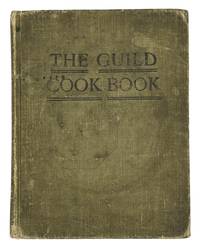
1907réf. 10723Meridian Mississippi 1907. 7 x 5.5" tan cloth with black lettering 111 33 pp including 28 pages of local advertisements at the end. A rare Mississippi community cookbook. According to the foreword the recipes were "gathered from our friends and from other reliable sources" including The Delineator a women's magazine of the period. Many of the recipes are attributed to local women while several recipes submitted by celebrities of the era are attributed to The Delineator; the book also contains three bean recipes "Written expressly for the Junior Guild's Cook Book" by Miles Bradford editor of The Delineator. Other recipes include Gopher Soup Gumbo five recipes and Vegetarian Mince Meat; the book also contains around a dozen recipes for alcoholic drinks including Brandy Punch Whiskey Cocktail Old Fashioned Absinthe Cocktail Coffee Cocktail and Mint Julep. Staining and wear to covers staining/spattering to some pages in good condition overall. hardcover
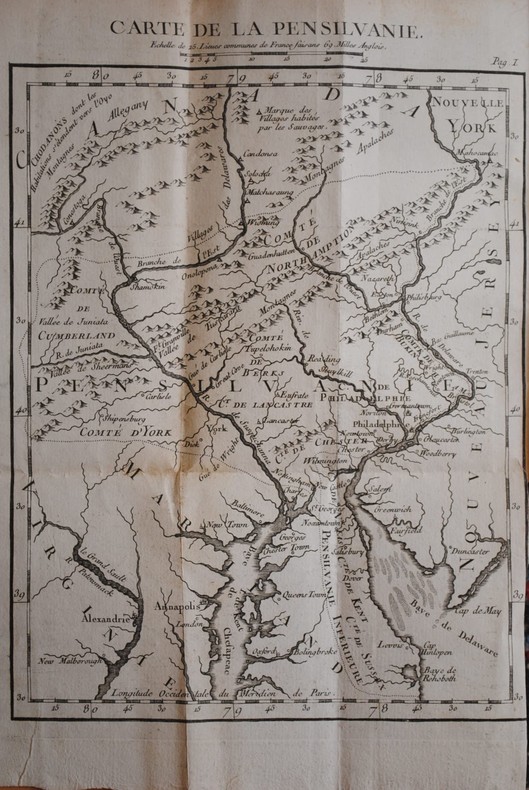
1768réf. 4A-8PARIS, GANEAU (DE L'IMPRIMERIE D' HOURY), 1768. IN-8° (185x115mm), XX - 372 - 2ff., 1 CARTE DÉPLIANTE, FAUX TITRE ET TITRE TACHÉS, PIQÛRES, TRÈS CLAIRE MOUILL. MARG. AU MILIEU DE L'EXEMPLAIRE. BROCHÉ, DOS SALI. UNIQUE ÉDITION DE CET OUVRAGE BASÉ SUR CELUI DU BOTANISTE PEHR KALM POUR L'HISTOIRE NATURELLE ET SUR LE VOYAGE DE GOTTLIEB MITTELBERGER POUR LA PARTIE CONSACRÉES AU QUAKERS. ILLUSTRÉ D'UNE CARTE DÉPLIANTE. UNIQUE FRENCH EDITION OF THIS DESCRIPTION OF PENNSYLVANIA BASED ON THE WORKS OF KALM AND MITTELBERGER. ILLUSTRATED WITH 1 FOLDING MAD. SEWED (FIRST LVS STAINED, FOXING).
1885215 p. Hardcover Ex-library, Very good condition
1952réf. 12938N.p. likely Braxton MS 1952. 24pp. Profusely illustrated. Quarto. Original pictorial wrappers printed in green brown and red. Minor edge wear and foxing to wrappers. Light toning to text. Very good condition. A scarce and wonderfully-informative history of the first forty years of the Piney Woods Country Life School Laurence C. Jones's school for African American youth in Braxton Mississippi. The work is amply illustrated with photographs documenting the life and people of the school since its inception in 1910 to the moment of the pamphlet's publication. There are pages devoted to celebrating notable graduates of the school the "blind and the lame orphans and half-orphans" who've attended "internationally known visitors" "present-day buildings" five pages displaying the "industry" of the school the dairy and farm the "human and material progress" of the school and more. OCLC reports just ten total copies of this vital midcentury history of a notable southern school devoted to African-American youth. unknown
1952réf. 12938N.p. likely Braxton MS 1952. 24pp. Profusely illustrated. Quarto. Original pictorial wrappers printed in green brown and red. Minor edge wear and foxing to wrappers. Light toning to text. Very good condition. A scarce and wonderfully-informative history of the first forty years of the Piney Woods Country Life School Laurence C. Jones's school for African American youth in Braxton Mississippi. The work is amply illustrated with photographs documenting the life and people of the school since its inception in 1910 to the moment of the pamphlet's publication. There are pages devoted to celebrating notable graduates of the school the "blind and the lame orphans and half-orphans" who've attended "internationally known visitors" "present-day buildings" five pages displaying the "industry" of the school the dairy and farm the "human and material progress" of the school and more. OCLC reports just ten total copies of this vital midcentury history of a notable southern school devoted to African-American youth. unknown books
1839réf. 3269Natchez Ms. 1839. Very good. Broadside 13 x 15.75 inches. Printed in four columns; central vertical fold. Light wear and toning. In the present broadside the trustees of Jefferson College announce that they are once again prepared to admit students in 1839 following a reorganization and give their mission statement courses of study faculty list tuition fees and more. The school located in Washington Mississippi just north of Natchez opened in 1811 and was the first college in the Mississippi Territory. In the text of this broadside one can clearly see sentiments and dispositions that would bring the Civil War to fruition. The first two columns are chiefly dedicated to a description fo the new faculty and their skills but also new measures put in place during the reorganization of the school. In place of gymnastics a daily military drill was substituted and a military police was to be established "for the preservation of good order and regularity." The remainder of the broadside descends into sectional paranoia arguing that students must be kept close to home in order for them to maintain allegiance to Mississippi and the South: "At this very moment a formidable content has commenced between the North and the South from the possible results of which the eye of the patriot instantly revolts. It surely becomes us to preserve our children from any influence that might mislead their judgment or weaken their patriotism. To do this effectually we must keep them at home!. Send your sons to other States where they are relased from social bonds you not only cut off these powerful incentives to emulation but you do more and worse you weaken or detach the growing virtues of the heart. and you estrange them from their native land." OCLC locates only a small handful of examples. unknown