New OrleansABAA

232 resultados
1873ref. 29323New Orleans: Picayune Steam Press 1873. Original printed wrappers clean but with a bit of corner wear with wrapper title as issued. 27 1 blank pp. Minor wear clean text Very Good plus. offered with Typescript Letter laid in from New Orleans March 22 1873 1 page: 'Dear Sir: We assume the liberty to commend to your patriotism and to your love of our common country the accompanying Report.' It is signed in type by Thos. A. Adams Chairman and five others comprising the Executive Committee of the Committee of Two Hundred Citizens. Fine. The Committee recites "the discontents pressures and grievances under which the people of the State were suffering from the unconstitutional and revolutionary action of a portion of the federal authorities" especially the federal court's intervention in the 1872 elections in favor of the Pinchback government. The elections produced rival claimants for the governor's office and sparked the Colfax massacre in which 280 blacks were killed some while attempting to surrender to armed whites. The Report is signed in type by Thomas A. Adams Chairman and five other members of the Executive Committee. FIRST EDITION. 136 Eberstadt 391. Thompson 1232. Picayune Steam Press unknown books
1871ref. 51895New Orleans: Printed at the Commercial Bulletin Office 131 Gravier Street 1871. First edition. 31 pp. 1 vols. 8vo. Printed yellow wrappers. Minor soiling else fine. First edition. 31 pp. 1 vols. 8vo. Printed at the Commercial Bulletin Office, 131 Gravier Street unknown books
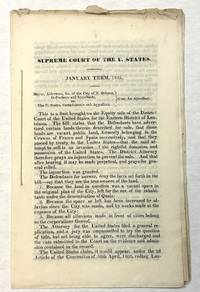
1833ref. 32746np 1833. 10 2 blank pp. Caption title as issued stitched untrimmed partly uncut. Minor dustsoiling on untrimmed edges. Else crisp and bright. Near Fine. This is the Brief submitted to the United States Supreme Court by the City of New Orleans. The City and the United States each claimed title to the same area of "vacant public land." The City sought to sell it. The United States objected on the ground that the land "formerly belonging to the Crowns of France and Spain successively passed by treaty to the United States." The U.S. District Court for the Eastern District of Louisiana enjoined the sale. The City appealed. The City's Brief an unusually detailed examination of its chain of title beginning in 1720 argues that ownership of the disputed lands did not vest in the United States under the treaty to purchase Louisiana; and that the "original plan of the City" left those lands "for the use of the inhabitants." The Supreme Court agreed. Its opinion by Justice McLean of Ohio is officially reported at 35 U.S. 662 1836. Daniel Webster and Edward Livingston-- who had spent years fending off U.S. claims to New Orleans alluvial lands-- represented the City; Attorney General Benjamin Franklin Butler was counsel for the United States. OCLC 1297855642 "Reproduction of the original from Harvard Law School Library" as of May 2026. unknown books
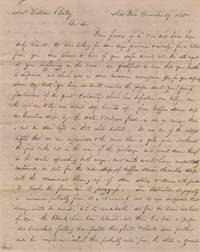
1835ref. BK0025New York City 1835. Autograph letter signed by the merchant firm Baker & Moore 4 pp. addressed to General William Battey care of Dr. Charles Luzenberg at the Franklin Infirmary on the Pontchartrain Railroad New Orleans. Stampless folded letter with red circular "NEW-YORK" December 31 datestamp and manuscript "25" rate. Appx. 1000 words. File folds; otherwise very good. A lengthy commercial letter written thirteen days after the Great Fire of New York describing the destruction of the city's mercantile district and tracing its immediate effects through insurance capital banking commodity prices and trade with New Orleans. Written by the New York firm of Baker & Moore to their associate William Battey the letter provides a near-contemporary account of the fire an assessment of the city's financial resilience and instructions for exploiting the resulting fluctuations in the markets for brandy wine raisins tobacco iron and copper. The fire began on the evening of December 16 during an extraordinary cold spell and northwest gale. Frozen hydrants wells cisterns and hoses left the city's volunteer fire companies largely unable to contain it. By the following day the fire had destroyed much of the commercial district between Wall Street and the East River including the Merchants' Exchange and hundreds of stores and warehouses. Buildings were eventually demolished with gunpowder to create firebreaks at Exchange Place and Coenties Slip. Contemporary estimates varied but approximately 674 buildings were destroyed with losses eventually placed at twenty million dollars or more.1 Baker & Moore begin by describing the extent of the burned district the severe weather and the use of explosives to arrest the flames: "Since my last you have no doubt received the paper sent you giving particulars of the great calamity which has befallen our City. On the 16th our City was about half burned up. From Coffee House Slip to Coenties Slip by the water & William Street is all in ruins. There is but one store left in that whole district. It was one of the coldest nights that we ever experienced & the wind blew a gale from Northwest. The fire broke out in the rear of the Exchange and went down through to the water spreading both ways and would have undoubtedly continued on but for the wide slips of Coffee House & Coenties Slip with the occasional blowing up of some stores & houses with powder to check the flame in its progress" The account quickly turns from the physical destruction to the distribution of its financial losses: "The destruction of property is immense probably from 10 to 15000000$ and it was supposed that many would be ruined but tis remarkable so far we have not heard of one. The Banks have been liberal and there has been a proper and benevolent feeling manifested throughout & should some further aid be brought in which probably will from the State or general government we think there may be no failures. The Insurance companies most of them are ruined and the principal loss is in Insurance capital. The loss will in some instances fall upon those who cannot well afford it. Many widows & orphans have had their all taken from them. The loss is large and New York has met with a great calamity but she is made of such materials & her facilities are so large & varied that the mercantile community will bear up under more than any other place in the Union & we think in one year's time it will be almost forgotten." The confidence expressed here correctly anticipated the city's rapid commercial recovery. Banks and government agencies extended credit and payment terms rebuilding began almost immediately and the burned district was reconstructed with new countinghouses and warehouses. The disaster also exposed the inadequacy of New York's water supply and firefighting arrangements contributing to later infrastructure and institutional reforms. Baker & Moore then apply the disaster to their own trade with New Orleans. Hundreds of warehouses and their contents had been destroyed increasing prices of imported foods wines and spirits. The firm instructs Battey to use the New York price current to obtain higher prices for their consignments: "This fire has advanced most all kinds of goods. Raisins are worth here $3-$3½. Wines such as Mess. Eastman's have advanced with us 4-6 cents. So many hundred casks destroyed must advance it and make it higher through the season. More than one half the Brandy was consumed tis now selling at $1.75 and some are asking $2. We wish what we sent you sold & this will be a favorable time to sell-show N.Y. price current-and get as good a price as you can. There will we think be no want of Brandy. Those raisins we think you had better dispose of at once. We think from N.O. current must pay something handsome for us. In regard to old Iron we find good old iron will always sell for the money for 112½ gross hundred equal to 1c per lb. Cast & wrought are same price. If you can come across a lot to do you may make it answer & pay us well. Copper if you can buy low enough may pay something. We thought hay might pay out but tis so high we cannot buy to send. We are of opinion that goods generally will be higher in consequence of this fire yet when we consign goods we wish them sold when they can to pay and we wish Eastman & Co. to sell and close up our affairs in their hands." The concluding paragraph briefly introduces events in Florida. The Second Seminole War had begun that month following mounting resistance to the forced removal of the Seminole people from Florida. Baker & Moore believed that the conflict might affect the movements of a brig expected in New Orleans: "We observe that trouble is anticipated with the Indians in Florida & if so our Brig may not get a load of them & be in N. Orleans earlier than we anticipated tis uncertain what will be the result they may detain her longer until they can get them on board." The wording appears to indicate that the vessel was expected to transport a group of Native people although the letter does not identify the brig its owners or the precise circumstances of the contemplated voyage. The recipient General William Battey was then in New Orleans apparently acting as Baker & Moore's commercial representative while also attending to his health at the Franklin Infirmary. The firm gave him considerable discretion to supervise consignments collect funds purchase goods when opportunities arose and forward current market information to New York. The address places him in the care of Dr. Charles Aloysius Luzenberg who founded the Franklin Infirmary with municipal support in 1835 and subsequently helped establish the Medical College of Louisiana the forerunner of Tulane's medical school.2 Baker & Moore appear to have been commission or importing merchants whose own affairs escaped direct damage but whose trade was immediately altered by the destruction of competing inventories. The letter thus follows the fire from the burned commercial district into the decisions of a New York firm and its representative in New Orleans. A substantial contemporary account of the Great Fire of 1835 documenting the destruction of New York's commercial center and the disaster's immediate movement through insurance banking commodity markets interregional credit and trade with New Orleans. We find no similar examples on the secondary market or in auction records. 1 Herbert Asbury "The Great Fire of 1835" The New Yorker July 26 1930. 2 Louisiana Historical Association "Luzenberg Charles Aloysius" in Dictionary of Louisiana Biography accessed August 2 2026 https://www.lahistory.org/resources/dictionary-louisiana-biography/dictionary-of-louisiana-biography-l/. . unknown books
1807ref. 32236City of Washington: A. & G. Way 1807. 7 1 blank pp. Toned with modern staples Good. Secretary of War Henry Dearborn advises John Randolph Chairman of the House Ways and Means Committee that he is "unable to state with correctness the present strength of the regular force now under general Wilkinson at New Orleans." On the best mode of defending that City he advises that "no system of fortification within our power at or about the city could be of any essential use for its defence." Secretary of the Navy Robert Smith reports on the naval force present at New Orleans and recommends deploying additional gun-boats and batteries. AI 13890 4. A. & G. Way unknown books
1891ref. 19362New Orleans 1891. Original printed wrappers chipped at extremities stitched 40pp. Scattered soil Good. The Board works on problems involving sanitary conditions disease transportation by rail and steam parks and postal service. Reports on agricultural and manufactured items are included. unknown books
1864ref. 94849New Orleans 1864. Paperback. Very Good. 8 unnumbered pages. 21 cm. Modest foxing and some light staining on outer leaves. Small stitchmarks indicates that this was previously sewed. "Invalid Battalion Corps d'Afrique" printed in small type in upper left corner of first page. Authorized establishment of an Invalid battalion for the Corps d'Afrique to be composed of "colored" tropps who by reason of wounds or sickness contracted in the line of duty are unfit for further field service. Most of this rare general order reprints the War Department's General Orders Nos 105 dated 4.28/63 and 139 dated 5/15/63. Most of General Order 139 consisted of lists of physical infirmities that did or didn't disqualify soldiers from serving in the Invalid Corps. The final provision in General Order No. 139 states that no officer or enlisted man would be entitled to any pension premium or bounty for enlistment or service in the Invalid Corps although such soldiers would receive other pay and allowances authorized for the U.S Infantry. paperback books
1840ref. 50965New Orleans: Michel & Co. 1840. Scarce New Orleans Directory Scarce New Orleans directory containing a complete list of citizens and their professions. Thousands of men and women are listed identified with precise street address and professions ranging from "Cotton Weigher" to "Segar Maker" to "Professor of french language." Illustrated advertisements at the rear of the volume promote businesses of all shapes and sizes mostly bilingual in French and English. 12mo. Contemporary half sheep and marbled paper spine gilt. Boards rubbed spine chipping. Contemporary ownership signature on boards and fly leaves. Bookplate on front pastedown; faded ownership stamp on first leaf. Heavy foxing. Good. SABIN 53344. SPEAR p.225. AMERICAN IMPRINTS 40-4947. hardcover books
1854ref. List2315New Orleans 1854. Fine. A lengthy description of life in New Orleans written by Samuel Sumner 1824-1866 the son of Michael and Mary Sumner of Newburyport Massachusetts describing life as an insurance salesman in New Orleans. He talks about his brother Richard Richard Bartlet Sumner 1816-1868. Sumner describes his life in New Orleans and alludes to previous difficulties presumably in his travels from Newburyport and establishing his family in the New Orleans. He talks about the difficulty in establishing business relationships stating "It has been most unfortunate for me & I presume there is not one young man in a hundred that has suffered as much as I have from its causes that I have never been placed in a position suitable to my taste or character that is I have had partners for whom I lost all respect & confidence because they had no respect for themselves & therefore it was impossible to succeed under such circumstances; but now I am in a very respectable position and am constantly thrown among a class of men whose influence is good whom I can respect and between whom there is some congeniality of feeling." He discusses sending his family to a plantation two-hundred miles north of the city where they are doing "tolerably well." An interesting letter overall that gives a detailed account of an emigrant familly from the east in New Orleans during the period. Full transcription follows: New Orleans Augt. 21st 1854 Dear Father & Mother It is a long long time since I availed myself of the opportunity of addressing you but allow me to assure you that it was not for a want of inclination to do so but because I have met with so many misfortunes & reverses in one way and another that I could not spur myself to write in that buoyant & happy spirit I desired & moreover I was aware that you occasionally heard of me through Richard. The changes & vicissitudes of this life have been many during the past few years and more than ever I anticipated to experience during my whole life but I trust it has not been thrown away upon me but has added much to my experience and judgement; however through the kindness and assistance of Richard I have been enabled to get through thus far & now am feeling quite content having forgotten the past with all its troubles & trials and entered upon a new sphere of action with the hope of some day in future to reach the head. I presume you have heard that I am now engaged in the Office of the Home Mutual Ins. Co. which was something of an undertaking for me at the time as I knew nothing of the system they pursued; but it took me but a short time to learn the traces & now I would not yield to anyone in the same line of business for quickness in figures or correctness in calculations tho I am but three months in service. It has been most unfortunate for me & I presume there is not one young man in a hundred that has suffered as much as I have from its causes that I have never been placed in a position suitable to my taste or character that is I have had partners for whom I lost all respect & confidence because they had no respect for themselves & therefore it was impossible to succeed under such circumstances; but now I am in a very respectable position and am constantly thrown among a class of men whose influence is good whom I can respect and between whom there is some congeniality of feeling. My salary is also tolerably fair $2000 to the 1st of Jany after which $2400 which will enable me to get along quite comfortably so you may expect to hear from me more frequently hereafter. Richard is now rich and well. He deserves it for no one ever paid closer attention to his business than he or worked harder to gain it & it certainly must be a great source of gratification to you to know of his success as I know it is to him that it is in his power to lend us aid. I was in hopes to have visited you long ere this but fortune did not smile upon me & therefore I must be content and await the day when good luck will again take me back to my old home the place of my birth the days of my childhood where I have enjoyed so many happy happy scenes many of which are now in my mind's eye; even the old house on Merrill St. & the grassy lot in front with the old pump & the old School house seem but yesterday & then comes the present house the garden the trees the fruit & the old Russell Apple Tree with its overhanging branches in the rear the cow the milking going to pasture the pigeon house & pigeons all all rise before me and often do I wish myself a boy again; but to these scenes I cherish a hope altho vague that I will one of these days return; but ere that time changes may take place that will only render it sad & melancholy; but to this I trust to a higher power & hope that we may all be submissive to will. A few days since I gave Mr. Breaux a friend of mine a letter of introduction to you & I presume he will call upon you during the summer - he visits the north in search of health. In him you will find a real true Southerner & gentleman intelligent & interesting born in this State but educated in Cambridge; he has been a good friend of ours & has taken a great fancy to our little 'Jennie' which is equally returned on her part for I don't believe she would ever forget him. Mr. Breaux can tell you all about us & give you a better description of us than anyone else. I hope you will welcome him & that his short call may prove interesting to all - if Hannah or Abby would like to talk French they will now have a chance - his parents both being French. My Wife & little ones were all tolerably well when last I heard of them - for the past 6 weeks they have been on a visit to the country about 200 miles above the City and will remain until they get tired of plantation life. It is the first time Mary ever visited a plantation & if you could read some of her letters to me you would find them truly interesting & instructive. Mary went up altogether on a/c of the ill health of our little girl who has always been delicate & becomes much reduced as warm weather approaches so much so that we are fearful at times that her constitution will fail her beyond all hope - but Mary writes me now that she thinks the country air is producing a good effect upon her & that they are having fine times. Mary rides horseback from 6 to 10 miles every fair morning before breakfast; the little ones ride the pony nearly all day & after dinner they all take their carriage drive. These amusements together with the calls of friends all tend to pass away the time most pleasantly. Since Richard left we have experienced one of the heaviest losses by fire the City ever felt but the Offices are all sound & you can say to Richard that we settled up all but 2 small losses which the parties have not brot in in 15 days after the fire took place - our loss about $65000 which we paid without going into bank for discount. I will not inflict a longer letter upon you this time but you may expect to hear from me more often than heretofore. If Mary was here she would send much love to you all. Give my love to all & believe me truly your aff. Son Sam. unknown books
1985ref. 21116.11985. Softcover. VG Ex art library with bookplate inside front cover tiny label on lower left front cover small area of paper loss on rear cover. A nice copy notwithstanding. Grey wraps. 99 pp. 64 bw photos. Catalogue by Nancy C. Barrett. Contents as follows: Foreword and acknowledgements / E. John Bullard -- Ilse Bing: three decades of photography / Nancy C. Barrett -- Bibliography and exhibitions / Nancy C. Barrett -- Plates. paperback books
1976ref. 78641976. Softcover. VG. Green wraps. 74 pp. 2 color 35 bw plates. Each of the 30 full-page plates is accompanied by a page of text by Vaughn L. Glasgow and Pamela A. Johnson. Also included are mentions of Healy family writings a page of 32 notes and a two-page bibliography. paperback books
ref. 29413Hardcover. VG/VG exlibrary with no extrnal marks two small labels and a check-out slip at rear of book. Superb shelf appeal. Black cloth pictorial DJ. ix 110 pp. 21 bw ills. 65 color plates. First monograph on Bourgeois. Essays by Dan Cameron Estill Curtis Pennington David Rubin and a foreword by Jay Weigel. Work of a figurative artist whose meticulously detailed paintings and sculptural assemblages present icons of popular culture as well as everyday people from Louisiana's diverse populations. With . realist imagery his work combines religious figures pop-culture artifacts environmental concerns social issues and the iconic stars of Hollywood's golden age and contemporary rock 'n' roll . color reproductions of key works dating from 1975 to 2001 . 65 color plates 21 black-and-white illustrations"--Dustjacket. Contents as follows: Baby-Boom Daydreams: The Art of Douglas Bourgeois /; David S. Rubin; 1 --; The Earthly Delights of Bourgeois's America /; Dan Cameron; 39 --; A New Place to Dwell: Seeking Douglas Bourgeois's Magic Realism /; Estill Curtis Pennington; 75. hardcover books
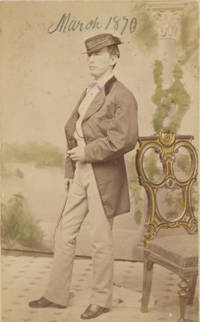
1870ref. List1434New Orleans: Various Photographers 1870. Twenty-four cartes-de-Visite and three ninth-plate tintypes all bearing New Orleans photographers’ marks to versos. Very good to fine. Very Good. A curated group of images of New Orleans subjects with an emphasis on women children and religious imagery including one uncommon image of a rosary and another of the interior of a church. Most photographs document the city’s wealthy residents at a time when elite culture changed due to the abolition of French instruction in schools and the general forces of reconstruction. The images include several with identified subjects. Overall an evocative group worthy of study by scholars of the city. Various Photographers unknown books
1940ref. 74599New Orleans: Antoine Restaurant. Very Good. 1940. Softcover. SOUVENIR DU RESTAURANT ANTOINE FONDE EN 1840. Roy L. Alciatore Proprietor. New Orleans Louisiana. No Date. 43 p. This pamphlet is soft-bound in white printed wrappers - contents are bright with illustrations - included 2 original postards oysters a la rockefeller being served 1938 . Antoine Restaurant paperback books
1961ref. 22640Stuttgart [u.a.] : Dt. Bücherbund, 1961. 281, [1] S. 8°. [Lizenzausg.]. OHLdr. mit Rückengoldpräg.
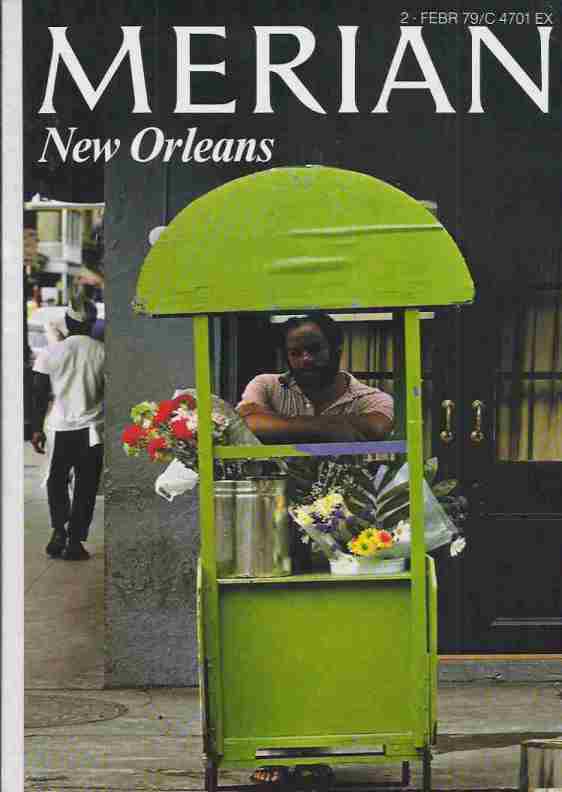
1979ref. 34284Hamburg, Hoffmann u. Campe Verlag, 1979. 32. Jahrgang, Heft 02. zahlr. teilw. farb. Abb., 1 Stadtplan, 116 (4) S., 4°, ill. OBr.,
1978ref. 40737Köln: DuMont 1978. 18 S.+ ca. 30 Taf. Lex 8° Ln.mS. *Umschlag mit leichten Randläsuren*.
1953ref. 49214ABHamburg, Rowohlt Verlag, 1953. 8°, 193 Seiten, kartoniert, Original-Schutzumschlag. 1. - 11. Tsd. mit Gebrauchsspuren, gut erhalten.
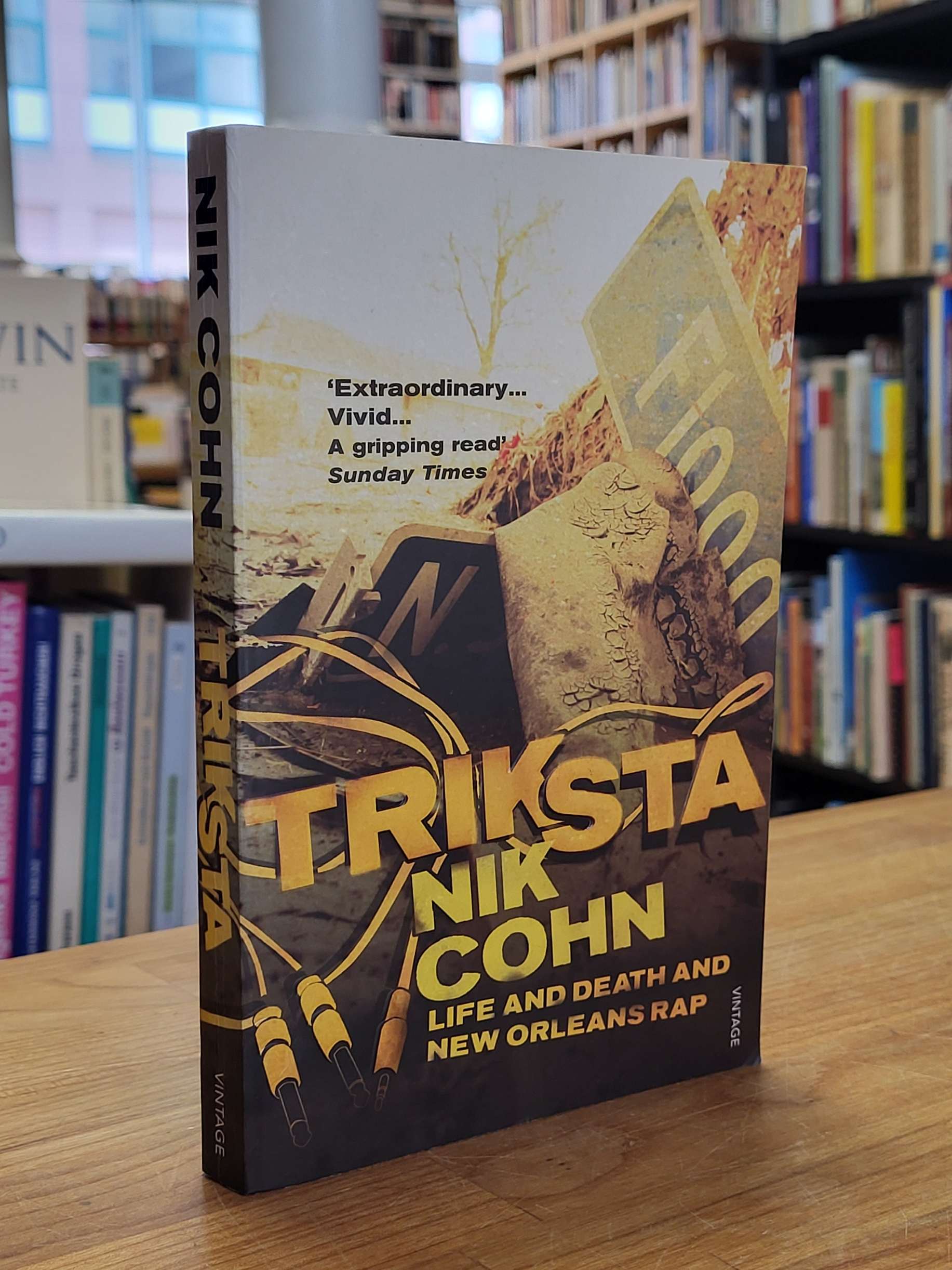
2007ref. 16260BBNew York, Vintage Books, 2007. 8°, 243 S., farbig illustr. original Kartonage (Paperback), erste Auflage dieser Ausgabe Papier ein wenig nachgedunkelt, sonst ein sehr gutes Exemplar.
2011ref. 50931Köln : Kiepenheuer & Witsch, 2011. 1. Aufl. 367 S. : Ill. ; 22 cm Pp.
2001ref. 48430Sundazed, 2001. SC 11094 2 CD CD
2001ref. 21659A 504 Rec. Prod., 29.07.2001. 1 CD Audio-CD
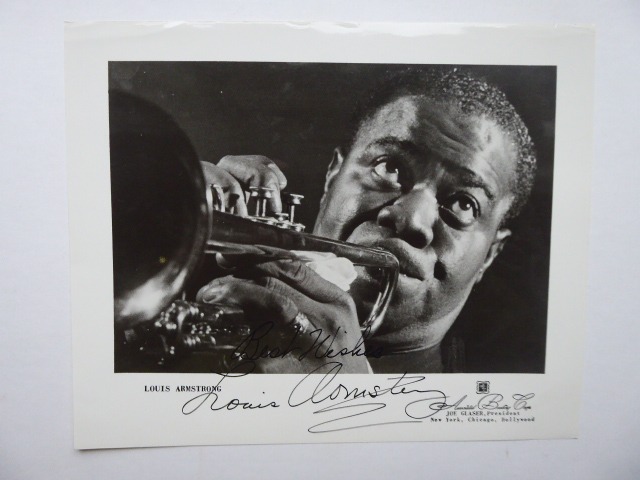
1958ref. 146640Associated Booking Corp. Joe Glaser, President. New York, Chicago, Hollywood. (Ohne Jahr. Um 1958). Fotoformat: 21x25 cm
1992ref. 50117Hamburg, Hoffmann und Campe Verlag, 1992. 520 Seiten , 22 cm, Hardcover/Pappeinband