9136 risultati
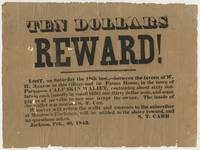
1843rif. BK0115Jackson Michigan 1843. Broadside 7 ¾ x 10 ½ inches. Single sheet printed in black. Old folds with short separations and small losses at several fold intersections and along the edges with general handling wear good overall. An early Jackson Michigan broadside issued by S. T. Carr offering ten dollars for the return of a wallet lost two days earlier on the road between the tavern of W. H. Monroe in Jackson and the Parma House. Carr describes the missing property in some detail: "A CALF-SKIN WALLET containing about sixty dollars in cash mostly in small bills one thirty dollar note and some papers of no value to any one except the owner. The inside of the wallet was marked S. T. Carr." Carr directed that the wallet be returned to him at Monroe's Exchange promising the reward "and no questions asked." Carr and W. H. Munroe appear together again two years later in the early history of Michigan's iron industry. In July 1845 they were among the Jackson men who organized an association to explore the mineral country south of Lake Superior. That fall Carr Munroe Philo M. Everett and E. S. Rockwell traveled north as an exploring party. Michigan mining histories record that Carr and Rockwell working with an Indigenous guide located the iron outcrop that became the Jackson mine; Carr continued the final search for the outcrop alone. The Jackson association subsequently became the Jackson Mining Company one of the earliest enterprises to develop the Marquette Iron Range.1 1 T. B. Brooks "Geological Survey of Michigan. Upper Peninsula 1869-1873 Accompanied by an Atlas of Maps" Legislature of Michigan and Julius Bien 1873 8. . unknown books
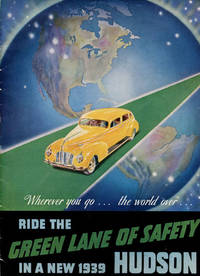
1938rif. 42948N. P.: Printed in Canada by R. G. McLean Limited 1938. 1938. TRADE CATALOGUE. First edition. 4to. 12" x 9" color pictorial wrappers 24 pp. including covers color-lithograph illustrated throughout and numerous black & white photograph illustrations. This scarce dealership catalogue is the Hudson Motor Car Company's 30th anniversary lineup with fresh new styling and models. A limited numbers of these models have survived and very few appear in period photographs. Even though over 80000 cars were shipped to dealers there are very few remaining examples from one of the few surviving pre-World War II smaller automakers. For the year 1939 the company offered six new models all equipped with L-head engines with chrome-iron blocks beginning with a bare-bones Series 90 and then the Series 91 92 and 93 straight sixes and finally the fully equipped Series 95 and 97. The Country Club sedans Broughams and Coupes featured luxurious Airfoam interiors with a broad range of paint and upholstery choices. This is a very colorful and informative catalogue. Light wear to the spine and extremities else a very good clean copy. Worldcat locates 1 copy Library of Michigan Lansing. [Printed in Canada by R. G. McLean Limited], 1938. unknown
1833rif. 36886Detroit: Sheldon M'Kinght 1833. Original full leather quite worn. Label at spine obscured. A short list of page numbers at front endpaper. Period Sig. crossed out at front flyleaf. Foxing throughout. Careful packing and fast efficient shipping including delivery confirmation. International Priority Air Mail shipping available for this item. Hardcover. Poor/No Jacket. Sheldon M'Kinght Hardcover
rif. SONG0472113526Used: Good unknown
1886rif. 2380051886. Initialed on board HMA June 15/86. 1-3/4 x 8-1/4 inches. Matted. Fine. Initialed on board HMA June 15/86. 1-3/4 x 8-1/4 inches. unknown
1886rif. 2380051886. Initialed on board HMA June 15/86. 1-3/4 x 8-1/4 inches. Matted. Fine. Initialed on board HMA June 15/86. 1-3/4 x 8-1/4 inches. unknown books
1898rif. 41432Detroit: Michigan Telephone Company. Fair with no dust jacket. 1898. 1st Edition. Softcover. Gray wraps lacking front cover and rear panel chipped and worn rough edges on first few pages. Very early Michigan telephone directory - entries may include name of subscriber exchange number residence or type of business address. Names arranged by telephone station and city or town interesting overview of late nineteenth century businesses and residences; a quick glance finds J. L. Hudson listed as a grocer James Vernor the Michigan Peninsular Car Company others. Quite scarce. ; MCN34101; Large 8vo 9" - 10" tall . Michigan Telephone Company paperback
rif. DADAX0942802047New unknown
1876rif. 52244N.P.: Privately printed n.d. ca. 1876 1876. 14" x 5 1/2" sheet folded to 8 panels. One cover panel; 3 panels showing lovely farm scene with pigs sheep chickens cows carriage church fountain and home with a large windmill at the foreground. Two panels offer information about the company and warranty. Remaining two panels offer testimonials. Light wear to edges and folds. A beautiful presentation. Very good. Privately printed, n.d. [ca. 1876] unknown
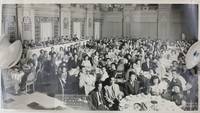
1955rif. 3892Detroit Mi 1955. Very good. Panoramic photographs 10 x 18.5 inches and 12 x 19.75 inches. Moderate creasing surface and edge wear. A pair of rare small-format panoramic photographs at least one of which was produced by a Japanese American photographer featuring diners at two different Detroit conventions of the Japanese American Citizens League in the mid-20th century. The first photograph pictures hundreds of Japanese American men and women dining at the Book Cadillac Hotel in Detroit during the September 1-2 1951 convention of the JACL. According to the printed title at bottom this was the organization's "2nd biennial Midwest District Convention." This photo was produced by a photographer named Kawamoto with his name scratched into the negative at bottom right. The second features the attendees of the "Testimonial Dinner" of the Detroit chapter of the JACL at the International Institute on May 15 1955. Material from eastern JACL chapters is especially difficult to find in the present market. unknown
1955rif. 3892Detroit Mi 1955. Very good. Panoramic photographs 10 x 18.5 inches and 12 x 19.75 inches. Moderate creasing surface and edge wear. A pair of rare small-format panoramic photographs at least one of which was produced by a Japanese American photographer featuring diners at two different Detroit conventions of the Japanese American Citizens League in the mid-20th century. The first photograph pictures hundreds of Japanese American men and women dining at the Book Cadillac Hotel in Detroit during the September 1-2 1951 convention of the JACL. According to the printed title at bottom this was the organization's "2nd biennial Midwest District Convention." This photo was produced by a photographer named Kawamoto with his name scratched into the negative at bottom right. The second features the attendees of the "Testimonial Dinner" of the Detroit chapter of the JACL at the International Institute on May 15 1955. Material from eastern JACL chapters is especially difficult to find in the present market. unknown books
rif. a87569Seven different volumes different sizes and shapes of volumes. Entries begin April 24 1887 and end June 9 1929 but some volumes are missing. Some volumes are thick eg. 481 pages in initial volumes but some are thin eg 152 pages in final volume. Over 1300 pages in all. All neatly written in ink. Clearly Everett is a student in 1887 and he becomes a music teacher with time but also does a lot of farmwork. A few pieces of ephemera laid in. Several pages have lists of financial information stock purchases debts itemized list of "Pa's Estate" etc. Good all volumes worn.Group of 7 volumes: . unknown
1940rif. 234851940. A substantial archive documenting the trucks drivers terminals accidents repairs freight operations and working life of the Michigan Tri-State Motor Express trucking company of Benton Harbor Michigan dating primarily from the late 1930s through the 1950s. The company grew from the Mammina Brothers transport business established by Joseph and Benjamin Mammina after their experience with heavy transport vehicles during American military service in World War I. By 1938 Joseph Mammina's independent Michigan Tri-State Motor Express operated sixty-four trucks across four Midwestern states part of the enormous transformation of American freight hauling that accelerated during the interwar and postwar years as trucks increasingly challenged railroads for regional cargo traffic. Photo archive of 122 loose silver gelatin photographs each measuring between 2.5" x 3.25" to 3" x 4". The photographs show fleets of branded Michigan Tri-State trucks and trailers lined in depots and freight yards; drivers posing beside International GMC and other commercial tractors; loading docks; warehouse operations; trailers marked "Michigan Tri-State Motor Express"; long-haul rigs parked along highways; winter driving conditions; damaged trailers; overturned freight trucks; accident recovery scenes; and mechanics standing beside wrecked equipment. Several photographs bear handwritten dates including 1940 1941 and 1950. Drivers appear repeatedly across the archive often photographed informally beside assigned vehicles emphasizing the labor force that sustained Midwestern freight circulation before interstate highways transformed American trucking after 1956. This collection showcases an intimate documentation of a regional trucking company during the period when motor freight became essential to American industrial and commercial distribution. During the Depression and World War II years trucking firms carried factory goods agricultural products machine parts and retail freight between Midwestern industrial cities and rural markets operating within a rapidly expanding road network shaped by New Deal infrastructure projects and wartime logistics demands. The accident scenes and roadside breakdowns visible throughout the archive also preserve the hazards of early commercial trucking before modern highway engineering federal safety regulation and standardized freight systems reshaped long-distance transport. Minor curling and edgewear some edges clipped and some toning throughout. Overall good condition. Collectively the photographs document the human and mechanical infrastructure of regional freight hauling during one of the decisive transitional periods in twentieth-century American commerce. unknown
1940rif. 234851940. A substantial archive documenting the trucks drivers terminals accidents repairs freight operations and working life of the Michigan Tri-State Motor Express trucking company of Benton Harbor Michigan dating primarily from the late 1930s through the 1950s. The company grew from the Mammina Brothers transport business established by Joseph and Benjamin Mammina after their experience with heavy transport vehicles during American military service in World War I. By 1938 Joseph Mammina's independent Michigan Tri-State Motor Express operated sixty-four trucks across four Midwestern states part of the enormous transformation of American freight hauling that accelerated during the interwar and postwar years as trucks increasingly challenged railroads for regional cargo traffic. Photo archive of 122 loose silver gelatin photographs each measuring between 2.5" x 3.25" to 3" x 4". The photographs show fleets of branded Michigan Tri-State trucks and trailers lined in depots and freight yards; drivers posing beside International GMC and other commercial tractors; loading docks; warehouse operations; trailers marked "Michigan Tri-State Motor Express"; long-haul rigs parked along highways; winter driving conditions; damaged trailers; overturned freight trucks; accident recovery scenes; and mechanics standing beside wrecked equipment. Several photographs bear handwritten dates including 1940 1941 and 1950. Drivers appear repeatedly across the archive often photographed informally beside assigned vehicles emphasizing the labor force that sustained Midwestern freight circulation before interstate highways transformed American trucking after 1956. This collection showcases an intimate documentation of a regional trucking company during the period when motor freight became essential to American industrial and commercial distribution. During the Depression and World War II years trucking firms carried factory goods agricultural products machine parts and retail freight between Midwestern industrial cities and rural markets operating within a rapidly expanding road network shaped by New Deal infrastructure projects and wartime logistics demands. The accident scenes and roadside breakdowns visible throughout the archive also preserve the hazards of early commercial trucking before modern highway engineering federal safety regulation and standardized freight systems reshaped long-distance transport. Minor curling and edgewear some edges clipped and some toning throughout. Overall good condition. Collectively the photographs document the human and mechanical infrastructure of regional freight hauling during one of the decisive transitional periods in twentieth-century American commerce. unknown books
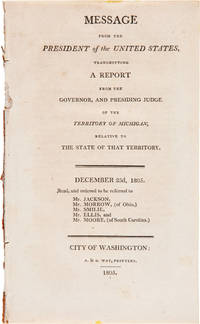
1805rif. 38811Washington: A. & G. Way 1805. The appeal of Michigan Territory governor William Hull and territorial judge August Woodward to Congress requesting action from them on the deplorable conditions of the proposed capital in Detroit and the status of several peoples found to be inhabiting the territory. The official government of Michigan was set to begin on June 30 1805 but when the Governor arrived he found Detroit nearly entirely destroyed by fire and numerous people both squatting on the ruins and dispersed throughout the nearby area including into the British territory. Hull and Woodward claim that the various treaties signed with the British do not clarify who has proper claim to the land and they add that the continuance of an indulgence for the Wiandot Indians to stay in Maguaga and Brown's town remains in question. They tentatively propose that Congress might make citizens of the Wiandot to settle the matter permanently. An excellent and concise history of the situation in Michigan at the time. Quite rare with OCLC and Shaw & Shoemaker together locating only five copies. Dbd. Near fine. STREETER MICHIGAN 6681. SABIN 48755. SHAW & SHOEMAKER 9574. OCLC 21062292. unknown
1805rif. 38811Washington: A. & G. Way 1805. The appeal of Michigan Territory governor William Hull and territorial judge August Woodward to Congress requesting action from them on the deplorable conditions of the proposed capital in Detroit and the status of several peoples found to be inhabiting the territory. The official government of Michigan was set to begin on June 30 1805 but when the Governor arrived he found Detroit nearly entirely destroyed by fire and numerous people both squatting on the ruins and dispersed throughout the nearby area including into the British territory. Hull and Woodward claim that the various treaties signed with the British do not clarify who has proper claim to the land and they add that the continuance of an indulgence for the Wiandot Indians to stay in Maguaga and Brown's town remains in question. They tentatively propose that Congress might make citizens of the Wiandot to settle the matter permanently. An excellent and concise history of the situation in Michigan at the time. Quite rare with OCLC and Shaw & Shoemaker together locating only five copies. Dbd. Near fine. STREETER MICHIGAN 6681. SABIN 48755. SHAW & SHOEMAKER 9574. OCLC 21062292. unknown books
1928rif. 000022560Chicago: Baird & Warner 1928. first edition. hardcover. Very Good. Folio 19" tall by 12 3/4" wide olive green paper covered boards stamped in gilt with black cloth spine 95 pages. Includes index in front and black and white photographs of Chicago and Evanston apartment buildings with descriptions. There are some interior shots as well as detailed layouts of apartments and configurations of each floor. Covers have light wear at edges. A glimpse into luxury apartment living established in Chicago pre - WWII and to the present. Photos available upon request. This oversize book will incur additional shipping charges for expedited or international delivery please inquire. Architecture Real Estate. St-Ch Baird & Warner hardcover
rif. DADAX0062196073New unknown
rif. DADAX1886167052New unknown
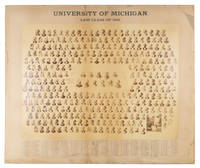
1893rif. 720111893. Class Portrait of the University of Michigan Law School Class of 1893 Law Schools. University of Michigan. University of Michigan Law Class of 1893. Ann Arbor c.1893. 16" x 21-1/2" 40.5 x 54.6 cm composite photograph on 22" x 26" 55.9 x 66 cm illustration board with printed text recently backed with masonite board. Light toning and soiling a few creases to image a few stains cracks and creases to margins some chipping to edges a few chips repaired. $1200. This charming class portrait depicts 11 faculty members 319 students and the law school building. The images of the students are numbered. Each number corresponds to a name on the list of students below the image. Two are female Eva Jane Akers Mary E. Benson and six are African American all men C.W. Scrutchin W.C. Swan L.C. Jones S.D. Blair R.J. Willis Benjamin F. Lester. A number went on to prominent careers in law. Charles William Scrutchin 1867-1930 became a criminal lawyer practicing in Bemidji Minnesota the first Black lawyer to practice in the state outside of Minneapolis. William C. Swan Robert J. Willis and Benjamin F. Lester remained in Michigan. All three practiced in Detroit joining a number of educated Black people who migrated to the city in the 1880s and 1890s in search of economic social and professional opportunity Katzman. For more information about this class see "Directory of the Law Class of 1893" Yearbooks & Class Year Publications https://repository.law.umich.edu/class_pubs/42. Katzman Before the Ghetto: Black Detroit in the Nineteenth Century 65. unknown
1893rif. 720111893. Class Portrait of the University of Michigan Law School Class of 1893 Law Schools. University of Michigan. University of Michigan Law Class of 1893. Ann Arbor c.1893. 16" x 21-1/2" 40.5 x 54.6 cm composite photograph on 22" x 26" 55.9 x 66 cm illustration board with printed text recently backed with masonite board. Light toning and soiling a few creases to image a few stains cracks and creases to margins some chipping to edges a few chips repaired. $1200. This charming class portrait depicts 11 faculty members 319 students and the law school building. The images of the students are numbered. Each number corresponds to a name on the list of students below the image. Two are female Eva Jane Akers Mary E. Benson and six are African American all men C.W. Scrutchin W.C. Swan L.C. Jones S.D. Blair R.J. Willis Benjamin F. Lester. A number went on to prominent careers in law. Charles William Scrutchin 1867-1930 became a criminal lawyer practicing in Bemidji Minnesota the first Black lawyer to practice in the state outside of Minneapolis. William C. Swan Robert J. Willis and Benjamin F. Lester remained in Michigan. All three practiced in Detroit joining a number of educated Black people who migrated to the city in the 1880s and 1890s in search of economic social and professional opportunity Katzman. For more information about this class see "Directory of the Law Class of 1893" Yearbooks & Class Year Publications https://repository.law.umich.edu/class_pubs/42. Katzman Before the Ghetto: Black Detroit in the Nineteenth Century 65. unknown books
2010rif. ANAIS-0757587100Kendall Hunt Publishing 2010-12-06. 2. spiral_bound. Good. 27.4x22.9x2.5. Buy with confidence. Excellent Customer Service & Return policy. Kendall Hunt Publishing unknown
19271st edition. Original paper wrappers, 16mo (small), 7 pages ; 25 cm (folded to 14 cm in wrappers). "Correspondence between Henry Ford, Louis Marshall and Herman Bernstein. Settlement of Aaron Sapiro's and Herman Bernstein's libel suits" (From the front cover). During the 1920s, Henry Ford gained as much fame for his antisemitic views as for his cars. His newspaper, the Dearborn Independent, published dozens of articles between 1920 and 1925 naming prominent Jewish Americans as conspirators in a plot to overthrow governments all over the world. Though hardly the first of their kind, the accusations in the Dearborn Independent represented the broadest, most sustained published attack on individual Jews and Jews as a group in the nations history. The articles created clear grounds for defamation and libel actions against Ford and the newspaper, and several were filed. In 1927 one lawsuit, Sapiro v. Ford, made it into court, generating international headlines, only to end in mistrial. Ford then disposed of the distasteful affair by signing a statement in which he apologized for the wrongs he had 'unintentionally' done to Jews. Ford's campaign against the Jews, as historians have recognized, reflected the renewed racial tribalism that characterized post-World War I American society (Woeste, Insecure Equality: Louis Marshall, Henry Ford, and the Problem of Defamatory Antisemitism, 1920-1929 in Journal of American History, Dec. 2004). The importance of the end result, here spelled out in this rare period publication, was summarized by Robert Rifkind in his 2008 examination Confronting Antisemitism in America: Louis Marshall and Henry Ford: Putting aside historical revisionism, it becomes clear that the Ford apology achieved a number of things no libel suit could have achieved. First, in broad and unambiguous strokes, Ford repudiated the defamation of Jews in general and not merely the particular claims asserted in the lawsuits. Second, the apology did so with dispatch rather than after further protracted delay. Third, Ford undertook to withdraw The International Jew from circulation both in the United States and abroad, and at least while Marshall remained alive, he seems to have done so. A jury sitting in an action for monetary damages could not have compelled such a result. And finally, a confession, retraction, and apology appearing in Fords name and over Fords signature carried the impressive force of a world-famous mana force that twelve anonymous jurors, easily dismissed as misled by lawyers wiles, could never have had (American Jewish History, Vol. 94, No. 1/2, March/June 2008, pp. 71-90). SUBJECT(S): Antisemitism -- Michigan -- Dearborn. Jews -- Trials (Libel) -- Antise´mitisme -- Juifs -- Proce`s (Diffamation) -- Dearborn independent. OCLC: 264355930. OCLC lists only 3 copies worldwide (Harvard, YIVO, Yale Law), none outside the Northeast. Light wear to wrappers, number penned on cover, no other markings, folded text pages inside extremely clean, an exceptional copy of this rare and very important imprint. Very Good Condition (holo2-148-4).
1965rif. 58541Ann Arbor MI: Museum of Art University of Michigan. As New. Paperback. FREE UPGRADE to Courier/Priority Shipping Upon Request – – IN STOCK AND IMMEDIATELY AVAILABLE FOR SHIPMENT - AS NEW THE TEXT BLOCK IS PRISTINE CLEAN UNMARKED AND IN EXCELLENT CONDITION - - 104 pp. With 110 ills. 27 x 20 cm. -- with a bonus offer-- . 1965. Museum of Art, University of Michigan paperback
1965rif. 18068Ann Arbor MI: University of Michigan Musuen of Art. As New. Paperback. FREE UPGRADE to Courier/Priority Shipping Upon Request - IN STOCK AND IMMEDIATELY AVAILABLE FOR SHIPMENT - AS NEW THE TEXT BLOCK IS PRISTINE CLEAN UNMARKED AND IN EXCELLENT CONDITION - -- with a bonus offer--; 018068; Ex-Library . 1965. University of Michigan Musuen of Art paperback