PALLAS, Peter SimonBiblio.com

68.818 resultados
1794ref. S508Paris: Maradan 1794. Uniform contemporary mottled calf richly gold-tooled spines. 8vo text and large 4to atlas. With 8 title pages and 8 half-titles 108 engraved plates and maps of which 22 folding and 2 double-page. 8 text-volumes and 1 atlas-volume. Second French edition of Pallas's 1768-1774 journeys through Russia. Peter Simon Pallas Berlin 1741-1811 studied medicine and natural history in Germany Holland and England. In 1767 he went to St Petersburg and began to conduct research in Russia. He was an eminent botanist zoologist and geographer and "sought to advance from merely describing nature to finding the causal interrelationships and hidden regularities of natural phenomena." Darwin acknowledged his work to have been influential in the development of evolutionary ideas DSB .In the years 1768 to 1774 Pallas joined so-called "academic expeditions" which traversed the Russian Empire from west to east. He studied flora and fauna landscape geological condition local population and culture. His findings were published in Reise durch verschiedenen Provinzen des russischen Reichs 3 volumes St Petersburg 1771-1776. The French translation of the work appeared in five volumes and one atlas-volume 1788-1793. The present nouvelle édition revised by Lamarck and Langlès comprises eight text-volumes and one atlas volume with maps and plates. The large map of Russia 55 x 117 cm is accompanied by ten others of parts of Russia three folding and two double-page. The other illustrations show plants ca. 58 costumes animals buildings inscriptions etc. A fine set; large bookplates of "Charles Baron de Selby" with smaller bookplates with the text "Caroli de Hoffmann Bruxellis" pasted onto them. Fine setof a great work on Russian natural history.l Cat. Russica 36; DSB X pp. 283-285; Stafleu & Cowan 7224; Wood p. 511. Maradan, unknown
1940Inscribed and initialed by Polanyi to "Sir Ernest and Lady Simon", Sir Ernest Simon, The Lord Simon of Wythenshawe, and his wife, upon front free endpaper. Simon, a British industrialist, politician and public servant, had a long association with the University of Manchester where Polanyi was a professor at the time of publication. Ink stamp reading "University of Manchester Broomcroft Hall" atop front free endpaper and inside back board solidifies this provenance as it was then the residence of the Simons. ix, [1], 116 pages. Includes these essays: The Rights and Duties of Science (1939), Collectivist Planning (1940), Soviet Economics - Fact and Theory (1935), and Truth and Propaganda (1936). "In those years the ideas of liberty... were left almost uncultivated." - from Preface. Minimal faint pencil markings to contents. Average wear and some fading to publisher's pale green cloth which is sunned at spine. Binding intact. Heavy wear to dust jacket which is now preserved in archival-grade Brodart. Today, the thoughts of the author, a scientist and philosopher who lived from 1891 to 1976, are faithfully upheld by a society named in his honour. Book
1979ref. 86828Leigh-on-Sea. As New. 1979. Hardcover. 0853170622 . FREE UPGRADE to Courier/Priority Shipping Upon Request - IN STOCK AND IMMEDIATELY AVAILABLE FOR SHIPMENT - AS NEW THE TEXT BLOCK IS PRISTINE CLEAN UNMARKED AND IN EXCELLENT CONDITION - - 47 pages; 30 illustrations. Catalogue Raisonné Catalogue Raisonne Catalog Raisonnee Complete Works Leigh-on-Sea hardcover
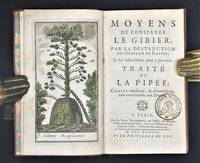
1738ref. 6First Edition - The copy of king Louis Philippe I Exceedingly rare hunting treatise on Bird trapping pipée AS A METHOD TO protect and preserve bush animals from birds of prey Simon Jean-Baptiste. Moyens de conserver le Gibier par la destruction des oiseaux de rapine ; Et les Instructions pour y parvenir. Traité de la pipée Chasse amusante & divertissante très-convenable aux Dames. Paris Veuve Prudhomme 1738. 12° 163 x 10 cm contemporary full leather binding gilt decoration and title at compartments pp. 4 – first blank recto of second page engraved frontispiece xxvii 3 84 4 engraved handcoloured frontispiece original silk bookmark perfectly preserved red edges. Hand coloured full page engraving at frontispiece representing a birds trap with the Latin motto "Silentio Decipiuntur Deceived in Silence" Only three complete copies of this first edition recorded in worldwide libraries WorldCat Extremely rare treatise on Birds Trapping pipée which as the author specifies in the preface can be considered the first and most complete popular and infomrative work on this hunting technique. This method of hunting now prohibited and already discussed in Simon's time is based on the preparation of traps usually poles leaning against trees or branches sprinkled with a sticky substance towards which a team of beaters lures the birds with decoys. Simon tries to valorise this hunting method not considering it only as it was mainly considered at the time a fun pastime perfectly suitable for ladies but as a very useful hunting method to control the number of birds of prey and therefore preserve bush animals otherwise destined to be their victims. Book Structure: · Hand coloured engraved frontispiece · Title page · Preface · Table of Contents · Chapter I – On the hunting methods of the "pipée" in general · Chapter II – On the preparation of the "Glue" for the traps · Chapter III – How to optimize the glue · Chapter IV – On Glue in general · Chapter V – About the best locations to prepare the traps · Chapter VI – How to choose the tree and how to prepare it · Chapter VII – Where to hide the hunt beaters · Chapter VIII – IX How to set up the traps · Chapter X – About the best time of the day to start the hunting · Chapter XI – About the decoys in hunting · Chapter XII – The best season for "pipée" · Chapter XIII – The best weather to practice Hunting · Chapter XIV – Which are the birds usually captured with "pipée" · Chapter XV – How to build a perfect Hunting Team. · Printing Authorization · King's privilege Simon Jean-Baptiste early XVIII century - 1762 was a French Lawyer member of the Parliament and Royal censor from 1742 to 1762. He was author of works on bees birds hunting and cosmography. Census: exceedingly rare edition. Only three copies of this first edition are recorded in Worldcat plus one imperfect: · 2 in USA Yale imperfect Berkeley · 1 in Sweden Kungliga biblioteket · 1 in France BnF. Conditions: Perfect copy of an exceedingly rare hunting treatise with an important noble provenance and with hand colored illustration. Provenance: I. From the prestigious Bibliothèque royale de Louis-Philippe au château d'Eu with his ownership stamp at title page. Louis Philippe 6 October 1773 – 26 August 1850 was King of the French from 1830 to 1848 the last King and penultimate monarch of France and Château d'Eu served as his summer residence. II: handwritten shelf location notes at front and back fly leaves. Veuve Prudhomme
1923ref. 014522Paris Galerie Simon 1923 In-8 Broché
1960ref. 83668Paris: Les Editions de Minuit 1960. Fine. Les Editions de Minuit Paris 1960 14 x 19.50 cm broché First edition one of 7 hors commerce copies out of 87 numbered copies on pur fil the only deluxe issue grands papiers. Signed and inscribed by Claude Simon using a sentence of page 306: ""Mais comment savoir que savoir"" But how to know what to know Rare first edition inscribed by the author. Les Editions de Minuit unknown
ref. #[60728]Two different states of 'Liberum Belgium' allegorical representation of the prosperity of the Dutch Provinces. The plate was modified in three areas: the portrait above in the middle below in the coat of arms in the plynth below on which hangs a lion skin with inscription and in the signature and address below with dates. The first is dated 1624. Prince Maurice of Orange is seated at the top of a throne. Above two angels playing shofars and holding a wreath with the coat of arms of the seven United Provinces. Libertas and Religio are standing at the sides in front ot the prince personifications of Negotiatio Negotiation Politia Politic Prudentia Prudence and Victoria Victory. On the plynth at the bottom: 'LE MAINTIENDRAY / MAURITIUS PRINCEPS AURIACUS. Et nobilissimi Ordinis Garterij Eques.' Further 14 lines in Latin by Daniel Heyns: 'Hispaniae domitor gentis. omnibus aequa datur / Daniel Heynsius' and further the Privilege and the address: 'Adrianus a Nieuwlandt Inventor et Pictor Symon de Pas sculptor Anno MDCXXIIII' The second is dated 1628. On the throne an orange tree its branches encicling a bust portrait of Prince Frederick Henry of Orange. On the plynth the inscription reads: 'PATRIAEQ PATRIQ / FREDERICO HENRICO D.G. PRINCIPI / Arausionensium Comiti Nassaviae. et Equiti Regii Odinis Garterii.' Further 14 lines in Latin by Daniel Heyns: 'Hispaniae domitor gentis. omnibus aequa datur / Daniel Heynsius' and further the Privilege and the address: 'Adrianus a Nieuwlandt Inventor et Pictor Symon de Pas sculptor Anno MDCXXVIII Amstelodami C. Dankaertz. Excudit'. The two states are sold as a set. l Engravings on paper trimmed within plate mark; total 1: 728 x 435 mm total 2: 730 x 445 mm; states I/4 and II/4; both prints pasted on thicker paper; second state creases on the top left corner; Hollstein 7 Franken/Passe 342 Frederik Muller 1545 a unknown
1723ref. 25150à La Haye The Hague: Aux dépens de la Compagnie 1723. Fine. Aux dépens de la Compagnie à La Haye The Hague 1723 15.50 x 20.50 cm 4 tomes reliés en 1 volume New edition in four languages after that cited on p. 59 at Mortier in 1659. This is the third edition the original having been published in Paris in 1694 in 8vo in French only. The remarkable illustration includes an allegorical frontispiece by Jan van Vianen a large folding plan of the city and castle of Versailles and 218 numbered plates five of which are folding all engraved by P. le Gros Garnier I. la Clerion N. Coustous Cornu after drawings by Thomassin. The work is divided into four parts with 3 title pages in red and black for the whole one in Dutch one in French and one dated 1695 at Pierre Mortier and 4 title pages in red and black for each of the volumes detailed as follows: vol. 1. The ancient & modern statues of Versailles fig. 1-53 -- vol. 2. The groups of Versailles fig. 54-85 -- vol. 3. The fountains and other ornaments of Versailles fig 86-172 -- vol. 4. The thermal baths and vases of Versailles fig. 173-218. Contemporary full vellum binding. Jansenist spine with raised bands. Red morocco title label. Marbled edges. Some leaves browned at the end of the index. Fine copy in good condition. The work in question is considered to form the finest achievement of Simon Thomassin 1653-1732 engraver to the king who created numerous works. The work was commissioned by Louis XIV himself in 1689. Aux dépens de la Compagnie hardcover
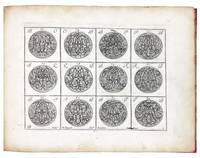
1704ref. 41629London: Printed for the Author in the Old Palace Westminster; and Sold by W. Rogers and H. Rhodes in Fleet Street; E. Harris and B. Barker in Westminster-Hall 1704. Oblong 4to. 8 x 10 inches. First edition. I-IV A4 B-M4 I-IV. 56 ff. 1-112. 112 pp. 56 copper engraved plates 50 each with 12 cyphers; 6 other engraved plates with text in French and English. Coronets Frontispiece Title English Advertisement French Advertisement 50 Leaves of Cyphers. Frontispiece reads: "A book of cyphers composed by Col. Parsons. Imprimatur Carlisle. E. M. 1703." Priced bound at 12 shillings. 18 leaves with extensive contemporary ink manuscript penmanship editions on versos. Bound to style in quarter 18th-century morocco over 18th-century marble paper boards Extensively annotated first edition Parsons's enigmatic cypher book draws on heraldy cryptography and typography and led a craze for monogrammatic systems of which many imitators followed. "Such cyphers were extremely popular on both sides of the Atlantic during the late seventeenth and early eighteenth centuries. For inspiration in preparing clients' personal designs engravers typically relied on guides by designers such as William Parsons's New Book of Cyphers." - DDW Parsons's New Book of Cyphers was at the forefront of a publishing craze for cyphers in the 1700s; it was the fourth such book to be printed and dozens of nearly identical ones followed. Samuel Sympson released books with the exact same title as the present in 1739 and 1750. Phillip Barraud meanwhile had the good taste in 1782 to change Parsons's title by one word to "A New Book of Single Cyphers." Cyphers were used to create heraldic devices and monogrammatic signatures to embroider on clothing use as trademarks or store signs or to incorporate into bookplates as many book collectors have and continue to do. Cyphers differ from monograms in that the individual aspects of a cypher system can be exchanged without affecting the overall system; the letterforms in monograms must be redesigned each time. The cypher system with its internal algorithmic rules and capacity for change can easily encrypt secret messages and has done so from mysterious medieval codices like the Voynich Manuscript to the communiques of British generals during the American Revolution to the blockchain and "crypto" today. Cyphers were so faddish in the 1700s that people kept albums full of printed cyphers they had collected from their family friends and celebrities of the period. Cyphers in other words were treated something like autographs something like business cards something like keepsakes and they were devices people and their families identified with strongly. The 600 engraved cyphers across 56 plates in this first edition of Parson's book each show how to interlink two separate letters within Parsons's larger system of encipherment. Parsons gives instructions in both French and English on how to use them to compose longer texts. Parsons comments severely in his preliminary "Advertisement" preface that the earlier works on the subject contained only half the required number of cyphers necessary to complete their alphabets. By extrapolating from Parsons's text and his supplied two-letter cypher building-blocks one could create cyphers of any length that would maintain a consistent coherent design and be able to be deciphered if one knew the system. This book of cyphers seems oriented toward a striving merchant class not an aristocracy born into their family's symbols from the beginning of their lives. Anyone with access to pen and paper could make a cypher of their initials using this book. This interpretation is bolstered by the early-19th century ink manuscript editions found in the book. Numerous pages of repetitive handwriting exercises express upright moral sentiments: "By a commendable deportment we gain reputation." "Compassionate men never prove extortioners." "A flattering companion is a dangerous enemy." "Brave spirits promote the public good." These didactic lines were copied out of Fisher's The American Instructor: or Young Man's Best Companion . . . How to Qualify Any Person for Business without the Help of a Master. More manuscript editions present includes numerous pages of budgetary ledgers for a construction worker or carpenter an architectural sketch calligraphic practice lyrics from a song called "Mr. Clark and His Bacon" by G. Colman and two poems: "The Essex Spark" and "The Model." Parsons was the younger son of a baronet and attended Christ Church Oxford. He entered the army in 1682 and took part in the Glorious Revolution in 1688. Afterward he turned to publishing especially popular works of learning. His translation of Guillaume Marcel's Tablettes chronologiques chronological tables listing the dates of Kings Popes and Emperors ran through many editions. Parsons helped produce a new set of globes but none survive. For the present work Parsons commissioned Michel Tauvel an engraver in the Strand to work on his cypher designs in 1698. Permission to print the complete work was finally given in 1703. The finished book engraved throughout includes a fine frontispiece engraved by Simon Gribelin to Parsons's design and a title-page and text leaves by Joseph Nutting. Parsons's own cipher is visible in the bottom left-hand corner of each leaf. Berlin Katalog 5315. Collins "The Modern Monogram" Print Magazine 08.06.19. DDW "No. 14 Waiter" in American Silver in the Art Institute of Chicago p.59. ESTC T116152. Francis Edwards Catalog No.800. Hale Treasures from Lord Fairhaven's Library at Anglesey Abbey cat.8 pp.58-9. O'Donoghue "Nutting Joseph" in DNB 18885-1900 Vol.41. Printed for the Author, in the Old Palace Westminster; and Sold by W. Rogers and H. Rhodes in Fleet Street; E. Harris and B. Bar unknown
ref. 420881New York: Saturday Morning 1978. Softcover. Near Fine. First edition. Edited by Simon Pettet. Tall octavo. Unpaginated. Stapled wrappers with illustrated covers by David Morris. Some modest age-toning on the wrappers else near fine. This copy with a printed limitation at the bottom of the front cover: "This is number 4 in a set of 10 signed editions." Signed by virtually all of the contributors including Pettet John Cage Ted Berrigan Allen Ginsberg Anne Waldman Peter Orlovsky Gerard Malanga Alice Notley John Giorno Dick Higgins Ron Padgett Carl Solomon Eileen Myles Maggie Dubris John Godfrey Jim Brodkey Bob Rosenthal Michael Scholnick Gary Lenhart Harris Schiff Annabel Levitt Michael Lally Maureen Owen Greg Masters Bob Holman Rose Lesniak Paul Violi Tom Savage Steve Carey and artist David Morris. Perhaps most amusing is an angry contribution by Kathy Acker purporting to be a public service announcement by the Chase Manhattan Bank of North America Signed by Acker as "The Chase Manhattan Bank of North America." Berrigan's signature notes himself as "Ted Berrigan on Ibogaine." The only signature that appears to be lacking is that of contributor Ray Bremser. Seemingly the last issue of this short-lived poetry zine. OCLC locates just two runs four issues of Vol. I and this double issue of Vol. II and only one in the U.S. with no mention of the limitation. Undoubtedly rare and a considerable achievement in corralling so many of the contributors to sign the issue in what might be considered an exercise in "herding cats. Saturday Morning unknown
1704ref. 41629London: Printed for the Author in the Old Palace Westminster; and Sold by W. Rogers and H. Rhodes in Fleet Street; E. Harris and B. Barker in Westminster-Hall 1704. Oblong 4to. 8 x 10 inches. First edition. I-IV A4 B-M4 I-IV. 56 ff. 1-112. 112 pp. 56 copper engraved plates 50 each with 12 cyphers; 6 other engraved plates with text in French and English. Coronets Frontispiece Title English Advertisement French Advertisement 50 Leaves of Cyphers. Frontispiece reads: "A book of cyphers composed by Col. Parsons. Imprimatur Carlisle. E. M. 1703." Priced bound at 12 shillings. 18 leaves with extensive contemporary ink manuscript penmanship editions on versos. Bound to style in quarter 18th-century morocco over 18th-century marble paper boards Extensively annotated first edition Parsons's enigmatic cypher book draws on heraldy cryptography and typography and led a craze for monogrammatic systems of which many imitators followed. "Such cyphers were extremely popular on both sides of the Atlantic during the late seventeenth and early eighteenth centuries. For inspiration in preparing clients' personal designs engravers typically relied on guides by designers such as William Parsons's New Book of Cyphers." - DDW Parsons's New Book of Cyphers was at the forefront of a publishing craze for cyphers in the 1700s; it was the fourth such book to be printed and dozens of nearly identical ones followed. Samuel Sympson released books with the exact same title as the present in 1739 and 1750. Phillip Barraud meanwhile had the good taste in 1782 to change Parsons's title by one word to "A New Book of Single Cyphers." Cyphers were used to create heraldic devices and monogrammatic signatures to embroider on clothing use as trademarks or store signs or to incorporate into bookplates as many book collectors have and continue to do. Cyphers differ from monograms in that the individual aspects of a cypher system can be exchanged without affecting the overall system; the letterforms in monograms must be redesigned each time. The cypher system with its internal algorithmic rules and capacity for change can easily encrypt secret messages and has done so from mysterious medieval codices like the Voynich Manuscript to the communiques of British generals during the American Revolution to the blockchain and "crypto" today. Cyphers were so faddish in the 1700s that people kept albums full of printed cyphers they had collected from their family friends and celebrities of the period. Cyphers in other words were treated something like autographs something like business cards something like keepsakes and they were devices people and their families identified with strongly. The 600 engraved cyphers across 56 plates in this first edition of Parson's book each show how to interlink two separate letters within Parsons's larger system of encipherment. Parsons gives instructions in both French and English on how to use them to compose longer texts. Parsons comments severely in his preliminary "Advertisement" preface that the earlier works on the subject contained only half the required number of cyphers necessary to complete their alphabets. By extrapolating from Parsons's text and his supplied two-letter cypher building-blocks one could create cyphers of any length that would maintain a consistent coherent design and be able to be deciphered if one knew the system. This book of cyphers seems oriented toward a striving merchant class not an aristocracy born into their family's symbols from the beginning of their lives. Anyone with access to pen and paper could make a cypher of their initials using this book. This interpretation is bolstered by the early-19th century ink manuscript editions found in the book. Numerous pages of repetitive handwriting exercises express upright moral sentiments: "By a commendable deportment we gain reputation." "Compassionate men never prove extortioners." "A flattering companion is a dangerous enemy." "Brave spirits promote the public good." These didactic lines were copied out of Fisher's The American Instructor: or Young Man's Best Companion . . . How to Qualify Any Person for Business without the Help of a Master. More manuscript editions present includes numerous pages of budgetary ledgers for a construction worker or carpenter an architectural sketch calligraphic practice lyrics from a song called "Mr. Clark and His Bacon" by G. Colman and two poems: "The Essex Spark" and "The Model." Parsons was the younger son of a baronet and attended Christ Church Oxford. He entered the army in 1682 and took part in the Glorious Revolution in 1688. Afterward he turned to publishing especially popular works of learning. His translation of Guillaume Marcel's Tablettes chronologiques chronological tables listing the dates of Kings Popes and Emperors ran through many editions. Parsons helped produce a new set of globes but none survive. For the present work Parsons commissioned Michel Tauvel an engraver in the Strand to work on his cypher designs in 1698. Permission to print the complete work was finally given in 1703. The finished book engraved throughout includes a fine frontispiece engraved by Simon Gribelin to Parsons's design and a title-page and text leaves by Joseph Nutting. Parsons's own cipher is visible in the bottom left-hand corner of each leaf. Berlin Katalog 5315. Collins "The Modern Monogram" Print Magazine 08.06.19. DDW "No. 14 Waiter" in American Silver in the Art Institute of Chicago p.59. ESTC T116152. Francis Edwards Catalog No.800. Hale Treasures from Lord Fairhaven's Library at Anglesey Abbey cat.8 pp.58-9. O'Donoghue "Nutting Joseph" in DNB 18885-1900 Vol.41. Printed for the Author, in the Old Palace Westminster; and Sold by W. Rogers and H. Rhodes in Fleet Street; E. Harris and B. Bar unknown books
ref. 420881New York: Saturday Morning 1978. Softcover. Near Fine. First edition. Edited by Simon Pettet. Tall octavo. Unpaginated. Stapled wrappers with illustrated covers by David Morris. Some modest age-toning on the wrappers else near fine. This copy with a printed limitation at the bottom of the front cover: "This is number 4 in a set of 10 signed editions." Signed by virtually all of the contributors including Pettet John Cage Ted Berrigan Allen Ginsberg Anne Waldman Peter Orlovsky Gerard Malanga Alice Notley John Giorno Dick Higgins Ron Padgett Carl Solomon Eileen Myles Maggie Dubris John Godfrey Jim Brodkey Bob Rosenthal Michael Scholnick Gary Lenhart Harris Schiff Annabel Levitt Michael Lally Maureen Owen Greg Masters Bob Holman Rose Lesniak Paul Violi Tom Savage Steve Carey and artist David Morris. Perhaps most amusing is an angry contribution by Kathy Acker purporting to be a public service announcement by the Chase Manhattan Bank of North America Signed by Acker as "The Chase Manhattan Bank of North America." Berrigan's signature notes himself as "Ted Berrigan on Ibogaine." The only signature that appears to be lacking is that of contributor Ray Bremser. Seemingly the last issue of this short-lived poetry zine. OCLC locates just two runs four issues of Vol. I and this double issue of Vol. II and only one in the U.S. with no mention of the limitation. Undoubtedly rare and a considerable achievement in corralling so many of the contributors to sign the issue in what might be considered an exercise in "herding cats. Saturday Morning unknown books
ref. #[53892]12° geheel perkament 8277 pag. met gegraveerd frontispice en 4 paginagrote gravures. Titelpagina beschadigd doch een facsimilé van deze pagina toegevoegd. Verder goed exemplaar. C0796 l Leemans Het woord is aan de onderkant pag. 97-99; Van de Pol Het Amsterdams hoerdom. Uiterst zeldzaam boekje slechs 4 ex. in STCN waarvan 2 in buitenland. De drukker was volgens Van Eeghen J. Bouman. Franse vertaling van ''t Amsterdamsch hoerdom' ui unknown
2002ref. 91511Frederick Baker Inc. New. 2002. Paperback. FREE UPGRADE to Courier/Priority Shipping Upon Request - IN STOCK AND IMMEDIATELY AVAILABLE FOR SHIPMENT - Flawless copy brand new pristine never opened -- 194 pages; 294 works catalogued. Catalogue Raisonne Catalog Raisonné Complete Works Life and Work Raisonnee Frederick Baker Inc. paperback
1680ref. CLL-599Amsterdam, Elzevier, 1680 In-4 de (15) ff., 612 pp., maroquin rouge, trois filets dorés sur plats, dos à nerfs orné de caissons de fleurons dorés, coupes et bordures décorées, tranches dorées (reliure de l'époque).
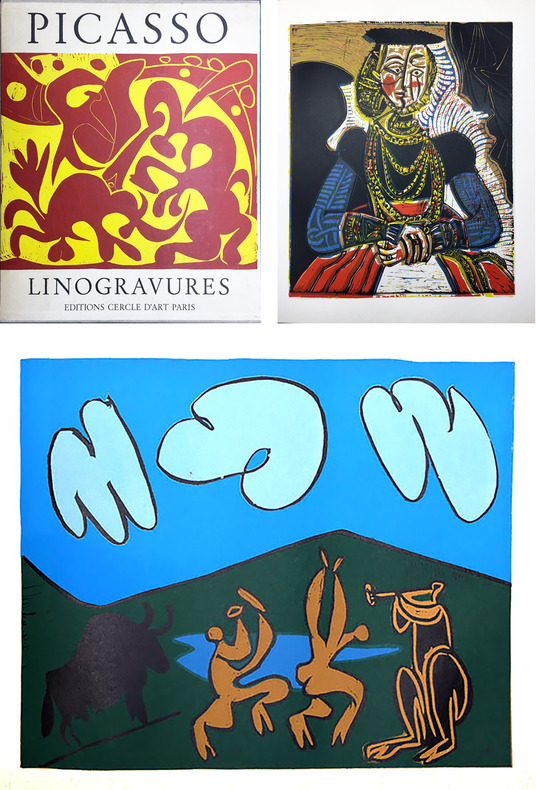
1962ref. 3185Éditions Cercle d'Art, Paris 1962. Un volume in-folio (390 x 330 mm) relié sous cartonnage toilé illustré, dans l'étui de l'éditeur décoré de deux compositions en couleur de Picasso. - 45 LINOGRAVURES DE PABLO PICASSO EN PLANCHES HORS-TEXTE réalisées d’après les linogravures originales. - PREMIER TIRAGE. Édition originale française, le texte de W. Boeck est traduit par Jacques Chavy. Remarquable publication d'art. Très bel exemplaire en parfait état. Infimes imperfections à l'étui, en excellent état. Très recherché.-- ENGLISH DESCRIPTION : 1 volume oblong folio in the original slipcase. Introduction by W. Boeck. Illustrated with 45 colour plates engraved and remarkably printed on one side only after the original linocuts by Pablo Picasso (approx. 13" x 15"). A state of the art production by Cercle d'Art in 1962. 1st printing. In perfect condition and complete. The decorated slipcase is in excellent condition. Scarce in this condition.
1921ref. 2132Paris, Éditions de la Galerie Simon, 1921. Un volume in-4 (324 x 228 mm) broché, couverture illustrée. Édition originale. 13 BOIS GRAVÉS ORIGINAUX PAR VLAMINCK : COUVERTURE, UN FRONTISPICE À PLEINE PAGE ET 10 GRANDS BOIS ENTOURANT LES POÈMES. Un grand bois illustre également le colophon. Tirage à 112 exemplaires : 10 Japon impérial + 100 sur Hollande van Gelder et 2 pour le dépôt légal. Chaque exemplaire est numéroté au composteur et signé par Vlaminck. Celui-ci 1 DES 100 SUR VÉLIN DE HOLLANDE signé à l'encre noire par Vlaminck. Tel que paru, broché, condition "sine qua non" pour un "Kahnweiler"! Photographies supplémentaires sur demande. More pictures on request.
1766ref. 060313Paris: Chez Cailleau Librairie 1765 / Sebastien Jorry 1766 / Chez La Veuve Duchesne 1766 1766. 1st Edition . Hardcover. Very Good. X 11-64 Viii 9-51 32 38 I 30. Several Items 1765 And 1766 Bound In One Full Patterned Calf Spine Elaborately Gilt. Worldcat Shows Only Four Institutional Holdings One In France Of The Calas Title 64 Pp. WearClean No Marks Fraying At Corners. Jean Calas 1698 - 10 March 1762 Was A Merchant Living In Toulouse Languedoc France Who Was Tried Judicially Tortured And Executed For The Murder Of His Son Despite His Protestations Of Innocence. Calas Was A Protestant In An Officially Catholic Society. Calas Along With His Wife Was A Protestant. France Was Then A Catholic Country; Catholicism Was The State Religion With No Legal Right For Individuals To Practice Different Faiths. While The Harsh Oppression Of Protestantism Initiated By King Louis Xiv Had Largely Receded Protestants Were At Best Tolerated. Louis One Of Calas's Sons Converted To Catholicism In 1756. On 13-14 October 1761 Another Of The Calas Sons Marc-Antoine Was Found Dead On The Ground Floor Of The Family's Home. Rumors Had It That Jean Calas Had Killed His Son Because He Intended To Convert To Catholicism. When Interrogated The Family Initially Claimed That Marc-Antoine Had Been Killed By A Murderer. Then They Declared That They Had Found Marc-Antoine Dead Hanged; Because Suicide Was Considered A Heinous Crime Against God And Since The Dead Bodies Of Suicides Were Defiled They Had Arranged For Their Son's Suicide To Look Like A Murder. Despite Jean Calas's Claiming That His Son Died By Suicide And The Testimony Of Jeanne Viguière Calas's Catholic Governess The Parlement Regional Court Of Toulouse Held That Jean Calas Had Murdered His Son. And On 9 March 1762 The Court Sentenced Him To Death By Torture. The Government Stretched His Arms And Legs Until They Were Pulled Out Of Their Sockets. Seventeen Litres 36 Us Pints Of Water Was Poured Down His Throat. He Was Tied To A Cross In The Cathedral Square On Which Each Of His Limbs Was Broken Twice By An Iron Bar. Yet Even Under This Torture Calas Continued To Declare His Innocence. French Philosopher Voltaire Was Contacted About The Case And After Initial Suspicions That Calas Was Guilty Of Anti-Catholic Fanaticism Were Dispelled By His Investigations He Began A Campaign To Get Calas's Sentence Overturned Claiming That Marc-Antoine Had Committed Suicide Because Of Gambling Debts And Not Being Able To Finish His University Studies Due To His Denomination.Voltaire's Efforts Were Successful And King Louis Xv Received The Family And Had The Sentence Annulled In 1764. The King Fired The Chief Magistrate Of Toulouse The Capitoul The Trial Was Done Over And In 1765 Jean Calas Posthumously Was Exonerated On A "Vice De Procédure" Not On The Original Charges With The Family Paid 36000 Livres By The King In Compensation.2 Voltaire An Outspoken Critic Of The Catholic Church Cited The Instance As An Example Of The Church's Severity In His 1763 Work Treatise On Tolerance. Édouard-Thomas Simon Known As " Simon De Troyes " 1740-1818 Was A French Doctor And Librarian .Simon Practiced Medicine In Troyes For Twenty Years Before Moving To Paris In 1786 Where He Divided His Time Between His Profession And The Pursuit Of Literature. At The Beginning Of The Revolution He Was Appointed A Member Of The Councils Of Public Health Public Relief Etc. Of The Capital. During The Establishment Of The Constitution Of The Year Iii Simon De Troyes Had The Plan For A Common Library For The Two Legislative Councils Adopted Became Its Curator And Under The Consulate Passed With The Same Title To The Library Of The Tribunate . After The Suppression Of The Tribunate He Entered Public Education And Became A Professor Of Literature At The Lycée In Besançon. Chez Cailleau, Librairie (1765) / Sebastien Jorry (1766) / Chez La Veuve Duchesne (1766) hardcover
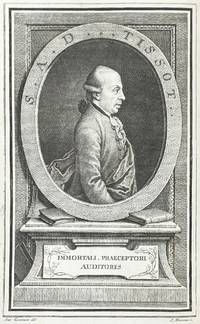
1783ref. 12066Pavia: P. Galeazzi 1783. Contemporary gilt green morocco extremities rubbed spine rubbed and faded POUR MR TISSOT gilt-lettered on the front panel. Only Edition bound for the recipient of the volume's adulation. This tribute to the retiring medical professor and prolific author - famous for his work on the dangers of onanism - contains poems in Italian German Greek English and Latin by seventy-two former students and professional colleagues. The odes sonnets elegies canzoni and a single distich praise Tissot as the Swiss Asclepius and meditate on the practice of medicine. In nice condition. ¶Buck The Dawn of Modern Medicine 103. P. Galeazzi unknown
1755ref. 129343Amiens Chez la Veuve Godart et se vend à Paris chez Ganeau Chaubert & Lambert 1755. Economic disputes in the middle of the 18th century A remarkable tract volume of economic writings from the mid-18th century all in first edition. The above work a prize essay on the effect of interest rates on trade is bound with: i Discours en forme de lettre sur l'esprit universel à Messieurs de la Société royale d'agriculture de Paris; Brussels Chez Van Dem Bergen 1765. An anonymous work purporting that there is a "universal spirit" animating all nature and that agriculturalists should endeavour to understand this. ii Réponse du Magistrat du Parlement de Rouen à la Lettre d'un Gentilhomme des États de Languedoc Sur le Commerce des Bleds des Farines & du Pain. Amsterdam et se trouve à Paris Chez Durand 1768. Part of the considerable stream of anonymous publications on the question of liberalising the French bread trade with this tract opposing liberalisation. A few pencilled marginalia. iii Clauses Et Conventions Les Plus Ordinaires Des Contrats de Mariage avec des notions directes ou relatives sur leur étendue & les effets qu'elles produisent. Par l'auteur des Principes Généraux de la Coutume de Chaumont i.e. Jean-Baptiste-Francois-Nicolas Thieriot Paris: Chez Antoine Boudet 1768. A tract on the law surrounding marriage contracts. A few pencilled marginalia. All are rare items with WorldCat listing four copies of the first tract three of the second two of the third and two of the fourth. Each is complete with half-titles errata and privilege leaves where issued. Four works bound in a single vol. duodecimo 158 x 95 mm. With folding table. Contemporary mottled sheep gilt floral motifs to compartments. Ink notes on verso of front endpaper. Spine label lacking light insect damage to sheep some faint foxing but generally clean and crisp. A very good copy joints and hinges intact folding table without tears. unknown
1767ref. 172269Théorie: "Londres" though Paris; Lettres: Amsterdam no publisher 1767; 1770. Defending despotism in the final years of the ancien régime First edition of Lettres together with the presumed first edition of Théorie. These controversial tracts oppose political reform in the run-up to the Revolution. Simon Nicolas Henri Linguet 1736-1794 argues that free workers are worse off than enslaved people in a market economy and that despotism is a more effective protector of the poor than liberalism - arguments which would lead to his execution under the Reign of Terror in 1794. This collection comprises the Théorie des loix civiles arguably Linguet's major political work and his Lettres sur la théorie a response to criticisms of Théorie. These works outline a stinging attack on Montesquieu's theories on laws and the state and challenge physiocratic arguments including their objection to grain regulation. Linguet a habitual controversialist was among the most renowned lawyers in France during the 1760s and 1770s until his attacks on other lawyers led to his expulsion from the bar in 1775. Initially a friend of the philosophes he gradually came to reject much of their philosophy - in the Lettres he rejects the argument that English liberties provide a model for France a popular claim among philosophes. Linguet's critique of Enlightenment liberalism in these works has been identified as an influence on Karl Marx. Two distinct editions of Théorie have been identified with a London/1767 imprint. This edition runs to 507 and 532 pages and includes three pages of errata following the "Discours Préliminaire". Many of these errata have been corrected in the other edition which runs to 496 and 528 pages. 3 vols duodecimo 165 x 98 mm. Woodcut ornament to title pages head- and tailpieces. Contemporary mottled calf spines with panelling and floral decoration in gilt raised bands and red brown and yellow morocco labels covers ruled in blind Lettres marbled endpapers edges red red and blue silk bookmarkers. Contemporary engraved bookplate of "C. T. Noel du Payrat" to front pastedown of Lettres. Light bumping and rubbing a couple of spots of foxing to endpapers and content margins: a very good collection. Einaudi 3420 3415; Goldsmiths' 10377; INED 2919; Kress 6459. hardcover
1964ref. 177540New York: no publisher 1964. The richest comedy Simon has written and purest gold for any theatergoer" Nadel An early script inscribed on the title page "To Clive Neil Simon". There are significant differences between this script dated 10 August 1964 on the title page and that first published in 1966 by Random House. The Broadway production was a notable early success for Simon. It won the author a Tony award and was be adapted for a film. The original version presented at Boston's Colonial Theater excluded the Pigeon sisters in the third act. The present script includes the character of Cecily Pigeon in the third act but presents an entirely different version of the text from the published text. The name of the Broadway producer Saint-Subber appears on the title page. Arnold Saint-Subber 1918-1994 would produce seven of Simon's plays on Broadway. Quarto. Original red wrappers front wrapper lettered in gilt comprising title and "studio duplicating service inc." name and address. 140 mimeographed leaves printed on rectos only additional leaf numbered "3-9A" in Act 3 secured by two brass screw brads. Housed in a custom brown cloth folding box. Some creases and loss to wrappers first leaf trimmed at fore-edge some insect damage to first and second leaves: a very good copy. Norman Nadel within Harold Bloom Neil Simon 2002. hardcover
1973ref. 91074Allen & Unwin. As New. 1973. Hardcover. 0046550119 . FREE UPGRADE to Courier/Priority Shipping Upon Request - IN STOCK AND IMMEDIATELY AVAILABLE FOR SHIPMENT - AS NEW THE TEXT BLOCK IS PRISTINE CLEAN UNMARKED AND IN EXCELLENT CONDITION - - 261 pages. Includes a catalogue raisonne of books published by the Curwen Press between 1920 and 1932. Catalogue Raisonne Catalog Raisonné Complete Works Life and Work Raisonnee - Catalogue Raisonne Catalog Raisonné Complete Works Life and Work Raisonnee Allen & Unwin hardcover
1802ref. 123166A. Strahan Printers Street for T.N. Longman and O. Rees 1802. hardcover. Good. 6x1x9. 1802 A. Strahan Printers Street for T.N. Longman and O. Rees 2 volume set in older repaired leather bindings rear board vol 2 detached. front board attached but not by much. Illustrated throughout with color images and plates many folding and several maps. Everything is present except for what we presume was the half title page of volume 1. oversized and overweight. Please email for photos. A. Strahan, Printers Street, for T.N. Longman and O. Rees hardcover
1803ref. 307354London: Printed by A. Strahan for T. N. Longman and O. Rees T. Cadell and W. Davies and J. Murray and S. Highley 1803. First Edition. With 3 folding maps 25 plates most hand-colored some folding and 14 vignettes most in color in volume I; plus 26 of 27 plates most are hand-colored some folding 14 vignettes mostly hand-colored and 3 folding maps in volume II. xxiii 1 552; xxx 2 523 pp. 2 vols. Thick 4to. Modern half black morocco and marbled boards. Lacking plate 4 in volume 2. First Edition. With 3 folding maps 25 plates most hand-colored some folding and 14 vignettes most in color in volume I; plus 26 of 27 plates most are hand-colored some folding 14 vignettes mostly hand-colored and 3 folding maps in volume II. xxiii 1 552; xxx 2 523 pp. 2 vols. Thick 4to. "An extremely charming colour plate book which deserves a place in every colour plate book collection for its numerous attractive coloured vignettes an unusual feature". Abbey Travel 222; Cat. Rusica P59; Tooley 357; Cox Volume 1 p. 199 Printed by A. Strahan for T. N. Longman and O. Rees, T. Cadell and W. Davies, and J. Murray and S. Highley unknown