56 788 résultats
réf. WELLER9798875002298New. New book. unknown books
1983réf. UWARALO00fpVintage Books 1983. Very Good. Warner Marina. Alone of All Her Sex. New York: Vintage Books 1983. 398 xixpp. Illustrated. 8vo. Paperback. Book condition: . Vintage Books paperback books
1999réf. UVAIART00fpWatson-Guptill 1999. Fine. Vaizey Marina. Art: The Critics' Choice. 150 Masterpieces of Western Art selected and defined by the Experts. New York: Watson-Guptill 1999. 368pp. Indexed. Illustrated. Glossary. 4to. Hardcover. Book condition: Near fine. Dust Jacket Condition: Very good. Edges lightly bumped and tiny tear on front top edge. Watson-Guptill hardcover books
2008réf. 37046Marshfield Hills MA: Viewpoint Studios 2008. Fine. The Millennium Tarot is a modern adaptation of an ancient method for gaining insight into one's life. The 78 card deck focuses on the choices you have made in the past the consequences in the present and the possible outcomes in the future. The images are by Dorothy Simpson Krause. In the accompanying 98 page booklet Marina Dubois gives the normal mundane and reversed meanings for each of the Major Arcana cards. Marina also interprets the Minor Arcana and suit card meanings gives instructions for the use of the deck and discusses the history of the tarot. Printed in India by Sudarsan Graphics. In fine condition. In gold color mesh bag. Measures 4.75 x 2.75 inches. OCCULT/011724. Viewpoint Studios unknown books
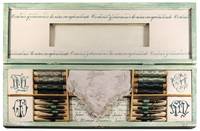
2016réf. 35742Buenes Aires: Marina Soria 2016. Fine. Unique. An engaging and personal work by world renowned calligrapher and book artist Marina Soria. It is a light blue wooden box with a glass window that opens to reveal calligraphic text and monograms done in watercolor and gouache on Strathmore paper. It is decorated with compartments containing old sewing threads and nibs. There is also a found object - a delicately embroidered white handkerchief. The artists writes: "The monograms are made from the initials of my daughters and my husband´s names. My daughters: MFJ: Mora Fernández Jurado / CFJ: Catalina Fernández Jurado / MFJ: Marina Fernández Jurado. GFJ: Gustavo Fernández Jurado. My monogram is at the back of the box: MS The text is a quote my granny used to say to me when I was a child. The original text is in Spanish "Cosiendo y descosiendo la niña va aprendiendo" Translation: "stitching and unstitching the little girl keeps on learning." In fine condition. Measures 32.5 x 12 x 3 cm. Born in Buenos Aires Argentina Marina Soria is a seasoned artist and educator with degrees in Fine Arts and Graphic Design. Not content to just immerse herself in learning calligraphy at international conferences and through courses with renown calligraphers she studied Eastern principles of Beauty in sumi-e Japanese painting. She distilled and blended these principles with her rich experience and background in the fine arts typography and graphic arts employing unique approaches and techniques. She has also dabbled in the textile arts creating a metaphor for weaving; letters as stitches and text as if it were a textile. Her works vibrating with a love for nature and exploding with life and color can be found in calligraphy collections in museums universities and libraries in the U.S. Europe and South America. Marina has received numerous national and international awards and has been featured widely in calligraphic arts publications. A prolific artist experimental calligrapher book artist and educator her goal is to mingle diverse disciplines to challenge the limits of conceptual art and technique. ARTISTSB/070522. Marina Soria unknown books
1972réf. RMARFOO00fpHolt Rinehart and Winston 1972. Very Good. Marine Gene. Food Pollution: The Violation of Our Inner Ecology. Van Allen Judith. New York NY: Holt Rinehart and Winston 1972. 1st edition. xi 385pp. Indexed. Bibliography. 8vo. White cloth with blue lettering. Book condition: Very good. Edges lightly rubbed and foot of spine slightly bumped. Dust Jacket Condition: Very good. Edges lightly rubbed and short closed tear on back cover near fold with short crease. Cover and flaps lightly toned. Holt, Rinehart and Winston hardcover books
1990réf. 14232New York: Summit Books 1990. Hardcover. Very Good. Hardcover. PRESENTATION COPY FROM CERF. Vg/Vg Dj/8vo./303 pp./contents bright crisp and clean Russian History. RUS5/5092. Summit Books hardcover books
1945réf. 127231945. Original wraps. Very Good -. A wonderful significant piece of World War II history. A fragile booklet a log mapping out in detail the schedule and itinerary of this American battalion. SIGNED BY OVER 100 RETURNING SOLDIERS FROM THE BATTALION THE 733 F.A. BN WHICH SET OUT FROM MISSISSIPPI IN LATE MARCH '44 AND SOME 7 1/2 MONTHS LATER --IN MID-NOVEMBER-- PENETRATED INTO GERMANY. This booklet has obviously travelled long and far but has held up nicely and is still very solid in its stapled salmon-colored wrappers. Light creasing and a bit of inevitable wear are far outweighed by the miracle of these returning heroes all 106 of them signing their names and addresses on the "Memoranda" pages and the pastedowns of this very scarce logbook. unknown books
1873réf. S11407Washington DC:: Bureau of Navigation Navy Department 1873. 1873. Second edition. 8vo. 6 xxxviii 262 pp. 36 tables; offsetting to pastedowns and free end-leaves. Half black calf over marbled paper-backed boards gilt-stamped spine; extremities worn spinal library label. Carnegie Institution of Washington Mount Wilson Observatory blind-stamp and ink number paper label on spine. SCARCE. Very good. Bureau of Navigation, Navy Department, 1873. hardcover books
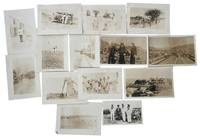
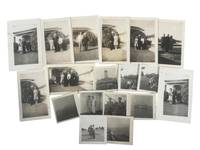
1914réf. 235561914. US Navy photograph archive 1914 to 1919 documenting American sailors in Cuba during the years when Guantánamo Bay served as a U.S. naval station for Caribbean fleet activity training and strategic movement. Verso inscriptions reading "25wyn" and "1914 to 1919" likely connect the group to USS Wyoming BB 32 whose documented service placed the battleship repeatedly in Cuban waters during this period. The photographs provide a sailor's vernacular record of Cuban streets roads transportation local residents agricultural hauling commerce and infrastructure within a wartime Cuba shaped by U.S. naval presence Caribbean patrol activity and the uneven modernization of industry under US Imperial rule. Photo archive of 14 silver gelatin photographs various sizes most approximately 5 x 3.5 inches Cuba 1914 to 1919. The images show U.S. Navy sailors posed among cactus and agave standing with Cuban men beside an open touring automobile and gathered in uniform at a public outdoor event with benches crowds buildings and hills beyond. Cuban infrastructure appears throughout the group: horse drawn carriages and wagons move through a town street lined with utility poles and commercial buildings; an ox team pulls a high wooden cart loaded with cut cane or brush along a rural road; a windmill or water pumping structure stands beside a group of local residents; a rail or tram line runs through a lightly built district; and a roadside scene combines naval uniforms automobile travel and undeveloped terrain. One commercial view shows a tourist photography and souvenir stand advertising "post cards made while you wait" "souvenirs & novelties" "Kodak films for sale" and "photo printing developing" placing commercial image making tourist exchange and modern photographic supply in the same Cuban landscape the sailors moved through during the US's imperial organization. The U.S. naval presence in Cuba began with the Spanish American War and the occupation that followed. The Platt Amendment which limited Cuban sovereignty after independence in 1902 and the 1903 lease agreements gave the United States a permanent base at Guantánamo Bay. By World War I Guantánamo was part of the working map of U.S. power in the Caribbean. It supported fleet exercises patrol movements and regional security from Cuban territory. These photographs show US imperial interest by depicting American sailors moving through streets and roads where motorcars utility poles photographic shops horse drawn traffic ox carts windmills rural tram lines and agricultural hauling all appear in the same landscape. Overall in good to fair condition with heavy image fading slight handling wear some curling. Some photographs have tears which do not obstruct the images. A visual record of U.S. naval presence in Platt Amendment Cuba and the roads shops vehicles animals and rural working systems during the World War I period. unknown books
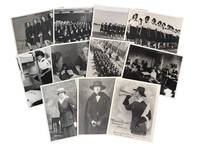
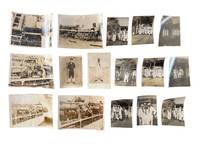
1968réf. 235551968. U.S. Navy women's service press photograph archive released by the U.S. Naval Historical Center in 1968 documenting how the Navy represented women's military labor across World War I World War II and later twentieth century service. The group links the Yeomen F of 1918 the first women formally enlisted in the U.S. Navy to the WAVES established during World War II and still present in postwar naval administration inspection training and ceremony. The photographs show women's military participation as clerical work uniformed discipline barracks life recruitment public parade and institutional remembrance. Photo archive of 11 Large silver gelatin press photographs most measuring 8" x 10" released by the U.S. Naval Historical Center Al images produced in 1968 with images subjects from 1918 to the 1960s. The photos show a Navy Department office in Washington D.C. in 1918 with uniformed and civilian personnel at desks; a woman identified in the caption as "Counselor Eastwood in the office"; a group of WAVES passing in review on an airfield; women marching in formation in New York City during a wartime bond drive; women seated in an auditorium; uniformed officers posed outside a building marked "Uniforms"; a woman in Navy dress working beside a bunk; and a line of women in white shirts and dark skirts marching in formation. Earlier Navy memory appears through portraits of Julia Washington Allen Yeoman F First Class shown with her cap turned to reveal "U.S.N." and "Yeoman F" lettering and Elsie M. Long Yeoman Second Class identified as serving on active duty from October 7 1918 to June 4 1919. A recruiting poster reads "Women awake! Your country needs you. Learn to be of national service. Join the Navy League. Help the Navy local headquarters." Women entered the Navy in large numbers during World War I because clerical expansion created a labor need that could be filled under existing enlistment language; Yeomen F worked as stenographers clerks translators messengers radio operators and office personnel while remaining segregated by gendered expectations of acceptable service. During World War II the WAVES brought women into the Naval Reserve under a formal wartime structure expanding their work into administration communications aviation support supply intelligence training and stateside naval operations. These 1968 release photographs show how the Navy later organized that history for public use: women appear as disciplined personnel administrative workers patriotic recruits and predecessors in a service tradition that the institution could claim as part of its own record. Light surface and corner wear verso captions stamps and release labels. Overall very good condition. An official record of how the U.S. Navy preserved and circulated the history of women's military service from the Yeomen F to the WAVES and their postwar successors. unknown books
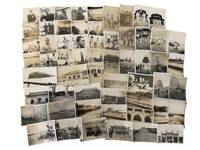
1933réf. 236941933. Colonial Italian Navy photo archive depicting sailors of the gunboat Lepanto in China circa 1933 to 1943 documenting Italy's Tianjin concession Italy's formal colonial territory in China granted in 1901 following the Boxer Rebellion. It covered approximately half a square kilometer and was strategically located on the east bank of the Hai River. Tianjin concession was governed by an Italian military official and maintained its own police force and legal framework. the Italian Navy maintained a strategic presence in China with personnel and several vessels including the gunboats Lepanto and Carlotto to protect Italian concessions in Tianjin and Shanghai. Originally built as an Azio class minelayer Lepanto reached Shanghai in 1933 and was reclassified as a gunboat in 1934 for coastal and Yangtze service protecting Italian citizens missions and treaty port interests. A United States Navy photograph places the vessel on the Whangpoo River at Shanghai during the mass evacuations of 1937 where foreign warships occupied the same congested waterway as refugee steamers and commercial traffic. The archive records this overseas station from the viewpoint of its sailors moving between shipboard hierarchy armed readiness collective leisure Chinese urban life and monumental sites visited under naval escort. Photo archive of 58 silver gelatin photographs ranging from 2" x 2" to 2" x 3.5" China circa 1933 to 1943. The photographs show Lepanto moored in Chinese harbors; Italian sailors posed on deck beside shipboard fittings and beneath the motto "In hoc signo vinces"; officers addressing assembled crews; uniformed men gathered around deck guns; rifle practice on open ground; sailors carrying packs and weapons; and formal and informal portraits of ratings petty officers and decorated officers. Group photographs place sailors at the Temple of Heaven and before other Chinese ceremonial buildings gates monuments and courtyards while wider views record Shanghai and Tientsin waterfronts docks municipal architecture Chinese junks sampans bridges rail lines and harbor shipping. Several images show Chinese residents at close range including children boatmen laborers and crowds encountered during shore leave; others depict shipboard entertainments meals athletic groups relaxed deck scenes and men photographed in work clothes apart from formal naval ceremony. The recurrence of the vessel uniformed crews weapons exercises official gatherings and organized excursions establishes the working structure of an Italian station ship rather than a general tourist itinerary. Italy's naval deployment in China descended from the foreign military privileges established after the Boxer Uprising including the Italian concession at Tientsin and the maintenance of armed detachments consular facilities and river patrol vessels. Lepanto replaced the aging gunboat Sebastiano Caboto and spent a decade operating from Shanghai and along the Yangtze using its shallow draft to reach places inaccessible to larger warships during years of civil conflict Japanese expansion and the Sino Japanese War. Following Italy's armistice with the Allies the crew scuttled Lepanto at Shanghai on September 9 1943 to prevent seizure; Japan raised and recommissioned the vessel as Okitsu in 1944 and the Republic of China received it after Japan's surrender operating it as Hsien Ning. Light surface wear toning occasional creasing and minor edge wear; photos remain legible and mostly clean. Overall in very good condition. A detailed visual record of how an Italian gunboat crew carried naval authority Fascist state ceremony armed preparedness and foreign privilege into the ports and public spaces of Republican China. unknown books
1918réf. 237261918. United States Marine photograph archive documenting Hato Mayor during the American occupation of the Dominican Republic circa 1918 to 1922 recording the military infrastructure established to secure the eastern sugar region under U.S. rule. The photographs place Marines within one of the occupation's most contested districts where military camps transportation routes and sugar estates became central to the campaign against Dominican insurgents known as the gavilleros. Hato Mayor stood at the intersection of military administration and the expanding sugar economy making it one of the principal inland centers through which the occupation asserted control over the eastern provinces. Photo archive of 12 silver gelatin photographs approximately 2.5" x 3.5" to 4" x 5" Hato Mayor Dominican Republic circa 1918 to 1922. The photographs show Marines posed in tropical field uniforms informal portraits captioned "Me & Cowley Hato Mayor" and a group identified as "The latest in dress." Several images depict Marine encampments including tents captioned "Camp Hato Mayor" and "Casa mio Hato Mayor" together with parade grounds roads and camp buildings. Two photographs record the Angelina Sugar Mill a substantial industrial complex with multiple smokestacks and associated buildings while another panoramic view identifies the "Town of Hato Mayor." Additional manuscript captions include "Native sugar mill outside Seibo" and "Field in front" and informal scenes of Marines standing with local civilians and posing beside village structures. The handwritten captions preserve the perspective of a Marine participant and firmly locate the photographs within the eastern occupation zone. The United States occupied the Dominican Republic from 1916 to 1924 establishing a military government that sought to protect customs revenues suppress armed resistance and secure the eastern sugar districts where American and foreign investment had become increasingly concentrated. Hato Mayor and neighboring El Seibo became focal points of operations against the gavilleros rural guerrilla forces resisting the occupation while estates such as Angelina formed part of the export economy whose roads rail links and industrial infrastructure Marines were tasked with protecting. The juxtaposition of military camps Marines civilian encounters sugar production and the town itself records the everyday mechanics of occupation rather than combat alone revealing how military authority and commercial agriculture operated within the same landscape. Light surface wear occasional fading and minor corner wear; manuscript captions throughout. Overall very good condition. A record of the United States Marine occupation of eastern Santo Domingo documenting the military administration within Hato Mayor during the final years of American military rule. unknown books
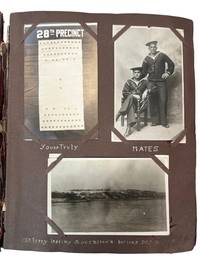
1917réf. 238941917. Fred J. Ulmer World War I naval photograph and postcard album 1918 to 1919 documenting service aboard USS "Terry" as the Allies fought German U boats. Photographs show convoy escort torpedo firing smoke screens damaged and torpedoed ships coaling operations and the destroyers and sailors engaged in the campaign. "Terry" had sailed with the first American Expeditionary Force convoy from New York in June 1917 and joined the American destroyer force at Queenstown Ireland in February 1918 escorting troop and merchant shipping through waters heavily threatened by German submarines. Ulmer's photographs captions postcards correspondence and contemporary newspaper clippings record that campaign from an enlisted sailor's perspective connecting life aboard a working destroyer with the larger Allied effort to keep American troops and supplies moving across the Atlantic. Photo album containing approximately 182 real photo postcards and postcards with three additional loose photographs and eight newspaper clippings principally United States Ireland Britain France Bermuda and Atlantic waters circa 1918 to 1919. Assembled and extensively captioned by Fred J. Ulmer a sailor aboard USS Terry the album includes shipboard photographs captioned "The stern from foretop" "The stern on deck" "Smoke screen" "On convoy duty" "Firing a torpedo" "Ship torpedoed & sunk" "U.S.S. Dipton torpedoed & sunk" "Coaling ship U.S.S. Dixie" and "U.S.S. Spectator's last smoke." Other images show sailors at their stations and at leisure deck machinery and ventilation equipment torpedo apparatus ships underway damaged and sunken vessels coaling operations harbors and dazzle painted naval craft; one photograph taken during convoy duty records an airship passing close to the ship. Ulmer also photographed Queenstown from the water including a view captioned "U.S.S. Terry leaving Queenstown Ireland Dec. 16 1918" fixing the album to the destroyer's documented departure for the United States on that date. Photograph postcards extend the record ashore and beyond Terry with European Bermudian and American scenes naval cartoons portraits of sailors and soldiers correspondence and a crowded troopship identified by Ulmer as "Erickson & troop ship." Postal material preserves messages sent during and immediately after the war while the album's final section incorporates contemporary clippings concerning Terry its crew visiting destroyers and the 1919 Victory Loan campaign. One clipping announces "The Navy Hawks Are Here" and "U.S. Destroyers Paulding and Terry" describing the vessels' arrival for Victory Loan activities and advertising fire and gun drills for visitors. A textile fragment is also retained in the album. Ulmer's frequent identifications supplemented by inscriptions on the versos of many photographs and postcards establish names locations ships and activities beyond what can be recovered from the images alone. At the time of these photographs in 1918 Queenstown had become the center of an American naval presence in Europe created specifically in response to the German submarine campaign. The first six American destroyers arrived there in May 1917; eventually nearly 7000 U.S. Navy personnel and 92 vessels served from the base including 47 of the 80 American destroyers deployed overseas. Queenstown sailors carried out 43 percent of the 1577 escort duties completed by American forces during the war meeting troopships and merchant convoys in the Western Approaches and accompanying them through the waters where submarine attack was most likely. The photographs record the rapidly changing technology of that campaign showing smoke screens torpedo equipment convoy formations coaling operations and damaged ships at a moment when destroyers were being adapted from torpedo attack craft into antisubmarine escorts armed with depth charges and operating within an increasingly coordinated convoy system. During "Terry's" final months overseas the influenza pandemic disabled crews at Queenstown badly enough that some destroyers could not be manned while American sailors were serving in an Ireland still under British rule and increasingly convulsed by the political struggle that would lead to independence. "Terry" left Queenstown on December 16 1918 little more than a month after the Armistice and Ulmer's postcards shore photographs correspondence newspaper clippings and Victory Loan material follow the transformation of the destroyer sailor from an anonymous component of the wartime convoy system into a returning serviceman whose ship and crew were presented to American civilians as visible representatives of victory. Album binding and leaves show wear consistent with age and use with occasional fading toning edge wear and handling marks; newspaper clippings are browned and brittle with some edge losses. Overall in good condition. unknown books
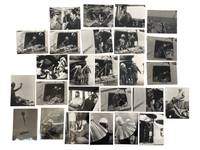
1970réf. 233711970. NavyWomen and Military Rescue Operations U.S. Navy helicopter rescue training photo archive circa 1970s-1980s documenting over-water emergency recovery drills during the early period when women were beginning to participate more visibly in naval rescue support shipboard emergency work and aviation-adjacent training. The archive documents women as active participants in the handling of a rescued person: preparing the litter assisting with stretcher movement working around the helicopter rescue opening and participating in the shipboard transfer of a restrained casualty. Women participation in rescue missions had just started at the time. The sequence records coordinated marine rescue between aircraft crews rescue swimmers and shipboard medical personnel during a period when helicopters had become central to recovering downed pilots injured crewmen and personnel lost overboard from aircraft carriers amphibious ships and support vessels. In a rescue environment still largely associated with male rescue swimmers aircrew and deck personnel the presence of women within the operational rescue sequence gives the archive added importance as a record of gender integration into the practical physical and technical emergency work that supported Cold War naval operations. Photo archive of 26 silver gelatin photographs each about 4 x 5 inches San Diego area circa 1970s-1980s. Flight-helmeted personnel prepare a litter secure a body with straps guide hoist lines and move a stretcher through a helicopter side opening marked with a large "RESCUE" arrow. Several scenes show rescue swimmers and crewmen working at the aircraft door with oxygen cylinders harnesses flotation gear helmets communications equipment and stretcher rigging visible. A rescue basket hangs above open water from a crane or hoist line; another basket carries a helmeted crewman inside a rope net. Interior views show uniformed personnel at communications stations and personnel inspecting chute-like equipment marked "PULL DOWN" while deck scenes record hands-on medical handling and lift coordination. Women visible within the sequence participate directly in the rescue environment itself appearing alongside male personnel during casualty stabilization stretcher handling and aircraft-door transfer procedures. The archive preserves the practical choreography of naval rescue: equipment inspection hoist transfer aircraft-door loading casualty stabilization and movement on deck. It is a close procedural record of Cold War naval rescue training with a focus on litter rigging rescue hatch access and the physical labor of moving a restrained casualty between aircraft and ship. The archive documents naval emergency procedure and women's visible participation at the beginning of their broader integration into rescue-support and technical military work in the 1970s making the archive relevant to collections on women in the military naval aviation support operations emergency medicine military labor and gender integration within technical service roles. Provenance from the estate of a Navy flight surgeon living in the San Diego area. Complete with all 26 photographs present; light handling wear only. Overall in very good condition. unknown books
1928réf. 232541928. Samoa photo archive documenting villages and locals during the U.S. colonial administration in 1928. Several inscriptions identify Tutuila Manua Utulei Leone and Pago Pago Bay while one captioned view explicitly notes a native governor in white and the American governor during an inspection placing the group within the administrative system through which the United States governed the territory after the 1900 cession. The photographs hold political authority missionization settlement patterns and everyday Samoan built space in the same frame making the archive useful not simply as island scenery but as evidence of colonial order in practice. Photo archive of 15 black and white photographs ranging from 2.75" x 4" to 3.5" x 5" Samoa 1928. Many versos carry contemporary manuscript captions including "Inspecting at Tai Manua" "Pago Pago Harbor" "Native house under construction Tutuila" "Native life at Utulei" "Goat Island Pago Pago Bay" "Officers Row golf course in foreground" and "Church at Leone." The images show multiple Samoan fale including large round and oval thatched structures raised on posts one photographed mid-construction with exposed framing and ladder in place. Other views record a white church facade at Leone broad mountain backed harbor scenes a shoreline road or causeway leading into the bay and a landscaped government or residential quarter with palms and open lawn. Several photographs depict indigenous groups assembled on a large field engaging in traditional ceremony. A particularly revealing image shows colonial officials and attendants moving beneath dense palms with the caption identifying both the native governor and the American governor and directly marking the dual structure of authority under U.S. rule. In the interwar period Samoa remained under U.S. naval administration with Pago Pago functioning as the territory's strategic harbor and administrative center while village life chiefly authority mission Christianity and a small export economy continued under colonial supervision. These photographs show that dichotomy through officers' housing and golf ground and mission church architecture to local village life and ceremony. Light edge wear minor curling; manuscript captions generally clear and legible. Overall very good condition. This archive captures Samoa as a colonized Pacific territory in which village life ceremonial gathering religious architecture and colonial rule entangled. unknown books
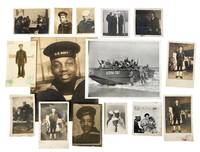
1920réf. 231621920. African American Military Service African American U.S. Navy photograph archive documenting naval service segregation training and enlisted social life from the interwar period through World War II with direct evidence of how Black sailors and Seabees moved through the Navy's expanding but racially divided wartime structure. The group centers on studio and snapshot portraits of Black servicemen in dress and work uniforms including several real photo postcards from the 1920s and a larger body of 1940s material tied to wartime service. A press photograph dated November 23 1942 anchors the archive within the Navy's 1942 expansion of Black enlistment into general service and the wartime organization of segregated Black Seabee battalions on the East Coast. Black men entered the Navy under long standing racial restrictions before broader wartime openings began in 1942 and Black Seabees remained largely segregated even as their labor and training became essential to amphibious and construction operations during the war. Photo archive of 14 silver gelatin photographs including 4 real photo postcards and one press photo various sizes ranging from 10 x 8 inches two 2 x 3 inches United States circa 1925 to 1940s. The most historically explicit image is a large Acme Newspictures press photograph showing Black Seabees disembarking from landing craft marked "USN 702" rifles raised as they train in surf; the typed caption on the verso reads in part "NEGRO SEABEES TRAIN IN LANDING OPERATIONS" identifies them as members of an "all Negro battalion" and bears the date November 23 1942. Other photographs shift from formal military portraiture to daily life: a large studio portrait of a smiling young Black sailor in a flat cap lettered "U.S. NAVY"; three interwar real photo postcards showing Black sailors in neckerchief jumper uniforms and in peacoat with flat cap one inscribed at front "Kansas City Mo" and "Adolphe J. Bell"; a headshot portrait with a cursive signature on the verso read as "Joe Louis"; three young sailors in white enlisted uniforms and white caps; three sailors posed indoors in dark dress uniforms; a mixed social table scene with ten people sharing food and drink including three Asian women and seven Black sailors in uniform; a domestic interior with a woman holding a child beside a sailor holding bottles; a casual image of a sailor in a recreation room with ping pong table; an outdoor snapshot near barracks or temporary buildings with servicemen and a dog; and a small vernacular image of three men one shirtless in tropical or warm weather surroundings. One real photo postcard is inscribed "Just to remember a pal - Stanely" and addressed to Lloyd S. Miller 219 Lexington St. Covington Virginia. Navy uniform history supports the archive's span across prewar and wartime decades from the flat hat and peacoat combinations in the earlier portraits to the white "dixie cup" caps and wartime enlisted uniforms in the later snapshots. The archive places Black naval service in view across two linked periods: the constrained interwar Navy when Black sailors were sharply limited by race and the wartime Navy after April 1942 when the service broadened Black enlistment while preserving segregation across much of its structure. Formal self presentation in studio portraiture named personal exchange through inscription and mailing address interracial or cross cultural off duty sociability at table domestic visitation barracks life recreation and a news service image of East Coast landing operations training. The 1942 Seabee press photo connects the personal photographs to a larger wartime system in which Black sailors were admitted into expanded service categories yet still sorted into segregated units and labor formations a tension now central to institutional collecting on African American military history and the history of segregation within federal service. Light to moderate wear throughout including edge wear creasing toning small losses corner softening surface abrasions and scattered staining; several images with fading or silvering and the press photo with caption label and agency stamp on verso. Overall in good condition. A compact concrete record of Black naval life before and during World War II with one dated press image and multiple inscribed vernacular portraits grounding the archive in both military policy and personal experience. unknown books
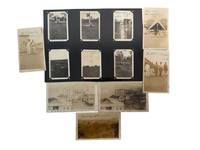
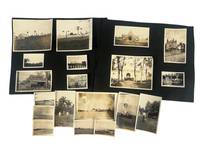
1915réf. 224781915. Polk George Washington Jr. Havana and rural Cuba photo archive 1915 documents Cuba through the viewpoint of an American military traveler during the Platt Amendment era when U.S. power shaped Cuban sovereignty port security naval access and commercial movement. The photographs record ships in Havana Harbor coastal fortifications rural dwellings Cuban farmers agricultural landscapes and colonial plazas providing insight into how U.S. military personnel visually encountered Cuba just before American entry into World War I. The Platt Amendment gave the United States broad authority to intervene in Cuban affairs and required Cuba to lease land for naval stations remaining central to U.S.-Cuba relations until its repeal in 1934; this archive therefore places vernacular travel photography within a larger framework of military oversight and commercial access. Polk George Washington Jr. Havana Cuba vernacular photo collection. Havana Cuba: unpublished December 1915. Twenty-eight silver gelatin photographs pasted to album pages with some loose or partially detached ranging from approximately 2 x 2½ inches to 4½ x 3½ inches many with handwritten ink annotations dated December 22 to 29 1915. The images include vessels anchored in Havana Harbor harbor views from on board ship Morro Castle and other coastal fortification views colonial civic plazas local laborers and civilians thatched rural huts or bohíos sugarcane fields and agricultural scenes captioned "Orange Trees & Coconut Palms Near Havana." One photograph is captioned "Cuban Farmer & Son Near Havana Dec 22 1915" giving the archive direct documentary value for rural family life and American observation of Cuban agricultural communities. Other captions identify boats as "U.S.C. 5th Protectors off Havana" and refer to the United Fruit Company steamer Abangarez on the Havana-Colon route; the Abangarez was a United Fruit Company passenger and cargo vessel completed in 1909 and later brought under United States registry during World War I. The photographs combine military commercial and rural subjects in a compact record of U.S.-Cuban contact. Polk's annotations and the repeated Potchernick-Birdsong Co. Kodak Place San Antonio Texas stamps on versos indicate that the images were developed in the United States after the trip or sent home for processing preserving the path by which overseas military travel became a personal photographic record. Polk's later military service is supported by burial and veterans' records identifying George Washington Polk Jr. as born May 13 1889 died July 27 1976 and buried at Fort Rosecrans National Cemetery; the supplied description identifies him as later a Colonel in the U.S. Army Air Corps and instructor in the early U.S. Air Force. Most photographs lightly pasted along one edge to scrapbook leaves with some detached or partially affixed; a few corner creases otherwise sharp images with strong contrast good to very good overall. Focused 1915 Cuba archive linking Havana Harbor rural Cuban labor vernacular architecture United Fruit maritime movement and American military observation during the U.S. protectorate period. unknown books
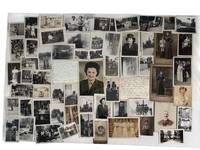
1944réf. 213131944. United States Marine Corps Women's Reserve service of an officer named "Lucille" documented in photographs created primarily during the Second World War. The images provide direct visual evidence of women's integration into the United States Marine Corps through the Women's Reserve program established in 1943 which expanded military labor by assigning women to administrative communications and logistical roles that freed male Marines for overseas combat service. Lucille appears repeatedly in uniform as a non-commissioned officer her sleeve chevrons indicating rank within a branch that became one of the most visible examples of women's wartime military participation. The photographs situate her service within a broader life history that includes family life in Chicago and Polish immigrant heritage placing the wartime mobilization of American women within the social networks of ethnic urban communities that supplied many of the nation's wartime workers and service personnel. Archive of 168 black and white photographs primarily silver gelatin prints dating from the mid-1930s through the immediate post-war years accompanied by several earlier family portraits including cabinet cards and cartes de visite. The collection centers on Lucille's Marine Corps service and includes a hand colored portrait inscribed "Lucille 1944" depicting her in USMC Women's Reserve dress uniform with jacket tie and rank chevrons visible on the left sleeve. Additional images show her standing at attention on the steps of a large institutional building and posing in formation with fellow servicewomen wearing winter coats and garrison caps scenes consistent with stateside training or official gatherings. Other photographs document civilian life in Chicago including family gatherings wedding celebrations and leisure outings along the Lake Michigan shoreline north of the city. The archive also preserves earlier generational photographs of relatives in traditional Polish dress and an inscribed carte de visite of "Miss Sobaleski" from Włocławek Poland linking the wartime Marine to a late nineteenth century immigrant family network. Creation of the United States Marine Corps Women's Reserve marked a significant expansion of women's participation in the armed forces during World War II when more than 20000 women served in the Marine Corps between 1943 and 1945. Photographic documentation of individual service members provides an important record of how women navigated military authority uniformed identity and wartime labor during a period of rapid institutional change within the armed forces. The inclusion of prewar family portraits and Polish immigrant imagery situates Lucille's military service within the longer trajectory of ethnic community life in Chicago one of the largest centers of Polish American settlement in the United States. Together the photographs document the intersection of immigrant family history urban American life and women's wartime military service. Photographs range in size from approximately 2 x 3 inches to cabinet card formats; the archive preserved loose. Minor edge wear and light toning consistent with age; overall very good condition. The breadth of images linking immigrant heritage civilian life and Marine Corps service gives the archive strong documentary value for the study of women in the U.S. military and Polish American community history during the Second World War era. unknown books
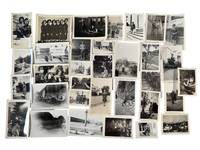
1943réf. 213151943. United States Marine Corps Women's Reserve service documented in photographs produced during World War II in the San Francisco Bay Area. The images record the participation of women in the Marine Corps Women's Reserve program established in 1943 a wartime expansion of the U.S. armed forces that assigned women to administrative communications and logistical roles in order to release male Marines for combat duty. The photographs depict women serving in uniform performing clerical tasks assembling for formation and socializing together preserving visual evidence of the daily lives and institutional roles of women who entered the Marine Corps during the wartime mobilization of the 1940s. Several photographs also trace the personal backgrounds of these service members including family portraits and earlier images connected to Polish American communities in Chicago situating military service within immigrant family histories and urban social networks. Archive of 129 black and white photographs primarily silver gelatin prints dating from the late 1930s through the World War II years. The photographs show women wearing United States Marine Corps Women's Reserve winter service uniforms consisting of forest green jackets six gore skirts khaki shirts and ties with several individuals wearing bell crowned service hats with red cords distinctive to the branch. Chevron insignia visible on some sleeves indicate non commissioned officer ranks. A number of images show groups of women standing in formation suggesting training exercises or ceremonial assembly. Another photograph shows a uniformed servicewoman beside a sign for a United States Naval Hospital indicating work in medical or administrative support functions. Other photographs depict everyday activities including typing at desks walking across military grounds and gathering in outdoor spaces with fellow service members. Leisure scenes show women seated together on lawns posing near buildings and socializing during off duty hours. Civilian photographs include picnics park outings beach and poolside scenes where women appear in swimsuits and images of wedding celebrations and formal portraits in evening dress. The archive also includes staged theatrical photographs in which women appear in costume suggesting participation in recreational performances or amateur productions. Many photographs include recognizable San Francisco landmarks including City Hall Market Street Fisherman's Wharf and views toward Alcatraz Island placing the military service documented in the archive within the wartime urban environment of the Bay Area. Earlier photographs predating the war include family portraits taken in professional studios some bearing embossed photographer stamps and inscriptions associated with Polish surnames and Chicago studios. One cabinet card identifies Stephanie Hanslik of 1669 Milwaukee Avenue in Chicago linking the servicewomen documented here to immigrant communities in the American Midwest. Together the images trace a visual narrative connecting immigrant family life wartime mobilization and the institutional integration of women into the Marine Corps during the Second World War. Photographs range in size from approximately 1 x 2 inch snapshots to larger cabinet card formats measuring up to approximately 6 x 7.75 inches with most prints around 3 x 4.5 inches. Minor surface wear and light handling marks consistent with age; overall very good condition. The archive offers substantial documentation of women's military service and social life within the USMC Women's Reserve during the wartime expansion of the U.S. armed forces. unknown books
1951réf. 214131951. U.S. Navy boxing photographs May 1951 document organized athletic competition within the Navy during the early implementation of military desegregation and provide direct visual evidence of African American participation in structured sports programs shortly after federal policy changes mandated integration. Created three years after President Executive Order 9981 these images record both interracial competition and institutional oversight within a branch historically resistant to integration. The archive situates athletic competition within broader efforts to build morale discipline and cohesion during the Korean War era supporting research into African American military history civil rights and the role of sport within newly integrated armed forces. Nineteen black and white silver gelatin photographs each approximately 8 x 10 inches official U.S. Navy images with May 1951 date stamps on versos depicting a naval boxing tournament held in a military arena. The photographs capture multiple fight sequences including mid swing punches defensive movements and clinches along the ropes as well as referees supervising bouts and trainers assisting fighters between rounds. Several images emphasize moments of impact with gloves connecting and fighters reacting in real time while others depict pre fight preparation including a boxer in a satin robe receiving instruction before entering the ring. Group portraits show teams of sailors including both African American and white participants posed in uniforms and boxing attire alongside officials and referees underscoring the organized and institutional nature of the event. Produced during a period of active military engagement in the Korean War these photographs document the practical realities of integration within everyday military life where athletic competition functioned as both training and public demonstration of unit cohesion. The presence of interracial matches and group portraits reflects evolving racial dynamics within the Navy while the structured environment of the tournament reveals how sport operated as a controlled space for recognition and advancement amid ongoing inequality. As visual records these images preserve the intersection of race military policy and physical culture at a moment when federal mandates and lived experience were still in negotiation. Light surface wear and minor handling marks with clear images and strong contrast; overall condition very good. unknown books
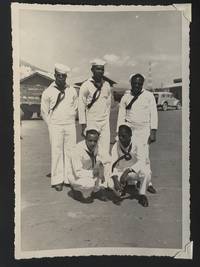
1943réf. 215061943. African American MilitaryWWII African American U.S. Navy sailors photographic archive 1943-1946 documenting Black naval service during World War II and the immediate postwar demobilization period capturing lived experience within a still-segregated military structure. Produced during a pivotal era when the Navy began to expand African American participation beyond steward and mess attendant roles the photographs reflect the evolving challenges and opportunities faced by Black servicemen in wartime. A dated postcard image from March 21 1943 anchors the collection to the height of the war when the Navy was under mounting pressure from civil rights advocates to expand enlistment for Black servicemen. Archive consists of 19 original silver gelatin photographs including 16 black and white prints measuring approximately 3 x 4 inches to 5 x 7 inches along with a postcard photograph dated March 21 1943. The images depict Black sailors in U.S. Navy service uniforms identifiable by white "Dixie cup" hats dark jumper tops and neckerchiefs. Several photographs show sailors gathered outside a Ship's Service facility a recreational and supply center on naval installations suggesting moments of rest or liberty. Group portraits emphasize camaraderie including one image of four sailors standing closely with arms around one another. Additional photographs document crowded military transport ships with servicemen lining railings and lifeboat stations. One image captures a transport vessel entering San Francisco Bay with the Bay Bridge visible in the background strongly suggesting return to a principal West Coast demobilization port. Such scenes are consistent with large-scale troop returns at the close of the Pacific War when thousands of servicemen were processed through West Coast ports following overseas deployment. During World War II the Navy maintained formal segregation policies initially restricting Black sailors to service roles before gradually permitting broader enlistment classifications beginning in 1942. The photographs capture this transitional moment: some images depict exclusively Black groups while others suggest more integrated spaces reflecting incremental institutional change that would culminate in President Harry S. Truman's Executive Order 9981 in 1948 mandating desegregation of the armed forces. The archive preserves evidence of African American participation in naval mobilization transoceanic transport and postwar demobilization at a time when service abroad coexisted with racial inequality at home. Light surface wear and minor corner curling visible on several prints; images retain strong tonal contrast; overall very good. A cohesive photographic record of Black naval service at the intersection of global war and the early movement toward military desegregation. unknown books
1950réf. 215431950. African American sailors aboard the USS Leyte CV-32 photo album compiled circa 1950-1951 documents daily life labor and camaraderie among Black enlisted men serving during the opening phase of the Korean War and in the early implementation of military desegregation under Harry S. Truman's Executive Order 9981. Created while the carrier was deployed in Atlantic and Caribbean waters and later in support of Korean War operations the album offers sustained visual evidence of African American naval presence during a transitional period when the U.S. Navy was moving unevenly from segregation toward formal integration. Of particular historical significance is the inclusion of the 15 December 1950 Christmas edition of 32's News containing an obituary and photograph of Ensign Jesse L. Brown who was killed in action on 4 December 1950 near the Chosin Reservoir in North Korea when his F4U-4 Corsair was struck by enemy fire making the album an immediate shipboard witness to the death of the Navy's first Black aviator. The archive supports research in African American military history Korean War studies naval integration and the social worlds of Black servicemen abroad. Photo Album with approximately 100 black-and-white silver gelatin photographs ranging from 2.75 x 1.75 inches to 10 x 8 inches most mounted recto and verso on 22 black paper album leaves with several images unmounted accompanied by loose and mounted ephemeral materials including mimeographed wartime reports clippings and shipboard newspapers. Notable among these are the 14 October 1950 issue of Daily Press News and the 15 December 1950 issue of 32's News Vol. 1 No. 5. Identified sailors include Harvey Thomas James Kincaid Leo Bowser "Lippy Connor" "Stockson" "Boby Mitchell" and James G. Watson the latter represented by photographs captioned "Watson" and accompanied by 1949-1951 W-2 forms documenting his service at Naval Air Station Quonset Point and aboard USS Leyte. A large-format photograph captioned "The GTMO Four" depicts four African American sailors in dress whites at Guantánamo Bay while other images captioned "Mindoro" situate the crew in the Philippines during operational deployment. The album interweaves formal portraits group military images and informal scenes of athletic recreation swimming nightlife and cross-cultural encounters with Filipino civilians as well as studio portraits labeled "School Days" and images of family members and sweethearts grounding naval service within networks of kinship and memory. Interior views of barracks communal meals and experimental aircraft armament work-contextualized by a mimeographed article describing the so-called "mercy bomb" perfected aboard Leyte-further illuminate the technical and social dimensions of shipboard life. Produced at a moment when Black servicemen were asserting dignity and professional competence within historically exclusionary institutions the archive offers unusually cohesive visual testimony to African American presence in a modernizing desegregating Navy at the outset of a global Cold War conflict. Photographs exhibit minor fading light corner wear and typical album mounting abrasions; mimeographed documents show toning creasing and several edge tears. Overall very good condition. A substantial and visually integrated record of African American naval service during the Korean War's opening year anchored by contemporaneous memorialization of Jesse L. Brown and richly documenting everyday Black military life at sea and abroad. unknown books
1944réf. 218031944. Asian American United States Navy sailor and fellow white serviceman appear throughout this World War II photograph archive documenting naval personnel and their families in domestic settings during the 1940s. Thousands of Chinese Americans enlisted in the U.S. Navy during the war forming one of the largest concentrations of Asian American personnel in a single military branch. Many Chinese American sailors initially served in steward or service ratings before gradually gaining access to other assignments as wartime manpower demands increased. The photographs therefore record Asian American participation in the U.S. military during a period marked by heightened racial scrutiny following the Attack on Pearl Harbor and the subsequent wartime environment that produced both expanded military service and intensified discrimination against Asian communities in the United States. Archive of twelve black and white vernacular photographs depicting two U.S. Navy sailors one Asian American and one white American serviceman posed with women identified as Asian American family members or companions along with several older relatives. The photographs present informal outdoor scenes taken in residential settings such as front yards and open lawns. Both sailors appear in standard U.S. Navy enlisted uniforms with white sailor caps in several images while another photograph shows the Asian American sailor wearing a darker Navy service uniform with a peaked cap typically used for more formal duties. The women pictured wear modest wartime clothing including dresses cardigans and heeled shoes. The photographs show the two sailors together repeatedly across the images often standing with family members or seated on lawns suggesting a close personal friendship extending into shared social gatherings with relatives. The archive documents domestic and social dimensions of wartime military service within Asian American communities at a moment when racial identity shaped the opportunities and restrictions placed upon service members. While thousands of Chinese Americans served in the Navy during the war Japanese Americans encountered far greater barriers to enlistment following the wartime incarceration policies authorized under Executive Order 9066. The photographs therefore capture a social environment in which Asian American servicemen navigated military duty family life and interracial friendships amid wartime tensions surrounding race and national loyalty. Photographs measure typical small snapshot sizes consistent with mid twentieth century vernacular photography. Minor handling wear and light edge wear visible across several prints. Overall condition very good. unknown books
1930réf. 218931930. Women's History Gender and Sexuality Photography Unidentified photographer women in military uniform photographs circa 1930 document female crossdressing and gender nonconforming expression in the United States during the interwar period and provide direct visual evidence of women adopting naval and military dress prior to formal inclusion in the armed forces. The images place women in uniforms associated with enlisted men of the U.S. Navy and Marine Corps including posed and candid settings that suggest both performative and social uses of military identity. Produced before the establishment of formal women's branches such as the Women's Army Corps the archive supports research into gender expression cultural attitudes toward uniform and authority and the informal appropriation of military symbols by women in early twentieth century America. United States circa 1930. Archive of 10 silver gelatin vernacular photographs ranging in size from approximately 3 x 2.5 inches to 3.5 x 5 inches with three photographs bearing a "Bear Photo Service" stamp and processing date of November 10 1930. The photographs depict women dressed in U.S. Navy enlisted uniforms including jumpers with flap collars neckerchiefs and sailor caps as well as dress uniforms with double breasted coats and peaked caps. One image shows a woman wearing a Marine Corps style uniform with a white service cap and belted tunic posed in a formal salute. Several photographs show oversized uniforms likely borrowed from male servicemen with visible insignia including petty officer chevrons. Subjects appear in both informal group settings such as porch scenes with companions and more formal posed portraits with one individual appearing repeatedly across multiple images in varied poses. The archive situates these photographs within a period when women's participation in military institutions was limited and highly regulated making the adoption of uniformed identity outside official structures notable. The use of naval and military dress in social and photographic contexts suggests engagement with themes of authority discipline and gender presentation while also reflecting broader interwar cultural experimentation with identity and appearance. These images document an underrepresented aspect of women's history capturing moments of self representation that diverge from dominant gender norms of the period. Light creasing to two prints with minor foxing and edge silvering to one image; overall toning consistent with age. Overall very good condition. A focused photographic record of gender nonconforming expression in early twentieth century American social life. unknown books