56,358 results
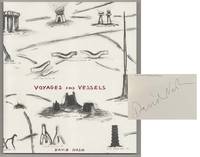
2002ref. 192243London: Artmedia 2002. First edition and first printing. Softcover. 128 pages. Monograph on British sculptor David Nash. Features an essay by Marina Warner. Includes numerous color and black and white illustrations. A clean very near fine copy in French style wrappers. Artmedia unknown books
1979ref. 159618N.p.: N.p. 1979. Seven vintage reference photographs from the 1979 film. Annotations in manuscript ink on the verso noting the film title in French. An anthology film divided into three segments set in three different time periods Rome in 1520 France at the turn of the century and modern Paris and following three women who are driven to commit crimes of passion. Six photographs 9.5 x 7 inches with wide top and bottom margins and one photograph 9.5 x 6 inches trimmed irregularly. About Fine. N.p. unknown books
1965ref. 160276N.p.: Documento Film / Royal Films International 1965. Vintage borderless reference photograph from the 1965 film. An anthology that follows a group of Italian tourists and immigrants during their time on a trip to Sweden. Set in Sweden shot on location in Italy. 7.5 x 6.75 inches trimmed. Near Fine with a crease at the top right corner. Documento Film / Royal Films International unknown books
1961ref. 160374Paris: Cinedis 1961. Vintage invitation from Cinedis for a private screening of the 1961 film. The event was held Sunday March 26 at 9:45 AM at the Marivaux theater in Paris. The invitation is indicated as only being good for two people. The Princess of Cleves develops feelings for a young Duke even though she is married. She tells her husband who becomes dangerously jealous. Shot on location at Chateau de Chambord and Montlouis-sur-Loire. 5.5 x 4.25 inches. Near Fine. Cinedis unknown books
1975ref. 158520Paris: Sygma 1975. Vintage oversize borderless reference photograph from the 1975 French film showing actors Jane Birkin and Gérard Depardieu. Mimeo snipe and stamp of Sygma on the verso. A surgeon at a public hospital in a small French town faces harassment from a rival surgeon and his incompetent sons who hate competition. 12 x 8 inches with a wide right margin Very Good plus with moderate edgewear and a short closed tear on the right edge. Sygma unknown books
1994ref. 185207Omaha NE: Joslyn Art Museum 1994. First edition. Softcover. 83 pages. Features text contributions by Graham W.J. Beal and Marina Warner. Includes numerous color and black and white illustrations checklist chronology list of previous exhibitions list of public collections list of publications by the artist list of films and documentaries and a selected bibliography. A fine copy in French style wrappers. Signed by Nash on the title page. Joslyn Art Museum unknown books
2012ref. 185487Nashville TN: Frist Center for the Visual Arts Vanderbilt University Press 2012. First edition. Softcover. Exhibition catalog for a show that ran February 24 through May 28 2012 at the Frist Center for the Visual Arts Vanderbilt University Press and then traveled to two other locations for additional dates. Features a foreword by Susan H. Edwards and essays by Suzanne Anker Mark W. Scala Marina Warner and Jack Zipes. A collection of numerous color illustrations by a wide range of artists a checklist and an index. A near fine copy in wrappers with some very light wear. Internally a clean copy. Frist Center for the Visual Arts, Vanderbilt University Press unknown books
1979ref. 158125N.p.: N.p. 1979. Vintage reference photograph from the 1979 film. Annotations in manuscript ink on the verso noting director Walerian Borowczyk's name and the film title in French. An anthology film divided into three segments set in three different time periods Rome in 1520 France at the turn of the century and modern Paris and following three women who are driven to commit crimes of passion. 9.25 x 7 inches. Near Fine. N.p. unknown books
1826ref. 179101826. Cruikshank George; Barker Matthew Henry. Greenwich Hospital A Series of Naval Sketches. Descriptive of A Man-of-War's Man 1826 combines illustrated naval satire with firsthand narrative material that includes direct testimony of British participation in the Atlantic slave trade. Issued during the period between the 1807 Slave Trade Act and the 1833 Slavery Abolition Act the work provides evidence of how naval literature circulated both popular entertainment and moral critique within British society. Barker writing under the name "An Old Sailor" drew on his experience as a seaman who entered maritime service as a teenager and his accounts move between humor and confrontation with the realities of imperial maritime labor warfare and slavery. One narrative titled "The Slave Ship" describes captives "brought aboard in droves" and "stowed away below. many of them in irons" documenting the violence of the trade while also framing an explicit moral appeal: "Aren't they all flesh and blood sir" The presence of such passages situates the volume within the broader cultural production that contributed to public awareness and critique of slavery in the decades preceding full abolition across the British Empire. Cruikshank George; Barker Matthew Henry. Greenwich Hospital A Series of Naval Sketches. Descriptive of A Man-of-War's Man. London: James Robins and Co.; Dublin: Joseph Robins 1826. First edition. Quarto. Illustrated with 12 hand-colored plates by George Cruikshank with additional wood-engraved tailpieces. Text authored by Matthew Henry Barker who published under the pseudonym "An Old Sailor" and contributed to periodicals including Bentley's Miscellany under the editorial direction of Charles Dickens. Volume presents a sequence of narrative sketches depicting life aboard naval vessels and on shore combining comic treatment of sailors' conduct with episodic accounts grounded in lived maritime experience. The work emerges from a period of expanding British naval power and intensified public debate over slavery empire and moral responsibility within maritime systems. Cruikshank's illustrations noted for their animated treatment of sailors both ashore and at sea operate alongside Barker's narratives to produce a layered depiction of naval culture that includes discipline labor leisure and violence. The inclusion of a detailed slave ship account within an otherwise humorous collection underscores the permeability between entertainment literature and political discourse in early nineteenth century Britain where printed narratives helped shape public understanding of imperial practices. Three volumes. Approximately 200 pages total. Illustrated with 12 hand-colored plates and wood-engraved tailpieces. Bound in marbled boards with gilt compartments to spine. Some soiling to pages with occasional offsetting from plates; textblock remains tight. Corners bumped hinges cracked but holding boards scuffed with later brown endpapers. Overall very good. unknown books
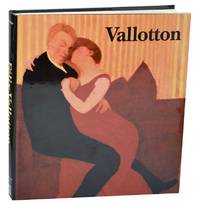
1991ref. 182999New Haven CT and New York: Yale University Art Gallery and Abbeville Press Publishers 1991. First edition and first printing. Hardcover. 328 pages. Exhibition catalog. Features text by Sasha M. Newman Marina Ducrey Richard S. Field Deborah L. Goodman Margrit Hahnloser-Ingold John Klein and Rudolf Koella. Includes numerous color and black and white illustrations. A clean very near fine copy in cloth boards with a small sticker shadow to the front free endpaper in a very near fine dust jacket. This is a heavy and oversized book and will require extra shipping. Yale University Art Gallery and Abbeville Press Publishers unknown books
1822ref. 55730London: Printed for the author and sold by F. C. and J. Rivington 1822. First Edition. Octavo in fours 20cm. Rebound in black cloth titled on spine in gilt; plain endpapers; ii 97 1pp; with folding advertisement for a Quarterly Muster Pay and Victualing Book sold by Burgess Hunt and Carter Ramsgate. Errata slip laid down on final page. Annotated throughout in pencil. A sturdy copy rebound with minor soiling to intial and final leaves tear in folding table neatly mended: Good or better. Naval impressment was standard pratice in Britain from the mid-seventeenth century until the end of the Napoleonic Wars after which the Navy developed other recruitment methods until the return of conscription in 1916. Printed for the author, and sold by F. C. and J. Rivington unknown books
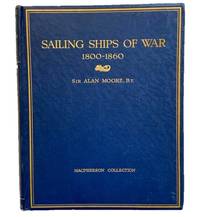
1926ref. 172861926. Moore Alan Sailing Ships of War 100-1860 1926 traces the visual and technological history of naval warfare from early sailing vessels through the nineteenth-century transition to steam power. The volume uses engraved painted and drawn ship images to document changing forms of maritime military power with particular value for the study of naval architecture Royal Navy history and the representation of warships in British collecting culture. Its emphasis on annotated plates from the A.G.H. MacPherson collection makes the book both an illustrated military reference and a curated record of how naval development was studied in the early twentieth century. Moore Alan Sir. Sailing Ships of War 100-1860 Including The Transition to Steam. With Illustrations From Engravings Drawings and Paintings. London: Halton & Truscott Smith Ltd.; New York: Minton Balch and Company 1926. No. 137 of a limited edition. 78 pages. Mounted color frontispiece with 90 large illustrated plates including 11 mounted color plates and one folding plate. Original blue cloth stamped in gilt on upper cover and spine. Large quarto. The plates are individually annotated pairing visual evidence with historical commentary on ship form armament national service and development across centuries of naval warfare. The introduction analyzes the evolution of naval vessels the transition to steam and includes a Royal Navy Admiralty list from 1798 to 1805. Published after World War I the volume belongs to an era of renewed attention to naval history technological change and Britain's maritime military past. Its long chronological scope places wooden sailing warships early modern fleets and steam transition within a single visual narrative of naval power. Near fine. A substantial limited-edition military reference preserving illustrated evidence of warship design and the historical memory of naval warfare before modern mechanized fleets. unknown books
1967ref. 155298N.p.: N.p. 1967. Vintage reference photograph from the 1967 French film directed by Jean-Luc Godard showing actors Raoul Lévy and Anny Duperey. From the archive of film historian and author Joel Finler. A day in the life of a seemingly normal suburban housewife who intersperses her daily routine of housework cleaning and shopping with appointments as a call girl. One of director Godard's most highly regarded and stylistically innovative films released the same year as "Weekend" and "La chinoise." Set and shot on location in Paris. 10 x 8 inches. Near Fine. Criterion Collection 482. Rosenbaum 1000. Vogel Film as a Subversive Art. N.p. unknown books
1985ref. 176888Eindhoven: Stedelijk Van Abbemuseum 1985. First edition. Softcover. 95 pages. Exhibition catalog for a show that ran September 14 through October 13 1985 at Stedelijk Van Abbemuseum and then October 20 through November 17 1985 at Kolnischer Kunstverein in Cologne and 1986 at the Castello di Rivoli in Turin. Text in English by Thomas McEvilley. Includes numerous color illustrations lists of performances previous exhibitions publications films and videotapes. A near fine copy in French style wrappers with some very minor wear. Stedelijk Van Abbemuseum unknown books
1983ref. 149305Rome: 2T Produzione Film 1983. Vintage grande French poster for the 1983 erotic film. Inspired by Ovid's 2 AD collection of poems "Ars Amatoria" "The Art of Love". Set in ancient Rome the poet Ovid teaches courses in the art of love. One of his students sets out to test his newfound skill on a woman whose husband has gone to war. 47 x 63 inches. One panel. Folded as issued. Near Fine. Bier 96. 2T Produzione Film unknown books
1931ref. 159541931. J.J. Martin photograph album 1931-1930s documents United States Marine Corps service during interwar naval deployments and records the geographic reach social structure and daily experience of enlisted personnel attached to the USS Arkansas BB-33. The album establishes direct evidence of Marine Corps participation in peacetime naval operations that linked domestic training hemispheric presence in Central and South America and European port visits during a period when the United States maintained strategic visibility without active wartime mobilization. The inclusion of a certificate marking Martin's crossing of the equator en route to Chile on October 22 1931 places the album within formal naval ritual practice while the extensive listing of fellow servicemen with names home locations and personal remarks provides unusually detailed documentation of interpersonal networks identity and camaraderie within Marine detachments aboard capital ships. Photo album 1931-1930s likely compiled aboard U.S.S. Arkansas during voyages throughout the United States Central and South America Panama Canal Zone and Europe. Oblong format album measuring approximately 8 x 11 inches containing 49 pages including approximately 120 original photographs ranging in size from approximately 2 x 3 inches to 5 x 6.5 inches. The first nine pages consist of handwritten entries identifying fellow Marines and acquaintances with names residences and descriptive commentary. The remaining pages contain photographs depicting uniformed Marines aboard ship shipboard life port visits civilian encounters including women and children at various locations and views associated with transoceanic travel routes including the Panama Canal and European destinations. Several photographs bear captions and a printed equatorial crossing certificate is laid in. Service aboard U.S.S. Arkansas during the interwar years situates this album within a broader framework of American naval diplomacy and military readiness between the First and Second World Wars when battleships functioned as instruments of both training and international presence. Marine detachments assigned to such vessels fulfilled roles in ship security ceremonial duties and expeditionary readiness and their photographic records provide granular insight into how service members experienced global mobility during a period often defined in historiography by relative peace but sustained military infrastructure. The combination of named social registers visual documentation of multinational encounters and evidence of naval ritual contributes to research in military social history interwar geopolitics and the cultural life of enlisted Marines operating within the expanding reach of U.S. naval power. Light soiling to leather boards with two of three ties detached; some page tears and instances of loose or missing photographs; images generally remain clear with subjects unaffected. Overall good condition. unknown books
1942ref. 529Annapolis Maryland: United States Naval Institute 1942. Cloth. Good . 4to; 509pp; gilt-stamped black cloth over board; ownership to endpapers; illustrated within text; scuffed cloth small tears to cloth on front joint wear to edges light stain to bottom edge; foxing to endpapers; good plus. Seventh edition published in 1942 as a textbook for the United States Naval Academy. United States Naval Institute unknown books
1961ref. 143272Paris: Cinedis 1961. Three original color transparencies from the 1961 film. Starring actors including Marais and Vlady are seen in lavish period costumes designed for the film by Marie-Claude Fouquet and Jacqueline Guyot. Housed in a light blue mailing envelope with annotations on the recto in manuscript ink noting contact information for Fouquet and Guyot. Based de La Fayette's 1678 anonymously published novel France's first historical novel widely regarded as an early psychological novel. The Princess Vlady marries a much older prince Marais but yearns for a handsome duke Poron. Her fidelity eventually coming into question. Marais also starred in Delannoy's and Cocteau's other collaboration "Love Eternal" 1943. Two transparencies 3.25 x 4.5 inches one slightly larger. Near Fine overall in original transparent sleeves. Cinedis unknown books
1961ref. 144012Paris: Cinedis 1961. Archive of 14 original single weight black-and-white photographs and various ephemera from the 1961 film here under the original French title. The photographs numbered on the versos in manuscript pencil detail costumes for starring actors Marina Vlady and Jean Marais an exhibit of film stills and costume designs at a bookshop called "Lavocat" costumes displayed at tge shop "Delvaux" and the ephemera consists of a press packet detailing film credits and biographies an invitation for two to the premiere on March 26 at the Marivaux cinema a small slip with annotations in manuscript ink and a carbon typescript from Maryse Martres to "Madame Armon" at Delvaux regarding the costumes. Housed in a large manila folder. Based de La Fayette's 1678 anonymously published novel France's first historical novel widely regarded as an early psychological novel. The Princess marries a much older prince Marais but yearns for a handsome duke Poron. Her fidelity eventually coming into question. Marais also starred in Delannoy's and Cocteau's other collaboration "Love Eternal" 1943. Delannoy directed over 50 films at first well-regarded dissipating at the end of his career with several B-grade films. Costuming for the film was produced by Pierre Cardin and Marcel Escoffier both also worked together on "Beauty and the Beast" 1946 and "Fernandel the Dressmaker" 1956. Martres Martin was a prolific French actress since 1948 notably "Girl on the Third Floor" 1955 and "The Happy Road" 1957 and she was later involved in press relations at Cinedis a notable film agency in operation since the Silent Film era. Kishi was born in 1932 and became a Japanese actress and writer. She married director Ciampi in 1957. Since 1996 she has been a Goodwill Ambassador for the United Nations Population Fund UNFPA. The Delvaux shop has been producing leather goods mostly handbags since the 19th century with central locations in Belgium. Photos range from 6.75 x 9 inches to 7.25 x 10.5 inches. Ephemera ranges from 3.5 x 4.75 inches to 8 x 10.5 inches. Very Good plus overall with scattered creases and toning. Cinedis unknown books
1970ref. 143871Rome: Fair Film 1970. Draft script for the 1970 film. An English language script for consideration by US filmmakers though the film was shot in Italian. Based on Alberto Bevilacqua's 1964 novel of the same name. The widow of a worker killed by police joins the militant strike against the factory owners one of which falls in love with her and is forced to face his glaring conflicts of interest. Shot on location in Parma Italy. Grey titled wrappers. Title page present with credits for screenwriter and director Alberto Bevilacqua. 82 leaves with last page of text numbered 82. Mechanical duplication. Pages Fine wrapper Near Fine bound internally with three gold brads. Fair Film unknown books
1919ref. 34793Washington DC: Navy Department Commission on Training Camp Activities 1919. First Edition. Oblong 12mo 10x13.5cm.; publisher's dark blue staple-bound card wrappers; 298pp.; chiefly musical scores two full-page photographic illus. linocuts by John Held throughout. A hint of toning to wrapper extremities else Very Good to Near Fine. Collection of patriotic songs with illustrations by a young John Held signed in image either "JH" or "J. Held" but otherwise unattributed to him. The noted Jazz Age cartoonist had already had work published in Vanity Fair though after the United States entered World War I he worked for Naval Intelligence in Central America as an illustrator and cartographer. Navy Department Commission on Training Camp Activities unknown books
1907ref. 31197N.p. Japan ca 1907. Pair of large trapunto banners both removed from original frames. First 82cm x 60cm ca 32" x 24"; embroidered in silk with trapunto elements on a black silk ground; photographic portrait on cabinet card inserted in embroidered pocket at center inscribed "Mellie McKeever" on verso. Silk ground fragile with a few thin tears but no significant losses; light soil; embroidered portions generally well-preserved and colors bright. Very Good. Second banner 65cm x 50cm ca 25" x 20"; photo-transfer on silk with embroidered ornaments. Slight fading to embroidered portions but generally well-preserved and sound; Very Good. Both banners with firm provenance purchased from the descendants of Mellie McKeever of Richwood West Virginia. Two exceptional and well-preserved examples of the ornamental trapunto banners that were popular souvenirs among U.S. sailors and marines during the late 19th and early 20th century. Yokohama was the principal point of production for these naval souvenirs but we have also seen examples from the Philippines and mainland China; Japanese examples such as these are generally distinguished by a higher quality of embroidery and more sophisticated composition. The banners became popular among British and American sailors beginning as early as the Boxer Rebellion and the Spanish-American War but seem to have reached their peak of popularity with the arrival in the Far East of Teddy Roosevelt's Great White Fleet in 1908. Some 14000 sailors and marines made land at various Japanese ports-of-call in that year and given the regularity with which these textiles still appear one imagines that every sailor must have brought at least one of these souvenirs home with him. The first example though of an unusually impressive size is of a type frequently seen displaying typical naval iconography right down to the hand-painted battleship portrait of a two-stack battleship of the Kearsarge class its hull painted white reflecting its peace-time mission at bottom center. The embroidered frame to hold a cabinet portrait of the sailor or perhaps a loved one is a typical feature found on more elaborate examples. The American Eagle in full battle stance is a nearly universal element of these banners. The second banner is of a style we have not previously seen and for which we can find no analogues in the extensive literature of naval souvenirs. It is clearly a family portrait probably a composite made from cartes-des-visites carried by McKeever; the portraits are printed by silkscreen using a photo-transfer process with applied trapunto decorations. The likenesses are clearly enlarged -- it is highly unlikely that a common sailor would have had room aboard a battleship to carry full-size portraits -- and it strikes us that this must have seemed an almost magical process at the time of creation especially to a young man from a tiny lumber-and-coal town in central West Virginia. Aside from their obvious virtues as objects of art and handicraft we regard these banners as compelling pieces of material culture from a period of tremendous social transformation in the United States. According to the Naval Historical Center U.S. naval rolls expanded by nearly 400% between the beginning of the Spanish-American War and the launching of the Great White Fleet. To meet this demand for the first time in its history the Navy began recruiting from the American heartland rather than solely from the Eastern Seaboard states. The generation of inland farmers and mechanics to follow was thus the first in American history to experience first-hand cultures as diverse and divergent from their own as those of Europe Asia and the Pacific Islands; they represented not only the beginning of the American imperialist enterprise but also the first stirrings of America's global consciousness. That so many of these banners have survived in good condition is evidence of the degree to which they were treasured by their owners for whom they represented an experience that must have been transformative and definitive. unknown books
1967ref. 138581Paris: Concordia Compagnia Cinematografica 1967. Four vintage borderless reference photographs from the set of the 1967 film. Studio rubber stamp on the verso. One of the photos features Marina Vlady sharing a cigarette with Roger Montsoret. Based on a 1966 article on casual prostitution in France by Catherine Viminet. One of three feature films Godard released in 1967 and like both "Week End" and "La chinoise" one that showcases Godard's increasing focus on deconstructing filmic narrative and structure and vocalization of leftist political ideas. Godard has stated that his overall desire with the film was "to include everything: sports politics even groceries" to make "an attempt at description of a phenomenon known. as a complex." 5 x 7 inches. Fine condition. Criterion Collection 482. Rosenbaum 1000. Vogel Film as a Subversive Art. Concordia Compagnia Cinematografica unknown books
1829ref. 9021127Edinburgh / London: Printed for Cadell & Co. / Simpkin and Marshall 1829. 1st. Hardcover. Very good. Bound in full dark blue calf with spines and board edges stamped and decorated in gilt. Gilt stamped spine labels are rubbed and chipped more than half gilt lost but impressions still legible. Boards are rubbed at the heads heels extremities and bottom edges. Volume one has a separated front inner hinge. Volume two front inner hinge has started but is holding. Marbled endpapers. Fold-out map in color bound in to volume one. Three tables on one fold-out sheet bound in to volume three. Printed for Cadell & Co. / Simpkin and Marshall hardcover books
1987ref. 140549Big Timber MT: Seven Buffaloes Press 1987. First edition. Softcover. 67 pages. A collection of poems printed in an edition of 500 copies. A near fine copy in wrappers. Seven Buffaloes Press unknown books