517 results
ref. DADAX0367349302New unknown
ref. DADAX0367276771New unknown
ref. DADAX0415501598New unknown
ref. DADAX1138800163New unknown
ref. DADAX1472479653New unknown
ref. DADAX0415822726New unknown
ref. DADAX041577702XNew unknown
ref. DADAX1472458834New unknown
ref. DADAX0415401909New unknown
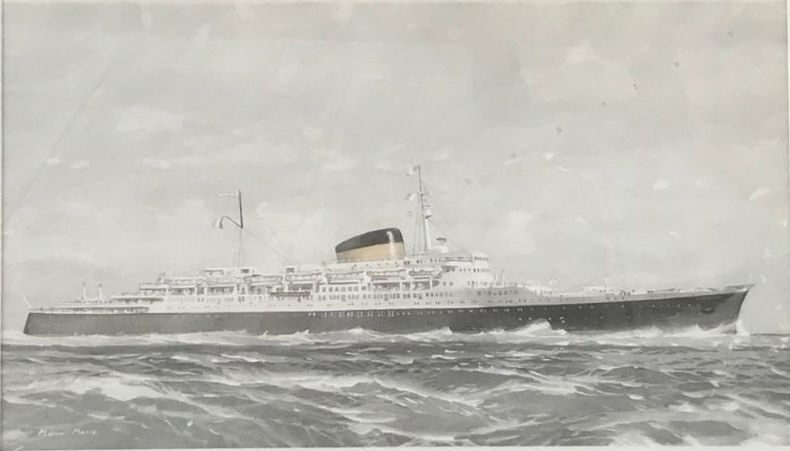
ref. 14650SD anni ’40. Alcune foto lievemente scollate ma ben conservato nel complesso. . Album fotografico in percallina verde con titoli dorati e legatura a vista con bulloni d'ottone cm 24 x 34 contenente 8 fotografie in bianco e nero cm 23.5 x 29.25 montate su tavole telate. Alcune foto lievemente scollate ma ben conservato nel complesso. Pubblicazione promozionale riservata presumibilmente alle agenzie turistiche ed agli agenti della compagnia di navigazione che presenta il transatlantico Conte Biancamano e in particolare le cabine gli spazi comuni e i servizi per la terza classe. La nave venne varata nel 1925 per il Lloyd Triestino e con il riassetto delle flotte passò negli anni '30 alla compagnia Italia di Navigazione venendo destinata alle rotte per il Sud America. Questo album risale agli anni '40 e testimonia il riallestimento civile del dopoguerra con arredi progettati da Gustavo Pulitzer Finali Giò Ponti e Nino Zoncada. Le fotografie con didascalia in lastra mostrano una veduta del transatlantico e alcuni ambienti della terza classe: Sala da Pranzo Sala fumatori e bar Sala delle Signore Cabina a quattro posti Cabina a due posti La piscina Ambulatorio medico chirurgico. Cat. 26 n. 20. unknown
1933ref. 7185Rouen Lecerf 1933 1 in-4 Illustrations de MONSNERGUE. Rouen, Lecerf, 1933, in-4, broché, couverture titrée sous chemise illustrée d'une carte marine, en demi-toile grise.
ref. 160644419 Six menus et chansons signés dans la planche, de 4 pages in-4 sous étui tryptique illustré, orné d'attributs marins et musicaux, disque "Nos vieilles chansons" interprétées par André Claveau, Mathé Altéry, Brigitte, Les Engels, production Pathé-Marconi, (1965).
ref. SONG3110376377Used: Good unknown
1959This is a very good substantial run of the Transatlantic Review with just light wear. Very clean inside and out. All issues softcovers in their original wrappers. The run contains issues 2, 3, 4, 5, 6, 9, 12, 13, 14, 18, 19, 20, 22, 23, 24, 26, 27, 32, 35, 36, 42 & 43, 44, 45, 49 and the Index volume. 25 issues in all from 1959 to 1974. Size varies a bit, typically 8" or 9" X 6". Heavy set, foreign shipping will be extra. This set will be securely wrapped and packed in a sturdy box and shipped with tracking.
1938ref. 54768Coupe longitudinale dépliante en 7 panneaux (format déplié 32 x 128 cm) sous chemise imprimée, J. Barreau & Cie, Albert Sébille dél., s.d. [ circa 1938 ]
1935ref. 21821ATLANTIQUE 1935 1 Atlantique, 1935, petit in-4, broché illustré en couleurs, couverture en couleur illustrée d'un paquebot et d'une Marianne à la cocarde tricolore, 28 pages.
1935ref. 191331935 Gouache, titrée, 1935, 22.3 x 19 cm, encadrée.
ref. DADAX0198298927New unknown
1934ref. 96700Paris, éditions de l’Atlantique 1934 7 numéros. In-4 31 x 23,5 cm. Agrafés, 8 pp. par numéro, première page en bichromie, photographies en noir & blanc, illustrations et cartes hors texte, textes de G. la Roërie, Firmin Roz, Constantin-Weyer, Montpetit, de la Roncière, Maurice Guierre, Valéry Larbaud, etc, illustrations de Chancel, V. Le Champion, ..., publicités. Ensemble en excellent état.
ref. DADAX0415241367New unknown
ref. 97101875. Gibson & Sons Penzance & Scilly Isles. Three striking unfamiliar photographs the last two in particular excellent compositions of a significant historical event. The three slides are bound in 8 cm glass squares with none of the glass shattered and the images themselves in good condition clear and unfaded. Each mount carries the stamp of the photographers Gibson & Sons. With numbered labels carrying a shelfmark. Each mount titled in manuscript. ONE: ' Schiller" wreck. Lifeboat in which Survivors came ashore'. Shows the white lifeboat with 'SCHILLER' and 'HAMBURG' on the bow on a beach with the background showing sailing ships in the bay. TWO: ' "Schiller" wreck - Digging the last graves. <> Scilly'. Striking composition showing five workmen toiling among stones before a country wall in front of which appears to be a long row of wooden markers. Stone building and horse in background. THREE: 'Schiller wreck at Scilly. A Funeral.' Strking composition show a large group of people one lady with an umbrella gathered around a country grave with metal railings with a stone building behind. The Schiller has been dubbed in the title of a 2001 book by Keith Austin 'The Victorian Titanic'. It is said that the German army in both world wars were instructed to spare the Scilly Isles in recognition of the inhabitants' assistance to the survivors of the wreck. [1875.] Gibson & Sons, Penzance & Scilly Isles. unknown
1952ref. 231381952 Affiche tirage offset signée en bas à gauche dans la planche, (1952), 48 x 63.5 cm., encadrée.
1958ref. 241951958 Affiche signée en bas à droite dans la planche, tirage offset, (1958), 100 x 62 cm.
1849ref. List3737Philadelphia Pennsylvania 1849. Eight page letter measuring 8 x 10 pages appx. 1800 words. Fine condition. A lengthy and literary 1849 family letter from Robert Lind Philadelphia to his brother discussing enslavement and the growing sectional crisis California Gold Rush migration and Presbyterian intellectual life and including a remarkable inherited family narrative concerning a clandestine aristocratic marriage in pre-Revolutionary Ireland that ultimately forced the writer's grandfather into exile. Lind provides a rich cross-section of American intellectual and family life on the eve of the 1850s. He discusses the state of the church the movement of ministers westward the instability of clerical life and the increasingly volatile national debate over enslavement and sectionalism. The letter meditates extensively on the survival of the Union just months after the conclusion of the Mexican-American War and amid the gathering crisis that would soon erupt into the Compromise of 1850. Lind responds to his brother's pessimism about the future of the republic with an expression of moderate antebellum Unionism: "I am sorry to find you had such discouraging hopes of the Republic for my own part I don't think that even the subject of Slavery with all the violence of the fanatical Abolitionists of the North & the disunionists of the South will be able to divide us - the people of the U.S. in each and every direction love the Union too much to permit such a catastrophe". Lind captures an aspect of political belief widespread among educated Northerners in the late 1840s that controversy over enslavement was dangerous but ultimately containable because emotional attachment to the Union would remain stronger than sectional extremism. He condemns both radical abolitionism and Southern disunionism in nearly symmetrical language reflecting the outlook of conservative or moderate Northerners who viewed themselves as defenders of national stability rather than partisans of either section. Equally revealing is his discussion of John C. Calhoun who "has regarded the subject in a partial light so long that I give him the credit of honestly believing it a blessed Institution"-Lind attempts to understand Calhoun's ideology as a sincere product of his environment. Yet he immediately contrasts that worldview with what he sees as the inevitable moral direction of modern civilization: "we live in an age of progress & enlightenment - the sympathies of Christendom is being fast enlisted in favour of the black republic sentiment is decidedly opposed to its enslavement's enlargement or extension." Lind is not a radical abolitionist yet neither is he proslavery; he represents the uneasy center of antebellum Northern opinion still convinced in 1849 that compromise and national affection would ultimately prevent disunion. The letter is equally valuable for its vivid contemporary references. California dominates conversation in Philadelphia: "For the last few months this has been the engrossing topic of conversation a great many have shipped from this city for the El Dorado." One relative is preparing to leave for San Francisco "not to dig but to plant himself" there professionally as a physician. Lind also discusses assembling material for a biography of his father to be included in a major Presbyterian biographical work by the noted minister and historian William Buell Sprague. However the heart of the letter is the extraordinary anecdote occupying nearly a third of the manuscript. Lind recounts a family story newly uncovered during a visit to Ireland involving his grandfather a clandestine aristocratic marriage mistaken identity scandal and eventual exile from the country. According to the narrative a young Irish nobleman had fallen in love with a peasant girl but could not openly marry her without jeopardizing his inheritance. A secret marriage was arranged and Lind's grandfather became mistakenly implicated: "They employed this person who resembled him very much in appearance procured him a suit of clothes & horse just like his learned him the marriage service & they were married in a woods close by where Grandfather lodged." The consequences were devastating. Rumors spread that Reverend Lind had in fact secretly performed the illicit marriage ceremony and "The proofs were so strong against him . that his congregation ceased to visit his church & he was eventually compelled to leave the country." Only much later-nearly half a century after the Reverend's death-the truth finally emerged. Lind describes how an aged participant confessed the deception on his deathbed before assembled witnesses: "He wished to relieve his conscience that Mr. Lind had nothing to do in the matter but that it was him who had performed the service & consequently that he was the guilty man." The episode is an interesting example of transatlantic memory: an eighteenth-century Irish scandal survived orally within a Presbyterian emigrant family before being partially verified decades later through renewed contact with the old country. An exceptional and highly literary mid-nineteenth century family letter combining antebellum political commentary Presbyterian intellectual networks California Gold Rush migration and an unforgettably dramatic Irish emigration narrative.
1849ref. List3737Philadelphia Pennsylvania 1849. Eight page letter measuring 8 x 10 pages appx. 1800 words. Fine condition. A lengthy and literary 1849 family letter from Robert Lind Philadelphia to his brother discussing enslavement and the growing sectional crisis California Gold Rush migration and Presbyterian intellectual life and including a remarkable inherited family narrative concerning a clandestine aristocratic marriage in pre-Revolutionary Ireland that ultimately forced the writer's grandfather into exile. Lind provides a rich cross-section of American intellectual and family life on the eve of the 1850s. He discusses the state of the church the movement of ministers westward the instability of clerical life and the increasingly volatile national debate over enslavement and sectionalism. The letter meditates extensively on the survival of the Union just months after the conclusion of the Mexican-American War and amid the gathering crisis that would soon erupt into the Compromise of 1850. Lind responds to his brother's pessimism about the future of the republic with an expression of moderate antebellum Unionism: "I am sorry to find you had such discouraging hopes of the Republic for my own part I don't think that even the subject of Slavery with all the violence of the fanatical Abolitionists of the North & the disunionists of the South will be able to divide us - the people of the U.S. in each and every direction love the Union too much to permit such a catastrophe". Lind captures an aspect of political belief widespread among educated Northerners in the late 1840s that controversy over enslavement was dangerous but ultimately containable because emotional attachment to the Union would remain stronger than sectional extremism. He condemns both radical abolitionism and Southern disunionism in nearly symmetrical language reflecting the outlook of conservative or moderate Northerners who viewed themselves as defenders of national stability rather than partisans of either section. Equally revealing is his discussion of John C. Calhoun who "has regarded the subject in a partial light so long that I give him the credit of honestly believing it a blessed Institution"-Lind attempts to understand Calhoun's ideology as a sincere product of his environment. Yet he immediately contrasts that worldview with what he sees as the inevitable moral direction of modern civilization: "we live in an age of progress & enlightenment - the sympathies of Christendom is being fast enlisted in favour of the black republic sentiment is decidedly opposed to its enslavement's enlargement or extension." Lind is not a radical abolitionist yet neither is he proslavery; he represents the uneasy center of antebellum Northern opinion still convinced in 1849 that compromise and national affection would ultimately prevent disunion. The letter is equally valuable for its vivid contemporary references. California dominates conversation in Philadelphia: "For the last few months this has been the engrossing topic of conversation a great many have shipped from this city for the El Dorado." One relative is preparing to leave for San Francisco "not to dig but to plant himself" there professionally as a physician. Lind also discusses assembling material for a biography of his father to be included in a major Presbyterian biographical work by the noted minister and historian William Buell Sprague. However the heart of the letter is the extraordinary anecdote occupying nearly a third of the manuscript. Lind recounts a family story newly uncovered during a visit to Ireland involving his grandfather a clandestine aristocratic marriage mistaken identity scandal and eventual exile from the country. According to the narrative a young Irish nobleman had fallen in love with a peasant girl but could not openly marry her without jeopardizing his inheritance. A secret marriage was arranged and Lind's grandfather became mistakenly implicated: "They employed this person who resembled him very much in appearance procured him a suit of clothes & horse just like his learned him the marriage service & they were married in a woods close by where Grandfather lodged." The consequences were devastating. Rumors spread that Reverend Lind had in fact secretly performed the illicit marriage ceremony and "The proofs were so strong against him . that his congregation ceased to visit his church & he was eventually compelled to leave the country." Only much later-nearly half a century after the Reverend's death-the truth finally emerged. Lind describes how an aged participant confessed the deception on his deathbed before assembled witnesses: "He wished to relieve his conscience that Mr. Lind had nothing to do in the matter but that it was him who had performed the service & consequently that he was the guilty man." The episode is an interesting example of transatlantic memory: an eighteenth-century Irish scandal survived orally within a Presbyterian emigrant family before being partially verified decades later through renewed contact with the old country. An exceptional and highly literary mid-nineteenth century family letter combining antebellum political commentary Presbyterian intellectual networks California Gold Rush migration and an unforgettably dramatic Irish emigration narrative. books