518 results
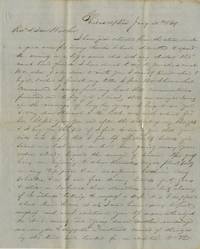
1849ref. List3737Philadelphia Pennsylvania 1849. Eight page letter measuring 8 x 10 pages appx. 1800 words. Fine condition. A lengthy and literary 1849 family letter from Robert Lind Philadelphia to his brother discussing enslavement and the growing sectional crisis California Gold Rush migration and Presbyterian intellectual life and including a remarkable inherited family narrative concerning a clandestine aristocratic marriage in pre-Revolutionary Ireland that ultimately forced the writer's grandfather into exile. Lind provides a rich cross-section of American intellectual and family life on the eve of the 1850s. He discusses the state of the church the movement of ministers westward the instability of clerical life and the increasingly volatile national debate over enslavement and sectionalism. The letter meditates extensively on the survival of the Union just months after the conclusion of the Mexican-American War and amid the gathering crisis that would soon erupt into the Compromise of 1850. Lind responds to his brother's pessimism about the future of the republic with an expression of moderate antebellum Unionism: "I am sorry to find you had such discouraging hopes of the Republic for my own part I don't think that even the subject of Slavery with all the violence of the fanatical Abolitionists of the North & the disunionists of the South will be able to divide us - the people of the U.S. in each and every direction love the Union too much to permit such a catastrophe". Lind captures an aspect of political belief widespread among educated Northerners in the late 1840s that controversy over enslavement was dangerous but ultimately containable because emotional attachment to the Union would remain stronger than sectional extremism. He condemns both radical abolitionism and Southern disunionism in nearly symmetrical language reflecting the outlook of conservative or moderate Northerners who viewed themselves as defenders of national stability rather than partisans of either section. Equally revealing is his discussion of John C. Calhoun who "has regarded the subject in a partial light so long that I give him the credit of honestly believing it a blessed Institution"-Lind attempts to understand Calhoun's ideology as a sincere product of his environment. Yet he immediately contrasts that worldview with what he sees as the inevitable moral direction of modern civilization: "we live in an age of progress & enlightenment - the sympathies of Christendom is being fast enlisted in favour of the black republic sentiment is decidedly opposed to its enslavement's enlargement or extension." Lind is not a radical abolitionist yet neither is he proslavery; he represents the uneasy center of antebellum Northern opinion still convinced in 1849 that compromise and national affection would ultimately prevent disunion. The letter is equally valuable for its vivid contemporary references. California dominates conversation in Philadelphia: "For the last few months this has been the engrossing topic of conversation a great many have shipped from this city for the El Dorado." One relative is preparing to leave for San Francisco "not to dig but to plant himself" there professionally as a physician. Lind also discusses assembling material for a biography of his father to be included in a major Presbyterian biographical work by the noted minister and historian William Buell Sprague. However the heart of the letter is the extraordinary anecdote occupying nearly a third of the manuscript. Lind recounts a family story newly uncovered during a visit to Ireland involving his grandfather a clandestine aristocratic marriage mistaken identity scandal and eventual exile from the country. According to the narrative a young Irish nobleman had fallen in love with a peasant girl but could not openly marry her without jeopardizing his inheritance. A secret marriage was arranged and Lind's grandfather became mistakenly implicated: "They employed this person who resembled him very much in appearance procured him a suit of clothes & horse just like his learned him the marriage service & they were married in a woods close by where Grandfather lodged." The consequences were devastating. Rumors spread that Reverend Lind had in fact secretly performed the illicit marriage ceremony and "The proofs were so strong against him . that his congregation ceased to visit his church & he was eventually compelled to leave the country." Only much later-nearly half a century after the Reverend's death-the truth finally emerged. Lind describes how an aged participant confessed the deception on his deathbed before assembled witnesses: "He wished to relieve his conscience that Mr. Lind had nothing to do in the matter but that it was him who had performed the service & consequently that he was the guilty man." The episode is an interesting example of transatlantic memory: an eighteenth-century Irish scandal survived orally within a Presbyterian emigrant family before being partially verified decades later through renewed contact with the old country. An exceptional and highly literary mid-nineteenth century family letter combining antebellum political commentary Presbyterian intellectual networks California Gold Rush migration and an unforgettably dramatic Irish emigration narrative. books
ref. DADAX0300251041New unknown
ref. DADAX0415572835New unknown
ref. DADAX0199261725New unknown
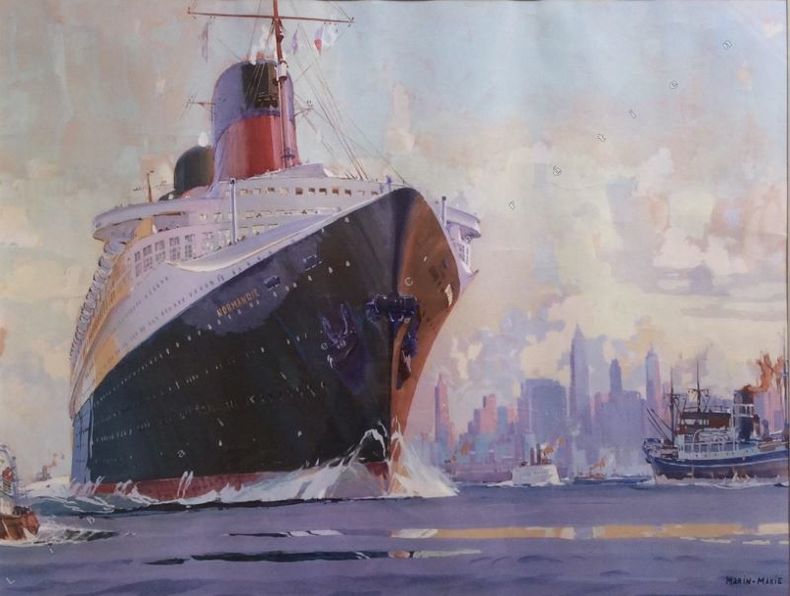
1960ref. 231601960 Affiche tirage offset signée en bas à droite dans la planche, (1960), 50 X 65 cm., encadrée.
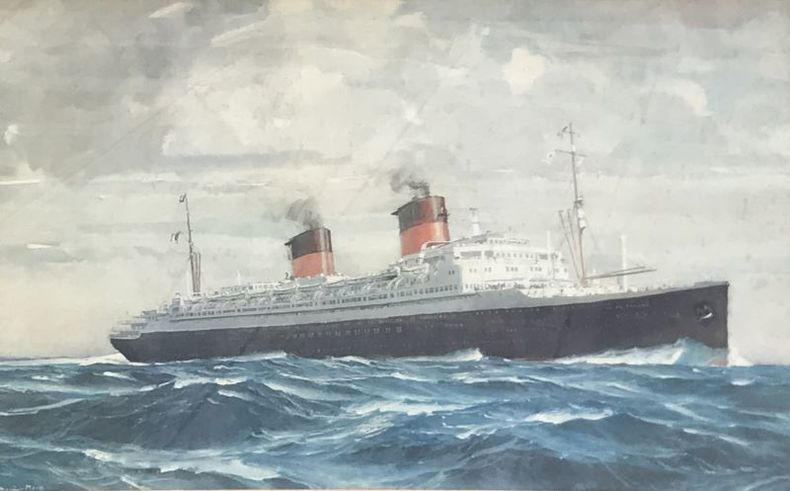
1950ref. 231371950 Estampe signée en bas à gauche dans la planche, (1950), 61 x 81 cm, encadrée
1935ref. 231361935 Estampe signée dans la planche, légendée et datée dans la planche en bas à droite, 1935, 48.5 x 76 cm., cadre d'origine de La Compagnie avec sa plaque en laiton gravée.
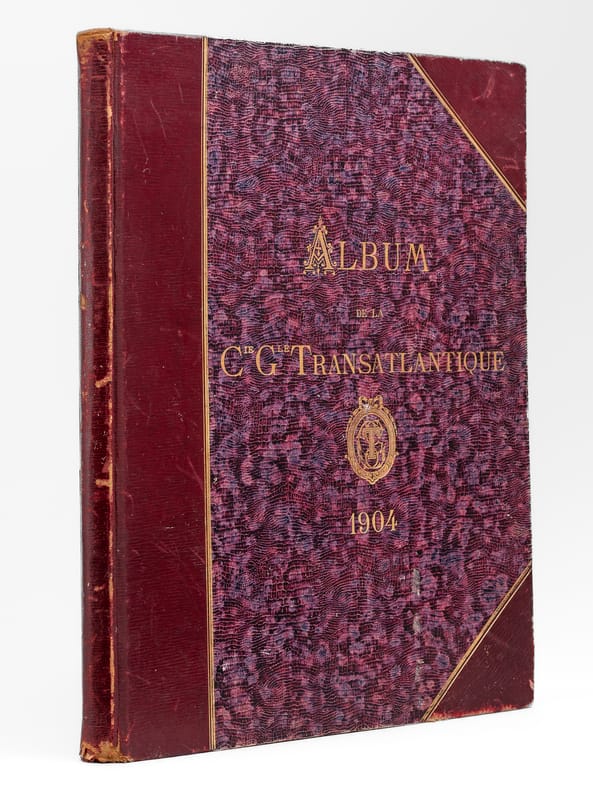
1904ref. 698591 vol. in-folio reliure de l'époque demi-cuir maroquiné bordeaux, double filet doré en mors et coins, s.n., Imprimerie Maréchal et Montorier, A. Maréchal Succr., Paris, 1904
ref. 17673Paris, Yves Gautier, 1965. In-folio, non paginé, en feuilles, couverture originale, étui éditeur de toile bleue (petites taches et frottements à l'étui, couverture insolée).
1950ref. 9752Paris Editions Blondel la Rougery 1950. Route map of the western Mediterranean and Northwest Africa 63.5 x 99 cm printed in three colours lined on linen. Shows the routes from Marseille and Bordeaux to Tunisia Alergira and Morocco with considerable detail of the road network inland. Decorative elements include a compass rose a matelot steering a ships wheel and a couple of steamships in the upper border. Map unknown
1965ref. 235911965 1 Gouache, aquarelle et crayon gras signé en bas à gauche, 1965, 65 x 50 cm.
1965ref. 23469St-Maur Yves Gautier-Jean Détienne 1965 1 St-Maur, Yves Gautier-Jean Détienne, 1965, in-folio, couverture titrée et rempliée.
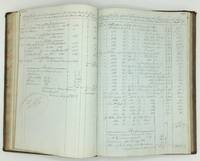
1852ref. 1338Original manuscript. 1852-1854. Folio 38 x 27cm. Full contemporary reverse calf with gilt morocco titles labels to the spine "Rough Sales Book / S & L / B". Marbling to page edges. Marbled endpapers with engraved label for "Baily Brothers Booksellers Stationers Account Book Manufacturers" London to the front pastedown. 172pp. of manuscript text in ink on red-ruled laid paper watermarked "W. King / 1850" followed by c.160pp. blank with a handful of pages torn out following the conclusion of the manuscript text section and another within the text. The majority of entries are in English with some in Spanish mostly written in the same hand. Condition is very good the binding firm with marking to the boards chipping to the head of the spine and a little wear to the extremities. The contents with a 3cm tear to the head of the first text page and two pages partially cut/torn away at the bottom are otherwise in good order. The ledger of a British sales agents operating in Panama during the mid-nineteenth century detailing the importation and sale of a wide variety European and South American goods into the country. The manuscript meticulously records the origin city/country importer ship the goods received and sold and the charges entailed for each shipment. A typical entry for example records the arrival of "gunpowder received per "Alexander" and sold on behalf of the Kames Gunpowder Company Glasgow" followed by details of the subsequent purchasers "J. D. Cordova" etc. and the charges/commissions taken by the agent including fees for landing expenses and "carriage to arsenal". Many of the entries describe large diverse cargoes combining both essential and luxury goods including: alpacas; chocolate pots; "41 cases of pickles and mustard"; lavender water; rocking chairs; a "copying machine"; cinnamon; scissors razors; bone buttons; horse brushes; compasses; gin; hatchets; bedsteads; looking glasses; children's toys; cloves; muslins; kegs of shot; cups and saucers; tobacco; machetes; claret; playing cards rat traps; "Aqua de Colonia" cologne; silk gloves; saddles; blunderbusses; padlocks; lace; pantaloons; "Jamaica rum"; almonds; vinegar; bonnets; sausages; gold frames; water closets; wash stands; champagne; mosquito nets; and much else besides. The origin ports include major European trade centres such as Liverpool and Glasgow but also include many South American ports such as Guayaquil Equador carrying beans cocoa coffee sugar and quinoa amongst other things; Buenaventura Colombia; Callao Peru carrying candlesticks coffee mills and bayonets; Lima Peru "bottled fruits" and cherry cordial; and Valparaiso Chile; as well as San Francisco and New York to the north. The importers themselves are also a mixture of British and Panamanian companies. A fascinating detailed insight into Panama's transatlantic and South American trade during the mid-nineteenth century. [Original manuscript]. hardcover
1962ref. 234831962 1 Huile sur toile signée en bas à gauche, titrée et datée au verso,1962, 87 x 114 cm.
1935ref. 22936ATLANTIQUE 1935 1 Maquette originale, gouaches, collages et photographies argentiques, 1935, in-folio porte-feuille demi-toile écrue en feuilles, couverture cartonnée, 24 pages.
1869ref. 316802Boston: Alfred Mudge and Sons 34 School Street 1869. First Edition. With 6 original mounted photographs. 57 pp. 1 vols. 8vo. Original burgundy cloth. Very good small nick and loss to upper spine. First Edition. With 6 original mounted photographs. 57 pp. 1 vols. 8vo. Celebration of the arrival of first transatlantic telegraphic cable on American shores with speeches of the dignitaries of Duxbury and Boston and a patriotic summary of the history of telegraphy; n appendix gives material on the cable fleet and press accounts. Alfred Mudge and Sons, 34 School Street unknown
1869ref. 316802Boston: Alfred Mudge and Sons 34 School Street 1869. First Edition. With 6 original mounted photographs. 57 pp. 1 vols. 8vo. Original burgundy cloth. Very good small nick and loss to upper spine. First Edition. With 6 original mounted photographs. 57 pp. 1 vols. 8vo. Celebration of the arrival of first transatlantic telegraphic cable on American shores with speeches of the dignitaries of Duxbury and Boston and a patriotic summary of the history of telegraphy; n appendix gives material on the cable fleet and press accounts. Alfred Mudge and Sons, 34 School Street unknown books
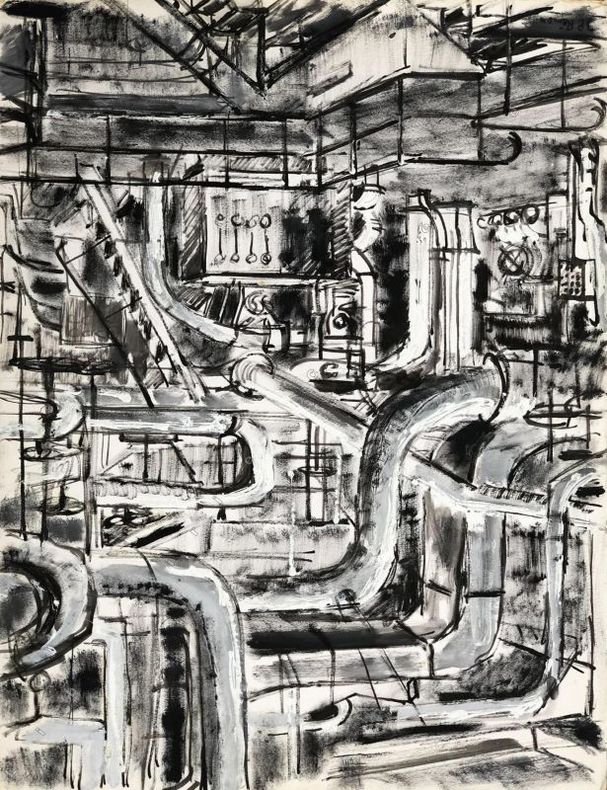
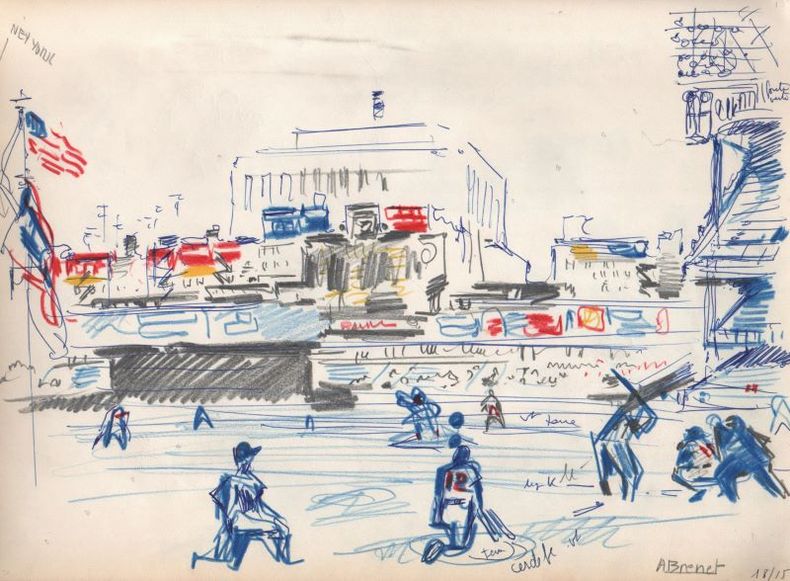
1958ref. 233201958 27 dessins signés, encres, mine de plomb, fusains et crayons de couleurs réunis dans un carnet de croquis à spirale, 1958, 27 x 36 cm,