19 448 résultats
19478vo., First Edition, with endpaper maps; elegantly bound in full navy crushed morocco, sides with gilt frame border, back with raised bands, second and fourth compartments ruled and lettered in gilt, all other compartments tooled in gilt with propeller motif, gilt top, hand-made endpapers, ribbon marker, custom-made slip-case, a most attractive copy ideal as a gift or for presentation. Marshal of the Royal Air Force Sir Arthur 'Bomber' Harris (1892-1984) was Commander in Chief Bomber Command from 1942 (when he replaced Richard Peirse) to 1945. Based on his experiences in London during the Blitz, Harris developed a belief in intensive incendiary bombing as a means not merely of destroying cities but of undermining civilian morale. His new concept of 'area bombing' was put into practice with the first 'thousand-bomber' raid on Cologne in May 1942. Like most large-scale innovations this was a major gamble, but its undoubted success (colossal damage inflicted for the loss of forty aircraft) paved the way for Britain's bombing strategy for the rest of the war. Eventually this policy (which remains controversial to this day) brought him into direct conflict with both Portal and Churchill, but Harris pursued it doggedly until the surrender. Arguably the greatest RAF commander of WWII, Harris was an outstanding and inspiring leader, achieving almost iconic status among staff and crews alike. After the war he refused a peerage but accepted a baronetcy in 1953. Enser, p.65.
réf. 116420Many of the photographs appear to have been taken at Vickers' Brooklands factory near Weybridge Surrey the famous banked race track is visible in many images and possibly also at the nearby Royal Aircraft Establishment Farnborough Hampshire. Nearly all are dated ranging from 1937 to 1946. The gelatin silver prints have been cropped to highlight the stationary aircraft; the resulting photographs are in a visually appealing panoramic format with most of them between 55 and 75 mm high some smaller some larger and approximately 190 mm wide. They are loosely mounted from three to five per page under clear celluloid sheets in a later commercial photograph album. The album is neither here nor there; apart from a crease near a short edge of one print the photographs are in excellent condition. Approximately 35 different aircraft are shown each represented by between two and five photographs taken from different angles. The verso of each print carries the inkstamp of the RTP Research and Technical Publications Photographic Section of variously the Air Ministry Ministry of Aircraft Production or Ministry of Supply. These stamps restricting reproduction are completed in manuscript with a reference number and date; at least one image is also stamped 'Secret'. The aircraft shown are: Vickers Wellesley Production; Armstrong Whitworth Whitley; Vickers B1/35 1939 1940 and 1941 models - these are prototypes for the Warwick; Vickers Wellington Mk II with and without experimental turret Mk III Mk IV Mk V Mk VIII an unidentified model with an experimental turret Mk X Mk XI Mk XII Gr Mk IV Mk XVI Mk XVII Mk XVIII and T Mk X; Vickers Warwick Mk I Mk I freighter Mk II ASR Mk I ASR Mk I Tropical C Mk I C Mk III Gr Mk II and Gr Mk V; De Havilland Vampire Mk I Mk II Prototype; Westland Welkin Prototype F Mk I F Mk 2; and Vultee Vengeance Mk I. unknown
réf. 3234Archive. 7 pieces. 1938 to 1939. A grouping of seven pieces concerning Frederic E. Humphreys the first Army officer to fly solo. These pieces arranged in chronological order mention the thirtieth anniversary of Humphreys first flight.1 TLS. 1pp. 8 x 10. July 18 1938. War Department. A typed letter signed J Totten on War Department letterhead concerning Special Recognition for Colonel F.E. Humphreys: Reference is made to your letter of November 12 1937 recommending that some form of special recognition be awarded Colonel Frederic E. Humphreys New York National Guard for being the first officer of the United States Regular Army to fly a plane aloneit is proposed to make a suitable award to Colonel Humphreys. By order of the Secretary of War.2 TL. 1pp. 8 x 10. July 18 1938. War Department. A typed letter that is an unsigned copy of #1.3 TDS. 1pp. 8 x 10. August 3 1938. No place. A typed letter signed Ames T. Brown indicating that he mailed a letter to Louis L. Pendleton concerning the 30th anniversary of the flight.4 TD. 1pp. 8 x 10. August 4 1938. Camp Smith Peekskill. A typed document mentioning that it is to be addressed to Colonel Louis L. Pendleton.5 ALS. 1pp. 8 x 10. August 23 38. New York City. An autograph letter signed L.L. Pendleton Colonel addressed to Lieutenant Humphreys: Please not attached papers which please return to me at your convenience. The Mills of the Gods grind slow it would seem but better late than never also applies. I hope I will be around next summer to see what they really do then!6 TLS. 1pp. 7 x 9. April 5 1939. Aberdeen Proving Ground. A typed letter signed C.M. on Office of the Commanding Officer Aberdeen Proving Ground stationery. He wrote to Humphreys: It certainly was nice to get your pleasant letter of April 3rdmy memory is quite clear as to the time you and Lahm were trying out the first Wright airplane. I am glad you enjoyed the bulletin or class letter but I prepared it quite a while before it was issued and made some serious omissionsThere is a good article in the Sperryscope Vol 8 no 10 just out by Lahm which mentions the trying experience of your pamphlet. Call up the Sperryscope Co. and get a copy from Gillmor who is an old friend of mine. Lahm received the first flying lesson but Humphreys made the first solo flight just before Lahm made his flight.7 Card. 1pp. No date. Governors Island NY. A card imprinted Colonel Earl McFarland and written on in pencil My best wishes and I hope to see you soon. Governors Island NY. unknown
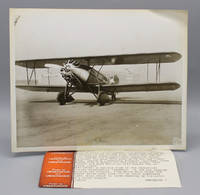
1929réf. 17575Underwood and Underwood n.d. 1929 On January 2 1929 Evelyn "Bobbi" Trout 1906 – 2003 set the women's endurance flight record with a time of twelve hours and eleven minutes. The record didn't last a month however before being beaten by Elinor Smith 1911 – 2010 by over an hour. The next month Trout reclaimed the record with a seventeen-hour flight; in April Smith smashed the record with a time of twenty-six hours. Trout and Smith's rivalry led them to collaboration: while participating in the Women's Transcontinental Air Derby in the summer of 1929 they agreed to attempt a month-long endurance flight. The present photo commemorates their first attempt which took place in November of 1929. Though Trout and Smith were able to successfully refuel the plane while in the air three times mechanical issues grounded them after forty-two hours. They set the women's endurance flight record with the time. The photograph shows aviator Bobbi Trout warming up the motor of a Commercial Aircraft Corporation "Sunbeam" plane at the Los Angeles Metropolitan Airport where Trout and Elinor Smith took off on their refueling endurance flight. The typewritten commentary suggests the headline "BOBBIE sic TROUT AND ELEANOR sic SMITH BURY THE HATCHET IN PREPARATION FOR REFUELING ENDURANCE FLIGHT. Photograph 10" x 8" with leaf of typewritten commentary by Underwood and Underwood adhered to verso at bottom edge. Some toning to edges and verso and some wear to the commentary leaf. Very good. Both Trout and Smith had illustrious aviation careers. Trout set an altitude record for light-class aircraft in June of 1929 and set another women's endurance flight record in 1931 by spending over 122 hours in the air with actress Edna Mae Cooper. Alongside Amelia Earhart Phoebe Omlie Louise Thaden and Blanche Noyes Trout co-founded the Ninety-Nines an organization for women pilots. Trout also co-founded founded the Women's Air Reserve with Pancho Barnes. Underwood and Underwood,
1910réf. 67316Various places:: Various publishers 1910-1945. publisher's original wrappers. Generally fine. Folio. Illustrated. Included are: L'Aerophile 4 issues 1911; Aero--America's Aviation Weekly 1 issue 1910; 15 issues 1911; 6 issues 1912; and 1 issue 1913; Fly: The National Aeronautic Monthly 3 issues 1912; Aerial Age Weekly 1 issue 1918; Vie au Grand Air 1 issue 1912; Flying Aces 9 isses 1941-1945; Flight: First Aero Weekly in the World 10 issues 1912-1914; and Aero and Hydro 8 issues 1911-1914. Various publishers, unknown
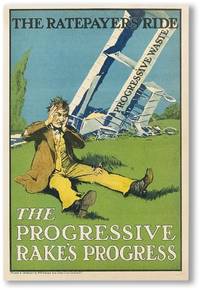
1914réf. 83910London: W.H. Smith & Son N.d. ca 1914. Lithograph in colors 77cm x 50cm ca. 30" x 20". Mild toning in margins with subtle repair to closed tears; Near Fine. Professionally mounted on archival linen. An anti-Progressive satirical image using a crash-landed bi-plane to symbolize the recklessness of Asquith's Liberal government; the unfortunate banged-up chap at center appears to be a caricature of David Lloyd George Asquith's Chancellor of the Exchequer and later Prime Minister. The artist is unidentified but possibly Edward Huskinson long-time editor of The Tattler and a popular Conservative cartoonist of the period. W.H. Smith & Son unknown
1918réf. 40619New York: Y.M.C.A. Training School 1918. Octavo. Three ring notebook filled with unlined loose-leaf paper. Handwritten notes made by unknown author. Date on first notes paper is Sept. 7th - 1918. The student who kept this notebook included many drawings of implements and mechanical parts of airplanes. Also included in the notebook is "the Compound Nozzle Explained" a short 14 pages pamphlet from 1915. The student punched holes and added it to his course notes. The notebook covers two courses: Airplane Motors with Professor Hall and Plane School with Mr. Chedester. In the back of the notebook there is a bibliography a list of tools needed to apply for positions in an airplane factory and a long list of questions the student recorded to ask after lectures. Several clippings from magazines or other sources are included throughout. The student who kept this notebook would have been well prepared for a career in the U.S. Air Service or in a factory. According to the U.S. Labor Department Training Bulletin see below a graduate of the Y.M.C.A. Airplane Mechanics School could expect to earn between $35 and $50 per week to start up from $12 per week in nonessential industry. The training program lasted for 5 weeks 6 days per week. There was also a night program that lasted for 10 weeks. "The West Side Y.M.C.A. Airplane School was established in November 1917 with the object to supply a crying need for men with some knowledge of airplanes both in the Air Service and in the factories. At that time the Government made a call for 10000 airplane mechanics who were urgently needed for this service. In all probability there were less than 1500 mechanics in the whole country who had any experience with airplanes in the field. The Y.M.C.A. embarked upon an extensive advertising program using newspapers magazines and billboards. The results were most gratifying as the school has always had a waiting list regardless of the increased floor space and additional capacity. Inquire for more details. Y.M.C.A. Training School hardcover
réf. 3234Archive. 7 pieces. 1938 to 1939. A grouping of seven pieces concerning Frederic E. Humphreys the first Army officer to fly solo. These pieces arranged in chronological order mention the thirtieth anniversary of Humphreys first flight.1 TLS. 1pp. 8 x 10. July 18 1938. War Department. A typed letter signed J Totten on War Department letterhead concerning Special Recognition for Colonel F.E. Humphreys: Reference is made to your letter of November 12 1937 recommending that some form of special recognition be awarded Colonel Frederic E. Humphreys New York National Guard for being the first officer of the United States Regular Army to fly a plane aloneit is proposed to make a suitable award to Colonel Humphreys. By order of the Secretary of War.2 TL. 1pp. 8 x 10. July 18 1938. War Department. A typed letter that is an unsigned copy of #1.3 TDS. 1pp. 8 x 10. August 3 1938. No place. A typed letter signed Ames T. Brown indicating that he mailed a letter to Louis L. Pendleton concerning the 30th anniversary of the flight.4 TD. 1pp. 8 x 10. August 4 1938. Camp Smith Peekskill. A typed document mentioning that it is to be addressed to Colonel Louis L. Pendleton.5 ALS. 1pp. 8 x 10. August 23 38. New York City. An autograph letter signed L.L. Pendleton Colonel addressed to Lieutenant Humphreys: Please not attached papers which please return to me at your convenience. The Mills of the Gods grind slow it would seem but better late than never also applies. I hope I will be around next summer to see what they really do then!6 TLS. 1pp. 7 x 9. April 5 1939. Aberdeen Proving Ground. A typed letter signed C.M. on Office of the Commanding Officer Aberdeen Proving Ground stationery. He wrote to Humphreys: It certainly was nice to get your pleasant letter of April 3rdmy memory is quite clear as to the time you and Lahm were trying out the first Wright airplane. I am glad you enjoyed the bulletin or class letter but I prepared it quite a while before it was issued and made some serious omissionsThere is a good article in the Sperryscope Vol 8 no 10 just out by Lahm which mentions the trying experience of your pamphlet. Call up the Sperryscope Co. and get a copy from Gillmor who is an old friend of mine. Lahm received the first flying lesson but Humphreys made the first solo flight just before Lahm made his flight.7 Card. 1pp. No date. Governors Island NY. A card imprinted Colonel Earl McFarland and written on in pencil My best wishes and I hope to see you soon. Governors Island NY. unknown books
1929réf. 17575Underwood and Underwood n.d. 1929 On January 2 1929 Evelyn "Bobbi" Trout 1906 – 2003 set the women's endurance flight record with a time of twelve hours and eleven minutes. The record didn't last a month however before being beaten by Elinor Smith 1911 – 2010 by over an hour. The next month Trout reclaimed the record with a seventeen-hour flight; in April Smith smashed the record with a time of twenty-six hours. Trout and Smith's rivalry led them to collaboration: while participating in the Women's Transcontinental Air Derby in the summer of 1929 they agreed to attempt a month-long endurance flight. The present photo commemorates their first attempt which took place in November of 1929. Though Trout and Smith were able to successfully refuel the plane while in the air three times mechanical issues grounded them after forty-two hours. They set the women's endurance flight record with the time. The photograph shows aviator Bobbi Trout warming up the motor of a Commercial Aircraft Corporation "Sunbeam" plane at the Los Angeles Metropolitan Airport where Trout and Elinor Smith took off on their refueling endurance flight. The typewritten commentary suggests the headline "BOBBIE sic TROUT AND ELEANOR sic SMITH BURY THE HATCHET IN PREPARATION FOR REFUELING ENDURANCE FLIGHT. Photograph 10" x 8" with leaf of typewritten commentary by Underwood and Underwood adhered to verso at bottom edge. Some toning to edges and verso and some wear to the commentary leaf. Very good. Both Trout and Smith had illustrious aviation careers. Trout set an altitude record for light-class aircraft in June of 1929 and set another women's endurance flight record in 1931 by spending over 122 hours in the air with actress Edna Mae Cooper. Alongside Amelia Earhart Phoebe Omlie Louise Thaden and Blanche Noyes Trout co-founded the Ninety-Nines an organization for women pilots. Trout also co-founded founded the Women's Air Reserve with Pancho Barnes. Underwood and Underwood, books
1914réf. 83910London: W.H. Smith & Son N.d. ca 1914. Lithograph in colors 77cm x 50cm ca. 30" x 20". Mild toning in margins with subtle repair to closed tears; Near Fine. Professionally mounted on archival linen. An anti-Progressive satirical image using a crash-landed bi-plane to symbolize the recklessness of Asquith's Liberal government; the unfortunate banged-up chap at center appears to be a caricature of David Lloyd George Asquith's Chancellor of the Exchequer and later Prime Minister. The artist is unidentified but possibly Edward Huskinson long-time editor of The Tattler and a popular Conservative cartoonist of the period. W.H. Smith & Son unknown books
1935réf. 183918London: Rolls-Royce Limited 1935. A detailed sales brochure introducing the dimensions weights performance statistics and armaments of a variety of bombers attack fighters and flying boats. It also features five planes in its "experimental section" such as the tail-less Pterodactyl V and the Gloster Gnatsnapper naval biplane. The aircraft profiled in the brochure include the single-seater Firefly IIM mostly used by the Belgian Air Force; the Fairey IIIF bomber used to equip RAF squadrons in Egypt Sudan and Aden; and the short-lived Supermarine Scapa flying boat. Another Supermarine the S.6 is depicted in colour opposite the introduction. This plane won the Schneider Trophy in 1929 and 1931. In the latter competition it both won the prize for the UK and broke the world speed record twice. Folio. Colour illustration of the Supermarine Rolls-Royce S.6 tipped in on title page verso halftone photographic illustrations in text; title page printed in black and blue text in English French and Spanish. Original buff paper wrappers wire-stitched and with metal posts as issued front wrapper lettered and decorated in brown and blind fore-edge tabs lettered in black and strengthened with linen on verso. Wrappers worn especially at edges spine repaired black ink stain on front cover staples rusted contents clean: a very good copy. Brockett p. 240 for the 1931 edition. unknown
réf. AEROS105P., Floury, 1922. Grand in-4, 47pp. chiffrées, 110 pl. h.t.(19 en couleurs), demi-chagrin à coins, titre doré. Couvertures et dos conservés. Tiré à 500 exemplaires numérotés. Manque de papier au pli de la planche N° 28: Affiche de la première ascension équestre de Poitevin au Champ de Mars, le 7 Juillet 1850.(voir photo).
194324 pages. "Dedicated to Sgt. Pilot Bernt Barge, to the 34 S.F.T.S. of the R.A.F., and to all those pilots who know..." - from title page. The author's colour illustrations humourously present the problems (gremlins) which could befall WWII aviators. Unmarked. Contents clean and bright. Light external soiling and peripheral wear. Binding sound. A high-quality copy of this vintage item. Book
1945réf. 4-946GPO 1945 1945. 1st ed. About 500p. Photos. Illustrations. Heavy. In original Printed binder. Lower corner missing from first page. Near Fine Copy. 1st. Hardcover. Near Fine. GPO, 1945 hardcover
1969réf. 2091502135702217Jijitsushinsha 1969. Soft Cover. Fine. The book is in fine condition. Jijitsushinsha paperback
1951réf. 15620Evans Brothers 1951. 8vo. First Edition with portrait frontispiece and 17 plates on 12; handsomely bound in full navy crushed morocco sides with gilt frame border back with raised bands ruled in gilt second and third compartments lettered and ruled in gilt all other compartments tooled in gilt with propeller motif hand-made endpapers a most attractive copy ideal as a gift or for presentation. The moving story of RAF Bomber Command's most famous squadron and Operation CHASTISE arguably the most famous air exploit of WWII. This book formed the basis of Michael Anderson's classic feature film 1954 of the same name starring Michael Redgrave Richard Todd and Nigel Stock. The stirring 'Dam Busters March' written by Eric Coates as the theme to the movie was almost immediately adopted as an official march of the Royal Air Force. Enser p.64; Mulholland & Jordan B121 Evans Brothers, hardcover
1920réf. 127751920. Early aviation technical manuscript explaining aircraft engine operation ignition systems and electrical wiring during the formative decades of powered flight. Produced in the early 1920s when aviation technology was transitioning from experimental wartime aircraft to increasingly standardized civil and military aeronautical engineering the manuscript documents the mechanical knowledge required to operate and maintain contemporary aircraft engines and electrical systems. The notebook focuses particularly on ignition circuitry engine starting procedures and performance specifications subjects central to the reliability and safety of early aviation machinery. References to the Jaguar engine a widely used aircraft powerplant of the interwar period situate the manuscript within the technical environment of early twentieth century aviation engineering and aircraft maintenance training. Manuscript aviation engineering notebook. Fourteen handwritten pages with numerous technical drawings and labeled diagrams explaining aircraft systems. The manuscript includes sections describing "general data" relating to aircraft performance characteristics such as speed and weight along with detailed mechanical illustrations including a "main wiring diagram." Several pages explain engine starting procedures and ignition circuitry. One labeled sequence reads: "Jaguar starting. See that both the engine magnets are switched off and that the throttle is in the slow running position. 2. With gas starter. Connect the gas coupling of the starter to the lead to the distributor of one of the two engine magnets. See that H1 lead switch from gas starter mag to engine mag is switched off. 3. Start the gas starter." Another passage describing a technical diagram states: "The ignition system is a highly developed form of battery coil ignition designed as an integral part of the engine. The general layout comprises a direct current generated gear driven from the engine." The manuscript combines written explanation with hand drawn schematics intended to clarify the layout and function of aircraft electrical and ignition components. During the early 1920s aviation expanded rapidly following the technological acceleration of World War I when aircraft design engine power and onboard systems developed at unprecedented speed. Technical manuals and engineering notebooks such as this formed an essential part of the training culture surrounding aircraft mechanics pilots and aeronautical engineers who needed to understand increasingly complex electrical systems ignition mechanisms and engine starting procedures. The attention given to wiring diagrams and ignition circuitry reflects the growing sophistication of aircraft power plants and onboard electrical networks during the interwar period. Surviving manuscript documentation of this kind provides insight into how aviation technology was taught recorded and transmitted during a period when aeronautical engineering was still developing standardized instructional literature. Light handling wear with minor age toning; overall excellent condition. A detailed early technical manuscript documenting the mechanical knowledge underlying inter war aviation technology. unknown
1944réf. 11915San Diego CA: Consolidated Vultee Aircraft Corporation. Near Fine with no dust jacket. 1944. First Edition; First Printing. Hardcover. Appear unread. ; 4to 11" - 13" tall . Consolidated Vultee Aircraft Corporation hardcover
1920réf. 127751920. Early aviation technical manuscript explaining aircraft engine operation ignition systems and electrical wiring during the formative decades of powered flight. Produced in the early 1920s when aviation technology was transitioning from experimental wartime aircraft to increasingly standardized civil and military aeronautical engineering the manuscript documents the mechanical knowledge required to operate and maintain contemporary aircraft engines and electrical systems. The notebook focuses particularly on ignition circuitry engine starting procedures and performance specifications subjects central to the reliability and safety of early aviation machinery. References to the Jaguar engine a widely used aircraft powerplant of the interwar period situate the manuscript within the technical environment of early twentieth century aviation engineering and aircraft maintenance training. Manuscript aviation engineering notebook. Fourteen handwritten pages with numerous technical drawings and labeled diagrams explaining aircraft systems. The manuscript includes sections describing "general data" relating to aircraft performance characteristics such as speed and weight along with detailed mechanical illustrations including a "main wiring diagram." Several pages explain engine starting procedures and ignition circuitry. One labeled sequence reads: "Jaguar starting. See that both the engine magnets are switched off and that the throttle is in the slow running position. 2. With gas starter. Connect the gas coupling of the starter to the lead to the distributor of one of the two engine magnets. See that H1 lead switch from gas starter mag to engine mag is switched off. 3. Start the gas starter." Another passage describing a technical diagram states: "The ignition system is a highly developed form of battery coil ignition designed as an integral part of the engine. The general layout comprises a direct current generated gear driven from the engine." The manuscript combines written explanation with hand drawn schematics intended to clarify the layout and function of aircraft electrical and ignition components. During the early 1920s aviation expanded rapidly following the technological acceleration of World War I when aircraft design engine power and onboard systems developed at unprecedented speed. Technical manuals and engineering notebooks such as this formed an essential part of the training culture surrounding aircraft mechanics pilots and aeronautical engineers who needed to understand increasingly complex electrical systems ignition mechanisms and engine starting procedures. The attention given to wiring diagrams and ignition circuitry reflects the growing sophistication of aircraft power plants and onboard electrical networks during the interwar period. Surviving manuscript documentation of this kind provides insight into how aviation technology was taught recorded and transmitted during a period when aeronautical engineering was still developing standardized instructional literature. Light handling wear with minor age toning; overall excellent condition. A detailed early technical manuscript documenting the mechanical knowledge underlying inter war aviation technology. unknown books
1996réf. 25300Air Research Publications Walton-on-Thames 1996-2004. 5 vols. 8vo. First Edition with photographs in the text; cloth gilt backs a near fine set in unclipped dustwrapper. The set comprises: Vol. I: September 1939 to September 1940 1996; Vol. 2: September 1940 to December 1941 1998; Vol. 3: January 1942 to June 1943 2001; Vol. 4: July 1943 to June 1944 2002; Vol. 5: June 1944 to May 1945 2004. Complete sets of the first edition of this standard reference are very scarce. Air Research Publications, [Walton-on-Thames, hardcover
2011réf. SBS-9781409411482ASHGATE 2011. Hardcover. New. ASHGATE hardcover
réf. N19White Mouse Editions, E.P.A., 1991. Grand in-4 à l'italienne, 312pp., nombr. photos et dessins in-t., cartonnage, premier plat illustré d'un motif automobile en relief.