2 309 résultats
1955réf. 008624Paris Tériade 1955 in folio En feuilles, couverture rempliée, chemise et étui éditeur
1939réf. 1594941939. AUTOMOBILES. ACME Production Colors. WITH Rogers Automotive Color Mixing. 2 volumes. Thick 4to. 270 x 210 mm bound in original embossed black and maroon expandable binders respectively with company logos. Detroit: Acme White Lead & Color Works 1939-48. First Edition of two scarce automotive colour sample books recording automobile colours in the years preceding and following World War II with hundreds of paint samples arranged in sections separated by tabs for various cars: Buick Cadillac Chevrolet Chrysler Dodge Lincoln Oldsmobile Packard Plymouth and more. The Acme White Lead & Color Works was a pioneering developer of the first automotive lacquers besides black a repertoire of colour that made the company an auto industry leader. Sherwin-Williams acquired Acme in 1920. unknown books
40 pages. Features: Great cover photo of wild-haired Albert Einstein in leather jacket; Photo of swastika atop smoke stack of New York hospital power plant on the East River between 70th and 71st; Photo of Mr. & Mrs. David Hearst; photo of Pinky Tomlin and his bride; Photo of Joan Bennett wounded on movie set by a bayonet; Great photo of FDR in limo in Gainesville, Georgia surrounded by crowd; Concern over Japanese fishing off Alaska; Photo of Dr. Seyss-Inquart with Hitler; One-page article on Einstein includes photo of his relaxing chair, work desk and Princeton home; Five photos of famous racehorse Man o' War; Nice one-page photo ad for the Chrysler Royal car; Nice one-page, two-color Chesapeake and Ohio ad features Ohio's "Cheese Corridor"; Photo of crowd of Akron Goodrich workers protesting wages; Photo of a 42-passenger 'Ensign' built for Imperial Airways; Handsome color Packard auto ad on back cover features illustration of well-dressed couple. Somewhat above-average wear. Unmarked. Articles clipped from pages 15, 16 and 39. One-third of table of contents page has been removed. A worthy vintage copy Book
1719réf. 62401New York NY Stamford CT & Reading & Chambersburg PA: Victor Page Motors Corporation 522 Fifth Ave. Zollinger Motor Car Co. N. Lazarnick Commercial Photographers; Leland G. Evans 24 N. Main St. Photographers 1917-1923. 4to. 67 leaves unnumbered or separately numbered in sections including 38 silver gelatin photographs a couple are reproductions of documents nearly all are linen-backed some mounted on stubs at gutter margin sized from 8 x 10 in. up to 8.5 x 11 in. 4 technical drawing blueprints for engine 2 smaller photos inserted in mylar pockets Supplementary Stock Issue announcement dittoed TLS on blue-tinted letterhead for the Beadon Service Inc. dealership indicating 5 sales assorted other ephemera including dittoed TLS announcements for Smith Motor Truck Corp. dated 1917. Flexible black calf 3-ring binder gilt lettering stamped on front cover wear rubbing front hinge split interior thumbing occasional dustsoiling still VG exemplar w/ signed introduction by Victor W. Page; together with two mounted silver gelatin photographs sized 8 x 10 on 11.5 x 13.5 in. studio mounts w/ embossed photographer’s imprint in lower right corner depicting future Zollinger Motors Co. dealership locations w/ billboards for Dodge Bros. and Buick minor edgewear some minor warping still VG bright images. An historically important survivor dealership sales brochure and album for the short-lived Victor W. Page Motors Corp. developed and built with the patented innovations of Victor W. Page 1885-1947 a pioneering automotive and aeronautical specialist and inventor. Following World War I Page left his position as the chief Aeronautical Engineering Officer in France to found the Victor W. Page Motors Corp. intended to produce over 300000 automobiles a year including the Aero-Type Four featuring his patented air-cooled motor suspension system chassis and cutaway seats. By January 1922 he was able to exhibit at the New York Auto Show with original photographs included in this dealership album of two couple sedans two convertible speedsters a display chassis and a body for the Aero-Type Four. The automobiles targeted the $ 1250- $ 1750 price range and featured steel dixc wheels contoured shell hood and fenders built with liberal amounts of aluminum.The first 15 automobiles were built in a Liberty Engine Factory including the ground-breaking 30 horsepower 4-cylinder engine featured his patented tilted steering wheel system and disc brakes. The body and chassis were built in Farmingdale MA and the engines were assembled in New York for an eventual production of just 15 cars and none survived after the liquidation auction in 1927. Page had prior experience with automobiles and had actually built 25 total cars with his earlier company the Page Motor Vehicle Co. of Providence RI which closed at the entry of the U.S. into World War I. Page in his second company as shown here intended a huge stock offering but unfortunately trusted the less than scrupulous grifter Charles Beadon to sell the stock whose salesmen ended up embezzling all dividends and profits. Some of the eary investors traveled to the Stamford CT plant to get their money back and Beadon sued him. After years of litigation the company was dissolved and all properties equipment and assets sold off. Unfortunately none of the Victor W. Page automobiles survive and this cataloguer could find no similar surviving piece of sales literature or photographs as this item. Lazarnick 1879-1955 was a pioneering automotive photographer whose images captured the development of motor vehicles form the early 1900’s to the late 1920’s and covered many of the Vanderbilt Cup Races photographed the presidential campaigns of Taft McKinley & Roosevelt as well as capturing such notables as Steinmetz Edison Oldfield and Rickenbacker. See: Frank C. Derato Victor W. Page Automotive and Aviation Pioneer 1991; John Brockmann Victor W. Page’s Early Twentieth-Century Automotive and Aviation Books: “Practical Books for Practical Men” Jounral of Business and Technical Communication Vol. 10 No. 3 July 1996 pp. 285-305; Howard Kroplick Nathan Lazarnick: The Pioneer of Automotive Photography Vanderbilt Cup Races March 9 2013. Victor Page Motors Corporation, 522 Fifth Ave., [Zollinger Motor Car Co., N. Lazarnick, Commercial Photographers; Leland G. Eva hardcover
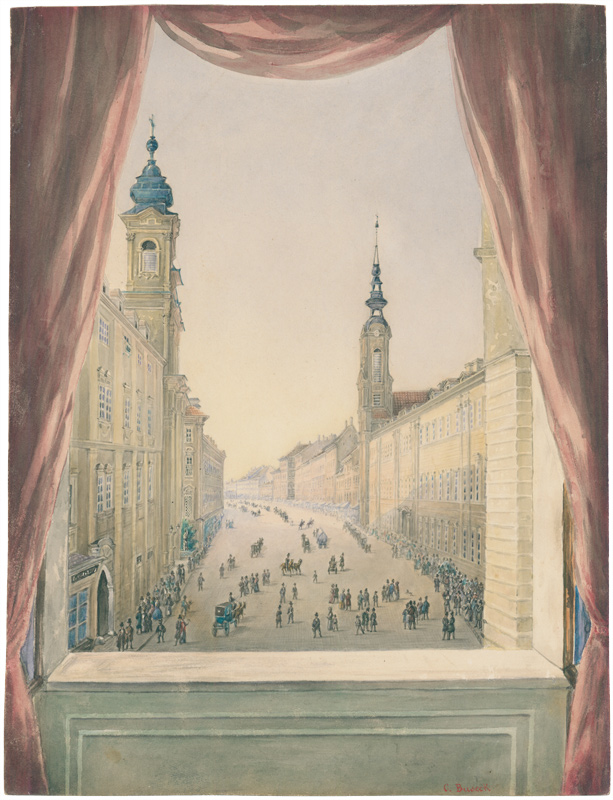
réf. 060-Eo.J. Aquarell über Bleistift, auf Zeichenkarton, rechts unten signiert ?C. Buseck?. 25,8:19,4 cm.
1907réf. AE4-1821907. Silver prints 22. A fascinating collection of photographs documenting the first year Camp Moodna a "street car colony" in Mountainville New York which served as a summer camp for impoverished New York City women. Under the auspices of the Downtown Ethical Society Camp Moodna was founded in 1907 by social worker Rose Gruening "The Angel of Grand Street" and it consisted of about twenty "old horse cars taken from the barns of the Metropolitan Street Railway to the mountains of Orange County" housing a different group of women each week. Camp Moodna was named for a nearby body of water seen in a number of the present photos and its genesis was described in a lengthy 1907 New York Times article "Abandoned Horse Cars Make Summer Hotel". After the success of a similar summer camp for NYC's young men Gruening wanted to create a similar program for young women. However "tent life wouldn't do; for a tent has no guardian doors that girls could lock at night and all manner of crawly things could creep under the canvas and bring on attacks of the fidgets." So "twenty perfect specimens of the classical age in New York transportation were unearthed from beneath a deep strata of dust and cobwebs in one of the barns of the Metropolitan Street Railway Company carried into the mountainland of Orange County and set upon a hillside near a beautiful babbling brook." Transporting the trollies was "no Lilliputian task." The trollies had all been stripped of their wheels before being donated so they were each 3800 pounds of dead-weight. However a flat low-bodied wagon a big team of horses and a gang of husky men with crowbars and jackscrews finally got all the potential Summer homes loaded upon Erie Railroad flatcars." And when they got to Mountainville they were transformed into two-room apartments of parlor and bedroom. Two of the others were made into diningrooms another into a kitchen and still another into a hospital. In 1925 Camp Moodna was donated to the Grand Street Settlement in 1925 and remained in Mountainville until 1955 when flooding from Hurricane Diane forced it to relocate to East Stroudsburg Pennsylvania. It was later sold to fund Grand Street's Lower East Side community center located at 80 Pitt Street. From 4 1/2 x 2 1/2 inches to 6 x 8 inches ; A few printed 1930s. unknown
1812réf. 117961812 toile saumon. (un manque de qq. cms à 1 des pliures de la f. 4). Carte en 6 feuilles, 164x 164 cms, P. P.A.F. Tardieu, 1812,
réf. 15226Technical manuscript in French describing in great detail turn-of-the-century automobile technology and car engine mechanics contained in an 8" x 10" notebook 54 pages early 20th century. The manuscript is illustrated throughout with hand-drawn schematics and diagrams and headings. The notebook covers the basic concepts necessary to understand an automotive engine "Elementary Mechanical Concepts" "Elementary Concepts of Electricity" etc. This notebook includes handwritten descriptions of the Hispano engine a groundbreaking vehicle maker which begun production in 1902. "In the engine of the Hispano 12 cylinder in V with each of the rows composed of a single aluminium block which includes the combustion chamber. The valves are adjusted when warm and are made of nitrided steel." Other notes include vehicle anatomy such as "Vehicle crank shaft for 12 cylinder engines" "Carborators" "Cooling systems" "Starting system including spark plug and magneto" coachbuilder including a Hispano-Suiza. Automobile early manuscript with detailed explanation and drawings of engine carburetor magneto etc. unknown books
réf. 42696London 1795. Folio 410 x 160 mm 19 pages of inventory verso of last leaf blank stitched in contemporary marbled wrappers corners a little dog-eared. A fascinating insight into the stock of a late eighteenth-century coach maker. The inventory was taken by Spurrier & Phipps of Copthall Court Thorognorton Street at which they valued the entire stock at £27824s. It supplies details of items in the coach makers workshop timber lofts harness loft painters loft wheelers shop blacksmith shop and stables. All the various pieces for making a coach are listed along with harness etc. Mr Waterfield also hired horses and an inventory of these and the people who hired them are also listed. London, 1795 unknown
réf. 57813Antwerpen -, WAFT Gallery, 2021 4 hardcover books in a luxury slipcase, 30 x 30 x 10 cm, 770 pages, fine set! Strictly limited to 300 numbered copies. 35 35 14 cm : 9.5kg. ***THE PRESS SAYS BEST BOOK EVER!!!! .
1900réf. 013582305 Flinders Lane Melbourne: The Thomson Motor Car Ltd 1900. 1st Edition . Soft cover. Near Fine. 8vo - over 7¾ - 9¾" tall. Printed by Syd Day 16 Wrights lane Melbourne. Covers crisp and fun faded to rear cover for 2cm around the top and stapled edge. Map of Australia on rear cover with picture of the Thomson car in the center. Sketch of the New light model to inside of rear cover. A Day by day account of the first cross country journey in Australia. To be followed by such greats as Francis Birtles and Michael Terry. The Thomson Motor Car Ltd paperback
Telephone Talk was the glossy bimonthly publication of the British Columbia Telephone Company. It was written by employees for employees to present information of interest to those engaged in the plant, traffic, commercial, operating, accounting and other departments of the service. Each issue is replete with black and white photos and information on topics such as: company, industry and technological news, traffic levels, expansion plans, personnel announcements, publicity and social events, deaths, weddings, lists of exchanges, and more. As such, these issues serve as a vital preserve of rare and fascinating British Columbia history. This volume covers topics including: Photo of new office in Victoria; Advances in rates; Increased Rates in Manitoba; Telephoning across the Atlantic; Exchanges ranked in order of per cent good toll calls, November 1911; Statement of development - number of phones operating in each exchange as of 1 December 1911; Cover photo of Grand Forks Switchboard; Photo montage of underground work at Victoria; Birth of the Telephone - 3 page article; Mr. F.J. MacGougan; Photo of types of protected terminals; Vancouver Switchboard photos from 1908 and 1898; Great 2-page photo of the huge 'A' switchboard at Seymour; Load Curve Graph of Seymour Office; Cut-over of Victoria Plant - new epoch in phone history of B.C.'s capital; Vancouver Island Toll Rates; Special Victoria Issue - photo montage of city and district officials; Photo of New B.C. Office; Table showing # of phones in Victoria since 1880; Photos of underground work in Victoria; May 1880 list of Victoria subscribers; 1890 list of subscribers; cable-laying scenes from last September; Nanaimo and Sidny facilities; New Gulf Cable Ordered by William Farrell in England; Miss Mina Kerr; Record work at Highland; New Plant Department Building; How a Directory is Produced; Jolly moonlight excursion to Nanaimo aboard the steamer Princess Patricia; Great photo of 5 new auto wagons of the construction department in front of the Seymour Office (horses having been recently displaced); Some Victoria cable troubles; Photo montage of the Royal visitors, the Duke of Connaught, the Duchess of Connaught, and Princess Patricia; Training school for operators; interior and exterior views of the Royal trolley coach; 3-page Kamloops feature with photos; Functionalization of Plant - reorganization of the department; laying North Vancouver Cable; Photos of large buildings under construction in the Fairmont exchange - the Lee Building, the hospital buildintgs, Steel plant in G.N.R. yards; Fairmont feature - 4 pages with photos; Instructions for Operators; North Vancouver Cable Ready; Importance of Transmission; and more. Half-leather binding. Hinges tender but intact. Backstrip very rough. Ink stamp of company executive E.P. LaBelle upon top edge. Mr. LaBelle's signature upon front free endpaper and his initials are penned to top edge. He is mentioned on page 8 of the July issue as being the new Plant Engineer. Binding intact. Please note: small article clipped from page 18 of the December issue. Book
1943réf. 27562Houghton Mifflin Boston 1943 In Latter DJ Priceclipped with $3.50 INTACT Title Page Light Fox HBDJ MAY 1943 First edition STATED 2ND PRINTING on Copyright pg in Latter DJ with Price $3.50 IntactVG/GOOD AS-IS of one of the rarest and most sought after children's classics. Oblong quarto original blue cloth Nice Condition Light Wear rub. Cloth shows Light fading Light wear. Dustjacket Light rub wer & Tiny Chips Tears Edges DJ Protected Clear Mylar InterirorNice tight clean Light FOX Wear SPINE DJ TINY END CHIPS SCUFF . 1st Edition. Hardcover. Very Good/Good. Illus. by VIRGINIA LEE BURTON. Houghton Mifflin, Boston, hardcover
2009réf. 74422009 Collection singulière, Editions Rehauts, 2009 " Ce livre a été realisé avec Mathieu Benezet , pour le texte et Gilles Du Bouchet pour les peintures , sur Montval Torchon 270 g en 7 exemplaires numérotés et signés par l'auteur et l'artiste . Exemplaire no 6 " Dans son coffret d'origine toilé , etat irréprochable ....
Contents: Nash car color ad inside front cover; Commercial Solvents Corp. ad with great Iwo Jima beach landing photo; Chrysler *Fluid Drive* color ad; Only Stalin of first trio is left but Attlee carries on where Churchill left off; Very graphic 6-photo sequence of a 'Jap' being burned to death by a flame-thrower; British Labor landslide stirs the world - the winning issue was not Churchill but new homes and jobs for Britons; Photo of a masked 'squeeler' identifying Gestapo agents hiding in the ranks of the Wehrmacht in Norway; Nice color ad for Martin aircraft; Photo of Dutch people tearing up trolly blocks for desperately needed fuel; Trial of Marshal Petain in France; Amazing coverage of B-25 Mitchell bomber striking the Empire State building - the diagram looks just like what the world witnessed September 11th, 2001; The Big Playhouse - Michigan's cushy prison at Jackson; Japan on the ropes - strikes at Kure naval base cover harbor with blazing ships - B-29s blast forewarned cities; Photo of American troops from Europe massing in Manila; *Super* color centerfold featuring a 1942 yellow Buick convertible; photo of leaflet dropped on Jap cities prior to bombing (with article); Photo of Canadian General Crerar who's army has been dissolved; Kaiser lines up Graham-Paige in march toward reconversion - with Frazer's selling genius added to Western Steel facilities, Combine's one need is capital; Photo of experimental helicopter, the PV-3, in flight; Nice color Imperial whiskey ad; Surplus problem - whether to scrap the Office of War Information's (OWI) profitable magazines abroad; Swiss family air force - survival training; Motorola radio ad; Great color Union Pacific Railroad ad with emphasis upon beautiful Washington state; Unmarked with average wear. Address label atop front cover. A sound copy. Book
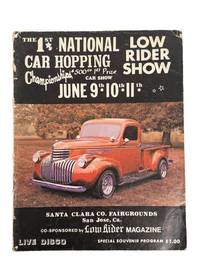
1978réf. 237231978. Lowriding exhibition program from June 9 to 11 1978 documenting the emergence of the first national gathering devoted entirely to lowrider culture at the moment when customized automobiles had become one of the most recognizable forms of Chicano public expression in the American West. Organized at the Santa Clara County Fairgrounds in San Jose only months after the debut of Low Rider magazine the event brought together car clubs custom builders hydraulic specialists painters upholsterers musicians and spectators from across California Arizona and neighboring states. More than an automotive exhibition the program records a community built around craftsmanship neighborhood identity cruising traditions family participation and small businesses that developed alongside the Chicano movement during the 1970s. The 1st National Low Rider Car Hopping Championships and Low Rider Show. San Jose California: Moreno Concessions & Moreno Productions in association with Low Rider Magazine June 9 to 11 1978. First edition. Quarto. 36 pages. Photographically illustrated stapled wrappers. Extensively illustrated throughout with black and white photographs and a two page color spread of customized vehicles. The official program opens with a history of lowriding and its expansion from neighborhood cruising into organized exhibitions noting participation by clubs from Los Angeles San Jose Phoenix Bakersfield Sacramento and throughout the Southwest. A detailed schedule of events includes hydraulic hopping championships custom car judging awards presentations mariachi performances disco dancing live DJs Jimmy the Memory Maker and José Chavez disco dance demonstrations by the L.A. Hustle Disco Dance Company hairstyling exhibitions and evening social events. Other features document custom automobiles bicycles clubs and participants including an illustrated essay titled "Bike On" asking "What do you do if you're 12 years old can't drive but dig low and custom rides" The advertising section preserves a cross section of the commercial infrastructure surrounding the movement including custom shops hydraulic specialists upholstery businesses automotive services and local enterprises serving Northern California's lowrider community. Appearing only six months after the founding of Low Rider Magazine this program captures the publication's first effort to transform a rapidly expanding readership into a national public gathering. The essays reject contemporary stereotypes that reduced lowriding to delinquency or spectacle instead presenting it as skilled craftsmanship requiring bodywork paint upholstery hydraulics engineering and sustained club participation. The combination of bilingual language neighborhood organizations family oriented programming bicycle customization and hundreds of privately built automobiles demonstrates how lowriding functioned as both artistic practice and cultural identity within Chicano communities during the late 1970s. The program also preserves the commercial ecosystem that sustained the movement recording businesses clubs and builders whose work rarely survives in institutional archives outside ephemeral publications such as this one. Some edge wear rubbing creasing and small chips to the wrappers; light toning and handling wear internally large loss to advertisement on second to last page corner; staples sound and contents clean and near complete. Overall very good condition. As of the time of this writing there are no copies in institutional holdings according to OCLC. An early documentary record of the moment lowriding emerged from regional cruising culture into a nationally organized expression of Chicano craftsmanship community and public identity. unknown
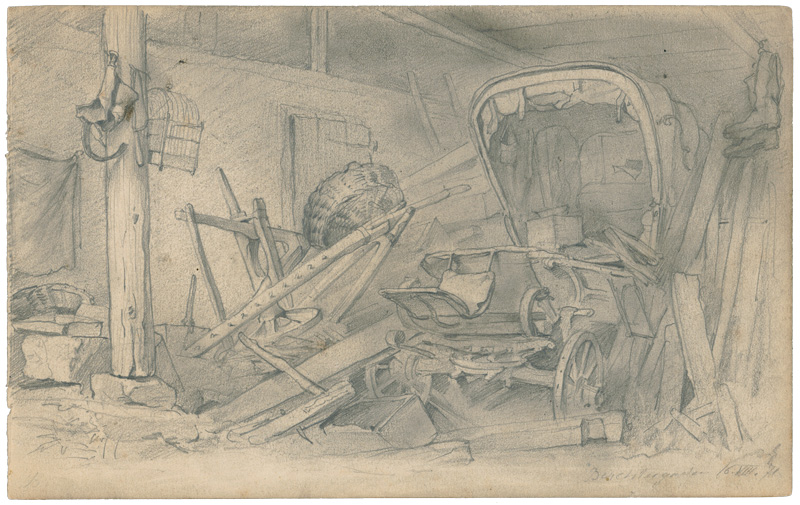
réf. 336-Eo.J. Bleistift, auf Velin, rechts bezeichnet und datiert (?): ?Berchtesgaden 16.VIII.71?. 14,5:23,2 cm.
64 pages. Features: Cover illustration by Franklin Arbuckle presents the rail line to Ungava's Iron; Editorial argues that Canadians need to read more of their authors; Elegant one-page colour 1953 Chrysler ad features red two-door New Yorker; The Crisis in Education - the Canadian education system is creaking toward chaos, Part 1 - The Teachers; Jerry (Gerald) Bull - Boy Rocket Scientist - photo-illustrated article on 24-year-old Dr. Gerald V. Bull, guided missile expert; The Dumbest Cluck on the Farm - fun article about raising chickens; When the Redskins took over Twiggeville (short story); Montreal - A City With a Heart - Karsh photos capture the spirit of the city; The Neighbours Who Sing for Canada - The Don Wright Chorus of London, Ontario - article with many photos; How the Boom Hit Seven Islands, Quebec courtesy of Mining Magnate Jules Timmins - article with many photos; Interesting one-page Massey-Harris ad examines the economic impact of farmers; Handsome one-page colour ad for the 1953 De Soto Firedome V-8 (maroon); Sensational 1953 Studebaker centrefold colour-photo ad features a canary yellow Starliner coupe; One-page two-colour Royal Canadian Air Force (R.C.A.F.) ad features photo of airman with puppy in his helmet; One-page colour ad for the 1953 Meteor car features a black on yellow car; One-page Morris Minor car ad; Nice colour one-page ad for Leonard fridges; What to do until the guests leave; Lovely colour Dofasco ad shows housewife picking peaches through her window in the middle of winter; Nice colour La-Z-Boy ad shows officeman relaxing; General Motors one-page photo ad explains how their many activities spend $350 million annually; Champion spark plugs ad features small photo of Chuck Stevenson, 1952 AAA National Racing Champion; Nice colour one-page Oldsmobile ad features green 1953 Super '88' holiday coupe; Half-page RCMP recruiting ad; Colour ad for the 1953 Ford Monarch (grey) inside back cover; Weston's ad on back cover links with the Coronation of Queen Elizabeth II; and more. Moderate wear. Unmarked. A sound copy of this nice vintage issue. Book
1812réf. 117951812 montées sur toile moutarde. carte en 4 feuilles, 115 x 117 cms, limites aquarellées. P. Librairie Géographique Hyacinthe Langlois, 1812,
1979réf. 014805Paris Gallimard NRF 1979 In-8 Broché Dédicacé par l'auteur
Telephone Talk was the glossy bimonthly publication of the British Columbia Telephone Company. It was written by employees for employees to present information of interest to those engaged in the plant, traffic, commercial, operating, accounting and other departments of the service. Each issue is replete with black and white photos and information on topics such as: company, industry and technological news, traffic levels, expansion plans, personnel announcements, publicity and social events, deaths, weddings, lists of exchanges, and more. As such, these issues serve as a vital preserve of rare and fascinating British Columbia history. This volume covers topics including: Miss K. Perrin joins as health supervisor; New West office upgraded - super photos; New York Engineer describes latest developments i.e. transmitting photos over phone lines; the truth about instrument zoning; Excitement at Duncan office; Diary describes observations on Chilliwack line; New cable successfully laid from Galiano Island to Point Grey - 9 pages of text and good photos; New Trans-Gulf circuits opened; sleeping car reservations by phone; Joe Gagnon; Phone expansion in Bay store; Seymour remodeling complete; Operating room photos; Coal, Travelling Men and Toll Lines Feature Nanaimo; High Poles removed from Seymour St. - 6 pages of text and great photos; Miss E.R. Walker - manages traffic on Vancouver Island; Cobble Hill Exchange; photo of updated Ladysmith office; Coast now linked with Okanagan by phone; Miss A. Falconer of the Port Coquitlam office; Successful Canadian jubilee broadcast from Ottawa; Photo of Chemainus Office; Royal Alexandra Apartments Fire - phones used from burning buildings by reporters; Company will have its own line to Vernon; Photo of public phones/'Pay Stations'; Photo of Belmont office near Victoria; Table of phones in use per province in Canada; Six pages of info. and great photos re: Kootenay; Battling Storm King; Mexico City can now communicate with Vancouver; Direct cable to be laid to West Vancouver; Article on poles; and more. Half-leather binding. Average wear. Ink stamp of company executive E.P. LaBelle upon top edge of text else unmarked. Binding intact. Substantial wear to backstrip with some chips missing. Book
1811réf. 0012294Hardin County Kentucky Elizabethville. Good with no dust jacket. 1811. Non-Book. On offer is an original 1811 manuscript documenting the financial machinery of government in early Kentucky and the involvement of some of the state's most prominent pioneers. At the center of the document is William Withers an early settler of strategically situated West Point and Hardin County sheriff from 1811 to 1812 entrusted with collecting and remitting the county's public revenues to the Commonwealth. The document records the $10000 state-revenue bond required of Withers upon becoming sheriff of Hardin County in 1811. Acknowledged in court on January 14 1811 Withers and his seven sureties all exceptionally prominent early settlers jointly guaranteed that he or his deputy would properly collect account for and remit every tax interest payment and other sum owed to the Commonwealth during the year. Before professional bonding companies and centralized tax departments Kentucky's county sheriffs personally collected the taxes and other public money owed to the Commonwealth. To protect the state against loss a sheriff was required to enter into a substantial bond supported by financially responsible local sureties. The sureties form a remarkable cross-section of early Kentucky's frontier governing class. They include: Benjamin Helm former sheriff and county clerk James Crutcher Merchant judge and legislator Samuel Stevenson Legislator Christopher Miller and Adam Miller brothers from a prominent pioneer family with Christopher a noted frontier scout who later served as magistrate legislator and sheriffDaniel Waide Elizabethtown innkeeper postmaster academy trustee and future state senator Christopher Bush father of Sarah Bush Johnston Lincoln Note: At the date of the bond Sarah was still married to Daniel Johnston; eight years later she married Thomas Lincoln and became Abraham Lincoln's stepmother. Biographical sketches of the sureties plus William Withers himself can be found at the conclusion of the listing. The document captures state administrative processes and the personal stakes of accepting prominent roles and responsibility in early 19th century America. These men were not merely endorsing Withers's appointment but pledging their own estates to secure his handling of Kentucky's public money. An excerpt from the document reads: "We bind our selves our heirs Executors and administrators Jointly & Severally firmly by these presents. "The recto is a contemporary clerk's manuscript copy of the bond including six of the subscription names and written indications " Seal " rather than six individual autograph signatures. The verso however bears the names Christopher Miller and Daniel Waide. The hands seem different than that of the recto so it is possible that the names on the verso are signatures of Miller and Waide though this is unconfirmed. The docket reads: William WithersTo Shffs BondCommonwealth1811 January CourtackdCopiedThe docket records the bond's acknowledgment in the January 1811 court and its entry into the official county records. Rather than an isolated financial instrument the manuscript preserves both the administrative process and the personal network through which public revenue was secured in frontier Kentucky. Biographical Notes of Men Named in the BondWilliam WithersWilliam Withers was Hardin County sheriff from 1811 through 1812 and was responsible for collecting and remitting the county's public revenues. He belonged to the early West Point settlement at the confluence of the Ohio and Salt rivers. By 1800 two of his daughters had married Robert Bleakley and William Montgomery Irish-born merchants who opened an Elizabethtown dry-goods store. Withers was thus connected by family to the commercial community whose members helped guarantee his bond. Benjamin HelmBenjamin Helm was one of early Elizabethtown's principal administrators. He qualified as Hardin County's first surveyor in 1793 became an original town trustee served as sheriff in 1807 and was county clerk from about 1800 until 1817. He erected Elizabethtown's first brick house riding ninety miles to Lexington for its wrought nails and later became the first president of the town's independent bank. His clerk's office recorded this bond although a deputy may have prepared the copy. James CrutcherJames Crutcher was a prominent merchant cattle dealer tavern proprietor judge and legislator. Appointed one of Elizabethtown's original trustees in 1796 he built a tavern beside the public square in 1798 and marked it with a sign bearing a lion rampant—the establishment later operated by Daniel Waide. Crutcher also served with Helm and Waide as a Hardin Academy trustee. Six weeks after this bond Daniel and Sarah Bush Johnston conveyed a 730-acre tract to him. Samuel StevensonSamuel Stevenson—also recorded as Stephenson—became the first teacher of Hardin Academy when its schoolhouse opened in 1806. The academy served an Elizabethtown community of only about 300 people emphasizing how prominent its teacher would have been locally. Stevenson subsequently became a tavernkeeper merchant and Kentucky legislator. In 1812 he again acted as a financial guarantor joining John Canady as surety on William Vittitow's $1000 constable's bond. Christopher BushChristopher Bush belonged to the Bush family identified among the early settlers of Severns Valley by 1782. A landowner and Hardin County constable he was remembered by Haycraft as an industrious man with a large family. His daughter Sarah Bush Johnston was then married to Daniel Johnston; in 1819 she married Thomas Lincoln and became Abraham Lincoln's stepmother. Her February 1811 land transaction with James Crutcher directly connects the Bush family with another surety named in the bond. Adam MillerAdam Miller belonged to a pioneer family recorded among the Severns Valley settlers by 1782. He was a son of German-born settler Ernest Miller and a brother of Nicholas and fellow obligor Christopher Miller. According to Haycraft Adam was captured in his youth and remained within an Indigenous community for approximately fourteen years. Unlike his politically prominent brothers he apparently held no major public office and was remembered instead as a quiet respected man and church member. Christopher MillerCaptured by Shawnees as a youth Christopher Miller lived among them for years and became fluent in their languages and customs. His knowledge later made him valuable to General Anthony Wayne as a messenger and scout and in 1796 he accompanied a delegation of Indigenous leaders to Philadelphia. In 1819 the Kentucky legislature petitioned Congress to compensate Miller for this service noting that he was then poor and supporting a large family. He later became a legislator magistrate and Hardin County sheriff. Daniel WaideDaniel Waide was an Elizabethtown innkeeper Hardin Academy trustee and postmaster. He operated the "Sign of the Lion" tavern built by James Crutcher in 1798 and helped develop the property into the later Eagle House. He served on the academy board with Crutcher and Benjamin Helm while postal records identify him as Elizabethtown postmaster beginning January 1 1811 thirteen days before this bond. Waide later entered the Kentucky Senate; tax rolls also record him as an enslaver. SourcesBrown Stephen A. "A Conversation with Abraham Lincoln. " Kentucky Humanities Fall 2013 pp. 6–9. Hardin County Court. Order Book C 1812 p. 2. Transcribed by Patricia O'Connor for Kentucky GenWeb. Hardin County Sheriff's Office. "History of the Hardin County Sheriff's Office. " Accessed August 2 2026."Hardin County Kentucky. " American History and Genealogy Project. Accessed August 2 2026."Hardin County Kentucky Timeline of Events. " Genealogy Trails History Group. Accessed August 2 2026. Haycraft Samuel Jr. A History of Elizabethtown Kentucky and Its Surroundings. Written 1869. Elizabethtown Kentucky: Woman's Club of Elizabethtown 1921. Hutton Paul Andrew. "William Wells: Frontier Scout and Indian Agent. " Indiana Magazine of History 74 no. 3 September 1978 : 183–222. Kentucky: Counties & Towns: Elizabethtown—Haycraft's History. Lincoln Financial Foundation Collection undated. National Park Service. "Sarah Bush Johnston Lincoln. " U. S. Department of the Interior. Accessed August 2 2026. Sweeney Mary Angela. "Postal Communication in the South-West 1789–1813." Master's thesis University of Louisville 1928. Warren Louis A. Lincoln's Youth: Indiana Years Seven to Twenty-One 1816–1830. New York: Appleton-Century-Crofts 1959. Winstead Mrs. Thomas Durham comp. Chronicles of Hardin County Kentucky 1766–1974. 1974. "Hardin County Kentucky Timeline of Events " transcribed by the Genealogy Trails Transcription Team. ; Manuscripts; 8vo 8" - 9" tall; 1 pages; Signed by Author .
1957réf. 015780Paris Club français du livre - collection "Formes de l'art" 1957 In-4 carré Cartonnage toilé de L'éditeur Ed. originale Dédicacé par l'auteur
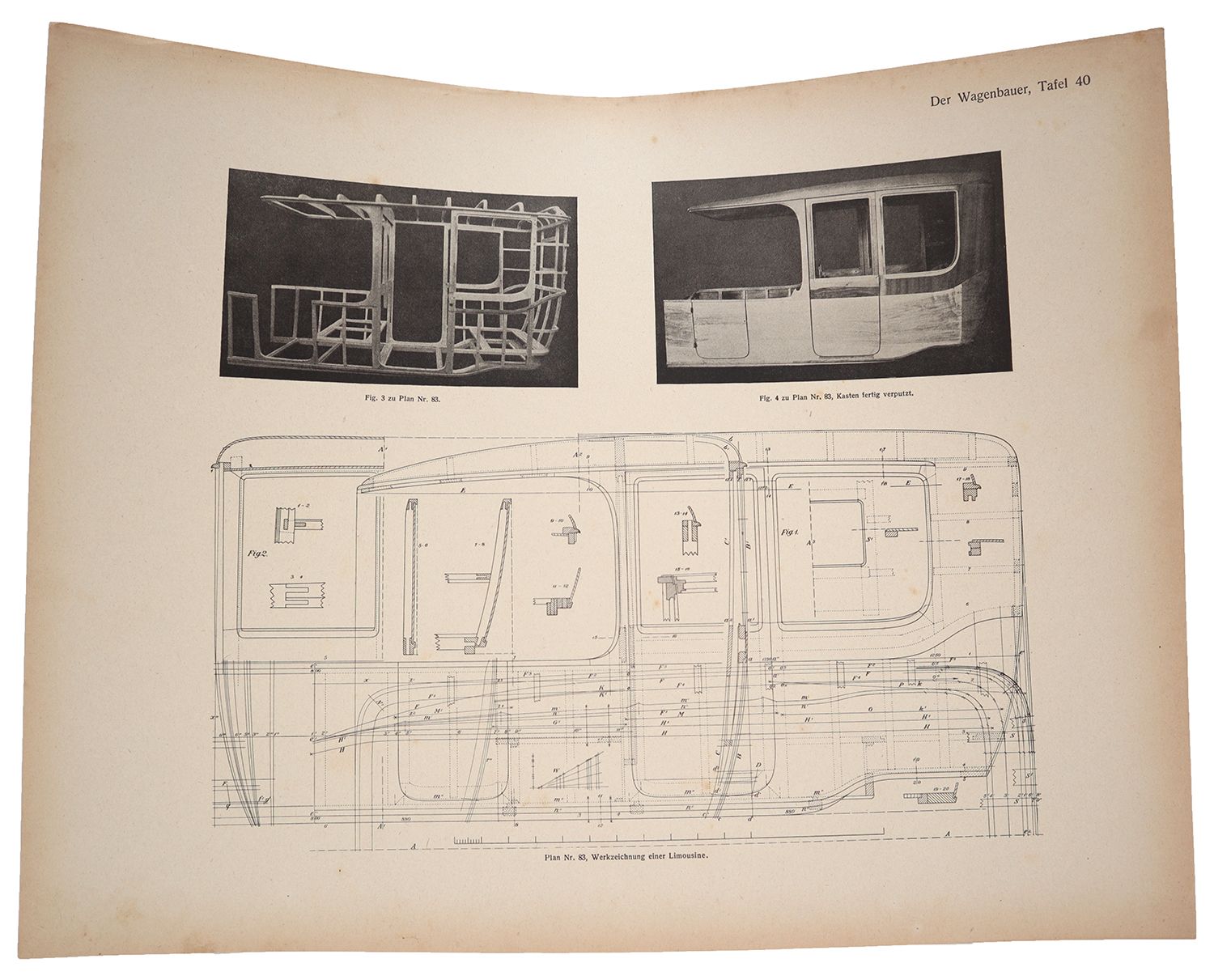
1923réf. 53494ABLeipzig und Wien, Waldheim-Eberle A.G., 1923. Querformat, ca. 31 x 39 cm. 4 Seiten, 67 Tafelbeilagen mit Illustrationen. Mappe mit aufmontiertem Deckelschild. Tafelband. [6 Warenabbildungen]
réf. 16-6279Paris: Editions de la Revue Verve 1938. Small foliio. 26.5 x 36cm. Original wraps. with design by Pierre Bonnard.Very good. Verve's October - December 1938 features it's first theme - The Orient and covers the art of the Middle East and East Asia. The cover was designed by Pierre Bonnard and the original issuing box by Chagall. The content features color lithographs by the artists Marc Chagall "Spring" Joan Miro "Summer" Abe Rattner "Autumn" and Paul Klee "Winter" all printed by Mourlot.Heliogravures and color process images include the reproduced works of Hindu artists including gilt detailing Pierre Bonnard Henri Matisse and many others. Photography includes works by Gaetan Fouquet Rogi Andre Schneider-Lengyel and many others. Text includes works by Rabindranath Tagore Roger Caillois Henri Michaux Chinese poets and others. Paris: Editions de la Revue Verve, 1938 paperback