Kraft, Eva SAntiquariat.de
28.264 resultados
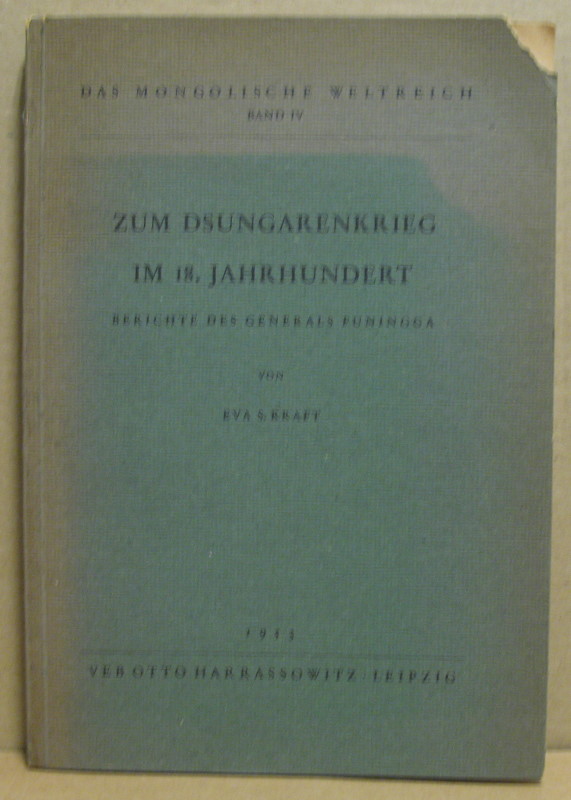
1953ref. 72490Leipzig, Otto Harrassowitz, 1953. Gr.8°; 191 Seiten mit einem Titelbild, 1 Karte und 3 Seiten Liste der chinesischen Zeichnen; 1. Auflage Orig.-Broschur Einband lichtgebräunt, vorderer obere Ecke abgebrochen, vord. Gelenk oben angerissen. beide Einbanddeckel längs angeknickt. Buchblock längs gebogen u. papierbedingt stark gebräunt Das Mongolische Weltreich. Quellen und Forschungen, Band
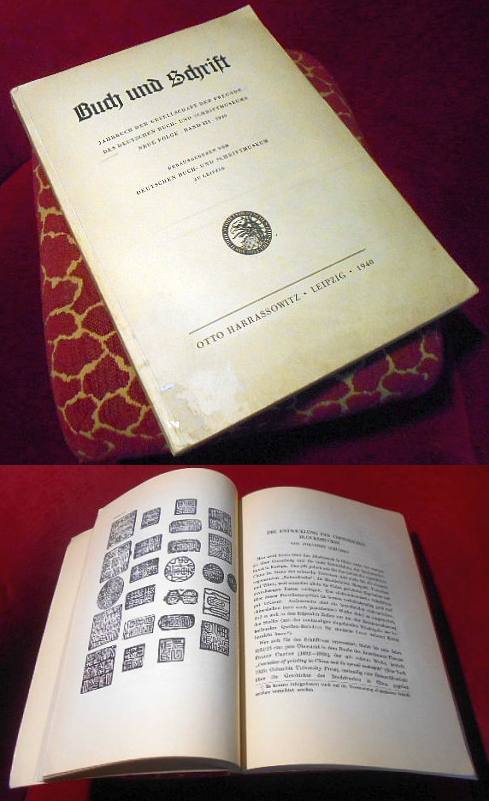
1940ref. 025861Harrassowitz, Leipzig 1940. Broschiert Gut
1987ref. 8112Neuhausen - Stuttgart: Hänssler. 1987. 1. Auflage, 178 S., Originalpappband, gutes Ex.,
1990ref. 43951München, Heyne Verlag, 1990. 583 Seiten, 8°, OPbd. mit farbig illustr. OUmschlag im OPapp-Schuber.
1990ref. 43949München, Heyne Verlag, 1990. 583 Seiten, 8°, OPbd. mit farbig illustr. OUmschlag.
1937ref. 1006EAST ASIA Zuijin zhi Dongya Xingshi Tujie Map Explaining the Latest Situation in East Asia. Mainichi Shimbun Osaka Office Japan Showa period 1937. Highly pictorial Japanese propaganda map of East Asia issued just six months before the outbreak of the second Sino-Japanese War. The map focuses on China's military situation and shows a separate Manchuria and Jidong Autonomous Region. Heavy industry military communication and supply lines airfields and foreign military bases are delineated with the note that there are '200000 Communists' at the Chinese Communist Party's northern Shaanxi base. The projection of the map is such that it illustrates the 'horseshoe formation' showing Manchuria 'the lifeline of Japan' as being surrounded by Japan's enemies. Chomo-lithographic map of East Asia 780 x 1065 mm. Territories in yellow and identified with a red cross other parts of the globe colored in green or red explanatory title at foot inset world map at lower left labelled mainly in Japanese and Chinese characters. Mild toning long closed tear repaired with old tape some other tears edgewear. Mainichi Shimbun Osaka Office, Japan, Showa period, books
1937ref. 1006EAST ASIA Zuijin zhi Dongya Xingshi Tujie Map Explaining the Latest Situation in East Asia. Mainichi Shimbun Osaka Office Japan Showa period 1937. Highly pictorial Japanese propaganda map of East Asia issued just six months before the outbreak of the second Sino-Japanese War. The map focuses on China's military situation and shows a separate Manchuria and Jidong Autonomous Region. Heavy industry military communication and supply lines airfields and foreign military bases are delineated with the note that there are '200000 Communists' at the Chinese Communist Party's northern Shaanxi base. The projection of the map is such that it illustrates the 'horseshoe formation' showing Manchuria 'the lifeline of Japan' as being surrounded by Japan's enemies. Chomo-lithographic map of East Asia 780 x 1065 mm. Territories in yellow and identified with a red cross other parts of the globe colored in green or red explanatory title at foot inset world map at lower left labelled mainly in Japanese and Chinese characters. Mild toning long closed tear repaired with old tape some other tears edgewear. Mainichi Shimbun Osaka Office, Japan, Showa period,
2 vols.in 8vo, orig. blue wrappers, Texte: 140pp (b/w plates)+10pp., Traduction:xii+93pp., excellent condition. Contents : v. 1. Texte--v. 2. Traduction. Subject : Tibetan drama -- Translations into French. Manuscripts, Tibetan. en français.
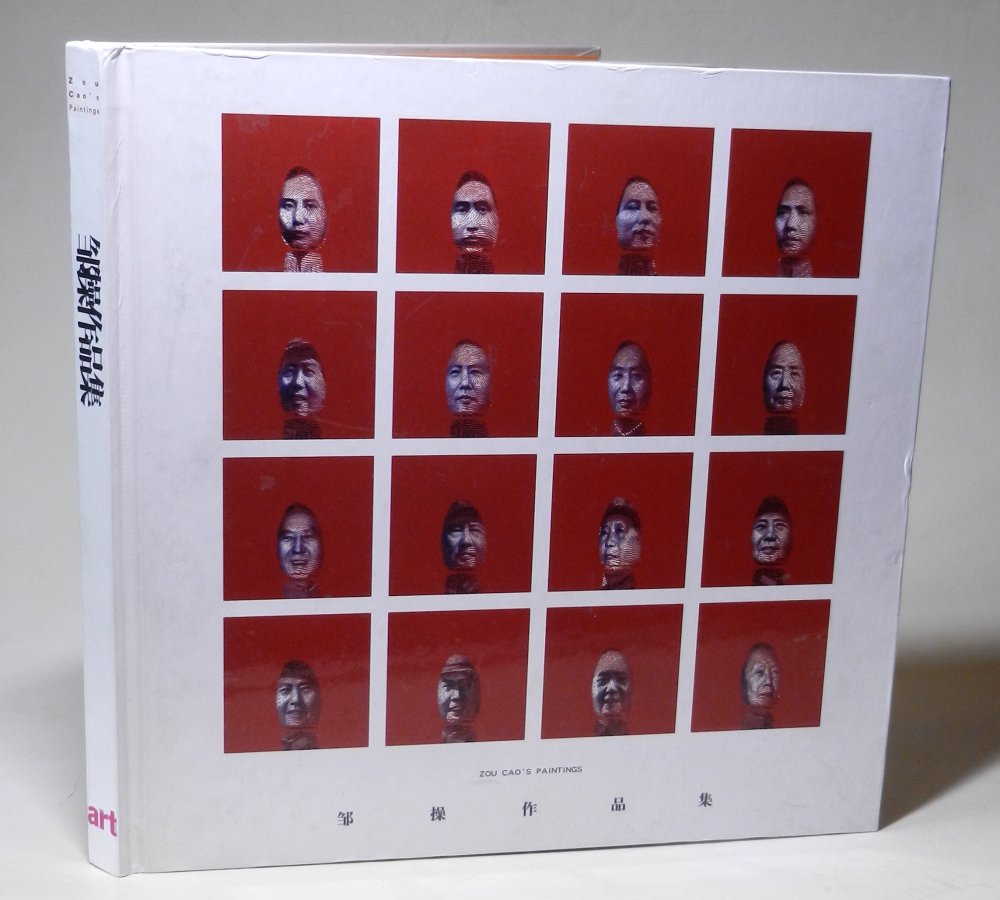
2007ref. 32523-ym3181Hong Kong: ILove Art Gallery 2007. 106 pages. Original Hardcover (something bumped, otherwise a very good and clean copy). 28,5 x 28,5 cm. [2 Warenabbildungen] fest gebunden
1788ref. 35708Paris Buisson 1788 in-8 maroquin cerise à long grain, dos lisse richement orné de filets, tortillons et guirlandes dorés, encadrement de double filet et double guirlande dorés sur les plats, hachuré doré sur les coupes, tranches dorées [Rel. de l'époque], quelques rousseurs
in-12°, 164 pp., figures, broché. Bon état. [BL-9]
8vo, br. ed 760pp. Zizhi tongjian Vol 1-8 – Warring States and Qin – Translated by Joseph P Yap Sima Guang (1019-1086 CE) completed his Zizhi tongjian (Comprehensive Mirror in Aid of Governance) in 1084, a monumental historiography that commences in 403 BCE and ends in 959 CE, covering a span of 1362 years of ancient and medieval Chinese history. Qin Mu the eminent contemporary Chinese historian remarks, “Sima Guang successfully merged the three disciplines of literature, history, and philosophy into one entity.” The Zizhi tongjian is about historical experience, and Sima Guang maintains that the heads-of-states can learn so much by studying history. The book has earned high acclaim among Chinese and Asian scholars ever since its publication. However, only a very small part of the work has been translated into English; hence, the work is not widely read. This volume of this translation begins in 403 BCE and concludes with the fall of the Qin Dynasty in 207 BCE. The Zizhi tongian assimilated the exceptional attributes and defining qualities of the Zuozhuan (the Commentary of Zuo) and the Shiji (Records of the Grand Historian). Since its publication, it has held a very special and esteemed position among Chinese scholars and historians. Although the work was principally sponsored and financed by the Song Imperial Court, it was organized and written by private individuals; it, therefore, deviated significantly from historical texts prepared by court officials during previous dynasties. In 403 BCE, the once powerful Jin hegemonic state was partitioned into Hann, Wei, and Zhao. Together with Qi, Qin, Chu and Yan they came to be known as the seven warring states. Sima Guang in his annotation on the enfeoffment of the three fief lords by the King of Zhou laments over the breakdown of li (rites). He says, ‘It was not the three Jin ministers who bankrupted the instituted rites; rather, the Son of Heaven brought on the collapse.’ He contends that as the illegitimate act of partitioning a state by its subjects was legitimized by the Son of Heaven - the Zhou king was wholly accountable for the demise. Sima Guang thus chose to commence his chronicle of Zizhi tongjian during the 23rd year of King Weilei of Zhou, 403 BCE, when the Son of Heaven enfeoffed the Jin ministers. The times of the Warring States was about reforms, political strategies, intrigue, warfares, conquests and wholesale massacres when the major states vied for control of China. Wei was the first state that made reforms and enjoyed of decades of prosperity and military strength; it was followed by others in varying forms. The tide turned when Duke Xiao of Qin ascended to the throne; he made resolve to strengthen his state, and it was the turning point of the Warring States. Through Shang Yang’s reform, Qin basically laid down the foundation for the final conquest of the six states. This volume offers the readers a glimpse of the political struggles between the seven states culuminating in the final unification of China by by the First Emperor Qin Shihuang in 221 BCE. The book ends with the demise of Qin. When Sima Qian (145?-90 BCE) composed the Shiji (Records of the Grand Historian) he used all the information that was available to him, numerous errors were incorporated. Sima Guang, while conducted extensive research, drew copiously on the information from Shiji on the parts of Warring States, Qin, and early Han, and his work included many of the mistakes made. Ever since much textual and archaeological information on the Warring States have become available. Yang Kuan, one of the most eminent contemporary scholars, had conducted extensive textual and archaeological research on the Warring States, shedding much light on the errors on Shiji, Zhanguoce (Warring States Strategies) and Zizhi tongjian. The author translated some of his more outstanding articles. Joseph P. Yap is a self-educated historian. Having spent many years in the business community as a corporate executive, he decided to turn his attention to translating ancient Chinese texts into English. He believes that there is certainly no shortage of excellent translators, particularly from the academic world. However the literature we inherit from the ancient Chinese are so vast that numerous books and texts are still left unattended, and he believes that these valuable texts and chronicles should be made available to a wider English readers. He published his first book the Wars with the Xiongnu in 2009. He is presently working on Volume 2 and 3 of Zizhi tongjian – The Han Empire.
1971347 pages. Index. Signed and inscribed by author upon half-title page. Chapters include: The Motivation of Zionism; Zionism in Action; The Process of Rejection; China and India Turn their backs; The Alien almost at Home; Asia draws back; Israel - a colony or a coloniser. Average wear. Unmarked. Binding intact. A sound copy. Book
ref. 22432Bruxelles, Fonds Mercator/ Mercatorfonds , 2009 Softcover met flappen, 208p, Afmetingen: 28 x 24 cm,200 illustraties in kleur, nieuwstaat . ISBN 9789061538912.
ref. 24391P., Corrêa (Collection "L'Esprit Vivant"), 1952, in 8° broché, 248pp. ; couverture illustrée (fanée).
1952ref. 80571952 broché in-octavo, dos crème, couverture recto ornée d'une illustration photographique, long papier, très légères piqûres, 248 pages, 1952 à Paris Editions Corréa,
1991ref. 721ABFrankfurt, Umschau, 1991. 21 cm. 158 S. mit181 Abbildungen, davon 150 farbig und 4 Karten. Illustrierter Originalkarton (Softcover). Sonderausgabe. Tadelloses gepflegtes Exemplar.
ref. 13454Pékin, Imprimerie de T'Ou-Sè-Wè, Zi-Ka-Wei, près Chang-hai, 1918. 1 plaquette in-8, 38 pp., enrichie d'un plan de Zi-Ka-Wei et de 5 illustrations à pleine page, en langue chinoise.
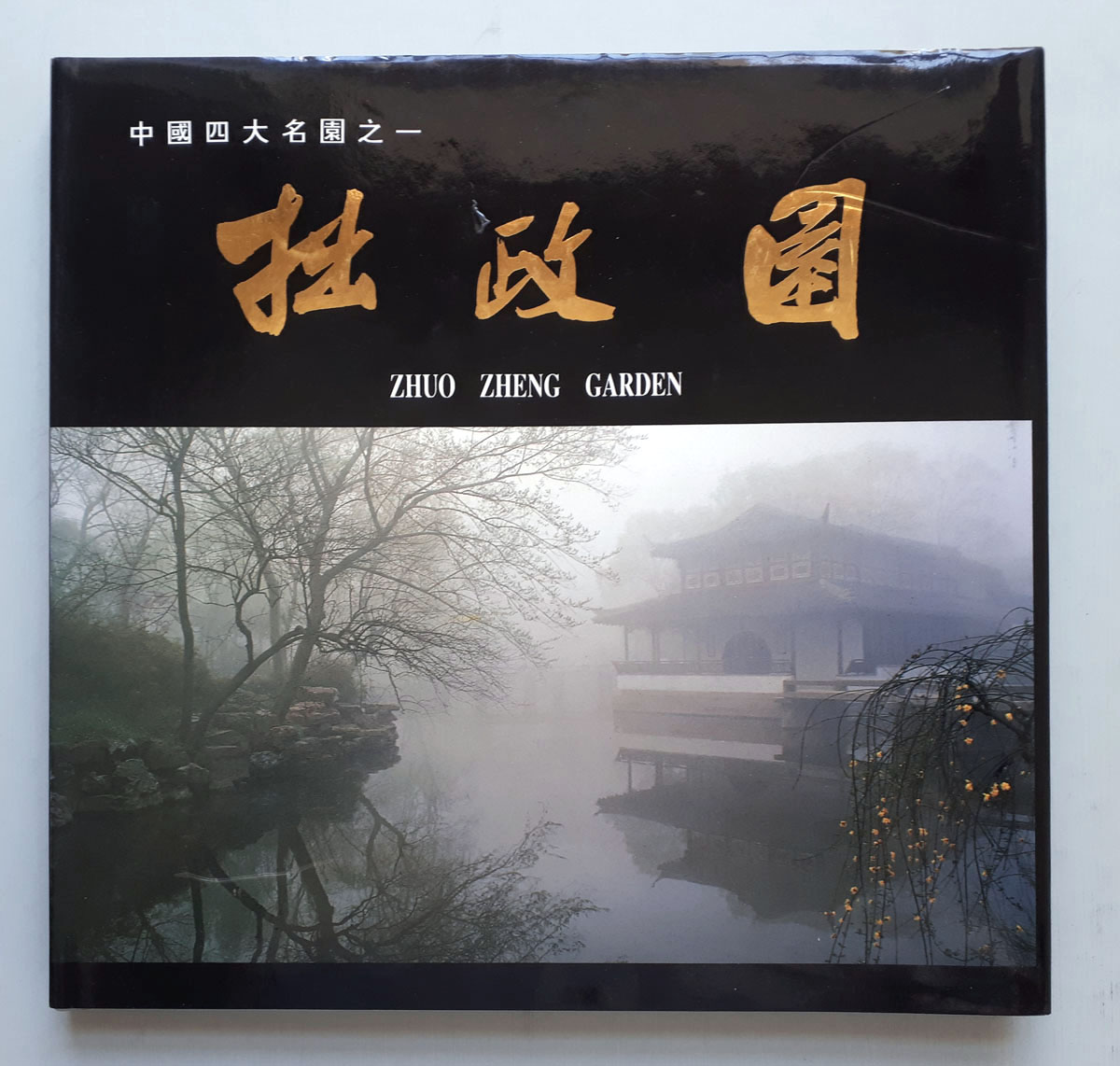
1994ref. q9b2701goGu Wu Xuan Publishing House (Suzhou, Jiangsu), 1994. Contents: An outline map of the humble administrator's garden. The Small Flying Rainbow Bridge. Spring. Summer Autumn. The Hall of drifting fragrance. Fragrant Isle. Spring scene round the mountain. A pool of lotuses in summer. Snowy scene. Bonsai Garden. Shu Xiang Hall etc. Photographers: Chen Jiangxing, Zheng Kejun, Zhou Rende, Zheng Xiang. 129 S. Chinesisch / Englisch / Japanisch. Auflage: 5000 Expl. Umschlag sehr leicht berieben, sauber, Einband und Rücken gut und sauber, Schnitt und Seiten sauber, sehr guter Zustand. Erstauflage. 4° Querformat [5 Warenabbildungen] Pappband
1996ref. 14249Beijing, Les livres du Dauphin, 1996. 2 volumes in-8 brochés sur agraphes, couvertures couleurs. A l'état de neuf.
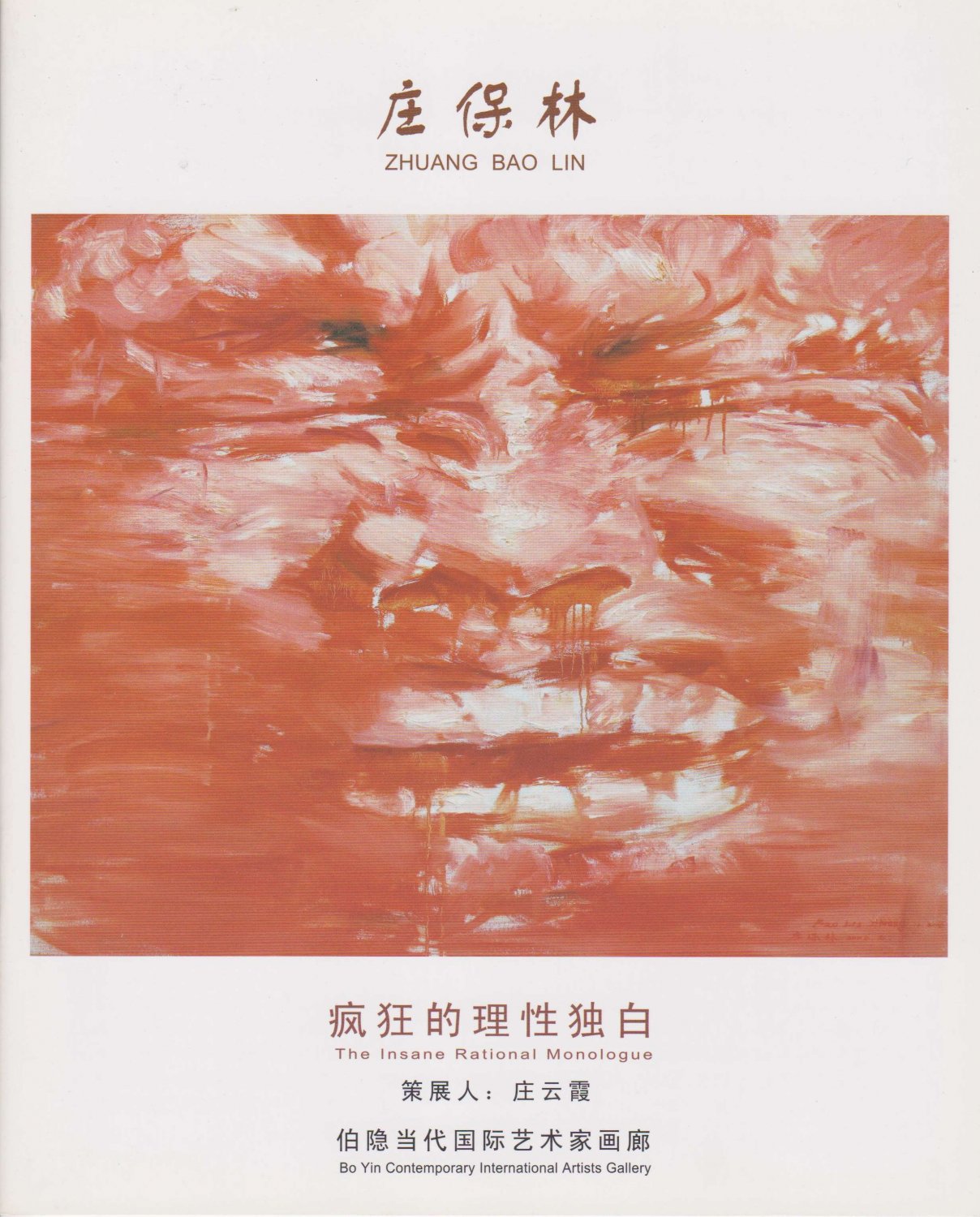
2007ref. 27968BShanghai:, Bo Yin Contemporary International Artists Gallery., (2007-2010). 26cm x 21cm. 58; 18; 18 p. Original wrappers with coloured illustrated title to cover. 3 catalogues. Boards with some staining, inside in very good condition.
3 catalogues. 26cm x 21cm. 58; 18; 18 p. Original wrappers with coloured illustrated title to cover. Boards with some staining, inside in very good condition. With numerous coloured illustrations of the paintings on plates. Introductory texts in Chinese and English.
in-8°, 358 pages, portrait, broche, couverture plastifiee. Bel exemplaire [CA32-4]
1 portfolio . (loose-leaf), 16 col. plates ; 37 cm.
19941 vol. in-8 br., col. cover, color. pictures, IVPP - Institute of Vertebrate Paleontology and Paleoanthropology, Chinese Academy of Sciences, 1994, 63 p. Very nice copy of this brochure on the Man of Peking (paleoanthropology). Anglais