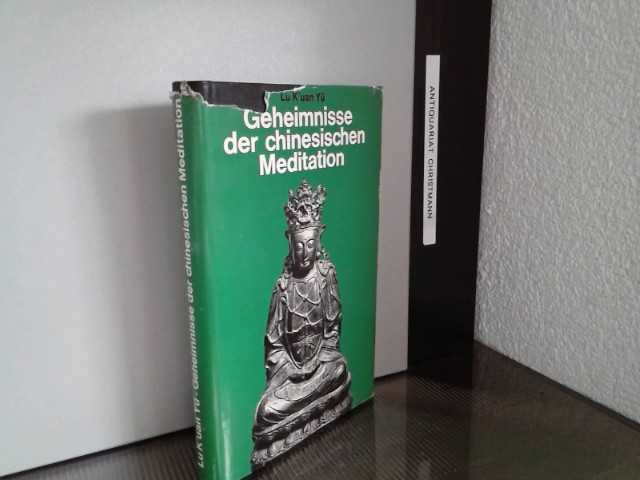
1994réf. LIT33556Berlin. Aufbau. 1994. 91 S. Kartoniert. Sauberes Exemplar ohne Stempel und Anstreichungen. Mit einigen Abbildungen. Sehr gut erhalten.
1981pp.575
Contents: Foreword. Preface. Bhaskaracarya: his life and work. Lilavati. 1.Definitions of tables. 2. Place values of digits. 3. Addition and subtraction. 4. Methods of multiplication. 5. Division. 6. Methods of finding squares. 7. Square root. 8. Method to find the cube. 9. Cube roots.10. Eight operations on fractions. 11. Addition and subtraction of fractions. 12. Multiplication fractions. 13. Division of fractions. 14. Squares, cubes, square roots and cube roots of fractions. 15. Eight rules concerning zero. 16. Reverse process. 17. To find an unknown quantity. 18. Method of transition. 19. Square transition. 20. Quadratic equation. 21. The rule of three. 22. Inverse proportion. 23. The rule of five. 24. Rules for barter. 25. Simple interest. 26. Combinations. 27. Progressions ( series). 28. Mensuration. 29. Volume. 30. Wood cutting. 31. Volume of a heap of grain. 32. Shadows. 33. Pulverization. 34. Concatenation ( permutations, partitions etc.). Index of verses. Subject index.Motilal Banarsidass. Lilavati has been used as a standard textbook for about 800 years. Itwas widely used and commented and translated into several languages of the world. Arithmetic is presented as an enjoyable playful activity. The name 'Bhaskaracarya' and 'Lilavati' are well-known. Aryabhata (b.476 AD) is credited for his pioneering work of extracting tantra sastra, (I.e. astronomy and mathematics) from vedas (generally known as the oldest embodiment of knowledge) to the level of common usage as he appropriately says in his Aryabhatiyam.In 1150 AD, Bhaskaracarya (b.1114 AD), renowned mathematician and astronomer of Vedic tradition composed Lilavati as the first part of this larger world called Siddhanta-Siromani, a comprehensive exposition of arithmetic, algebra, geometry, mensuration, number theory and related topics, 201 pp. The names 'Bhaskaracarya' and 'Lilavati' are well-known. If a student displays outstanding talent in Mathematics, the school teacher lovingly calls the student ìSecond Bhaskaracaryaî. Many legends about Lilavati are in vogue. It is but natural that Indians have a special interest in Bhaskaracarya and his works, especially the Lilavati. Professor N.H. Phadke has taken great pains in the preparation of the present work A New Light on Lilavati, thus filling a void. In the Lilavati, Arithmetic is presented as an enjoyable playful activity. Professor Phadke has admirably succeeded in preserving this spirit in the A New Light on Lilavati. Since Professor Phadke studied many books in Sanskrit, Hindi, English and Marathi, he could have easily given scholarly notes and references all over. But the author has resisted that temptation and has given the relevant supplementary information in six appendices. So the book is easy to read and the readers enjoy the playful atmosphere. The Lilavati is a book on Arithmetic written in the twelfth century. Techniques for the solution of problems are simple and easy to use and, moreover, there is a lot of interesting information in the problems presented therein. In 1150 AD, Bhaskaracarya (b. 1114 AD), renowned mathematician and astronomer of Vedic tradition composed Lilavati as the first part of his larger work called Siddhanta Siromani, a comprehensive exposition of arithmetic, algebra, geometry, mensuration, number theory and related topics. Lilavati has been used as a standard textbook for about 800 years. This lucid, scholarly and literary presentation has been translated into several languages of the world. Bhaskaracarya himself never gave any derivations of his formulae. N.H. Phadke (1902-1973) worked hard to construct proofs of several mathematical methods and formulae given in original Lilavati. The present work is an enlargement of his Marathi work and attempts a thorough mathematical explanation of definitions, formulae, short cuts and methodology as intended by Bhaskara. Stitches are followed by literal translations so that the reader can enjoy and appreciate the beauty of accurate and musical presentation in Lilavati. The book is useful to school going children, sophomores, teachers, scholars, historians and those working for cause of mathematics.
8vo TELA EDIT. CON SOVR. ILL. A COLORI, PP. 263
réf. 2513Paris Librairie Plon 1936 in 12 (18,5x12) 1 volume broché, 267 pages [1], avec 2 photographies et 20 cartes établies par Charles Lindbergh. Adapté de l'anglais par Hervé Lauwick. Collection ''La Fayette''. Bel exemplaire
1934réf. Y1399Leipzig, F. A. Brockhaus, 1934. Ganzleinen, 8°, 272 S., mit 74 Abbildungen nach Aufnahmen des Verfassers und drei Karten, Inhalt: Mandschurische Städte - Guerilla-Krieg mit Panzerzügen - Die Reise zum Hauptquartier der Aufständischen - Mongolische Steppe
1957réf. 457181957 Paris, PUF (Collection "L'Oeil du Connaisseur"), 1957, in 8° broché VII-193 pages suivies de 32 planches hors-texte (dont 8 en couleurs) ; 11 figures ; bibliographie et index.
8vo, br. ed. "Una selezione di alcune delle voci più importanti della fantascienza cinese contemporanea che di certo delizieranno i lettori di tutto il mondo. Le visioni e le questioni presentate in questo libro sono importanti non solo per la Cina, ma per tutta l'umanità". Ken Liu, vincitore dei premi Hugo, Nebula e World Fantasy Dall'invecchiamento della popolazione ai cambiamenti climatici, dall'istruzione di massa all'impatto dei social network, le storie immaginate da Liu Cixin, Xia Jia, Chen Qiufan e Wu Yan mostrano una Cina lontana dall'Occidente per costume e sensibilità, ma simile nelle realtà economico-sociali e così tecnologicamente avanzata da restituire uno sguardo sul futuro che attende il mondo intero. L' immagine di copertina è stata selezionata tra le proposte degli allievi della Scuola Internazionale di Comix, così come le immagini scelte per introdurre all' interno del volume ogni racconto
198616mo, broch.ed.
8vo, cloh in dj, ex library but no marks, very good. Shortly before midnight on March 17, 1959, the Dalai Lama, without his glasses and dressed as an ordinary Tibetan solider, slipped out of his summer residence with only four aides at his side. At that moment, he became the symbolic head of the Tibetan government in exile, and Gyalo Thondup, the only one of the Dalai Lama's brothers not to don the robes of a Buddhist monk, became the fulcrum for the independence movement. The Noodle Maker of Kalimpong tells the extraordinary story of the Dalai Lama's family, the exile of the spiritual leader of Tibetan Buddhism from Tibet, and the enduring political crisis that has seen remote and bleakly beautiful Tibet all but disappear as an independent nation-state. For the last sixty years, Gyalo Thondup has been at the at the heart of the epic struggle to protect and advance Tibet in the face of unreliable allies, overwhelming odds, and devious rivals, playing an utterly determined and unique role in a Cold War high-altitude superpower rivalry. Here, for the first time, he reveals how he found himself whisked between Chiang Kai-shek, Zhou Enlai, Jawaharlal Nehru, and the CIA, as he tried to secure, on behalf of his brother, the future of Tibet. About the Author: Gyalo Thondup, the older brother of the Dalai Lama, lives on a hilltop compound in Kalimpong, India, that also houses the noodle factory he set up with his late wife, Diki Dolkar (Zhu Dan).
8vo, br. ed. pp.189. Dopo "Il richiamo della notte", continua la riscoperta della produzione fantastica di Jack London con alcune riletture satiriche e tragiche del mito evoluzionista e della fede cieca nell'inarrestabile progresso tecnologico. Nove racconti in cui la fantascienza si fa terreno di critica sociale, smascherando, oltre alla retorica libertaria e al rigorismo scientifico, il trascinarsi di ataviche ossessioni e l'anarchia del capitale refrattario a ogni opposizione, che stritola gli operai e irride i poeti. Lontano dai ghiacci, dalla natura selvaggia delle amate terre di confine, London si muove tra passato e futuro, tra la remotissima Cina e la natia San Francisco, descrivendo mondi iperbolici e segrete fonti energetiche, guerre batteriologiche e armi apocalittiche, scioperi vaneggiati e ferree oligarchie, manicomi criminali e distopiche rivoluzioni, indagando i meccanismi del potere e la natura umana
1985Broch?. 4277pages. D?fra?chi.
8vo "Nouvelles, poemes en prose, souvenirs." 426 pp. in-8 reliure sky vert, jacquette, etui. 0,626 kg 1ère édition, avec jaquette et boite.
1967réf. 26868Zürich ; Stuttgart : Rascher 1967. 296 S. ; 8°, mit Schutzumschlag, SU oben mit Fehlstücken, gebundene Ausgabe, Kunststoffeinband, sonst Exemplar in gutem Erhaltungszustand
2010réf. 177411Editions du Rouergue Editions du Rouergue, 2010. In-8 broché, couverture à rabats de 270 pages. Très bon état
1933français In-12 de 246 pp. + Table; demi-toile chagrinée à bande, dos orné, couverture conservée (reliure de l'éditeur). Exemplaire imprimé spécialement pour la Sélection Séquana sur véritable papier de chiffon de Corvol-l'Orgueilleux à son filigrane.
2008réf. PHOTOGRAPH5824145centsID, 2008, 24,5 x 16, 72 pages cousues sous couverture souple illustrée. Photographies à pleine page en noir et couleurs.
1928réf. 18292ABBerlin:, Verlagsgesellschaft des allgemeinen deutschen Gewerkschaftsbundes GmbH., 1928. 8°. 160 Seiten. Original illustrierter Leinenband. Die Versandkosten für Kunstwerke und mehrbändige Werke können von den Standard-Versandkosten abweichen. Angestaubt, sonst guter Zustand.
Paperback. Very Good. First Edition. 12mo - over 6¾" - 7¾" tall. 1987, stated 66pp, stories and essays. Most written before the People's Republic was founded in 1949. Moderate shelf rubbing to covers, ISBN: 0835116085
1927réf. 139071927 livre relié " syvertex" - 19x27 -304 pp - réalisation éditions du BURIN distribution éditions MARTINSART - 1967 - dos décoré ,titre doré, plat décoré et doré - illustrations de CLAUDE TABET.
1967réf. 1011610Verlag für fremdsprachige Literatur, Peking, 1967. 17 S.; geheftet.
1981unpublished young mao, in italian, pp.25o, br, good
réf. M4476Paris éd.L'Harmattan 1989, collection Recherches Asiatiques,dirigées par Alain Forest. Grand in8 br,315pp. Langue: Français
réf. 15123Payot, 1943. In-8°, broché.
réf. cROU-1274Paris, Payot, 1935 ; grand in-8°, broché, couverture bleu pale imprimée en bleu nuit; 284pp.,1f.