THEVENOT (Melchisédech).Livre Rare Book
26 145 résultats
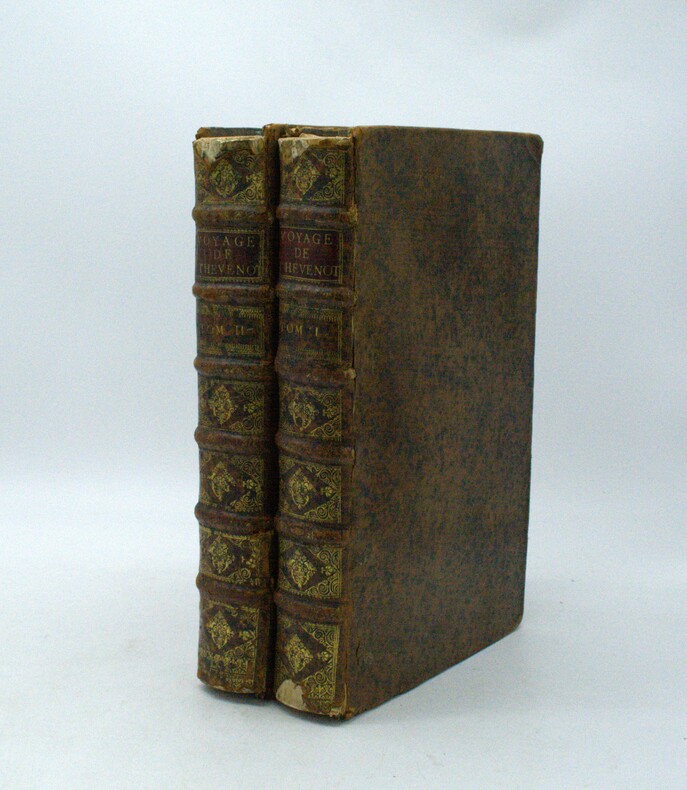
1696réf. PHO-1981Paris, Thomas Moette, 1696 ; 5 parties en 2 vol. in-folio (37x23,5cm), veau marbré, dos à nerfs richement orné de motifs dorés avec tomaison et pièce de titre grenat, quelques frottements, charnières fendillées, manque au dos, coins usés, coiffes absentes, 8 feuillets détachés, rousseurs, qlqs feuillets brunis. L’illustration comporte de nombreuses gravures et illustrations dans et hors texte, 6 cartes dont la carte de l’Indostan, de la Colchide, du Japon (qui regarde l’Amérique), carte de la route du voyage de Canton à Péking, carte de l’Éthiopie, carte de l'Éthiopie ["Entrée de quelques ports…"]. Il manque la Carte de Bassorah, les 2 planches de caractères Chaldéens, la carte de l’Australie, la carte des côtes d’Arabie et d’Asie, la carte des Costes de Sierlionne, la carte des Philippines et Chine, la carte de Chine
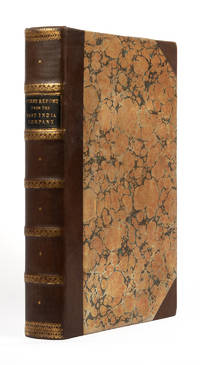
réf. 121050London Ordered by the House of Commons to be Printed 8 July 1830. . First edition; 4to 34 x 22 cm; numerous tables in text some very light occasional spotting; later half-calf to style marbled boards gilt spine in six compartments with gilt black lettering piece all edges marbled a very good copy; xxiii 500 173 pp. This was the final large-scale inquiry into the East India Company in China before their monopoly was revoked in 1833. Since the revocation of their monopoly in India twenty years prior the Company's trading power had been more and more heavily relying on tea exports through which they were able to control prices. The six sessions of the parliamentary Select Committee between February 15th and June 3rd clearly laid out the inadequacies of the Company supplying the potential trade on offer with China and more importantly the additional costs upon the British consumer through the inefficiencies associated with the Company. After 1833 the East India Company was a purely administrative body whose army was used as part of the British force in the First Opium War. Opium was one of the issues raised early on in the sessions in particular in regards to its legality and whether it therefore laid under the jurisdiction of the Company: 'is not the opium trade in China. entirely an illicit trade'. Part of the reason for revoking the Company's monopoly was that the stance they had to take in regards to opium that it was a prohibited product precluded both themselves and any other private merchants from profiting from a 'trade which is open to the rest of the world'. The rest of the report is largely concerned with the primary export from China: tea. The charts in the appendices helpfully lay clear the extent of the trade showing that on average the Company exported nearly 130000 tonnes of tea to England and America every year and the duties paid by the Company on tea to the Crown alone exceeded £3000000 a year. In large part the inquiry concerned itself with the high prices for the end English consumer resulting from the inefficiencies and protectionist practices inherent in a monopoly. The difference between the cost of tea in America versus England is highlighted with some teas being double the price in England compared to America as well as costs of ship production when compared with both America and the Crown. One of the witnesses states that 'the Company has been always anxious to promote the consumption of tea' knowing they would struggle to provide 'an adequate supply for any increased demand'. Rare in commerce with none at auction in the last 30 years. [London], Ordered, by the House of Commons, to be Printed, 8 July 1830. hardcover
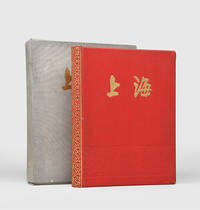
1959réf. 168621Shanghai: Shanghai renmin meishu chubanshe c. 1959. The preferred deluxe issue First edition first printing of this photobook issued by the Shanghai Municipal Government to celebrate ten years of Communist rule as well as Chinese culture history and art. Shanghai's status as the country's economic powerhouse is stressed through numerous pictures of heavy and light industries smiling workers and modern housing developments as well as of consumer goods such as fountain pens sewing machines and bicycles. Space is given to healthcare culture and the arts the historic architecture of the Bund parades and tourism. Unlike other propaganda from the period the message is uniformly forward-looking centring on developments achieved under socialism rather than recycling shop-worn condemnations of the Republican and imperial eras. Copies of this extravagant production were also issued housed in a paper box. Folio. With 21 tipped-in plates 16 colour 2 folding colour and black and white illustrations throughout. Title page printed in brown and grey. Binding designed by Ren Yi Chen Zhichu Zhang Suyu Cai Zhenhua and Qian Zhenzhi. Original red cloth spine elaborately decorated in gilt gilt calligraphic title on front cover foot of front board blocked in blind floral-patterned endpapers. Housed in publisher's folding grey cloth case title to front panel in gilt bone ties. Spine bright boards lightly soiled extremities worn spine ends and tips a little finger soiling internally else bright. A very good copy indeed in very good case with some soiling lining foxed. Parr & WassinkLundgren The Chinese Photobook: From the 1900s to the Present pp. 189-92. hardcover
réf. 11058Paris, J. Caboche, Demerville et Cie, Editeurs, 1848 (deuxième Edition, mise en un meilleur ordre). 4 volumes in-folio, (30 pp.), reliure moderne plein cuir, enrichi de planches dessinées en noir et blanc, rousseurs habituelles sinon très bon état.
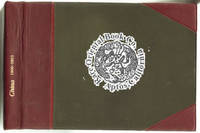
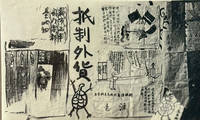
réf. 41046101China 1891-1903. Leather spine & corners over green cloth oblong: 33 x 24 cm.249 b.w. & 3 hand-colored photos firm clean & solidly bound all photos laid downmost with pencil captions & date. STUNNING COLLECTION OF EARLY IMAGES . . . ORIGINAL DATED 1891-1903 PHOTOGRAPHIC ALBUM . . . PLACES IN MASSACHUSETTS NEW YORK U.S. EAST COAST HAWAII . . . CHINA MANCHURIA &c. . THE PHOTOS: The album contains various sizes & types of photos for the most part they are either silver-gelatin types or glossy finish most are black & white finish with a few hand-colored. All photos are laid down. Size in centimeters range from the smallest: 2.8 x 4.2 cm to the largest: 28 x 21 cm. There are 249 various kinds of photo processed black & whites and 3 hand-colored Japanese photos in all. . PHOTO DESCRIPTIONS BY PAGE NUMBERS PENCILED IN UPPER CORNERS 52 PAGES IN ALL: . Most with pencil captions & some with dates: . 1. 1 Photo: THE "STARS & STRIPES" photo of the U.S. Flag . 8 x 8 cm. . 2. & 3. Pictures of 2 lions 2 horse not photos clips from . unknown source. . 4. 2 Photos: most likely around the Massachusetts area: a. Tipped over house. "After the storm Atlantic Coast U.S.A. b. Beached ship. "After the storm Atlantic coast U.S.A." . 16.5 x 11.5 cm. . 5. 2 Photos: a. U.S.A. General Putnam's house. Revolutionary War . Rutland Mass.16.5 x 11.5 cm. b. U.S.A. Birch grove in the Adirondacks New York 16.5 x . 11.5 cm. . 6. & 7. 2 Photos all the same size. a. PORT ARTHUR CHINA 1900 16.5 x 11.5 cm. b. ditto c. ditto d. ditto . 8. 4 Photos: oval square round a. Claude L. Hall Roxbury 1899 cutout portrait5.5 x 5.5 cm b. Douglas Huntington New York 1900 2.3 x 3.5 cm. oval c. Capt. Hatch U.S.S. New Orleans 3 x 4.2 cm. square d. Susie A. Nye Sugamore U.S.A. albumen type 9.5 cm. roun e. Gertrude E. Spurr 1899. Melrose 4.2 x 7.2 cm. square . 9. 4 Photos: all oval cut outs albumen types. a. Charles S. Fuller Cambridge 1891 8 x 11.2 cm. b. E. Gertrude Dymond 91 Roxbury size ditto c. Alice J. Raymond Cambridge 1891 size ditto d. Gertrude E. Spurr Boston 1891 size ditto . 10. 3 Photos: a. Mama at Leomuslir U.S.A. May 1903 5.4 x 8 cm. b. Mrs. Caleb Saundres of Lawrence U.S.A. and her tiny lap . dog 1903 10 x 18 cm. c. Massachusetts U.S.A. Shows 4 horse-team buggy with . riders. 16.5 x 11.5 cm. . 11. 9 Photos:Aboard Steamship Heading to China actually 3: a. Captain Patterson of the China Merchants Steamship . Navigation Company 4 & 4 photos per print 7 in all of . him 10.8 x 4.3 & 5.8 x 4/3 cm. b. Hsing Fung in Chinese waters: captions for each of the . 4 people: Mrs. Nye Mrs. Roller Captain Patterson . Captain Roller on board 1902 8.4 x 8.3 cm. c. 4 people: Captain Patterson Mrs. Roller Captain Roller . Dr. Nye China on board C.M. Hsing Fun 19028.4 x 8.3 cm . 12. 3 Tientsin Photos: a. Coolies carrying wool Tientsin. 1902 8.4 x 8.3 cm. . b. Hoisting sail on Chinese boat Island canal Tientsin . 1901 8.4 x 8.3 cm. c. Tientsin Posing for their picture 1903 8.4 x 8.3 cm. . 13. 4 Tientsin Photos: a. Chinese kids fishing Tientsin 1903 8.4 x 8.3 cm. b. Our tennis orator Tientsin 1902 10 x 14.2 cm. c. Chinese soldiers on Chinese ponies Tientsin 1903 10 x . 14.2 cm. d. Chinese kids Tientsin 1902 9 x 6 cm. . 14. 6 Photos: a. Harry S. Nye Los Angeles Ca. Sept.16 1900 11.8 x 2.4 . cm. 6 views. b. Edwin H. Jose Jr. 1898 Whiteface N.H. c. U.S.A. Horvace F. Cooks & Joto Leominster Mass. 1902 . 5.5 x 8.3 cm. d. Ellen R. Nye Sagamore Bach 1899 5.5 x 8.3 cm. e. Harold J. Cook Alice L Jose Grace P. Cook Susan C. . Will Leominster Mass U.S.A. 1898 8.5 x 8 cm. f. Jor Leominster Mass U.S.A. 1902 83 x 55 cm. . 15. 5 Tientsin Photos all the same size: a. 1902 Mrs. Daniel B. Nye Tientsin China riding . rickshaw 8.5 x 8 cm. cm. b. One corner of our home Tientsin China 1902 Rue de . France. c. 1902 Dr. Daniel B. Nye Tientsin China riding rickshaw. d. Rue de France 1902 our home Tientsin China. e. Rue de France 1902 our home Tientsin China. . 16. 4 Tientsin Photos: a. Mary Allen as "Old Lady who Lived in the shoe" at church . of England's fair Tientsin China 1902 13.7 x 9.3 cm. b. A typical Chinese temple pagoda 8.5 x 8 cm. cm. c. At the mouth of a pottery kiln China 1902 ditto size. d. Children who took part in the Church of England fair at . Tientsin China 1912 13.7 x 9.3 cm. . 17. 1 Large Tientsin photo: a. Tientsin China 1904 photo of 14 foreign women each . dressed in the same kind of dress similar to 15 a "old . lady who lived in a shoe" 27.5 x 21.5 cm. . 18. 5 Mass. Photos first 4 faded: a. Witch house Salem Mass. U.S.A. 11.5 x 9.2 cm. b. House in which was born a famous witch Ann Hutchinson . Dainero Mass U.S.A. 11.5 x 9.2 cm. c. Edwin H. Jose Jr. Cambridge Mass U.S.A. 4.5. x 10 cm. d. Old Fort Sewall Marblehead Mass. U.S.A. 9.7 x 9.5 cm. e. Cutout portrait Ellen Nye Crowell Sagamore Mass. . U.S.A. 5 x 4.5 cm. . 19. 4 China Photos all the same size.: a. Dr. Drake rowing Major O'Brian washing boat Grand . Canal China 1902 8.5 x 8 cm. b. Speaks for itself. c. Mrs. D.B. Nye Grand Canal China sampan 1902 d. A yard of roses Hsi-Ku China 1902. . 20. 1 Large Chefoo photo: a. Chefoo China from Temple hill. Panoramic view of the . city 1903 20 x 14.7 cm. . 21. 4 Galesburg Il. Photos all same size; a. Uncle Alpheus' house at Galesburg Illinois 12 x 9.5 cm. b. Willard Dean New years' Day 1902 Galesburg U.S.A. c. At aunt Lizzie's Galesburg Aug. 1901. d. Uncle Alpheus & Aunt Lizzie in the library 1901 . 22. 2 Chefoo China Photos: a. Chow time at Deaf & Dup school Chefoo China9.7 x 7 cm. b. Mrs. Mills teaching sound to the deaf & dumb children . Chefoo China 1902 size ditto. . 23. 4 PHOTOS; HONOLULU & MT. PLEASANT MASS.: a. Leaving Honolulu H.T.on Hong Kong Maru 19018.5 x 8 cm b. Mama. Mt Pleasant St. Cambridge Mass 1903 12 x 9.5 cm. c. Mamma Mt Pleasant St. Cambridge Mass 1903 12 x 9.5 cm. d. Leaving Honolulu H.T.8.5 x 8 cm. cm. . H.T. means Hawaiian Territory now commonly called "T.H. . 24. 1 China Photo: a. The old Cedar Grove at the Ming Tombs Trees 300 years . old June 1903. China 9.7 x 7 cm. . 25. Three Naukow Pass China photos all same size: a. A laden camel caravan passing through Naukow Pass to . Kalgan June 1903 9.7 x 7 cm. b. Mr. Westerdorf and a caravan at rest at a hamlet in the . Naukow Pass June 1903. c. A difficult road Through Naukow Pass June 1903 Boy on a . Donkey. . 26. 4 Photos of Japan all same size: a. Japan 1901 Hakone Lake 13.3 x 9 cm. b. Japan 1901 Yumoto hand colored. c. Fujiya Miyanoshita hand colored c. Miyanoshita Japan 1901 hand colored 2 left corners . torn away. . 27. 6 Photos of Chefoo China: a. En route to Temple Hill Chefoo China 1903 she is . being carried by two coolies ca. 8 x 6 cm. b. Qu Lieuws Ryukyu Mud World 1902 4.5 x 5.8 cm. c. Same caption as b ca. 8 x 6 cm. d. Same caption as a ca. 8 x 6 cm. e. Chefoo Harbor in the background 1903 ca. 8 x 6 cm. d. same caption as e ca. 8 x 6 cm. . 28. 5 Peking & near Peking China photos: a. Mr. Westerdorf ready to start from the inn at . Tschong-ping-Jir June 1903 9.7 x 7 cm. b. Peking from drum tower looking toward the Forbidden City . ditto size c. Mr. Westerdorf on Rice Road Techong-ping-jir June 1903 . ditto size. d. Queen's Hotel at Wei-hai-Wei August 1903 oval 6.2 x . 6.8 cm. e. The main street and South Gate with bell in it . Tschong-ping-Jir June 1903 9.7 x 7 cm. . 29. 4 Peking China Photos 1903. all same size 9.7 x 7 cm.: a. A whole in the Great Wall at Pa li-ling June. b. Native bridge near Sehah-ho-chow on the way to the Great . Wall from Peking June. c. The main entrance to the largest Ming Tombs June. d. 3000 years old stones at Confucius Temple Peking 1903. . 30-38 A series of 10 RARE original photos of the YAO people and other views of northwestern "Kwangtung Guangdong area 9 of 10 are large size: 19 x 14 cm. dated 1903. . The American visitors go to see the native Yao people in their primitive villages and environs. . Excellent ethnographic examples clear fine RARE images. . a. Family scene in primitive mud-brick hut thatched roof dirt poor but in native home-spun embroidered & stitched clothing. Grandma & another woman wears the traditional "Bow" elaborate hair dress. With a long caption: "A group of Yao people Kwantung province." . b. "Dwelling house of the Yao people made of bamboo & grass." Thatched hut in the rocky hillside wilderness. . c. Terraced cultivated hillsides in the Yao peoples country." d. Yao woman and her son working in the tea fields." . c. "Rain clothing worn by the Chinese in Kwantung.bamboo hats grass capes and skirts." Shows two river craft. . 36. "Wall washed away at time of cloud burst at Chefoo-China July 1903" 8.5 x 6.5 cm. . Continue with large format photos 19 x 14 cm. dated 1903 of northwest northern part of Kwangtung: . 37. "In the northern part of Kwantung province nearly every village has a large house beside the village which is intended as a place of retreat for the villages in attack by robbers. fort house." . 38. "Temple Dr. Drake lived in for a short time." . 39. Return to the first format: 4 China photos 1903: a. "Chinese beggar at Chefoo" 7 x 9 cm. b. "Typical entrance to Chinese Temples" Peking 14.5 x 10 . cm. c. "View of Chefoo North China" ditto size. d. "Temple built to the Gods by a young Chinese who vowed to . built of if the Gods would cure him of sickness 100 mile . from Peking" 7 x 9 cm. . 40. 4 Photos of USA: a. The U.S.S. Olympia going down the Hudson River to . anchor after saluting at Grant's tomb During the Dewey . celebrations. The U.S.S. Chicago behind her. USA. Compose . of 2 separate but adjoining photostogether:16.8 x 12 cm . b. Blanch Jewel Boston U.S.A. 1891 outline photo 3 x 8 . cm. 1891. c. Mr. ad Mrs. Caleb Saunders Laurence Mass. 7 x 12.5 cm. . An elaborately dressed couple. . 41. 3 Famous Forbidden city Peking China photos all the . same size: 9.8 x 8 cm.: a. Dr. Westerdorf at one of the gates to Confucius Temple. b. Sacred stone dragon Confucius Temple c. Mr. Westerdorf and 'boy" under the Marble Arch of Llama . Temple Peking. . 42. 6 Photos Sagamore Mass. & Honolulu 1901: a. "Our Home" Sagamore Mass. 8.5 x 7.5 cm. b. 1900 Falls at Newton Mass. round photo: 7.8 x 8 cm. c. Honolulu Hawaii 1901 8 x 5 cm. d. Our barn Sagamore Mass. 8 x 5 cm. e. "Winchester U.S.A. duds" shows 3 kids 1 in American . Indian dress the others cowboy "duds" 4.5 x 6 cm. f. Mr. Stowell leaving 1901 Honolulu 8.5 x 6.5 cm. . 43. 3 Photos Tientsin China 1902 all 8.5 x 6.5 cm.: a. "Rue de France: Dr. Nye in his Tientsin office Mr. . Roding in the dental chair." b. Daniel Butler Nye DDS in his office at Tientsin. c. Dest in Rue de France office. . 44. 5 Photos aboard ship in China all 8.5 x 6.5 cm.1901: . corners clipped: a. Lt. Morgan asleep in his bunk on U.S.S. Monocacy Tanku b. Drill aboard U.S.S. Monocacy Tangku c. U.S.S. Monocacy leaving dry dock Tongku d. " " ditto e. " " " . 45. 5 China Photos of the U.S.S. Moncacy Tongku 1901 a. Captain Roller of the U.S.S. Monocacy 8.5 x 6.5 cm. b. Mrs. Roller " " " ditto c. U.S.S. Monocacy leaving dry dockTongku faded7.5 x 6.5 d. ditto above e. ditto above not faded same size . 46. 6 China Tientsin & U.S.A. photos 1902-03: a. Part of front room at Rue de France 1902 8.5 x 6.5 cm. b. Mama on Amb. Emmuii's Piazzco Leominster Mass 1903 . 5.5 x 8 cm. c. "Ah Chin" in dining room Rue de France 6.6 x 4.8 cm. d. Corner of front room at Rue de France 19024.2 x 8.2 cm. e. Round photo "Enjoying Kipling 1902 4 x 4.5 cm. f. Side board in dining room at Rue de France 8.5 x 6.5 cm. . 47. 8 Blue pictures of photos of family & friends. . 48. 2 Photos of Peking & Shanghai China: a. Temple in which the Emperor was imprisoned . Empress Dowager Peking 1900 14.5 x 10 cm. by the b. Chinese pagoda Shanghai ca. 9 x 12 cm. . 49. blank . 50. 6 Photos of Tientsin China: a. Grand StandTientsin Race Club in Race Way 19027.8 x 5. b. Japanese Temple 8.5 x 11 cm. c. Hsi Shan Terrace Tongshan 1903 Residence of Me and . Mrs. G.B. Wikow 12 x 9.5 cm. d. French market Tientsin 1902 8.7 x 3 cm. e. Chinese children Tientsin 1902 2.5 x 4 cm. . 51. 3 Photos of China: a. Old tombs in interior of China. Where a man became old and useless he would have this tomb built around him with only small opening at top where his family put in food each day until he died. 15 x 10 cm.Korean penciled above this . b. Making pottery Tientsin 1902 9.7 x 7 cm. c. Blind musician Chefoo 1903 9 x 10.5 cm. . 52. 4 China Photos. a. God of Transmigration In Buddhist Hall breaking the bones of wicked Chinese on the Wheel of torture by the Monkey King 15 x 10.5 cm. . b. Rear view of the 'steam roller' making roads Tientsin . 1902 7.5 x 6 cm. c. Chinese prisoners going for trial British concession . Tientsin 1902 7 x 8.5 cm. d. Photo of Boxer placard 1900 15 x 10.5 cm. . End of photo album. . A rough list of names places dates &c. in order of appearance: . 1900 Los Angeles Sept. 151900: Harry S. Nye 1898 Whiteface N.H. Edwin H. Jose Jr. 1898 Mass. Horace F. cook Alice F. Jose Grace P. Cook Samuel C. Willard Leominster Mass. 1902 Horvath F. Cook and "Joe" dog Leominster Mass. 1902 "Joe" Leominster Mass. 1898 Ellen R. Ne Sagamore Beach Tientsin 1902-1903 . OF ANTHROPOLOGICAL INTEREST: PHOTOS OF YAO PEOPLE: . The album contains 5 superb images large size: 19.5 x 14 cm. illustrating the Yao minority in native costume their hand-made dwellings terraced rice paddy sea-worthy vessels tea fields &c. Each with lengthy pencil caption dated 1903 documenting Yao living in Kwantung province. Located in southern tip of the Liaodong Peninsula near Port Arthur Manchuria. . About the Yao nationality its great majority branch is also known as Mien or Pinyin: Yáo zú; and as "Ngui Dao" in Vietnamese. They form one of the 55 ethnic minority groups officially recognized by the People's Republic of China where they reside in the mountainous terrain of the southwest and south. They also form one of the 54 ethnic groups officially recognized by Vietnam. In the last census in 2000 they numbered 2637421 in China and roughly 470000 in Vietnam. . Origins of the Yao Iu-Mien can be traced back 2000 years ago starting in Hunan Province. . The Yao people were among the rebels during the Miao Rebellions Ming Dynasty along with the Miao people against the Ming dynasty. . Around 1890 the Guangdong government started taking action against Yao in northwestern Guangdong. . Emigration from the late 1800s to early 19th century the Yao migrated into Thailand Vietnam and the highlands of Laos. The migration was agitated by the opium trade said by the Chinese government. But The Iu Mien say all the emigration was because of the Chinese taking their land. . A group of 61000 people on the island of Hainan speak the Yao language Kim Mun 139000 speakers of Kim Mun live in other parts of China Yunnan and Guangxi and 174500 live in Laos and Vietnam. . Color photos are posted to our website. . CONDITION: THE IMAGES: The photographs are for the most part very clear vivid most little or no fading saying that there are a few each noted that are faded. There are 3 hand-colored Japanese images. Naturally there is some of the typical fading of some of the photos depending on the process. By and large overall an excellent examples. . Prior to coming to us there was a small number of photos extracted from the album the above list and count are accurate for what is present. . The captions are original in pencil in some places for better understanding we added "." to capture the creator's affect or to separate our comments. . THE ALBUM: The album has red 3/4 leather binding the spine is neatly re-backed the corners also neatly replaced with matching leather with gold-stamped cover title: "PHOTOGRAPHIEN" & spine title: "CHINA 1900-1903." . The balance of the covers are in green cloth which has gold rule lines with cover title: "Photographien" most likely of German/Austrian origin ca. 1880-90's vintage. . Album pages are solidly cloth hinged firm and serviceable there are no stains or other obtrusive marks inside. . There are a few lower right page corners rubbed chipped a few broken away typical for an item 120 years old. . BIBLIOGRAPHY: en-wikipedia-org/wiki/Yao_people . . unknown
1788réf. 314738Paris: chez l'auteur . et chez Ponce 1788. First editions. Vol 1: Title 24 plates and 24 leaves of text; vol 2: title dedication 24 plates and 24 leaves of text. 4to. Contemporary green morocco with gilt Greek key borders pink silk endpapers a.e.g. Corners rubbed spine a touch browned marginal foxing in first volume and to a few leaves in second. First editions. Vol 1: Title 24 plates and 24 leaves of text; vol 2: title dedication 24 plates and 24 leaves of text. 4to. First editions beautifully and fully engraved. The first volume is on the life of Confucius the second details notable events in the reigns of various Chinese emperors. The plates were made after a series of drawings by the Jesuit missionary Joseph Marie Amiot. Cohen-De Ricci 479; Lust 729 1133. Provenance: Francis John Hughes bookplate chez l'auteur ... et chez Ponce unknown
réf. FRE47The collection comprises 207 glass negatives 161 sheet-film negatives preserved in 32 contemporary negative boxes 33 original silver gelatin photographs and 23 sequential newsreel frames together documenting urban life foreign concessions political unrest transportation military activity rural society and the aftermath of the devastating Shanghai typhoon of 1926. The negatives are housed in contemporary photographic boxes manufactured in London and in Rome. One of the boxes bears a contemporary Chinese inscription reading 风景照片 "Landscape Photographs " while another carries a handwritten notation mentioning the Chino-Italian Bank Huayi Yinhang together with the partially legible European name "G. Perez " strongly suggesting that the archive belonged to or was compiled by an Italian associated with the bank during his residence in China. The collection appears to have been assembled between approximately 1923 and 1926 the period during which the compiler was active in China. Most of the negatives were almost certainly exposed by the compiler himself while a smaller group—particularly several dozen slightly softer copy negatives depicting well-known late Qing punishment scenes—were likely reproduced from earlier photographs or commercially available prints and incorporated into the archive. Such compilation was common among professional photographers journalists and foreign residents in China during the Republican period. The archive documents both the international settlements and the Chinese cities surrounding them. Shanghai is represented by numerous views of the Bund and waterfront the construction of the North China Daily News Building Kiangse Road and other streets together with more than thirty photographs recording the widespread destruction caused by the Shanghai Typhoon of 1926 including collapsed buildings wrecked vessels damaged railway equipment debris-strewn streets and emergency conditions in the city. These negatives clearly dated 6th of July 1926Tianjin is documented through views of the Italian Concession Municipal Council Building the British General Consulate Piazza Regina Elena panoramic views of the city and a remarkable series depicting groups of Italian residents posing with local Chinese inhabitants and railway workers. Additional photographs depict the Nanjing City Wall river traffic traditional passenger boats rural villages with vernacular courtyard farmhouses agricultural labour grain harvesting shrine interiors and everyday life in the Chinese countryside. Around two dozen photos depict sights in Beijing and the Great Wall another 10 photos show Beijing Ancient Observatory and its instruments on the rooftop terrace. Of particular historical significance are photographs recording the political tensions of Republican China. These include contemporary images of Chinese demonstrations walls covered with political slogans and hand-painted inscriptions and Chinese troops marching through the streets apparently in preparation for or during the suppression of protests. The archive also contains photographs of North Chinese irregulars or bandits armed with rifles military units railway stations—including a sequence from Lingcheng Station possibly connected with the widely reported Lincheng railway incident—and numerous scenes illustrating the growing military presence in North China during the turbulent years preceding the Northern Expedition. A separate group comprises approximately three dozen copy negatives reproducing well-known photographs of late Qing judicial punishments dating originally from the 1890s through the final years of the Qing dynasty. Among them are views associated with the Jiangnan Examination Hall and other widely circulated images illustrating penal practices that had attracted considerable attention in contemporary European publications. Their slightly softer appearance compared with the rest of the archive suggests that they were copied from earlier photographic prints or negatives rather than exposed directly by the compiler reflecting the common practice of incorporating historically significant documentary images into personal photographic collections. The presence of the Chino-Italian Bank annotation together with the concentration of photographs relating to the Italian community in Tianjin and Shanghai strongly suggests that the compiler was closely connected with the Italian commercial presence in Republican China. Rather than functioning solely as a photographer he appears to have assembled a comprehensive visual record of contemporary China combining his own documentary photographs with acquired negatives illustrating subjects of historical or journalistic interest. The result is an unusually coherent archive documenting China during the politically volatile years immediately preceding the Northern Expedition viewed through the perspective of a member of the small Italian expatriate community active in the country's treaty ports. unknown
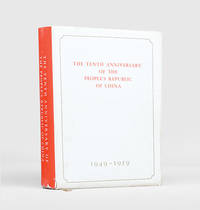
1959réf. 185410Beijing: no stated publisher 1959. A grandiose photobook First and only edition with a printed compliments card from the preparatory committee for the anniversary celebrations. Though unmarked as such this copy was owned by Solomon Adler one of the select group of Westerners permanently resident in China during the Mao era. The 1959 festivities signalled China's growing independence on the international stage and its stepping out of the Kremlin's shadow. This lavish production carefully compiled and printed at great expense is a comprehensive pictorial review of events held on and around 1 October 1959. It begins with the text of addresses by Liu Shaoqi Zhou Enlai Lin Biao Deng Xiaoping and Song Qingling followed by vistas of famous architectural landmarks such as Tiananmen Square and the Museum of the Chinese Revolution. Photos of a meeting and banquet held in the Great Hall of the People accompany shots from the National Day parade showing fireworks dancing and flowers. Mao and Khrushchev feature prominently as do images of diplomatic events and of politicians inspecting industrial exhibits architectural landmarks and cultural artefacts. An economist by training Adler 1909-1994 worked in the US in the 1940s but later fell under suspicion during the "red scare." After a period spent at Cambridge University he moved to China in 1962 living in Beijing until his death three decades later and working on the official Chinese translation into English of Mao's Selected Works. Folio. With tissue-guarded portrait frontispieces of Mao Zedong and Liu Shaoqi tipped in many illustrations 9 folding in text. Original white cloth spine lettered in gilt on red ground compartments elaborately tooled in gilt front board with gilt and red emblem of the People's Republic of China "1949-1959" lettered below in gilt silver silk bookmarker. With dust jacket. Housed in original card box. Binding with touch of wear couple of illustrations slightly proud where incorrectly refolded; jacket flaps without price as issued a few closed tears and chips scuffing: a near-fine copy in very good jacket and like box with some toning and marking. hardcover
1973réf. 2091202133213203Gakushu Kenkyusha 1973. Soft Cover. Fine. Number of books: 4 books in total Gakushu Kenkyusha paperback
1954réf. 030011Hong Kong 1954 K. Weiss Hardcover 1st Edition Signed by Author
1955réf. 140030Peking 1955. Zwei blaue Blockbücher mit OTitelaufkleber in Kassette mit Rohseidebezug und zwei Elfenbeinschließen und OTitelaufkleber. 31,5 x 21 cm (Folio).
1788réf. 314738Paris: chez l'auteur . et chez Ponce 1788. First editions. Vol 1: Title 24 plates and 24 leaves of text; vol 2: title dedication 24 plates and 24 leaves of text. 4to. Contemporary green morocco with gilt Greek key borders pink silk endpapers a.e.g. Corners rubbed spine a touch browned marginal foxing in first volume and to a few leaves in second. First editions. Vol 1: Title 24 plates and 24 leaves of text; vol 2: title dedication 24 plates and 24 leaves of text. 4to. First editions beautifully and fully engraved. The first volume is on the life of Confucius the second details notable events in the reigns of various Chinese emperors. The plates were made after a series of drawings by the Jesuit missionary Joseph Marie Amiot. Cohen-De Ricci 479; Lust 729 1133. Provenance: Francis John Hughes bookplate chez l'auteur ... et chez Ponce unknown books
1828réf. 7462Paris, Baudouin frères, 1828. 4 volumes in-8 en demi-maroquin vert à grains longs, avec coins, dos lisse orné de fers romantiques, doubles filets dorés sur les plats, non rogné, avec les couvertures conservées des 10 livraisons de l'édition de Baudouin, mais également les couvertures - verte et jaune de 6 de livraisons de l'édition des vignettes chez Perrotin, avec un envoi autographe de ce dernier. Belles reliures Pastiches dues au maître du genre, Bernasconi. La reliure est signée par Bernasconi.
2005réf. 4059Meaux, Editions de la Revue Conférence, 2005. Un volume grand in-4 (281 x 380) en feuilles de 44 pages non chiffrées. Couverture blanche rempliée, sous emboîtage pleine toile brune. Parfaite condition.
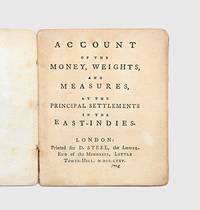
1775réf. 191552London: Printed for D. Steel 1775. Catties cowries candarines and comashees An otherwise untraced pocket reference for supercargos with alphabetically arranged sections for major destinations along eastern trade routes including China Medina Mecca Bengal Bombay and Batavia. The final page concerns Japan evidence of British commercial dealings with the Dutch East India Company. Pages 19-24 concern the sterling value of local coins offering exchange rates for the Chinese tael a Bengali English crown and for sequins dollars piastres and other currencies used in Arabia. For Bengal a special section discusses sea shells cowries as a currency for "coolies labourers and other small payment" over 2400 cowries making one "current rupee". The publisher David Steel 1734-1799 specialized in handbooks charts maps and other maritime material for naval use and for seaborne commerce. Trading out of his warehouse at Little Tower Hill Steel built a publishing empire that was continued by his son of the same name and his daughter-in-law Penelope Steel. The latter continued the business alone following David Steel the younger's death in 1803. In 1775 Steel published two other longer works for the India and China trade including the 56-page Indian Trader's Complete Pocket-Assistant which was an expanded form of the present handbook. Small duodecimo pp. 24. Sewn into contemporary marbled wrappers edges trimmed. Housed in custom grey card box. 1974 ownership signature of one E. Harris on inner front cover; date added in same ink on title page. Covers rubbed some browning internally: well-preserved. Not in ESTC or Witt. unknown
1867réf. 193376Mainly China and Japan: 16 October 1863 - 29 July 1867. Tensions and turbulence in the treaty ports A revealing source spanning Courtenay's entire East Asia command during which Scylla - a wooden screw corvette - patrolled the coast of China and Japan. Courtenay spent five months as the senior officer in charge of the Shanghai division bringing him into contact with the likes of Sir Harry Parkes and also co-ordinated anti-piracy operations. Courtenay 1820-1894 made captain in 1859 and was promoted to vice-admiral in 1881. These letters report on Scylla's movements and occurrences onshore. Many recently opened cities were still tense and Western officers and civilians faced jeering stone-throwing and other acts of xenophobia. A lengthy letter from 2 September 1864 sent to Vice-Admiral Sir Augustus Kuper the commander-in-chief describes anti-foreign sentiment in Nagasaki in the wake of the Namamugi Incident and the Battle of Shimonoseki Straits. He records measures taken to counteract the influence of soldiers deployed in disguise by the hostile Choshu domain and relays rumours of a Choshu attack on the European enclave. "Considering that there are fifty people here either Dutch or under Dutch protection I am surprised that there should be no vessel of war of that nation here." In Amoy the ship's arrival "caused great excitement: numerous reports were spread of the reason of her coming among others are to the effect that we had landed several hundred men and that I was going to the city to seize the tautai" 26 December 1865. Care was also required in dealing with the Russians Courtenay reminding his officers to be "extremely guarded in asking questions or making observations" 25 July 1866. Other correspondence concerns piracy. Courtenay found the Chinese maritime police "utterly inefficient" 30 November 1865 and used his authority to send the gunboat HMS Grasshopper to seize lorchas on the coast. Quarto 320 x 205 mm. With 70 leaves filled with neat manuscript in several hands 2 bound- or tipped-in manuscript slips; additional blank. Recent quarter calf spine lettered in gilt green cloth sides front cover lettered in gilt green endpapers. A little marking internally: a well-preserved example. hardcover
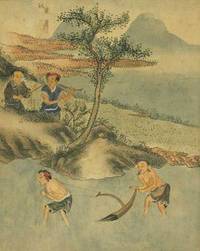
1920réf. 218778China Late 19th or early 20th century. 34 scenes on paper each featuring several figures in traditional dress disporting themselves amid landscapes and in a few instances houses all done by the same artist. Each picture is a separate scene; subjects include fishing visiting boating farming wrestling courting harvesting rice and hunting--a particularly effective image shows a tiger hunt and several scenes include wild and domestic animals. 1 vols. Images measure 8-3/4 x 7 inches plus margins bringing the overall page size to 11 x 8 inches. The mounted leaves are linked in the Oriental accordion fashion and contained within two substantial wood covers. Fine condition. 34 scenes on paper each featuring several figures in traditional dress disporting themselves amid landscapes and in a few instances houses all done by the same artist. Each picture is a separate scene; subjects include fishing visiting boating farming wrestling courting harvesting rice and hunting--a particularly effective image shows a tiger hunt and several scenes include wild and domestic animals. 1 vols. Images measure 8-3/4 x 7 inches plus margins bringing the overall page size to 11 x 8 inches. A very interesting and engaging collection of genre scenes. The trees rocks and landscapes are particularly well rendered and the figures are full of life. unknown
1810réf. 38599Canton Guangzhou workshop 1810. Watercolour and opaque body-colour with ink on thick chinese paper depicitng 1. A Temple Compound and 2. An Imperial Pleasure Garden. Sheet size: 16 1/8 x 22 inches. An exceptional pair of Chinese export watercolours rich in architectural detail exemplifying the pictorial conventions developed to frame China for European eyes. A fine pair of large-scale architectural fantasy views produced in a Canton workshop for the export trade at the height of the China Trade period. The compositions exemplify the hybrid artistic language developed for Western patrons by Chinese painters trained in native techniques yet attuned to foreign tastes for picturesque and monumental subjects. The first painting depicts a two-courtyard Buddhist or Taoist temple approached through a three-bay shan-men ceremonial gateway flanked symmetrically by drum and bell towers. A painted screen wall in the inner court displays guardian deities in brilliant red while the gilded Buddha presides from an elevated rear hall. The temples architecture is stylized but evocative of southern Chinese religious compounds. Above the gateway a plaque bears brush-written characters reading "Beautiful Hall of Profound Reverence" a fictive name likely invented by the workshop for decorative effect rather than to identify a specific site. The second painting shows a walled palace complex centered around a multi-tiered pavilion rising from a lotus pond filled with sculptural rocks and pleasure boats. Dragon grottoes stone causeways and ornamental bridges evoke the fantastical terrain of imperial parks such as the Yuanmingyuan rendered here in a compressed stage-set perspective. White elephants bearing crimson banners guard the main gate signaling a courtly or ceremonial setting. While reminiscent of northern gardens the details are compositional inventions rather than topographical records. The palette vermilion malachite green gamboge and carbon black and the use of crisp ink outlines are typical of late 18th-century Canton export workshops. Unlike smaller pith-paper images destined for albums these works were painted on thick laid paper of generous dimensions. Loose drawings such as these were often compiled into custom albums in British India where Chinese watercolours were often combined with Indian and Persian material to appeal to the tastes of British collectors. The Persian-Urdu foliation on the verso indicates their inclusion in such a collection likely assembled in Calcutta or Lucknow in the early 19th century. While drawing upon recognizable architectural forms and cultural symbols the views are best understood as imaginary or composite constructions designed to satisfy European curiosity about China. The temple compound reflects generic southern typologies while the palace garden borrows selectively from northern models such as the Yuanmingyuan. unknown
1895réf. 32714Ca. 1895 / 96. Format fast 4°. (Original) Halbleder. [5 Warenabbildungen]
réf. 218778China Ca. first half of 19th century. 34 scenes on paper each featuring several figures in traditional dress disporting themselves amid landscapes and in a few instances houses all done by the same artist. Each picture is a separate scene; subjects include fishing visiting boating farming wrestling courting harvesting rice and hunting--a particularly effective image shows a tiger hunt and several scenes include wild and domestic animals. 1 vols. Images measure 8-3/4 x 7 inches plus margins bringing the overall page size to 11 x 8 inches. The mounted leaves are linked in the Oriental accordion fashion and contained within two substantial wood covers. Fine condition. 34 scenes on paper each featuring several figures in traditional dress disporting themselves amid landscapes and in a few instances houses all done by the same artist. Each picture is a separate scene; subjects include fishing visiting boating farming wrestling courting harvesting rice and hunting--a particularly effective image shows a tiger hunt and several scenes include wild and domestic animals. 1 vols. Images measure 8-3/4 x 7 inches plus margins bringing the overall page size to 11 x 8 inches. Album of 34 Original Chinese Watercolors. A very interesting and engaging collection of genre scenes. The trees rocks and landscapes are particularly well rendered and the figures are full of life. The pictures in many such albums often follow a sequence of events going on a journey etc.; this one gains by having a variety of unconnected events and individuals and the whole production is a delight to behold. unknown books
1673In-8°, 16 cc, pp. 327, più errata, c. di tav. ripiegata (Situs provinciarum imperii Sinici), occhietto, vignetta calcografica sul frontespizio, illustrazioni calcografiche. Rilegatura in pergamena con nervi e titolo al dorso. ROUGEMONT (Franciscus de), b. a Maastricht il 2 aprile 1624, d. a Chang-chu (Cina) il 4 novembre 1676. Nelle scuole dei gesuiti a Bruxelles e Anversa fece i suoi studi inferiori con risultati brillanti e nel1641entrò nella Compagnia di Gesù. All'assedio di Kortrijk nel 1646 si distinse, sebbene non fosse ancora un sacerdote, per il suo zelo nella cura dei soldati feriti. Nel 1654 ricevette la consacrazione del sacerdote e, quando padre Martino Martini, procuratore della missione cinese in Europa, venne a cercare missionari per questo lavoro, riuscì a convincere i suoi genitori a richiedere quella missione a favore del figlio dal Generale dell'Ordine. L'anno seguente partì da Amsterdam per Lisbona con il gesuita di Amsterdam Ignazio Hartoghvelt. Dopo un ritardo a Coimbra, lasciarono Lisbona il 30 marzo 1656 e arrivarono il 6 novembre a Coa. A piedi, continuò il suo viaggio lungo la costa di Malabar, Visschersen Transvancore, e poi attraversò il Siam, dove il suo compagno Hartoghvelt morì a Yoethia nel 1658. Nello stesso anno, de Rougemont raggiunse Macao, e nel 1659, raggiunse la corte imperiale, in Cina. I cristiani da lui formati sono stati riconosciuti per il loro zelo e conoscenza della religione. In seguito a una violenta persecuzione dei cristiani durante la minore età dell'imperatore Kang-hi i missionari furono portati prigionieri a Pechino, poi esiliati nel Canton e imprigionati nella chiesa per 6 anni. R. capì che questa persecuzione aveva la sua ragione principale nella nazionalità straniera dei missionari. Per togliere quest'arma dalle mani degli avversari, pensò di addestrare un clero nativo e pensò che consentire una liturgia della chiesa in lingua cinese avrebbe promosso questo piano. Nel 1667 inviò un dettagliato memorandum al generale dell'ordine Oliva (stampato in Analecta Bollandiana XXXIII (1914), 279-93). Solo nel 1671, quando l'imperatore Kang-hi fu convinto dell'innocenza dei missionari, questi tornarono alle loro congregazioni cristiane. Il Rougemont ha continuò il lavoro interrotto per altri 5 anni. Durante un viaggio verso l'isola di Tsong-ming, si ammalò a Tsang-chu e morì tra le braccia di Padre Couplet. I suoi fedeli cristiani vennero per raccogliere il corpo del loro padre spirituale e dopo due giorni di cammino lo seppellirono solennemente sul Monte Voxan fuori dalla città di Changsho. Egli aveva usato il tempo della sua disoccupazione forzata per compilare la sua Historia Tartaro-Sinica nova (Lovanii 1673), in cui racconta ampiamente la persecuzione subita. Il Rougemont ha dato un ottimo contributo alla conoscenza della letteratura cinese. Con i padri Intorcetta, Herdrich e Couplet, intraprese l'importante lavoro: Confucius Sinarum philosophus, messo in stampa nel 1687 per ordine di Luigi XIV a Parigi. In-8 °, 16 cc, pp. 327, plus errata, folded table (Situs provinciarum imperii Sinici), half-title, woodcut on the title page. ROUGEMONT (Franciscus de), b. in Maastricht on April 2, 1624, d. in Changchu (China) on November 4, 1676. In Jesuit schools in Brussels and Antwerp he made his lower studies with brilliant results and in 1641 he entered the Society of Jesus. At the siege of Kortrijk in 1646 he distinguished himself, even if he was not yet a priest, for his zeal in caring for wounded soldiers. In 1654 he received the priest's consecration and, when Father Martino Martini, procurator of the Chinese mission in Europe, came to look for missionaries for this job, he managed to convince his parents to carry out that mission in favor of his son by the General of the Order. The following year he left Amsterdam for Lisbon with the Jesuit of Amsterdam Ignazio Hartoghvelt. After a delay in Coimbra, they left Lisbon on 30 March 1656 and arrived on 6 November in Coa. On foot, he continued his journey along the coast of Malabar, Visschersen Transvancore, and then he crossed Siam, where his companion Hartoghvelt died in Yoethia in 1658. In the same year, Rougemont reached Macau, and in 1659, he reached the imperial court , in China. The Christians he trained were listed for their zeal and knowledge of religion. Following a violent persecution of Christians during the minor age of Emperor Kang-hi, the missionaries were taken prisoner to Beijing, then exiled to the Canton and imprisoned in the church for 6 years. R. understood that this persecution had its main reason in the foreign nationality of the missionaries. To remove this weapon from the hands of opponents, he thought of training a native clergy and thought that allowing a Chinese-language church liturgy would promote this plan. In 1667 he sent a detailed memorandum to the general of the order Oliva (printed in Analecta Bollandiana XXXIII (1914), 279-93). Only in 1671, when Emperor Kang-hi was convinced of the innocence of the missionaries, did they return to their Christian congregations. Rougemont continued the interrupted work for another 5 years. During a trip to Tsong-ming Island, a Tsang-chu fell ill and died in the arms of Father Couplet. His faithful Christians came to collect the body of their spiritual father and after two days of walking they saw him solemnly on Mount Voxan outside the city of Changsho. He had used the time of his forced unemployment to compile his Historia Tartaro-Sinica nova (Lovanii 1673), in which he widely recounts the persecution he endured. Rougemont made an excellent contribution to the knowledge of Chinese literature. With his fathers Intorcetta, Herdrich and Couplet, he undertook the important work: Confucius Sinarum philosophus, printed in 1687 by order of Louis XIV in Paris.
1897réf. 003359Paris, L. Conquet, 1897. In-4 (227 x 175 mm.), I ff. n. ch. 340 pp., 3 ff. n. ch., reliure maroquin bordeaux, dos à cinq nerfs orné d'encadrements de filets or et d'un listel de maroquin vert, plats ornés d'encadrements de filets or et d'un cadre de maroquin verchif.t, frappé à froid d'une guirlande végétale, double filet de coupes, contreplats ornés de soie moirée bordeaux encadrée de filets or et à froid et d'un listel de maroquin vert, gardes de soie, doubles gardes papier bigarré, couverture illustrée en couleurs sur le premier plat, et dos, tranches dorées (reliure signée Blanchetière). Ouvrage illustré de quatre-vingt-dix illustrations en deux tons de Albert ROBIDA. Tirage limité à 350 exemplaires numérotés, celui-ci un des 150 imprimés sur papier de Chine fort contenant en supplément un état à part des illustrations, sur le même papier. Envoi autographe au crayon bleu signé par l'éditeur Léopold Carteret. (légères marques du décollage d'un ex-libris sur la première page de garde).
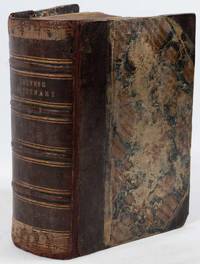
1865réf. 219705Shanghae sic & London.: London Mission Press and Trubner & Co. 1865. Two volumes in one: Volume I. ii Title i-x Advertisement Preface 762 pp including Index of Chinese characters pp 1-99 pagination duplicated for pp 224 & 239. Volume II. ii Title 724pp iv List of the Radicals of the Chinese Language. 22 x 15 cm contemporary half calf spine gilt between raised bands expertly rebacked mounting the original spine numerous annotations and underlinings in pencil a handful in ink at the head the final blanks with notes and translation age-toned and worn boards rubbed but a good complete copy of the scarce reprint. Provenance: With the early inked signature of "Hugh Wadell Newchwang 1869" the pioneering missionary whose work laid the foundation for the Irish Presbyterian Church's long-term presence in East Asia. In 1869 Waddell 1839–1901 landed at Newchwang now Yingkou where he established a mission station that included a church school and dispensary. His daughter was Helen Waddell poet scholar and theological novelist. Recent signature of A. Allan Shearer Wellington. Scarce reprint of the second part of Morrison's Dictionary first published between 1815 and 1823 with a notable provenance. The 1865 reprint was issued as a single volume combining the second part of the dictionary with an index of characters arranged according to the Kangxi radicals. "The Second Part of Morrison's Dictionary has been generally commended by experienced Sinologues as the most perfect and useful of the whole. The present is merely a reprint of it with such slight modifications as are mentioned at the close of the original preface." Preface Löwendahl 1334 . London Mission Press [and] Trubner & Co. hardcover
réf. 92946aaf36.5x24.5 cm (passepartout 50x35 cm), 17 planches au total passepartout, 2 couvertures orginales en velours pourpre conservées.
réf. 107087aafo.J. XX Jhd. (?), 117x71 cm (Bild), bords en papier de soie / Margen aus Seidepapier, aufgezogen, Orig.-Hängestöcke / montée sur toile 156x83.5 cm. Baton pour suspendre orig.