[PEIPING IMPRINT] [MONUMENTA SERICA] [HENRI VETCH]Livre Rare Book
28 309 résultats
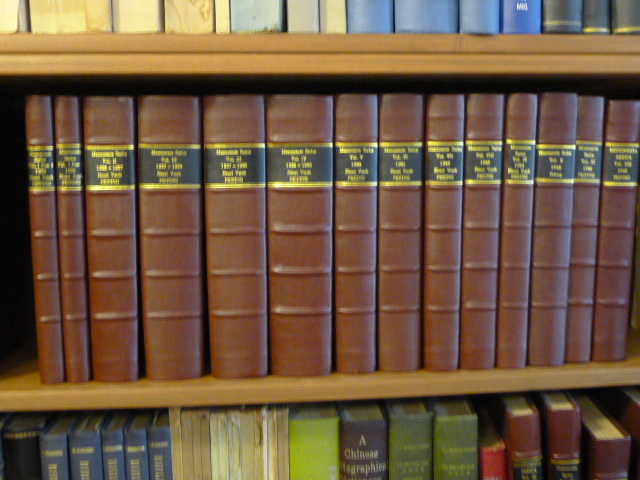
réf. 8672Pékin-Peiping, Henri Vetch, 1936-1937-1938 -1939-1940 - 1941 - 1942 - 1943 - 1944 - 1945 - 1946 - 1947 - 1948. 12 forts volumes in-8, enrichis de planches ou illustrations, reliure moderne plein cuir brun, couvertures conservées, très bon état. Ensemble de toutes les publications de Monumenta Serica du 1er numéro au numéro 13 (1949), sauf le No 12 de 1948. La publication sera ensuite éditée au Japon à partir de 1950. A full set of 12 volumes of Monumenta Serica, from Number I to Number XIII (except No XII), published in Peking by the french publisher Henri Vetch. A very scarce collection of books, nicely and identically rebound in fill brown leather,
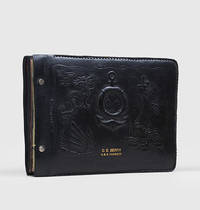
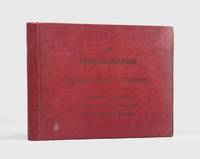
1934réf. 115861Chefoo Yantai Shanghai Singapore: 1934-37. Battleships baseball and the Bund A substantial private photographic record compiled by Yeoman Second Class Charles Edmond Berry during his 1934-37 service aboard USS Parrott DD-218 with the Asiatic Fleet. Combining personal snapshots and commercial studio prints the album captures both naval operations and sailors' pastimes alongside a survey of East Asian ports before the Second Sino-Japanese War. Opening with portraits of Parrott's officers and crew two colour-tinted views of the destroyer at anchor and a playful Afong Studio promotional image featuring the ship the album moves between naval duties and life at leisure. It includes panoramic views of the Asiatic Fleet at Chefoo and Hong Kong American destroyers on station gunnery practice loading shells and baseball matches. Scenes of liberty parties at Chefoo's Beach Cafe including the next morning's breakfasts and sailors enjoying themselves along Shanghai's Bund supply a convivial counterpoint. Other photographs document streets and waterfronts in Shanghai Hong Kong Qingdao Peking and Singapore; excursions to the Great Wall; cremation ceremonies in Bali; temples and city life in Japan; and Pan American Airways flying boats landing and disembarking passengers. There are views of Chinese Republican warships including the cruiser Yixian subsequently sunk by Japanese aircraft in September 1937. Commercial prints are credited to Afong in Chefoo and to Joseffa and Skvirsky in Shanghai. The related ephemera retained in the original sailcloth bag give the album additional personal immediacy: Berry's dog tags and devotional medallion a naval despatch shipboard newsletter voyage programmes mock proceedings before Neptune's court tourist booklets and a folding map of Shanghai. The Parrott stationed in the Far East since 1925 gathered hydrographic data near Saigon in 1935 and resumed neutrality patrols in 1936. Her wartime service included engagements off Borneo and Bali and transatlantic convoy escorts; she was decommissioned following a collision in 1944. Oblong photograph album 380 x 280 x 51 mm. 319 corner-mounted original photographs 102 x 63 to 292 x 240 mm including 6 colour-tinted prints and 4 panoramas 292 x 145 mm many studio prints captioned in the negative or bearing photographers' stamps a few annotated on verso. 52 heavy black card leaves most of the coloured and patterned tissue guards preserved. Contemporary heavily embossed black padded calf post-binder front cover decorated with Chinese dragon junk Great Wall lifebelt and anchor title lettered in gilt nickel-plated binding posts. Accompanied by related ephemera including illustrated tourist pamphlets 2 mock summonses to Neptune's court naval despatch from USS Parrott USS Henderson voyage programme shipboard newsletter dated 23 March 1937 folding map of Shanghai dog tags and Bakelite devotional medallion all preserved in the original canvas sailcloth bag. Binding lightly scuffed occasional creasing to mounting leaves minor damage to a couple of photographs; overall in excellent condition. hardcover
1875réf. 64770Yokohama & Tokyo Japan Hong Kong Canton China Saigon Vietnam: No Compiler ca. 1875-1893. Thick Oblong folio. 14.5 x 10.75 x 2.25 in. 50 pp unpaginated on thick cream-coloured boards each mounted with white silk hinge at gutter margin w/ 41 tipped-in albumen photos sixed from 6 x 8 in. up to 8.5 x 11 in. 5 of which are hand-coloured many w/ photographer’s annotated caption w/in the negative at lower fore-edge frequently with image inventory number many w/ manuscript in pencil captions. Beautiful beveled lacquer boards Mother-of-Pearl & bone inset panel on black laccquer on front cover depicting Rickshaw drive pulling Japanese Geisha w/ Mount Fuji in background a.e.g. rebacked w/ black calf minor edgewear minor curving to textblock a couple images w/ minor creasing from mounting 1 w/ very minor tear still an excellent exemplar with the nearly all the photographs retaining bright strong contrast. This superb Asian Souvenir Export photo album filled with large albumen prints offers a vivid representation of people life and the architectural landscape of Victorian-Era Hong Kong Saigon in French Indochina Vietnam Canton Guangzhou China and Meiji-era Japan. Fifteen of the photographs depict scenes and life in and around Hong Kong with several of the photos by famed Chinese photographer Lai Afong 1839-1890 including a view of Happy Valley the Public Gardens the Peak Hill District with 55 houses at the Peak Cemetery and another view of the public gardens with harbour in the background by William Pryor Floyd 1834-c.1900 a prolific British Commercial Photographer. One of the Hong Kong photographs depicts the Mount Austin Hotel which was built above the Victoria Gap opened in 1891 and was named after Colonial Secretary John Gardiner Austin and operated for just a short time converted by 1897 into the Mount Austin Barracks. Another Hong Kong photo depicts the six-story expansion completed in 1893 to the Hong Kong Hotel facing Victoria Harbor on Queen’s Road which included a private ferry launch for guests. The last Hong Kong photo is a striking street scene by Lai Afong. Of particular interest are the several original albumen photos capturing Saigon French Indochina or Cochin China and surrounding areas with images shot by Emile Gsell 1838-1879 noted French military photographer and his successor Otto Wegener 1849-1922 noted Swedish photographer who continued to sell Gsell’s prints as well as Vidal/Salin-Vidal. These images include views of a “Native House Saigon” “Native Street Saigon” French “Military Hospital Ship” docked in Saigon “Monkey Palms Saigon” “French Settlement Saigon” along some railroad tracks and traditional sampans boats along a canal in Cholon Saigon. In our experience this many French Indochina Vietnam photographs included for travel in and around Saigon are quite uncommon. Nine of the original albumen photographs capture such scenes in and around Canton Guangzhou China such as the 500 Mages or interior shot of the 500 Lohan disciples of the Buddha inside the Hualin Temple in the western suburb of Canton the “Execution Yard” in Canton Pagoda near Cantonas well as two very nice images of the “Flower Boats” in Canton possibly by Lai Afong or Emil Rumsfield visually capturing these multi-tiered wooden houseboats or pleasure boats operating as exclusive floating brothels featuring music dining and socializing and essential to the Pearl River’s social economy into the 20th Century. A couple others include prisoners in wooden stocks in Canton China taken from a cracked glass negative and well-dressed Mandarin Chinese official.The remainder of the albumen photographs sprinkled through the album encompass a hand-coloured albumen of Japanese rickshaw pulling kimono-clad Japanese women; the Yokohama Hataba or English/French treaty pier; Yokohama Park with cherry blossoms viewing & rickshaws; the famed view of the staged seppuku scene with nearby kaishakunin Samurai assistant standing with drawn sword for beheading and beautiful Kamakura Temple shot by Felice Beato. Other Beato photos include a fine Palanquin photo of young geisha and porters; and a very nice “Setting Silk-Worm-Eggs to the Paper” with young silkworm women workers carefully extracting the threads. Adolfo Farsari 1841-1898 photos include one of the No. 9 House in Yokohama Japan as well as two shots of the Grand Hotel in Yokohama. See: Terry Bennett History of Photography in China Chinese Photographers 1844-1879; Metadata Database of Japanese Old Photographs in Bakumatsu-Meiji Period Nagasaki University Library Collection 2006; Early Photography of Japan Harvard College Library; Bennett Photography in Japan 1853-1912 2006; Old Photos of Japan. A Photo Blog of Japan in the Meiji Laisho and Showa Periods. [No Compiler], hardcover
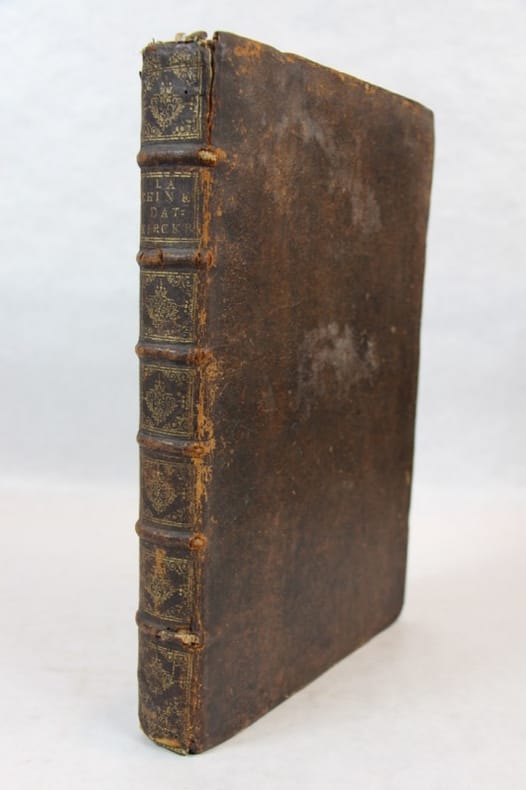
1670réf. 139790Amsterdam, Jansson van Waesberge et héritiers Weyerstraet, 1670 In-folio, veau brun, dos à nerfs orné, tranches jaspées Reliure de l'époque, 7] ff. dont titre, préface, table ; portrait de Kircher manquant pas toujours présent pour cette édition ; 367 pp. ; [12] pp. table ; 24 planches hors texte dont 2 cartes certaines sur double-page ou dépliantes ; très nombreuses vignettes gravées sur cuivre dans le texte. Cachets au titre d'une institution jésuite et de la bibliothèque Paul Chapuy, ingénieur des mines. Rousseurs, déchirure sans manque p. 1, coins usés, manques aux coiffes et sur un nerf. Première édition française de l’ouvrage fondateur des études orientales. La traduction de François-Savinien Dalquié est augmentée des réponses du père Johann Grüber et d'un dictionnaire chinois- français. L'ouvrage avait d'abord paru en latin en 1667, chez le même libraire hollandais, qui a dédié cette édition française à François-Michel Le Tellier, alors surintendant général des postes et relais de France. Superbe illustration en taille douce comprenant un titre-frontispice, deux cartes et un grand tableau épigraphique dépliants, 22 planches hors texte et 55 figures dans le texte, couvrant l'ensemble du champ étudié par Kircher : idéogrammes et écriture, costumes, histoire naturelle, religion, monuments, etc. Le jésuite Athanase Kircher 1602-1680, esprit d'une curiosité universelle qui s'est intéressé notamment aux langues orientales, à la cryptographie, à l’occultisme et à la Cabale, traite dans cette somme très importante de la géographie, de l'histoire naturelle, des coutumes, des pratiques religieuses, de l'écriture, de l'architecture de l'Empire du Milieu. Attaché à mettre en lumière le rôle des missionnaires chrétiens en Orient, le polygraphe jésuite entreprend de démontrer la présence, assez surprenante, de la foi chrétienne en Chine dès le VIIe siècle en interprétant une inscription nestorienne trouvée en Chine en 1625.
1968réf. 79766ABGenève, Collections Baur, 1968-1972. 4°. Mit vielen hundert teils farbigen Tafeln. OLn.-Bde. mit goldpr. Rückentitel, OU. Vol. I-IV in 4 volumes complet. Tadellose Erhaltung.
1969réf. 163011969 Dessin original à la mine de plomb et à l'encre de Chine sur papier, collage dans la bulle , signé et daté au verso 1969, 35 x 25 cm., encadré.
1798réf. PHO-1092Deuxième reliure de la première édition. Édition originale in-4 sur grand papier, remise en circulation en 1841 avec un nouveau titre avec la mention fictive "nouvelle édition" (quelques exemplaires imprimés en 1798 n'avaient toujours pas trouvé preneur). Une édition octavo en six volumes a également été publiée. in-4 ,y compris l'atlas. Avec 16 (10 dépliantes) dont 15 cartes gravées, 1 planche gravée et table dépliante. - Beau demi-cuir contemp , dos lisse avec titre et tomaison , petits manques au dos , quelques mouillures intermittentes et vieille trace d’humidité (T1), déchirure carte hydrographique sans manque. xii, cxliv, 628, [3] ; xvi, 676, [2] ;[xi], 431, [1];[2],viii, 158pp.
1596In-4°; pp. (10), 318, (2),; (8), 161, (3), con un bel ritratto di Francesco Saverio finemente inciso su rame da Theodor Galle; vari esemplari, tra cui quello alla Biblioteca Casanatense di Roma e quella dell’Università di Granada, come il nostro sono prive della carta *6; le Epistole hanno un proprio frontespizio, entrambi con monogramma della Società di Gesù inciso su legno. Nota di possesso manoscritta all’ultima sguardia. Legatura in piena pergamena coeva. Bellissimo esemplare. The third edition of De Vita Francisci Xaverii (the first in Rome 1594, another issues in Antwerp in the same 1596 containing only De vita) and the first of the Epistolae. This 1596 edition of the saint’s biography is better then the one of 1594 because revised by the author and complete. St Francis Xavier (1506-52), a companion of Ignatius of Loyola and co-founder od the Jesuit order, was a leader of the first Jesuit missions to India, southeast Asia and Japan. Orazio Torsellino was an italian Jesuit; he achieved great popularity with this work, which had numerous editions and translations, and with his first and principal early printed collection of Xavier’s letter, including many from Japan, available at the end of the 16th century. This first edition remained standard for many years and also for 17th cent. editions. This is the first collection of writings by St. Francisco Xavier. In 1540, he set off as a missionary to Asia. From there in the midst of ten years of incessant labor, 1542 - 1554, he produced 137 letters and instructions. The translator and editor of this volume, Orazio Torsellini in this place presented 52 letters. This collection of Xavier letters is very important in the story of China and Japan. Streit Iv, p. 290; Cordier col. 128; Sommervogel VIII, col. 140.
1942réf. 2091502135500862Not Available 1942. Soft Cover. Fine. Number of pages: 444p Size: B5 size 17x25 cm Not Available paperback
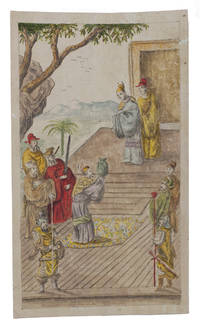
1670réf. E9PF9I9C81WOChina 1670. A series of 8 Chinese drawings ca. 24 x 14.5 cm: 5 coloured 1 also highlighted in gold showing scenes from a Chinese novel many military or diplomatic plus a Chinese watercolour drawing and a Japanese woodblock print. A series of 8 pen and ink drawings 5 coloured 1 also highlighted in gold drawn from Chinese books possibly the 14th-century Sanguo yanyi or Romance of the Three Kingdoms. All mounted on European paper 6 on 3 different patterns of decorated paper. The paper of the drawings ranges from 23.5 x 14 cm to 24 x 15 cm. They show the following outdoor and indoor scenes:1 2 warriors on horseback one of whom has just beheaded the other and carries his head away the beheaded warrior has not yet fallen from his horse while his superior watches on horseback with 2 attendants.2 a man standing with a spear in the prow of a boat while 2 men and a woman sit at a tea table in the boat which flies a flag and pennant.3 5 people on 2 boats one flying a flag and pennant.4 4 soldiers bringing a woman to a dignitary at his house.5 a delegation visiting a dignitary.6 2 men playing go with 4 attendants and a guard.7 a dignitary at a writing table with attendants and visitors.8 a seated dignitary with 6 standing figures 1 with a document at a table.In the backing paper of number 7 one can make out an Amsterdam coat of arms watermark. It is difficult to see clearly but seems to follow the general style of Laurentius 71-95 1662-1675. The 3 patterns of decorated backing paper show: a flower pattern printed in gold on green; 2 patterns with more abstract decorations in a diamond pattern printed in gold on white.With this series we include a watercolour drawing and a woodblock print:9 watercolour drawing of irises along a stream with hills in the background 17 x 22.5 cm.10 rectangular woodblock print of a Samurai at a tea ceremony 14 x 10 cm possibly derived from a Japanese book.Some edges of the drawings a little frayed but otherwise in very good condition. unknown
1926réf. 015082Paris Grasset 1926 In-12 Broché Edition originale
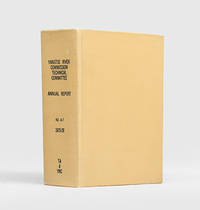
1925réf. 188317Beijing & Shanghai: Yangtse River Commission 1925-26-28. Measuring China's longest river First editions of these invaluable technical publications which record a wealth of data from gauging stations across hundreds of charts and diagrams. The Yangtse River Commission was formed by presidential order in December 1922 and the American engineer George Gottlieb Stroebe 1877-1965 served as the first head of its survey department. After several years of operation the commission switched its focus to the middle section of the river stretching from Hankou to Yichang. In 1925 it installed new gauges and discharge measurement stations while also collecting data with equipment maintained by the customs service. Until 1926 inclusive reports were released in the name of the commission's technical committee before responsibility transferred to the Ministry of Communications. The table of contents for the fifth annual report 1926 calls for 221 plates but numbers 150-221 were not issued. 3 works bound in 1 octavo 255 x 180 mm. Together 351 diagrammatic plates 2 folding tables; tables in text. Text in English and Chinese. 1966 tan buckram by the Heckman Bindery Indiana label on rear pastedown spine lettered in black original green card wrappers bound in. Ex-Library of Congress with its ink stamps and shelf-marks on the original wrappers index card holder on rear pastedown and "duplicate" deaccession stamp on front free endpaper. Contents toned one original wrapper creased at foot occasional marking and offsetting internally couple of short closed tears: very good. hardcover
réf. 8681P., Imprimerie royale, 1694 (LA HIRE), 1692 (observatons physiques et mathématiques envoyées des INDES et de la CHINE), 1694 (Observations faites à la CHINE), un volume in 4 (20cm x 26cm) relié en plein veau marbré, dos orné de fers dorés (fleurs de lys), ARMES DE LOUIS XIV sur les plats, tranches rouges (reliure de l'époque), 8pp., 202pp. (mal chiffrés 302), figures dans le texte (LA HIRE) ; (3), 113pp. (observations physiques et mathématiques envoyées des INDES et de la CHINE ; 20pp. (observations faites à la CHINE)
réf. 8701Paris, Lithographie du Ministère de la Marine, 1862. 1 volume in folio (30*46 cm), 125 pp., enrichi de 13+45 planches à pleine page légendées, décrites et commentées sur la page opposée. La page de titre est salie et tachée, ainsi que 2 feuillets internes (pp. 62-63). Déchirures restaurées sur les 2 derniers feuillets, sinon très bon état, reliure moderne plein cuir noir.
1890réf. 29094S.l. s.d. [vers 1890] in-8 oblong (15 x 23,5 cm) toile grise, dos lisse muet
réf. 138483aafParis : chez Ph.-D. Pierres & Clousier, imprimeur-libraire, rue Saint-Jacques, 1777-1785, in-4to, illustré de 16 planches et 3 cartes dépliantes contours en couleurs par Brion d après le P. de Mailla, + 5 dépliantes de divers dynasties, qqs feuillles brunies, qqs planches piquées, (tome 4 avec 8 p. un peu courte de marges). relié veau époque , dos à nerfs ornés avec titre et tomaison, dos lég. frottés.
1980réf. 2090202120414273Heibonsha 1980. Soft Cover. Fine. Number of books: 1 Heibonsha paperback
réf. 8698Paris, de l'Imprimerie Impériale, MDCCVIII (1808). 1 atlas in folio, reliure cartonnée moderne, comportant 91 gravures sur 60 planches et 6 cartes dont 4 dépliantes, mouillures claires et marginales n'affectant pas les planches, très bon exemplaire, très frais intérieurement. L'atlas est enrichi d'une lettre manuscrite de M. de Guignes présentant son ouvrage.
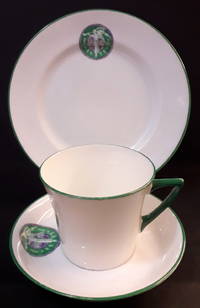
réf. 3210181Cup saucer and side plate; white china has strikingly clean straight lines and is rimmed in dark green with a green handle to the cup each piece carries the motif designed by Sylvia Pankhurst of the 'angel of freedom' blowing her trumpet and flying the banner of 'Freedom in the background are the initials 'WSPU' set against dark prison bars surrounded by the thistle shamrock and rose and dangling chains; the cup has one minor hairline crack otherwise all pieces are in fine condition. Rare survival of an original Suffragette cup saucer and side plate complete with the 'Angel of Freedom' designed by Sylvia Pankhurst. Initially for use in the refreshment room of the Prince's Skating Rink Exhibition and then sold in aid of funds. The Women's Exhibition of 1909 all but forgotten today was a tipping point in women's struggle for equal rights. The event was open to both sexes and cleverly calculated to show men that suffragettes were not the dangerous 'shrieking sisterhood' they were painted but were in fact the wives mothers and sisters they knew women safely interested in the same female pursuits they always had been women dedicated to creating beautiful things not destroying them. 'The winged angel logo was repeated on almost all promotional material. It was especially striking on the elegant white tea service specially commissioned from a pottery in Staffordshire used in the traditional tea and refreshment room during the exhibition and for sale after the event. Commemorative china was a relatively new idea and this early understanding of branding as a way of advertising was a key element of the exhibition's success making the WSPU one of the first campaign groups to understand the significance of logos' http://annesebba.com/journalism/the-womens-exhibition-of-1909/
1900réf. 176895Shanghai: Brewer & Co. c. 1900. From the Chefoo Bluff to Lamtong Head Sole edition untraced institutionally the copy of Vice-Admiral Seymour's chief of staff in Tianjin during the Boxer Uprising. This photographic guide is designed for "the navigator of this changeable and frequently foggy locality" preface. We have traced only one other copy which appeared in commerce in 2017. Navigators in the late Qing period could rely on only a small network of lighthouses and fixed navigational aids when sailing the Chinese coast. "In thick weather even a person familiar with the coast is at a loss to identify a well-known Islands with its summit" preface. The thirty views include the Chefoo Bluff in the Pechili Gulf the waters near the Hieshans Light House Zhejiang and Hong Kong's Lamtong Head. A concerted period of lighthouse-building in the 1910s and 1920s obviated the need for further publications of this kind. Provenance: though unmarked as such this copy was owned by Captain Edward Henry Bayly C.B. 1849-1904 Commander of the International Forces at Tianjin in June 1900. Bayly had a lifelong career in the Royal Navy. He was promoted to the rank of lieutenant in September 1873 commander in June 1887 and captain in January 1894 having served overseas in numerous ships. Bayly captained HMS Pelorus during the fleet review for Queen Victoria's diamond jubilee in 1897 and in 1899 became captain of the armoured cruiser HMS Aurora on the China station. During the Boxer Uprising he replaced the wounded John Jellicoe as chief of staff to Seymour was mentioned by Seymour in dispatches and remained at Tianjin until the withdrawal of naval forces. He retired at his own request in February 1904. Landscape octavo. With 30 mounted collotypes within red frames. Original red cloth front cover lettered in gilt white coated endpapers leaves hinged with white linen as issued. A little shaken binding sunned and stained contents well preserved a little toning at fore edges: a very good copy. hardcover
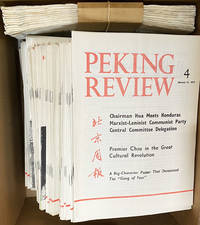
1963réf. 1008621 issues Beijing Review Chinese: 北京周報; pinyin: Běijīng ZhÅubào; Wade–Giles: Pei-ching Yu-pao previously Peking Review is China's only national news magazine in English published by the Chinese Communist Party-owned China International Publishing Group. In 2006 it claimed a per-issue circulation of 70000 and distribution "throughout China and 150 countries and regions worldwide." Founded in March 1958 as the weekly Peking Review it was an important tool for the Chinese government to communicate to the rest of world. The first issue included an editor's note explaining that the magazine was meant to "provide timely accurate first-hand information on economic political and cultural developments in China and her relations with the rest of the world." The U.S. Postal Service initially restricted distribution of the magazine but the U.S. Supreme Court overturned this policy in Lamont v. Postmaster General. In October 2020 the United States Department of State designated Beijing Review as a "foreign mission" of China. An important time period covering the entire Cultural Revolution through the death of Chairman Mao the policies of Deng Xiaoping and the establishment of modern China. Each issue in original printed wrappers: 1963: No. 10 11 13 15 25 30 32-36 38 41-45 52; 1964: No. 1-52; 1965: No. 1-19 21-22 24-52; 1966: No. 5-30; 1970: No. special issue 8 May 21 31; 1972: No. 1-33 35-52; 1973: No. 1-52; 1974: No. 1-35 37-49 51-52; 1975: No. 1-52; 1976: No. 1-52; 1977: No. 1-52; 1978: No. 1-52; 1979: No. 1-43; 1980 No. 10 12-15 21 33 38 40 47 48; 1981: No. 1 2 5 23 27 28 37 42 44 51; 1982: No. 31 33 35 37 38 48 50-52; 1984: No. 36 40 42 1985: No. 9 11 12; 1986: No. 1 3 13 14 30 36 43 46; 1987: No. 8 9 27 28 37 42 44-46; 1988: No. 10; 1989: No. 3 5 6 9 19 21-23 27-29 41; 1995: No. 4 8 The name change of this journal under President Deng presaged a new direction. From being a revolutionary magazine presenting the ideas and aspirations of a young and relatively weak Socialist state struggling along the road to the construction of Communism it was now displaying its open statement of aims of an outright capitalist and imperialist state – with global ambitions. From the very beginning the new Socialist state had to face many obstacles. There was opposition from within and without the country from within and without the Party. Those who might have played an important role in the past in the fight for liberation were not necessarily the ones who were needed to build a radically new society. All revolutions bring with it old baggage from the past but some leaders found it more difficult than others to throw it away and start fresh. 《北京周报》创刊于1958年3月1,最åˆè‹±æ–‡å为"Peking Review",在ä¸å›½å…¨é¢æ”¹ç”¨æ±‰è¯æ‹¼éŸ³ä½œä¸ºè¯‘åæ ‡å‡†åŽæ”¹ä¸ºçŽ°å。æ‚志主è¦æŠ¥é“ä¸å›½çš„政治ç»æµŽçŽ°çŠ¶ï¼Œä»‹ç»ä¸å›½æ”¿åºœå¯¹å†…对外的é‡å¤§æ–¹é’ˆæ”¿ç–ç‰2。《北京周报》也曾出版过法文ã€è¥¿ç牙文ã€æ—¥æ–‡åŠå¾·æ–‡ç‰ˆå®žä½“刊,ä¸è¿‡é™¤è‹±æ–‡ç‰ˆä»ä¿ç•™å®žä½“刊外,其他è¯è¨€ç‰ˆæœ¬å‡å·²äºŽ2000年12月åœåˆŠï¼Œä»…ä¿ç•™ç½‘络版。 Published by Guozi Shudian for the Foreign Language Press, paperback
1963réf. 1008621 issues Beijing Review Chinese: 北京周報; pinyin: Běijīng ZhÅubào; Wade–Giles: Pei-ching Yu-pao previously Peking Review is China's only national news magazine in English published by the Chinese Communist Party-owned China International Publishing Group. In 2006 it claimed a per-issue circulation of 70000 and distribution "throughout China and 150 countries and regions worldwide." Founded in March 1958 as the weekly Peking Review it was an important tool for the Chinese government to communicate to the rest of world. The first issue included an editor's note explaining that the magazine was meant to "provide timely accurate first-hand information on economic political and cultural developments in China and her relations with the rest of the world." The U.S. Postal Service initially restricted distribution of the magazine but the U.S. Supreme Court overturned this policy in Lamont v. Postmaster General. In October 2020 the United States Department of State designated Beijing Review as a "foreign mission" of China. An important time period covering the entire Cultural Revolution through the death of Chairman Mao the policies of Deng Xiaoping and the establishment of modern China. Each issue in original printed wrappers: 1963: No. 10 11 13 15 25 30 32-36 38 41-45 52; 1964: No. 1-52; 1965: No. 1-19 21-22 24-52; 1966: No. 5-30; 1970: No. special issue 8 May 21 31; 1972: No. 1-33 35-52; 1973: No. 1-52; 1974: No. 1-35 37-49 51-52; 1975: No. 1-52; 1976: No. 1-52; 1977: No. 1-52; 1978: No. 1-52; 1979: No. 1-43; 1980 No. 10 12-15 21 33 38 40 47 48; 1981: No. 1 2 5 23 27 28 37 42 44 51; 1982: No. 31 33 35 37 38 48 50-52; 1984: No. 36 40 42 1985: No. 9 11 12; 1986: No. 1 3 13 14 30 36 43 46; 1987: No. 8 9 27 28 37 42 44-46; 1988: No. 10; 1989: No. 3 5 6 9 19 21-23 27-29 41; 1995: No. 4 8 The name change of this journal under President Deng presaged a new direction. From being a revolutionary magazine presenting the ideas and aspirations of a young and relatively weak Socialist state struggling along the road to the construction of Communism it was now displaying its open statement of aims of an outright capitalist and imperialist state – with global ambitions. From the very beginning the new Socialist state had to face many obstacles. There was opposition from within and without the country from within and without the Party. Those who might have played an important role in the past in the fight for liberation were not necessarily the ones who were needed to build a radically new society. All revolutions bring with it old baggage from the past but some leaders found it more difficult than others to throw it away and start fresh. 《北京周报》创刊于1958年3月1,最åˆè‹±æ–‡å为"Peking Review",在ä¸å›½å…¨é¢æ”¹ç”¨æ±‰è¯æ‹¼éŸ³ä½œä¸ºè¯‘åæ ‡å‡†åŽæ”¹ä¸ºçŽ°å。æ‚志主è¦æŠ¥é“ä¸å›½çš„政治ç»æµŽçŽ°çŠ¶ï¼Œä»‹ç»ä¸å›½æ”¿åºœå¯¹å†…对外的é‡å¤§æ–¹é’ˆæ”¿ç–ç‰2。《北京周报》也曾出版过法文ã€è¥¿ç牙文ã€æ—¥æ–‡åŠå¾·æ–‡ç‰ˆå®žä½“刊,ä¸è¿‡é™¤è‹±æ–‡ç‰ˆä»ä¿ç•™å®žä½“刊外,其他è¯è¨€ç‰ˆæœ¬å‡å·²äºŽ2000年12月åœåˆŠï¼Œä»…ä¿ç•™ç½‘络版。 Published by Guozi Shudian for the Foreign Language Press, paperback books
1777Ensemble de 15 volumes de format in 4° carré; reliure uniforme de l'époque en demi veau fauve richement orné; illustré de 179 planches gravées et numérotées (sur 193). Le volume XII est entièrement consacré à la vie de Confucius avec de superbes planches. Célèbre et monumentale histoire de la Chine dans tous ses aspects, militaires, agricoles, religieux, géographiques, généalogiques... Une encyclopédie sur la Chine à l'usage des Européens. Notre exemplaire ne comprend pas les planches hors texte des T. I et II; sauf le portrait frontispice du Tome I et présente donc 152 planches hors texte sur 166; ou 179 planches numérotées sur 193. Les tomes III à XV sont bien complets . Quelques petits défauts de reliure et travaux de vers intérieurs principalement en marge. Deux volumes de suppléments parurent en 1814. Curieuse signature manuscrite "Montgolfier" sur chaque page de titre. Voir les photos.
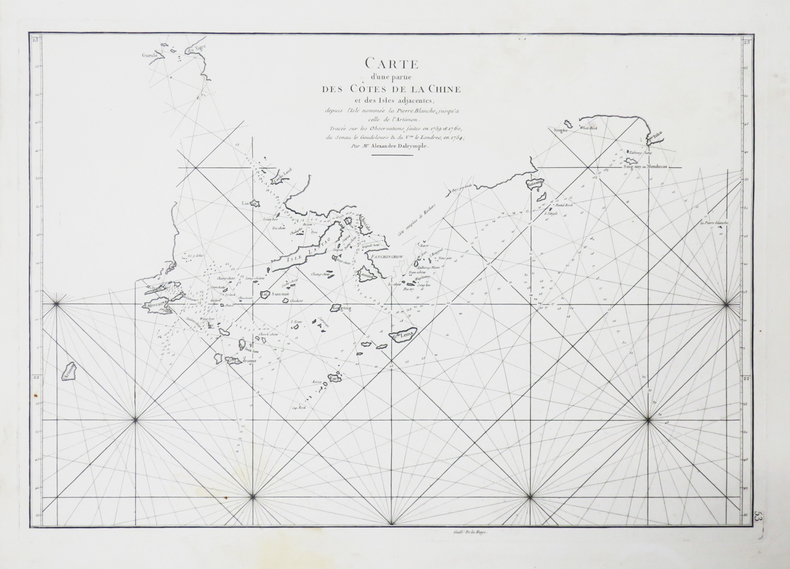
1775réf. LBW-4998[1775-1781]. 333 x 484 mm.
1914réf. 276778Berlin: Reimer / Vohsen 1914. 6 Bll. (Titel u. Einleitung), 75 doppelbl. Taf. (von 81). Quer Folio. *Eine Mappe fehlt, die andere ist demoliert* vorhanden die Taf. 1-73,76* 1 Taf. mit Blattrand beschädigt, wenige auf der unbedruckten S. fleckig*.