225 résultats
1938Fair French Modern full brown leather, gilt lettering of title on front board. Heavily water stained, and some chippings on extremities of some pages. A fair copy. 4to. (27 x 20 cm). In French. 63 p. The very rare autographed copy of this lecture given in Lebanon on January 20, 1937, at the Youth Center, by Ostrorog after his serving in China as Assistant High Commissioner, a French diplomat from a noble Polish family, who had served as Assistant High Commissioner in China and Syria in the 1930s. Signed and inscribed by Ostrorog as "Par Mahid, Avec autre au mille amitié, Damas, 1938". On the eve of the Second Sino-Japanese War (1937-1945) between the Chinese and the Empire of Japan which is often regarded as the beginning of World War II in Asia, French ex-Assistant High Commissioner in China Ostrorog gave a lecture about Chinese power and policy. Some titles from book: "La Chine.; Le monde au temps de Confucius.; Humanisme Confuceen.; Opposition de l'humanisme Chinois a la morale idealiste de l'occident.; Facteur grammatical.; Universalite des caracteres.; Facteur geographique.; Facteur moral.; La republique des philosophes.; Reaction de Huang Ti au 3me siecle avant notre ere.; Evolution historique dans le cadre de l'unite.; Isolement.; Arrivee des Europeens au XVIme siecle les marchands et les missionnaires.; La querelle des rites condamnation des Jesuites.; Eclat du couchant Kien Lung.; Lettre de Kien Lung a Georges III.; Guerre de l'Opium.; Qeuvre des missions en Chine.; Tseu-hi et Abdul-Hamid.; Le Japon.; Propagande de Moscou.; Succes du mouvement nationaliste.; Intervention Japonaise en Mandchourie.; L'Unite Chinoise menacee.; La Grande pitie.; L'avenir de la Chine.". From the last chapter: "In our contract, the Chinese until now have taken only the faults and vices of Western civilizations. There is, however, something else to choose from and perhaps the time is near when the Chinese will understand it. Whether they are few in number, fifty, forty, ten, or five only, that will suffice. And on that day, with the power of assimilation which has always characterized it, China will integrate, in a way, all the foreign contributions of a moral or cultural order, to rebuild its unity, to resume the continuity of his story, and rediscover his genius." Only two copies in OCLC: 42804470. Signed and inscribed by Stanislas Ostrorog.
2007Book is in excellent condition. Binding is solid and square, covers have sharp corners, exterior shows no blemishes, text/interior is clean and free of marking of any kind. 261 pages.
1949244p. Inked ownership. 8vo. Original full grey cloth binding. Coldwar/Economics 9
in-8°, 150 pages, dessins, broche, couv. Manque la p. de titre, qq. cachets. [CA-11]
in-12, 216 pages, carte en frontispice, broche, couverture illustree. Bel exemplaire. [CA33-2]
in-16, 68 pages, broche, couverture illustree. Bel exemplaire. [BU-10]
1946Stories: The Convict Who Captured a Prison; Adventures in Manchuria; The Big Redwood; Ocean Tramps; The Personal Touch; Ripple Rock; The Man from Cork; The Reluctant Tiger; Blood Money; Breach of Contract; Nigger Goes Shark Fishing; Passage to Bahia; Gold Coast English; The Sea-Cook's Day Out; What Happened at Hossainpur; The Wide World and the P.O.W. Above-average wear. Covers present but detached from textblock. Book
1945Contents: Color ad for GM's Electro-Motive Division; Color ad for the new Pontiac (car); Color Kuppenheimer clothing ad; Moscow-London duel attests problems of Truman and Attlee in shaping policy on atomic bomb; Nice color military-themed Coke ad (in Leyte, Philippines); Nice color Camel cigarette ad; Stalin rumors kindled by failure to show up for Red celebrations; photo of tubby Col. Esao Tokunaga who abused Allied prisoners in Hong Kong; Evidence of Japanese war crimes in the Philippines; Blood over Manchuria; The idle GI and liberated France are mighty tired of each other; Dee Balla - Sweetheart of the Marines; Color ad for Pullman-Standard; Great color centerfold ad for the new 1946 Chevrolet; Two photos of a German weapon, the "Viper", a rocket-powered, piloted midget plane which was to be aimed at enemy bombers at 620 mph - the pilot would bail out pre-impact; Canada's arctic exercise Musk Ox; Lewis-Murray feud blurs start of labor-management meeting; Clarence Birdseye now holds 300 patents - his latest invention is a quick-dehydration method; nice color White truck ad; Edgar Bergen marries Frances Westerman; Prokofieff's voice is cosmopolitan - his theme is the spirit of Russia; Photo of German POWs at Fort Custer, Michigan; color ad for Philip Morris & Co. - Bond Street and Revelation; William Keighley; It's Pepsi's Money - Portrait of America Exhibition at Rockefeller Center; Color ad for Scheaffer's pens inside back cover. Average wear. Unmarked. Address label atop front cover. A sound copy. Magazine
193352 pages. Cover painting by Thomas W. Mitchell features man with ax and oxen. Content: Fantastic International Trucks ad features photos of their largest and smallest models plus diagrams of their other 11 models; Investors Syndicate ad features Mrs. Martha E. Dodele; Nice Canada Dry ad features tennis-playing couple; She Who Walks the Waters, by Jefferson Cralle; Mr. Beatty - President of the Canadian Pacific Railway Company; Aces' Race - proposed professional world's championship sculling race at the Canadian National Exhibition (CNE), by Frank Adams - with illustrations of Major Goodsell, Teddy Phelps, Bert Barry and Bobby Pearce; Fair by not Frail, Gladys B. Taber; Eye, Eye, Sir, by Hugh Grant Rowell, M.D. - an article on vision; Who's Next? - an article to help other Canadians understand how political trouble of Ontario's Conservatives may affect the rest of the country - with photos of George S. Henry, Mines McCrea, Col. W.H. Price, and Mr. Macaulay; Warden of the Flock, by Paul Annixter; Central Banking, by Harold E. Crowle - a monetary commission will in the near future investigate the desirability of a central bank for Canada; Czar's Gold, by Robert Welles Ritchie; A Fall Out of History, by H.M. Blake; Feathered Speed - Pigeon Races, by W.T. Webb; Grain Fair, by Roderick Stuart Kennedy - The World's Grain Exhibition at Regina; Nice colour ad for Campbell's vegetable soup; President Roosevelt's Brain Trust; British M.P. W. Kirkpatrick supports Japan's conquest of Manchuria; Lux Toilet Soap ad features Loretta Young, Polly Ann Young and Sally Blake; Letters to the Editor; A Swedish Forest has supplied logs for 700 years and has greater supply than ever; The Great Auk may still live; The Summer Cottage - article by F.L. DeN. Scott; The Investor and His Stockbroker, by C.W. Stollery; Nice ad for Dominions Tires inside back cover; Nice ad for Chevrolet Standars Six and Master Six on back cover. Average wear. Address label atop front cover. A sound copy. Book
1907Reprint of the 1904 first edition. 564 pages. Index. Black and white photographic plates. Openings to fold-out map at back. Foxing to and near endpapers. Above-average but not excessive overall wear. Front hinge just starting. Minor evidence of moisture exposure inside boards. Prior owner's details atop front free endpaper. A worthy copy. Book
1947Pages 649- 676. Features: Cover photo of huge black plume of smoke rising from a Jerusalem cinema, mistakenly thought to be Arab owned and burned by Jews in retaliation for Arab looting; Six dramatic photos of Arab riots in Jerusalem where Britain represents the sole stable factor; Photo of the huge Consolidated Vultee military transport, the XC-99, during its first test flight; Photo inside the belly of the XC-99; Two photos of the air raid shelter, or bunker, where Hitler and Eva Braun died; Two photos of the deep water salvage submarine designed by Italian Pietro Vessena for use in Lake Como; Five photos of Russia's mighty military on parade in Moscow; Five photos of hunger and destitution in postwar Berlin; Article discusses the great communist counter-offensive in France; Photos from Manchuria where China's Civil War continues; Two pages of scenes of sabotage and civil disorder in Paris, Arras and Lille, where the French assertion of the right to work has brought the Communists into the open; One-page reproduction of the famous photo of St. Paul's Cathedral during the 1940 blitz - contrasted with the opposing page which shows St. Paul's today, war-scarred but majestic amid devastation; Five photos show repairs being made to St. Paul's; Two pages of photos illustrate the ancient art of Benin; Photos of personalities of the week include Sir Eustace Pulbrook, King Michael of Rumania and Princess Anne of Bourbon-Parme, Samuel Courtauld, Mr. Molotov, Mr. Vishinsky, Chiang Kai-shek, Harold Wilson, and Mme. Chiang Kai-shek; Photo of a detachment of the York and Lancaster Regiment at Dolni Bousov, Czechoslovakia, receiving back the regimental drum, lost to the Germans in Crete in 1941; Photo of huge crowd in Tel Aviv celebrating news that the UN had voted in favour of the partition of Palestine. Somewhat above average wear. Unmarked. Few tape repairs. A worthy vintage copy. Magazine
1931Pages 881-921 plus advertising covers. Features: Cover illustration of new American idea using mirror to protect bank tellers from gun-toting robbers; Six captioned photos of the Nonni Front / Tsitsihar and the relics of the original cause of trouble between the Japanese and Chinese in Manchuria; Review of "The Coinage of England" by Charles Oman; Photos of horse racing; Photo of burning passenger steamer the L.M.S. "Duke of Lancaster"; Photos of sinking of the "Nautilus", the first submarine to attempt reaching the North Pole; Photo of Bert Hinkler, the first airman to fly solo from South America to West Africa; Photo of J.A. Mollison's Gipsy moth upside-down in an Egyptian maize field; Photos of Jammu - occupied by British troops after riots; Bronze-age discover in Cyprus - prehistoric snake-worship; Two excellent photos show New York City's skyline (overlooking Central Park) twenty-five years ago and now (dramatic difference); Two pages of photos (and captions) of New York skyscrapers; Five photos of Captain C.W.R. Knight and white-headed sea-eagle "Miss America" - trained to falconry; Two photos of the first anniversary of the Coronation of Haile Salassie; Photo of Miss Peggy Salaman feeding one of her lion cubs; Photos of the Indian Conference ending and the Burman Conference beginning; Photos of personalities of the week include E.G. Pretyman, Maj.-General Sir P. Hambro, Mr. S.R.C. Bosanquet, Lady Bruce, Maj.-Gen. Sir David Bruce, Dr. Sze of China, Yotaro Sugimura, Mr. Yoshizawa, Yehudi Menuhin performing at the Albert Hall, Mr. C.J. Longmore - the first man to loop-the-loop in a glider in England; Preparing the New Gorilla Group for the Natural History Museum; Four photos of mural discovered in Little Missenden's 12th century church; Five photos of scenes in new film "Tsar Lenin"; Photos of Christmas gift suggestions; plus many nostalgic ads. Unmarked with moderate wear. A quality vintage copy. Book
1931XXII [ads], 76 pages. Profusely illustrated with wonderful black and white photos. Features: La Ville de Montreal - article with many excellent photos; The Omnipotent Soya Bean - fascinating content and photos from Manchuria; The Royal Mint and its Branches; Fishing for Albacore [off the Nova Scotia coast]; Glorious vintage ads for national Canadian brands. Unmarked with average wear. Binding intact. A sound copy of this marvelous issue. Book
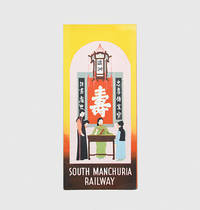
1933réf. 1964131933. An attractive piece of ephemera with photographs of cities in Manchuria a regional map incorporating the railway network and infographics recording the growth of imports exports and the population. The South Manchuria Railway occupied a prominent place in the exposition's Japanese pavilion. The leaflet's text portrays Manchuria as an independent state whose residents had seceded from China in a manner akin to the American Revolution of 1776 and positions Japan as a neutral conduit between the West and the region's rich resources. Colour lithographed sheet 460 x 300 mm folding to 230 x 103 mm printed both sides. Colours vivid and bright small closed tear at foot of one fold: a fine example. unknown
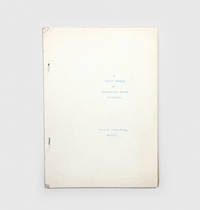
1934réf. 193780Likely Mukden: South Manchuria Railway 1934. First edition significantly scarcer than the second edition of 1936 of this memorandum on the railway's revenue and growth threats from bandits and infrastructure and bus and shipping lines run by its ancillary organizations. Sections are also devoted to agricultural development town planning and medical work. WorldCat records a single holding Claremont Colleges. This work is not to be confused with a more common book of the same title published in the same year. Quarto 252 x 174 mm. With 3 folding tables tables in text. Contents in dittoed typescript occasional corrections in black ink likely as issued. Original white card covers wire-stitched as issued front cover lettered in blue dittoed typescript. Creasing and a little marking to covers rear cover and final leaf detached from wire stitching: very good. unknown
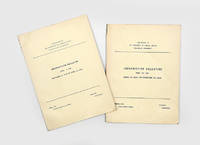
1933réf. 193848Hsinking Changchun: Department of Foreign Affairs Manchoukuo Government 1933 & 1934. First collection editions gathering informational notices previously circulated only to a limited audience in mimeographed form. Issued between September 1932 and February the documents concern the puppet state's legal economic and political affairs including flood relief taxation imports and exports and opium regulation. 2 works quarto. Section titles printed in colour paper. Original light yellow textured card wrappers front covers printed in black. Spines repaired with adhesive creasing and light cockling: very good. unknown
1923réf. 188890Perhaps Tokyo: Mantetsu tetsudobu c. 1923. The backbone of Japan's overseas empire A large and colourful tourist map of the mainline running from Jilin and Changchun to Lushun Port Arthur recording stations branchlines rivers and the belt of mountains skirting the mainline's south side. The text on the verso provides essential information on major destinations along the route. This map was issued during a period when Japan both consolidated its economic and political hold over South Manchuria but also faced heightened Chinese opposition in the form of strikes and protests. Tourist traffic however flowed unabated. Colour map formed from 2 joined sheets each 750 x 250 mm text and tipped-on errata slip on verso. Folding away into original illustrated wrappers. General creasing 55 mm split at head of first fold archival tape repair to wrappers: very good. unknown
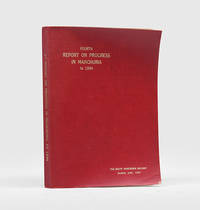
1934réf. 180943Dairen: South Manchuria Railway 1934. First edition of this comprehensive statistical and narrative report including a large folding map of Manchuria a map of road construction and plans of the ports of Rashin and Dairen. Sections convey the expansion of the railway's administrative structure and business interests into all aspects of governance. Quarto. With 24 plates 2 colour diagrams 4 maps and plans 2 colour. Original red cloth over limp card spine and front cover lettered in gilt. Covers and some text bowing rear endpaper lifting from cover spotting to edges plans at rear creased where incorrectly refolded: very good. hardcover
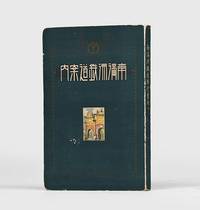
1917réf. 156891Dalian: Minami manshu tetsudo 1917. A rare guide to the South Manchuria Railway with 13 well-preserved maps First edition first printing of this scarce and profusely illustrated handbook for business and tourist travellers on the South Manchuria Railway the economic powerhouse of Japan's East Asian empire. WorldCat records only three copies all in Japanese institutions. The South Manchuria Railway Company was founded in 1906 under the direction of Goto Shinpei 1857-1929 to manage railway lines seized from Russia in the wake of the Russo-Japanese War. By the end of 1907 it already had 9000 Japanese and 4000 Chinese employees and during its first decade of operations the company invested in a range of industries including coal mining including the major mine at Fushun natural gas extraction shipping and hotels and hospitality. In 1917 the company took over management of the entire railway network in Japanese-controlled Korea cementing its position as the backbone of Japan's imperial expansion between the wars. This guide focuses on major stops along the railway including Dalian Fengtian Changchun and Yingkou together with descriptions of and directions to notable visiting spots. The maps and plans show the extent of the network the layout of important destination cities and the course of key battles in the Russo-Japanese war. A selection of the plates stress the vibrancy of Japanese economic development. Octavo. With 54 plates 11 colour 13 folding maps and plans 6 colour folding table of fares colour pagoda vignette on title page vignettes in text. Original illustrated green stiff card wrappers spine and front cover lettered in white pictorial endpapers. Covers bright extremities rubbed small closed tear to penultimate map professionally repaired with Japanese tissue maps otherwise exceptionally well-preserved small loss to p. 7 of table of contents slightly affecting text contents clean. A near-fine copy. Institutional holdings: National Diet Library Waseda and International Research Center for Japanese Studies. unknown
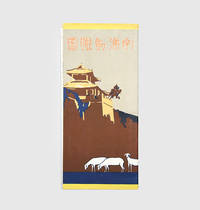
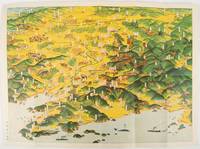
1932réf. 220844東京. Tokyo.: 大日本雄弁会講談社. Dainihon Yūbenkai Kōdansha. Showa 7 1932. Attractive colour folding bird's-eye view map with black and white photographic illustrations on the reverse. 39 x 53.5cm. Very good condition. This colourful bird’s-eye view map of Manchuria by Ito Kikuzo 1901–1985 a popular graphic artist in the early Showa period covers the entire region showing railway lines cities local produce and natural resources. Although a few small human figures appear the map largely presents Manchuria as a treasure trove of agricultural produce and natural resources. The reverse features agricultural produce and natural resources including soya beans sheep and coal with accompanying explanations. A list of products at the lower left reinforces this emphasis on Manchuria’s abundant resources while making no mention of its inhabitants. . 大日本雄弁会講談社. [Dainihon Yūbenkai Kōdansha]. unknown
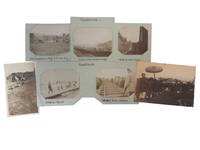
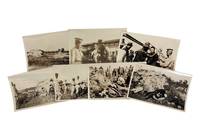
1903réf. 236401903. Chinese Eastern Railway and rural Manchuria photo archive depicting railway travel across Manchuria in 1903 documenting the rapid transformation of northeastern China into one of the most contested transportation corridors of the early twentieth century. Created only months before the outbreak of the Russo-Japanese War the photographs record a landscape where imperial railway construction traditional village life and foreign travel briefly occupied the same space. The French captions identify the photographer as part of the growing community of European travelers who crossed northern China by rail during the final years of the Qing dynasty when newly completed railway lines made regions previously reached only by caravan or river increasingly accessible. Photo archive of 7 silver gelatin photographs ranging from approximately 3 x 4 to 4 x 6.25 inches Manchuria and northern China 1903. Most prints bear contemporary handwritten French captions identifying locations and events including "Montée des monts Kingan" "Passage du Liao-Ho" "Attendant le train de secours" and "Scène champêtre au village de Che-San-Ling." The photographs show passenger trains winding through the forested slopes of the Khingan Mountains travelers gathered beside railway tracks awaiting a rescue train pedestrians crossing the Liao River by ferry expansive mountain vistas viewed from the railway a rural farming scene with villagers pack animal and harvested fields near Che-San-Ling and a ceremonial procession led by musicians carrying traditional instruments and parasols while foreign uniformed soldiers in white tropical helmets march behind. The photographs were made as Manchuria became the focal point of international competition following construction of the Chinese Eastern Railway between 1897 and 1903 a Russian-financed line that connected the Trans-Siberian Railway with Port Arthur and opened the interior of Manchuria to unprecedented commercial and military movement. By 1903 Russia's expanding railway presence and continued military occupation had become an international diplomatic crisis with negotiations over withdrawal collapsing only months before war erupted with Japan in February 1904. These photographs preserve the region immediately before that transformation showing railway travel functioning alongside agricultural villages river crossings and ceremonial life that had defined Manchuria long before foreign concessions arrived. The French captions also reflect the wave of French-speaking diplomats missionaries engineers businessmen and independent travelers who moved through China after the Boxer Rebellion using the expanding railway network to record landscapes and communities that had only recently become accessible to European visitors. Light surface wear minor edge wear and expected age toning; several photographs mounted with original manuscript captions. Overall in very good condition. A visual record of railway expansion cross-cultural travel and everyday life in Manchuria at the moment the region stood on the threshold of the Russo-Japanese War. unknown
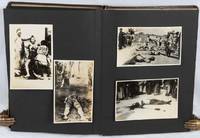
1940réf. 234221940. Chinese prisoner execution photo archive from Japanese-occupied Manchuria circa 1940s recording the custody restraint killing and aftermath of Chinese prisoners under Japanese military control. Japan's occupation of Manchuria followed the Mukden Incident of September 18 1931 when Japanese forces used an explosion along the South Manchurian Railway as the pretext for military conquest; in 1932 Japan established Manchukuo a puppet state that drew international condemnation through the League of Nations' Lytton Commission. By the 1940s Manchuria remained a central zone of Japanese military power in northeast China where occupation authority puppet-state policing and anti-guerrilla campaigns produced summary punishments prisoner shootings and public terror against local Chinese populations. Photo archive of 7 silver gelatin photographs each 4" x 6.5" Manchuria circa 1940s. Japanese soldiers in field uniforms and peaked caps surround blindfolded Chinese captives seated in open ground near an earthen bank; in one scene soldiers level rifles toward bound or blindfolded prisoners at close range. Several men lie face down or on their sides at the base of the embankment with soldiers and civilian onlookers standing above them; plain wooden boxes or planks sit nearby suggesting prepared burial or removal. Another scene records a prisoner being physically restrained in a courtyard or village setting with tiled rooflines uniformed soldiers and civilian men crowded around him. The sequence moves between armed custody execution ground bodies on the earth and prisoner handling under guard giving the group a direct evidentiary relationship to Japanese military violence in occupied Manchuria. Manchuria was not a peripheral theater in Japan's war in China; it was the region where the Kwantung Army transformed a railway-security pretext into territorial occupation state building under Manchukuo and a long-running military presence that helped bring international crisis in the 1930s and full-scale war in Asia. The scenes preserved here are not battlefront combat views but close-range records of prisoners controlled by armed soldiers making the archive especially significant for the study of occupation violence Japanese military practice wartime China and the fate of Chinese civilians or irregular fighters labeled enemies under Japanese authority. Light edge wear and minor fading to some areas; images remain primarily clean; overall very good condition. The archive preserves a compact but stark record of military force in Japanese-occupied Manchuria grounded in the physical proximity between guards prisoners rifles and bodies. unknown
1924réf. 71397New York: South Manchuria Railway Company 1924. Revised edition 8vo pp. ix 1 98 2; color folding map 60 pages of plates; publisher's blue cloth gilt title on upper cover and spine; hinges cracked a touch of foxing very good. The South Manchuria Railway Company was founded and managed by the Japanese government and served as sort of imperial representative of the colonial project in China. They published many books aimed at a western audience touting the success of this project. From the preface: "The record of this achievement in colonial enterprise is here set forth in facts and figures with a careful avoidance of debatable questions of international politics. South Manchuria Railway Company unknown
1936réf. 0107528Tokyo: The Herald Press 1936. Paperback. pp. x 84. 8vo. Black and white photos and map. Fold-out map at rear. Light shelfwear crease and ring mark to front cover South Manchuria Railway Company ink stamp to title page; very good-. The Herald Press paperback
1940réf. 220264Circa1940s. Photographic album with eighty mounted black and white photographic illustrations of varying sizes a further four photographs loosely inserted. Unpaginated. Some with captions some with handwritten descriptions on the verso. 25 x 17cm. Faux leather blind stamped decorative binding a little worn on the edges the rear gutter has been neatly strengthened. Good condition. A strange and very disturbing but historically significant album of photos taken by a Japanese man before and during the Asia-Pacific War. Some photos have been removed from the album but those remaining include family images and school photos taken at the 80th anniversary of Takefumi Higashi Junior School in Echizen City Fukui Prefecture Japan in 1951. A set of five photos stamped with the mark of "E. Tsukio" and the place name Takefumi Higashi show the aftermath of an exceptionally heavy snowfall. The photographs in this album seems to be associated with a family surnamed Hiroba as a number have handwritten notations on the back bearing the names of various individuals with that surname. The album includes a set of commercially produced photographs of the aftermath of the 1923 Great Kanto Earthquake including grim images of piles of bodies of earthquake victims. These are annotated as having been a present from a man named Hiroba Shigenobu. A photo at the rear of the album shows a photo of a Japanese army officer with sword and medals and is annotated "Hiroba Shigeharu 6 October 1940 on the eve of the third expedition to Manchuria given by Takeda Fumio". Next to this is a set of commercially produced photographs of Port Arthur focusing on the monuments to the 1905 Japanese victory there in the Russo-Japanese War. These monuments were a popular tourist attraction for Japanese people visiting Manchuria before or during the Asia-Pacific War. There are also numerous original photos taken in Harbin and the surrounding area mostly in March and April 1941. These include pictures of the streetscape of Harbin and local people participating in an ice festival on the river but also of Japanese military actions in the area - setting up an observation post transporting goods by horse-cart etc. One photo shows the range of cigarette brands available for sale in wartime Harbin. Four photos show a ceremony celebrating the establishment of the "Shimizu Unit no. 24" in Northeast China. The celebrations included a sumo wrestling competition and a party where Japanese troops were entertained by Chinese "beautiful geisha" raising the disturbing spectre of the recruitment of "comfort women" by the wartime Japanese military. More shocking still are nine photos of beheadings and other acts of extreme violence being perpetrated on people during the war in China. The precise locations of these scenes are unclear. Some of the photos appear to have been commercially produced as they contain title inscriptions in within the print but others may be original. One titled photo shows "the heads of bandits being transported by train". A haunting reminder both the horrors of war and of the way in which these can be interwoven into apparently normal family lives. . hardcover