SCHOUTEN (Gautier)Livre Rare Book

950 résultats
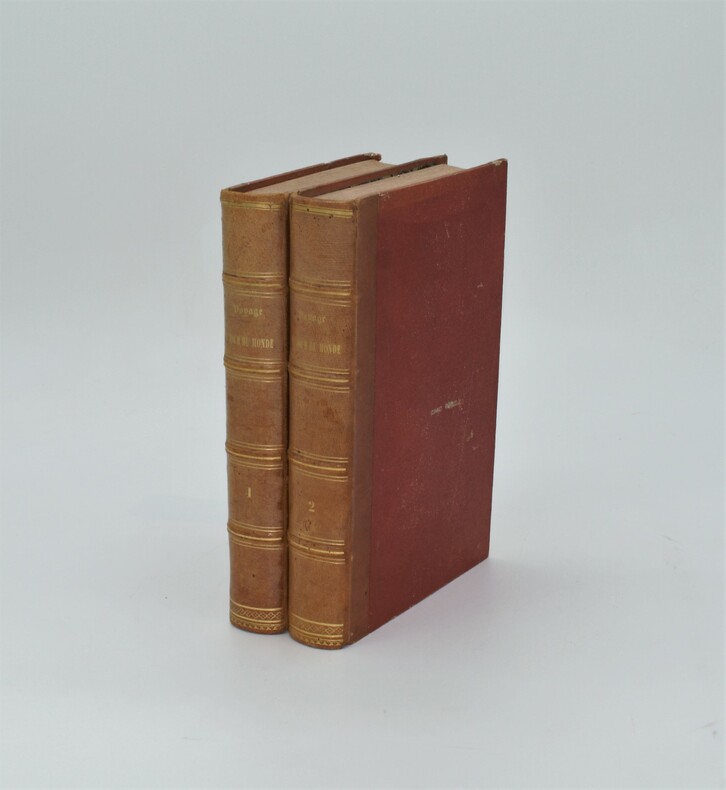
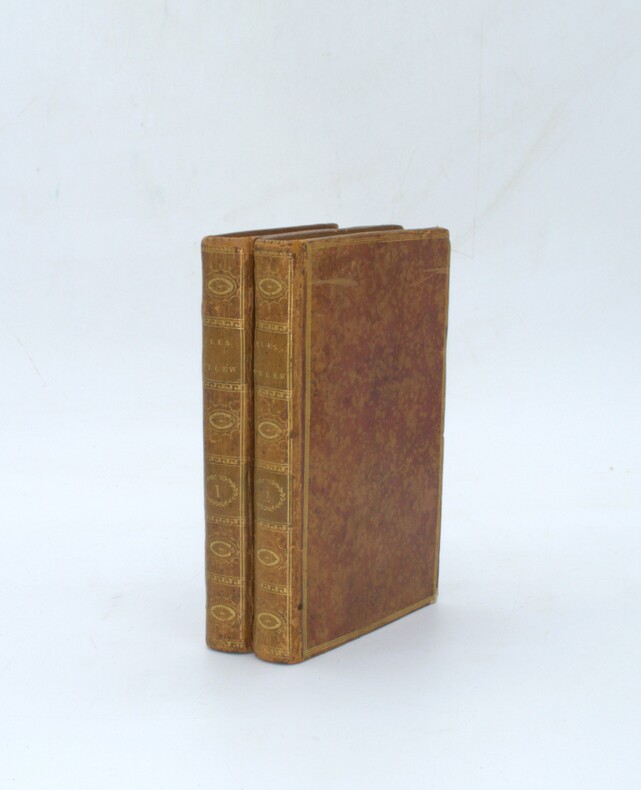
1707réf. PHO-767Amsterdam, Étienne Roger, 1707. 2 volumes in-12 (160x100) ,relié plein veau époque , dos à nerfs orné , tranches rouges , titre en rouge et noir , coiffes usées . 508pp-515pp illustré d’un frontispice et de 15 figures sur 10 planches .Ex-libris Mich Comitis vandalini Mniszech (1742-1806)
1782réf. PHO-10601782 , A Paris , Chez l'auteur & Froulé & Nyon, In-8 (150x225mm), xxij, 340pp. et (6) 376pp. et (6) 362pp.,illustré de 7 planches dépliantes gravées par Poison d’après l’auteur, relié plein veau marbré époque , dos lisse avec pièces de titre et tomaison vertes, tranches mouchetées rouges, filets sur les plats , dos frottés , coiffes et coins usés , petites rousseurs.
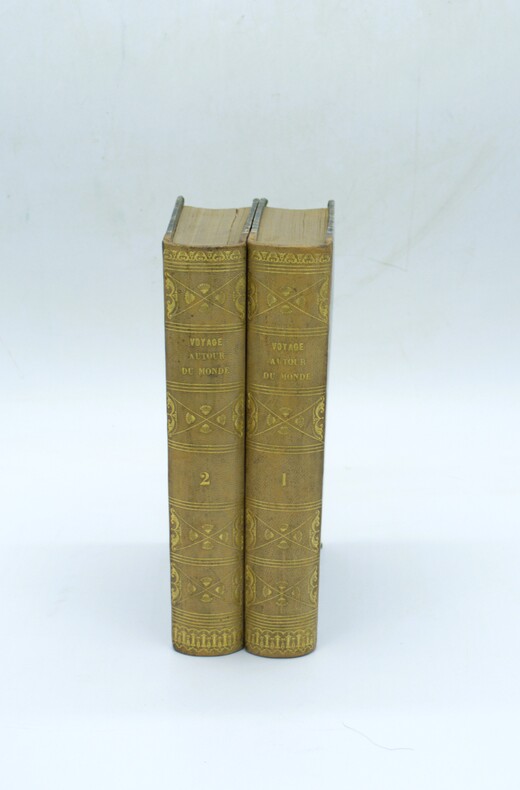
1839réf. PHO-1319Paris, Pourrat frères, 1839. 2 volumes in-8 (220x150), demi-basane maroquinée à grain long fauve , 2ff.-510pp.-1f. , 2ff.-547pp.-2ff. , illustré d’un frontispice et de 36 planches dont 19 en couleurs d’époque représentant des animaux, des poissons et des oiseaux, frottements aux plats , coins usés, très peu de rousseurs .
1930réf. 64636London UK: Herbert Jenkins Ltd. 1930. Thick 8vo. 317 1 pp. Photo frontisp. 15 photo plates. Green publisher’s cloth blue lettering & border ruling maps on endpapers slightly cocked slight occasional foxing very minor shelfwear w/ d.j. photo cover art minor chipping head & foot of spine dustsoiling edgewear small chip on back cover still a VG/VG- copy from the library of Claude Bridgland. First edition 1st printing stated of this rousing travelogue of the author’s “thrilling record of forty years’ adventures among the Igorote Head-hunters the Negrito Pygmies Aeta of Luzon whose poisoned arrows are the terror of the forests of Luzon the Dusun Python-hunters of the Borneo jungles the Corsairs and Sultans of the Sulu Sea and the Moro warriors of Mindanao.” Burdett b. 1864 was renowned for his pearling and smuggling expeditions gold mining in the Kimberley mines and extended expeditions into the Philippines Indonesia and across the South Pacific. Exceedingly scarce in original dustjacket. Herbert Jenkins, Ltd., hardcover
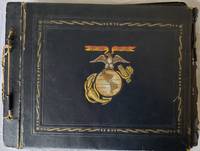
1944réf. 159501944. United States Marine Corps photo album 1944-1945 documenting Marine service in the Pacific Theater during the final campaigns against Japanese forces including visual evidence of combat environments military infrastructure and daily life during Allied advances toward the Philippines. Compiled by an active Marine the album records conditions faced by servicemen during a decisive phase of World War II when United States forces intensified operations to dismantle Japanese control across strategic island territories. The photographs show armed Marines in field settings encampments and operational zones alongside damaged urban structures marked by bullet impacts aircraft staged on active airfields and transportation along jungle rivers providing direct visual documentation of wartime movement occupation and destruction. Photograph album containing 93 silver gelatin photographs and approximately 30 postcards assembled by a United States Marine serving in the Pacific Theater. Images depict Marines in group portraits at base camps informal scenes of soldiers at rest and aircraft on airfields including fighter planes with visible nose art. Additional photographs document jungle landscapes river travel using local barges and built environments showing structural damage consistent with recent combat. The album includes interactions between American servicemen and local civilian populations as well as images of local animals such as dogs and monkeys. Postcards depict illustrated views of Marine bases and wartime scenes several addressed to the compiler's family in Georgia. Laid into the album are photographic negatives newspaper clippings reporting wartime developments military documents and a ribbon extending the documentary scope beyond the mounted photographs. Produced during the closing phase of World War II this album aligns with major United States Marine Corps operations supporting the liberation of the Philippines in 1944 and 1945 and the broader Allied campaign across the Pacific. Marine aviation and ground units operated from forward airfields and temporary encampments such as those depicted here sustaining continuous engagement with Japanese forces while navigating tropical terrain and heavily damaged urban zones. The inclusion of civilian encounters and informal group scenes adds dimension to the study of occupation dynamics and servicemen's daily routines within active war zones. Album pages detached from original ties with some tearing and evidence of missing photographs light wear throughout; overall fair to good. A substantial primary visual record of Marine experience during the final stage of the Pacific War. unknown
1944réf. 159501944. United States Marine Corps photo album 1944-1945 documenting Marine service in the Pacific Theater during the final campaigns against Japanese forces including visual evidence of combat environments military infrastructure and daily life during Allied advances toward the Philippines. Compiled by an active Marine the album records conditions faced by servicemen during a decisive phase of World War II when United States forces intensified operations to dismantle Japanese control across strategic island territories. The photographs show armed Marines in field settings encampments and operational zones alongside damaged urban structures marked by bullet impacts aircraft staged on active airfields and transportation along jungle rivers providing direct visual documentation of wartime movement occupation and destruction. Photograph album containing 93 silver gelatin photographs and approximately 30 postcards assembled by a United States Marine serving in the Pacific Theater. Images depict Marines in group portraits at base camps informal scenes of soldiers at rest and aircraft on airfields including fighter planes with visible nose art. Additional photographs document jungle landscapes river travel using local barges and built environments showing structural damage consistent with recent combat. The album includes interactions between American servicemen and local civilian populations as well as images of local animals such as dogs and monkeys. Postcards depict illustrated views of Marine bases and wartime scenes several addressed to the compiler's family in Georgia. Laid into the album are photographic negatives newspaper clippings reporting wartime developments military documents and a ribbon extending the documentary scope beyond the mounted photographs. Produced during the closing phase of World War II this album aligns with major United States Marine Corps operations supporting the liberation of the Philippines in 1944 and 1945 and the broader Allied campaign across the Pacific. Marine aviation and ground units operated from forward airfields and temporary encampments such as those depicted here sustaining continuous engagement with Japanese forces while navigating tropical terrain and heavily damaged urban zones. The inclusion of civilian encounters and informal group scenes adds dimension to the study of occupation dynamics and servicemen's daily routines within active war zones. Album pages detached from original ties with some tearing and evidence of missing photographs light wear throughout; overall fair to good. A substantial primary visual record of Marine experience during the final stage of the Pacific War. unknown books
1944réf. 224221944. Olson Laverne Edwin vernacular photo album circa 1944-1946 documents U.S. Navy enlisted service across the Philippines and Hawaii during the final phase of World War II and the immediate postwar occupation period providing direct visual and documentary evidence of military presence local communities and wartime social life in the Pacific Theater. The album is anchored by Olson's official U.S. Navy Certificate of Satisfactory Service confirming duty from December 18 1944 through April 23 1946 situating the material within the aftermath of the U.S. return to the Philippines following the Leyte landings and the transition into occupation and reconstruction. The photographs support research into Pacific War military infrastructure American servicemen's daily life and interactions with local populations in recently contested and strategically critical regions. Album titled "Snapshots: The Philippines and The Islands of Hawaii" compiled circa 1944-1946 contains 25 items: 23 silver gelatin photographs one wallet-sized U.S. Navy Certificate of Satisfactory Service and one Roosevelt Commemorative Birthday Ball exchange coupon dated January 30 1946. Album measures approximately 4.5 x 3.5 inches with most photographs approximately 4 x 2.5 inches. Images include candid and landscape views from the Philippines likely including Leyte depicting rural villages shoreline activity docked naval vessels and local labor such as fishing and canoe transport. One photograph shows a group of Filipino children and young men gathered along a beach while another captures men and boys navigating shallow coastal waters in a canoe. Hawaiian images include group recreation scenes and coastal landscapes reflecting off-duty life within a major U.S. naval hub. The Roosevelt Birthday Ball coupon printed with the slogan "Dance That Others May Walk" provided access to multiple Honolulu venues and connects the album to wartime charitable campaigns supporting polio treatment through organized social events. Created during the closing campaigns of the Pacific War and the first year of U.S. postwar presence in the Philippines the album situates an enlisted sailor within a broader military and geopolitical transformation that included amphibious warfare territorial reoccupation and the reestablishment of American administrative and logistical systems. The Philippines served as a critical site of both combat and reconstruction while Hawaii functioned as a central staging and support base for naval operations. The inclusion of both official documentation and leisure-related ephemera demonstrates how military service encompassed bureaucratic recordkeeping mobility across strategic locations and participation in organized morale and fundraising activities tied to the American home front. Light wear to album covers minor handling and edge wear to photographs with images remaining sharp; service certificate shows toning and wear; pages largely intact. Overall very good condition. unknown
1944réf. 224221944. Olson Laverne Edwin vernacular photo album circa 1944-1946 documents U.S. Navy enlisted service across the Philippines and Hawaii during the final phase of World War II and the immediate postwar occupation period providing direct visual and documentary evidence of military presence local communities and wartime social life in the Pacific Theater. The album is anchored by Olson's official U.S. Navy Certificate of Satisfactory Service confirming duty from December 18 1944 through April 23 1946 situating the material within the aftermath of the U.S. return to the Philippines following the Leyte landings and the transition into occupation and reconstruction. The photographs support research into Pacific War military infrastructure American servicemen's daily life and interactions with local populations in recently contested and strategically critical regions. Album titled "Snapshots: The Philippines and The Islands of Hawaii" compiled circa 1944-1946 contains 25 items: 23 silver gelatin photographs one wallet-sized U.S. Navy Certificate of Satisfactory Service and one Roosevelt Commemorative Birthday Ball exchange coupon dated January 30 1946. Album measures approximately 4.5 x 3.5 inches with most photographs approximately 4 x 2.5 inches. Images include candid and landscape views from the Philippines likely including Leyte depicting rural villages shoreline activity docked naval vessels and local labor such as fishing and canoe transport. One photograph shows a group of Filipino children and young men gathered along a beach while another captures men and boys navigating shallow coastal waters in a canoe. Hawaiian images include group recreation scenes and coastal landscapes reflecting off-duty life within a major U.S. naval hub. The Roosevelt Birthday Ball coupon printed with the slogan "Dance That Others May Walk" provided access to multiple Honolulu venues and connects the album to wartime charitable campaigns supporting polio treatment through organized social events. Created during the closing campaigns of the Pacific War and the first year of U.S. postwar presence in the Philippines the album situates an enlisted sailor within a broader military and geopolitical transformation that included amphibious warfare territorial reoccupation and the reestablishment of American administrative and logistical systems. The Philippines served as a critical site of both combat and reconstruction while Hawaii functioned as a central staging and support base for naval operations. The inclusion of both official documentation and leisure-related ephemera demonstrates how military service encompassed bureaucratic recordkeeping mobility across strategic locations and participation in organized morale and fundraising activities tied to the American home front. Light wear to album covers minor handling and edge wear to photographs with images remaining sharp; service certificate shows toning and wear; pages largely intact. Overall very good condition. unknown books
réf. 13404Madrid, Tipografia sw Manuel G. Hernandez, 1887. 1 volume in-8, 409 pp., reliure ancinne demi-chagrin, plats cartonnés marbrés, très bon état. Ouvrage publié à Madrid, en langue espagnole.Très rare.
1963réf. 59482Philadelphia & New York: J.B. Lippincott Co. 1963. Thick 8vo. 12 425 1 pp. Double-page map. Quarter-black over red publisher’s cloth silver stars & lettering front cover & spine slight shelfwear rubbing w/ d.j. cover art by Robert Hallock minor dustsoiling toning to spine price-clipped still NF/VG copy inscribed by Colonel Wendell Welby Fertig 1900-1975 to Eric Offret 1949-1986 upon his graduation from high school in San Diego June 1967 “This is a part of the story of our effort in the Philippines. “Chief” can supply some details. It is a story of a fight against odds -- and we won!” First edition 2nd printing of this work detailing the efforts of self-promoted Brigadier General Fertig a reservist mining engineer who had assisted in the evacuations of Bataan and Corregidor who accepted the offer from Major General Sharp to oversee the resistance in Visayan-Mindanao to the Japanese invasion. Fertig linked up with Filipino-American Luis Morgan a local constabulary officer as Fertig attempted to manage the disparate groups of Filipino guerillas managing non-Americans including Australian soldiers a Syrian engineer and German soldier of fortune and negotiating between Filipino Christians and Lanao Moros. J.B. Lippincott Co., hardcover
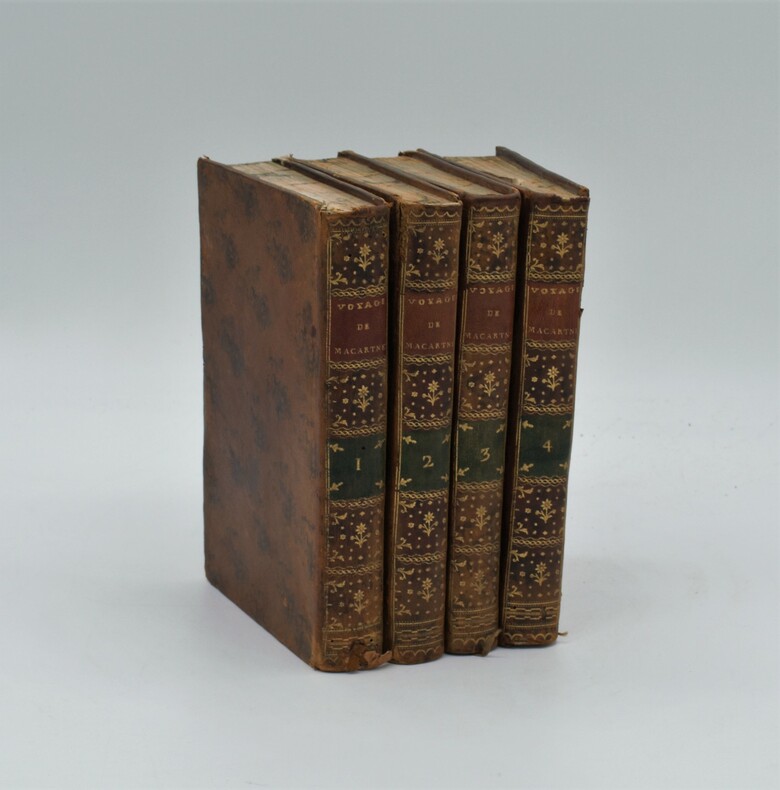
1798réf. PHO-1309Paris, F. Buisson, An 6 de la République (1798). 4 volumes in-8 (21x13,5cm) , relié plein cuir tacheté époque , dos lisse orné avec pièces de titre et de tomaison , tranches marbrées, coins et coiffes usés avec manque, charnière faible au tome 4, (4) viij, 515pp. et (4) 412pp. et (4) 399pp. et (4) 326pp. et (4) ij, 402pp. ; (2) , illustré de 4 frontispices et 3 grandes cartes dépliantes (déchirures sans manques) gravés par Tardieu l’Ainé , mouillure sur quelques pages au tome 1.
1804réf. PHO-2366Paris, Chez Buisson, 1804, in-4 (32x23,5cm), 2ff. et 41 planches dont 3 cartes (complet), reliure d’attente, étiquette au plat dans une pochette en toile bleu, réparations aux cartes.
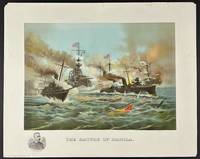
1898réf. 13092New York: Muller Luchsinger & Co 1898. Color chromolithograph 16 x 20 inches printed on thick glossy paper. Corners a bit chipped several short closed edge tears minor surface wear. Image area still vibrant and clean. Very good overall. A striking and very rare lithograph capturing an important moment during the Spanish-American War specifically the American Navy's assault on Manila Bay in the Philippines in 1898. In the present scene three U.S. warships from the Asiatic Squadron in the left and middle including Admiral Dewey's flagship the U.S.S. Olympia fire their guns toward a few retreating ships flying the Spanish flag. A Spanish ship at middle right is almost completely sunken with just a portion of the flag peaking above the water. The scene depicts the first major engagement of the Spanish-American War a decisive victory for the American Navy that stands as one of the most lop-sided naval battles in history. During the course of the encounter the Spanish Pacific Squadron was destroyed and effectively ended Spanish colonial rule in the Philippines. The bombardment was commanded by Rear Admiral George Dewey 1837-1917 whose head-and-shoulders portrait appears in the bottom left corner. The work was accomplished by the New York firm of Muller Luchsinger & Company a prolific but still somewhat obscure producer of prints lithographs and chromolithographs in the latter-19th and early-20th centuries. OCLC records just two institutional copies at the Library of Congress and the Clements Library. A dynamic and patriotic American naval scene picturing the United States Navy's obliteration of the Spanish Navy in Manila. Muller, Luchsinger & Co unknown
1898réf. 13092New York: Muller Luchsinger & Co 1898. Color chromolithograph 16 x 20 inches printed on thick glossy paper. Corners a bit chipped several short closed edge tears minor surface wear. Image area still vibrant and clean. Very good overall. A striking and very rare lithograph capturing an important moment during the Spanish-American War specifically the American Navy's assault on Manila Bay in the Philippines in 1898. In the present scene three U.S. warships from the Asiatic Squadron in the left and middle including Admiral Dewey's flagship the U.S.S. Olympia fire their guns toward a few retreating ships flying the Spanish flag. A Spanish ship at middle right is almost completely sunken with just a portion of the flag peaking above the water. The scene depicts the first major engagement of the Spanish-American War a decisive victory for the American Navy that stands as one of the most lop-sided naval battles in history. During the course of the encounter the Spanish Pacific Squadron was destroyed and effectively ended Spanish colonial rule in the Philippines. The bombardment was commanded by Rear Admiral George Dewey 1837-1917 whose head-and-shoulders portrait appears in the bottom left corner. The work was accomplished by the New York firm of Muller Luchsinger & Company a prolific but still somewhat obscure producer of prints lithographs and chromolithographs in the latter-19th and early-20th centuries. OCLC records just two institutional copies at the Library of Congress and the Clements Library. A dynamic and patriotic American naval scene picturing the United States Navy's obliteration of the Spanish Navy in Manila. Muller, Luchsinger & Co unknown books
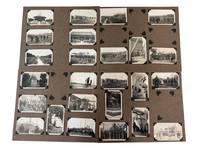
1910réf. 235901910. Late Qing China and Philippines photo archive depicting military authority public punishment foreign presence and imperial architecture circa 1910 in the years immediately before the Xinhai Revolution ended dynastic rule in China. The Chinese photographs show Beijing monuments urban crowds soldiers execution spectators and foreign personnel at a moment when Qing authority remained visible but unstable. The group places tourist views of imperial architecture beside scenes of coercion and military order linking travel photography to the political crisis of the late Qing state. Photo archive of 32 silver gelatin photographs each 2.5 x 4.25 inches cornered in on 11 x 13.5 inch brown album leaves mainly China with several Philippines views circa 1910. The images show Beijing landmarks including the Temple of Heaven palace buildings imperial gates stone lions carved walls ceremonial terraces walled compounds and garden architecture. Several views show Chinese crowds gathered near military or judicial scenes including a public execution aftermath with a severed head displayed from a pole before laughing onlookers and children with a placard stating the events transpired. Other photographs show Chinese soldiers and civilians in open grounds foreign military or naval personnel a group of men in white naval style uniforms seated in a circle Chinese junks harbor traffic street scenes rickshaws and colonial buildings. The Philippines photographs appear to include Manila street and harbor views a woman and girl a domed theater or civic building tropical shoreline and American colonial urban scenes. China in 1910 stood between the punitive settlement that followed the Boxer Rebellion and the republican revolution that began in Wuchang in October 1911. Foreign troops remained in North China under treaty rights imperial and provincial authorities tried to preserve order through policing army reform and public punishment and revolutionary societies used anti Manchu and anti foreign resentment to attack the legitimacy of Qing rule. The execution photographs show law as spectacle with the punished body displayed before civilians and soldiers rather than hidden within prison administration. The Beijing views record the ceremonial architecture of the dynasty at the same time that its political power was nearing collapse while the Philippines views place China within a wider American and European imperial geography of ports garrisons and colonial travel. Light surface wear toning and occasional fading; mounted with photo corners on album leaves. Overall very good condition. A concentrated visual record of military order public punishment foreign presence and imperial space in East Asia immediately before the fall of the Qing dynasty. unknown
1910réf. 235901910. Late Qing China and Philippines photo archive depicting military authority public punishment foreign presence and imperial architecture circa 1910 in the years immediately before the Xinhai Revolution ended dynastic rule in China. The Chinese photographs show Beijing monuments urban crowds soldiers execution spectators and foreign personnel at a moment when Qing authority remained visible but unstable. The group places tourist views of imperial architecture beside scenes of coercion and military order linking travel photography to the political crisis of the late Qing state. Photo archive of 32 silver gelatin photographs each 2.5 x 4.25 inches cornered in on 11 x 13.5 inch brown album leaves mainly China with several Philippines views circa 1910. The images show Beijing landmarks including the Temple of Heaven palace buildings imperial gates stone lions carved walls ceremonial terraces walled compounds and garden architecture. Several views show Chinese crowds gathered near military or judicial scenes including a public execution aftermath with a severed head displayed from a pole before laughing onlookers and children with a placard stating the events transpired. Other photographs show Chinese soldiers and civilians in open grounds foreign military or naval personnel a group of men in white naval style uniforms seated in a circle Chinese junks harbor traffic street scenes rickshaws and colonial buildings. The Philippines photographs appear to include Manila street and harbor views a woman and girl a domed theater or civic building tropical shoreline and American colonial urban scenes. China in 1910 stood between the punitive settlement that followed the Boxer Rebellion and the republican revolution that began in Wuchang in October 1911. Foreign troops remained in North China under treaty rights imperial and provincial authorities tried to preserve order through policing army reform and public punishment and revolutionary societies used anti Manchu and anti foreign resentment to attack the legitimacy of Qing rule. The execution photographs show law as spectacle with the punished body displayed before civilians and soldiers rather than hidden within prison administration. The Beijing views record the ceremonial architecture of the dynasty at the same time that its political power was nearing collapse while the Philippines views place China within a wider American and European imperial geography of ports garrisons and colonial travel. Light surface wear toning and occasional fading; mounted with photo corners on album leaves. Overall very good condition. A concentrated visual record of military order public punishment foreign presence and imperial space in East Asia immediately before the fall of the Qing dynasty. unknown books
réf. DADAX1585673943New unknown
Malina, Tipo-Litografía de Chofré y Cía., 1892, 21,5 x 14,5 cm., rústica editorial con la cubierta posterior desprendida, VI + 201 págs. (Sello de anterior poseedor. Carecemos de la segunda parte de esta obra, español-tiruray).
1848réf. 9299Paris, A. Frank, 1848. In-4 de [10]-326-[4] pages, demi-veau brun, dos lisse orné de filets et fleurons dorés et à froid, étiquette de titre verte. Mors fendus et frottés, dos légèrement frotté, quelques rousseurs.
réf. 13752Madrid, Tipografia sw Manuel G. Hernandez, 1887. 1 volume in-8, 409 pp., reliure ancinne demi-chagrin, plats cartonnés marbrés, très bon état. Ouvrage publié à Madrid, en langue espagnole.Très rare.
1793réf. PHO-2402Paris, Maradan, 1793. 2 volumes in-8 (20 x 12,5 cm), 2ff.-280pp. & 2ff.-272pp., veau porphyre, dos lisse orné avec titre et tomaison, triples filets aux plats, tranches jaspées. Petits frottements, 2 coins usés, 1 cahier bruni, déchirure au pli de la grande carte.
1839réf. PHO-2300Paris, Pourrat frères, 1839. 2 volumes in-8 (24x16cm), 2ff.-510pp.-1f. , 2ff.-547pp.-2ff. , illustré d’un frontispice et de 41 planches dont 19 en couleurs d’époque représentant des animaux, des poissons et des oiseaux, demi basane époque, dos lisse orné avec titre et tomaison, étiquette de bibliothèque, 2 feuillets détachés, quelques rousseurs, dos insolé, petits frottements.
réf. ORD-19121Tome X contenant Voyage dans l'Indoustan, la description des îles Marianes, des Philippines, de Célèbes, du Japon, etc. Paris. Didot. 1752. 1 volume in-4 (205 x 260 mm) pleine basane racinée, dos à 5 nerfs orné or, gardes peignées, tranches rougies, VI, 688, (3) pages. Complet des 8 cartes et plans et 17 figures sur 18 hors texte Seule la planche représentant la cour du Grand Mogol manque. Coiffes un peu arasées, papier lgt insolé par endroits, petits défauts mais bon état intérieur et bonne reliure. Étiquette de Raoul Pascalis au revers du 1er plat.
1917Abundant black and white illustrations and reproductions of photos. Features: Cheetah-Hunting - Lewis R. Freeman provides an interesting account of using cheetahs to hunt deer in India - article with photos; The Mad Hatter - two former partners fight it out over a woman in the boom days of the Kalgoorlie mines; Ivory-Poaching in German East Africa - Prior to WWI big game hunter J.A. Jordan set out to poach ivory from the jealously guarded herds of the colony after a German captain confiscated his possessions and left him stranded - article with amazing photos; Adventures of a Wild-Beast Trainer - The thrilling experiences of ex-lion-tamer Alexander Feely; An Errand of Mercy - the dangers and difficulty of travel in the interior of Paraguay; After Outlaws in Unknown New Guinea - pursuit of a band of native murderers who had wiped out a village - article with excellent photos; 'Big-Bang' - the story of a WWI heavy-duty trench mortar invented by a man named X____; The Brothers Alvarez - a Mexican narrative related to the author by the late British Minister to Mexico; A Canadian Lumber-Camp - Part I - A vivid photo-illustrated sketch of the strenuous winter existence of a Canadian lumber-jack; A Five Minutes' Race With Death - a mining engineer's story of a revengeful Matabele and a very narrow escape; The Bunko House - a very narrow escape in Chicago; Bob Trinder's Good Time - at story of the bad old days of San Francisco when men were 'shanghaied' aboard deep-water ships for the sake of advance-money or private vengeance; South African Snakes - their variety and characteristics; A Race With a Typhoon - the remarkable adventure of Yale graduate Dr. E.E. Severy in a remote district of Mindanao in the Philippines; Sensational 16-page photo-illustrated stock offering for the Pruden Coal Carburetor and the Powdered Coal Engineering & Equipment Company; and and more. pp. 4 [ads], [2], 292-382, 22-32 [ads]. Covers beginning to loosen. Unmarked with moderate wear. A quality vintage copy. Book
1988168 pages. Glossary, index and bibliography. Map endpapers. "From 1934 to 1956, self-taught Filipino photographer Eduardo Masferre dedicated his talent to recording images of the indigenous people in the heart of the Philippine Cordillera mountains - the Bontok, Kankana-ey, Kalinga, Gaddang and Ifugao people. Masferre created in photographs a sensitive portrait of a place and its people. The rice terraces sculpted into the steep mountain slopes and long valleys, the planting, cultivation and harvesting of rice, a family gathered at their hearth, scenes of the village, weavers and potters at work, men engaged in religious rituals and ceremonial dances, and strong faces that meet one's gaze with great integrity - Masferre preserved all of these in timeless images that transcend ethnography and imbue documentary fact with deeper meaning." - dust jacket. Clean and unmarked with moderate wear. Binding open at page 3. Fading to top of dust jacket back panel. Dust jacket now preserved in archival-grade Brodart. [ISBN 9719108253] Book