837 Ergebnisse
2000Best.-Nr. LFA017e0Revue mensuelle conernant la philatélie : environ 110 pages en couleurs, format 300 x 210 mm, illustrée, brochée couverture couleurs + fiches détachables
1776Best.-Nr. GIT00dbfA La Haye chez Gosse 1776. In-12 VIII 488pp. Demi cuir de Russie vert à petits coins de velin ivoire, dos lisse ornéde filets et fleurons dorés, pièces de titre et de tomaison rouges, tranches mouchetées, rel époque. Orné d'une gravure en frintispice et une grande carte dépliante. Bel exp.
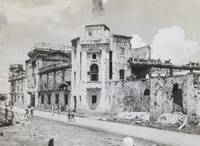
Best.-Nr. PD10Oblong Octavo album ca.182x295 cm or 7 ¼ x 11 ½ in. 30 card stock leaves with 2 free endpapers. With 105 original gelatin silver photographs including one loose from ca. 104x75 cm 4 x 3 in to 47x64 cm 1 ¾ x 2 ½ in. All photos with white ink captions in English on the mounts seven photos captioned in negatives some photos dated. Period dark green half leather binding with raised bands; guilt-tooled ornaments on the front cover and the spine. Seven photos missing one page lacks fragments at the right margin several pages with minor tears but otherwise a very good album with strong interesting photos. Historically interesting collection of original photographs mostly documenting the technical reconstruction of Manila’s communication networks after the end of World War II. As follows from the photographs the compiler was a technician or lineman with the U.S. Army Signal Corps. First stationed in Pittsburgh in 1943 he likely underwent specialized technical training at one of the city's industrial or academic centers before being deployed to Finschhafen New Guinea. There he was tasked with establishing the communications infrastructure for the Allied base following the recapture of the town from Japanese forces. Finally he was sent to Manila in the fall of 1945 where he assisted in the massive effort to reconstruct the city’s destroyed telephone and telegraph systems during the initial months of the post-war occupation. The album contains 105 rare early photographs from the Pacific Theatre with most images taken in Manila in the fall of 1945. The photos capture Japanese ships sunk by U.S. forces in Manila Bay and the city’s architecture before and after the artillery bombardment Escolta Street Jones Bridge the ruins of City Hall the University of the Philippines the Manila Hotel San Vicente de Paul Parish Department of Finance Building today’s National Museum of Anthropology Commerce & Agriculture Building today’s National Museum of Natural History and Legislative Building today’s National Museum of Fine Arts. Especially interesting are about fifteen candid photographs documenting the technical reconstruction of Manila’s communication networks. Outdoor scenes show the compiler’s companions with climbing spikes and safety belts repairing overhead trunk lines. Interior views depict a “Test Desk” with technicians both American and Philippian operating specialized consoles and patch cords the massive Main Distribution Frame MDF with thousands of line terminations and heavy power panel equipment. The series also includes several photographs from Clark Field showing “Ralph” and “Eddie” posing beside wrecked aircraft. The other interesting photos from the collection show “a Native of New Guinea” posing with American soldiers as well as the compiler and his friends in military uniforms in Finschhafen and Pittsburgh beside their tents barracks and orderly room. Overall historically interesting collection of original gelatin silver photographs illustrating rare scenes from the service of the U.S. Army Signal Corps in the Pacific Theatre of World War II. hardcover
1931Best.-Nr. 64637London UK: Herbert Jenkins Ltd. 1931. Thick 8vo. 320 pp. Photo frontisp. 15 photo plates. Green publisher’s cloth blue lettering & border ruling very slight shelfwear slight foxing to fore-edges w/ d.j. photo cover art minor chipping head of spine dustsoiling edgewear 1 minor closed tear still a NF/VG copy. First edition 1st printing stated of this follow-up travelogue recording his adventures in the Kimberley Gold Rush the pearl fisheries of the Indian Ocean coping with the Pirates of Panay hunting for sunken treasure and shocking discoveries in a supposed Indigenous “cannibal” cooking pot. Burdett b. 1864 was renowned for his pearling and natural history expeditions sailing through the Indian Ocean Indonesia and extended expeditions into the Philippines Indonesia and across the South Pacific. Exceedingly scarce in original dustjacket. Herbert Jenkins, Ltd., hardcover
1930Best.-Nr. 64636London UK: Herbert Jenkins Ltd. 1930. Thick 8vo. 317 1 pp. Photo frontisp. 15 photo plates. Green publisher’s cloth blue lettering & border ruling maps on endpapers slightly cocked slight occasional foxing very minor shelfwear w/ d.j. photo cover art minor chipping head & foot of spine dustsoiling edgewear small chip on back cover still a VG/VG- copy from the library of Claude Bridgland. First edition 1st printing stated of this rousing travelogue of the author’s “thrilling record of forty years’ adventures among the Igorote Head-hunters the Negrito Pygmies Aeta of Luzon whose poisoned arrows are the terror of the forests of Luzon the Dusun Python-hunters of the Borneo jungles the Corsairs and Sultans of the Sulu Sea and the Moro warriors of Mindanao.” Burdett b. 1864 was renowned for his pearling and smuggling expeditions gold mining in the Kimberley mines and extended expeditions into the Philippines Indonesia and across the South Pacific. Exceedingly scarce in original dustjacket. Herbert Jenkins, Ltd., hardcover
1945Best.-Nr. 64628Los Angeles CA: 40th Infantry Division ca. 1945. Oblong 4to. 120 pp unpaginated. with 200 silver gelatin photographs all mounted and numbered in lower corner w/in negative keyed to indices inserted after the title page occasional creasing to corners. Brick-red publisher’s cloth post-binder two hidden nickel-plated screwposts at gutter margin 40th Infantry Division sunburst emblem patch on front cover in gilt on blue field minor thumbing edgewear slightly shaken occasional fraying to a couple leaves at fore-edge still a VG copy. First edition thus of this 40th Infantry Division regimental souvenir album visually recording the Western National Guard “Sunshine Division’s” participation in the grueling and bloody island hopping campaign during World War II from Guadalcanal to The Philippines often involved in heavy fighting and credited with capturing or killing over 11000 Japanese troops while suffering 715 casualties. These photographs follow the 40th Division’s arrival and activities in Hawaii followed by their movement to Guadalcanal and arrival at Kukum Dock. Photos depict wrecked Japanese ships beached nearby the typical bare-breasted shots of New Britain Indigenous Peoples arrival of nurse units and training on New Britain. As depicted in these images the bloody Philippine Islands campaign opened with multiple regiments from the 40th Division landing at the Lingayen Gulf on Luzon in order to retake the main Philippine Island in January 1945 including views of Tarlac Bamban battle damage artillery pieces war dogs used by segregated African-American patrols on Luzon well-prepared Japanese positions built to repel the American forces machine gunners Japanese casualties and the results of Japanese troops using grenades to commit Hari Kari.The next phase of the campaign involved the 40th Division participating in the Panay & Guimaras Invasion landing at Tigbauan on Panay Island securing Iloilo City and nearby airfields coordinating with Philippine guerrilla forces with photos of the guerrillas views of the landing craft Philippine peoples and guerrillas wounded by Japanese snipers being treated by American forces and the Division artillery. The 40th Division later came together with other forces and moved onto Negros Island from the end of March through August 1945 pushing deep into Negros Island capturing Bacolod and its airfield before continuing on in the heavy surrounding jungle dislodging Japanese troops in the surrounding area. Their artillery and tank battalions proved particularly effective and many of these photographs depict not only the movements and equipment but the aftermath as well. This album does not include the National Guard Division’s participation in the enforcement of the orders to round up and illegally incarcerate Japanese-Americans throughout the West into War Relocation Centers and Internment Camps for the duration of the War. No copies in Worldcat -- this volume should not be confused with the regimental history published in Baton Rouge LA by the Army & Navy Publishing Company -- “40th Infantry Division: the years of World War II 7 December 1941-7 April 1946. 40th Infantry Division, hardcover
1936Best.-Nr. 64638London UK: Herbert Jenkins Ltd. 1936. Thick 8vo. 316 pp. plus 4 pp. publisher’s ads. Photo frontisp. 15 photo plates. Red publisher’s cloth black lettering very slight shelfwear slight foxing to fore-edges w/ d.j. photo cover art minor chipping head of spine dustsoiling edgewear couple minor closed tears still a NF/VG copy. First edition 1st printing stated of this third travelogue recording Burdett’s adventures in the Kimberley Gold Rush working as a sheep drover and at the sheep station handling cattle and off to the Philippines. Burdett b. 1864 was renowned for his pearling and natural history expeditions sailing through the Indian Ocean Indonesia and extended expeditions into the Philippines Indonesia and across the South Pacific. Very uncommon in original dustjacket. Herbert Jenkins, Ltd., hardcover
2026Best.-Nr. x-981982303XWorld Scientific Publishing Co Pte Ltd 2026. Hardcover. New. 560 pages. 6.00x2.00x9.00 inches. World Scientific Publishing Co Pte Ltd hardcover
Best.-Nr. PF35Oblong Quarto album ca.18x29 cm. 38 paper album leaves 19 blank . With ca. 90 mounted original gelatin silver photographs and 2 postcards from ca. 14x85 cm 5 ½x3¼ in to ca. 109x65 cm 4 ¼ x 2½ in. Some photos with period caption in negative citing ‘Banzon photos’ likely a local studio the others without captions. Two Real Photo Color Postcards in The Collection Show the Subano Women and Nagasaki View. Both are mounted with a strong glue the previous owner tried to un-glue one to reveal the signature ‘P.J.’ possible date ‘1919’ and readdress ‘To U.S.N.Radio Station’. Other images might be captioned at the back this is subject to further research. The Tatoosh group of photos are loose one of them captioned ‘This is the most lonesome place in the world’. Binding worn several photos missing few images loose one of the postcards with tears but otherwise a very good album of strong interesting photos. Historically important collection of original photographs illustrating the life of American Navy Officer Serving at Navy Radio Station in Washington and Philippines. He likely received his training at Tatoosh before being sent to Philippines. Tatoosh station existed since late 1900s being one of the first Island Naval Radio Stations on West Coast following the first station on Mare Island that has been established in 1904. The album is divided into three group of photos the first one being from WA the second - from Philippines one of them dated in negative as of 1913 which suggests the arrival of the officer to Philippines around that time or in late 1910s. The same group of photos are taken in variety of places in the Philippines but already include a number of photos of Las Baños including the panorama of Los Baños Laguna with U.S. Ambulance & Signal Corp Camp Eldridge on it. The image of thecamp is a good verification for the dating of the photos of the first group: it has been photographed in a very early stage of its establishment while later photos from before Japanese invasion show more buildings and more developed territory. This group of photos which are larger include 17 images. The third group of photos is dedicated entirely to Las Baños its radio facilities and the life of the officer: his home his wife his friends the locals he has photographed. In this series the photographer is likely climbed one of the radio towers and took aerial shots in the process of his climb as well as from the top. As a result a series of photographed has survived showing the laguna and the operation in Los Baños in the early stage. US Naval Radio Control Station was built in 1917 including three 600' towers by 1930 it was operating at a significant capacity as the photos published by navy-radio website demonstrate. It is likely our group of photos is taken earlier as the territory shown on the photos from 1930 is developed more significantly and the pathway to operation building and the gate is not constructed yet. were built in 1917 - one destroyed in 1941 attack two demolished in 1945. 1920s was the early days for US Navy Communication Stations abroad the US: in 1924 there was a shore-based site at Shanghai as early as 1924 but its operations had been shifted to the USS General Alva in 1927; Guam in 1929 had one-person intercept site. Oahu had two stations established in 1924 and 1925. The precent station in Los Baños probably was playing a significant role in the region. Civilian radio in the Philippines started in June 1922 with the establishment of KZKZ AM in Manila Philippines by Henry Herman Sr. owner of the Electrical Supply Company in Manila. One radio tower destroyed in 1941 attack two demolished in 1945. During Japanese occupation Los Baños became known for an agricultural school campus turned Japanese internment camp. In famous ‘Raid on Los Baños’ United States Army Airborne and Filipino guerrilla task force have liberated 2147 Allied civilian and military internees from the camp. Likely the operation affected the Radio Control Station that was not re-started after 1945. Overall an important photographic evidence of the US Navy Radio operations in the Pacific. unknown
2025Best.-Nr. x-1032419814Taylor & Francis Ltd 2025. Paperback. New. 176 pages. 9.00x6.00x9.02 inches. Taylor & Francis Ltd paperback
2025Best.-Nr. x-1032853336Taylor & Francis Ltd 2025. Paperback. New. 208 pages. 9.18x6.12x9.21 inches. Taylor & Francis Ltd paperback
Best.-Nr. MC80Folio logbook ca. 38x245 cm or 15 x 9 ¾ in. 1 – printed title page 67 1 - blank leaves of watermarked laid paper. A copy of “The Seaman's Journal Being an Easy and Correct Method of Keeping the Daily Reckoning of a Ship During the Course of Her Voyage” New York: Burtus & Crane with the entries carefully completed in brown ink on recto and verso of the leaves with a gap of recto of leaf 41 i.e. comprising 133 pp. of text. Title page with a woodcut vignette depicting a sail ship under the American flag hand coloured and with a period ink title “Bashee Islands 1809” underneath. Period red ink stamp “C. Teubner” on the title page watercolour drawing of a maritime signal flag on the front pastedown endpaper. Period brown quarter sheep with marbled papered boards neatly repaired on hinges and extremities. Paper slightly age-toned text with occasional stains leaf 23 and others but overall a very good logbook written in a legible hand. Historically significant original content-rich logbook with a detailed record of the first trade voyage of a New York East Indiaman “America” from New York to Canton Guangzhou and back in June 1809 – June 1810. A namesake of the famous Salem merchant ship and privateer during the War of 1812 ship “America” built in 1803-1804 made five privateer cruises in 1812-1815 broken up in 1831 this “America” was built on the New York shipyard of Adam and Noah Brown for the noted local merchant company “Minturn & Champlin” and launched in May 1809 shortly before her first voyage The United States Gazette May 15 1809 p. 3. The ship’s tonnage was 493 tons Morrison J.H. History of New York Ship Yards. N.Y. 1909 p. 47. On June 21 1809 New York authorities cleared “America” for a voyage to Canton under the command of Captain Mather Evening Post Marine List// The Evening Post. New York June 21 1809 p. 3. The logbook opens with “America’s” 158-day outbound voyage starting on June 24 1809 when the ship discharged the pilot after the passing of the Sandy Hook spit at the south entrance to New York Bay. She passed the Cape of Good Hope on September 12-13 1809 without calling at port and crossed the Indian Ocean choosing the route to China via the Alas Strait between Lombok and Sumbawa Islands Lesser Sunda Islands of Indonesia. On October 21-22 “America” anchored near the “Bally Town” also marked “Laboagee” on some old maps; it is a settlement south of the modern-day town of Selong on the east coast of Lombok to get fresh water and trade for fresh supplies. A part of the crew went on shore where they were received by a local “king” who also visited the ship. “America” then crossed the “Java” Bali Sea proceeded north through the Makassar Strait between Borneo and Sulawesi crossed on October 26 – November 4 and went across the “Celebean” Celebes Sea towards the Pacific Ocean passing “Sarangaran” Sarangani and “Meangis” Miangas Islands. On November 11 1809 while in the “Celebean Sea” east of “Meangis” Island the compiler saw an island which “I did not find laid down in any chart Capt. Mather “America’s” Captain during the voyage in ship Aeolus from the Cape of Good Hope bound to China first discovered it on Sunday the 30th of November 1806…” The ship then sailed north in the Western Pacific Ocean along the east coast of the Philippines November 13-24 crossed the South China Sea passing “Bashee” Babyan “Lemma” Lamma and “Ladrones” Wanshan Islands arriving to Macao Macau on November 29. The goal of the voyage was to trade in Canton and quickly return to New York but “America” stayed there longer than expected. Captain Mather later reported that “all the English & American ships were embargoed at Canton from Jan. 27 to Feb. 22 in consequence of a new difficuly between the English and Chinese occasioned by a Chinese having been killed by a British seaman; and the English refused to deliver up any one unless the criminal could be pointed out which could not be done. It was expected the difficulty would be amicably settled” National Intelligencer. Washington City D.C. 18 June 1810 p. 3. The logbook omits the ship’s almost three-month stay in China and resumes with her departure from Macao on February 24 1810. On her 104-days return voyage “America” crossed the South China Sea sailed through the Gaspar Strait between Bangka and Belitung Islands east of Sumatra Java Sea and Sunda Strait went across the Indian Ocean and passed Cape of Good Hope April 25 and St. Helena Island May 6. The logbook ends at sea south-east of New York Bay close to the point recorded on the first day of the outbound voyage. New York “Evening Post” newspaper reported that “Arrived at this port on Saturday last the following vessels with valuable cargoes: Ship America Mather 105 days from Canton and 44 from the Cape of Good Hope with teas nankeens china silk and cassia to Minturn and Champlin owners” Evening Post Marine List// The Evening Post. New York June 11 1810 p. 3. The logbook follows the “America’s” voyage day by day thoroughly recording the ship’s geographical position and course weather winds currents operations with sails sundry works on board and ship’s repairs geographical objects passed vessels encountered termometer readings in the Strait of Alas and Western Pacific Ocean/ Philippine Sea the number of the day of the voyage and various events comets caught sharks fights on board an incident with a crew member falling overboard &c. Very interesting is a lengthy description of interactions with the inhabitants of the “Bally town” on Lombok Island where an “American ensign” was flying on shore notes about the sighting of an unknown island in the Western Pacific Ocean “two large comets” in the Indian Ocean endured storms various events on board names of encountered ships &c. Overall an important content-rich source on the history of early American trade voyages to China at the beginning of the 19th century. One of the latest mentions of the ship “America’s voyage to Canton still commanded by “Captain Mather” and owned by “Messrs. Minturn & Champlin” dates back to 1815 Alexandria Gazette. Alexandria Virginia 11 October 1915 p. 1. Excerpts from the logbook: June 24 1809. Transactions North Atlantic. These 24 hours begins with light winds and pleasant weather at 4 a.m. got under way with a light breeze from the south west at 11 a.m. … of Sandy Hook discharged the pilot. The wind hauled to the west. Set all the tending sails below and aloft. Several outward bound vessels in company. The America outsailed them all. July 15 1809. Transactions North Atlantic. <…> @ 8 a.m. saw a brig to the south and west stearing sic! to the north & east I took her to be a king’s brig. August 17 1809. Transactions North Atlantic. <…> @ 10 a.m. saw an Hermaphrodite Brig to the west steering to the N.W… September 25 1809. Transactions Indian Ocean. <…> All hands employed trimming ship got some bales of cotton out the fore hold … them in the cabin filled 8 casks with salt water between decks sailmakers mending sales carpenters repairing jolly boat. October 16 1809. Transactions Indian Ocean. <…> Ship under full sail all hands employed getting the guns out the main hold & mounting them carpenters at the boats. October 21 1809. Transactions Straits of Alas. <…> @ 5 a.m. made the land Lombock & Sambawa western extremity of Sambawa bearing north <…> @ 7 a.m. saw the Peak of Lombock bearing N. by W. dist. 3 or 4 leagues <…> got to the mouth of the Strait of Alas. At 1 p.m. came too with the small bower in 14 fathoms water sticky bottom Bally town bearing N.W. by west dist. 2 miles. Furled all sail & out all boats ready for watering. Saw an American ensign flying on shore at Bally town. At 3 p.m. out all boats mannd sic! & arm’d went on shore to the town of Bally. First & second officers. Treated well by the natives… The Land at the entrance of the Straits of Alas both on the Lombock & Sambawa sides is very remarkable - there projects from the Island of Lombock about 100 yards a Rock resembling much in form a cannon with the mouth planted downwards as you pass the mouth of the Straits this Rock sheets in & the little Town of Bally opens to the view it consists merely of a few huts belonging to the natives who received us in a friendly manner & immediately commenced trafficking sic! their productions wh. consists chiefly of ducks fowls cocoa nuts plantains & other fruit generally found in these Latitudes for money jack knives looking glasses & particularly rasors sic! - they take care however to get the full value of what they dispose of & are no novices in making a bargain. They demanded 10 dollars or 4 muskets for permission to fill our water which proved to be very brackish - they however let us have some fine turtle. The inhabitants of this Island are of a copper colour middling stature & well made they chew great quantities of Beetle sic! nut wh. renders their teeth black & their gums very red. They are all armed with axes & spears & wear nothing but a piece of calico <…> tied around the middle. The King to whom we were introduced was sitting on his throne which was composed of a block of wood surrounded by his guards who were armed in the manner already described he received us very graciously and promised to supply us with whatever we stood in need of. October 22 1809. Transactions in Bally Roads. First part fresh gales & clear weather at 4 a.m. got the long boat & pinnace out & commenced watering the ship. At 8 a.m. got all the water & stock on board. Monday October 23 1809. First part calm with pleasant weather. At 5 a.m. got the boats in. At 8 a.m. King & a great many of the natives came on board to see the Captain & the ship. Bro’t some fruit off as a present to the Captain at 10 a.m. got under way with a light breeze from the south… November 11 1809. Transactions Celebean Sea. <.> @ 4 a.m. an island in sight N.W. by W. dist. 6 or 7 leagues <…> This island I did not find laid down in any chart Capt. Mather in ship Aeolus from the Cape of Good Hope bound to China first discovered it on Sunday the 30th of November 1806 about 3 p.m. in the bearing N.O. by E ½ E. dist. 5 or 6 leagues. <…> November 25 1809. Transactions China Sea. <…> @ 4 p.m. made the Bashee Islands bearing west dist. 8 or 9 leagues… November 26 1809. Transactions China Sea. <…> @ 10 a.m. passed several fishing boats. November 27 1809. Transactions China Sea. <…> @ 4 p.m. made the Great Lemma Islands bearing W.N.W. dist. 5 or 6 leagues same tie sounded in 28 fathoms water fine grey mud… November 28 1809. Transactions China Sea. <…> @ 6 p.m. the peak of the Great Ladrone bore east ½ south distance 2 leagues… November 29 1809. Transactions China Sea. <…> @ 3 p.m. took a pilot for Macao the peak of the Great Ladrone bearing S.E. by E. 3 miles. <…> @ midnight came too with the small bower anchor in 5 fathoms water. Furled all sail. The compadore went on shore for a pilot @ 9 a.m. the compadore came off with some fresh provisions & hopes of getting a pilot the next day. <…> We were informed of several Ladrone corsairs being out. February 24 1810. Transactions China Sea. <…> @ 6 p.m. discharged the pilots Macao bearing W. ½ S. dist. 3 or 4 leagues <…> @ 4 a.m. the Middle Island bore east 2 leagues <…> @ 7 a.m. lost sight of the Frances Henrietta… March 9 1810. Transactions Straits of Gasper. <…> @ 6 p.m. saw the ship Ocean at anchor to the South of us @ 9 got under sail to the best advantage of the wind the ship Ocean in company <…> Latter part ditto. wind & weather & Meridian the Brothers bore N.E. 2 leagues the farthermost point of Sumatra in sight S.W. by W. 7 or 8 leagues. Spoke the ship Ocean & parted with her. March 11 1810. Transactions Java Sea. At anchor. @ 10 a.m. was boarded by the Gov. of Batavia boats. Latter part light airs & calm with cloudy wr. @ Meridian South pt. of Cracatau S.W. by W. ½ W. Center of Middle Islands NE. by E. ½ E. Center of Tamarin Island N.W. ½ W… March 13 1810. Transactions Straits of Sunda. <…> @ 6 p.m. Java head bore S.E. dist. 12 leagues from which I take my departure <…> lost sight of the ship Ocean Capt. McPherson… April 23 1810. Transactions Indian Ocean. <…> Caught 2 sharks & two albatrosses. Put the ship’s & Captain’s name with the Lat. & Long. of ship around the neck of one A. & let him go. April 24 1810. Transactions Indian Ocean. <…> Saw two large comets the blare of which lasted nearly 5 minutes. May 11 1810. Transactions South Atlantic. <…> @ 3 p.m. James Tylee fell overboard rounded the ship too & lowered the gig found she was sinking & lowered the jolly boat after her. June 1 1810. Transactions Western Ocean. <…> @ 3 p.m. heard a noise on the main deck went forward & found Henry Lockwood had Mr. Clark the second officer under him on deck the Captain & myself parted them. June 2 1810. Transactions Western Ocean. <…> @ 5 a.m. saw a sail to the N. & E. standing to the S. & W. @ 6 bore off N.W> by N @ 10 a.m. spoke & boarded the brig Sally & Eliza Captn. Bell 21 days from Alexandria bound to Antigua all well. hardcover
Best.-Nr. PE54Oblong Folio album ca. 25x33 cm or 10 x 13 ¼ in. 30 card stock leaves. With ca. 330 mounted original gelatin silver photos including five large images from ca. 195x26 cm 7 ¾ x 10 in to ca. 175x24 cm 7 x 9 ½ in; the rest of the photos are from ca. 125x205 cm 4 ¾ x 8 in to ca. 45x65 cm 1 ¾ x 2 ½ in. Nine photos are captioned in negative; at least eighteen with ink manuscript captions on recto or verso. With seven mounted period newspaper clippings or ephemera. Period brown faux leather album fastened with a string; gilt-lettered title “Photographs” on the front cover. Binding rubbed with chipping and losses on extremities over a dozen photos with creases losses of corners or scratches two or three photos possibly previously removed A few photos mildly faded or with mild silvering but overall a very good album of interesting photos. Interesting extensive collection of original gelatin silver snapshot and studio photos taken and collected by an American sailor during his service on U.S.S. “Huron” and “U.S.S. “Black Hawk” in the Southwest Pacific in the 1920s. Former U.S.S. South Dakota 1908-1920 U.S.S. “Huron” served as flagship of the U.S. Asiatic Fleet in 1919-1926 “operating in Philippine waters during the winter and out of Shanghai and Yantai during the summer” Wikipedia. In 1923 the ship participated in the relief operation in Yokohama and Tokyo after the Great Kanto earthquake. U.S.S. “Black Hawk” served in the Asiatic Fleet for twenty years 1922-1942 cruising between various locations in the Philippines Manila Olongapo and China Hong Kong Shanghai Amoy/Xiamen Tsingtao/Qingdao and Chefoo/Yantai. During WW2 it served in Hawaii and Kodiak Alaska. Most images in the album show the U.S. naval ships where the compiler served and their crew members including a large group portrait of sailors wearing the U.S.S. “Huron’s” sports uniform and a large view of U.S.S. “Huron” in Hong Kong harbour. The smaller photos include numerous scenes taken on board mostly of U.S.S. “Black Hawk” with the sailors working or resting some are captioned i.e. “scrubbing gangway in Yellow Sea en Chefoo to Shanghai me with pipe in mouth B.H.” “just like convicts” “B.H. looking forward; x - is our movie screen and o - is the movie house” “main mast” &c. images of an official ceremony on board naval exercises at sea “firing a torpedo” “standing by to fire 4 inch” portraits of the crew members several identified by the compiler i.e. “… Seaner he is at the hospital in Peking now” “F.J. Tancey from Fort Wayne apt gun deck Chefoo” “Lewis R. Hand he died the night we left Chefoo from desentery sic!” “Wirth and Mardis” &c. There are also views of the interior of U.S.S. “Huron’s” launch boat the ship’s radio tower “comforts of a man-of-war” a view “taken from inside of Hawk looking thru an air port tin cans ships and the beach” a launch boat “waiting for the Captain Chefoo” &c. A series of photos show the U.S. naval ships in Chefoo Yantai: “a small part of the Asiatic Fleet anchored in Chefoo;” “x – is were the cans go for shelter when it gets bad also the subs. They might slip there sic! anchor and get washed up on the shore. O. Chinese fort Chefoo;” “tin cans coming in from fireing sic! Chefoo;” “cans and sampans taken at apt gun deck B.H. Chefoo;” “English gun boat in river” “repairing cans Chefoo B.H.” “more of the navy Chefoo” &. Several views of Chefoo show “God in Heaven temple” “Door & lions at Yu Hwan Ding Chefoo” “Chefoo Wall’ taken from above “Arch at American Mission School Temple Hill – Chefoo” “Y.M.C.A. Court Chefoo” “Row of old guns Chefoo Fort” “Chinese memorial Tablets – Chefoo” local boys swimming in the sea &c. There are also several views of Hong Kong port and wharves waterfront residences on Victoria Peak Statue Square with the monument to Queen Victoria Shanghai “entering Shanghai we are in the Yangtze river” “view from B.H. outskirts of Shanghai” a view of the General Post Office building with the Suzhou Creek Qingdao “Tsingtau” &c. Several photos portray American sailors in rickshaw carts “Jew Wirth and me Oriental Hotel Chefoo” posing with Chinese girls “Sing Tat and Job” “6 Chinaman sic! Chefoo” on board the ship &c. The large photos include two reproductions of drawings depicting the service of American sailors in China and the Philippines a map with “Distances from Guam to principal points in the Pacific. Over a dozen photos taken in the Philippines show “Hotel Abella Pagsanjan P.I.” local villages native workers dancers women boys playing a ball game and a group portrait of American sailors “in the Philippine jungles Olongpo sic! while we were in dry dock Feb. 25…” The newspaper clippings and ephemera include articles about the USS S-4 submarine disaster 1927 the appointment of U.S.S. “Pittsburg” the flagship of the Asiatic Fleet in the end of 1926 the movement of San Diego warships a receipt from “Hanson photo studio” in Tsingtau/Qingdao and a ticket to the Peak tramway in Hong Kong. Overall an interesting content-rich visual source on the history of the U.S. Asiatic Fleet and its service near the coast of China and the Philippines in the 1920s. hardcover
Best.-Nr. PC42Oblong Folio album ca. 275x365 cm. 75 card stock leaves with tissue guards over 30 blank. With ca. 269 mounted gelatin silver photographs including two large photos ca. 21x27 cm 8 ¼ x 10 ½ in and ca. 20x25 cm 7 ¾ x 10 in and two panoramas ca. 12x29 cm 4 ¾ x 11 ¼ in; the rest of the photos are from ca. 7x11 cm 2 ¾ x 4 ½ in to ca. 6x85 cm 2 ¼ x 3 ¼ in. Ca. 70 photos with period white ink captions on the mounts one photo is captioned in negative. With twenty-seven loosely inserted gelatin silver photos including two large ones ca. 205x25 cm 8x10 in and 17x25 cm 6 ½ x 10 in; the rest of the photos are from ca 8x105 cm 3 ¼ x 4 in to ca. 55x8 cm 2 ¼ x 3 ¼ in. Period dark brown sheep boards fastened with metal bolts; the front board with an elaborate blind-stamped ornament with two Chinese dragons and a gilt-lettered title. The first leaf with a period printed introduction titled “My Oriental Album.” Boards rubbed on extremities several leaves with minor tears on the margins not affecting the photos four images previously removed from the album but possibly laid in as loose photos but overall a very good album of strong interesting photos. Interesting album with over original gelatin silver snapshot photos of China and the Philippines taken and collected by an American sailor during his service in the U.S. Naval Battle Force in the 1930s. The album opens with two large partly-coloured photos of the U.S. naval ships where the compiler apparently served a portrait of Admiral Harris Laning 1873-1941 commander of the U.S. Naval Battle Force in 1935-1936 and images of the ships of the Battle Force “torpedo bomber” plane “night battle practice” and “ground swells.” Two large loosely inserted photos show U.S.S. “Guadalupe” launched in 1940 a fleet replenishment oiler where the compiler apparently served in the 1940s. The photos of Tsingtao Qingdao include views of the entrance to the “Enlisted Men’s Club” and the interior of a dining room apparently in the same club city racecourse beach and waterfront harbour with Chinese boats and U.S. naval ships Zhanqiao pier with the octagonal Hunian pavilion Memorial Monument to the fallen in the “Japanese War” former German Governor’s House city streets and shops a shop with flags and sign “Sze Fang Road” on the side pagodas and temples portraits of a local policeman Japanese girls Chinese kids and families people “making blankets” beggars U.S. sailors posing with young local women “Nina & I” “Shera & Spindle” “Sally” “Korean girls” &c. A series of over thirty images illustrate the “Lao Shan Valley Trip” Mount Lao southern Shandong Peninsula showing the compiler and his fellow servicemen posing on the grounds of the local temples possibly the Temple of Supreme Purity next to a “Chinese farmhouse” playing with children being carried in sedan chairs drinking beer &c. The album also contains two large panoramas of Hong Kong city waterfront and Victoria Peak taken from the sea; Victoria Harbour. Smaller photos of Hong Kong show the city waterfront with the third building of the Hong Kong and Shanghai Bank under construction completed in 1935 harbour mansions on the slopes of Victoria Peak the Peak Tram Chinese houseboats Repulse Bay Hotel a review of American marines a ferry of the “Hongkong and Yaumati Ferry Ltd.” sign “HYF” on the top &c. There are also several views of Beijing White Stupa on the Jade Flower Island interior of the Forbidden City sailors posing on the bronze astronomical instruments of the Ancient Observatory the Great Wall of China photos of “Pao Hsing Restaurant All kinds of Liquors and Grocery Regular Meals and Money Exchange Chin Hang Tao North China” a new building of the “Chinese Telegraph Administration Tangyi Road Branch” Chinese pagodas colourful street procession numerous portraits of American sailors posing in rickshaw carts at Chinese arch gates riding donkeys drinking at several bars “Morgan’s Bar” “U.S. Bar” &c. The photos of the Philippines show the facilities and vessels at the Olongapo Naval Station modern-day U.S. Naval Base Subic Bay: a floating drydock the compiler’s ship missing the entrance to the dock U.S.S. Pigeon U.S.S. John D. Ford U.S.S. Augusta H.I. J.M.S. Koma naval exercise in the Manila Bay Corregidor Island &c. Among the identified images of Manila are the views of the Central Post Office Old Legislative Building Legaspi Landing scenes of public celebrations during the day and at night in the Luneta Rizal Park with the visible Rizal Monument &c. The other images show U.S. naval ships at sea and in port a submarine lighthouses group portraits of the compiler and other enlisted sailors &c. Twenty-one photos at the rear portray the compiler and his family in the United States. hardcover
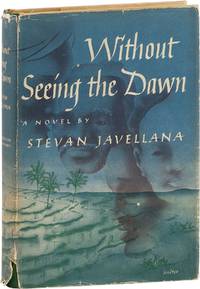
1947Best.-Nr. 82279Boston: Little Brown & Company 1947. First Edition. First Printing. Octavo 21cm; khaki cloth-covered boards blocked and titled in green and gilt on spine and decorations embossed to spine and front cover; dustjacket; xvi34-3591pp. Pictorial bookplate to front pastedown. Very slight waviness to lower edge of textblock; two very small nicks on rear endpaper and rear pastedown; Near Fine. Dustjacket designed by George Salter unclipped priced $2.75 shelf-worn with 1.5" closed tear to rear spine fold with several tiny chips small tears and attendant creases; Very Good. The Filipino author's only published novel later released under the title The Lost Ones. Javellana's experience as a guerrilla during the Japanese invasion of the Philippines is evident in his two-part novel "Day" and "Night" describing events before and during the war. He focuses on the struggle of his people through farmer folk characters feeling that was ".the most sincere most accurate and most moving story about the Philippines would be the story of those who dug their plows into the rich earth and prayed for the coming of rain and whose sons were with the guerrillas" from rear panel. A film adaptation Santiago! was directed by Filipino director Lino Brocka 1939-1991 who co-founded the Free the Artist Movement and the Concerned Artists for Phillipines CAP; he was appointed by President Corazon Aquino for Constitutional Commission to draft the country's new constitituion. Without Seeing the Dawn also received an award-winning TV mini-series adaptation Malayo Pa Ang Umaga. 82279. Little, Brown & Company unknown
Best.-Nr. 57369461-6Pearson Education Limited. Used - Good. Pages intact with minimal writing/highlighting. The binding may be loose and creased. Dust jackets/supplements are not included. Stock photo provided. Product includes identifying sticker. Better World Books: Buy Books. Do Good. Pearson Education, Limited unknown
Best.-Nr. B9781377222950Paperback. New. paperback
Best.-Nr. 41903029like new. unknown
Best.-Nr. 41903014like new. unknown
Best.-Nr. 41903014-nnew. unknown
Best.-Nr. 41903029-nnew. unknown
2021Best.-Nr. AME_9781774076736Society Publishing 2021. UNKNOWN. Hardcover. New/New. Society Publishing hardcover
2021Best.-Nr. AME_9781774076453Society Publishing 2021. UNKNOWN. Hardcover. New/New. Society Publishing hardcover
2020Best.-Nr. AME_9781774073087ARCLER PRESS 2020. UNKNOWN. Soft Cover. New/New. ARCLER PRESS paperback
2021Best.-Nr. AME_9781774076767Society Publishing 2021. UNKNOWN. Hardcover. New/New. Society Publishing hardcover