[Philippines]. [Promotionals]Biblio.com
969 Ergebnisse
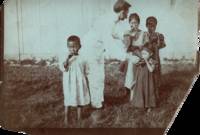
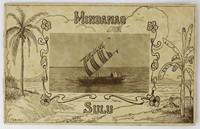
1905Best.-Nr. 5045Manila: Sugar News Press 1905. Very good. 22pp. Illustrated. Oblong quarto. Original pictorial wrappers stapled. Moderate dust-soiling and edge wear. Light even toning to text. An early and seemingly-unrecorded promotional touting the people and scenery in Mindanao and Sulu in the southern Philippines in the first decade of the 20th century. The work opens with a Foreword detailing the positive aspects of Mindanao particularly its principal city described here as the "Metropolis of Mindanao and Sulu" with "a population of more than thirty thousand a mixture of Moros or Mohammedan Filipinos Christian Filipinos Chinese Japanese and Europeans." Following the Foreword the remainder of the work is mostly comprised of thirty-four duotone photographic prints printed mostly two per page but occasionally with from one to five per page. The photographs feature numerous scenic and street views in and around Zamboanga including various "Moro houses" and about fifteen portraits of indigenous Filipinos such as a "Moro woman weaving materials for head-turbans and sarongs" a view inside a "weaving school" "Yakan Moros on the island of Basilan" "Muhammad Jamallul Sultan of Sulu" "Joloano Warriors" "Moro Kulintang" and their musical instruments Bogobo and Cotabato warriors "Bajaos - the sea gypsies of Sulu" and "Bogobo musicians." The final two pages of the work are taken up with two poems -- the first is a traditional Filipino poem entitled "No Te Vayas" noted as "Zamboanga's 'Auld Lang Syne" and one titled simply "Zamboanga" by Susan Hart Dyer. The front cover is decorated with a central photograph of an indigenous sailing vessel surrounded by an illustrated beach scene signed at bottom left "Jh. Mendoza." The inside front cover contains an illustration of the Philippine Islands from Batanes down to Sulu. We could locate no other copies of the work by title and imprint information in OCLC. Sugar News Press unknown
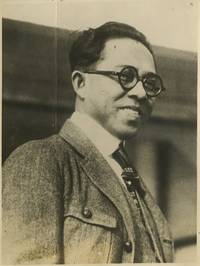
1920Best.-Nr. List38122New York City: Keystone View Co. Inc 1920. Photo measuring 5 ⅞ x 7 ¾ inches. With caption Keystone stamp manuscript and later sticker verso. Fold along left third of image with several pinholes around margins and one small hole in photo; very good. A portrait of Hadji Gulamu Rasul around the 1920s. Rasul was the son of Filipino statesman Abd ul-Bagui Butu Rasul and some sources state that he was the adopted son of Jamalul Kiram II the last sultan of Sulu. The sultanate was a Sunni Muslim state that ruled parts of what are now the Philippines Malaysia and Indonesia from the 1400s until the 1915 Carpenter Agreement was signed in the American-occupied Philippines. Under American rule Rasul represented the district of Sulu in the Philippines' congress from 1938-1941 and 1949-1953. The caption on this photograph states that he was in Seattle "in search of his white wife who deserted him when she found he had several native wives"; however other newspaper articles from the same period state that he was in Washington to study law. Keystone View Co., Inc unknown
1946Best.-Nr. 60810New York: Frederic H. Stevens Stratford House Inc. 1946. 8vo. xiv 569 1 pp. Frontisp. illust. of Santo Tomas Building numerous text illustrations. Beige cloth red & gilt lettering on front cover minor shelfwear & dustsoiling still VG copy from the library of former internee Charles Kurz 1891-1978 a business agent and later accountant for the Pascific Steamship Line World War I veteran and headed the labor safety battalion for American prisoners inside Santo Tomas w/ ownership markings on ffep. and 1950’s passport photo of Kurz laid-in. First edition of this scarce and graphic work chronicling the conditions of one of the largest of Prisoner-of-War Internee camps set up by the Japanese during World War II composed mostly of American civilians. The University of Santo Tomas in Manila was utilized for the camp and housed over 4000 civilians many of whom were near death at the end of the war due to starvation and poor conditions. The 1st Cavalry Division pushed forward in a 100 mile advance to Manila in 66 hours in order to prevent the Japanese from killing all of the internment camp prisoners and subsequently fought the Japanese forces across Manila. Frederic H. Stevens, Stratford House, Inc., hardcover
1931Best.-Nr. 64637London UK: Herbert Jenkins Ltd. 1931. Thick 8vo. 320 pp. Photo frontisp. 15 photo plates. Green publisher’s cloth blue lettering & border ruling very slight shelfwear slight foxing to fore-edges w/ d.j. photo cover art minor chipping head of spine dustsoiling edgewear 1 minor closed tear still a NF/VG copy. First edition 1st printing stated of this follow-up travelogue recording his adventures in the Kimberley Gold Rush the pearl fisheries of the Indian Ocean coping with the Pirates of Panay hunting for sunken treasure and shocking discoveries in a supposed Indigenous “cannibal” cooking pot. Burdett b. 1864 was renowned for his pearling and natural history expeditions sailing through the Indian Ocean Indonesia and extended expeditions into the Philippines Indonesia and across the South Pacific. Exceedingly scarce in original dustjacket. Herbert Jenkins, Ltd., hardcover
1930Best.-Nr. 64636London UK: Herbert Jenkins Ltd. 1930. Thick 8vo. 317 1 pp. Photo frontisp. 15 photo plates. Green publisher’s cloth blue lettering & border ruling maps on endpapers slightly cocked slight occasional foxing very minor shelfwear w/ d.j. photo cover art minor chipping head & foot of spine dustsoiling edgewear small chip on back cover still a VG/VG- copy from the library of Claude Bridgland. First edition 1st printing stated of this rousing travelogue of the author’s “thrilling record of forty years’ adventures among the Igorote Head-hunters the Negrito Pygmies Aeta of Luzon whose poisoned arrows are the terror of the forests of Luzon the Dusun Python-hunters of the Borneo jungles the Corsairs and Sultans of the Sulu Sea and the Moro warriors of Mindanao.” Burdett b. 1864 was renowned for his pearling and smuggling expeditions gold mining in the Kimberley mines and extended expeditions into the Philippines Indonesia and across the South Pacific. Exceedingly scarce in original dustjacket. Herbert Jenkins, Ltd., hardcover
1936Best.-Nr. 64638London UK: Herbert Jenkins Ltd. 1936. Thick 8vo. 316 pp. plus 4 pp. publisher’s ads. Photo frontisp. 15 photo plates. Red publisher’s cloth black lettering very slight shelfwear slight foxing to fore-edges w/ d.j. photo cover art minor chipping head of spine dustsoiling edgewear couple minor closed tears still a NF/VG copy. First edition 1st printing stated of this third travelogue recording Burdett’s adventures in the Kimberley Gold Rush working as a sheep drover and at the sheep station handling cattle and off to the Philippines. Burdett b. 1864 was renowned for his pearling and natural history expeditions sailing through the Indian Ocean Indonesia and extended expeditions into the Philippines Indonesia and across the South Pacific. Very uncommon in original dustjacket. Herbert Jenkins, Ltd., hardcover
1963Best.-Nr. 59482Philadelphia & New York: J.B. Lippincott Co. 1963. Thick 8vo. 12 425 1 pp. Double-page map. Quarter-black over red publisher’s cloth silver stars & lettering front cover & spine slight shelfwear rubbing w/ d.j. cover art by Robert Hallock minor dustsoiling toning to spine price-clipped still NF/VG copy inscribed by Colonel Wendell Welby Fertig 1900-1975 to Eric Offret 1949-1986 upon his graduation from high school in San Diego June 1967 “This is a part of the story of our effort in the Philippines. “Chief” can supply some details. It is a story of a fight against odds -- and we won!” First edition 2nd printing of this work detailing the efforts of self-promoted Brigadier General Fertig a reservist mining engineer who had assisted in the evacuations of Bataan and Corregidor who accepted the offer from Major General Sharp to oversee the resistance in Visayan-Mindanao to the Japanese invasion. Fertig linked up with Filipino-American Luis Morgan a local constabulary officer as Fertig attempted to manage the disparate groups of Filipino guerillas managing non-Americans including Australian soldiers a Syrian engineer and German soldier of fortune and negotiating between Filipino Christians and Lanao Moros. J.B. Lippincott Co., hardcover
Best.-Nr. 240267Lisbonne, monastère de S. Vincent hors les murs, 1749 2 vol. in-folio, [3] ff. n. ch. (titre avec belles armes des Bragance, avertissement, autorisations), 326 pp., un f. vierge, 80 pp. d'index, texte sur deux colonnes ; [4] ff. n. ch. (titre, avertissement, approbations), 498 pp., un f. n. ch. d'errata, avec une belle vignette en-tête gravée par O. Cor d'après Debrie, demi-basane fauve à coins, dos à nerfs ornés de fleurons et guirlandes dorés, pièces de titre cerise, tranches rouges (reliure de l'époque). Une coiffe rognée, coins abîmés.
1919Best.-Nr. 58763Washington D.C. National Geographic Society 1919. Two parts in one. Oblong 4to. 11 x 9 in. 24; 24 leaves printed on thick glossy paper stock w/ photo & colour illustrations on recto of each leaf slight shelfwear rubbing still NF set preserved in original printed envelope with instructional information and stamp “China & Philippines” on recto minor creasing edgewear former ownership ink markings. First edition of these scarce sets of plates designed for geography classroom use following World War I filled with text by Burrall 1883-1960 to increase geographical literacy of children as well as promote the ideas of preparing American youths to assume the role of a “World Power.” This first set focused on China includes text and photos describing the “Avenue of Stone Animals;” increasing number of girls attending school; rice fields street restaurants Chinese temples along with several parts with photos by E.H. Wilson of the Arnold Arboretum. The photographs are unidentified in the Philippines section and includes descriptions and photos of tree houses greased pole contests weaving cloth making pottery and growth of school bands and schools. Worldcat ostensibly locates 5 surviving China & Philippines portfolios at least 1 is microfilm; See: Katie Good Bring the World to the Child: Technologies of Global Citizenship in American Education 2020 pp. 44-47 227-228. National Geographic Society, hardcover
1987Best.-Nr. LFA-126740656Une revue de 98 pages, format 215 x 285 mm, illustrée, brochée couverture couleurs, bon état
1971N°297, d'avril 1971, de la revue mensuelle dirigée par Jean-Paul Sartre; au sommaire: "La terre ferme" de Christine DAURE, "Dictature du prolétariat, classes sociales et idéologie prolétarienne", article de Paul SWEEZY et sa réponse par Charles BETTLEHEIM, "L'idéologie mexicaine" par Léo GABRIEL, "L'Afrique recolonisée ?" par Basil DAVIDSON, "Le Mouvement de libération nationale aux Philippines" par Rodrigo ROJAS, des lettres de détenus de la prison californienne de Soledad, "La vie quotidienne dans l'empire du Fer (un voyage en Lorraine)" par Jacques-Alain MILLER et François REGNAULT, des critiques théâtrales (Vauthier, Shakespeare, Vassilikos) de Renée SAUREL et cinématographiques de Christian ZIMMER. Français
Best.-Nr. PC42Oblong Folio album ca. 275x365 cm. 75 card stock leaves with tissue guards over 30 blank. With ca. 269 mounted gelatin silver photographs including two large photos ca. 21x27 cm 8 ¼ x 10 ½ in and ca. 20x25 cm 7 ¾ x 10 in and two panoramas ca. 12x29 cm 4 ¾ x 11 ¼ in; the rest of the photos are from ca. 7x11 cm 2 ¾ x 4 ½ in to ca. 6x85 cm 2 ¼ x 3 ¼ in. Ca. 70 photos with period white ink captions on the mounts one photo is captioned in negative. With twenty-seven loosely inserted gelatin silver photos including two large ones ca. 205x25 cm 8x10 in and 17x25 cm 6 ½ x 10 in; the rest of the photos are from ca 8x105 cm 3 ¼ x 4 in to ca. 55x8 cm 2 ¼ x 3 ¼ in. Period dark brown sheep boards fastened with metal bolts; the front board with an elaborate blind-stamped ornament with two Chinese dragons and a gilt-lettered title. The first leaf with a period printed introduction titled “My Oriental Album.” Boards rubbed on extremities several leaves with minor tears on the margins not affecting the photos four images previously removed from the album but possibly laid in as loose photos but overall a very good album of strong interesting photos. Interesting album with over original gelatin silver snapshot photos of China and the Philippines taken and collected by an American sailor during his service in the U.S. Naval Battle Force in the 1930s. The album opens with two large partly-coloured photos of the U.S. naval ships where the compiler apparently served a portrait of Admiral Harris Laning 1873-1941 commander of the U.S. Naval Battle Force in 1935-1936 and images of the ships of the Battle Force “torpedo bomber” plane “night battle practice” and “ground swells.” Two large loosely inserted photos show U.S.S. “Guadalupe” launched in 1940 a fleet replenishment oiler where the compiler apparently served in the 1940s. The photos of Tsingtao Qingdao include views of the entrance to the “Enlisted Men’s Club” and the interior of a dining room apparently in the same club city racecourse beach and waterfront harbour with Chinese boats and U.S. naval ships Zhanqiao pier with the octagonal Hunian pavilion Memorial Monument to the fallen in the “Japanese War” former German Governor’s House city streets and shops a shop with flags and sign “Sze Fang Road” on the side pagodas and temples portraits of a local policeman Japanese girls Chinese kids and families people “making blankets” beggars U.S. sailors posing with young local women “Nina & I” “Shera & Spindle” “Sally” “Korean girls” &c. A series of over thirty images illustrate the “Lao Shan Valley Trip” Mount Lao southern Shandong Peninsula showing the compiler and his fellow servicemen posing on the grounds of the local temples possibly the Temple of Supreme Purity next to a “Chinese farmhouse” playing with children being carried in sedan chairs drinking beer &c. The album also contains two large panoramas of Hong Kong city waterfront and Victoria Peak taken from the sea; Victoria Harbour. Smaller photos of Hong Kong show the city waterfront with the third building of the Hong Kong and Shanghai Bank under construction completed in 1935 harbour mansions on the slopes of Victoria Peak the Peak Tram Chinese houseboats Repulse Bay Hotel a review of American marines a ferry of the “Hongkong and Yaumati Ferry Ltd.” sign “HYF” on the top &c. There are also several views of Beijing White Stupa on the Jade Flower Island interior of the Forbidden City sailors posing on the bronze astronomical instruments of the Ancient Observatory the Great Wall of China photos of “Pao Hsing Restaurant All kinds of Liquors and Grocery Regular Meals and Money Exchange Chin Hang Tao North China” a new building of the “Chinese Telegraph Administration Tangyi Road Branch” Chinese pagodas colourful street procession numerous portraits of American sailors posing in rickshaw carts at Chinese arch gates riding donkeys drinking at several bars “Morgan’s Bar” “U.S. Bar” &c. The photos of the Philippines show the facilities and vessels at the Olongapo Naval Station modern-day U.S. Naval Base Subic Bay: a floating drydock the compiler’s ship missing the entrance to the dock U.S.S. Pigeon U.S.S. John D. Ford U.S.S. Augusta H.I. J.M.S. Koma naval exercise in the Manila Bay Corregidor Island &c. Among the identified images of Manila are the views of the Central Post Office Old Legislative Building Legaspi Landing scenes of public celebrations during the day and at night in the Luneta Rizal Park with the visible Rizal Monument &c. The other images show U.S. naval ships at sea and in port a submarine lighthouses group portraits of the compiler and other enlisted sailors &c. Twenty-one photos at the rear portray the compiler and his family in the United States. hardcover
Best.-Nr. List2928Luzon Philippines likely early 20th century. Seventeen photographs: six measuring 3 ½ x 8 inches five measuring 4 ¾ x 6 ½ inches five measuring 3 ¼ x 3 ¾ inches and one measuring 4 x 5 inches. With Brown Brothers stamps and captions verso; some with editorial overpainting. Worn with some folding missing corners and small tears; excellent contrast; overall very good plus. The US occupation of the Philippines began with Spain’s cession of the islands to the US in 1898 and ended with the Treaty of Manila of 1946. Offered here is a small collection of photographs likely shortly postdating the Philippine-American war showing civilian life and industry in occupied Philippines especially the island of Luzon. The photos show copra processing—dried coconut flesh from which coconut oil is made—timber cutting and cigar and cigarette production. All three were and are important industries in the Philippines but tobacco in particular seems to have had a hold on the populace. Several of the photographs show young children smoking large cigars; one is captioned “A youthful smoker of Manila. The Filipinos smoke cigarettes from the cradle and cigars not long after.” Others show well-dressed young schoolgirls toddlers playing in a miniature nipa hut and panoramic views of the Pasig River and Manila Bay. Of interest to historians of the Philippines’ American colonial period especially its agricultural and productive history. unknown books
Best.-Nr. List2928Luzon Philippines likely early 20th century. Seventeen photographs: six measuring 3 ½ x 8 inches five measuring 4 ¾ x 6 ½ inches five measuring 3 ¼ x 3 ¾ inches and one measuring 4 x 5 inches. With Brown Brothers stamps and captions verso; some with editorial overpainting. Worn with some folding missing corners and small tears; excellent contrast; overall very good plus. The US occupation of the Philippines began with Spain’s cession of the islands to the US in 1898 and ended with the Treaty of Manila of 1946. Offered here is a small collection of photographs likely shortly postdating the Philippine-American war showing civilian life and industry in occupied Philippines especially the island of Luzon. The photos show copra processing—dried coconut flesh from which coconut oil is made—timber cutting and cigar and cigarette production. All three were and are important industries in the Philippines but tobacco in particular seems to have had a hold on the populace. Several of the photographs show young children smoking large cigars; one is captioned “A youthful smoker of Manila. The Filipinos smoke cigarettes from the cradle and cigars not long after.” Others show well-dressed young schoolgirls toddlers playing in a miniature nipa hut and panoramic views of the Pasig River and Manila Bay. Of interest to historians of the Philippines’ American colonial period especially its agricultural and productive history. unknown
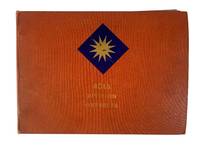
1944Best.-Nr. 220931944. 40th Infantry Division Pacific campaign photograph album documenting combat operations and daily military life of U.S. Army forces during World War II. The 40th Infantry Division served extensively in the Southwest Pacific Theater participating in campaigns across New Guinea New Britain and the Philippines as Allied forces advanced against Japanese defensive positions. The photographs record amphibious landings artillery operations destroyed towns and the collaboration between American troops and Filipino guerrilla forces during the campaign to liberate the Philippines. The album therefore documents the operational environment of Pacific warfare including jungle terrain fortified Japanese defensive networks and the logistical systems required to sustain prolonged combat across island battlefields. Photograph album containing approximately 200 original black and white photographs documenting operations of the 40th Infantry Division during the Pacific campaigns of World War II. Each photograph is sequentially numbered in white ink at the lower corner and corresponds to descriptive entries in a photographic index within the album. Early images depict American Red Cross workers disembarking from landing craft and greeted by U.S. soldiers illustrating the presence of female support personnel assigned to medical and relief operations. Additional photographs record amphibious landing scenes aerial views of destroyed towns in Luzon artillery and tank operations and soldiers operating mounted machine guns overlooking jungle valleys. Several images depict Japanese military casualties reflecting the intense close combat that characterized fighting across the Pacific islands. A printed military map within the album shows Japanese tunnel and cave fortifications in the Zambales Mountains illustrating defensive positions encountered during operations in the Philippines. The album also documents logistical and civilian dimensions of the campaign. Photographs show ships unloading cargo Filipino guerrilla units marching through urban streets and groups of local porters assisting Allied forces in moving supplies through mountainous terrain. Weapons and equipment visible in the images include field artillery pieces mortars and armored vehicles such as the M4 Sherman. One photograph depicts African American soldiers accompanied by scout dogs operating in jungle terrain illustrating the presence of Black servicemen serving within the segregated structure of the wartime U.S. Army. Other photographs show tent encampments mess areas interactions with local populations and the recovery of prisoners of war following combat operations. The photographs collectively present a visual record of combat logistics and daily military life during the Pacific campaigns. Album contains approximately 200 photographs with indexed numbering. Light handling wear visible to album and photographs consistent with wartime field compilation. Overall condition very good. unknown books
1944Best.-Nr. 220931944. 40th Infantry Division Pacific campaign photograph album documenting combat operations and daily military life of U.S. Army forces during World War II. The 40th Infantry Division served extensively in the Southwest Pacific Theater participating in campaigns across New Guinea New Britain and the Philippines as Allied forces advanced against Japanese defensive positions. The photographs record amphibious landings artillery operations destroyed towns and the collaboration between American troops and Filipino guerrilla forces during the campaign to liberate the Philippines. The album therefore documents the operational environment of Pacific warfare including jungle terrain fortified Japanese defensive networks and the logistical systems required to sustain prolonged combat across island battlefields. Photograph album containing approximately 200 original black and white photographs documenting operations of the 40th Infantry Division during the Pacific campaigns of World War II. Each photograph is sequentially numbered in white ink at the lower corner and corresponds to descriptive entries in a photographic index within the album. Early images depict American Red Cross workers disembarking from landing craft and greeted by U.S. soldiers illustrating the presence of female support personnel assigned to medical and relief operations. Additional photographs record amphibious landing scenes aerial views of destroyed towns in Luzon artillery and tank operations and soldiers operating mounted machine guns overlooking jungle valleys. Several images depict Japanese military casualties reflecting the intense close combat that characterized fighting across the Pacific islands. A printed military map within the album shows Japanese tunnel and cave fortifications in the Zambales Mountains illustrating defensive positions encountered during operations in the Philippines. The album also documents logistical and civilian dimensions of the campaign. Photographs show ships unloading cargo Filipino guerrilla units marching through urban streets and groups of local porters assisting Allied forces in moving supplies through mountainous terrain. Weapons and equipment visible in the images include field artillery pieces mortars and armored vehicles such as the M4 Sherman. One photograph depicts African American soldiers accompanied by scout dogs operating in jungle terrain illustrating the presence of Black servicemen serving within the segregated structure of the wartime U.S. Army. Other photographs show tent encampments mess areas interactions with local populations and the recovery of prisoners of war following combat operations. The photographs collectively present a visual record of combat logistics and daily military life during the Pacific campaigns. Album contains approximately 200 photographs with indexed numbering. Light handling wear visible to album and photographs consistent with wartime field compilation. Overall condition very good. unknown
Best.-Nr. 72760Philippines: np np. Hardcover. Very good. Hardcover. Oblong plastic bound photograph album. 10.5 x 7.5". 52 photographs measuring approximately 3.75" x 2.5". Inside the front cover is written "31st Div USMC New Britain Philippines." Album is clean and in very good condition. Photographs depict soldiers in camp and jungle settings riding oxen and posing with jeeps equipment and tents as well as downed aircraft and local inhabitants. No dates or names are recorded and the location is unidentified. The 31st Division served in the Philippines and New Guinea during World War II. np hardcover books
Best.-Nr. 72760Philippines: np np. Hardcover. Very good. Hardcover. Oblong plastic bound photograph album. 10.5 x 7.5". 52 photographs measuring approximately 3.75" x 2.5". Inside the front cover is written "31st Div USMC New Britain Philippines." Album is clean and in very good condition. Photographs depict soldiers in camp and jungle settings riding oxen and posing with jeeps equipment and tents as well as downed aircraft and local inhabitants. No dates or names are recorded and the location is unidentified. The 31st Division served in the Philippines and New Guinea during World War II. np hardcover
Best.-Nr. B9781020462283Hardback. New. hardcover
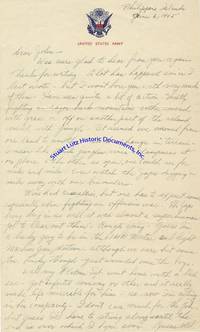
Best.-Nr. 4410WORLD WAR II IN THE PHILIPPINES. ALS. 3pg. 6 x 10 . June 6 1945. Philippine Islands. An autograph letter signed Claude an American GI stationed in the Philippines. He wrote on United States Army stationery to his friend John about fighting the Japanese: Dear John Was sure glad to hear from you again Thanks for writing. A lot has happened since I last wrote - but I won't bore you with very much of them - Have seen quite a bit of action. Mostly fighting n razor back mountains either covered with grass or off on another part of the island covered with jungle - It seemed we moved from one land to another - such a change in terrain - I mean like thick jungles vines & dampness at one place & the other so open one could see for miles and miles - even watch the japs digging in miles away with our binoculars. Weve had casualties but one has to expect some especially when fighting an offensive war - The japs being dug in so well it was almost a superhumanjob to clear out them - Rough going - guess I'm a lucky guy to be in the 60MM Mortar and light Machine Gun platoon - although we were hit some too. Lucky though just wounded were the boys. Well my Platoon Sgt. Went home with a bad ear - got infected someway or other and it really made life miserable for him - so now I'm acting in his compacity - I don't care much for the job but guess I'll have to string along until the end is over which I hope soon. Guess old Nick here was lucky - Had a few close one's too close for comfort. just hope my luck holds on. Guess as far as the point system goes - I'll be in the Army quite awhile yet. Only can figure out 69 points - Quite a jump to dig up 16 more And I've been in this Army 38 months already - Seems like half my life - When I get home I won't know how to act like a civilian - ha - I know one thing I'll have to learn to control my Army slang or else - I'm writing this in our rest area - although we aren't resting as yet - A lot of hard work to build it up & get it in shape first - Havent been her long - but it's a nice area - About like Fort Lewis. Pine trees - cold at night need three blankets still my pups get cold and now that the rainy season has set in it reminds me of Fort Lewis more so as we had so much rain there. Have one camp on a golf course - Been quite some time since I played golf - last tie in the Hawaiian Is. on the isle of Moloka! - More or less pasture. I'd send you a v-mail but as far as I know yet they go straight home with out being photographed and I don't think you'd want that kind. So am using the borderless airmail variety - No two cent overprints have showed up in this area as but if they do I'll remember you - Some of my other friends were asking about them too. Mr. Weltack has been sending me a first day cover now and then and I really appreciate it - as I have no way or time to bother with them. Hope I can continue after the war as I really get a kick out of FD. 's F.Fs F.AM's & all the other better covers. I belonged to the AAMS at one time and have been thinking about joining the MACC in the future. Its been a long time since I saw a good game of baseball- Was in 1939 I guess - In Chicago at the Cub park - The Cubs were playing the Giants at the time. My dad & cousin are great Cub fans but me I like to see a good game - The best men win - I used to play a little too. You know how young guys are - getting up a team & trying to lick the neighboring town teams a log of good clean fun. Well John write when you have time. I enjoy hearing from you. Best of Wishes Sincerely Claude. The letter is in fine condition. unknown books
Best.-Nr. 4410WORLD WAR II IN THE PHILIPPINES. ALS. 3pg. 6 x 10 . June 6 1945. Philippine Islands. An autograph letter signed Claude an American GI stationed in the Philippines. He wrote on United States Army stationery to his friend John about fighting the Japanese: Dear John Was sure glad to hear from you again Thanks for writing. A lot has happened since I last wrote - but I won't bore you with very much of them - Have seen quite a bit of action. Mostly fighting n razor back mountains either covered with grass or off on another part of the island covered with jungle - It seemed we moved from one land to another - such a change in terrain - I mean like thick jungles vines & dampness at one place & the other so open one could see for miles and miles - even watch the japs digging in miles away with our binoculars. Weve had casualties but one has to expect some especially when fighting an offensive war - The japs being dug in so well it was almost a superhumanjob to clear out them - Rough going - guess I'm a lucky guy to be in the 60MM Mortar and light Machine Gun platoon - although we were hit some too. Lucky though just wounded were the boys. Well my Platoon Sgt. Went home with a bad ear - got infected someway or other and it really made life miserable for him - so now I'm acting in his compacity - I don't care much for the job but guess I'll have to string along until the end is over which I hope soon. Guess old Nick here was lucky - Had a few close one's too close for comfort. just hope my luck holds on. Guess as far as the point system goes - I'll be in the Army quite awhile yet. Only can figure out 69 points - Quite a jump to dig up 16 more And I've been in this Army 38 months already - Seems like half my life - When I get home I won't know how to act like a civilian - ha - I know one thing I'll have to learn to control my Army slang or else - I'm writing this in our rest area - although we aren't resting as yet - A lot of hard work to build it up & get it in shape first - Havent been her long - but it's a nice area - About like Fort Lewis. Pine trees - cold at night need three blankets still my pups get cold and now that the rainy season has set in it reminds me of Fort Lewis more so as we had so much rain there. Have one camp on a golf course - Been quite some time since I played golf - last tie in the Hawaiian Is. on the isle of Moloka! - More or less pasture. I'd send you a v-mail but as far as I know yet they go straight home with out being photographed and I don't think you'd want that kind. So am using the borderless airmail variety - No two cent overprints have showed up in this area as but if they do I'll remember you - Some of my other friends were asking about them too. Mr. Weltack has been sending me a first day cover now and then and I really appreciate it - as I have no way or time to bother with them. Hope I can continue after the war as I really get a kick out of FD. 's F.Fs F.AM's & all the other better covers. I belonged to the AAMS at one time and have been thinking about joining the MACC in the future. Its been a long time since I saw a good game of baseball- Was in 1939 I guess - In Chicago at the Cub park - The Cubs were playing the Giants at the time. My dad & cousin are great Cub fans but me I like to see a good game - The best men win - I used to play a little too. You know how young guys are - getting up a team & trying to lick the neighboring town teams a log of good clean fun. Well John write when you have time. I enjoy hearing from you. Best of Wishes Sincerely Claude. The letter is in fine condition. unknown
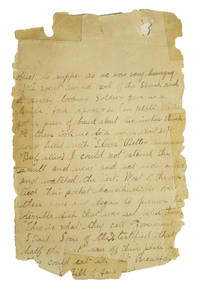
1902Best.-Nr. 311327np 1902. 5-67 manuscript pages on the rectos of unbound sheets. 8 x 5 inches. Lacking the first 4 leaves and an indeterminate number at end several leaves quite worn each crudely taped or pasted to modern paper and then crudely cropped at the top edge without loss of text. 5-67 manuscript pages on the rectos of unbound sheets. 8 x 5 inches. This account consists of pages five to sixty-seven of what appears to be a diary or copied letters of an unnamed soldier in the 21st United States Infantry. The author who may have been a corporal remains unidentified by name. The account begins in August 1898 at Camp Hobson Lithia Springs GA; in September he is transferred to Plattsburgh NY rejoining the bulk of his regiment which had suffered heavy losses in Cuba. The Philippine-American war ran from February 1899 to July 1902 and was regarded as a continuation of a war for independence by the Philippines and as an insurrection by the United States of America. This account spans the duration of it providing rich detail on topics ranging from food to the war-ravaged environment and American-Philippino interactions both on and off the battlefield. An epic train ride across the country and then a boat from San Francisco brought the 21st US Infantry to Manila on 11 May 1899 in the fourth month of the conflict. The author mentions shipboard conditions an engine breaking down and comments "We caught 4 sharks in our trip. The largest was 12 feet long and took the whole crowd to land him aboard. the men used the bones for rings and pen holders and in fact every thing you could think." Their first combat was the capture of an insurgent outpost at Guadaloupa Ridge on 9 June 1899 where they "joined General Lauter's Flying Column . with eight chinamen to carry our rations." The description of this combat and its aftermath pages 33-41 is the most dramatic passage in the memoir. The writer was sent with another soldier to gather up some supplies that had been left behind but they were separated from the regiment with no food or water. They made a makeshift fort from some old haversacks and brush when they were unable to return to the trenches that night. The author describes scavenging after battle as follows: "About 10:00 oclock there was several chinamen came looking around and picking up what-ever they seen. They came to close to us to suit me and we shot 4 and the rest ran away." Going out in search of water at about four in the morning despite ongoing fire the author found several dead and mortally wounded soldiers from a black regiment including a graphic description of one man who had been shot at close range and had a hole the size of a fist in his belly and was covered in blood. Of the only survivor the author says: "Found one poor cuss shot through the hip. He could not move. I gave him some hard tack and he gave me water then I went back to our haversacks." Another disoriented soldier whom the author names as H. McBain was found wandering without most of his clothing brandishing a bottle of wine and an axe. After waiting until the 11th for a reclamation detail the author and his companion crawled through the brush for a mile to San Peter McCarty and eventually rejoined their regiment at Los Penes where their captain threatened to have them court-martialed for losing their haversacks. Later while hospitalized the author was befriended by Señora Edna Luna cousin of an insurgent general who took him out riding daily: "She was stuck on me and that is no lie. I think I ought to go back and hook up with her as she has all that is required. She is hansome & plenty of money" page 45. The author -- first too ill to be moved then put in a wheel chair and with trouble with his vision -- was transferred back to the States on 15 May 1900 page 48 by way of Nagasaki May 21 1900 and Yokohama arrived in San Francisco on June 9 1900 then was sent to recover at Hot Springs Arkansas concluding in Vancouver Barracks Washington circa July 1901. Some of the pages are torn and some text is lost at the bottom edges due to wear but the handwriting is clear and the voice of the author shines through. This narrative though it took place before World War One reads more akin to a Vietnam War narrative than a Civil War diary in tone and disregard for authority and the morality of war. unknown books
Best.-Nr. a75332Washington 1912 GPO. 62nd congress 2nd Session. Senate Doc. No. 927. Octavo 203pp. removed and rebound in later wraps. VG. . paperback
Best.-Nr. a76297Washington 1993 1st Center of Military History. 2 volumes. Hardcovers. Octavo 628pp. black buckram. Light non-circulating library stamps - no spine numbers no pocket no bookplate. VG. Two volume set complete. . hardcover
1962Best.-Nr. 2383All volumes near fine in blue cloth. First editions thus. Consisting of the following: Volume 1: GIRONIERE PAUL DE LA. Twenty Years in the Philippines. Frontispiece is "Una Mestiza de Manila" with tissue guard intact. 1962. Volume 2: CARERI GIOVANNI FRANCESCO GEMELLI. A Voyage to the Philippines. Frontispiece is a water color by Alfredo Carmelo b.1896 depicting Manila galleons moored at the mouth of the Pasig River. 1963. Volume 3: BOWRING SIR JOHN. A Visit To The Philippine Islands. Frontispiece is a black and white portrait of Bowring. 1963. Volume 4: SALEEBY NAJEEB M. The History of Sulu. Frontispiece is black and white photo of Saleeby. 1963. The Filipiniana Book Guild publications expanded to 24 volumes in the first series. These first four volumes are extremely rare. The Princeton library has all volumes except these four. Only digital copies are located in the National Archives of the Philippines. Manila, Philippines, Filipiniana Book Guild, 1962-1963. hardcover