24 754 résultats
2002réf. 789842002. illustrations some color 116 156p. Wrapper. 30cm. Japanese text summaries in English. We used the English title which appears on the cover and title-page along with the Japanese. unknown books
1927réf. 4296Toyama 1927. 1st and only ed. in English. Paperback. Fine. index iii 133p. Softcover in original wrapper. 22 cm. "The library consists.of the collection originally made by Lafcadio Hearn.with some slight addition acquired by the family after his death." An almost new copy purchased by Phil about 30 years ago from Charles Tuttle of Tuttle Publishing at his family's used book store in Rutland Vermont. paperback books
réf. 68107New York n.d. 194-. Paperback. Good. Folded four-page leaflet. 28 cm. Later horizontal fold. Campaign to raise ten million dollars to establish a new university. paperback books
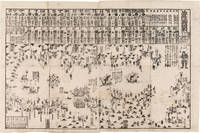
1854réf. 57490Edo. ca. 1854. Large and Detailed "Black Ship" News Sheet An unusually large and well-maintained "kurofune" kawaraban news-sheet depicting the entrance of Perry's Black Ships into Edo Bay in 1854. The majority of the broadside is occupied by a large map and illustration of Edo Bay with Perry's ships depicted in dramatic manner in the lower center with three masts a paddle a plain striped flag and smoke billowing from the exhaust funnel. Text next to the ships describes them and estimates their crew complements. The land surrounding the bay is thoroughly labeled with some geographical features as well as the names and banners of the lords in charge. The section of the print above the map lists the larger daimyo with images of their Kamon or clan crests and descriptions of the defense forces they would be able to muster. The inset portrait is of an American soldier in uniform. Kawaraban were illicitly printed woodblock news sheets distributed in large numbers during the Edo period. They covered a range of topics meant as much to entertain as to inform including natural disasters crime major political events humorous stories and more. The arrival of Perry's ships in 1853 was an incredible shock to the people of Japan and "kurofune 'black ship' kawaraban" became a genre all their own. Since no official report was ever distributed by the Japanese government these quickly printed and widely distributed news sheets were the primary way that the general public connected with the arrival of Americans in their midst. A particularly large detailed and well-preserved broadside relaying this pivotal moment in the history of Japan America and the world to the Japanese people. Kawaraban were cheaply made and ephemeral though produced in relatively large numbers. We locate copies of this rare print at the Huntington Library and the Tateyama City Museum in Japan. Old folds. Light foxing and minor edge wear. Very good. OCLC 1124857994. unknown books
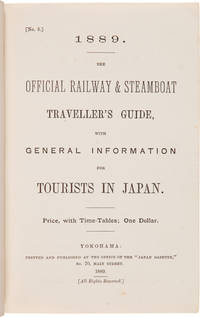
1889réf. 62461Yokohama: Printed and published at the Office of the "Japan Gazette" 1889. American Woman Traveller's Copy of an Unrecorded Japanese Tourism Guide An otherwise unrecorded portable edition of this guide to Japanese travel printed at the important Japan Gazette a year before the still-scarce expanded edition of 1890. The Japan Gazette was a very early and influential English-language newspaper founded by John Reddie Black in 1867. Through the Japan Gazette and its Japanese-language counterpart Nisshin Shinjishi Black is largely credited with establishing Western-style journalism in Japan particularly by reporting on political issues and the activities of the government. Black left Japan when laws passed in 1874 restricted public criticism of the government and prohibited foreigners from editing Japanese-language papers but his Gazette remained an important source of news and entertainment for foreigners living or interested in Japan and its office continued printing books directories and travel guides such as the present work into the early 20th century. This guide owned and clearly used by a young Massachusetts woman on an 1897 trip to East Asia features a plethora of advice for the prospective visitor on nearly every subject. It includes tips on traveling from Kobe where most steamers made landfall to other major cities denominations of Yen and the appropriate costs for typical transactions gives the locations of banks and telegraph stations lists clubhouses open to foreigners by location and largely provides brief descriptions and directions to various sights worth seeing. It also contains several pages of Japanese phrases and vocabulary useful to travellers and timetables for steamboats and railroads. The two folding maps in the rear pocket titled "The Official Railway Guide" for Northern and Central Japan respectively depict cities and landmarks with the major rail lines overlaid in red and are identical to those included in the 1890 edition. Several dozen pages of advertisements surround the main text and include offers of accommodations in Japan shipping and freight companies curio shops prescription medicines Western-style goods and clothing and other English-language books about Japan printed at the Gazette office. An inscription on the first pages of this copy reads "Presented by Mr. Lush to Nannie Jenckes Borden January 27 '97." Borden 1877–1963 who has made a handful of pencil annotations in the margins of her copy was a native of Bristol Massachusetts and appears to have used this travel guide to great effect on a turn-of-the-century trip to China and Japan. Accompanying the book are a flyer and pamphlet for the Boa Vista Hotel in Macao dated 1897 as well as fifteen trade cards for various businesses. The trade cards some illustrated are generally for businesses located in and around Yokohama and a handful of them have been updated with new addresses or additional information in manuscript. Some of the businesses include art studios curio dealers a fur dealer and a jeweler as well as one slightly out-of-place card for Kwong Hang Chang Chinese and Japanese Goods store in Vancouver British Columbia. Also present is a printed ticket accomplished in manuscript reserving a seat for "Miss N. J. Borden" on board the "S/S 'Omi Maru.'" A rare and interesting piece of English-language printing from Japan aimed at an American audience to encourage tourism owned and used by just one such American woman. OCLC records no copies of this edition and only four copies of the 1890 edition the Universities of Leicester and Aberdoon the Société Asiatique in Paris and only Harvard in North America. Original printed stiff green wrappers. A bit worn and soiled spine chipping at extremities ink stain on front wrapper upper edge of rear wrapper and last few leaves including pocket lightly chewed. Contemporary presentation inscription across inside front wrapper and following page. Very good related ephemera in very good or better condition. OCLC 504408209 614218108 1028738317 229486735 all for later ed. hardcover books
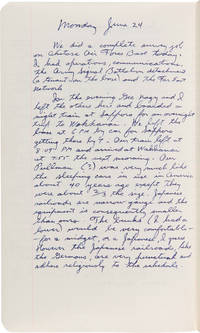
1957réf. 57392Various places including Tokyo and several army and navy bases in Japan. May 27 - August 7 1957. High-Ranking Officer's Inspection Tour of U.S. Military Installations Across Japan An intriguing and highly detailed account of an anonymous but apparently high-ranking officer's two-month inspection tour of the entire United States military presence in Japan from late May to early August of 1957. This manuscript journal provides much information on American Army Navy and Air Force bases in Japan during the Cold War and the extensive inspections conducted to maintain high levels of readiness as tensions increased between the United States and various nations in Asia. Our unnamed officer travels in style from Washington D.C. to San Francisco and then on to Hawaii and Tokyo providing highly detailed specifics of his itinerary along the way including flight numbers times terminals models of planes and costs of everything purchased from cab fare to airport snacks. After his arrival in Tokyo he and his team travel to most if not all of the American military bases in the country Navy Army and Air Force and carry out an intensive analysis "to check out procedures organization and techniques." At each installation the team bunks in commissioned officer's and VIP quarters and are wined and dined by the top officials - even when they would rather just go to sleep after a long day of travel. In addition to the details of his inspections the diary writer records more mundane details about his sightseeing trips shopping excursions meals and general observations on- and off-base. Though unidentified the diarist was likely assigned to duty at the Pentagon. Our diary writer though generally circumspect provides some tantalizing glimpses into his mission and its proceedings. Occasionally he will take a short aside to discuss the history or modern goings-on of a particular base for example the Gifu Air Force Base where "a Jap plane factory is turning out T33s for the Jap AF and overhauling some of ours" or the Naval Communications Facility in "Kamasaya" i.e. Kamiseya "a complex outfit which transmits fleet broadcasts and all kinds of messages. Also it supports a huge cloak and dagger operation run by CIA." Much of the content is quite detailed such as an entry where he records: "At 1100 George Nagy Rutt and I took off by car for NAF Atsugi.We met Capt. Johnson the C.O. and then we were invited to lunch by Rear Admiral Ward ComFair WestPac at his flag quarters. In the afternoon we split up. Rutt covered Public Works. Nagy with the Admiral's Chief of Staff a Capt. Boyle covered aircraft maintenance activities. I had Capt. Johnson go over his station organization and then give a cook's tour of the base." The military installations he visits include Fuchu Far East Air Force headquarters; Johnson Air Force Base near Tokyo; Komaki Air Force Base near Nagoya; Iwakuni Naval Air Station; Itazuke Air Force Base; the U.S. Army Quartermaster Depot at Kokura; Camp Otsu; U.S. Army Quartermaster Depot at Kobe; Chitose Air Base; Misawa Air Force Base; Tachikawa Air Base and others. Other notes are interesting but vague: "In the evening we had a lengthy conference among ourselves. Recent T.S. messages from JCS Joint Chiefs of Staff seem to greatly affect our work here and we wanted to reorient our thinking toward the feasibility and practicality of various proposals." This possibly relates to the restructuring of FECOM Far East Command into USFJ United States Forces Japan which took place in July 1957. Aside from these snippets the officer discusses the personal conflicts that break out within the team such as when their boss one George Nagy delays the team's return trip by three days after their reservations had already been made "the team was almost in open rebellion and tempers were short." After a quick reconciliation the next day "All hell broke loose again" as the new plans fell apart and the team and Nagy were not on speaking terms for the rest of the trip. We also get a few brief snippets of a protest demonstration put on by a group of Japanese citizens at Tachikawa Airfield which was proposing to seize nearby privately-owned lands to expand its runway. This protest was known as the "Sunagawa Struggle" and marked a high point in Japanese opposition to U.S. military installations during the Cold War; the widely televised and recorded demonstrations succeeded in derailing the runway expansion plans and are credited among the reasons for the massive forty percent reduction in U.S. military force in Japan in 1957 which is mentioned by our author and was likely a main component of the top secret letters and briefings that dramatically altered his team's project. Some of the officer's more interesting anecdotes relate to his rather cantankerous impressions of Japan. He seems to always find something to complain about: the weather is too hot too cold too hazy or too humid; the train cars are far too small though timely: "The bunks on our sleeper car would be very comfortable - for a midget or a Japanese I guess. However the Japanese railroads like the Germans are very punctual and adhere religiously to the schedule." In his estimation the company also leaves something to be desired: "The stores and buildings in Tokyo seem to try to outdo Times Square in garishness and elaborate animated neon signs. The Jap people are not particularly handsome and most are downright ugly. They are all rushing around seeming to be very busy but not quite accomplishing what we do." He does at least begrudgingly admit that "The rural sections of Japan look very pretty from the air where you can't smell it." His travels take him from the tropical south all the way to the northernmost tip of Hokkaido "our closest major airbase to the Reds and a bleak looking outpost. Our VIP quarters are in little individual shacks. The weather seems to be 35 degrees colder here than at Komaki where we took off and our Aloha shirts are definitely out of place. It's like going from North Carolina to Vermont and just as far in miles too." That said he is as likely to stay on base for his leisure as to go out and finds the American entertainment equally disappointing: "In the evening we went to the movie in the basement of the Sanno base and saw 'The Incredible Shrinking Man.' Phooey." While the author is never named we can glean a good amount of information about him including the names of several of his team members and the first names of family members. He is also revealed to be a devout Catholic: he attends mass every Sunday and records the location and feast day if applicable notes that "the Japs don't observe Sunday very much" and also runs into an old classmate from Fordham University where they were in the Glee Club together "26 years ago." Following the diary are a few pages containing a full ledger of his personal and gift purchases with prices in dollars and yen locations purchased and intended recipients and four pages of "Hints" for a business trip written in a different hand possibly the owner's wife based on the content. These hints with occasional annotations by the author include recommendations for stores and restaurants general travel tips "keep your passport with you always" gift suggestions and reveal other timely sentiments "Goods from Hong Kong are NOT made in Communist China". A thoroughly detailed and interesting account of a United States military official's tour of bases in Japan in the 1950s penned by an unnamed but clearly important officer. Original patterned brown paper boards front board gilt. Light wear along spine and edges. Very clean internally. Near fine. hardcover books
1858réf. 58560Japan. ca. 1858. Japanese Treaties with the United States and European Powers An attractive set of the "Ansei Five-Power Treaties" the formal diplomatic engagements between Japan and the United States United Kingdom France Russia and the Netherlands ending Japan's 250 years of seclusion and opening its ports to worldwide commercial trade so named for their signing in the fifth year of the Ansei era. The first treaty also known as the Harris Treaty was signed by the U.S. on the deck of the U.S.S. Powhatan in Edo now Tokyo Bay on July 29 1858. It opened the ports of Shimoda Hakodate Kanagawa and Nagasaki to foreign trade effective July 4 1859 and then Niigata and Hyogo on January 1 1860 and January 1 1863 respectively. In addition to extensive trade and consular provisions the treaty also established the rights of U.S. citizens to reside permanently lease property purchase real estate and construct residences and warehouses; established a system of extraterritoriality whereby U.S. residents were subject only to the laws of their own consular courts and not the Japanese legal system; and established freedom of religious expression and the right to construct churches to serve the needs of U.S. residents within the confines of designated foreign settlements. The treaty followed the Convention of Kanagawa signed under threat of force in 1854 after Commodore Matthew Perry's aggressive visits to the Shogunate in 1853 and 1854. The Convention had granted coaling rights for U.S. ships and allowed for an American consul in Shimoda but Perry left the more important trading negotiations to Townsend Harris New York businessman and eventually the first U.S. Consul General to Japan. Each of the five volumes details the negotiations between Japan and a specific foreign power. These other accords are similar and duly inspired by the U.S. treaty; each nation forced Japan to grant the same "favored nation" provisions they had granted to the U.S. The Dutch already had several treaties with Japan; they were the only Western power to retain trade relations with Japan after the final expulsion of Europeans in 1638 and had been advising and supplying the Japanese navy since 1853. However once the U.S. had sealed its "Treaty of Amity" the Dutch quickly revised theirs to match on August 18 1858; Russia followed on August 19; Lord Elgin signed for Britain on August 26; and Jean-Baptiste Louis Gros commander of the French expedition in China signed for France on October 9 1858. Subsequent Japanese and Chinese scholars refer to these treaties and subsequent agreements as the "unequal treaties" as none of the provisions were ever reciprocated. This set is uncommon. We found only one record for another incomplete set at auction. Original stiff textured tan wrappers stitched as issued each with printed paper label. Some minor shelf wear and dust soiling front covers of two volumes rubbed and soiled. Overall very good. unknown books
1900réf. 45650Various locations in Japan. ca.1900. Interesting Images of Japan at the Turn of the 20th Century Eighty attractive images of turn-of-the-century Japan as seen through a Western lens. Evidently narrating a trip in Japan each photograph is captioned in English usually stating location which include Kagoshima the Kuma River Kumamoto Nakatshu Fukuoka Nagasaki and Isahaya. While most of the images show landscapes and the scenery of the area many of them include local people - at temple and shrines in city streets going about everyday life. Of particular interest are a photograph of a woodcutter's hut with the family in the foreground a fortuneteller plying his trade a group of young men washing vegetables a view of Suizenji Park a Buddhist Temple threshing rice the sulphur springs at Nagasaki and various scenes in native villages. A nice collection of images with the bookplate of New Zealand photo-historian Frederic Hardwicke Knight. Ten leaves containing eighty photographs each 2¼ x 3¼ inches. Oblong octavo. Contemporary black three-quarter morocco and cloth. Hinges and corners lightly worn. Bookplate on front pastedown. Light foxing primarily to mounts and not images. Prints sharp and clear. Very good. hardcover books
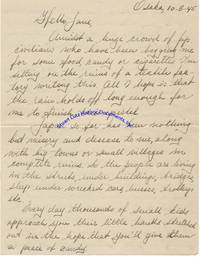
réf. 5824OCCUPIED JAPAN. ALS. 4 pages. 8 x 10 . Osaka Japan October 8 1945. An autograph letter signed Van to Jane describing the misery on the ground in Japan right after the end of the Second World War. Van is writing Amidst a large crowd of Jap. civilians who have been begging me for some food candy or cigarettes. He later writes that Japan so far has been nothing but misery and disease to me along with big towns or small villages in complete ruins. So the people are living in the streets under buildings bridges sleep under wrecked cars busses trolleys etc. Every day thousands of small kids approach you their little hands stretched out in the hope that youll give them a piece of candy. Women unable to feed their babies come up to you with the little child sucking away on their breast but not getting any milk at all. They beg for milk on their knees. Other women offer their gold wedding rings for a couple of C ration crackers. Disease is all over. Children with sores as big as a silver dollar all over their skinny bodies by the dozens. How the heck can you possibly refuse to give them a negative answer. This afternoon I actually couldnt walk because I was surrounded by women who kneeled down in front of me begging for food. I finally had to show them that they had no reason to be afraid of me so I bent over and put my hand underneath the chin of a young women who was quite pretty. I lifted up her head and lookedThe people here have no food at all except for a few potatoes that they manage to grow in the streets or among the ruined buildings. They all carry huge sums of money in the hope that some G.I. will sell them a can of C-rations or a K-ration which they will pay for with as much as 500 yen $30.00 of course it is strictly sic forbidden. But some guys get away with it and are making a fortune at the present. After a few concluding thoughts and sending Loads of Love Van writes a postscript saying he expects to be home by Easter. Pages are numbered at the top. The collection is missing the third and fourth pages and contains a noticeable horizontal crease across the middle of the pages but is in otherwise very good condition. unknown books
réf. 5101WORLD WAR II IN JAPAN. ALS. 2pgs. October 1 1945. Hirosaki Japan. An autograph letter signed Dale Christensen written home by an Allied serviceman stationed in Japan shortly after the official end of World War II. Well I havent had a chance to write for some time. We made it up here O.K. but the ship sure was loaded. We landed at Aomori and this place is inland about 30 miles. We have had no trouble at all. We spent the first night at an airport and then moved to another Army camp the next day then the third bn came up and took over here. I was in on the big thing at this camp I came up with the first gen jeeps and saw the Jap General sign the camp over to us then to top it all off I was picked to take the Jap General to his home. He talked to me all the way but I didnt know a thing he said. When he got out he saluted me. He seemed happy about the whole thing. The climate here is good and cool. We have a big mt right afore us and it looks just like Mt Fugiama sic. They say it sure gets cold here in the winter. The rice is just headed out and it is very pretty here but I hope I can soon come homeWe are cleaning this camp up now it sure needed it. I dont see how the Japs lived in it. Bugs and dirt all over. We sure are making a change in the looks of it. They say they might give each one of us a Jap Rifle and bayonet to take home I dont think there is any thing to it. I sure would like to have one. They sure can grow the fruit and garden stuff here but they sure are way behind in the way to live. I think even behind the PhilippinesThe papulation sic of this place in 97000 and Aomori 57000. Aomori was bombed and it sure was smashed and burned. Well we have a few Japs working in this camp and I think as a whole they will like better from now on that ever before. There clothes are all patches but they look healthy and happy. Well I will write more later. I hope we soon get a mail call. Tell Ann and the rest Hello. Everything is fine here. Write soon. Dale. The letter is in fine condition. hardcover books
réf. 4696JAPAN. Diary. January 14 1950 to late 1954. Various places Philadelphia Japan Fort Meade. A lengthy diary of an American officer Lieutenant Louis T. Holtz who was stationed in Japan during the Korean War. It was written on dozens of sheets of loose-leaf notebook pages and it contains many black and white photographs with captions as well as newspaper and magazine cutouts and brochures from places he visited. The diary begins on January 14 1950 in Philadelphia and he discuses seeing shows and such but notes that All in all this constituted a very enjoyable ten days of leave prior to going overseas. Sometimes I wish I could stay at home and live a normal routine life like everyone else. Other times I find myself eager to goAlmost two years ago who could forecast a war in Korea and the manner in which it would rip everyones life to shreds He writes on January 2 1951 from Kurume Japan: perhaps 10 years from now it the diary will be of interest if any of our civilization remains in 1961I collapsed 28 June and spent 3 weeks in the hospital with excessive fatigueI am the Officer-in-charge of the Kurume Office with an area of jurisdiction of approximately 1000 square miles. In April 1951 he mentions I am very busy in my position as OIC Officer In Charge. Its a full 7-day-a-week jobThe Korean mess has everyone guessing as to eh future of the Far Eastbeing the senior official in an area of jurisdiction of nearly 10000 square miles with dozens of mayors and police chiefs constantly catching my every word as official. The next couple dozen pages contain black and white photographs of protests in Japan and Holtzs commentary about the images including When people get hurt propaganda fills the air. The winner: the Kremlin always! Demonstrations take planning and people. You can always be sure the plans were framed in red and the spectators sprinkled liberally with dye-hard communist stooges Demonstrations & rallies are usually fantastically well organized. And as often as not they can be unbelievably orderly and But orderly or violent you can always be sure there is a professional communist keeping the sheep in line or arousing them to maximum fury. In September 1951 Holtz writes from Sapporro life in the Armed Services has been a miserable one because of one bad experience after anotherKurume was one of the most pleasant and enjoyable assignments I ever held. The 45th was without doubt the most bitter and least enjoyable. I gave up so much for so little. Holtz was in Californias Camp Stoneman in November 1951: with all the hundreds of officers here not particularly anxious to go overseas and with several actually fighting the assignment I was amazed to find that someone eager to return is sidetracked so abruptly. He was back in Japan by December and then wrote a lengthy entry entitled The Korean Story starting with Combat precautions make it mandatory that no diaries or personal papers be kept where they may fall into enemy hands and he spends the next seven pages describing his experiences in the Korean War. Holtz wrote in part: Things had not gone well at all with Trubotas unit prior to August 1951. After my arrival working results proved very satisfactoryThree other officers has also joined up in the interim between leaving Sapporo and going to KoreaWhen oriented in Tokyo they were told that the 45th Detachment would remain in Sapporo and they had already alerted their families to start to prepare to join them overseasI had to fight Trubota in order to be able to fight the enemy. In one occasion I was reprimanded for going to a forward observation post and not being personally available to answer the telephone at my CP and the section finishes with a photograph of the USS Marine Lynx the ship that brought him home. The diary continues with his being stationed at Marylands Fort Meade. There are photographs of the mansion he occupied in Kyushu Japanese women at the beach his fellow soldiers after a bowling tournament etc. There are Samples of United Nations propaganda leaflets dropped on North Korean positions early in the Korean conflict that show Truman and MacArthur a December 7 1950 letter signed by the mayor of Kurume City Japan. The condition is fine to very fine. unknown books
réf. 3655a TLS. 2pg. 8 x 10. July 15 1920. Yokohama Japan. A typed letter signed Neil laced with anti-Semitic sentiment. In part: Went out calling last night with the bunch of fellows across the street. The host and his side partner are N.Y. Jews but sort of decent people. The wife is very nice but the husband is a regular East Sider. He is always talking about not that I mind the expense of the house here but the servant is always telling about the money she needs for this and that and I cant see where it goes to. You know just about what kind of a guy he is better than I do no doubt and you havent seen him. Anyway it was sort of a pleasant evening as he left the States in March and brought a lot of the new songs with him. He is a very good piano player and I had a fine time listening to him. One of the songs he played and tried to sing just like John was Pal of Mine you know how nice it was in comparison to the real singer and this Jew did the same stunt of turning to his wife too as John does to his wife when she sits up in the box. The husband was just a regular N.Y. smart alex Jew. Typed on letterhead from Yokohamas Grand Hotel which famously burned down as a result of the devastating 1923 Great Kanto earthquake the letter is in very fine condition with light toning throughout and a few handwritten corrections not affecting legibility.b TLS. 3pg. 8 x 10. July 19 1920. Yokohama Japan. A typed letter signed Neil regarding work and life as an American abroad in early 20th century Japan. In part: There isnt much doing as for excitement but just hang around and do nothing. I really think I am gaining weight on the job. I met a fellow here who deals in all sorts of dress goods from Boston and I am getting on the right side of him as he gets all his stuff from here and I may be able to get some things for you people wholesale when you need them. He is one of us you get me being from Boston and a very fine chap. Eleanor will have nothing on me then getting things wholesale. About the only thing we need now wholesale is to get a bank to give us more money on our checks when we cash in. I am thinking of buying a kimono for Connors in the office for his wife as they are married in the Fall. He is a nice fellow and I thought for his trouble in calling up and the like I would bring him back one. I am not sure about it as yet but I think I will. Typed on letterhead from Yokohamas Grand Hotel which famously burned down as a result of the devastating 1923 Great Kanto earthquake the letter is in very fine condition with light toning throughout and a few handwritten corrections not affecting legibility. unknown books
réf. 2060a TLS. 2pg. 8 x 10. July 15 1920. Yokohama Japan. A typed letter signed Neil laced with anti-Semitic sentiment. In part: Went out calling last night with the bunch of fellows across the street. The host and his side partner are N.Y. Jews but sort of decent people. The wife is very nice but the husband is a regular East Sider. He is always talking about not that I mind the expense of the house here but the servant is always telling about the money she needs for this and that and I cant see where it goes to. You know just about what kind of a guy he is better than I do no doubt and you havent seen him. Anyway it was sort of a pleasant evening as he left the States in March and brought a lot of the new songs with him. He is a very good piano player and I had a fine time listening to him. One of the songs he played and tried to sing just like John was Pal of Mine you know how nice it was in comparison to the real singer and this Jew did the same stunt of turning to his wife too as John does to his wife when she sits up in the box. The husband was just a regular N.Y. smart alex Jew. Typed on letterhead from Yokohamas Grand Hotel which famously burned down as a result of the devastating 1923 Great Kant earthquake the letter is in very fine condition with light toning throughout and a few handwritten corrections not affecting legibility.b TLS. 3pg. 8 x 10. July 19 1920. Yokohama Japan. A typed letter signed Neil regarding work and life as an American abroad in early 20th century Japan. In part: There isnt much doing as for excitement but just hang around and do nothing. I really think I am gaining weight on the job. I met a fellow here who deals in all sorts of dress goods from Boston and I am getting on the right side of him as he gets all his stuff from here and I may be able to get some things for you people wholesale when you need them. He is one of us you get me being from Boston and a very fine chap. Eleanor will have nothing on me then getting things wholesale. About the only thing we need now wholesale is to get a bank to give us more money on our checks when we cash in. I am thinking of buying a kimono for Connors in the office for his wife as they are married in the Fall. He is a nice fellow and I thought for his trouble in calling up and the like I would bring him back one. I am not sure about it as yet but I think I will. Typed on letterhead from Yokohamas Grand Hotel which famously burned down as a result of the devastating 1923 Great Kant earthquake the letter is in very fine condition with light toning throughout and a few handwritten corrections not affecting legibility. unknown books
réf. List3834N.p. N.d. Printed postcard measuring 5 ⅜ x 3 ½ inches. Excellent. A printed postcard showing the American and Japanese teams that played in the 1934 Japan Tour a barnstorming baseball tour. Each player is labeled with his autograph. The American team included Babe Ruth Lou Gehrig Charlie Gehringer and Jimmie Foxx; the Japanese team included Eiji Sawamura Osamu Mihara Kumeyasu Yajima and Nobuaki Nidegawa. Organized by politician and media mogul MatsutarÅ ShÅriki the Great Japan Tokyo Baseball Club became today's Yomiuri Giants and is Japan's oldest professional baseball team. The tour and especially Babe Ruth who hit thirteen home runs in the tour were wildly popular in Japan. unknown books
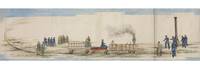
réf. 1148111 long & lavishly painted scenes employing numerous washes of ink in a variety of colors. Two emaki I: 295 x 6760 mm.; II: 295 x 6800 mm. with wooden rollers & patterned silk-fabric front endpapers. Japan: 1854-55. Two brilliantly rendered "Black Ship" scrolls representing Commodore Perry's return to Japan in early 1854; most of the events depicted in this pair of scrolls are rarely pictured in Japanese materials recounting these consequential months in the history of both countries. The skillful illustrations are uncommonly detailed and more carefully rendered than those found in other scrolls. We also find the present scrolls to be an invaluable counterweight to the official American illustrated account published in the 1856 Narrative of the Expedition of an American Squadron to the China Seas and Japan among other American books with its clear advocacy of the United States' gunboat diplomacy. The scenes within our scrolls show mostly convivial moments as the Americans and Japanese shared their customs pastimes crafts and innovations - sumo wrestling a telegraph machine a steam-engine locomotive train for example. Although the scroll is unsigned it appears a single artist is responsible for the paintings throughout. These two scrolls executed by a talented artist with painstaking attention to detail are an exceptional visual record of the second Perry expedition of 1854; each of the scenes is a revealing vignette on the evolving relationship between the American interlopers and the Japanese reconciling themselves to the end of their isolationism. Finely illustrated scrolls and books documenting these pivotal moments are especially rare. Scroll I Scene I: This scroll begins with American sailors landing their rowboats filled with presents for the Japanese in the days before high-level diplomatic negotiations began. Laden with boxes and barrels the boats were unloaded on the beach with the assistance of Japanese men some wearing straw jackets. Members of the American marching band are shown playing their instruments while proceeding from the beach towards the reception hall where discussions are to take place. The Japanese erected a long white sheet barrier to keep the Americans from visiting unauthorized areas adjacent to the beach. A row of American sailors stands in the empty reception hall monitoring the proceedings. Next to the hall is a small Shinto shrine. Scroll I Scene II: Americans and Japanese start to interact ashore; for instance a Japanese guard shows his long spear to a group of Americans one of whom is holding the spear as well as the guard's hand-protectors. Further to the left three American officers appear to be drinking wine while they rest. Another mixed group stands next to a fire as one of the Americans pours a bucket of water from a well. Next the two sides stand under a camellia tree; two Americans pull down a branch to collect the flowers. One American officer is examining a flower with an armed Japanese man; another officer shows his patterned blue cape to a Japanese government official. There is also a drummer boy in a bright red uniform. Lastly two Americans admire a parasol with calligraphy written on it and a Japanese official describes it to them. Scroll I Scene III: The hosts and visitors continue to familiarize themselves with the other's ways of life. In a martial arts pose a Japanese man demonstrates sumo wrestling technique leaving an American sailor crumpled on the ground. We assume this was meant as a friendly demonstration since two other sailors show little concern. Moving onwards an American is practicing what looks to be equestrian vaulting in front of a crowd of impressed Japanese warriors. Scroll I Scene IV: Three Americans demonstrate their technological prowess with a telegraph machine. This is one of the more detailed depictions of the device we have seen. A wire snakes from the device to a tall pole the Americans have installed. In the foreground an American sailor playfully throws dirt at one of his hosts. Scroll I Scene V: This scroll concludes with a column of American sailors marching led by four young members of the marching band in red with a cluster of instrumentalists at the rear. We know that Commodore Perry organized an extravagant and boisterous military parade on the day he first met with Japanese representatives at Kanagawa in order to impress or shock the Japanese. Scroll II Scene I: At the beginning of the second scroll is a panoramic view of the American squadron anchored off Kanagawa presumably in the days before officials from both sides met at the reception hall to deliberate on ending Japan's policy of isolationism. The ship on which the scene focuses must be Perry's flagship the USS Powhatan a sidewheel steam frigate. The rest of the American fleet is visible in the background as are smaller American rowboats and Japanese ships. Scroll II Scene II: As a sign of good faith in their negotiations the shogun supplied the Americans with ca. 200 sacks of rice. Additionally the Japanese sent 75 large sumo wrestlers to carry the rice to the American camp. The size and strength of the wrestlers astounded the Americans; Perry was even encouraged to playfully punch one in the stomach. The wrestlers are depicted carrying two sacks at a time; one extends his arm fully while lifting the rice. Scroll II Scene III: The Japanese entertained the American delegation with sumo wrestling. In this scene both sides are gathered around a dirt circle eagerly watching two wrestlers and a referee in the middle of a bout. In several places Japanese men are explaining the sport to Americans. Behind the wrestling ring an American officer is poking one of the wrestlers while examining his large body. In the foreground a Japanese man in a green jacket stands on the tips of his toes to see the bout past the taller Americans and their headwear. Scroll II Scene IV: Members of the American delegation demonstrate to the Japanese how they could harness steam to power a small-scale locomotive train. To the right six sailors stand next to a chimney while a Japanese samurai looks on. The locomotive carries an American engineer who hand-feeds coal into the furnace and a Japanese diplomat on top of the passenger car. A group of Americans and Japanese watches including one Japanese man who is writing or drawing in a book recording his impressions of this novel technology. Scroll II Scene V: On 31 March the two parties agreed to a final version of a treaty known as the Treaty of Peace and Amity. This opened Japanese ports to Americans for the first time. To celebrate their agreement the Japanese hosted an elaborate banquet in the reception hall. The hosts are on the right and the Americans including Commodore Perry sit at a dining table on the left. A column of Japanese men enters from the right carrying dishes to be served to their guests. The table in the middle is replete with a multi-level lacquer box dishes holding vegetables and condiments utensils and a large jug. Confronted with an unfamiliar cuisine several Americans are pointing at components of the meal presumably asking their hosts about them. Scroll II Scene VI: Deviating from the positive illustrations of the two sides familiarizing themselves each other this scroll ends with a tense scene in which an American officer in a rowboat has his handgun drawn and pointed at a Japanese man who is leaning forward with his hands raised. We have been unable to ascertain the incident to which this refers. We know about several disagreements and altercations between the two sides stemming from misunderstandings but these were all de-escalated without a shot fired. The scrolls are in excellent and fresh condition housed in a modern wooden box. â§ Renata V. Shaw "Japanese Picture Scrolls of the First Americans in Japan" The Quarterly Journal of the Library of Congress Vol. 25 No. 2 April 1968 pp. 134-53. The Library of Congress's digital collection "Pacific Encounters in Nineteenth-Century Japan" provides full high-definition scans of the library's holdings and is an invaluable resource for researching this period. For helpful recapitulations of accounts from the Japanese Americans and Russians we highly recommend William McOmie's The Opening of Japan 1853-1855: A Comparative Study of the American British Dutch and Russian Naval Expeditions to Compel the Tokugawa Shogunate to Conclude Treaties and Open Ports to Their Ships 2006. unknown books
réf. 29929THE GOVERNMENT OF JAPAN. EXHIBITION OF JAPANESE PAINTING AND SCULPTURE. Washington: National Gallery of Art 1953. 4to. Stiff wrappers. 207 pages. Very good. unknown books
1893réf. List1712Nagasaki: Ikuta 1893. Albumen photograph measuring 5 x 3 ½ inches on a larger mount with the imprint of Ikuta Uwajima on mount recto. Slight fading near fine condition. With identifying marks to verso. Near Fine. A photograph of the wedding party of the American missionary and author William Jackson Callahan and Martha Taylor Callahan taken at the Kwassui Girls' School later Kwassui Women's University in Nagasaki. At the time Taylor was representing the Women's Board of the Methodist Episcopal Church and serving perhaps as principal of the school which had been started in 1879. Callahan began his work as a teacher in Japan shortly after graduating from Emory in 1890. The two would spend over forty-five years in Japan as missionaries. Ikuta unknown books
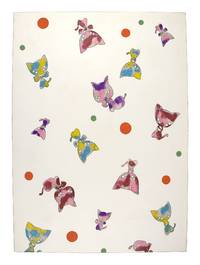
1940réf. 33730Suzuka Japan et al. 1940. Very Good . Suzuka Japan: n.d. ca. 1940-1960. Nineteen original hand-stenciled designs ca 48x35cm; thirteen examples with rubber-stamp from two different craft shops the remaining six unattributed. Light wear and soil else a Very Good to Near Fine collection. Colorful multi-decade sampling of designs for the Japanese casual summertime cotton kimono known as yukata. The designs were almost certainly designed for children's outfits decorated as they are with baby birds puppies ducklings circus elephants bunnies musical instruments and teddy bears. The ten earliest examples all hail from the same shop and all use the same color scheme of navy blue slate blue and orange-brown. Later examples expand the color palate to much more vibrant and neon colors. One design in particular of a small child in a red bunny costume anticipates both the manga and the Hello Kitty aesthetic that became a global phenomenon beginning in the 1970s and 1980s. unknown books
réf. 29359Softcover. VG minor wear to cover edges. Pictorial wraps. 237 pp. 365 bw and color plates. Text in Japanese. paperback books
1945réf. 0088251945. Very good. Envelope only no letter. The envelope was addressed to Private First Class Walter Mikucki at the Osaka Yodogawa Bunsho POW Camp in Japan. It has a typed "Prisoner of War Postage Free" free frank in the upper right corner and has received a Chicago "War Savings machine postmark dated Jan 13 1944. The envelope was opened by a U.S. censor and resealed using censor tape annotated "Examined by 6587." The address was subsequently obliterated with a red cross and black bands using grease pencil or crayon. It has a circular handstamp in the lower right corner dated Nov 20 1945 with text that appears to read "LIBERATED HQ. USMC. WASH. D.C." Ther is a USMC "pointing finger" return-to-sender hand stamp that point to the return address. Pfc. Mikucki was a member of the 4th Marine Regiment when as war clouds rumbled in the Pacific it was sent from China to Corregidor to defend Manila Bay in the Philippines. Shortly after its arrival Japan launched its infamous sneak attack on Pearl Harbor and allied bases throughout the Pacific. Corregidor was bombed continuously from late December 1941 until May 5 1942 when an overwhelming force of Japanese soldiers landed on the island. After tanks were brought ashore the following day Lt. Gen. Jonathan Wainwright realized defeat was imminent and surrendered fearing the thousand or so wounded men and bedraggled defenders would be annihilated. Although most of the 4th Marine Regiment had been killed the remaining men were transported to prison camps in Japan. The Yodogawa Bunsho Camp near Osaka was one of the smallest Japanese prisoner of war camps and records in the National Archives identify only 12 prisoners that were known to have been held there. Pfc. Mikucki's name is not on that list. Other records show that Mikucki may also have been imprisoned at various times at the Itchioke Chikko and Umeda Bunsho camps. He died from unknown causes on March 11 1943. Clearly this information was not provided by the Japanese to the Red Cross as Mikucki's parents sent this letter ten months later. Examples of mail sent to American prisoners held in Japan are very scarce and this example may be unique for at the time of this listing I find no mention in philatelic or ephemera auction records in sale listings or institutional holdings of other returned mail for Corregidor Marines who died in Japanese prisoner of war camps . Also there is no mention of anything similar in Gruenzner's Postal History of pf American POWs. unknown books
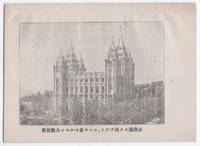
1900réf. 71537Tokyo Nihon Japan: LDS Japanese Mission 1900. Pamphlet. Near Fine. 2 13 1 pp. 24mo 15 cm. Pamphlet in self-wrappers. A single gathering secured only by folding and glue as issued. Printed on white paper in black ink. The front cover bears the title and author attribution to Heber J. Grant. The rear cover features a halftone photographic illustration of the Salt Lake Temple with a caption. Mild even age-toning and a soft faint vertical handling fold. A nice structurally sound and clean copy. This variant matches most closely to Flake-Draper 3673 with no date printed 15cm vertical measurement and plain printed wraps. See also: Flake/Draper 3669-3672. This tract represents the primary missionary work written by Heber J. Grant 1856-1945 during his tenure as the first president of the LDS Japan Mission 1901-1903. The text provides an introductory overview of Latter-day Saint theology for a Japanese audience reporting on the First Vision of Joseph Smith his subsequent martyrdom at Carthage Jail and concluding with a complete translation of the thirteen Articles of Faith. Documenting the foundational years of the Church's proselytising efforts in Asia this rare Japanese Mormon imprint predates the first Japanese translation of the Book of Mormon. [LDS Japanese Mission] unknown books
1585réf. 4676ENTRY NO. 1 IN BOSCARO THE FIRST REFERENCE TO THE JAPANESE EMBASSY OF 1585 PRINTED ON THE TITLE-PAGE Venice I Gioliti 1585. Small 8vo 15.3 x 10 cm 103 pp. Bound in old vellum. Discrete former ownership stamp on title. Gutter margin of title reinforced; inconsequential toning otherwise excellent. Rare early edition of this Jesuit letter containing news of missions and activity in Japan from the year 1582 the only edition of 5 printed that year to contain a title-page advertising the famous Japanese embassy of 1584-86. Significantly the work also discusses the embassy the participants and their noble lineage and expresses the hope that the embassy will prove a convincing sign of the Jesuit's spectacular success in Japan p. 7. The present imprint of this edition comprises the first entry in Boscaro's bibliography of printed works related to the embassy. It thus stands at the head of nearly 50 works printed in 1585 alone to record and commemmorate an event that-in addition to providing a public relations coup for the Jesuits-became a watershed moment in cross-cultural exchange between the Orient and the West: "no Japanese emissaries to Europe either before or since aroused comparable interest or enthusiasm" Lach. In the annals of international relations between Europe and Japan in the 16th C it is particularly noteworthy "how the physical presence of the Japanese in Europe stimulated an unexpected number of typographical presentations" Boscaro of which this particular Gioliti edition with the titlepage advertising the embassy-Portata de Novo Dal Giapone Dai Signori Ambasciatori-is the very first. Boscaro notes that there were four other editions of Coehho's letter published in Italy in 1585 around the time the embassy arrived in Venice on June 25 including another by Gioliti but none of these uses the embassy as a way to market itself. The report itself is also a significant document of the embassy's genesis: Coelho composed it in February 1582 the month that the embassy of four Japanese Christian converts departed from Nagasaki. In it he describes the ongoing missionary activity across the country: e.g. in Hirado Amasuka Bungo and especially Funai Oita City the home of a thriving Jesuit college. Presumably the contents of this letter as the title suggests were "brought from Japan by the eminent ambassadors" as the latest news on the Jesuits current success in that faraway land. Though the embassy did not reach Lisbon until August 1584 it eventually was as Coelho had hoped a resounding success: from 1584-86 the four young Japanese nobles were the object of intense curiosity wherever they traveled and they were treated to lavish receptions in Lisbon Madrid Florence Rome Venice and other cities throughout Catholic Europe. Provenance: Alfred Hamy 1838-1904 French Jesuit historian and prolific author of books relating to the history of the members of the Company of Jesus. OCLC: Cornell NYPL HU and Newberry. Boscaro 1; Alt-Japan 812; Sommervogel II.1267; Cordier 78; Laures 169; Pagès 22; Lach I.2.690. Boscaro 1; Alt-Japan 812; Sommervogel II.1267; Cordier 78; Laures 169; Pagès 22; Lach I.2.690. I Gioliti books
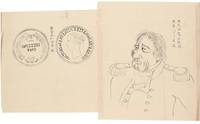
1854réf. 347541854. 9 1/5 x 6 1/2 inches. 104 pp. including illustrations. Light worming to initial leaves slightly affecting text. Original grey wrappers stitched as issued manuscript cover label A contemporary Japanese manuscript sammelband recording the defensive anxieties and administrative response prompted by Commodore Matthew C. Perry's return to Japan in 1854 with manuscript maps plans and sketches connected with the negotiations at Kanagawa. This composite manuscript brings together two Japanese reports produced in the immediate context of Perry's expedition to Japan. The first a "Strategy for Coastal Defence" concerning the area around Edo is attributed to Yamaga Motomi. The second gives an account of Perry's arrival in 1854 when the American squadron returned to Edo Bay and negotiations with the Tokugawa authorities led to the Convention of Kanagawa. Together they preserve a Japanese view of a decisive diplomatic and military encounter seen through the practical concerns of coastal defence official protocol ship identification personnel lists and the exchange of gifts. The Perry account records the names of the American vessels names of some members of the crews crew numbers and a list of gifts presented to Perry by the Tokugawa shogunate. Such details place the manuscript within the administrative culture of information-gathering that surrounded the so-called Black Ships. The arrival of armed steam vessels in Edo Bay demanded rapid assessment copying and circulation of foreign intelligence and this volume appears likely to have been compiled for official or semi-official consultation. The manuscript is particularly notable for its visual material. It includes a two-page manuscript map of the bay near Kanagawa now part of Yokohama where the Convention of Kanagawa was signed; a pen and ink plan of the buildings laid out for the signing compound; a pencil sketch of Commodore Perry; a drawing of the obverse and reverse of a one-shilling piece; and two pages of ink sketches of the gravestone of a sailor identified as "R.W." who died during the expedition and was buried ashore. These illustrations give the volume a documentary immediacy unusual in later printed accounts preserving the diplomatic outcome alongside the spaces objects and individuals through which the encounter was understood by Japanese observers. Perry first entered Edo Bay in July 1853 carrying President Fillmore's request for relations with Japan and returned with a larger squadron in February 1854. The resulting Convention of Kanagawa signed on 31 March 1854 opened Shimoda and Hakodate to American vessels and marked the beginning of formal United States relations with Tokugawa Japan. This manuscript belongs to that moment of transition when Japanese officials scholars and military thinkers were recording the appearance of foreign naval power and considering the defence of the shogun's capital. unknown books
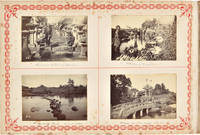
réf. 8575718. PHOTO ALBUM - JAPAN. 50 ALBUMEN OUTDOOR SCENES AND WOMEN. Small late 19th early 20th century oblong 13.4 x 18.3 cm album of albumen photos Half of the album is made up of shots of Japanese women in kimono in the studio and out. The other half is a catalogue of tourist scenes each about 9 x 13 cm image size. Decorated lacquer covers with insets. The images are handcolored with quite a bit of differential fading the reds stand out. The covers have a bit of edgewear and gouges but the condition overall is good. Interesting for its emphasis on women. unknown books
2005réf. 1026352005. Softbound. As New. Color illustrated wraps. 185 pp. Profusely illustrated in color. Text is presented in Japanese. Extensively illustrated and annotated and significant addition to the literature on La Tour. paperback books