3451 risultati
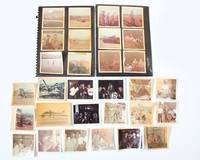
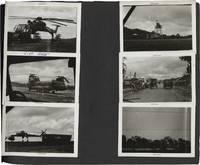
rif. 162967N.p.: N.p. 1971. Archive of 236 vernacular photographs documenting an African-American serviceman's deployment as a cavalryman with the 228th Aviation Battalion likely at An Khe Vietnam as well as his life back home in the US circa 1969-1971. Includes 180 black-and-white and 56 color photographs housed in two photograph albums. The serviceman in question appears to be Isaac Johnson whose name is written in a caption on one photograph and whose image appears throughout both photograph albums reconfirmed by a page near the end of the first album with the endearing heading "Some of the Woman sic in Johnson's Life . Before Me." The first album contains 153 photographs showing Vietnam and 83 photographs showing friends and family back home in the US most with captions in manuscript ink on the margins. The album's first half documents friends family and events back home including the serviceman's wedding. The second half beginning on the ninth leaf captures what appears to be the soldier's initial deployment in Vietnam showing images of Chinook and Sikorsky helicopters various military vehicles village and base scenes Vietnamese locals and fellow soldiers. Following the Vietnam photographs are two pages containing Johnson's military insignias Vietnamese currency and military payment certificates. The following leaf presents photographs-one of a stereo and two of a young boy likely the soldier's son-alongside two ticket stubs dated August 28 1970 from Baltimore Baseball Club captioned "Darryl's first Baseball Game." The tickets on that date were apparently for the Baltimore Orioles versus the Milwaukee Brewers at Memorial Stadium in Baltimore. The final leaf contains a computer printout of an "A Co 228th ASH Wildcats" insignia and two maps of Vietnam both with An Khe circled. The second photograph album containing the majority of photographs taken in Vietnam presents 128 photographs largely black-and-white images of fellow soldiers at work and leisure as well as barracks structures and equipment Vietnamese locals and girlfriends Chinook helicopters and the Vietnamese countryside. The final two leaves of the album contain 16 photographs of family friends children and a pet cat all in the US. Photographs: 2.5 x 3.5 inches to 5 x 3.5 inches. Very Good plus to Near Fine overall with a few photographs starting to detach from leaves. Green album: 14 x 11 inches. Very Good plus with some light edgewear and rubbing to the corners. Black album: 13.25 x 9.75 inches. Very Good plus with some chipping near the hinge on the front board. N.p. unknown books
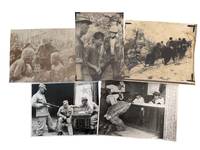
1971rif. 170893N.p.: N.p. 1971. Collection of five vintage photograph of anti-Vietnam War protests 1968-circa 1971. All five photographs with provenance stamps and annotations on the versos two also with mimeo snipes affixed to the versos. The five photographs are: One photograph of anti-war demonstrators marching down Fifth Avenue in New York to a mass rally in Central Park being heckled and jeered at by passersby on April 27 1968. One photograph of students being forcibly removed from a Columbia University building on April 30 1968. Two photographs of Harvard University protests in April 1969. One of Harvard students demonstrating to abolish the ROTC program on April 9 1969 and one of Harvard students on strike on April 14 1969. And one photograph of an antiwar march in Washington DC circa 1971. 1 9 x 7 inches. 4 10 x 8 inches. Near Fine overall. N.p. unknown books
1992rif. 62845New York: Random House 1992. Uncorrected Proof. 8vo. 24cm x 15.5cm. Publisher's printed card wraps some scuffing to the laminate here and there but otherwise a near fine copy. 402pp. Internally clean. Black and white charts and diagrams to prelims. A calm informed nothing held back account of one the most influential battles of the early stages of the Vietnam conflict. Moore and Galloway both present for the events of the book Moore in command and Galloway as a correspondent recount step by step the progress of the battle; the first major engagement of the war the first to extensively use helicopters to drop troops and equipment into battle and the first engagment to utilise B-25 bombers as air support. Galloway describes Ia Drang as "The battle that convinced Ho Chi Minh he could win." although that had little to do with the fighting ability of the 7th Cavalry and more to do with the swift tactics lessons the battle offered and the realisation that the US could take but not hold fight but not pursue and they could destroy but only what was on the surface. It changed the course of the conflict for both sides and took many prior strategic techniques back to the drawing board. Uncorrected proofs of this title are quite scarce. Random House unknown books
1963rif. 235511963. Vietnam War captivity and Code of Conduct press photograph archive 1963 to 1967 documenting how American military joined two sides of the same problem: the questioning of suspected Viet Cong prisoners in South Vietnam and the training of U.S. soldiers to resist Communist interrogation if captured. The Korean training images trace to the post Korean War Code of Conduct regime created after American POWs had faced coercion indoctrination and propaganda use in North Korean and Chinese captivity. The Vietnam images date from June August and September 1967 during the year after the major U.S. troop buildup made prisoner handling tactical intelligence and battlefield screening daily features of American and South Vietnamese operations. Photo archive of five silver gelatin press photographs each 8 x 10 inches 1963 to 1967. The photographs show three Vietnam War prisoner scenes and two U.S. Army Code of Conduct training scenes. One Associated Press wirephoto dated June 23 1967 captioned "Interrogation" shows South Vietnamese Marines and a U.S. Marine questioning a Vietnamese villager suspected of being a Viet Cong terrorist after two Marines were killed in a firefight northeast of Saigon. Another dated August 5 1967 captioned "Questioning a villager" shows South Vietnamese paramilitary soldiers questioning a man suspected of being a Viet Cong soldier after villagers were rounded up following a firefight southwest of Saigon. A September 24 1967 wirephoto captioned "Asks a captive" shows soldiers of the U.S. 25th Infantry Division interrogating a captured Viet Cong soldier before continuing a village sweep northwest of Saigon. The two Korea images show staged Communist prisoner camp scenarios: one image by Malcolm Barr shows American soldiers three dressed in North Korean army uniforms conducting an "interrogation" at a U.S. Army simulated Communist prisoner of war camp; the other captioned "Pointed question" shows Sp/4 Ralph Kreis receiving rough treatment from Korean "guards" attached to the 2nd Infantry Division during a five hour Code of Conduct course. The group belongs to the period when the U.S. military carried Korean War captivity lessons into the Vietnam era while fighting a counterinsurgency in which prisoners detainees suspected guerrillas and civilian villagers became sources of tactical information. The Vietnam photographs show prisoner questioning at the edge of combat operations with captions placing each scene near Saigon and linking interrogation to sweeps firefights suspected Viet Cong activity and U.S. or South Vietnamese field units. The U.S. Code of Conduct photographs show the counterpart of American soldiers rehearsing captivity under staged Communist authority using Korean War imagery to prepare men for the coercive questioning and ideological pressure they might face in later Cold War conflicts. Press stamps caption slips crop marks editorial notations toning surface wear adhesive residue and handling creases; images remain clean and clear. Overall very good condition. A press record of how captivity interrogation and resistance training handled counterintelligence heralding from the red scare. unknown books
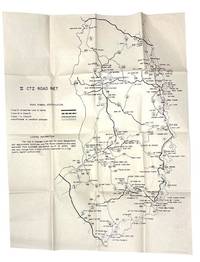
1967rif. 96222Saigon: Printed by 569th Engr. Co. Topo Corps 1967. Near Fine. Single folded sheet. 74 x 39 cm. English text. The map displays towns and connecting roads QL1 QL 14 QL 19 QL 21 LTL 79 etc. in the II Corps Tactical Zone Central Highlands and Central Coastal lowlands in Vietnam. Dan Pek U.S and ARVN army base at top left; Phan Thiet at bottom center. This map may have been in some Vietnam-related military publications. Printed by 569th Engr. Co. (Topo) (Corps) unknown books
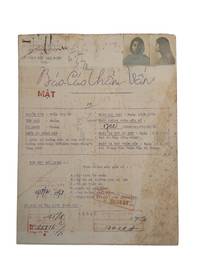
1970rif. 235521970. South Vietnamese Special Police interrogation report from Saigon 1970 documenting the arrest and questioning of Trần Thị Tư a seventeen year old ice cream seller accused of guiding and sheltering her husband after his infiltration into the Capital District for Communist activity. Created by the Cảnh Sát Äặc Biệt or Special Police of the Republic of Vietnam's National Police in Äô Thành Sài Gòn the file places one young woman's domestic movements kinship obligations and street vending work within the Phượng Hoàng security apparatus that targeted Viet Cong infrastructure in and around Saigon. The report anchors the charge in specific movements through Gò Vấp Gia Äịnh Tây Ninh and Saigon naming Trần Văn Bốn alias Trung Bà Tám Nhiá»u Tám Chợ Thị Hai and Phiếm as figures in the alleged route of contact shelter and attempted legal cover. Phúc Trình Thẩm Vấn Số 1702 / CSÄB / S3 / P33 / B3 / M. Saigon: Cảnh Sát Äặc Biệt 1970. Four page typed interrogation report with distribution sheet 8 x 10 inches in Vietnamese with two mounted silver gelatin mugshot portraits of Trần Thị Tư. The first page is headed "Báo Cáo Thẩm Vấn" roughly translating to "Interrogation Report" with Trần Thị Tư identified as the informant no alias no nom de guerre and her communist position having "contacted guided and sheltered her husband as he infiltrated the Capital District to carry out Communist activity." The report gives her address as 44C B Ä‘Æ°á»ng Phan Thanh Giản Gò Vấp lists her birth in 1953 at Xuyên Thanh Duy Xuyên Quảng Nam identifies her husband as Trần Văn Bốn alias Trung a professional weaver and records her occupation as an ice cream seller. The narrative states that after the family house burned in 1966 she moved to Gò Vấp married Bốn in 1967 visited him at a Communist base area after being guided through Tây Ninh received instructions from cadres named Nhiá»u and Tám Chợ and in April 1970 helped bring Bốn back to Saigon to live under legal cover. The final page states that she was arrested on 15 May 1970 while selling ice cream in Gò Vấp and then led security personnel to arrest her husband at Phiếm's workshop where he was apprenticing; the report is dated Saigon 19 August 1970 and signed for Major Lâm Văn Nghĩa Chief of the Special Police Office. The distribution sheet routes copies to the National Police Directorate Saigon City Hall's Internal Affairs Office the Capital Phượng Hoàng Committee the Saigon Gia Äịnh Mixed Security Committee the O.S.A. adviser's office District 11 National Police Quảng Nam National Police Gia Äịnh National Police S3/P31/B2 S3/P31/B3 and retained files. The report belongs to the period after the Tet Offensive when South Vietnamese and American security programs intensified the identification of urban Viet Cong infrastructure rather than battlefield combatants alone. Its language treats Tư as a source and detainee whose value lies in routes addresses family links employment and names. The file records a mother in law's address a rented kitchen near a workshop an apprenticeship motorcycle movements ferry and market truck transfers and the use of ordinary residence as a condition of clandestine work. The evaluation section concludes that Tư had no clear Communist ideological training but that she was used through "marital loyalty" to guide and shelter her husband so he could operate legally in the Capital District. Moderate foxing and toning throughout with minor edge wear corner wear ink stamps and manuscript docketing; text remains legible and paper has maintained integrity. Overall very good condition. A Saigon Special Police interrogation record tracing Viet Cong urban security through one woman's marriage movements and coerced knowledge of clandestine routes. unknown books
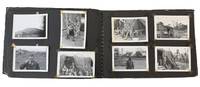
1960rif. 232781960. Black U.S. Army soldier's photo album documenting home and military life between Virginia and Vietnam in the late 1960s and early 1970s. Black servicemen moved through the formally desegregated Army during the first major U.S. war fought after official military integration. Centered a young black enlisted man the album tracks the life of service through photos at camp soldiers in formation military equipment helicopters and with portraits alongside other soldiers. Though the Korean War was the first U.S. war that was formally desegregated the units still saw unequal integration and opportunity while the Vietnam War marks an era in which a desegregated military was already well established. Photo archive of 92 color and black and white photographs ranging from 3.5" x 3.5" to 3.5" x 5" Virginia and Vietnam late 1960s to early 1970s. Mounted in a 10" x 14" spiral bound album. Many images show the compiler in uniform and civilian dress some of the earlier home scenes have handwritten inscriptions en verso. Other images show helicopter scenes in flight and at camp; tent lines wooden barracks; soldiers standing in formation gathering in small groups and posing beside military vehicles and equipment. A Virginia license plate anchors the soldier's home state and the use of quippy captions gives this soldier a voice identifying some individuals by their first name and one particular youthful photo of himself captioned "Dunn will be leaving on January the 1st army But you know he is trying to get out of it said he was going to school. Ha! Ha! Uncle Sam's school" giving a glimpse into the prior aspirations of young Black man right before being drafted. Black soldiers entered the Vietnam era military in large numbers at the same time that civil rights struggles Black Power politics and mounting criticism of the war reshaped the meaning of service for African American men. This album gives weight to that history with repeated presence of black men within camps and comradeship with white soldiers. Adhesive residue to corners and backs of some images edgewear to album and leaves and expected handling wear; photographs generally clear and legible. Overall very good condition. This album shows the ground level of Black military experience in the early post segregation Army. unknown books
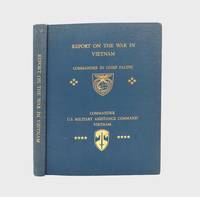
1968rif. 20360Washington: Government Printing Office 1968. First edition. Maps some folding charts and diagrams photographs Index laid in at the back. 1 vols. 4to. Original blue cloth gilt. Some light soiling of cloth warping of volume and light marginal browning of text else a very good copy of this work. First edition. Maps some folding charts and diagrams photographs Index laid in at the back. 1 vols. 4to. INSCRIBED BY WILLIAM WESTMORELAND TO HEDLEY DONOVAN former editor-in-chief of Time Inc. "To Hedley Donovan-With reminiscence of our pleasant association. W. C. Westmoreland. March 1969." In his position as Editor in Chief of Time Inc. Donovan had made four trips to Vietnam to see firsthand the people and places being covered by his correspondents and to get a feel for the situation. He met with Westmoreland in Vietnam in late 1965-early 1966 and probably on his subsequent trips. Westmoreland was the Time Magazine Man of the Year for 1965. Partly reading "As commander of all U.S. forces in South Viet Nam General William Childs Westmoreland 51 directed the historic buildup drew up the battle plans and infused the 190000 men under him with his own idealistic view of U.S. aims and responsibilities. He was the sinewy personification of the American fighting man in 1965 who through the monsoon mud of nameless hamlets amidst the swirling sand of seagirt enclaves atop the jungled mountains of the Annamese Cordillera served as the instrument of U.S. policy quietly enduring the terror and discomfort of a conflict that was not yet a war on a battlefield that was all no man's land. Government Printing Office unknown books
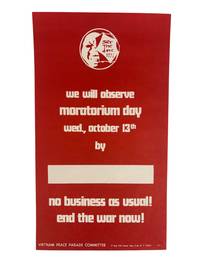
1971rif. 222041971. Vietnam Peace Parade Committee. No Business as Usual! a 1971 antiwar protest poster issued to encourage participation in the national Vietnam Moratorium on Wednesday October 13 1971. The poster called upon Americans to interrupt their ordinary activities in opposition to the Vietnam War continuing the nationwide Moratorium campaign that began in October 1969 with demonstrations teach-ins workplace actions and student walkouts. Issued during renewed antiwar mobilization following the American invasion of Cambodia in 1970 and the publication of the Pentagon Papers in June 1971 the poster was designed for local adaptation allowing participating organizations businesses or individuals to announce their own plans for the day of protest. We Will Observe Moratorium Day Wed. October 13th. Vietnam Peace Parade Committee. New York: Vietnam Peace Parade Committee 1971. Original illustrated protest poster with bold white typography and a circular graphic emblem at the top. Beneath the emblem centered lettering declares: "we will observe / moratorium day / wed. october 13ᵗʰ / by" followed by a large blank space intended for recipients to enter their planned protest activity. The poster concludes with the slogans "no business as usual! / end the war now!" The issuing organization's address appears along the bottom: Vietnam Peace Parade Committee 17 East 17th Street New York N.Y. 10003. The unprinted central area allowed the same poster to be adapted for different forms of participation from business closures and workplace stoppages to campus demonstrations and public meetings. The October 1971 Moratorium formed part of a renewed nationwide antiwar campaign that also included Veterans Day actions and demonstrations demanding immediate American withdrawal from Southeast Asia. The Vietnam Peace Parade Committee's poster promoted decentralized participation rather than attendance at a single demonstration providing a common date and message while leaving the specific action to local organizers. Its declaration "no business as usual!" continued the Moratorium movement's strategy of disrupting routine commercial educational and civic activities to protest continued American military involvement. The blank announcement space is a distinctive feature of the poster documenting a practical method by which national antiwar organizers encouraged local participation. Light handling wear; otherwise in very good condition. unknown books
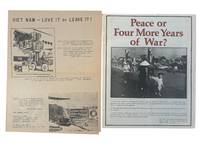
1969rif. 222221969. Archive of Two Anti-Vietnam War Pamphlets Critiquing Nixon-Era Policy 1969-1972. Birmingham AL and Cambridge MA / Los Angeles CA: Birmingham Moratorium Committee and Indochina Peace Campaign. Two pamphlets totaling 8 pages. A stark and emotionally charged pair of pamphlets confronting the human and economic cost of the Vietnam War particularly under the administration of Richard Nixon and his South Vietnamese ally Nguyễn Văn Thiệu. Both documents highlight the structural violence wrought by U.S. imperialism through quotes infographics and personal testimonies. One pamphlet issued by the Birmingham Moratorium Committee presents a Marxist-inflected indictment of American capitalism's complicity in the war; the other by the Indochina Peace Campaign anchors its critique in the grief of a widow counterposing Nixon's broken promises with devastating images of Vietnamese civilians and political prisoners. 1 Birmingham Moratorium Committee. "Viet Nam - LOVE IT or LEAVE IT!" Birmingham AL: 1969. A four-page pamphlet structured around working-class economic critique. On the front page black-and-white line art depicts a U.S. military cargo loader moving a casket-shaped crate labeled with stars beneath the caption "U.S. troops continue to be withdrawn from South Vietnam." It features a collage juxtaposing the Chase Manhattan logo with the silhouette of a prone soldier in Saigon. Alongside damning pull quotes from McNamara Gen. Harkins and Nixon ".this may have been one of America's finest hours." it lists the GI toll from 1961 to 1966: "killed: 38969; wounded & maimed: 254947." The interior spread lays out the economic beneficiaries of the war-"Who Profits"-stating "only big business. corporate profits after taxes rose 91%." One cartoon labeled "The Free Enterprise System" depicts a caricatured Nixon shaking down an American taxpayer for the wealth-hoarding "Corporations and Upper Income Earners". The final page calls for a debate and mass rally on November 13-14 involving Alabama's senators and representatives and denounces the war as a tool to "pay Vietnamese women 31¢ a day to make transistors as they do now in South Korea." The overall tone centers class exploitation with a particularly Southern regional organizing base. 2 Indochina Peace Campaign. "Peace or Four More Years of War" Cambridge MA / Los Angeles CA: 1972. Four-page pamphlet likely distributed in the lead-up to the 1972 election. The cover image-captioned "NBC-TV Dec. 12 1972"-depicts a Vietnamese woman and barefoot child walking past a bombed-out village. Beneath it is a widow's testimony: "If they had gone ahead and signed the treaty as promised my husband would be alive today with me and my children." The interior is a detailed exposé of the Nixon administration's duplicity in peace negotiations asserting that "After two years of negotiations all that remained was to settle one percent of a peace settlement." The Indochina Peace Campaign asserts that the U.S. deliberately sabotaged the Nine-Point Agreement by refusing to recognize the Provisional Revolutionary Government PRG despite "warnings by Congressmen and Senators" and international outrage over the Christmas bombings. The pamphlet cites major media: "The U.S. supported regime in Saigon have ruled by suppressing all their opposition" Pentagon Papers Gravel Edition Vol. 1 p. 256 and includes documentation of 40994 political assassinations under the Phoenix Program. A chilling image of children behind bars in Chanh Hung Prison accompanies these facts. The final call to action reads: "We have this choice: either we allow our government to prolong the rule of General Thieu or we pressure it to sign the Agreement." An ideologically diverse but thematically united pair of anti-war publications: one focused on working-class Southern economic outrage the other on moral urgency and state-sponsored atrocity. Together they demonstrate the breadth of opposition to the Vietnam War and the emotional political and class-based appeals that animated grassroots resistance across the U.S. Overall very good condition. unknown books
1964rif. 222171964. Counterculture Vietnam War This pair of mimeographed documents issued in 1964 and 1969 respectively capture the shifting rhetorical and political frameworks of U.S. justification and policy aims in Vietnam offering rare comparative insight into both the Lyndon B. Johnson and Richard Nixon administrations' public positions. 1 Some Questions on Vietnam. Washington: Friends Committee on National Legislation June 3 1964. 2 Mr. Nixon's Points. N.p October 14 1969. Two double-sided mimeographed typescripts measuring 8.5" x 11" each. Together they trace the continuity and contradictions in American official thinking from the earliest stages of direct military intervention to the early attempts at managed withdrawal. The 1969 document is particularly notable for its side-by-side presentation of Nixon's proposed peace terms with those of the National Liberation Front NLF the political wing of the Viet Cong. 1 The first document dated June 3 1964 and issued by the Friends Committee on National Legislation in Washington D.C. is titled Some Questions on Vietnam. Framed as a briefing tool for concerned citizens it outlines the U.S. position in the early escalation phase of the war and provides extensive excerpts from contemporary sources including President Johnson's June 2 press conference and articles from The Washington Post and New York Times. Johnson is quoted stating that the U.S. is "bound by solemn commitments to help defend this area against Communist encroachment" reaffirming the domino theory logic underpinning American involvement. The handout catalogs U.S. military strategies then being deployed including the "Strategic Hamlet Program" in which "thousands of peasants were uprooted at gunpoint and moved into defensive village-clusters far removed from ancestral lands." Other methods included the use of lie detectors on suspected Viet Cong and defoliation tactics that the Washington Post acknowledged raised "questions of the wisdom of using such agents at all in this kind of war. where the consequences are visited upon a civilian population we are trying to defend." The leaflet also raises doubt about South Vietnamese support for the war: "the Saigon government has the allegiance of probably no more than 30 per cent of the people." Statistics from the Pentagon note that by May 25 1964 1130 American servicemen had been killed wounded or listed as missing since 1961. Senator Wayne Morse is quoted: "We have already poured into that sink-hole over $5½ billion." The final sections argue that economic aid cannot be separated from military goals and propose alternatives such as United Nations mediation. Notably the sheet warns that mail to the White House on Vietnam had been averaging fewer than 150 letters per week urging citizens to "make their views known to the President and your Congressmen." 2 The second document dated October 14 1969 presents President Nixon's public negotiating stance during the early phase of his "Vietnamization" strategy. Titled Mr. Nixon's 8 Points the yellow sheet begins with a justification of U.S. sacrifices: "The United States has suffered over a million casualties in four wars in this century. We are proud of this record and we bring the same attitude in our search for a settlement in Vietnam." Nixon outlines eight specific principles most notably: "We seek no bases in Vietnam. We insist on no military ties. We are willing to agree to neutrality for South Vietnam if that is what the South Vietnamese people freely choose." He continues "We have no intention of imposing any form of government upon the people of South Vietnam nor will we be a party to such coercion." The points include phased withdrawal over twelve months the establishment of an international supervisory body elections under international supervision release of prisoners of war and mutual agreement to observe the 1954 Geneva Accords. Nixon concludes with a reaffirmation that U.S. presence would end entirely once these measures were fulfilled. The reverse of the Nixon flyer contains The NLF's 10 Points the Viet Cong's counter-position which sharply contradicts Nixon's framing. Point 2 is categorical: "The U.S. Government must withdraw from South Vietnam all U.S. troops military personnel arms and war materiel. and liquidate all U.S. military bases in South Vietnam." Point 4 emphasizes sovereignty: "The people of South Vietnam shall settle themselves their own affairs without foreign interference." Throughout the NLF stresses full political participation neutral diplomatic relations and reunification of Vietnam as "a peaceful process. without foreign interference." Notably Point 9 demands that the U.S. government "must bear full responsibility for the losses and devastations it has caused to the Vietnamese people in both zones." Juxtaposing these two documents reveals a significant divergence between U.S. public rhetoric and Vietnamese revolutionary demands. While Nixon framed U.S. intentions as altruistic and limited the NLF viewed the war as colonial in nature and demanded unconditional withdrawal. This side-by-side format would have been a powerful tool for peace activists and educators in 1969 especially as public trust in government narratives about Vietnam eroded in the wake of the Tet Offensive and ongoing domestic protest. Very good condition overall. unknown books
1959rif. 223101959. United States Army Intelligence School. Intelligence training archive. 1959-1963. This archive documents the institutional training system used by the U.S. Army Intelligence School at Fort Holabird during the Cold War outlining how personnel were instructed in reconnaissance mapping foreign intelligence analysis and counterintelligence operations. The material establishes a formal curriculum designed to prepare officers for intelligence work in the context of U.S.-Soviet conflict combining doctrinal interpretation of adversary systems with technical instruction in observation terrain analysis and operational planning. It provides primary evidence of how intelligence training integrated ideological framing with practical field methods. Archive of 13 instructional documents totaling approximately 459 pages issued between 1959 and 1963 including manuals technical booklets and training schedules. Titles include 1 Soviet Intelligence Systems Nov 1962 2 Observation and Description Jan 1961 3-5 Military Map Reading booklets 1959-1961 6 Interpretation of Highways Bridges and Transportation Facilities Oct 1961 7 USAINTS Library Guide Jan 1962 8 Operational Data on South Korea I Sep 1962 9 Nuclear Warfare II Jun 1963 10 Benelux Jul 1961 11 Solution of Dispersion Problems undated and 12-13 weekly training schedules June and July 1963. The manuals include diagrams and exercises on map reading identifying "recognition distance and direction" as core elements with annotated examples of azimuth calculation and grid use. Instructional material in Observation and Description includes facial and morphological diagrams distinguishing features such as "Vertical Forehead" and "Bushy" eyebrows for identification purposes. Soviet Intelligence Systems presents ideological analysis stating that Soviet security organs are "extensions of the Party's designs" and describing intelligence as "a pervasive force which envelops every sector of society." Infrastructure manuals include photographic examples of roads and bridges for field identification while the Library Guide outlines access systems and spatial organization of intelligence resources. Weekly schedules list training components such as report writing practical exercises and seminars alongside technical instruction in photography. Produced during a period of sustained Cold War tension these materials show how the U.S. Army formalized intelligence education by combining political interpretation of adversaries with standardized technical training. The emphasis on mapping surveillance and infrastructure analysis reflects preparation for both conventional and nuclear-era operations while the inclusion of regional studies such as South Korea and Benelux indicates geographic scope within global strategic planning. Minor rust to staples light edge toning and scattered manuscript annotations; occasional corner creases and small marginal tears not affecting text; overall very good. A cohesive archive of Cold War intelligence training preserving the instructional methods and analytical frameworks used by the U.S. Army in the early 1960s. unknown books
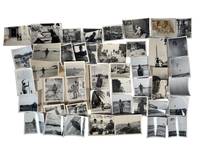
1965rif. 212871965. Archive of original photographs documenting African American soldiers serving in the Vietnam War during the early phase of large-scale United States military escalation in Southeast Asia. The material captures the daily experiences military operations and interpersonal relationships of Black servicemen stationed at Bien Hoa Air Base circa 1965 including members of the 173rd Airborne Brigade Combat Team. The photographs provide primary-source visual evidence of integrated military life during a period when African American troops served disproportionately in frontline combat roles while racial inequality and civil rights struggles intensified in the United States. Particularly significant is the candid nature of the images which were apparently taken by an African American serviceman identified by the surname Thomas offering an unusually personal perspective on Black military experience during the Vietnam conflict. Collection consists of 56 original black-and-white silver gelatin photographs measuring approximately 3.5 x 3.5 to 3.5 x 5.5 inches primarily loose with two mounted to an album page. The photographs depict African American soldiers at Bien Hoa Air Base near Saigon identifiable through a photographed base sign and visible 173rd Airborne Brigade insignia on soldiers' uniforms. Numerous images portray Black servicemen posing casually outside tents reading letters socializing in small groups smoking resting and interacting with fellow soldiers emphasizing camaraderie and the routines of military life between operations. Several photographs document airborne training exercises with parachutists descending beneath open canopies over the surrounding landscape. Other images depict military infrastructure and equipment including jeeps sandbag fortifications stacked munitions barracks areas and transport zones associated with the logistical operations of the base. The archive also includes photographs taken during off-duty excursions into Vietnamese civilian areas including a riverside marketplace crowded with vendors boats and local residents. Additional images show soldiers posed before local monuments and religious sites including one photograph of Thomas with a white serviceman in front of a Buddhist temple and another featuring a tall obelisk monument surrounded by military statuary. The archive documents the lived experience of African American servicemen within integrated combat units during one of the most consequential military conflicts of the twentieth century. Bien Hoa Air Base served as a major operational center for airborne and aerial missions during the early years of sustained U.S. intervention and the presence of Black paratroopers within these photographs provides important visual evidence of African American military participation during the Civil Rights era. Unlike official military photography the informal and personal nature of the images preserves moments of friendship boredom training and interaction with Vietnamese civilians that are often absent from institutional wartime records. Minor edge wear and light handling wear throughout; photographs remain sharp and well-preserved overall in very good condition. A substantial and historically valuable photographic record of African American military life in Vietnam during the mid-1960s. unknown books
1989rif. 300300N.p. 1989. Special Edition 1989. Etching on artist's board. 17 x 12 cm image. Fine. Matted. Special Edition 1989". Etching on artist's board. 17 x 12 cm image. Inscribed beneath the image: "To James H. Heineman -- a true friend of mine and of our nation". Affixed to the rear of the board is a letter of presentation to Heineman dated June 22 1989. unknown books
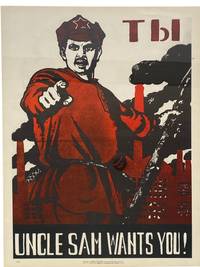
1968rif. 220901968. PropagandaCounterculture Ты / Uncle Sam Wants You! New York: International Poster Corp. 1968. Offset lithographic poster in red black and cream tones measuring 21 x 29 inches. A striking Cold War-era visual pastiche that fuses Soviet revolutionary imagery with American military propaganda this poster was issued during a peak moment of political unrest in the U.S. amid the Vietnam War and domestic resistance movements. This design is a bold recontextualization of the iconic 1920 Soviet recruitment poster "Ты запиÑалÑÑ добровольцем" "Did you volunteer" by Dmitry Moor repurposed here with the English slogan "Uncle Sam Wants You!" emblazoned below in tall confrontational type. The juxtaposition of Soviet iconography-complete with red army uniform factory smokestacks and Cyrillic lettering-with a phrase universally associated with U.S. enlistment efforts delivers a searing critique of militarism nationalism and ideological doublespeak on both sides of the Cold War divide. Produced by the International Poster Corp. a commercial publisher in the late 1960s known for distributing countercultural and revolutionary imagery this poster was marketed to radical bookstores and student groups across North America. It exemplifies the era's politically charged appropriation of state propaganda styles as a vehicle for anti-war New Left and student movement critiques. The figure's accusatory point lifted directly from Moor's original underscores a shared visual vocabulary of coercion that transcended ideological boundaries. Very good condition with strong color retention and no visible tears small surface abrasion on recto not affecting images. Printed copyright and publishing line along bottom margin. An evocative artifact of 1960s countercultural print culture merging international iconographies of enlistment and resistance. unknown books
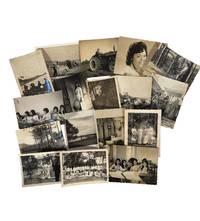
1960rif. 210781960. Vietnam War Photography Personal photograph album containing 17 silver gelatin photographs documenting civilian life education family and military service in South Vietnam during the 1960s. Original brown vinyl album measuring approximately 3.5" x 4.5"; photographs approximately 2.5" x 3.25". The album offers an intimate glimpse into the everyday experiences of South Vietnamese men and women during a period more often documented through the lens of war. Rather than combat scenes the photographs focus primarily on family friendship education courtship and community life creating a personal record of a society navigating rapid social change amid the conflict. Several photographs depict young Vietnamese women wearing traditional áo dài dresses both in formal portraits and informal outdoor settings. One particularly attractive image shows three smiling women walking along a path in patterned áo dài framed by a mixture of traditional and modern architecture. Another studio portrait captures a young woman posed alone and smiling toward the camera suggesting a family member friend or perhaps the album owner's sweetheart. Education and youth culture are prominently represented. Multiple photographs show school-aged girls gathered in classrooms and assembled outdoors in large group portraits. The students wear white áo dài and traditional conical hats illustrating the continued importance of educational institutions and cultural traditions during the war years. Several candid classroom scenes preserve moments of ordinary student life rarely encountered in wartime photographic archives. The album also documents changing fashions and modernization in South Vietnam. Young men and women appear in contemporary 1960s clothing posing in parks forests and rural landscapes. One photograph shows a young Vietnamese man seated proudly atop a large tractor reflecting the agricultural modernization efforts underway throughout much of South Vietnam during the period. Military service appears in several images. One photograph depicts a South Vietnamese serviceman standing beside an automobile with military vehicles visible in the background suggesting that the album may have belonged to a soldier or military family. Unlike official military photographs however the image emphasizes personal identity rather than military operations reinforcing the album's character as a private keepsake rather than a wartime record. Additional photographs show fishing boats riverside scenes rural landscapes and groups of family members and friends creating a portrait of everyday life that existed alongside the broader conflict. Together the photographs reveal the coexistence of tradition and modernity documenting a generation of South Vietnamese men and women whose lives were shaped by both enduring cultural customs and the upheavals of the Vietnam War era. Photographs appear to have been removed from a larger album at some point with remnants of mounting paper and adhesive visible on versos. Minor wear and handling marks; overall very good condition. A compelling personal archive documenting civilian life education culture and military service in South Vietnam during the 1960s. unknown books
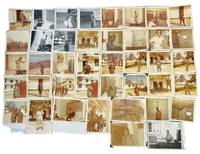
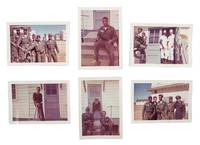
1968rif. 197531968. Photographic archive 1968-1969 documenting African American enlisted personnel in the United States Army Transportation Corps during the Vietnam War era with emphasis on training environments unit structure and daily life on base prior to overseas deployment. The material captures soldiers in both formal and informal settings providing visual evidence of military preparation racial composition within units and interpersonal dynamics among predominantly Black troops during a period of significant racial tension within the U.S. armed forces. The archive supports research into African American military service segregation and integration practices and the lived experience of soldiers during the late 1960s. Archive of 41 original vintage photographs primarily color with several black-and-white images ranging in size from approximately 3.5 x 3.5 inches to 3.5 x 5 inches. The photographs depict soldiers in a range of uniform styles including standard fatigues seasonal dress variations and Transportation Corps-specific elements such as white belts shoulder cords red scarves and helmets with distinctive markings. Several images show troops in formation with rifles raised while others capture training environments featuring sandbag trenches artillery placements and fortified structures resembling pillboxes. Interior scenes document barracks life including soldiers playing cards maintaining uniforms and interacting in relaxed settings. A black-and-white image shows an African American soldier posed near signage for a "Leadership School and Honor Guard" at a U.S. Transportation Center while another identifies a seated "battery clerk" labeled informally as "Johnny my Running Mate." Additional photographs include racially integrated groupings with Black and white soldiers appearing together in casual and structured contexts. Produced during the height of the Vietnam War this archive provides insight into the transitional phase between training and deployment emphasizing both institutional structure and personal experience within military life. The presence of both formal drills and informal social scenes allows for examination of hierarchy camaraderie and daily routine among enlisted men. Light handling wear and minor surface marks; overall very good condition. A substantial visual record of African American military experience within the U.S. Army during a pivotal period of twentieth-century conflict. unknown books
1950rif. 367089Paris: Édition de la Belle Page 1950. First editions from the limited issues each inscribed by the author. 4 vols. 8vo. Printed wrappers some light toning. First editions from the limited issues each inscribed by the author. 4 vols. 8vo. Collection of four works interpreting Vietnam for a contemporary French public written during the First Indochinese War by Tran Van Tùng 1915-post-1964 a France-based Vietnamese author and nationalist who became secretary general of the Democratic Party of Vietnam which presented itself as a political alternative to both the Diệm and communist governments. Each is inscribed by the author to Philip Dodson Sprouse then first secretary to the American ambassador to France in the early 1950s and later the U.S. ambassador to Cambodia from 1962-64. From the limited issues: Le Viet-Nam et sa civilisation is one of 500 hors commerce; Le Viet-Nam au combat is one of 200 on vélin blanc spécial Aussedat; Le Viet-Nam face a son destin one of 400 numbered copies on Marais Crèvecoeur. With Tran Van Tùng's card and associated ephemera. Édition de la Belle Page unknown books
1970rif. 190661970. U.S. Army Engineer Company photo album early 1970s documents logistical operations base life and personnel composition at Oakland Army Base during the Vietnam War providing visual evidence of military transportation infrastructure and the integration of a diverse workforce within a key Pacific transit hub. The material records the functioning of an engineer unit responsible for vehicle maintenance cargo handling and operational readiness while also capturing the presence of African American servicemen and female personnel within the same working and ceremonial environments. It supports research into military logistics on the U.S. home front race and gender integration in the armed forces and the institutional processes that sustained overseas deployment during the Vietnam War. Album containing 369 photographs including 353 color and 16 black and white images most measuring approximately 5 x 3.5 inches compiled at Oakland Army Base and the adjacent Port of Oakland. The contents document heavy machinery and vehicle maintenance including bulldozers cranes transport trucks and military jeeps with numerous images showing mechanics engaged in repair work. Additional photographs depict combat training exercises including rifle instruction with M16 firearms alongside formal ceremonies in which soldiers of varied racial backgrounds and both genders receive promotions commendations and instruction from commanding officers. Several images show administrative office environments providing insight into the clerical and organizational functions supporting base operations. Group scenes include family-oriented gatherings and meals indicating the social dimension of service life within the base setting. Produced at a time when Oakland Army Base operated as a principal embarkation and return point for U.S. forces traveling to and from Vietnam and other locations in East Asia the album documents the domestic infrastructure underpinning overseas military engagement. The emphasis on machinery cargo movement and personnel readiness reflects the scale and complexity of logistical coordination required during the conflict. The visible diversity within the unit corresponds with broader transformations in the U.S. military following desegregation and evolving roles for women making the album relevant to studies of institutional change during the late stages of the Vietnam War. Light wear to album edges and corners photographs well-preserved with minor handling marks; overall very good. A substantial visual record of engineer operations and base life at a critical West Coast military installation during wartime. unknown books
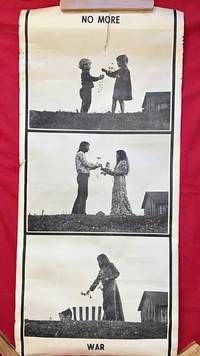
1970rif. 190631970. Anti-WarVietnam War "NO MORE WAR". Designed and photographed by Terry and Dennis Newell 1970. Measures 35" × 16" on offset tan lithographic paper. This monochromatic anti-war poster illustrates three scenes of a man and woman in three stages of their lives. In the first photo a young girl innocently gifts a young boy flowers on a grassy field. The following image conveys the young girl and boy in their adulthood---dressed in typical 1970's attire---as the woman hands flowers to the man in great despair. As her partner leaves to fight in the war she is left on the field longing for his return. Yet in the last image she is left lying flowers atop his coffin wrapped in the American flag. The Vietnam anti-war movement from 1960-1970 was one of the most pervasive displays of opposition to the government policy in modern times as protests raged all over the country. As a result posters like these were just one of the mediums used to highlight anti-war narratives. Five inch tear on the top margin minorly affecting the title text. Signs of foxing and discoloration to due to age otherwise in very good condition. unknown books
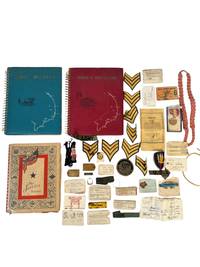
1942rif. 193041942. Coon Clarence; Coon Michael. Coons family Air Force service archive 1942-1944 and 1968-1969 documents two generations of American military experience across World War II and the Vietnam War offering direct evidence of shifting military culture wartime attitudes and generational identity within a single family. Clarence Coon's New York World War II service as an engineer gunner in the Fifteenth Air Force in Italy situates the archive within the Allied air campaign over Europe while his son Michael Coon's deployment to South Vietnam places the later material within the context of a deeply contested and culturally transformative conflict. Clarence's letters and scrapbook entries foreground a disciplined and duty-oriented perspective shaped by mid-century wartime expectations while Michael's photographic record presents a markedly different tone capturing leisure irreverence and camaraderie among soldiers during the Vietnam era. The archive preserves Clarence's written voice including lines such as "Another card to let you know that I don't do all my writing to women" and his commentary on the 1942 New York gubernatorial election "The radio just announced Bennet's Defeat. To bad. Well we will see what Dewey can do. I wish him luck" as well as his observations during stateside training "Well as far as I'm concerned they can give Tenn. back to the Indians. We are walking around in a sea of mud. Its all day rains every 5 min. I wouldn't live in the South for anything." Together these materials establish a continuous family narrative linking wartime service political awareness and personal expression across two major twentieth-century conflicts. Coons family Air Force archive. United States and Vietnam 1942-1944 and 1968-1969. Group consists of two photograph albums from Vietnam War service and one World War II scrapbook accompanied by a quantity of associated ephemera including patches medals registration cards business cards a ring and a dog tag. Archive contains approximately 123 photographs across the albums and scrapbook along with numerous postcards including 26 with manuscript correspondence on the verso and three pages of a letter incorporated into the scrapbook. Scrapbook also includes newspaper clippings documenting Clarence Coon's training and service progression including flight training in Westover Massachusetts; Nashville and Smyrna Tennessee; technical training in Gulfport Mississippi; and gunnery and pistol range distinction at Tyndall Field Florida. Vietnam-era albums depict Michael Coon and fellow servicemen in informal and candid settings including scenes of drinking recreational outings helicopter transport weapons handling and interactions with entertainment venues. The juxtaposition of World War II and Vietnam War materials within this archive provides a concentrated record of evolving American military life particularly the transition from the structured collective ethos associated with the Second World War to the more individualized and culturally expressive environment of Vietnam-era service. Clarence Coon's combat role aboard B-24 Liberator bombers during missions over Italy aligns the archive with the strategic bombing campaigns of the European theater while his writings document both military routine and domestic political awareness. In contrast Michael Coon's photographs capture the lived experience of American soldiers in Vietnam beyond formal operations including leisure dissenting humor and the visual language of 1960s youth culture within the military. Light wear from handling throughout with typical album and scrapbook aging and ephemera showing minor creasing; overall very good condition. unknown books
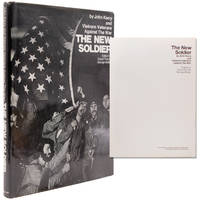
1971rif. 352118New York: Macmillan 1971. First Edition. Illus. 174pp. 4to. Black cloth. Fine in near fine clippwed dj. First Edition. Illus. 174pp. 4to. Macmillan unknown books
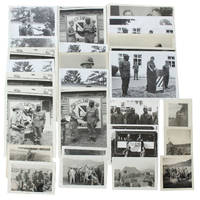
1950rif. 186871950. Barber Command Sergeant Major. U.S. Army 17th Field Artillery Battalion photographs circa 1960s to 1970s document integrated military training and the advancement of an African American senior noncommissioned officer within the post-desegregation Army. The images center on activities at a Noncommissioned Officer Academy and within field environments placing the archive within the period following the formal integration of the U.S. military and during the era of the Vietnam War. The repeated presence of Barber in both instructional and ceremonial contexts situates him within the upper ranks of enlisted leadership documenting the visibility and authority of Black noncommissioned officers at a time when opportunities for advancement had only recently expanded following mid-twentieth-century reforms. Archive of 30 black and white silver gelatin photographs. United States circa 1960s to 1970s. Photographs range in size from approximately 7 x 5 inches to 4 x 3 inches. Images depict integrated groups of soldiers within the 17th Field Artillery Battalion known as "The Persuaders" engaged in training and daily activities. Scenes include artillery instruction trench digging weapons handling camp life chapel gatherings and a graduation ceremony in which soldiers take an oath and pass a unit flag. Several photographs show Barber prominently including moments that appear to document formal oath-taking or advancement within the noncommissioned officer structure. The photographs appear to have been taken across multiple locations including a more rugged field setting and a separate academy environment. Following the desegregation of the U.S. armed forces in 1948 African American soldiers increasingly assumed leadership roles within enlisted ranks particularly during the Cold War and Vietnam War periods. The position of Command Sergeant Major represents one of the highest enlisted leadership roles in the Army responsible for discipline training and the welfare of soldiers. This archive provides visual evidence of integrated unit cohesion professional training systems and the presence of Black leadership within those structures. The combination of field exercises and formal ceremonies offers material for examining race hierarchy and institutional culture within the modern U.S. Army. Light wear consistent with handling; overall very good condition. unknown books
1973rif. 185751973. Cooper Howard L. Vietnam War photographs and promotion letter circa 1970s document African American noncommissioned officer service within an integrated U.S. Army and the formal evaluation structures governing advancement during and immediately after the conflict. The material centers on Sergeant Cooper's presence within a deployed unit in Vietnam alongside fellow soldiers and local civilians and extends into the postwar administrative process through a typed recommendation for promotion dated 1973. Together the photographs and letter situate the archive within the broader context of African American military participation during a period marked by both expanded combat roles and documented racial disparities in discipline assignment and promotion within the armed forces. Archive of 20 vernacular photographs and one typed letter. Vietnam and United States circa 1970s. Photographs include 15 color Kodak snapshots measuring approximately 5 x 3.5 inches or smaller depicting Sergeant Cooper and fellow soldiers primarily in uniform in Vietnam. Four black and white Agfa snapshots measuring approximately 5.5 x 3.5 inches show Cooper other servicemen and Vietnamese children. One Polaroid photograph includes two African American men standing beside Cooper with handwritten captions. Additional images depict base life and group interactions within the unit. Accompanying the photographs is a typed letter recommending Sergeant Howard L. Cooper for promotion signed by Transportation Supervisor Alice J. Griffin Fort Ord California dated 14 November 1973 one page measuring approximately 8 x 10 3/8 inches. African American soldiers served in large numbers during the Vietnam War with many attaining noncommissioned officer roles that required both leadership within units and navigation of institutional structures that did not always provide equitable advancement. The inclusion of a formal recommendation letter alongside the photographs connects personal service to bureaucratic recognition documenting how military authority evaluated performance in the postwar period. The combined visual and documentary record offers material for examining race leadership and military administration in the Vietnam era. Photographs show light wear; letter with pinholes discoloration and minor ink smear at upper edge; overall very good condition. unknown books
1970rif. 185581970. Vandergriff Sergeant. Vietnam War photographs 1970 to 1971 document integrated U.S. Army service during a period when African American troops were serving in substantial numbers in combat units and negotiating both military duty and racial dynamics within the ranks. The images record a tour of duty from basic training through the final days before return home placing the archive within the later phase of the Vietnam War when troop morale racial tension and antiwar sentiment were all intensifying within the U.S. military. The presence of a visibly multiracial unit with many African American soldiers situates the photographs within the post-desegregation military structure established after World War II offering direct visual evidence of daily life interpersonal relationships and combat readiness in an officially integrated force. Archive of 68 color Polaroid photographs. Vietnam 1970 to 1971. Images measure approximately 3.5 x 3.5 inches to 3.5 x 4.5 inches with approximately one quarter mounted to black board and the remainder loose. Several loose photographs include handwritten captions and soldiers' names on verso. The sequence follows Sergeant Vandergriff's service from training through deployment with scenes including soldiers smoking drinking and posing with standard-issue M16 rifles and M1911 sidearms. Additional images show helicopter interiors and aerial views a destroyed grounded helicopter tanks aircraft drill formations and encampments. Photographs also depict Vietnamese villages and local civilians including two children bathing in a river. Unit identification is not explicitly stated in the archive. Other photos depict aircraft drill marches tanks weaponry villages and locals including two Vietnamese children bathing in a river. It is not clear which unit these troops belong to. It is possible they are in the 101st Airborne which was prominent at both Birmingham and Evans. During the Vietnam War African American soldiers served in disproportionately high numbers in combat roles particularly in airborne and front-line units at a time when the U.S. military was confronting internal racial conflict alongside external war. This archive documents the lived experience of a multiracial unit operating within that structure showing informal social interaction alongside military activity and equipment. The combination of candid personal imagery and operational context provides material for examining race military culture and everyday life in a late-stage U.S. combat theater. Some photographs show minor staining and image degradation; overall very good condition. unknown books