1654 resultados
1789ref. 48038Puerto Deseado Argentina. ca. 1789. Two Extraordinary Native American Portraits from the Malaspina Expedition A superb pair of highly finished red chalk portraits of two Patagonians made at Puerto Deseado in southern Argentina during the Malaspina expedition by one of the expedition's artists. The Malaspina Expedition was Spain's single effort at a voyage of exploration and discovery comparable to the great English and French voyages of the late 18th and early 19th centuries. More specifically it was designed to gain geographical knowledge and underpin Spain's territorial claims to the Northwest coast of America. It also had ambitious plans to publish its findings in the tradition of the other great European voyages. The Malaspina voyage is famous for the quality of the scientific material collected not least the anthropological drawings of peoples drawn at their many ports of call accurate and lifelike depictions very much in the tradition of the artists who accompanied James Cook William Hodges and John Webber. The expedition circumnavigated the globe leaving Cadiz on July 30 1789 visiting the coast of Patagonia in November working on the west coast of the Americas in 1790 and 1791 and ultimately returned to Spain in 1794 after a five-year voyage. Although unsigned both portraits offered here have been firmly attributed to voyage artist José de Pozo Ximénez 1757-1821 who made a series of drawings in Patagonia including one sketch in which he and his fellow artist Pineda are depicted in the act of drawing some of the local people. Pozo Ximénez was a native of Seville hired as an expedition painter by the Spanish government in June 1789. At the time of his recruitment he was described as "an excellent subject and perspective painter having a very good education with a wealth of geometry and is very robust for the age of 32" quoted in Puig-Samper p.18. A specialist in perspective and portraits his ethnological work is considered his greatest contribution to the results of the voyage but although Malaspina admired his "accuracy and speed" Journal of the Voyage p.140 the commander became increasingly infuriated with what he saw as the artist's laziness and indifference and forced him to leave the expedition in Callao in May 1790. Although ordered back to Spain Pozo in fact never left Peru founding a school of painting in Lima. The bulk of his Malaspina voyage originals are in the Museo Naval Madrid where much of the original material from the expedition resides. The portraits depict a man and woman drawn during a well-recorded encounter between the Spanish and the Patagonians in December 1789. It can be established that the man is a chief called "Junchar"; and the young woman is apparently the young woman called "Jujana" or "Cátama" who is described in detail in Malaspina's journal as having captivated the Spanish officers. The expedition had reached Puerto Deseado in late 1789 and Malaspina personally describes their interaction with a local tribe of some forty people on three separate occasions pp.85-90. Pozo joined Malaspina on the second of these visits drawing these portraits and a larger sketch of the encounter between the Spanish officers and a large group of Patagonians a sketch which seems to have an each-way bet on whether they were in fact giants: Pozo's Patagonians are strapping but not absurdly tall Serrano plate 36. Indeed it is plausible that the two present portraits are of people who are also in that larger scene: Junchar may be the man with a cloak over one shoulder talking to one of the Spanish men while the young woman could conceivably be the person standing at the far right of the Patagonians with dark eyes and parted hair. What is clear is that both subjects were described in detail by Malaspina personally. Of Junchar he notes: "In general they were all including the women and children very large and solidly built. Their height was not in proportion to their build but they were tall: the cacique Junchar who was carefully measured by Don Antonio Pineda and found to be six Burgos feet and ten inches in height and almost twenty-three inches broad from shoulder to shoulder" p.87. No doubt Junchar was singled out by Pozo because his large stature spoke to the ancient misconception of Patagonians as giants a myth which had gripped the European imagination since the time of Magellan. In a much longer passage Malaspina also describes how they singled out one particular woman to have her portrait taken: a "Patagonian girl aged about fourteen later referred to as Jujana by Malaspina whose good looks great charm and exceptional loquacity had made us choose to portray her rather than the other women was drawn to our attention even more when the time came for them to go ashore" as she struggled to modestly use her poncho to carry away some biscuits and vegetables that had been given to her as a gift p.89. In the catalogue raisonné of the art of the Malaspina voyage Carmen Sotos Serrano located two preliminary gridded sketches of these portraits "Patagon" and "contorno de la Patagone" respectively see cat. 39 and 40. Pozo also did a full-length study of Junchar and two other studies of a second woman with child cat. 41 and 42. All of these sketches are in the Museo Naval in Madrid which collection also includes two later oil paintings of Junchar and the young woman now called "Cátama." The oils were acquired by the museum in 1932. The drawings presently offered were originally in an album or portfolio entitled "Spanish Drawings" which had been acquired by Elizabeth Lady Holland when travelling extensively in Spain between 1802 and 1805. The Whatman paper into which they have been window-mounted for the album is watermarked 1801 confirming this approximate date of acquisition and their having been mounted in an album. Many of the other drawings in the collection were topographical works by another Malaspina voyage artist Fernando Brambila. When the present drawings were sold in the large sale of drawings from Holland House in 1979 they were attributed to Brambila with the rather telling comment that "no comparable drawings by the artist are recorded." However a comparison with the works illustrated by Serrano and a reading of the journals make it clear that Pozo Ximénez is the artist. Because Malaspina quickly fell into official disfavor and with the disruptions of the Napoleonic Wars the extensive planned publications of the expeditions never came to be. Virtually all of the archives of the voyage are now to be found in the Museo Naval in Madrid. These drawings acquired only a few years after the return of the voyage by Lady Holland are thus among the very few original works of the voyage to ever appear in the market. An extraordinary opportunity to acquire two significant portraits of Native Americans from one of the greatest voyages of the Second Age of Exploration. Two red chalk drawings: the young woman on a sheet 228 x 190 mm. paper watermarked with a combined "P" and smaller "L"; the man "Junchar" on a sheet 228 x 195 mm. Both drawings window-mounted probably about 1801 into a larger sheet of Whatman paper with ink borders added. Fine. HOWGEGO I M26. Carmen Sotos Serrano Los Pintores de la Expedicion de Alejandro Malaspina Madrid 1982 cat. 39-42. Miguel Ãngel Puig-Samper "Illustrators of the New World: The Image in the Spanish Scientific Expeditions of the Enlightenment" in Culture and History Digital Journal Vol. 1 no. 2 December 2012 pp.1-28. Andrew David et al. eds. The Malaspina Expedition 1789-1794 Journal of the Voyage by Alejandro Malaspina Vol. 1 Cadiz to Panama London: The Hakluyt Society 2001. unknown
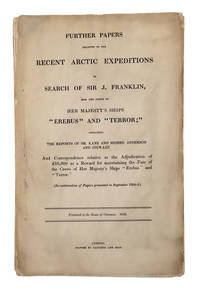
1856ref. 69186London. 1856. Parliamentary "Blue Book" on the Search for Franklin A rare Parliamentary paper relating to the lost Franklin expedition. This "blue book" a series of parliamentary reports named for their original blue paper wrappers contains a wealth of information about Franklin's expedition including detailed correspondence on the Second Grinnell Expedition with Kane's report and the Hudson's Bay Company's expedition down the Back River under Anderson and Stewart. Also includes Richard King's proposal to venture down the Back River to Montreal Island; the recovery and subsequent disposal of the Resolute; Collinson's report on Franklin relics; correspondence on the rewards for Franklin searches; and a list of American officers and men entitled to receive the Arctic Medal known today as the Polar Medal and given out by the British government to "all persons of every rank and class who have been engaged in the several Expeditions to the Arctic Regions whether of discovery or search between the years 1818 and 1855". Sir John Franklin's doomed 1845 expedition his fourth to the Arctic and third as commander set out in 1845 to search for the fabled Northwest Passage. In September 1846 the expedition's ships became trapped in the ice off of King William Island which would be their final resting place. The crew spent the next year and a half trapped there before attempting to walk south dying along the way in the arctic tundra hundreds of miles from the nearest European settlements. After three years without word the British Admiralty launched a massive search for the missing ships. Spurred by a large reward many expeditions from Britain and the United States set out on the hunt beginning in 1848 and continuing through the next decade. The British Parliament printed occasional reports of the various expeditions and related Arctic subjects during that time. These reports became known as the Arctic "blue books." One of the scarcer Franklin items rarely appearing on the market and with only a handful recorded in OCLC. Folio. Gathered signatures stitched. Soiling and edge wear to outer leaves minor scattered foxing else very good. ARCTIC BIBLIOGRAPHY 45249. TPL 3659. LANDE S910. unknown
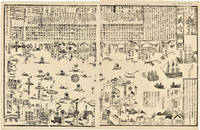
1855ref. 46844Tokyo ca. 1855. Japanese Print of Perry's Ships in Tokyo Harbor Large wood block print comprised of two sheets showing the disposition of the Japanese soldiers and ships in preparation for the arrival of Commodore Perry's American fleet seen sailing into Tokyo harbor at the right side of the image. The top third of the print is comprised of text in Japanese characters. Three large American ships dominate the right side of the print while several smaller boats dot the rest of the harbor. The whole is dotted with Japanese characters denoting various people and places around the harbor. Perry first arrived in Japan on July 8 1853 with a fleet of four ships flying his pennant on the steam frigate Susquehanna. This first visit lasted ten days and culminated on July 14 with Perry's presentation of a letter from the President of the United States to the Japanese commissioners. Perry then absented himself for seven months returning on February 11 1854 for a stay of over four months. He negotiated a treaty opening Japan to trade with the western world providing for a U.S. consul in Japan and protecting visiting ships and crews. Perry's visit to Japan remains one of the most important events in the diplomatic history between western and eastern nations. A handsome print showing the Japanese side of this important historic event. 24½ x 16 inches. Matted. Old fold lines some minor wear and soiling. Near fine. unknown
ref. A9781017803808Hardback. New. hardcover
ref. A9781017722925Hardback. New. hardcover
ref. 1376827301.Gpaperback. Good. Access codes and supplements are not guaranteed with used items. May be an ex-library book. paperback
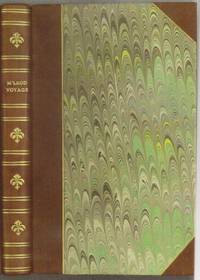
1818ref. E0061323 pages with a portrait frontispiece and five colored aquatints. Octavo 8 3/4" x 5 1/2" bound in attractive half leather with marbled boards and gilt lettering to spine. Hill 1168 Second and best edition The Alceste brought Lord Amherst to China to serve as ambassador and specifically to negotiate the China trade at the time a matter of dispute between China and Great Britain. M'Leod who was surgeon on the ship describes the voyage out the various calls in the East Indies including touching at Batavia surveying off Korea the visit to Okinawa another to Manila and the shipwreck off the coast of Sumatra and subsequent rescue from Malay pirates. A brief but interesting interview with Napoleon at St. Helena is also included in the narrative. This was one of the most popular travel books of its time portraying the Far East to a much wider audience than had been reached by earlier accounts. The idyllic descriptions of Lewchew undoubtedly appealed to the romantic sensibilities of the era. Indeed buoyed by its success M'Leod published another work recounting his time as a slaver A Voyage to Africa with some Account of the Manners and Customs of the Dahomian People. Condition: Attractive half rebind some foxing through out with no spotting to plates else a very good copy. John Murray hardcover
1787ref. E00402 volumes: 576xv pages; 499xv pages. Octavo 8 3/4" x 5 1/2" bound in 3/4 period leather. Translated from the first German edition 1781 which includes a chapter entitled: "Observations and additions to by Johann Gottlob Theaenus Schneider". Translated with additional notes and reviews by Jean Baptiste Lefebvre Villebrune. First Spanish edition published in 1772 Madrid. Sabin 36805 First French edition. Antonio de Ulloa 12 January 1716 – 3 July 1795 was a Spanish general explorer author astronomer colonial administrator and the first Spanish governor of Louisiana. He was born in Seville the son of an economist. Ulloa entered the navy in 1733. In 1735 he was appointed with fellow Spaniard Jorge Juan a member of the French Geodesic Mission a scientific expedition which the French Academy of Sciences was sending to Ecuador to measure a degree of meridian arc at the equator led by Pierre Bouguer. He remained there from 1736 to 1744 during which time the two Spaniards discovered the element platinum. In 1745 having finished their scientific labors Ulloa and Jorge Juan prepared to return to Spain agreeing to travel on different ships in order to minimize the danger of losing the important fruits of their labors. The ship upon which Ulloa was traveling was captured by the British and he was taken as a prisoner to England. In that country through his scientific attainments he gained the friendship of the men of science and was made a Fellow of the Royal Society of London. In a short time through the influence of the president of this society he was released and was able to return to Spain. He published an account of the people and the countries they have met 1748 which was translated into English as A Voyage to South America. He became prominent as a scientist and was appointed to serve on various important scientific commissions. He is to be credited with the establishment of the first museum of natural history the first metallurgical laboratory in Spain and the observatory of Cadiz. In 1758 he returned to South America as governor of Huancavelica in Peru and the general manager of the quicksilver mines there. He held this position until 1764. He arrived on 5 March 1766 in New Orleans to serve as the first Spanish governor of West Louisiana. The French colonists refused to recognize Spanish rule and de Ulloa was expelled from Louisiana by a Creole uprising during the Louisiana Rebellion of 1768. For the remainder of his life he served as a naval officer. In 1779 he became lieutenant-general of the naval forces. As a result of his scientific work in Peru he published Madrid 1784 Relación histórica del viaje á la América Meridional which contains a full accurate and clear description of the greater part of South America geographically and of its inhabitants and natural history. In collaboration with the Jorge Juan mentioned above he also wrote Noticias secretas de América giving valuable information regarding the early religious orders in Spanish America. Condition: Sever worming to spines exterior hinges cracked point chipped library stamps to title pages else a good copy of a scarce item. Chez Buisson hardcover
1747ref. BOOKS00585324548 pages with three folding engraved maps present southern part of South America; part of the Pacific Ocean and the track of the Centurion round the world. Octavo 8 1/4" x 5 1/2" bound in full leather with five raised spine bands with red label to spine in gilt lettering with decorative blind-stamped ruled edges. Compiled from papers and other materials of the Right Honourable George Lord Anson and published under his direction by Richard Walter M.A. Chaplain of his Majesty's Ship the Centurion in that expedition. Hill I pp 317-138. Third edition. "This is the official account of Anson's voyage. England at war with Spain in 1739 equipped eight ships under the command of George Anson to harass the Spaniards on the western coast of South America for the purpose of cutting off Spanish supplies of wealth from the Pacific area. Lord Anson who was a friend and patron of Benjamin Robins after returning from the voyage around the world in the Centurion appears to have entrusted to Robins for revision the account of the voyage which had been compiled from the journals by his chaplain Richard Walter. It is probable that Robins revised and edited the work wrote an introduction and added dissertations." Hill. Perhaps the most popular account of maritime adventure of the eighteenth century. Anson's account of harrying the Spanish of South America and the taking of the Manilla galleon with treasure with a contemporary value of $800000 and his circumnavigation has long enjoyed a distinguished place as a masterpiece in descriptive travel. Condition: Some small closed tears at the edges of the maps. Rebound in tooled leather with raised bands. Over all a very good to fine copy. John and Paul Knapton and Office of the Lord High Admiral hardcover
1998ref. 23860Adelaide: The Friends of the State Library of South Australia. Fine. 1998. Facsimile Edition. Hardcover. 1876154195 . Australiana Facsimile Editions No. 217. With introduction by Valmai Hankel. With 8 illustrations and 4 maps this is an unread as new copy. Limited to 600 copies of which 99 are numbered deluxe issue this is an unnumbered cloth bound edition. ; 225 x 145mm; xiiviii 354 pages . The Friends of the State Library of South Australia hardcover
2016ref. 26480London: Folio Society. Fine. 2016. First thus. Introduced by Pater Campbell. With many illustrations A fine copy in a fine slipcase. ; 230 x 160mm; xxviii 409 pages . Folio Society unknown
1929ref. 26494Edinburgh And London: William Blackwood and Sons. Very Good with no dust jacket. 1929. First Edition. Hardcover. Foredge and top edge of pages have minor spotting/foxing otherwise a very good copy. ; 190 x 130mm; vi 317 pages . William Blackwood and Sons hardcover
1996ref. 24580Perth: Corkwood Press. Fine. 1996. Facsimile of 1887 Edition. Hardcover. A Facsimile Limited Edition of 400 copies the first Seventy Five of which are Bound in Half Leather this being number 367 with 6 full page colour plates at rear and large foldout map to inside of rear cover a fine copy. ; 330 x 215mm; vi 43 6 pages . Corkwood Press hardcover
1980ref. 20050022Angus & Robertson Australia 1980. Reprint. Paperback. Good. Paperback. 239 pages. PUBLISHING DETAILS: Angus & Robertson Australia 1980. Reprint. CONDITION: This book is in good condition. More specifically: Covers have light creasing. Corners of covers are moderately bumped. Spine has minimal reading creases and slight fading. . Pages are reasonably tanned. Quantity Available: 1. Category: Exploration; ISBN: 0207140820. ISBN/EAN: 9780207140822. Inventory No: 20050022. 9780207140822 Angus & Robertson paperback
2012ref. 18050120Atlantic Books London 2012. First Edition. Hardcover. Fine/Fine. Hardcover. 548 pages. PUBLISHING DETAILS: Atlantic Books London 2012. First Edition. This is the first UK edition. CONDITION: The book itself is in fine condition and comes in fine dust jacket. More specifically: Boards have no wear rubbing or soiling. Dust jacket is in excellent condtion. Dust jacket is unclipped. Dust jacket is protected in clear plastic sleeve. Pages are clean and unmarked and in excellent condition. ABOUT THIS BOOK: In 1498 a young captain sailed from Portugal circumnavigated Africa crossed the Indian Ocean and discovered the sea route to the Indies opening up access to the fabled wealth of the East. It was the longest voyage known to history; the ships were pushed to their limits their crews were racked by storms and devastated by disease. However the greatest enemy was neither nature nor the fear of venturing into unknown worlds. With blood-red Crusader crosses emblazoned on their sails the explorers arrived in the heart of the Muslim East at a time when the old hostilities between Christianity and Islam had intensified. In two voyages that spanned six years Vasco da Gama would fight a running sea battle that would ultimately change the fate of three continents. The Last Crusade is an epic tale of spies intrigue and treachery; of bravado brinkmanship and confused - often comical collisions - between cultures encountering one another for the first time. With the world once again tipping back East The Last Crusade offers a key to understanding age-old religious and cultural rivalries resurgent today. Quantity Available: 1. Category: Exploration; History. ISBN/EAN: 9781848870178. Inventory No: 18050120. 9781848870178 Atlantic Books hardcover
1927ref. 15213London: John Murray. Very Good in Very Good dust jacket. 1927. Cheap Edition. Hardcover. With biographical introduction by J. M. Barrie and a preface by Sir Clements R. Markham K. C. B. F. R. S. pagination - xxviii 522 last blank 2 pages of publishers adverts illustrated with photographs by Herbert Ponting endpaper maps original blue cloth with printed image of ski-ing party spine lightly faded with a facsimile dust jacket. A very good copy. ; 205 x 135mm . John Murray hardcover
1869ref. 14451London & Glascow: William Collins Sons & Company. 1869. Hardcover. With two hundred illustrations after drawings by Gustave Dore Berard Lancelot Jules Noel and other eminent artists and six finely engraved maps full coloured title page reads the same for both volumes. Volume 1 first series - xii 820 pages six finely engraved maps full coloured and four others folding panorama of Jerusalem approx 200 other illustrations some full page Volume 2 second series - xii 810 pages six finely engraved maps full coloured and two others approx 200 other illustrations some full page bound in half leather as a matching 2 Volume set front hinge on Vol. 1 has small split at top new endpapers overall a very good set Heavy books may require extra postage cost. . William Collins, Sons & Company hardcover
ref. a26142Cambridge 1935. first edition. Cambridge. Volume 1 General Ethnography. Hardcover. 4to. 421pp. 11 full page photo plates on glossy stock brown buckram cloth. FINE. clean bright; no owner marks no DJ. no ownership marks. Volume 1 only. Pictures available on request. . hardcover
1896ref. 151586Boston: Little Brown and Company. Good. 1896. Leatherbound. The front plate is detached but is still present; Leatherbound with marble plates; 381 pages . Little, Brown, and Company hardcover
1907ref. 86512St Louis Mo: Privately Printed. Very Good. 1907. First Edition. Leather. Limited Edition #211/487 Copies. Inscribed By Publisher; Illustrated with facsimile pages of Hamilton's 1744 journey narrative and with scenes from his travels. PROFESSIONALLY REBOUND IN GORGEOUS GENUINE LEATHER WITH RAISED BANDS ON SPINE STRIP AND GILT LETTERING. ALSO HAS NEW LOVELY MARBLED BOARDS AND NEW END PAPERS.; 263 pages . Privately Printed hardcover
1716ref. BB0841Paris: chez Jean-Geoffroy Nyon quay de Conti au coin de la rue Guenegaud au Nom de Jesus Etienne Ganeau rue Saint Jacques aux Armes de Dombes vis-à-vis la Fontaine de S. Severin Jacque Quillau imprimeur-juré-libraire rue Galande aux Armes de l'Université 1716. First Edition. A defective first edition missing one map and one plate of this classic in the literature of Pacific voyages of exploration. 4to: xiv2982pp with 35 of 37 maps plans and plates 18 of which are folding; ornamental engraved vignettes and woodcut musical notation in the text never bound in were the map of Détroit de le Maire no. v and the plate of Indiens en habits simples no. ix; plate xvi was bound in twice. Contemporary calf spine richly gilt in six compartments brown leather lettering piece gilt "Caissotti" in gilt script on upper board all edges stained red marbled end papers red silk page marker. An exceptional wide-margined copy text maps and plates fresh and clean marred only by a stain in the gutter of first three leaves. Provenance: copper-engraved bookplate "Il Cittadino / Carlo Giac. Caissotti." Sabin 25924. Borba de Moraes 328. Hill p. 115. Leclerc 1736. Palau 94964. Gibson's Library p. 128. Item #BB0841. Frézier set sail in 1712 with a French commission to assess the strength of Spanish settlements on the Pacific coast and to revise existing charts. According to Hill he "brought back information of considerable geographical and scientific value" to later navigators and his account is today appreciated for its keen observations of the customs commerce and natural historyincluding the cotton and strawberry plantsof Chile Peru and Tierra del Fuego. It's interesting to note that Frezier's surname was itself derived from fraise the French for strawberry. The chapters on Indian and Creole life include descriptions of costume and architecture as well as musical instruments. The folding plans of cities visited are often enhanced by panoramic views as in the case of Callao Concepción Valparaíso La Serena Salvador de Bahía and Angra Azores. Amongst the most important plates are the general map of the expedition the Strait of Lemaire Valdivia Bahía de an Vicente Santiago de Chile Lima and Bahía de Todos los Santos. An immediate success the work was soon translated into English and German and republished several times in the eighteenth century. N. B. With few exceptions always identified we only stock books in exceptional condition with dust jackets carefully preserved in archival removable mylar sleeves. All orders are packaged with care and posted promptly. Satisfaction guaranteed. Fine Editions Ltd is a member of the Independent Online Booksellers Association and we subscribe to its codes of ethics. chez Jean-Geoffroy Nyon, quay de Conti, au coin de la rue Guenegaud, au Nom de Jesus, Etienne Ganeau, rue Saint Jacques, aux Arm unknown
1777ref. BB0796London: printed for T. Durham at Charing-Cross; and G. Kearsly at No. 46 in Fleet-Street 1777. First Edition. Quarter-bound Leather. Near Fine. First Edition in English of this novelized first-person account of a young English lord's debauched sojournprostitutes gambling horse-racing drinkin the French capitol. Crown 8vo 206 x 121mm: 2x222pp. Contemporary leather spine in six compartments between raised bands recent red morocco lettering piece gilt marbled sides and end papers. Joints skillfully reinforced marbled sides heavily rubbed top of title page including word 'The' supplied in excellent facsimile. Internally a Fine bright copy pages fresh and free of foxing browning and stains. ESTC Citation No. N31079 distinct from ESTC T131522 which Durham and Kearsly brought out the same year in duodecimo and which does not have the following note below the date on the title page present in our copy: "This work may be had of the above booksellers in French printed from the Paris edition which was suppressed in that country.". Translated by the author from his La quinzaine angloise à Paris first published the previous year. Rutledge was the grandson of an Irish Jacobite who settled in France and son of Walter Rutledge a banker and ship owner at Dunkirk who assisted the Pretender in his expedition of 1715 and in consequence was named a baronet. "This sketch which depicts the rapidity with which a plunger may be reduced to destitution by the harpies of Paris and purports to be a posthumous work by Sterne to whose works it bears no sort of resemblance . . . The writer states that attempts had been made to suppress the work in Paris. A species of sequel entitled Le Second Voyage de milord appeared in 1779." DNB N. B. With few exceptions always identified we only stock books in exceptional condition carefully preserved in archival removable mylar sleeves. All orders are packaged with care and posted promptly. Satisfaction guaranteed. Fine Editions Ltd is a member of the Independent Online Booksellers Association and we subscribe to its codes of ethics. printed for T. Durham, at Charing-Cross; and G. Kearsly, at No. 46, in Fleet-Street unknown
1783ref. BB0692In Venezia Venice: Nella stamperia Gatti a spese di Leonardo e Giammaria Fratelli Bassaglia 1783. Original Wraps. Fine. Second Venice Edition of Antonio Pillori's translation of Robertson's standard work on the discovery of America and the conquest of Mexico and Peru. Demy 8vo 202 x 136mm: xxiv240pp with frontispiece portrait of Columbus and large folding map of Gulf of Mexico showing Florida Cuba Jamaica and farther Caribbean islands; 25-328pp with frontispiece portrait of Bartolomé de las Casas and folding map of South America; 23-359 p. 181 misnumbered "281"; p. 304 "204"1pp with frontispiece portrait of Cortés and folding map of Mexico; 42951pp with frontispiece portrait of Pizarro and large folding map of Middle America. Original paper-case bindings with yapped edges manuscript titles and volume numbers to spines text block sewn on tawed tongs vol. iv with modern replacements. Worming to upper cover portrait title page and map margins of vol. iv now expertly restored by a paper conservationist. A remarkably fresh wide-margined set in original paper-case bindings complete in four volumes eight books as issued with all four folding maps colored in outline by a contemporary hand as the John Carter Brown Library copy. Borba de Moraes p. 740-41 first edition. Sabin 71997 noting the Venice editions of 1778 and 1802 only. Originally published in two volumes in 1777 by Strahan and Cadell in London and Balfour in Edinburgh "to a very positive reception" ODNB; first Venice edition published in 1778. "Its success" according to the ODNB "was even more marked on the continent where it was considered Robertson's masterpiece . . . With its dramatic sweep of narrative combined with a provocative confrontation of two very different stages of civilization Spanish and Native American and a prose that was more flexible and evocative than that of his earlier books the History of America is often regarded as Robertson's most interesting original and even Romantic work. However it also shows the Eurocentric limits of his stadial thinking because it presents an unsympathetic account of Native Americans and glosses over Spanish atrocities." Borba de Moraes credits Roberston with writing the "first history of the discovery and Spanish conquest of America based on ample bibliographical information and documents in the Simancas archives. . . . The bibliography at the end of the second volume is remarkable for the time." Franklin D. Roosevelt owned the first Venice edition. N. B. With few exceptions always identified we only stock books in exceptional condition carefully preserved in archival removable mylar sleeves. All orders are packaged with care and posted promptly. Satisfaction guaranteed. Fine Editions Ltd is a member of the Independent Online Booksellers Association and we subscribe to its codes of ethics. Nella stamperia Gatti a spese di Leonardo e Giammaria Fratelli Bassaglia unknown
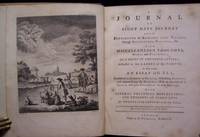
1756ref. BB0568London: Printed by H. Woodfall 1756. Quarter-bound Leather. Near Fine. First Edition "printed for presentation only and not sold." DNB. The more common second edition published in octavo appeared the following year. 4to: 62015203-3611pp with engraved frontispiece and engraved plate opposite the divisional title to the Essay on Tea both by Thomas Major after Samuel Wale. Modern quarter-calf over plain paper-covered boards flat spine in six compartments between decorative gilt bands red morocco lettering piece gilt; all edges stained red end papers renewed. Title page and preliminaries lightly foxed but contents otherwise clean and bright the binding tight and firm. A splendid wide-margined copy. ESTC Citation No. T127188. Gibson's Library p. 144. Goldsmiths'-Kress 9083. Cox I p. 19. Hanway was both a widely traveled merchant with connections to the Russia Company and a philanthropist whose causes included foundlings prostitutes and the climbing apprentices of chimney sweeps. His mother's death in 1755 prompted him to return to Portsmouth where she was buried that sojourn served as inspiration for this his second book to which he appended An Essay on Tea. Hanway describes many of the places he visited including Salisbury with its great cathedral and Stonehenge with digressions on tombstones sacred music and oratorios divine poetry temperance lapdogs false grief the ruling passion of women and much else. His Essay on Tea indicts the beverage for causing everything from insomnia weak nerves and scurvy to bad teeth and proposes 'Herbs of our own growth in lieu of tea.' Oliver Goldsmith Samuel Johnson and other ardent tea-drinkers criticized these eccentric views in The Idler and other publications. N. B. With few exceptions always identified we only stock books in exceptional condition. All orders are packaged with care and posted promptly. Satisfaction guaranteed. Fine Editions Ltd is a member of the Independent Online Booksellers Association and we subscribe to its codes of ethics. Printed by H. Woodfall unknown
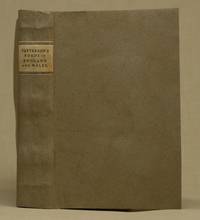
1794ref. BB0447London: printed for T. N. Longman Pater-Noster-Row from 1771 1794. Early Reprint. Stiff Wraps. Fine. 8vo: xxxvi380 numbered columns381-394pp with double-page copper-engraved map as frontispiece; 4216pp. ESTC Citation No. T93564 and T93553. Finely bound to style by Fitterer in stiff beige wraps printed paper spine label. Binding and text block clean bright and unmarked save for offsetting from engraved map. A superlative copy. Fordham Road-Books pp. 27 and 29. Roscoe John Newbery A399/6. Not in Hodson. The tenth edition: with the addition of near ninety pages including considerable improvements in the direct roads many new cross roads and a great number of noblemens and gentlemens seats. Tenth Edition of the first work 1794; originally published 1771 "With the Addition of near Ninety Pages including considerable Improvements in the direct Roads many new Cross Roads and a great Number of Noblemens and Gentlemens Seats"; Sixth Edition 1792 improved and corrected of the second work with separate title page. Although Paterson contributed no significant innovations to the compilation of road books relying on the advances of Norden Ogilby and others he "made improvements in style and presentation and added factual detailso much so that his name was for many years an indicator of reliability in road books and was attached to them long after he had stopped compiling them." ODNB N. B. With few exceptions always identified we only stock books in exceptional condition. All orders are packaged with care and posted promptly. Satisfaction guaranteed. printed for T. N. Longman, Pater-Noster-Row [from 1771] unknown