Paul-émile VictorLivre Rare Book

1958ref. 100082041Hachette 1958 in8. 1958. Cartonné.
1970VG (original blue cloth, minimal wear, no dj) Octavo 270pp Illustrated. Maps at endpapers
1932331p., illus. The Carnegie, the world's only sea-going non-magnetic observatory, was destroyed in a 1929 explosion in Samoa. Hardcover Good condition
1911ref. M147391911 P, P Lafitte , 1911 , in4° reliure bleue éditeur , 341 pp , 1 carte dépliante. Une pièce de titre amateur sur le dos. Langue: Français
1911ref. hp292Pierre Lafitte et Cie Cartonné 1911 In-4 (20,5 x 25,8 cm), cartonné toilé, 341 pages, photographies en noir et blanc ; dos insolé, épidermures en tête et traces blanche en queue du quatrième plat, quelques traces et bord insolé au premier plat, par ailleurs intérieur bien conservé, assez bon état général. Livraison a domicile (La Poste) ou en Mondial Relay sur simple demande.
1911ref. GIT00157Paris Pierre lafitte et Cie 1911. Grand in-8 carré broché couverture rempliée 341pp. Orné d'un portrait de l'auteur en frontispice, 110 photographies réunies sur 32 planches certaines en 2 couleurs, 1 carte en couleur dépliante. Exp sur papier vergé. Rousseurs par endroits, dos de la couverture usé.
ref. 43217Paris Pierre Laffite & Cie 1911 in 4 (26,5x20,5) 1 volume reliure demi chagrin rouge à coins, dos à nerfs, pièce de titre de cuir vert, couverture conservée, 341 pages [1}. Orné d'un portrait de l'auteur en frontispice, 110 photographies réunies sur 32 planches certaines en 2 couleurs, 1 carte en couleur dépliante in fine. Papier vergé. Introduction de Théodore Roosevelt et une préface de G.-H. Grosvenor. Edition originale. Très bel exemplaire, bien relié, et exempt de rousseurs ( Photographies sur demande / We can send pictures of this book on simple request )
1907411 pages. Index. Colour frontisplate. Black and white photographic plates. Usual library markings. Above-average wear. Library binding intact. Maps not included. Offered as is. A worthy reading copy. Book
ref. 2111New York G. P. Putnam's Sons 1942. First Edition. New York G P Putnam's Sons 1942 First Edition Signed by the author on a front free endpaper -- Short 8vo 281pp cloth map endpapers -- Binding a hint cocked -- Very good condition in a very good dust jacket not price clipped Ne382 Quantity Available: 1 Category: Exploration; Pictures of this item not already displayed here available upon request Inventory No: 002111. New York, G. P. Putnam's Sons, (1942). [First Edition] hardcover
ref. 366Grasset, 1957. In-12. Broché. Couverture illustrée. 284 pages non coupées. Illustrations hors texte de J. A Carlotti. Carte en frontispice. Bon état.
1952ref. 100070388Flammarion 1952 in8. 1952. Broché.
ref. 054566Paris Librairie Arthème Fayard 1962 in 8 (19,5x14) 1 volume broché, couverture illustrée (petite trace d'adhésif sur le bas de la couverture), 275 pages [2]. Premier tirage. Bon exemplaire ( Photographies sur demande / We can send pictures of this book on simple request )
ref. M10428P, Lanore , sd , in8br , 118p.
1911ref. 100088070Witherby & Co 1911 in8. 1911. Cartonné.
1933ref. 976071933 A Lyon, Librairie A. Badiou-Amant. 1933. 1 vol in-8 broché. Avec iun envoi de l'auteur à l'abbé Gelin et une signature datée de l'abbé Gelin en page de garde. 100 pages
1918ref. GITg653Paris Félix Alcan 1918. In-8 broché IV 238pp. Orné de 12 planches réunissant 18 illustrations, 1 carte hors texte.
1954ref. 271488Denoël 1954 270 pages in8. 1954. Broché. 270 pages.
1981ref. 21094New York, Pantheon Books, 1981. Four Expeditions to the Arctic, the Congo, The Gobi, and Siberia 183 S. (24x31,5 cm quer) Großformat, Leinen mit Umschlag / gebundene Ausgabe
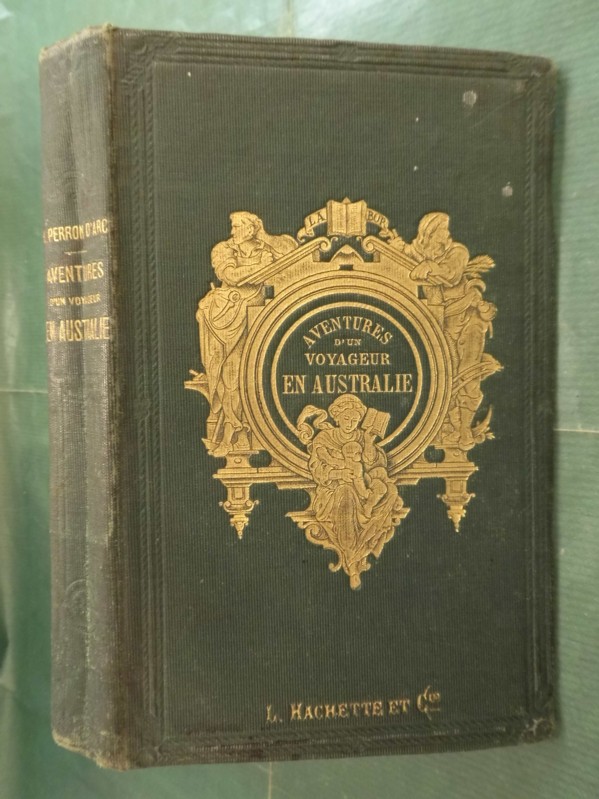
1869ref. 149309geParis, Librairie de L. Hachette et Cie, 1869. Kaliko, mit Rahmen und goldfarbiger Deckelprägung, kl. DinA 5, kleineres Format, 351 Seiten, KEINE Abbildungen, Einband mit stärkeren Gebrauchsspuren, STARK fleckig, beschabt, berieben und bestoßen, Fleck auf der Einbandinnenseite, Schnitt und Seiten papierbedingt stark gebräunt und SEHR STARK stockfleckig, Falz zwischen Vorsatzblatt und Titelblatt fast durchgehend eingerissen, Buchblock beginnt sich vom Einband zu lösen, trotz der deutlichen Gebrauchs- und/oder Altersspuren ausreichender Zustand / used [4 Warenabbildungen]
1854ref. 191943Yokohama: c. 1854. A broadside newsletter kawaraban reporting on the return of the famous castaway Nakahama Manjiro and Perry's second visit to Japan. This example was produced in the year the Japanese isolation policy was ended and talk of foreigners especially Commodore Perry and his "black ships" was rife. Kawaraban were woodblock digests of local news events and scandals cheaply printed and distributed throughout the Edo period. On the left of this example is a short report about Nakahama Manjiro the castaway who lived in America for a decade before returning to Japan in 1851. It is accompanied by an illustration of an American sailor called "Itsuhii" carrying a gun and a compass and a sentence about how he supposedly travelled from Kanagawa to Daisha Gawara before returning to his ship. On the right is an illustration of an item sent floating towards Uraga Bay by Perry's ships with the caption "we do not know what it is". The centre of the page is taken up by an English-Japanese "dictionary" titled Amerika kotoba wakai no utsushi "American Words Translated" which purports to give the translations of common words such as "father" "fish" and "hair". However the translations are not correct: "oranhee" "kyonpo" and "romo" respectively. These words may have been misheard by the author or they may have been a satirical attempt to mock the sound of English. The historian of the English language Sogo Masaaki suggested that perhaps there is some relation to words in Malay. Single sheet 210 x 284 mm woodblock on one side only. Illustrations in text; text in Japanese. Mounted framed with Hawaiian koa wood and glazed 340 x 440 mm. Print bright two small holes on right edge light creasing and dust-soiling; small crack in frame in lower right corner: a very good copy unexamined out of frame. unknown
1856ref. 191708Japan: c. 1856. The first Western ships in a newly opened Japan An untraced manuscript record of the Western ships that arrived in Shimoda after Perry signed the Convention of Kanagawa. They include those from his fleet such as the Mississippi and the Macedonian as well as the Russian flagship Diana and many smaller trading vessels about which little information survives. Compiled anonymously the ledger begins on 25 February 1854 and ends on 26 February 1856. Over this period the scribe recorded the names captains armaments and crew compliments of each vessel that arrived in port. While much of this information is available elsewhere for larger American ships such as the Vandalia there are fewer resources that give details on smaller trading ships such as the Lady Pierce Caroline E. Foote Vincennes and Hancock. For example this ledger notes that the Caroline E. Foote docked 21 January to 9 February 1855 arrived with 21 people including 3 women and 2 children a boy aged 9 and a girl aged 5 before ferrying Russian sailors who had been staying in Toda village back to Kamchatka. The scribe also notes the arrival of Russian ships including the flagship Diana. Her captain Yevfimy Putyatin was sent to negotiate the Treaty of Shimoda. In December 1854 the fleet was hit by a tsunami causing the Diana to spin round her mooring 42 times. Three French ships are recorded in the manuscript transcribed as the Napoleon III Havre Constantine and Colbert. We have been unable to trace information about these vessels in other sources. Large octavo 245 x 171 mm ff. 15. Manuscript in red and black on recto and verso of leaves; text in classical Japanese. Original manuscript title leaf paper string koyori tied through one hole. Together with manuscript draft drawing of a Dutch officer 327 x 243 mm stamp of the artist "Toho" in red. Creased as expected a few worm holes internally some repaired otherwise bright: a very good example. unknown
ref. 11288Japan: ca. 1854-55. An impressively assembled scroll that portrays the second American expedition to Japan February-March 1854 led by Commodore Perry; much of it is focused on the American vessels that anchored menacingly off the coast. Seven of the nine ships in the American fleet are carefully portrayed with notes on the estimated numbers of cannons and crewmembers. Steam-powered ships with black smoke gushing from the stacks and rows of powerful cannons shocked the Japanese most of whom had never seen such a demonstration of advanced military technology. The observations in this scroll must have been crucial to inform the decision-making of Japanese officials. "Black Ship Scrolls" conveying eyewitness reports were disseminated among the Japanese elite and kept top secret. Our scroll was presumably created for a high-ranking Japanese official since any information on the American interlopers was carefully controlled by the local authorities to maintain public order in the face of an anticipated foreign invasion. Compared to other depictions of the foreigners which frequently showed them as caricatures hairy oversized red-faced and blue-eyed the more dignified portraits in our scroll demonstrate the increasing familiarity between the Japanese and American contingents. In the years following Japan's opening to the West Japanese artisans produced countless scrolls commemorating the American expeditions catering to the tourist trade and as gifts to visiting dignitaries. Mass-produced with foreigners' preferences in mind these scrolls took liberties with the events that transpired straying far from the earliest accounts and sketches. They pale in comparison with the elaborate and scrupulous illustrations found in this early scroll. Though the later mass-produced scrolls are easily found on the market examples like ours presumably created for a Japanese official or nobleman remain greatly treasured for their revealing depictions. We have ordered the scroll into 15 individual scenes most of which have a contemporary manuscript caption translated below: I. Three sailors in the American marching band two of whom are uniformed drummer boys. The band led the American march to Yokohama where negotiations between the two nations were held in a newly constructed reception hall. The Japanese manuscript caption reads: "Illustration of musicians." II. Two sailors with swords sheathed are holding their muskets with bayonets fixed. A fine indigo ink has been employed to depict the uniform on the left. Caption: "Rank: Sergeant/Soldier." III. Commodore Perry on the right faces a sailor who may be the conductor of the American expedition's marching band. Perry is depicted rather sympathetically compared to exaggerated and even outlandish portraits that depict him as quite large hairy and red-faced. The artist has once more used a deep indigo to capture the color of the uniforms. Caption: "Ambassador Perry/Conductor Commandant." IV. A larger portrait of a lone sailor probably an officer clutching his sheathed sword and clenching his fist. Caption: "Foreigner Captain landed near Kanagawa." V. An elaborate and realistic portrait of Perry capturing even the individual hairs on his head and the wrinkles on his face. Caption: "American Envoy Perry." VI. A portrait of Perry's chief-of-staff Henry A. Adams done by the same artist as Perry's portrait. Caption: "American Vice Envoy Adams." VII. upper portion A very long horizontal painting of the American column marching to the Yokohama reception hall for negotiations regarding the opening of Japan to American trade. There are more than 100 armed Americans soldiers following the marching band. The top of this sheet has been slightly cropped cutting off part of the American flag in the middle. Caption: "Illustration of American landing column." VIII. lower right A sizable rendering of the USS Vandalia a sloop-of-war that joined the Perry Expedition in late 1853. Caption: "Name of ship: Vandalia 20 cannons 200 crewmembers." Minuscule mended wormholes to the image. IX. lower left The USS Saratoga another sloop-of-war. Caption: "Name of ship: Saratoga 20 cannons 200 crewmembers." Expertly mended wormholes touching the image hardly visible. X. upper portion A panoramic view with a fleet of 23 American rowboats headed to shore. Mending to the top of the scroll. XI. right lower portion The USS Mississippi a steam frigate that was part of the first expedition. Caption: "Name of ship: Mississippi 8 cannons 240 crewmembers." XII. left lower portion The USS Southampton a storeship. Caption: "Name of ship: Southampton 6 cannons 50 crewmembers." Expert mending of wormholes affecting the image. XIII. USS Supply a supply ship. Caption: "Name of ship: Supply 6 cannons 40 crewmembers." Wormholes repaired and with some foxing. XIV. USS Lexington a supply ship. Caption: "Name of ship: Lexington 26 cannons 50 crewmembers." Repaired wormholes and small sections of the white wash used for the sails have come off. XV. USS Susquehanna a steam frigate. Caption: "Name of ship: Susquehanna 6 cannons 240 crewmembers." Careful mending of wormholes to head and tail of scroll. In very good condition; there are a number of wormholes all expertly restored to the point that most are invisible to the naked eye and some browning and speckles to blank segments of the scroll. Two unidentified ownership seals next to the illustration of the USS Vandalia no. VIII. Housed in a custom-made 20th-century wooden box. ⧠Renata V. Shaw "Japanese Picture Scrolls of the First Americans in Japan" in The Quarterly Journal of the Library of Congress Vol. 25 No. 2 April 1968 pp. 134-53. For helpful recapitulations of accounts from the Japanese and Americans William McOmie The Opening of Japan 1853-1855: A Comparative Study of the American British Dutch and Russian Naval Expeditions to Compel the Tokugawa Shogunate to Conclude Treaties and Open Ports to Their Ships 2006. unknown
ref. 11288Japan: ca. 1854-55. An impressively assembled scroll that portrays the second American expedition to Japan February-March 1854 led by Commodore Perry; much of it is focused on the American vessels that anchored menacingly off the coast. Seven of the nine ships in the American fleet are carefully portrayed with notes on the estimated numbers of cannons and crewmembers. Steam-powered ships with black smoke gushing from the stacks and rows of powerful cannons shocked the Japanese most of whom had never seen such a demonstration of advanced military technology. The observations in this scroll must have been crucial to inform the decision-making of Japanese officials. "Black Ship Scrolls" conveying eyewitness reports were disseminated among the Japanese elite and kept top secret. Our scroll was presumably created for a high-ranking Japanese official since any information on the American interlopers was carefully controlled by the local authorities to maintain public order in the face of an anticipated foreign invasion. Compared to other depictions of the foreigners which frequently showed them as caricatures hairy oversized red-faced and blue-eyed the more dignified portraits in our scroll demonstrate the increasing familiarity between the Japanese and American contingents. In the years following Japan's opening to the West Japanese artisans produced countless scrolls commemorating the American expeditions catering to the tourist trade and as gifts to visiting dignitaries. Mass-produced with foreigners' preferences in mind these scrolls took liberties with the events that transpired straying far from the earliest accounts and sketches. They pale in comparison with the elaborate and scrupulous illustrations found in this early scroll. Though the later mass-produced scrolls are easily found on the market examples like ours presumably created for a Japanese official or nobleman remain greatly treasured for their revealing depictions. We have ordered the scroll into 15 individual scenes most of which have a contemporary manuscript caption translated below: I. Three sailors in the American marching band two of whom are uniformed drummer boys. The band led the American march to Yokohama where negotiations between the two nations were held in a newly constructed reception hall. The Japanese manuscript caption reads: "Illustration of musicians." II. Two sailors with swords sheathed are holding their muskets with bayonets fixed. A fine indigo ink has been employed to depict the uniform on the left. Caption: "Rank: Sergeant/Soldier." III. Commodore Perry on the right faces a sailor who may be the conductor of the American expedition's marching band. Perry is depicted rather sympathetically compared to exaggerated and even outlandish portraits that depict him as quite large hairy and red-faced. The artist has once more used a deep indigo to capture the color of the uniforms. Caption: "Ambassador Perry/Conductor Commandant." IV. A larger portrait of a lone sailor probably an officer clutching his sheathed sword and clenching his fist. Caption: "Foreigner Captain landed near Kanagawa." V. An elaborate and realistic portrait of Perry capturing even the individual hairs on his head and the wrinkles on his face. Caption: "American Envoy Perry." VI. A portrait of Perry's chief-of-staff Henry A. Adams done by the same artist as Perry's portrait. Caption: "American Vice Envoy Adams." VII. upper portion A very long horizontal painting of the American column marching to the Yokohama reception hall for negotiations regarding the opening of Japan to American trade. There are more than 100 armed Americans soldiers following the marching band. The top of this sheet has been slightly cropped cutting off part of the American flag in the middle. Caption: "Illustration of American landing column." VIII. lower right A sizable rendering of the USS Vandalia a sloop-of-war that joined the Perry Expedition in late 1853. Caption: "Name of ship: Vandalia 20 cannons 200 crewmembers." Minuscule mended wormholes to the image. IX. lower left The USS Saratoga another sloop-of-war. Caption: "Name of ship: Saratoga 20 cannons 200 crewmembers." Expertly mended wormholes touching the image hardly visible. X. upper portion A panoramic view with a fleet of 23 American rowboats headed to shore. Mending to the top of the scroll. XI. right lower portion The USS Mississippi a steam frigate that was part of the first expedition. Caption: "Name of ship: Mississippi 8 cannons 240 crewmembers." XII. left lower portion The USS Southampton a storeship. Caption: "Name of ship: Southampton 6 cannons 50 crewmembers." Expert mending of wormholes affecting the image. XIII. USS Supply a supply ship. Caption: "Name of ship: Supply 6 cannons 40 crewmembers." Wormholes repaired and with some foxing. XIV. USS Lexington a supply ship. Caption: "Name of ship: Lexington 26 cannons 50 crewmembers." Repaired wormholes and small sections of the white wash used for the sails have come off. XV. USS Susquehanna a steam frigate. Caption: "Name of ship: Susquehanna 6 cannons 240 crewmembers." Careful mending of wormholes to head and tail of scroll. In very good condition; there are a number of wormholes all expertly restored to the point that most are invisible to the naked eye and some browning and speckles to blank segments of the scroll. Two unidentified ownership seals next to the illustration of the USS Vandalia no. VIII. Housed in a custom-made 20th-century wooden box. ⧠Renata V. Shaw "Japanese Picture Scrolls of the First Americans in Japan" in The Quarterly Journal of the Library of Congress Vol. 25 No. 2 April 1968 pp. 134-53. For helpful recapitulations of accounts from the Japanese and Americans William McOmie The Opening of Japan 1853-1855: A Comparative Study of the American British Dutch and Russian Naval Expeditions to Compel the Tokugawa Shogunate to Conclude Treaties and Open Ports to Their Ships 2006. unknown books
ref. 100082087Albin Michel / Robert Laffont / Arthaud in8. Sans date. Broché. 8 volume(s). 10 livres d'expéditions aventures: Fortune de Mer + A l'école de l'aventure le cap Horn en kayak + Moi Jacob 13 ans + globe-trotter + Seul + Planète Océan + La route des épaves + La terre va-t-elle cesser de tourner + Kaly photographe bassari
1978ref. 100118447Arthaud 1978 239 pages in8. 1978. Broché. 239 pages.