1.521 Ergebnisse
1996258 p. Hardcover Fine condition
1950Oversize. 235 p., illus. Hardcover Very good condition good
18072 vols. (479, 419p.) front. (fold. map) 6 fold. pl. (incl. plans) 22 cm. Hardcover Very good condition, in worn 3/4 leather
1938Mild dampstaining to boards. Rough spots to endpapers ; Beautiful fold-out map on japon paper at rear; B&W Photographs; 8vo 8" - 9" tall; 287 pages
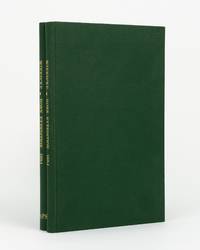
1995Best.-Nr. 146811Bundaberg: Corkwood Press 1995. Hardcover. Near fine. Bundaberg Corkwood Press 1995 facsimile edition/ 1897. Octavo two volumes iv 86 pages with a frontispiece plus 23 plates many reproduced from original negatives or prints and three of them are here reproduced the correct way round for the first time plus a folding chart 2 folding maps and a very large folding map 1210 × 1210 mm loosely housed in a matching cloth portfolio. Cloth; one corner tip slightly bumped; a near-fine set. Number 52 of only 300 sets the first 30 of which were bound in half leather. Winnecke was the leader of the expedition and in 'the natural order of things these journals and maps should have been published in connection with the scientific and other records of the Horn Expedition as both supplementary and complementary to them'; after a financial disagreement with W.A. Horn the organiser and backer of the venture this did not occur. The first edition appeared as South Australian Parliamentary Paper Number 19 of 1896; it was reissued in this octavo format the following year. McLaren 16969 the original edition - not noting the very large map. 2 items. Corkwood Press hardcover
1854Best.-Nr. 191943Yokohama: c. 1854. A broadside newsletter kawaraban reporting on the return of the famous castaway Nakahama Manjiro and Perry's second visit to Japan. This example was produced in the year the Japanese isolation policy was ended and talk of foreigners especially Commodore Perry and his "black ships" was rife. Kawaraban were woodblock digests of local news events and scandals cheaply printed and distributed throughout the Edo period. On the left of this example is a short report about Nakahama Manjiro the castaway who lived in America for a decade before returning to Japan in 1851. It is accompanied by an illustration of an American sailor called "Itsuhii" carrying a gun and a compass and a sentence about how he supposedly travelled from Kanagawa to Daisha Gawara before returning to his ship. On the right is an illustration of an item sent floating towards Uraga Bay by Perry's ships with the caption "we do not know what it is". The centre of the page is taken up by an English-Japanese "dictionary" titled Amerika kotoba wakai no utsushi "American Words Translated" which purports to give the translations of common words such as "father" "fish" and "hair". However the translations are not correct: "oranhee" "kyonpo" and "romo" respectively. These words may have been misheard by the author or they may have been a satirical attempt to mock the sound of English. The historian of the English language Sogo Masaaki suggested that perhaps there is some relation to words in Malay. Single sheet 210 x 284 mm woodblock on one side only. Illustrations in text; text in Japanese. Mounted framed with Hawaiian koa wood and glazed 340 x 440 mm. Print bright two small holes on right edge light creasing and dust-soiling; small crack in frame in lower right corner: a very good copy unexamined out of frame. unknown
Best.-Nr. BN610349Karluk. Die Geschichte einer verratenen Expedition McKinlay William L and Seib Günter Karluk. Die Geschichte einer verratenen Expedition McKinlay William L and Seib Günter Karluk. Die Geschichte einer verratenen Expedition McKinlay William L and Seib Günter unknown
1856Best.-Nr. 191708Japan: c. 1856. The first Western ships in a newly opened Japan An untraced manuscript record of the Western ships that arrived in Shimoda after Perry signed the Convention of Kanagawa. They include those from his fleet such as the Mississippi and the Macedonian as well as the Russian flagship Diana and many smaller trading vessels about which little information survives. Compiled anonymously the ledger begins on 25 February 1854 and ends on 26 February 1856. Over this period the scribe recorded the names captains armaments and crew compliments of each vessel that arrived in port. While much of this information is available elsewhere for larger American ships such as the Vandalia there are fewer resources that give details on smaller trading ships such as the Lady Pierce Caroline E. Foote Vincennes and Hancock. For example this ledger notes that the Caroline E. Foote docked 21 January to 9 February 1855 arrived with 21 people including 3 women and 2 children a boy aged 9 and a girl aged 5 before ferrying Russian sailors who had been staying in Toda village back to Kamchatka. The scribe also notes the arrival of Russian ships including the flagship Diana. Her captain Yevfimy Putyatin was sent to negotiate the Treaty of Shimoda. In December 1854 the fleet was hit by a tsunami causing the Diana to spin round her mooring 42 times. Three French ships are recorded in the manuscript transcribed as the Napoleon III Havre Constantine and Colbert. We have been unable to trace information about these vessels in other sources. Large octavo 245 x 171 mm ff. 15. Manuscript in red and black on recto and verso of leaves; text in classical Japanese. Original manuscript title leaf paper string koyori tied through one hole. Together with manuscript draft drawing of a Dutch officer 327 x 243 mm stamp of the artist "Toho" in red. Creased as expected a few worm holes internally some repaired otherwise bright: a very good example. unknown
2010Best.-Nr. 147489Adelaide: Friends of the State Library of South Australia in association with the Friends of Mawson at the South Australian Museum 2010. First Edition. Hardcover. Fine. Adelaide Friends of the State Library of South Australia in association with the Friends of Mawson at the South Australian Museum 2010 first edition. Folio xxvi pages with maps and illustrations plus a facsimile reproduction of the original typescript of the five issues in all 216 pages with a few illustrations plus a colour plate for each issue and an introductory title page new to this edition. Gilt-lettered and silver-decorated half calf and gilt-pictorial blue cloth; a fine copy. Number 76 of only 199 copies of the deluxe issue in a total edition of 999 copies: 450 copies in cloth 300 in card covers and 50 sets of unbound sheets. One copy only of each of the five issues of 'The Adelie Blizzard' was produced during Mawson's Australasian Antarctic Expedition 1911-1914 in April May June August and October 1913. The original - and hitherto unpublished - typescript is reproduced here complete with numerous contemporary editorial annotations. This edition has a preface by Emma McEwin great-granddaughter of Sir Douglas Mawson and an 11-page introduction by Elizabeth Leane and Mark Pharaoh. Friends of the State Library of South Australia in association with the Friends of Mawson at the South Australian Museum hardcover
1996Best.-Nr. 146363Chipping Norton: Surrey Beatty & Sons 1996. First Edition. Hardcover. Fine/Good. Chipping Norton Surrey Beatty & Sons 1996. Folio x 398 pages with numerous figures and illustrations from photographs some in colour plus a front endpaper map. Papered boards; a fine copy with the very good dustwrapper sunned about the spine and lightly rubbed. The book reviews the achievements and reassesses the significance of the expedition with contributions from 'prehistorians historians anthropologists biologists ecologists geologists Aboriginal people and social commentators'. Not indicated but limited to 1200 copies. Surrey Beatty & Sons hardcover
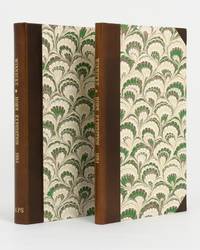
1995Best.-Nr. 146579Bundaberg: Corkwood Press 1995. Hardcover. Near fine. Bundaberg Corkwood Press 1995 deluxe facsimile edition/ 1897. Octavo two volumes iv 86 pages with a frontispiece plus 23 plates many reproduced from original negatives or prints and three of them are here reproduced the correct way round for the first time plus a folding chart 2 folding maps and a very large folding map 1210 × 1210 mm loosely housed in a matching portfolio. Half calf and marbled papered boards; spines lightly sunned; a near-fine set. Number 15 of only 30 sets of the deluxe issue from a total edition of 300 out of print soon after publication. Winnecke was the leader of the expedition and in 'the natural order of things these journals and maps should have been published in connection with the scientific and other records of the Horn Expedition as both supplementary and complementary to them'; after a financial disagreement with W.A. Horn the organiser and backer of the venture this did not occur. The first edition appeared as South Australian Parliamentary Paper Number 19 of 1896; it was reissued in this octavo format the following year. 2 items. Corkwood Press hardcover
1994Best.-Nr. 146592Bundaberg: Corkwood Press 1994. Hardcover. Very Good. Bundaberg Corkwood Press 1994 facsimile edition/ 1896. The facsimile was 'produced in conjunction with the Horn Expedition Commemorative Symposium held at Alice Springs to celebrate the centenary of the Horn expedition'; it was produced with financial support from the Conservation Commission of the Northern Territory. Quarto four volumes ii xviii 220 pages with illustrations and a map plus 11 pages of plates and a large folding map 650 × 615 mm; ii iv 432 pages with illustrations plus 28 pages of plates 1 folding 11 in colour and a corrigenda slip at page 1; vi 204 pages with illustrations plus 9 pages of plates 2 folding; and vi 200 pages with illustrations plus 20 pages of plates 6 folding 4 of them in colour. Half calf and marbled papered boards; spines lightly sunned; a few corners bumped; an excellent set. Number 15 of only 50 sets of the deluxe issue; not stated but we know the entire print run was limited to 500 sets. This copy is complete with the full complement of plates in Volume 4 ten of which are sometimes found excised from this edition 'at the request of Central Australian Aboriginal custodians as they illustrate things persons or events which according to their traditional customs may only be seen by initiated males' from the publisher's note present in these sets; it is our understanding that only sets sold at or through the Horn Expedition Commemorative Symposium held at Alice Springs in 1994 underwent this operation. The purpose of the original scientific expedition sponsored by mining magnate and philanthropist William Austin Horn and with Charles Winnecke as commander and surveyor was to examine the MacDonnell Ranges on the not unreasonable premise that 'when the rest of the Continent was submerged the elevated portions of the McDonnell sic Range existed as an island and that consequently older forms of life might be found in the more inaccessible parts'. This in fact proved not to be the case but the expedition of some fourteen weeks and 2000 miles by camel was an outstanding success. 'It was not the intention . to explore a new region . But in the pursuit of natural history the expedition split into independent groups and explored undiscovered areas thus filling in more of the blank spaces in this vast region' Feeken Feeken and Spate. 'These volumes constitute one of the most substantial contributions in nineteenth-century Australian exploration but perhaps more importantly the expedition is a landmark in anthropological history because it resulted in Baldwin Spencer meeting Frank Gillen' Mulvaney. McLaren 15098 the original edition. 4 items. Corkwood Press hardcover
Best.-Nr. BN92096DuMont Reiseverlag. Mit der Endurance in die Antarktis: Die Bilder der dramatischen Expedition 1914-1917 Hurley Frank and Hurley Frank Mit der Endurance in die Antarktis: Die Bilder der dramatischen Expedition 1914-1917 Hurley Frank and Hurley Frank Mit der Endurance in die Antarktis: Die Bilder der dramatischen Expedition 1914-1917 Hurley Frank and Hurley Frank DuMont Reiseverlag unknown
1935Best.-Nr. 145162Cambridge: At the University Press 1935. First Edition. Very Good. Cambridge At the University Press 1935 first edition. Quarto xvi 422 pages with 10 maps and 52 illustrations plus 11 pages of plates from photographs. Grey buckram lettered in gilt on the spine; buckram lightly spotted possibly a minor issue with the binding material itself; edges lightly foxed or marked; minimal signs of age and handling; an excellent copy. The reports of this important expedition 1898-1899 were published in six volumes between 1901 and 1935 this being the last to appear. It includes studies of the material culture social organisation religious beliefs languages and folk tales of the peoples of the Torres Strait Islands and southern New Guinea. At the University Press unknown
1971Best.-Nr. 146059Adelaide: Libraries Board of South Australia 1971. Hardcover. Very Good. Adelaide Libraries Board of South Australia 1971/ 1963 facsimile edition/ 1861. Octavo ii ii facsimile front wrapper iv 36 pages plus a frontispiece portraits and a large folding map. Synthetic cloth; rear endpaper a little tanned; an excellent copy. Originally reprinted from 'The Argus'. Peade A10: a total of 970 copies 1963 and 1971 reprints. Libraries Board of South Australia hardcover
1976Best.-Nr. 74408Uten år. 1976 . Folio. I original mappe. Fortuen maskin- og håndskrevet tekst 12 originale fotografier samt to foldede kart i konvolutt bak i boken. Engelsk. unknown
1996Best.-Nr. 144082Chipping Norton: Surrey Beatty & Sons 1996. First Edition. Hardcover. Fine/Fine. Chipping Norton Surrey Beatty & Sons November 1996. Quarto x 398 pages with numerous figures maps and illustrations many from photographs plus a front endpaper map. Papered boards; a fine copy with the fine dustwrapper. The book reviews the achievements and reassesses the significance of the expedition with contributions from 'prehistorians historians anthropologists biologists ecologists geologists Aboriginal people and social commentators'. Not indicated but limited to 1200 copies. Surrey Beatty & Sons hardcover
1943Best.-Nr. 140785Melbourne: Bread and Cheese Club 1943. First Edition. Paperback. Very Good. Melbourne Bread and Cheese Club 1943. Small quarto 32 pages with an illustration and 12 pages of musical scores plus a frontispiece. Saddle-stapled card covers slightly rubbed and creased at the extremities; an excellent copy. The SY 'Morning' originally named 'Morgenen' was a Norwegian-built steam yacht one of two relief vessels for Captain Scott's British National Antarctic Expedition 1901-1904. The songs were 'Compiled and composed by Captain Gerald S. Doorly One Time Third Executive Officer S.Y. "Morning"'. Rosove 98.A1. Bread and Cheese Club paperback
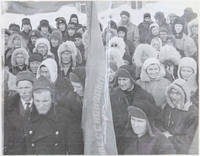
Best.-Nr. PD27Oblong Quarto album ca. 22x30 cm. 32 thick paper leaves. With 130 mounted original gelatin silver photographs with smaller ones from ca. 71x5 cm 2 ¾ x 2 in to ca. 36x3 cm 1 ½ x 1 ¼ in larger ones from ca. 163x103 cm 6 ½ x 4 in to 85x14 cm 3 ¼ x 5 ½ in and the rest of the photos ca. 76x11 cm 3 x 4 ½ in; with a mounted folding printed map showing the route of the expedition ca. 21x67 cm and a hand-drawn map of the expedition base camp ca. 20x282 cm. Most photos with period ink captions in Russian on the mounts. Several photographs with dates indicated. Period grey patterned full cloth album with blind-tooled decorations with industrial motif on the front board fastened with a string; dried flower specimens mounted to the inner side of the rear board. Binding slightly worn with mild damp stains on the right margin of the front board one page detached several photos age-toned and with mild silvering but overall a very good album with strong interesting photos. Historically significant album of rare original gelatin silver photographs taken and collected during the Nordvik-Khatanga Soviet Oil Exploration Expedition in 1939-1940. The compiler took part in the expedition together with his wife “Sonkes” who according to the photographs was head of a tailor's workshop at the expedition base camp in Nordvik. Neither reports nor official photographs from the expedition were found through our research of digital archives and libraries. The expedition organized by the USSR’s Main Directorate of the Northern Sea Route at the onset of WWII aimed to study the oil potential of Nordvik Bay. A team of polar explorers set sail from Arkhangelsk on a steamship accompanied by a cargo convoy and powerful icebreakers. Navigating through the Yugorsky Shar Strait the expedition made several stops at Dixon Melyuskin and Vstrechny Islands before establishing its base in Nordvik Bay. Despite extensive operations drilling at Nordvik over the next seasons proved largely unsuccessful revealing only small oil pockets with little commercial value. The album contains 130 lively vernacular photographs from the 1939-1940 expedition including eight well-executed photos of the expedition base camp and its premises the general view of the settlement main street local bathhouse and canteen. About ten photographs portray construction works as the team members attempted to build rotor No. 2. The images depict the site of the rotor “the beginning of the work” workers pulling out a tankette from snow digging and using special equipment. There are also about a dozen photographs showing the general view of rotor No. 1 - “the first in the world in Arctic conditions” “a boiler room for rotor No. 1” “a rotor drilling rig No. 1 with machinery room” “steam winch 250 hp for rotor No. 1” “oil drilling rigs” “general view of a coal mine” etc. At least forty lively candid photographs show the expedition members mostly the compiler and his wife sewing at a tailor’s workshop resting after work feeding dogs and posing by a tankette on sleds in tents at a meteorological station by the storage room near the assembly crane etc. Especially interesting are five photos of a fire at a local hospital documenting the funeral of deceased polar explorers and the compiler standing solemnly beside the victims’ camp. There are also about ten candid individual and group portraits of local Yakuts showing “Sonkes with a young Yakut woman” “Yakut Family and Sonkes” “Yakut Man with a Purchase” young Yakut women in a school reading books and Yakut fishermen posing by their camp. The other interesting photos portray the expedition members at the October and May rallies with “Sonkes” clearly visible in the crowd four and two-engine seaplanes at Cape Kosisty “bird market on Vstrechny Island” steamships “Stalingrad” “Dixon” etc. and icebreakers “Ermak” “Litke” etc. from the expedition etc. The album closes with the general views of the bank of the Khatanga River the town Igarka and the Krasnoyarsk pillars. Overall historically important collection of 130 original gelatin silver photographs documenting the 1939-1940 Soviet Oil Exploration Expedition to Nordvik Bay. hardcover
1935Best.-Nr. 9030684New York: Macmillan 1935. 1st. Hardcover. Very good. Translated by Alec Brown. Bound in publisher's original blue cloth with spine and cover stamped in white. Illustrated with forty photographs drawings maps and diagrams in black-and-white. Moderate wear and fading to the extremities of cover. 6 1/4 x 9 1/4 inches. 324 pages. Macmillan hardcover
2004Best.-Nr. x-0786417765McFarland & Co Inc Pub 2004. Paperback. New. illustrated edition. 200 pages. 8.75x6.00x0.50 inches. McFarland & Co Inc Pub paperback
1994Best.-Nr. 139514Bundaberg: Corkwood Press 1994. Hardcover. Near fine. Bundaberg Corkwood Press 1994 facsimile edition/ 1896. Quarto four volumes ii xviii 220; ii iv 432; vi 204; and vi 200 pages with numerous illustrations plus 66 pages of plates several folding 13 in colour and a large folding map. Cloth lightly scuffed; a near-fine set. The purpose of this scientific expedition sponsored by mining magnate and philanthropist William Austin Horn and with Charles Winnecke as commander and surveyor was to examine the MacDonnell Ranges on the not unreasonable premise that 'when the rest of the Continent was submerged the elevated portions of the McDonnell sic Range existed as an island and that consequently older forms of life might be found in the more inaccessible parts'. This in fact proved not to be the case but the expedition of some fourteen weeks and 2000 miles by camel was an outstanding success. 'It was not the intention . to explore a new region . But in the pursuit of natural history the expedition split into independent groups and explored undiscovered areas thus filling in more of the blank spaces in this vast region' Feeken Feeken and Spate. 'These volumes constitute one of the most substantial contributions in nineteenth-century Australian exploration but perhaps more importantly the expedition is a landmark in anthropological history because it resulted in Baldwin Spencer meeting Frank Gillen' Mulvaney. Limited to only 500 sets and sold out on publication. 4 items. Corkwood Press hardcover
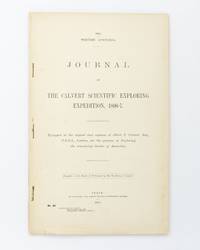
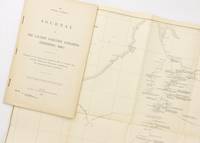
1902Best.-Nr. 25076Perth: Wm. Alfred Watson Government Printer 1902. First Edition. Paperback. Very Good. Perth Wm. Alfred Watson Government Printer 1902. Foolscap folio 62 pages with 4 illustrations plus a very large folding map 625 × 865 mm. Title-wrappers relatively recently bound in half calf and cloth lettered in gilt on the spine; title leaf slightly marked with trifling loss to the bottom corner-tip; minimal signs of age and use; an excellent copy. Western Australian Parliamentary Paper Number 46 of 1902; only 1200 copies were printed. The 'expedition was fitted out to explore the remaining unknown regions of Australia on similar lines to the Elder expedition'. Lawrence Allen Wells third in command on the ill-fated Elder expedition of 1891-92 was leader. The party set out from Mullewa east of Geraldton on 13 June 1896; lack of water and the gruelling conditions brought the official expedition to an end on 6 November at Noonkanbah Station on the Fitzroy River with two men unaccounted for. It was not until late May of the following year that Wells located the bodies of the missing men his cousin Charles Wells and George Lindsay Jones nephew of the explorer David Lindsay. The detailed accounts of the three search expeditions undertaken by Wells accompanied by Nat Buchanan George Keartland and Sub-Inspector Ord respectively are included. Not least strong on contemporary race relations. Wm. Alfred Watson, Government Printer paperback
1902Best.-Nr. 125441Perth: Wm. Alfred Watson Government Printer 1902. First Edition. Paperback. Very Good. Perth Wm. Alfred Watson Government Printer 1902. Foolscap folio 62 pages with 4 illustrations plus a very large folding map 625 × 865 mm. Stapled as issued without wrappers; minimal reinforcement to the map near the rusty staples; trifling signs of handling; an excellent copy. Western Australian Parliamentary Paper Number 46 of 1902; only 1200 copies were printed. The 'expedition was fitted out to explore the remaining unknown regions of Australia on similar lines to the Elder expedition'. Lawrence Allen Wells third in command on the ill-fated Elder expedition of 1891-92 was leader. The party set out from Mullewa east of Geraldton on 13 June 1896; lack of water and the gruelling conditions brought the official expedition to an end on 6 November at Noonkanbah Station on the Fitzroy River with two men unaccounted for. It was not until late May of the following year that Wells located the bodies of the missing men his cousin Charles Wells and George Lindsay Jones nephew of the explorer David Lindsay. The detailed accounts of the three search expeditions undertaken by Wells accompanied by Nat Buchanan George Keartland and Sub-Inspector Ord respectively are included. Not least strong on contemporary race relations. McLaren 16633. Wm. Alfred Watson, Government Printer paperback
Best.-Nr. H4141874. Albumin Prints ca. 145 x 129 cm 15 x 106 cm und 145 x 113 cm auf Kartontafeln montiert. Mit Beschriftung in deutscher Sprache. Eine Aufnahme ist etwas gebleicht die anderen sind in gutem Zustand und von guter Qualität. Die Photos wurden während des Aufenthalts der Korvette Gazelle 1874 in Monrovia gemacht. Sie zeigen Mitglieder der Expedition. Kommandant von Schleinitz führte die Korvette Gazelle 1874 bis 1876 auf einer Weltreise mit wissenschaftlichem Auftrag. Auf den Kerguelen-Inseln verbrachte die Expedition längere Zeit um den Venustransit zu beobachten. Mitte 1875 ging es weiter nach Neu Guinea. Viele Wissenschaftler forschten in den Bereichen Zoologie Botanik Geologie Meteorologie und Meeresforschung während Schleinitz selbst ethnologisches Material sammelte. Er benannte die Halbinsel nach seinem Schiff der Gazelle. Melanesien wurde erfirscht während auf der Rückfahrt Fiji Tonga und Samoa besucht wurden. Die Ergebnisse der Expedition wurden in einem fünfbändigen Werk publiziert. unknown