2 031 résultats
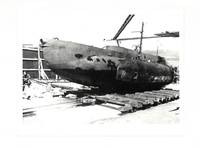
1932331p., illus. The Carnegie, the world's only sea-going non-magnetic observatory, was destroyed in a 1929 explosion in Samoa. Hardcover Good condition
1996258 p. Hardcover Fine condition
1950Oversize. 235 p., illus. Hardcover Very good condition good
18072 vols. (479, 419p.) front. (fold. map) 6 fold. pl. (incl. plans) 22 cm. Hardcover Very good condition, in worn 3/4 leather
1938Mild dampstaining to boards. Rough spots to endpapers ; Beautiful fold-out map on japon paper at rear; B&W Photographs; 8vo 8" - 9" tall; 287 pages
2004réf. x-0786417765McFarland & Co Inc Pub 2004. Paperback. New. illustrated edition. 200 pages. 8.75x6.00x0.50 inches. McFarland & Co Inc Pub paperback
1855réf. 46629Gotha Julius Perthes 1855-1874. 4to. Bound in 18 contemp. hcalf some wear to the first 10 vols. some a bit rubbed. Some scattered brownspots to the first volumes. Gilt spines. Wear to top of spines. With a huge amount of original maps plates profiles etc. lithographed and engraved large and folded and mainly in colour. This set does not include the "Ergänzungsbände". The first 19 lacking vol. 14 volumes of this importent periodical from its "Golden Period". "Petermann's Mittheilungen" became the leading geographic publication of the world and remained so until World War I. All the new geographical discoveries all the reports from the latest exploratory expeditions were published and flowed into Petermann's Geographische Anstalt and he took care to see that it was translated into cartographic form as quickly as possible. The maps soon came to have a reputation for containing the latest and the most accurate information available. Not only German but international readers as well came to see the 'Mitteilungen' as an indispensable organ for the world of geographical research. unknown
1854réf. 191943Yokohama: c. 1854. A broadside newsletter kawaraban reporting on the return of the famous castaway Nakahama Manjiro and Perry's second visit to Japan. This example was produced in the year the Japanese isolation policy was ended and talk of foreigners especially Commodore Perry and his "black ships" was rife. Kawaraban were woodblock digests of local news events and scandals cheaply printed and distributed throughout the Edo period. On the left of this example is a short report about Nakahama Manjiro the castaway who lived in America for a decade before returning to Japan in 1851. It is accompanied by an illustration of an American sailor called "Itsuhii" carrying a gun and a compass and a sentence about how he supposedly travelled from Kanagawa to Daisha Gawara before returning to his ship. On the right is an illustration of an item sent floating towards Uraga Bay by Perry's ships with the caption "we do not know what it is". The centre of the page is taken up by an English-Japanese "dictionary" titled Amerika kotoba wakai no utsushi "American Words Translated" which purports to give the translations of common words such as "father" "fish" and "hair". However the translations are not correct: "oranhee" "kyonpo" and "romo" respectively. These words may have been misheard by the author or they may have been a satirical attempt to mock the sound of English. The historian of the English language Sogo Masaaki suggested that perhaps there is some relation to words in Malay. Single sheet 210 x 284 mm woodblock on one side only. Illustrations in text; text in Japanese. Mounted framed with Hawaiian koa wood and glazed 340 x 440 mm. Print bright two small holes on right edge light creasing and dust-soiling; small crack in frame in lower right corner: a very good copy unexamined out of frame. unknown
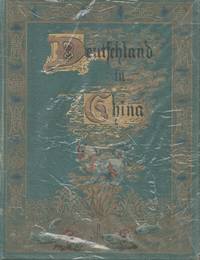
1902réf. BB77515Düsseldorf: August Bagel 1902. hardcover. gebraucht akzeptabel Original-Leinen-Band mit privatem Klarsicht-Schutzumschlag Buchrücken beschädigt einige Seiten lose beiliegend Papier altersbedingt etwas gebräunt akzeptables Exemplar. 32 x 25 cm. Das Werk behandelt den Boxeraufstand und den deutschen Chinaeinsatz 1900/01 und ist außerordentlich reich illustriert. Die Originalausgabe umfasst rund 445/446 Seiten zahlreiche Textabbildungen 13 farbige Tafeln und 5 Karten. Für Ihre Zufriedenheit versenden wir mit DHL und ausschließlich mit Trackingcode für eine sichere Sendungsverfolgung! Weitere Angebote unter antiquariat-kastanienhof August Bagel hardcover
1857réf. 375531New York: G. P. Putnam & Co 1857. One of 150 copies of the unofficial issue. Text: 4 777 1pp. Atlas: 100 engraved plates. 4pp. 2 vols. 4to text and folio atlas. Modern half russet morocco and cloth covered boards. Heavy foxing to the plates in the atlas small chip at fore-edge of atlas title minor dampstaining at lower outer corner of plates tape repair to final leaf of text. Provenance: University of Chicago ink stamp and blindstamp deaccession stamp. One of 150 copies of the unofficial issue. Text: 4 777 1pp. Atlas: 100 engraved plates. 4pp. 2 vols. 4to text and folio atlas. A very rare set of the text and plates of Asa Gray's report on the botany of the Wilkes Expedition illustrated with 100 engraved plates of plants collected by the first scientific expedition conducted by the United States Navy. The United States Exploring Expedition circumnavigated the globe under the command of Charles Wilkes between the summer of 1838 and the summer of 1842. The Wilkes Expedition "was the first American scientific expedition of any size charged to 'extend the bounds of Science and promote the acquisition of knowledge' and was one of the most ambitious Pacific expeditions ever attempted" Forbes. The Expedition represents "the first governmental sponsorship of scientific endeavor and was instrumental in the nation's westward expansion. Specimens gathered by expedition scientists became the foundation collections of the Smithsonian Institution. Significant American contributions in the fields of geology botany conchology anthropology and linguistics came from the scientific work of the expedition. Wilkes's evaluations of his landfalls influenced later U.S. positions in those areas" DAB. The Narrative of the expedition was first published in 1844 but the separately-issued scientific reports and atlases for the United States Exploring Expedition were published over a long period of time; the Expedition returned in 1842 and the final volume did not appear until 1874. Because of their limited issue and historical importance all the separately-issued scientific reports and atlases from the Expedition are highly sought after though they very rarely appear on the market. Gray's report is specifically on the "phanerogamia" seed plants or flowering plants collected during the four year voyage. The history of the publication of the many scientific reports that resulted from the Wilkes Expedition is filled with difficulties in their writing and production and Gray's botanical report is exemplary of these difficulties. "The preparation of the reports on the botanical collections brought back by the Expedition proved to be one of the worst headaches encountered during the course of the entire publication" Haskell. Asa Gray was one of the most acclaimed botanists of his era and he was the original selection as botanist for the Wilkes Expedition. In the time between his appointment and the expedition's departure in 1838 however Gray accepted the position of Professor of Botany at the University of Michigan and so he resigned from Charles Wilkes's command and was replaced by William Rich. Rich completed his botanical report in 1846 and submitted it to Wilkes who found it wholly unacceptable. Eventually Asa Gray was asked to study the specimens gathered on the expedition and to produce this report which he agreed to do and which he worked on for three years. Gray initially planned for a two-volume text report and an atlas including 300 folio plates. In the end the text was issued in one large volume and the atlas contained 100 plates drawn by the talented botanical artist Isaac Sprague. The botanical specimens described in the text and depicted in the atlas come primarily from throughout the Pacific Rim including the islands of the South Pacific Hawaii Singapore the Philippines Australia New Zealand and several countries in South America - predominantly Brazil and Chile. The total number of texts published from the voyage of the United States Exploring Expedition is massive - a total of twenty-four volumes of narrative and scientific reports. Asa Gray's botanical report is designated as Volume XV. As with Charles Wilkes's narrative account of the United States Exploring Expedition Gray's botanical report was issued in "official" and "unofficial" editions. The official edition of Gray's report was published by Sherman & Son of Philadelphia in an edition of 100 copies each of text and plates and the unofficial edition was issued by Putnam of New York in an edition of 150 copies again as quarto text and folio plates. Either edition is exceedingly rare in commerce as they were mostly intended for presentation or for placement in research libraries. Sabin writing in 1875 comments that "owing to some mistake a large number of copies of the Atlas were sold by auction unbound and without the letterpress the result is that odd volumes are comparatively common - whole sets are scarce." Actually the text or atlas individually or the two volumes together are exceedingly rare in the market. A highly desirable scientific report from the Wilkes Expedition with an atlas of 100 attractive plates with text by the noted botanist Asa Gray. Haskell 61 and 63; Rosove 354-10.A2 and 355-6.A2 both text and atlas described as "rare"; Sabin 28368; Meisel II pp.668-669; Nissen 2153; Stafleu 2129 2130; Pritzel 3529; Forbes 1993. Not in Spence G. P. Putnam & Co unknown
1856réf. 191708Japan: c. 1856. The first Western ships in a newly opened Japan An untraced manuscript record of the Western ships that arrived in Shimoda after Perry signed the Convention of Kanagawa. They include those from his fleet such as the Mississippi and the Macedonian as well as the Russian flagship Diana and many smaller trading vessels about which little information survives. Compiled anonymously the ledger begins on 25 February 1854 and ends on 26 February 1856. Over this period the scribe recorded the names captains armaments and crew compliments of each vessel that arrived in port. While much of this information is available elsewhere for larger American ships such as the Vandalia there are fewer resources that give details on smaller trading ships such as the Lady Pierce Caroline E. Foote Vincennes and Hancock. For example this ledger notes that the Caroline E. Foote docked 21 January to 9 February 1855 arrived with 21 people including 3 women and 2 children a boy aged 9 and a girl aged 5 before ferrying Russian sailors who had been staying in Toda village back to Kamchatka. The scribe also notes the arrival of Russian ships including the flagship Diana. Her captain Yevfimy Putyatin was sent to negotiate the Treaty of Shimoda. In December 1854 the fleet was hit by a tsunami causing the Diana to spin round her mooring 42 times. Three French ships are recorded in the manuscript transcribed as the Napoleon III Havre Constantine and Colbert. We have been unable to trace information about these vessels in other sources. Large octavo 245 x 171 mm ff. 15. Manuscript in red and black on recto and verso of leaves; text in classical Japanese. Original manuscript title leaf paper string koyori tied through one hole. Together with manuscript draft drawing of a Dutch officer 327 x 243 mm stamp of the artist "Toho" in red. Creased as expected a few worm holes internally some repaired otherwise bright: a very good example. unknown
2003réf. 004175Potts Point NSW Australia: Hordern House 2003. Hardcover. As New/as new. 4to. xv 1168 pp. Bound in full olive cloth title in gilt on cover and spine three ribbon bookmarks in illustrated dust jacket. Includes bibliography and index. This is the first volume in a five-volume work. As New in As New dust jacket. Hordern House hardcover
réf. 102116London H.M.S.O. 1877. . First edition; folio 33.5 x 21.5 cm; 16 folding maps a few small splits to folds 16 plates further illustrations in the text; contemporary blue half roan marbled boards lightly faded neat restoration to extremities a very good copy; viii 484 pp. One of the most valuable sources for the history of exploration in northern Canada. The Nares expedition so called after its commander George Nares 1831-1915 sailed in two ships HMS Alert and HMS Discovery in late May of 1875 in quest of the North Pole. The ships reached Lady Franklin Bay on North Ellesmere Island and the Alert went on to reach the extreme north of the island the highest latitude that had yet been reached by a ship. In April 1876 three separate sledge parties set out but the men showed serious signs of scurvy and several members died. Nares was forced to abandon the expedition and returned to England in September that year. Despite the difficulties faced by the expedition it did produce important scientific results including a study of Inuit dog disease and a volume of physical observations. The Nares expedition is one of the best documented Arctic expeditions with eight Parliamentary Blue Books alone devoted to it between 1875 and 1878. Arctic explorer Vilhjalmur Stefansson wrote 'The Arctic Blue Books are beyond comparison the most important tool of knowledge in this field.' London H.M.S.O., 1877. hardcover
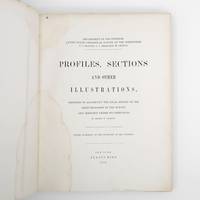
1872réf. 373132New York: Jules Bien 1872. First edition. Limited to 100 copies. 65 lithographed plates many folding preceded by 4pp. text. 4to. Original green cloth boards upper cover lettered in gilt rebacked endpapers renewed. Dampstaining. First edition. Limited to 100 copies. 65 lithographed plates many folding preceded by 4pp. text. 4to. This book was prepared to illustrate the work of the Hayden survey. It contains numerous panoramic illustrations many on folding sheets depicting sites in Wyoming Utah Colorado and Montana. This report contains the bulk of Henry Wood Elliott's art work for the Hayden Survey see preceding entry most of which was published nowhere else. These images are important because of their scientific contribution to several fields historical significance documentation of the Hayden expedition and their beauty and attention to detail. Elliott's illustrations were among the early images of many locations in the new territories of the West. From an edition of 100 copies issued in advance of the text. The Prefatory Note states p. 3: "A small edition of one hundred copies of the Profiles and Sections are issued in advance of the text for the purpose of placing them in the hands of the principal geologists in this country and in Europe. The first issue of two thousand copies in colors will be published with descriptions in about one year." We find no evidence that a subsequent edition in color was ever printed and it is stated of the present work in the Checklist of United States Public Documents 1789-1909 Washington: Government Printing Office 1909: "Originally intended to illustrate v. 4 of quarto series of reports but never thus used." The Hayden Survey was the most important of the four major government surveys of the American West undertaken after the Civil War the others being Powell King and Wheeler. Collectively these surveys filled in the map of the United States using accurate scientific methods to chart the land and investigate not only its geology but natural resources wildlife and plants as well. Schmeckebier Catalogue and Index of the Publications of the Hayden King Powell and Wheeler Surveys p. 32 #3 Jules Bien unknown
1976réf. 74408Uten år. 1976 . Folio. I original mappe. Fortuen maskin- og håndskrevet tekst 12 originale fotografier samt to foldede kart i konvolutt bak i boken. Engelsk. unknown
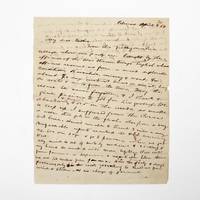
1854réf. 369733Palmas Panama 1854. 2pp. single 4to sheet. With: Carte-de-visite photograph of Mayo signed and inscribed to his sister on verso. Folds minor separations. 2pp. single 4to sheet. With: Carte-de-visite photograph of Mayo signed and inscribed to his sister on verso. Seeking a low-level train or canal route to bridge the Atlantic and Pacific Oceans in late 1853 President Franklin Pierce ordered a U.S. Naval exploring expedition to participate in an international attempt affiliated with a venture by the Atlantic and Pacific Junction Company. Although ships from Great Britain New Grenada and the United States were involved the principle overland portion of the expedition through 40 miles of dense jungle would be led by Lieutenant Isaac G. Strain who had previously led exploring expeditions in Brazil Baja California and Chile. With a party of 27 officers and men and including the author of the present letter they entered the jungle on January 20 1854. Problems began almost immediately. While puting ashore a boat was swamped and a portion of the party's provisions lost. Next the route Strain had been tasked with following contained no gap in the cordillera as had been previously believed. Led through the jungle by several groups of indigenous people the promise of a few days hike turned into months of wandering in the jungle before being abandoned by the guides. Subsisting on plantains and bananas and drinking river water Stain divided his men with an advance party striking out to seek rescue. On March 9 forty-nine days after starting from Caledonia Bay Strain and his advance party reached Yavisa; it would be another nearly three weeks before the main body was rescued but not before at least five had died of starvation or disease. Sometimes compared with the trials of the crew of the Essex or the members of the Donner Party the men on the Darien expedition endured extreme harship and resorted to unspeakable things. This remarkable letter was written by one of the expedition's survivors shortly after his rescue and return to civilization. George Upshur Mayo 1834-1896 was born into a prominent family in Norfolk VA. He attended the Virginia Military Institute served as an assistant engineer on the Strain Expedition was involved in the United States Geodetic Survey and was later a major in the Confederate Army. Here he writes: "My dear father From this filthy native village where our party are brought by the officers of the war steamer Virago English whose officers rescued us from a most deplorable condition starvation misery & want for about 70 days without bread or meat living on roots & nuts from the trees. May the rescue be never forgotten & I thank & give praises to God for his goodness. We abandoned & buried 4 or 5 in the woods as unable to keep up. I suffered from the cusano a worm that gets in the flesh also from a very bad knee. Almost unable to travel 3 miles a day. Unfavorable reports reached the U.S. concerning us. We are safe & go to Panama when we get well. My mind is out of sorts by medicine & sickness & my hand too weak to write more legibly. Will write from Panama or Aspinwall a respectable letter there. We are 100 miles from Panama. Had the party 8 days provisions only in the woods yet nothing to shield us from wind & storm & no change of garments. The suffering was intense & the rescue came at the most dreadful & important for our safety. I with 3 others on the river bank washing at sundown when the canoes came in sight. Captain Strain had no pants or underdraws to protect him from the briars & vermin. God be praised for rescue. Love to Annie. . . . In all probability will meet the Cyane at Aspinwall." A remarkable first-hand account of a desperate struggle for survival. unknown
1857réf. 324349New Haven 1857. Separately-issued offprint from the American Journal of Science and Arts 2nd series Vol. xxiv July 1857. 21-38 pp. plus folding map. 8vo. Period plain green wrappers stitched. Separately-issued offprint from the American Journal of Science and Arts 2nd series Vol. xxiv July 1857. 21-38 pp. plus folding map. 8vo. "Redfield's last contribution to meteorological science was a memoir upon the cyclones or typhoons of the north Pacific Ocean prepared at the request of Commodore Perry to accompany his Narrative of the United States Expedition to Japan; and was printed in the second volume of that work . He showed that the hurricanes of the Pacific followed the same general laws as those of the Atlantic and traced the paths of several remarkable storms among which was one of great force encountered by the steamer 'Mississippi' one of the vessels of Commodore Perry's squadron on route from Simoda to the Sandwich Islands in October 1854" Recollections of John Howard Redfield p. 302. Page 37 includes a description of the Kona or southerly winds of Hawaii as well as the effects of cyclones on the Hawaiian islands. Following its publication within Perry's Narrative in 1856 the work was issued in a slightly more condensed form within the July 1857 issue of the American Journal of Science and Arts. The present separately-issued offprint from the AJSA is the only separately-issued edition of the work. Scarce. Sabin 68512. Not in Forbes unknown
1922réf. 314367Ottawa: F. A. Acland 1922. 5 of 12 parts comprised of the Introduction Preface and errata and parts A B and G. With a duplicate of the Preface part. 5 vols. 8vo. Three in original wrappers. 5 of 12 parts comprised of the Introduction Preface and errata and parts A B and G. With a duplicate of the Preface part. 5 vols. 8vo. Five individual parts from Volume III of the official reports of the Expedition organized and led by Vilhjalmur Stefansson. F. A. Acland unknown
1913réf. 84790May 24 1913. The Sphere. London. 1913. May 24. The Complete Magazine including original coloured cover and all adverts. Folio. Pagination: Coloured front cover iv 1 - b/w second cover with portrait of Scott publishing details of this issue - see second photo. 182 182a - 220 v- xxii. Includes double page photo 182b-183 of Captain Scott in his Antarctic Home by Herbert Ponting taken at Cape Evans. This famous portrait shows the space allotted to Scott and you can see all the photos of Lady Scott and baby Peter that he put up on the wall above his desk. This issue contains very good prints of many photographs not previously seen and also of a much higher quality than when reproduced in future publications. There are also diary entries. This publication predates the Strand Magazine which used some of the same photos. Front cover creased and worn and lacks small portions along spine. Close tears to edges of rear cover. VERY SCARCE. unknown
1923réf. 321730Ottawa: F. A. Acland 1923. Vol XII Part B: Physical Characteristics 12 photographic plates. Vol. XII Part C: Osteology: 9 plates. 2 vols. 8vo. Publisher's lettered wrappers. Vol XII Part B: Physical Characteristics 12 photographic plates. Vol. XII Part C: Osteology: 9 plates. 2 vols. 8vo. Two individual wrappered parts from the official reports of the Expedition organized and led by Vilhjalmur Stefansson. Vol. XII part B on the physical characteristics of the Copper River Eskimos by D. Jenness is particularly noteworthy due to its portraits of the aboriginal peoples encountered. F. A. Acland unknown
1928réf. 321731Ottawa: F. A. Acland 1928. Vol XII Part B: Physical Characteristics 12 photographic plates. Vol. XII Part C: Osteology: 9 plates. 3 vols. 8vo. Publisher's lettered wrappers. One part lacking upper wrapper. Vol XII Part B: Physical Characteristics 12 photographic plates. Vol. XII Part C: Osteology: 9 plates. 3 vols. 8vo. Three individual wrappered parts from the official reports of the Expedition organized and led by Vilhjalmur Stefansson. Vol. XII part B on the physical characteristics of the Copper River Eskimos by D. Jenness is particularly noteworthy due to its portraits of the aboriginal peoples encountered. F. A. Acland unknown
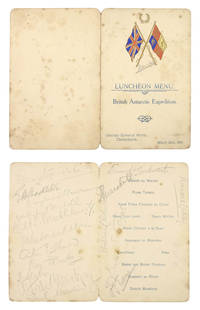
réf. 950041907-1913. . A collection of six menus and one souvenir programme various sizes and dates concerning the Nimrod British Antarctic Expedition. Preserved in archival sleeves within a blue morocco-backed fold-over box with chemise. A rare collection of signed ephemera from Shackleton's first Antarctic expedition 1907-1909 during which Shackleton reached 'Farthest South' and achieved the first ascent of Mount Erebus all owned by the Ship's chief engineer. The collection comprises: 1. 'To Celebrate the birthdays of our Shipmates H.J. Dunlop; & W.A.R. Michell at "Latitude 40"S. 30'/ Longitude 50"E.30'' manuscript menu in red and black ink on printed card signed on the reverse by Michell Murray Davis Mackintosh Mackay Dunlop and Captain England headed with the printed National Antarctic Expedition badge Nimrod added in ink 8vo 15.5 x 11.2 cm. Menu for a meal to celebrate the birthdays of four shipmates of the Nimrod given whilst en route to Christchurch - at this point half way between South Africa and the Kerguelen Islands. Signed by four of the ship's officers and three of the eventual shore party. Food includes Potage. Dominion Crême D'Unloppè and Dessert. Abricot au Shackleton. 18 October 1907. 2. 'Complimentary Dinner Given to Lieutenant Shackleton and the Scientists and Officers of the Antarctic Expedition of 1907' menu signed by Shackleton Bernard Day William Roberts and 7 others 4pp. upper cover printed in gilt with the 'Antarctic Expedition S.Y. Nimrod 1907'. emblem in blue 12mo 11.3 x 8.8 cm. Christchurch Freeman's Rooms. 19 December 1907. Menu given for members of the Nimrod expedition by the Canterbury establishment. Shackleton was presented with a copper salver made from bolts taken from Nelson's ship Victory and Bishop Julius gave his blessing at an event attended by some eighty local dignitaries. 3. Menu held for the 'British Antarctic Expedition' dinner held at the Canterbury Club Christchurch signed by Shackleton Wild Edgworth Davis and approximately 30 others 4pp. oval photographic illustration of polar scenes on upper and lower cover signatures on inside and lower pages punch holes at fore-edge 8vo 15.5 x 10.5 cm. 30 December 1907. Nimrod arrived at Lyttleton harbour on 25 March 1909 to a heroic welcome by the New Zealand public. The luncheon held at the United Service Hotel the following day appears to have been a relatively intimate one the menu signed by Shackleton all but 2 members of the Shore Party and 3 of the ship's officers but none of the usual local dignitaries and was apparently unreported in the press. 4. 'Luncheon Menu. British Antarctic Expedition. United Service Hotel Christchurch' signed by Shackleton and eighteen other members of the British Antarctic Expedition. 4-page menu the upper cover colour-printed with British flags. 26 March 1909. 5. 'Philosophical Institute of Canterbury. Complimentary Banquet to Lieut. E.H. Shackleton M.V.C. the Shore Party and Officers of the S.Y. Nimrod on their return from Antarctica' signed by John K. Davis Nimrod's first officer Henry Dunlop and 24 other attendees 4-page menu the upper cover printed with map of the South Pole showing position reached by Discovery and Nimrod split at fold. 3 April 1909. The banquet at the Philosophical Institute was a public affair at which 'a standing ovation was given to Shackleton and loud applause as he responded to the many toasts to the expedition. He said that 'They always felt dissatisfied with what might have been done. but on that plateau with no 'grub' inside them. they were forced to turn back. There had been no gentle maidens to rest their heads upon!' This was a reference to a duet that had been sung earlier in the evening and was received with laughter' The Press 5/4/09 p.8. 6. 'South Polar Dinner given by John Howard Mcfadden. June 13. 1913' large-format menu card embellished with an original watercolour oval vignette by George Marston the Nimrod artist of a polar scene man sledge and tent against snow-covered mountains large penguin and decoration signed by the artist on the vignette 28.4 x 19.4 cm. the oval vignette c.6.8 x 9.5 cm. Oddenino's Imperial Restaurant. 13 June 1913. Celebratory menu illustrated by George Marston. 'One wealthy friend was so far interested as to give an Antarctic dinner at a famous restaurant to all the available men who had been in the far South. The table was transformed into a picture of the Antarctic with artificial snow and real ice where large models of the Nimrod and the Aurora were placed at the edge of an ice-barrier thickly peopled by penguins and Marston the Antarctic artist painted special menu cards. It was a gay gathering enlivened towards the close by songs from Harry Lauder; but alas! the rich and kindly host did not pursue his hospitality to the point of providing transportation for his guests to revisit the haunts they longed for' The Life of Sir Ernest Henry Shackleton 1923 pp.191-2. 7. Souvenir programme. 4to 'Sir Ernest Shackleton to give his Popular Lecture entitled Nearest the South Pole at the Music Hall Chester' signed twice by Shackleton 'E.H. Shackleton' in ink on the map once at the location of Farthest South and once in the lower margin 4 pages first page printed in red and black with photographic portrait of Shackleton. 21 February 1910. A souvenir from Shackleton's extensive fund-raising lecture tour following the British Antarctic Expedition of 1907-9 during which Shackleton reached 'Farthest South' and achieved the first ascent of Mount Erebus. The series of talks accompanied by lantern slides proved hugely popular with audiences. An account of a similar lecture in Edinburgh describes his charismatic style of delivery: '"In the centre" he said "you see the South Pole. Now you've seen as much as anybody else has ever seen". Hearty laughter greeted this opening as he knew it would. He had an orator's gift for dramatic effect and his humour was timed to perfection.' 'A born leader of men'. 1907-1913. unknown
1908réf. ZB657436London: The Royal Society 1908. first edition; folio leaves slightly shorter than 30.5 cm. v 1 192 pp. 21 plates with one folding and including six plates of aurora observations in muted grey blue and brown also a double page color map of Laurie Island; hardcover ex library spine worn hinges reinforced with tape else text clean & binding tight; five articles viz. Tidal Observations in the Antarctic Regions 1902-1903 Pendulum observations Earthquakes and other Earth Movements recorded in the Antarctic Regions 1902-1903 Antarctic Observations of Aurora 1902-1903 and Antarctic Magnetic Observations 1902-1904. - If you are reading this this item is actually physically in our stock and ready for shipment once ordered. We are not bookjackers. Buyer is responsible for any additional duties taxes or fees required by recipient's country. Photos available upon request. London: The Royal Society, hardcover
1840réf. ZB592269Washington 1840. 34 pp self wrappers very good. - If you are reading this this item is actually physically in our stock and ready for shipment once ordered. We are not bookjackers. Buyer is responsible for any additional duties taxes or fees required by recipient's country. Photos available upon request. Washington unknown