(Wilkes Expedition) Gray, AsaBiblio.com

1 874 résultats
1857réf. 375531New York: G. P. Putnam & Co 1857. One of 150 copies of the unofficial issue. Text: 4 777 1pp. Atlas: 100 engraved plates. 4pp. 2 vols. 4to text and folio atlas. Modern half russet morocco and cloth covered boards. Heavy foxing to the plates in the atlas small chip at fore-edge of atlas title minor dampstaining at lower outer corner of plates tape repair to final leaf of text. Provenance: University of Chicago ink stamp and blindstamp deaccession stamp. One of 150 copies of the unofficial issue. Text: 4 777 1pp. Atlas: 100 engraved plates. 4pp. 2 vols. 4to text and folio atlas. A very rare set of the text and plates of Asa Gray's report on the botany of the Wilkes Expedition illustrated with 100 engraved plates of plants collected by the first scientific expedition conducted by the United States Navy. The United States Exploring Expedition circumnavigated the globe under the command of Charles Wilkes between the summer of 1838 and the summer of 1842. The Wilkes Expedition "was the first American scientific expedition of any size charged to 'extend the bounds of Science and promote the acquisition of knowledge' and was one of the most ambitious Pacific expeditions ever attempted" Forbes. The Expedition represents "the first governmental sponsorship of scientific endeavor and was instrumental in the nation's westward expansion. Specimens gathered by expedition scientists became the foundation collections of the Smithsonian Institution. Significant American contributions in the fields of geology botany conchology anthropology and linguistics came from the scientific work of the expedition. Wilkes's evaluations of his landfalls influenced later U.S. positions in those areas" DAB. The Narrative of the expedition was first published in 1844 but the separately-issued scientific reports and atlases for the United States Exploring Expedition were published over a long period of time; the Expedition returned in 1842 and the final volume did not appear until 1874. Because of their limited issue and historical importance all the separately-issued scientific reports and atlases from the Expedition are highly sought after though they very rarely appear on the market. Gray's report is specifically on the "phanerogamia" seed plants or flowering plants collected during the four year voyage. The history of the publication of the many scientific reports that resulted from the Wilkes Expedition is filled with difficulties in their writing and production and Gray's botanical report is exemplary of these difficulties. "The preparation of the reports on the botanical collections brought back by the Expedition proved to be one of the worst headaches encountered during the course of the entire publication" Haskell. Asa Gray was one of the most acclaimed botanists of his era and he was the original selection as botanist for the Wilkes Expedition. In the time between his appointment and the expedition's departure in 1838 however Gray accepted the position of Professor of Botany at the University of Michigan and so he resigned from Charles Wilkes's command and was replaced by William Rich. Rich completed his botanical report in 1846 and submitted it to Wilkes who found it wholly unacceptable. Eventually Asa Gray was asked to study the specimens gathered on the expedition and to produce this report which he agreed to do and which he worked on for three years. Gray initially planned for a two-volume text report and an atlas including 300 folio plates. In the end the text was issued in one large volume and the atlas contained 100 plates drawn by the talented botanical artist Isaac Sprague. The botanical specimens described in the text and depicted in the atlas come primarily from throughout the Pacific Rim including the islands of the South Pacific Hawaii Singapore the Philippines Australia New Zealand and several countries in South America - predominantly Brazil and Chile. The total number of texts published from the voyage of the United States Exploring Expedition is massive - a total of twenty-four volumes of narrative and scientific reports. Asa Gray's botanical report is designated as Volume XV. As with Charles Wilkes's narrative account of the United States Exploring Expedition Gray's botanical report was issued in "official" and "unofficial" editions. The official edition of Gray's report was published by Sherman & Son of Philadelphia in an edition of 100 copies each of text and plates and the unofficial edition was issued by Putnam of New York in an edition of 150 copies again as quarto text and folio plates. Either edition is exceedingly rare in commerce as they were mostly intended for presentation or for placement in research libraries. Sabin writing in 1875 comments that "owing to some mistake a large number of copies of the Atlas were sold by auction unbound and without the letterpress the result is that odd volumes are comparatively common - whole sets are scarce." Actually the text or atlas individually or the two volumes together are exceedingly rare in the market. A highly desirable scientific report from the Wilkes Expedition with an atlas of 100 attractive plates with text by the noted botanist Asa Gray. Haskell 61 and 63; Rosove 354-10.A2 and 355-6.A2 both text and atlas described as "rare"; Sabin 28368; Meisel II pp.668-669; Nissen 2153; Stafleu 2129 2130; Pritzel 3529; Forbes 1993. Not in Spence G. P. Putnam & Co unknown
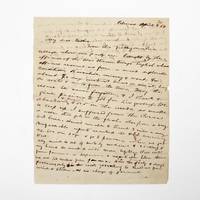
1854réf. 369733Palmas Panama 1854. 2pp. single 4to sheet. With: Carte-de-visite photograph of Mayo signed and inscribed to his sister on verso. Folds minor separations. 2pp. single 4to sheet. With: Carte-de-visite photograph of Mayo signed and inscribed to his sister on verso. Seeking a low-level train or canal route to bridge the Atlantic and Pacific Oceans in late 1853 President Franklin Pierce ordered a U.S. Naval exploring expedition to participate in an international attempt affiliated with a venture by the Atlantic and Pacific Junction Company. Although ships from Great Britain New Grenada and the United States were involved the principle overland portion of the expedition through 40 miles of dense jungle would be led by Lieutenant Isaac G. Strain who had previously led exploring expeditions in Brazil Baja California and Chile. With a party of 27 officers and men and including the author of the present letter they entered the jungle on January 20 1854. Problems began almost immediately. While puting ashore a boat was swamped and a portion of the party's provisions lost. Next the route Strain had been tasked with following contained no gap in the cordillera as had been previously believed. Led through the jungle by several groups of indigenous people the promise of a few days hike turned into months of wandering in the jungle before being abandoned by the guides. Subsisting on plantains and bananas and drinking river water Stain divided his men with an advance party striking out to seek rescue. On March 9 forty-nine days after starting from Caledonia Bay Strain and his advance party reached Yavisa; it would be another nearly three weeks before the main body was rescued but not before at least five had died of starvation or disease. Sometimes compared with the trials of the crew of the Essex or the members of the Donner Party the men on the Darien expedition endured extreme harship and resorted to unspeakable things. This remarkable letter was written by one of the expedition's survivors shortly after his rescue and return to civilization. George Upshur Mayo 1834-1896 was born into a prominent family in Norfolk VA. He attended the Virginia Military Institute served as an assistant engineer on the Strain Expedition was involved in the United States Geodetic Survey and was later a major in the Confederate Army. Here he writes: "My dear father From this filthy native village where our party are brought by the officers of the war steamer Virago English whose officers rescued us from a most deplorable condition starvation misery & want for about 70 days without bread or meat living on roots & nuts from the trees. May the rescue be never forgotten & I thank & give praises to God for his goodness. We abandoned & buried 4 or 5 in the woods as unable to keep up. I suffered from the cusano a worm that gets in the flesh also from a very bad knee. Almost unable to travel 3 miles a day. Unfavorable reports reached the U.S. concerning us. We are safe & go to Panama when we get well. My mind is out of sorts by medicine & sickness & my hand too weak to write more legibly. Will write from Panama or Aspinwall a respectable letter there. We are 100 miles from Panama. Had the party 8 days provisions only in the woods yet nothing to shield us from wind & storm & no change of garments. The suffering was intense & the rescue came at the most dreadful & important for our safety. I with 3 others on the river bank washing at sundown when the canoes came in sight. Captain Strain had no pants or underdraws to protect him from the briars & vermin. God be praised for rescue. Love to Annie. . . . In all probability will meet the Cyane at Aspinwall." A remarkable first-hand account of a desperate struggle for survival. unknown
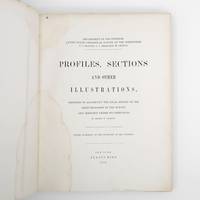
1872réf. 373132New York: Jules Bien 1872. First edition. Limited to 100 copies. 65 lithographed plates many folding preceded by 4pp. text. 4to. Original green cloth boards upper cover lettered in gilt rebacked endpapers renewed. Dampstaining. First edition. Limited to 100 copies. 65 lithographed plates many folding preceded by 4pp. text. 4to. This book was prepared to illustrate the work of the Hayden survey. It contains numerous panoramic illustrations many on folding sheets depicting sites in Wyoming Utah Colorado and Montana. This report contains the bulk of Henry Wood Elliott's art work for the Hayden Survey see preceding entry most of which was published nowhere else. These images are important because of their scientific contribution to several fields historical significance documentation of the Hayden expedition and their beauty and attention to detail. Elliott's illustrations were among the early images of many locations in the new territories of the West. From an edition of 100 copies issued in advance of the text. The Prefatory Note states p. 3: "A small edition of one hundred copies of the Profiles and Sections are issued in advance of the text for the purpose of placing them in the hands of the principal geologists in this country and in Europe. The first issue of two thousand copies in colors will be published with descriptions in about one year." We find no evidence that a subsequent edition in color was ever printed and it is stated of the present work in the Checklist of United States Public Documents 1789-1909 Washington: Government Printing Office 1909: "Originally intended to illustrate v. 4 of quarto series of reports but never thus used." The Hayden Survey was the most important of the four major government surveys of the American West undertaken after the Civil War the others being Powell King and Wheeler. Collectively these surveys filled in the map of the United States using accurate scientific methods to chart the land and investigate not only its geology but natural resources wildlife and plants as well. Schmeckebier Catalogue and Index of the Publications of the Hayden King Powell and Wheeler Surveys p. 32 #3 Jules Bien unknown
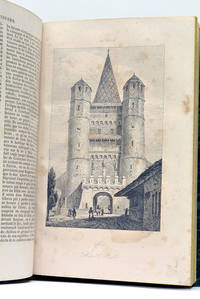
réf. 56216Paris Didot 1846. 4 feuillets. 460 pages. 1 carte dépliante. 91 planches hors-texte. 215x18 Cm. Cartonnage vert de lépoque. Dos lisse. Titre doré. Coins émoussés. Plats un peu frottés. Ouvrage illustré de nombreuses vues costumes portraits etc. Histoire de la Suisse des temps anciens jusqu'au début du 19e siècle suivie de la statistique et la description de chacun des cantons suisses. Il suit une 2e partie beaucoup plus brève sur le Tyrol. Rousseurs. Paris, Didot, 1846. unknown
1857réf. 324349New Haven 1857. Separately-issued offprint from the American Journal of Science and Arts 2nd series Vol. xxiv July 1857. 21-38 pp. plus folding map. 8vo. Period plain green wrappers stitched. Separately-issued offprint from the American Journal of Science and Arts 2nd series Vol. xxiv July 1857. 21-38 pp. plus folding map. 8vo. "Redfield's last contribution to meteorological science was a memoir upon the cyclones or typhoons of the north Pacific Ocean prepared at the request of Commodore Perry to accompany his Narrative of the United States Expedition to Japan; and was printed in the second volume of that work . He showed that the hurricanes of the Pacific followed the same general laws as those of the Atlantic and traced the paths of several remarkable storms among which was one of great force encountered by the steamer 'Mississippi' one of the vessels of Commodore Perry's squadron on route from Simoda to the Sandwich Islands in October 1854" Recollections of John Howard Redfield p. 302. Page 37 includes a description of the Kona or southerly winds of Hawaii as well as the effects of cyclones on the Hawaiian islands. Following its publication within Perry's Narrative in 1856 the work was issued in a slightly more condensed form within the July 1857 issue of the American Journal of Science and Arts. The present separately-issued offprint from the AJSA is the only separately-issued edition of the work. Scarce. Sabin 68512. Not in Forbes unknown
1922réf. 314367Ottawa: F. A. Acland 1922. 5 of 12 parts comprised of the Introduction Preface and errata and parts A B and G. With a duplicate of the Preface part. 5 vols. 8vo. Three in original wrappers. 5 of 12 parts comprised of the Introduction Preface and errata and parts A B and G. With a duplicate of the Preface part. 5 vols. 8vo. Five individual parts from Volume III of the official reports of the Expedition organized and led by Vilhjalmur Stefansson. F. A. Acland unknown
1923réf. 321730Ottawa: F. A. Acland 1923. Vol XII Part B: Physical Characteristics 12 photographic plates. Vol. XII Part C: Osteology: 9 plates. 2 vols. 8vo. Publisher's lettered wrappers. Vol XII Part B: Physical Characteristics 12 photographic plates. Vol. XII Part C: Osteology: 9 plates. 2 vols. 8vo. Two individual wrappered parts from the official reports of the Expedition organized and led by Vilhjalmur Stefansson. Vol. XII part B on the physical characteristics of the Copper River Eskimos by D. Jenness is particularly noteworthy due to its portraits of the aboriginal peoples encountered. F. A. Acland unknown
1928réf. 321731Ottawa: F. A. Acland 1928. Vol XII Part B: Physical Characteristics 12 photographic plates. Vol. XII Part C: Osteology: 9 plates. 3 vols. 8vo. Publisher's lettered wrappers. One part lacking upper wrapper. Vol XII Part B: Physical Characteristics 12 photographic plates. Vol. XII Part C: Osteology: 9 plates. 3 vols. 8vo. Three individual wrappered parts from the official reports of the Expedition organized and led by Vilhjalmur Stefansson. Vol. XII part B on the physical characteristics of the Copper River Eskimos by D. Jenness is particularly noteworthy due to its portraits of the aboriginal peoples encountered. F. A. Acland unknown
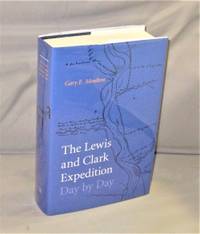
2018réf. 28379Lincoln:: University of Nebraska Press 2018. First Printing of the First US Edition. A Fine unread copy in a Fine dust jacket. In May 1804 Meriwether Lewis William Clark and their Corps of Discovery set out on a journey of a lifetime to explore and interpret the American West. The Lewis and Clark Expedition Day by Day follows this exploration with a daily narrative of their journey from its starting point in Illinois in 1804 to its successful return to St. Louis in September 1806. This accessible chronicle presented by Lewis and Clark historian Gary E. Moulton depicts each riveting day of the Corps of Discovery’s journey. Drawn from the journals of the two captains and four enlisted men this volume recounts personal stories scientific pursuits and geographic challenges along with vivid descriptions of encounters with Native peoples and unknown lands and discoveries of new species of flora and fauna. University of Nebraska Press, unknown
1876réf. 895260551Excellent condition but missing the original map that was originally included. 11 fine chromolithographic and 11 lithographic plates. Publication of this report was originally intended for 1861 but the Civil War intervened and prevented publication for another fifteen years. The expedition under Macomb went west from Santa Fe across northern New Mexico and Arizona to the Colorado. The whole drainage of the San Juan had been traced and the relationship of that river with the Colorado clearly established. More important they had also established that the Green River united with the Grand to form the Colorado. The entire maze of intricate canyon country had been threaded and its geography revealed for the first time. In addition Newberry was able to establish numerous stratigraphic columns and to trace the Triassic Jurassic and Carboniferous strata far out across the Colorado River. Newberry.introduced a new level of sophistication into the study of western geology. Government printing office hardcover
1939réf. 7135London 1939. Photography & Ephemera. Three portraits of the "Westward" a beautiful four-mastered ship on board the "Westward" each with BAE 1937-9 stamped on the verso; and nine small snapshots of the same with the expedition on verso. The small photographs are snapshots with manuscript text on the verso- "Photo by Mr. Bishop July 1937"; "REP in Lookout on Westward June 1938" & "Southend Pier taken from rigging of Westward June 1939". "At work on board the 'Westward'". Published Daily Telegraph July 1939". The rest of the photographs are unidentified. Also an advertising memento of the expedition a paper wrapper for Horlick's Malted Milk printed on both sides with "British Antarctic Expedition 1937. Horlick's" with other Horlick's information. After three years of fund raising efforts WWII finally put an end to Ernest Walker's expedition. Photographs range from 8x6" to 3 1/2 x 2 1/2". The large ones are stamped "Associated Press" on the verso along with the "British Antarctic Expedition 1937-9". The two photos of the ship are have some small creases. One image has a person's faced excised. The Horlicks wrapper measures 13 x 3 1/2". browned & spotted. Overall vg -. unknown
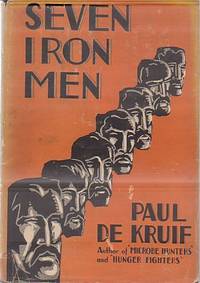
1929réf. 12469New York: Harcourt Brace. Very Good in Very Good- dust jacket. Hardcover. Moderate wear and small open tears to price clipped DJ.; About the Merritt family who prospected for iron. Very nicely INSCRIBED by the author on title page with black fountain pen dated 1931.; B&W Photographs; 8vo 8" - 9" tall; 241 pages . 1929. Harcourt Brace hardcover
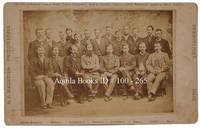
1881réf. 1002651881. Cabinet photo. fine. Horizontal albumen cabinet photo on white mount 4 7/8" X7 7/8" image:4 1/8" X6 1/8". Nice group portrait of members of the expedition - Standing from left to right: D. Schneider D. Cross D. Linn S. Long S. Frederick D. Henry S. Connell D. Bender D. Salor S. Bierdersack D. Gardner D. Ellis and D. Ralston - Seated from left to right: S. Brainard D. Keslingbury S. Greeley leader D. Lockwood D. Israil D. Jewell and D. Rice. fine Rare. Portrait of members of the U.S. International Polar Year Scientific Expedition to Lady Franklin Bay Ellesmere Island sponsored by the U.S. Signal Service and other government agencies. After two winters and the failure of relief expeditions in 1882 and 83 Greeley abandoned Fort Conger and moved to Cape Sabine as per his orders. Eighteen men would die that winter including one by suicide and one execution - Pvt. Charles B. Henry Seven survivors were rescued by Schley's relief expedition on the June 22 1883 but Elison would perish before they reached St. John's on July 17. 1881 unknown
1902réf. 13354London: John Murray 1902. First U.K. Edition. Hardcover. Very Good. 8vo. Pp. xxxvii 183; 184-383. Index. Top edges gilt. Illustrated with 122 plates with tissue guards of which 39 are color-printed 14 chromolithograph landscape views by R. Swain Gifford and Fred S. Dellenbaugh including frontispieces numerous letterpress illustrations. 16 plates of birds 2 of mammals and 7 of flowers and 83 are photogravures by Edward Curtis and others as well as maps and numerous text illustrations. Red cloth lettered and decorated in gilt light rubbing and wear to spines light rubbing to boards. Volume II includes contributions by William H. Dall Charles Keeler Henry Gannett William H. Brewer C. Hart Merriam George Bird Grinnell and M.L. Washburn. John Murray hardcover
réf. BN610349Karluk. Die Geschichte einer verratenen Expedition McKinlay William L and Seib Günter Karluk. Die Geschichte einer verratenen Expedition McKinlay William L and Seib Günter Karluk. Die Geschichte einer verratenen Expedition McKinlay William L and Seib Günter unknown
réf. BN92096DuMont Reiseverlag. Mit der Endurance in die Antarktis: Die Bilder der dramatischen Expedition 1914-1917 Hurley Frank and Hurley Frank Mit der Endurance in die Antarktis: Die Bilder der dramatischen Expedition 1914-1917 Hurley Frank and Hurley Frank Mit der Endurance in die Antarktis: Die Bilder der dramatischen Expedition 1914-1917 Hurley Frank and Hurley Frank DuMont Reiseverlag unknown
réf. 2041381-nnew. unknown
réf. 1346414785.Ghardcover. Good. Access codes and supplements are not guaranteed with used items. May be an ex-library book. hardcover
réf. H4141874. Albumin Prints ca. 145 x 129 cm 15 x 106 cm und 145 x 113 cm auf Kartontafeln montiert. Mit Beschriftung in deutscher Sprache. Eine Aufnahme ist etwas gebleicht die anderen sind in gutem Zustand und von guter Qualität. Die Photos wurden während des Aufenthalts der Korvette Gazelle 1874 in Monrovia gemacht. Sie zeigen Mitglieder der Expedition. Kommandant von Schleinitz führte die Korvette Gazelle 1874 bis 1876 auf einer Weltreise mit wissenschaftlichem Auftrag. Auf den Kerguelen-Inseln verbrachte die Expedition längere Zeit um den Venustransit zu beobachten. Mitte 1875 ging es weiter nach Neu Guinea. Viele Wissenschaftler forschten in den Bereichen Zoologie Botanik Geologie Meteorologie und Meeresforschung während Schleinitz selbst ethnologisches Material sammelte. Er benannte die Halbinsel nach seinem Schiff der Gazelle. Melanesien wurde erfirscht während auf der Rückfahrt Fiji Tonga und Samoa besucht wurden. Die Ergebnisse der Expedition wurden in einem fünfbändigen Werk publiziert. unknown
réf. H714an Bord der HMS Challenger 1872-1875. 4to. Band 1: 378 S. Band 2: 98 S. Mit zahlreichen Skizzen und Plänen im Text. Halblederbände der Zeit in neuer Lederbox. Sehr gut leserliche Handschrift meist in deutscher Sprache. Original-Tagebuch des deutschen Biologen von der Reise der HMS Challenger. Gestorben auf Tahiti. Die letzten Eintragungen des Biologen stammen vom 2.September 1875 auf Hilo Hawaii. Die Reise führte weiter Richtung Tahiti unterwegs am 13.September 1875 starb Willemoes-Suhm. Sein Tagebuch ist eine Fundgrube an Reisenotizen und wissenschaftlichen sowohl zoologischen als auch botanischen Eintragungen. Unterteilt ist sein Tagebuch nach den Stationen u.a. Azoren St. Paul Tristan-Inseln Pince Edwards Islands Crozet-Insel Kerguelen Antarktis Australien Neuseeland Tonga Fiji Ovalau Api Neue Hebriden Arafui Ari Ke´Dulan Ternate Lamboanga Manilla Cebri Humboldt-Bai – Neu-Guinea Yeddo Yokohama Hiogo. Yokohama – Sandwich-Inseln Honolulu Hilo. 1872-1875. Important manuscript by one of the leading naturalists on the voyage. Original scientific travel journal titled “Challenger” Rudolph von Willemoes Suhm “Journal No.” “I & II.” Scientific Travel Journal of the German Explorer and Zoologists aboard HMS Challenger. Text in German but occasionally in English. 2 Vols. 21 Dec. 1872-6. Sept. 1875. 4to 378; 98 pp. illustrated with sketches and 1 photograph original half calf fitted half morocco case. Autograph journal kept by the German naturalist Rudolf v. Willemoes-Suhm during his 3-year journey with the Challenger. Suhm was mainly concerned with Crustaceans and several new species were named by him. His journal covers the entire voyage until his tragic death from erysipelas on 13th September1875 while the ship was at Tahiti in the Pacific. His travel report remains unpublished and is a leading yet apparently untapped source on the history of the Challenger Expedition as well as research and discovery of the sea. Suhm born on 11. September 1847 in Glückstadt on the Elbe River studied in Bonn Munich and Göttingen already at the age of 24 years he was a Professor of Zoology at the University of Munich. in 1872 he was appointed by Sir Charles Wyville Thomson the Scientific Director of the Challenger Expedition as the only German on the staff of the research carried out on behalf of the Royal Society. The posthumous journal covers the entire period from Suhms trip to a few days before his death in which his illness forced him to stop writing. It contains a wealth of information particularly the geographical and zoological research of the “Challenger”. Suhm illustrated his records with small designs including many maps and some small Zoological representations. Die britische Challenger-Expedition 1872-1876 war die erste rein wissenschaftliche Forschungsreise. Das Expeditionsschiff HMS Challenger legte bei Ihrer Reise ca. 130.000 km zurück und durchzog damit beinahe das gesamte Weltmeer. Mit dieser Expedition wurde der Grundstein für die Ozeanographie gelegt. Wichtige Forschungsstationen waren die Bahamas die Marion-Inseln im südlichen Eismeer Neuseeland die Auckland-Inseln und Neu-Guinea. Die Ergebnisse wurden in 50 Bänden veröffentlicht. unknown
réf. H909Washington Beverley Tucker 1856. Three volumes quarto Volume 1 with 88 lithographed plates most tinted three colour facsimiles of Japanese woodblock prints two folding six maps two folding numerous wood-engraved illustrations in text the suppressed nude bathers plate is present !; Volume 2 with 27 illustration plates 18 hand-coloured 16 plates of wind & current diagrams 16 folding maps 14 linen-backed; Volume 3 with 352 wood-engraved star charts. Original cloth rubbed joints with small tears minor wear Text and plates in good condition. First edition the Senate Issue of Perry's account of his historic voyage to Japan in command of a naval expedition which was to lobby the Japanese government to establish diplomatic relations with the United States. The resulting treaty in 1853 ensured better treatment by the Japanese authorities of shipwrecked seamen and permitted American ships to dock at two Japanese ports to refuel and to seek supplies. "The most important result. was that the visit contributed to the collapse of the feudal regime and to the modernization of Japan" Hill. "As one of the chief diplomatic achievements of the 19th century the opening of Japan by the treaty negotiated by Perry will long make the name of Perry memorable. His expedition marked a departure in Occidental policy restricting Japan in American policy respecting the Orient and in Japanese policy respecting the Western world. In June 1855 Perry was ordered to Washington where his chief duty for more than a year was the preparation of a report of his expedition which was published by the government in 1856" DAB. hardcover
réf. H921Wien Tempsky/ Gerold/ Hölder 1892-1931. Reihe 1-5: Östliches Mittelmeer; ab Reihe 6: Rotes Meer und weiterführend östliches Mittelmeer endet mit Reihe 11; in Reihe 9 gab es nur Berichte über das Rote Meer. Alle Reihen in den Jahresbänden der Denkschriften der k.k. Akademie der Wissenschaften. Meist in Original-Leinenbänden bzw. in Original-Broschur sehr guter Zustand. Genaue Auflistung der Forschungsergebnisse und Publikation in Kainbacher S.358-362. - Eine der großen Tiefsee-Expeditionen gegen Ende des 19. Jahrhunderts waren die Österreichischen Expeditionen des S.M. Schiffes "Pola" in das östliche Mittelmeer bis 1894 und nachfolgend in 2 Reisen in das nördliche und südliche Rote Meer 1895/98. Die Publikation der wissenschaftlichen Ergebnisse dieser Expeditionen liegen hier vollständig vor. Der Schwerpunkt lag auf der zoologischen Erforschung daneben gab es aber auch umfangreiche meteorologische geodätische geologische botanische chemische und physikalische Untersuchungen Wasserproben etc. Neben der Tiefsee wurden auch die Küsten von Südarabien Jemen Sokotra Sudan Ägypten Arabien Levante Kleinasien und Libyen besucht und erforscht. Die Publikation ist mit großem wissenschaftlichem und verlegerischem Aufwand hervorragendes Karten- und Abbildungsmaterial über einen Zeitraum von fast 40 Jahren in kleiner Auflage für wissenschaftliche Kreise und Bibliotheken herausgegeben worden. unknown
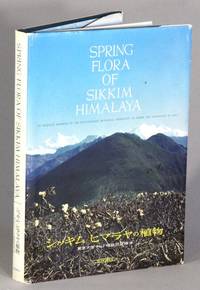
1963réf. 71837Osaka: Hoikusha Publishing Co. Ltd 1963. First edition large 8vo pp. 4 169 3; text in Japanese and English; text illustrations throughout many in color; original full blue cloth; previous owner's bookplate once tipped on the title page but now loose; very good sound and clean. From the preface: "The Indo-Japanese Botanical Expedition was sent to West Sikkim and the Darjeeling and Kalimpong districts in spring of 1960. It has been known that the flora of this region is very rich and is similar to that of Japan. So the main object of our expedition is to make more clear the botanical relationship between the region and Japan. The photographs compiled in this book were taken during the Expedition by the Japanese members under various difficult conditions excepting a few ones taken by Hara in March of 1963. Hoikusha Publishing Co., Ltd unknown
1987réf. 69219Beijing: Science Press 1987. 8vo pp. 4 vi 510; printed from typescript; graphs maps tables illustrations throughout; previous owner's bookplate otherwise near fine in original blue cloth stamped in gilt on spine. "From May to September 1981 the Sino-W. German Joint Expedition to the Qinghai-Xizang Plateau made multi-disciplinary investigations of glaciology permafrost climatic geomorphology geology surveying and remote sensing in the Anyêmaqên Mountains Qilian Mountains and a part of the Kunlun Mountains. A symposium on the Qinghai-Xizang Plateau was held at Braunschweig in April 1982 . and scientists from West Germany China Switzerland and Austria took part in it. The following five topics relating to the Qinghai-Xizang Plateau were discussed: 1. Glaciers and glacier oscillations; 2. Ice and frost regions; 3. Geomorphological types; 4. Vegetations weather and climate; 5. Recent and ancient alpine climate in Asia" Preface. Science Press unknown