anonymAntiquariat.de
4.953 Ergebnisse
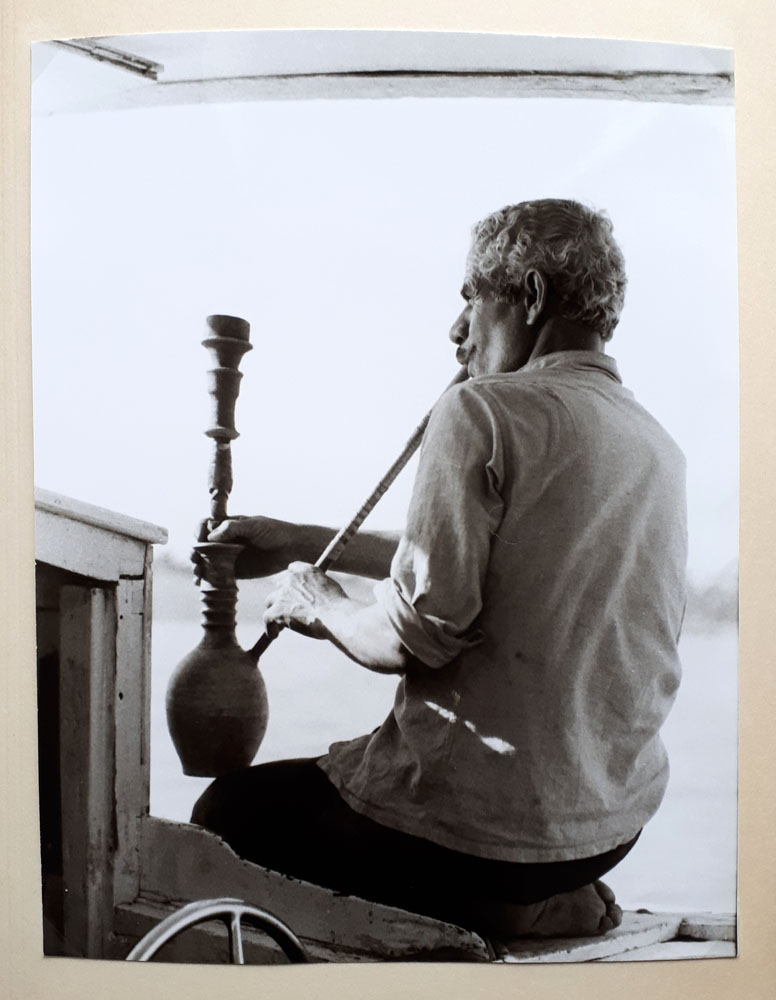
1969Best.-Nr. q5r1030b81969. Ca. 180 orig. s/w Vintage auf Barytpapier, ca. 17, 6 x 23,2 cm und ca. 80 orig. Farb-Abzüge, ca. 13 x 18 cm . Die Aufnahmen wurden mit einer Leica-Mittelformat-Kamera gemacht und enstanden während einer Studienreise März-April 1969 durch die Gebiete des heutigen Irak und Iran. Der Photograph ist unbekannt. Alle Photos sind mittels Photoecken auf Photo-Karton befestigt. Die Pappen sind in vier Ringbücher abgeheftet. Die Photos sind sauber und unbeschädigt und können getrost als wichtige Dokumente der Kunst- und Kulturgeschichte des Mittleren Ostens bezeichnet werden. Sehr guter Zustand. ca. 1800 gr. Aus dem gleichen Bestand wird separat eine Serie angeboten, die wahrschscheinlich für eine Ausstellung vorbereitet war. Weitere Informationen auf Anfrage. Bildrechte beim Verlag IL. 4° [7 Warenabbildungen] Ringbuchheftung
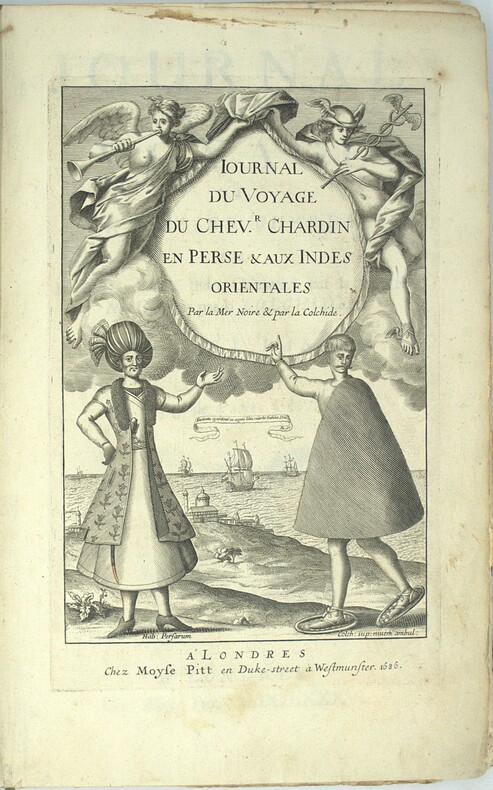
1686Best.-Nr. PHO-2117Londres, chez PITT, 1686, in-folio (32x21cm), 8ff. - 349pp.-3ff., illustré de 17 gravures, la plupart dépliantes, manque le portrait de l’auteur, relié plein cuir époque, défauts de reliure avec manque de matière mais corps solide, 2 planches détachées, déchirures sans manque, manque en marge à la carte, traces de réparation à quelques planches, traces d’oxydation (adhésif).
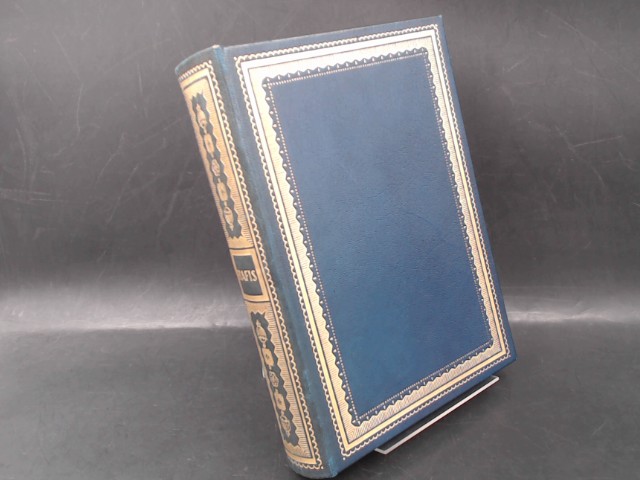
1912Best.-Nr. 45497Jena; Diederichs, 1912. 315 S., 10 Tafeln von F. H. E. Schneidler. Gr.-8°(=22,5-25cm); Blauer Original-Maroquin-Ledereinband mit reicher Goldprägung. Kopfschnitt in Gold.
1922Best.-Nr. PHO-1091A l'Imprimerie Nationale, Paris, Ernest Leroux et Paul Geuthner Éditeur, 1922-1949. . Édition bilingue: Texte arabe avec traduction française en regard. 5 volumes In-8° de: Tome I (4e tirage,1927) 2ff-XLVI & 443pp. Tome II (5e tirage,1949), XIV & 465 pp. Tome III (5e tirage, 1949), XXVI & 476 pp. Tome IV (4e tirage, 1922), 479 pp. Le Tome V, constitue l'index ,(3e tirage , 1927) 91 pp.. Broché avec couverture éditeur .
1827Best.-Nr. 18393Paris, Ponthieu et Cie; Leipzig Ponthieu, Michelsen et Cie 1827 in-8 de 2 ff.n.ch. et 187 pp. br., couv. bleue impr., couv. tachée, infimes piqûres
Best.-Nr. 176637Paris, Ducollet, 1833-1835 7 vol. in-8, carte dépliante, demi-chagrin noir, dos à nerfs, caissons à froid, filets dorés (rel. de l'époque). Rousseurs, qqs taches plus prononcées à la fin du tome 5. Timbre sec.
Best.-Nr. 10556N.R.F. 1924. In-4°, reliure demi-percaline rouge, étui assorti, couvertures conservées. Non paginé [56 pages]. E.O. 1/550 sur vergé baroque. [15 Whatman / 62 vergé de Navarre / 550 vergé baroque].
Best.-Nr. 13982845Amsterdam: Aux dépens de la Compagnie, 1720 3 vol in-12, t. 1: frontispice (manque minime de papier dans la marge), page de titre, (8)-308-(7) pages, 5 planches ( la planche p. 158 mal pliée et déchirée sans manque); t. 2: page de titre, 278-(9) pages, 8 planches, 1 carte; t. 3: page de titre, 176-(2) pages, 15 planches. Reliure plein veau d'époque, dos à 5 nerfs, caissons à fleurons dorés, roulette dorée sur les coupes, coins usés, petit manque de cuir à la coiffe sup. du t.3, petit manque de cuir au dos et au mors du 2ème plat du t.2, sinon bon exemplaire, complet du frontispice, des 28 planches (plusieurs se dépliant) et de la carte dépliante. STRUYS, JAN JANSZOON est un voyageur et navigateur hollandais du 17e siècle.
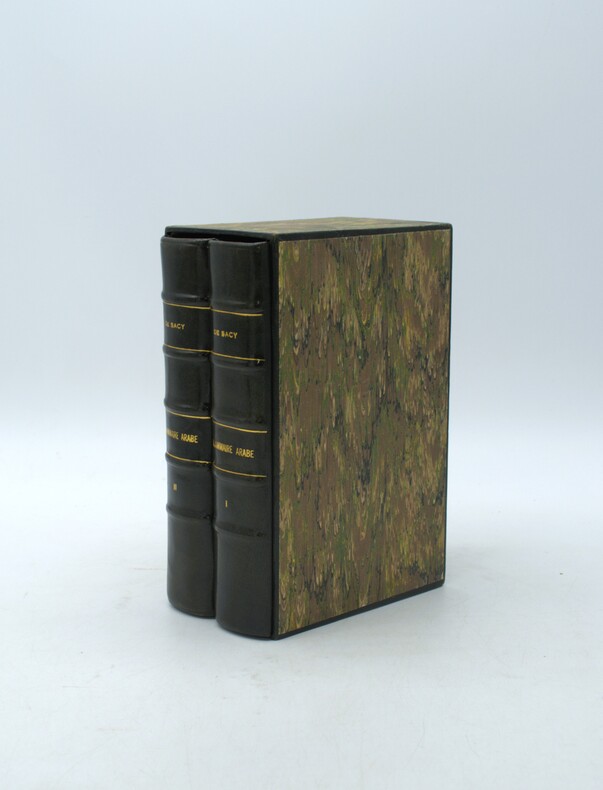
1810Best.-Nr. PHO-2229Paris, Imprimerie impériale, 1810, 2 volumes in-8 (22,5x15,5cm), xxvi-434pp.-1f (catalogue), x-473pp.-1f (catalogue suite). Demi chagrin et coins moderne dans un coffret, dos à nerfs avec auteur, titre et tomaison, brunissures sur les premières et dernières pages, travail de vers sur les 3 premiers feuillets de chaque tome renforcé, petit travail de ver en pied. Complet de ses 10 tableaux dont 9 dépliants, manque les 8 gravures de lettres arabes
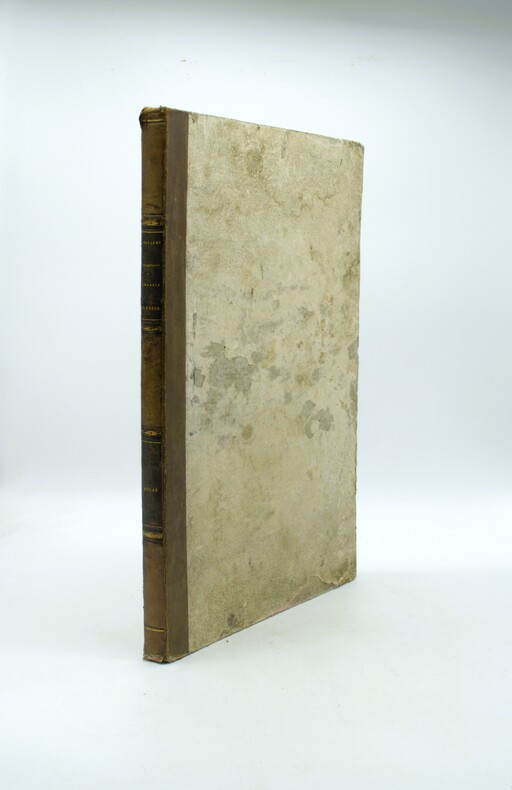
1811Best.-Nr. PHO-2107Paris, Le Normant, 1811. Folio (51 x 34 cm), f. de faux-titre, frontispice, f. de titre et 82 planches sur 64 feuilles dont la grande carte par Lapie. Relié demi veau, dos lisse avec titre, coiffes usés, coins usés, début de fente, papiers des plats défraichis, mouillures.
1711Best.-Nr. PHO-2422Amsterdam, Jean Louis de Lorme, 1711, 10 volumes in 12° (161 x 93 mm.), relié basane époque, dos à nerfs orné avec tomaison et pièce de titre rouge, tranches rouges. Petits frottements, accrocs au dos tome 6 & 8, petite mouillure sans gravité, quelques déchirures aux plis, une planche déchirée, une autre volante, 2 planches avec mauvais n° et 2 sans n°, 1 planche mal montée. Titre noir et rouge, illustré d’un portrait en frontispice, une carte et 78 planches dont certaines en panorama I/ (15) ff. avec le privilège, 254 pp., 1 portrait de l’auteur gravé par Tomassin, 1 carte dépliante, 1 planche hors texte ;II/ 334 pp., 9 planches dépliantes ;III/ 285 pp., 7 pl. dépl.;IV/ 280 pp., 6 pl. dépl.;V/ 312 pp., 4 pl. dépl. et 6 tableaux dépliants ;VI/ 328 pp., 4 pl. dépl.;VII/ 448 pp. ;VIII/ 255 pp., 16 pl. dépl.; IX/ (Volume de texte) 308 pp. / (Volume de planches) 29 pl. dépl. ;X/ 220 pp., (41) ff. de table.
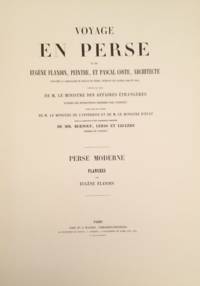
Best.-Nr. 145801976. Flandin Eugène. Voyage en Perse. Perse Moderne Planches documents the architecture cities and landscapes of nineteenth century Iran through the drawings produced during a French archaeological and artistic expedition to the region in 1840. French artist Eugène Flandin traveled to Iran with architect Pascal Coste as part of a diplomatic mission supported by the Académie des Beaux Arts in Paris. During two years of travel across western and southern Iran the expedition produced extensive drawings of monuments urban centers and archaeological sites associated with the Qajar period. These images later formed the basis of Perse Moderne one of the most significant illustrated records of nineteenth century Iran produced by European artists. Flandin Eugène. Voyage en Perse. Perse Moderne Planches. London: Burness Faridany Limited 1976. Limited facsimile edition issued to commemorate the centennial of Flandin's death. Elephant folio measuring approximately 17 x 24 inches. The volume contains one hundred tinted lithographic plates reproducing the illustrations from the original nineteenth century publication. The plates depict architectural monuments and landscapes including royal mosques and palaces the city and ports of Tehran the ruins of Persepolis the tomb of Saadi and other locations recorded during Flandin's expedition. The original Perse Moderne was published in 1854 as part of a large multi volume series documenting the results of Flandin and Coste's travels through Iran. The expedition provided one of the earliest systematic visual surveys of Persian architecture and urban landscapes available to European scholars and artists. Flandin's drawings preserved detailed views of monuments and settlements during the Qajar period and have been widely cited by historians of Persian art and architecture as a major documentary source for nineteenth century Iran. The 1976 edition reproduces these images in a limited printing of six hundred copies allowing modern readers access to the visual material of a work that is otherwise difficult to obtain in its original form. One elephant folio volume with one hundred tinted lithographic plates housed in the original box. Minor handling wear to the box while the volume and plates remain well preserved. Overall condition very good. unknown
Best.-Nr. 145801976. Flandin Eugène. Voyage en Perse. Perse Moderne Planches documents the architecture cities and landscapes of nineteenth century Iran through the drawings produced during a French archaeological and artistic expedition to the region in 1840. French artist Eugène Flandin traveled to Iran with architect Pascal Coste as part of a diplomatic mission supported by the Académie des Beaux Arts in Paris. During two years of travel across western and southern Iran the expedition produced extensive drawings of monuments urban centers and archaeological sites associated with the Qajar period. These images later formed the basis of Perse Moderne one of the most significant illustrated records of nineteenth century Iran produced by European artists. Flandin Eugène. Voyage en Perse. Perse Moderne Planches. London: Burness Faridany Limited 1976. Limited facsimile edition issued to commemorate the centennial of Flandin's death. Elephant folio measuring approximately 17 x 24 inches. The volume contains one hundred tinted lithographic plates reproducing the illustrations from the original nineteenth century publication. The plates depict architectural monuments and landscapes including royal mosques and palaces the city and ports of Tehran the ruins of Persepolis the tomb of Saadi and other locations recorded during Flandin's expedition. The original Perse Moderne was published in 1854 as part of a large multi volume series documenting the results of Flandin and Coste's travels through Iran. The expedition provided one of the earliest systematic visual surveys of Persian architecture and urban landscapes available to European scholars and artists. Flandin's drawings preserved detailed views of monuments and settlements during the Qajar period and have been widely cited by historians of Persian art and architecture as a major documentary source for nineteenth century Iran. The 1976 edition reproduces these images in a limited printing of six hundred copies allowing modern readers access to the visual material of a work that is otherwise difficult to obtain in its original form. One elephant folio volume with one hundred tinted lithographic plates housed in the original box. Minor handling wear to the box while the volume and plates remain well preserved. Overall condition very good. unknown books
1711Best.-Nr. PHO-2002Amsterdam, Louis de Lorme, 1711, 3 volumes in-4° (255x200mm), T1 : Portrait de l’auteur gravé par Tomassin (détaché), Titre noir et rouge, (1ff),279pp., 18 planches, T2 ,1ff, Titre ; 454pp ,15 planches, T3, 1ff, Titre ; 254pp, errata, table des matières (11ff), 45 planches, complet. Relié veau époque, dos à nerfs orné avec titre et tomaison, ex-libris, Tome 1 ; manque un caisson au dos et la pièce de tomaison, début de fente, coiffes absentes, travail de ver avec atteinte, Tome 2 ; dos manquant, coin abimé avec manque, coiffes absentes, mouillures, coutures lâches. Tome3 ; manque au dos, coiffes absentes, frottements, coins abimés, mouillure.
1657Best.-Nr. PHO-1458A Troyes, par Nicolas Oudot, et se vendent à Paris: Chez François Clousier, 1657. in-4; [6ff. (sur 7: feuillet de dédicace en fac-simile), dont titre, portrait légendé de La Boullaye, préface], 558p., [5ff. Table, fautes, privilège du 12 février 1657]; 33 illustrations sur bois dans le texte dont 16 à pleine page. Reliure d'époque en basane brune, dos à nerfs avec titre , coupes , coiffes et coins usés , frottements. un coin déchiré au titre sans atteinte au texte. Mouillure angulaire au premier portrait P. 73 déchirée avec manque de papier ,sans atteinte au texte. P. 165: manque en coin avec perte de qq mots; PP. 173 et 175: déchirures sans perte de texte; P. 234: manque de papier en pied avec perte de quelques mots; taches d'encre pp. 264 ; pp. 460 à 485: petites galeries de vers marginales en pied. Ex-libris manuscrit Dominium Antonium Biguet. Seconde édition
1829Best.-Nr. PHO-1340Paris, 1829 , imprimerie Royale , in-8 , X-519 pp.-164 pp. ,catalogue in fine, relié demi cuir époque , dos lisse avec auteur et titre , initiales en pied , coins et coupes usés , frottements aux plats , quelques rousseurs , pages de garde bruni.
1819Best.-Nr. 12492A Paris, chez Nepveu, 1819. In-8 de [4]-II-285 pages, demi-veau moucheté à coins, dos lisse orné de filets, roulettes et titre dorés, pièce de tomaison bordeaux, tranches jaunes mouchetées. Dans un remarquable état de fraîcheur.
2013New English In original decorative full leather bdg. In publisher's special box. Elephant folio. (48 x 33 cm). In Persian and English. 419, [3] p., color ills. "This magnificent edition is printed on 420 pages, of which 171 pages are pure full five color print illustration of the original Shahnameh. - 119 illustration from the TMOCA and other Iranian museums. - 33 illustration from Metropolitan Museum of Art in New York. - 9 illustration from Agha Khan Foundation. - 10 illustration from The Khalili Collections in London.".
1860Very Good Turkish, Ottoman (1500-1928) Original fine 1/4 leather bound in Ottoman lettered gilt. Demy 8vo. (22 x 14 cm). In Ottoman script (Old Turkish with Arabic letters). 174 p. Hegira: 1277 = Gregorian: 1860. Rare early (second) edition of this eye witness and first-hand account, and one of the most important chronicles describing the history of late Safavid Iran in the 18th century, the Iranian invasion of Afghanistan and the siege and the fall of Isfahan in 1722 written by Kruzinski who was a Polish Jesuit missionary served in the Persia in the early 18th century. In 1720 he was nominated advocate general of the mission in Persia and became the secretary to the Bishop of Isfahan. Krusinski himself, however, claimed later on that he is not only the author but also the translator of this work. As a chronicle, this is a history of Iran under the Safavids from 1499 up to 1727 with a special focus on the 1722 Afghan invasion that terminated the Safavid dynasty. "His account of the conditions and events preceding and during the siege and the subsequent demise of the Safavids is unique. It also offers key insights into the workings of the late Safavid state and government as well as the functions of the royal harem." (Bloomsbury). Translated and expanded by Ibrahim Müteferrika of Kruzinski's Latin manuscript written in 1726 in Istanbul and entitled "Historia revolutionis monarchia Persica". The book was first published in Italian, French, and English translations, in Rome (1727), Paris (1728), and London (1728). The founder of the legendary first printing house in the Islamic world, Ibrahim Müteferrika (1674-1745), was the editor of this book. Ceridehâne [i.e. Journal House] Printing House is the successor of the Müteferrika Press in the early 19th century. "The book is a Turkish translation of the history of Iran written in Latin by the Jesuit missionary Judas (Jan) Tadeusz Krusinski (1675-1751). The work, whose title can be translated as 'A voyager's description on the apparition of the Afghans and on the reasons of the Safavid Empire being undermined', focuses on the Afghan invasion of 1722 which led to the fall of the Safavid dynasty, but also offers an overview on the historical processes of early 18th-century Safavid Iran. The publication of this work was made actual not only by the vicinity of Iran to the Ottoman Empire but also by the historical turn reorganizing the relations of power in the region and triggering the intervention of the Ottomans as well. This may have been the reason that among the first Turkish incunabula this was the work published in the highest number of copies. This publication also offers an early example of copyright disputes, as Krusinski considered the Turkish translation as his own work, while Müteferrika, who does not mention his name in the printed version, suggests himself to be the translator". (Source: The Mysterious Printer Ibrahim Muteferrika and the Beginnings of Turkish Book Printing: Library of Hungarian Academy of Sciences Online). Özege: 19897.
Best.-Nr. 48147Paris.1679.In-12 en vélin d'époque.564 p.+ Tables de Chapitres.1 carte rempliée du Japon.8 gravures.Cinq parties:1/Une relation du Japon.2/Négociation des députez en Perse et Aux Indes.3/Commerce des Indes Orientales.4/Royaume de Tunquin.5/Les Hollandais en Asie. Bel exemplaire. Au dos, titre et date à l'encre.Manque de vélin sur les bords des plats.petit manque de papier en bordure horizontale de la page de garde.Réparation ancienne de la carte.Intérieur et gravures très frais.
1956Best.-Nr. 9000018 février 1956 | 21.3 x 27.7 cm | Une feuille
Best.-Nr. 114702levy in-folio Paris, Librairie centrale des Beaux-Arts, Emile LEVY, [sans date], 1 portfolio de 305 x 410 mm environ, (2) ff. (Justification de tirage, page de titre), 4 pages (Notice), 3 pages (Table des planches), complet des 100 planches. Tirage à 300 exemplaires numérotés (n°146). Portfolio en toile verte, titré en doré sur le plat supérieur, trois attaches en tissu. Quelques marques sur la toile, tranches brunies, rares traces foncées en marge des feuillets, quelques rousseurs, défaut planche 67 sans atteinte à l'image, sinon bon état général.
1801Best.-Nr. PHO-1355Paris, H. Agasse, an 9 [1801]-1807. 6 vol. in-8 (207 x 134 mm) sans l’Atlas ,xx-392pp.-1f. , 2ff.-377pp.1f. , 2ff.-iv-369pp.-1f.,2ff.-456pp.-1f.,2ff.-xv-485pp.,2ff.-522pp.-1f., relié demi veau, dos lisse richement orné,tranches marbrées (Reliure de l'époque), quelques frottements .
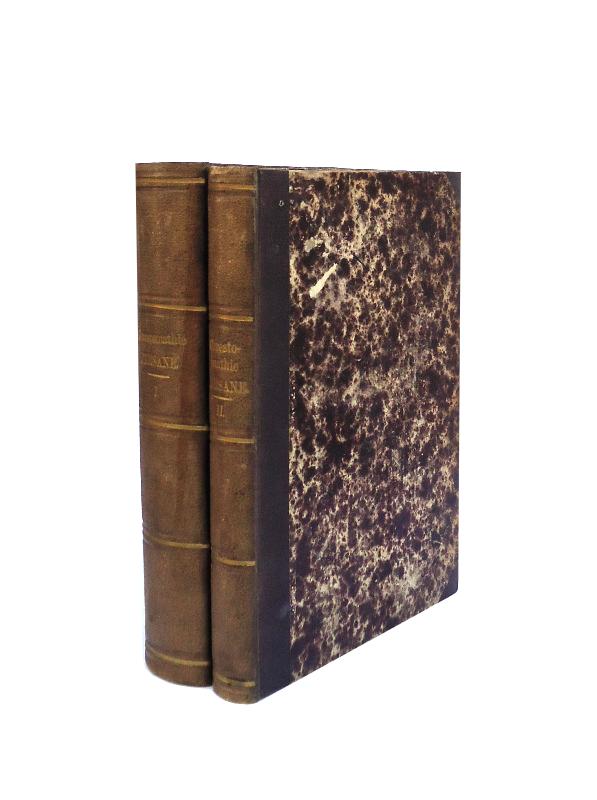
1843Best.-Nr. 19824Paris, Typographie de Firmin Didot Frères, 1843-1853. In-8°. CLV, 276; XXXVIII, 292 (2) p. (= Chrestomathies orientales), demi-reliures de toile avec titres dorés. - 1. Prolégomènes des tables astronomiques d'Oloug-Beg, publiés avec notes et variantes, et précédés d'une introduction par L.P. E. A. Sédillot. 1847. - Mirkhond: Histoire de Sassanides, à l'usage des élèves de l'école royale et spéciale des langues orientales vivantes. 1843. - 2. Prolégomènes des tables astronomiques d'Oloug-Beg. Traduction et commentaire, par L.P.E.A. Sédillot. 1853. Reliures un peu frottées. Petite manque sur le plat. Quelques cachets sur les pages de titre et sur les dernières pages de texte. Papier un peu taché par la moisissure.
1942Best.-Nr. 124591Buenos Aires Editions des Lettres Françaises 1942 1 vol. broché in-4, broché, non paginé. Edition originale, si l'on excepte le tiré à part publié en mai 1942 par les "Cahiers du Sud" à l'insu de l'auteur. Exemplaire du premier tirage daté du 25 août 1942. Un des rares exemplaires hors commerce sur un étonnant papier de type Auvergne qui n'est pas annoncé en page de justification, mais simplement marqué "H.C.", avec ce bel envoi autographe signé au poète et critique américain Allen Tate (1899-1979), "qui sait de quels refus est fait l'accueil d'une heure, d'une oeuvre, ou d'un échange humain, bien cordialement. St-J. Perse, Washington, 1944". Petites déchirures et manques en bordure de la couverture, le papier utilisé étant cassant et d'une grande fragilité. L'exemplaire est conservé sous un étui qui reproduit en fac similé la couverture.