[Canadian Pacific]Biblio.com
5 789 résultats
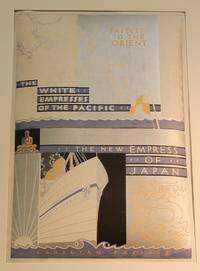
1930réf. P2522Montreal: Canadian Pacific c. 1930. Very Good; laid down on acid-free paper for long-term preservation. Image Size : 454x301 mm 17.87x11.85 Inches Platemark Size : Paper Size : 480x328 mm 18.90x12.91 Inches Coloring: Printed in Color Medium: Lithograph Categories: Advertising; Posters; Transportation Ships;20th Century Art Art Nouveau & Deco; Canadian Pacific unknown
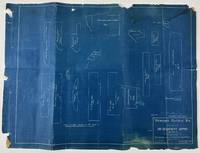
1907réf. 13196San Francisco: Chief Engineer's Office 1907. Three blueprints each about 18 x 24 inches. Old folds noticeable chipping to edges occasionally costing minor content near the margins. Good condition. A trio of blueprints detailing the Western Pacific Railroad's standard 20-x-32-foot Desert Depot structure. This standard building plan was created for the depots between San Francisco and Salt Lake City in the Nevada Desert. The blueprints include side views of the building plain views floor plans details of footings overall foundation construction details of prominent structural support and so forth. The layout of the office reveals that each would have a telegraph office at front and center a conductors room at the right of the building three bedrooms and a kitchen. A wonderful relic of the western railroad. Chief Engineer's Office unknown
1907réf. 13196San Francisco: Chief Engineer's Office 1907. Three blueprints each about 18 x 24 inches. Old folds noticeable chipping to edges occasionally costing minor content near the margins. Good condition. A trio of blueprints detailing the Western Pacific Railroad's standard 20-x-32-foot Desert Depot structure. This standard building plan was created for the depots between San Francisco and Salt Lake City in the Nevada Desert. The blueprints include side views of the building plain views floor plans details of footings overall foundation construction details of prominent structural support and so forth. The layout of the office reveals that each would have a telegraph office at front and center a conductors room at the right of the building three bedrooms and a kitchen. A wonderful relic of the western railroad. Chief Engineer's Office unknown books
1892réf. 64321Portland OR: Wiley B. Allen Press of the Lewis & Dryden Printing Co. 1892. 8vo. viii 462 pp. Photo frontisp. photo plate of Dr. John McLoughlin woodcut-engraved plate facsimile plates 1 large folding 1 large folding map. Embossed plum-coloured pebbled publisher’s cloth illustration of covered wagon in blind on front cover gilt lettering on spine very slight sunning to spine slight bumping head & foot of spine occasional pencil annotations in Miller’s hand still a NF bright copy from the library of Robert Aubrey Miller 1854-1941 w/ ownership markings dated October 25th 1895 & ownership stamp. Miller a noted attorney former Oregon House of Representatives Democratic Rep and from 1893-1897 the registrar at the United States Land Office in Oregon City. Known as Colonel Bob Miller he was the key organizer of the Chautauqua system in the Pacific Northwest and practiced law in Portland until his death manuscript note in pencil on rear flyleaf. First edition of what is considered one of the rarest early histories of Oregon with nearly all of the edition’s copies destroyed in a fire except for those already sent to the bindery or subsequently lost at sea. This work drew upon a vast body of original documents pertaining to early explorations of the Pacific Coast early Territorial government maneuverings a detailed history of the Cayuse War with original documents along with early overland immigration records. Although Soliday and Eberstadt believed there to be no more than 20 surviving copies and no copy at auction or bookseller’s catalogue in over 50 years Worldcat does locate 30 or so physical copies. Brown 1867-1898 was an Oregon pioneer newspaper printer and journalist who has an historian wrote on both Oregon and Native American History and due to illness never completed the unpublished manuscripts held by the University of Oregon. The pencil manuscript note on the 2nd rear flyleaf recorded June 4 1917 how “Mrs. Robert A. Miller Sarelia Griffith Miller 1859-1903 told of her mother Mrs. Susan Margaret Savage Griffith 1838-1909 . . . journals telling of a story of one of the early pioneer women in crossing the plains and being out of provisions having to eat dog meat and this woman said she thought this was awful but she sed we even had to do worse . . . they had recourse to dried salmon that had maggots in it. . . After she ate it she god down on her knees and prayed for more dog.” See: Howes B846; Soliday Descriptive Check List Western Americana 1 1349. Wiley B. Allen, Press of the Lewis & Dryden Printing Co., hardcover
1945réf. 64628Los Angeles CA: 40th Infantry Division ca. 1945. Oblong 4to. 120 pp unpaginated. with 200 silver gelatin photographs all mounted and numbered in lower corner w/in negative keyed to indices inserted after the title page occasional creasing to corners. Brick-red publisher’s cloth post-binder two hidden nickel-plated screwposts at gutter margin 40th Infantry Division sunburst emblem patch on front cover in gilt on blue field minor thumbing edgewear slightly shaken occasional fraying to a couple leaves at fore-edge still a VG copy. First edition thus of this 40th Infantry Division regimental souvenir album visually recording the Western National Guard “Sunshine Division’s” participation in the grueling and bloody island hopping campaign during World War II from Guadalcanal to The Philippines often involved in heavy fighting and credited with capturing or killing over 11000 Japanese troops while suffering 715 casualties. These photographs follow the 40th Division’s arrival and activities in Hawaii followed by their movement to Guadalcanal and arrival at Kukum Dock. Photos depict wrecked Japanese ships beached nearby the typical bare-breasted shots of New Britain Indigenous Peoples arrival of nurse units and training on New Britain. As depicted in these images the bloody Philippine Islands campaign opened with multiple regiments from the 40th Division landing at the Lingayen Gulf on Luzon in order to retake the main Philippine Island in January 1945 including views of Tarlac Bamban battle damage artillery pieces war dogs used by segregated African-American patrols on Luzon well-prepared Japanese positions built to repel the American forces machine gunners Japanese casualties and the results of Japanese troops using grenades to commit Hari Kari.The next phase of the campaign involved the 40th Division participating in the Panay & Guimaras Invasion landing at Tigbauan on Panay Island securing Iloilo City and nearby airfields coordinating with Philippine guerrilla forces with photos of the guerrillas views of the landing craft Philippine peoples and guerrillas wounded by Japanese snipers being treated by American forces and the Division artillery. The 40th Division later came together with other forces and moved onto Negros Island from the end of March through August 1945 pushing deep into Negros Island capturing Bacolod and its airfield before continuing on in the heavy surrounding jungle dislodging Japanese troops in the surrounding area. Their artillery and tank battalions proved particularly effective and many of these photographs depict not only the movements and equipment but the aftermath as well. This album does not include the National Guard Division’s participation in the enforcement of the orders to round up and illegally incarcerate Japanese-Americans throughout the West into War Relocation Centers and Internment Camps for the duration of the War. No copies in Worldcat -- this volume should not be confused with the regimental history published in Baton Rouge LA by the Army & Navy Publishing Company -- “40th Infantry Division: the years of World War II 7 December 1941-7 April 1946. 40th Infantry Division, hardcover
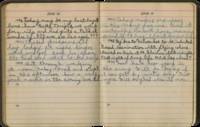
1944réf. List3749US Australia and New Guinea 1944. Diary measuring 4 ¼ x 5 ½ inches containing 735 entries. With three letters two of which are facsimiles. Diary boards with debossed text reading "ARMY DAYS" and lock; worn especially at corners excellent. Contents Fine. Letters Fine. Overall Near Fine. A diary belonging to Dale F. Damitz 1920-1944 Company A of the 738th Military Police Battalion covering the time between his last day before leaving for service and about a month before his death in October of 1944. The 738th MPB stationed in the South West Pacific Area during the Second World War is best known during that time for its role in the Battle of Brisbane a two-day riot between US servicemen and Australian servicemen and civilians in which an Australian Gunner was killed and hundreds on both sides were injured. Australia was a critical station for housing troops on duty in the Pacific Theater. The arrival of US military personnel in Australia-80000 in Brisbane alone-overtaxed the capacities of its cities increased crime and strained relations between US troops and Australians. Americans had access to better rations including luxuries such as cigarettes and ice cream; received higher pay than their Australian counterparts; and were often criticized for consorting with Australian women. Though it does not figure in this diary race likely also contributed to animosity between the groups. Despite fairly strict Australian laws around the sale of alcohol drunkenness was rampant. Military police from both countries were tasked with keeping the peace in the major cities. Damitz arrived in Brisbane with the 738th in August 1942 where "Lt. Craddock" informed his company that "where we're going we'll have a chance to catch 200 lb bombs in our pockets" August 30 and "Cpt. Forbes" that he would "get some honor and glory if it costs him the whole company" August 31. Damitz's diary is fairly sparse at this time including during the Battle of Brisbane though he mentions an "air raid" that made "the ground shake" December 1. In Australia-"this land of forgotten men" February 15 1943 consisting of "Just heat and rain day after day. And insects" February 5 1943-Damitz's duties mainly consisted of being what he called "prisoner chaser" patrolling for and guarding "the drunks" who "make you so sick and disgusted you never want a drink again" March 29 1943. Damitz's duties took him across central and southeastern Australia from Adelaide River outside Darwin to Birdum and Alice Springs to Adelaide via Terowie-these along the Stuart Highway a critical military transport route-to Melbourne and then to Brisbane via Sydney. The central Australian route through the Northern Territory and South Australia is "just waste land" February 23 1943 and "flat desert country . Saw a lot of camels and a few abo camps" March 5. Damitz's then went from Brisbane to Adelaide River outside Darwin to Melbourne and back to Brisbane. In Melbourne and Brisbane he is on "prisoner chaser" duty: "Was prisoner chaser today. Got through at five. Went out on town patrol at six thirty. All troops were restricted as there was a big drive on to pick up all AWOL's. got one fellow over the hill." April 21 1943 And: "Was working with the Civilian Police tonight after sly-grog sellers. Caught one. Sure is a lot of excitement and dangerous" June 13 1943. Bootlegging was a persistent issue in Australia exacerbated by the presence of American GIs who were unused to Australia's strict liquor laws. Damitz's company left Brisbane for Milne Bay in New Guinea in November of 1943. The camp is "worse than a pig pen" November 11 and the "bastard of a Col. of the 801st" takes away his tent's floorboards for his own use leaving Damitz in the mud December 17. In a somewhat more upbeat letter to friends back home Damitz reports water "clear as crystal and cold as ice" with "plenty of banana trees and pineapples" and "natives here . called fuzzy-wuzzies. We give them a cigarette to climb the coconut trees and knock down coconuts for us" November 17. They arrived in Oro Bay in March of 1944 where Damitz "Just lays around" March 15 deals with the mud and casts his ballot-"the first time in my life I have voted. Voted straight Republican" July 23-on the controversial absentee ballot. By far Damitz's most persistent topic for the entirety of the diary is his overwhelming boredom the constant feeling of preparing for "something big" October 24 1943 that never materializes and the totalizing apathy that this produces. Damitz had been a reluctant enlistment in the first place-for instance mentioning an award as "another pipe dream of the old man's" June 5 1943-and had not expected to be sent overseas so quickly "it was said no untrained men would leave the states. Some joke!"; June 30 1942. He "Sure is sick of this shit!!!" March 15 1944 and writes throughout 1943: "February 4: Doesn't take long for a guy to get so you don't give a dam for anything. Almost get so you don't care what happens next. February 12: Saw a good movie here in camp last night. Rest of the day was just like any other day here. Often wonder if I'll ever have the happiness I once had April 14: This all seems like a bad dream. Sure wish it was over with. April 30: The months slowly go by. You feel like a condemned man who is waiting for the chair. August 19: Today makes fourteen months in the army. Seems more like years tho. Hate it more every day. November 13: Is raining again today the mud is about a foot deep right inside of the tents. Don't have any kitchen yet. Don't care. December 21: Just laid around all day. Don't have any life or pep anymore. Don't have any ambition to do a dam thing." After nearly two and a half years of "all this B.S." July 30 1943 Damitz's company was sent to the Philippines where he was killed in action a few days into the Battle of Leyte. The diary provides a humanizing look-in Damitz's distinctively hard-boiled writing voice-at US-Australian relations and law enforcement and at everyday life outside of combat for a US battalion infamous in Australian history.
1944réf. List3749US Australia and New Guinea 1944. Diary measuring 4 ¼ x 5 ½ inches containing 735 entries. With three letters two of which are facsimiles. Diary boards with debossed text reading "ARMY DAYS" and lock; worn especially at corners excellent. Contents Fine. Letters Fine. Overall Near Fine. A diary belonging to Dale F. Damitz 1920-1944 Company A of the 738th Military Police Battalion covering the time between his last day before leaving for service and about a month before his death in October of 1944. The 738th MPB stationed in the South West Pacific Area during the Second World War is best known during that time for its role in the Battle of Brisbane a two-day riot between US servicemen and Australian servicemen and civilians in which an Australian Gunner was killed and hundreds on both sides were injured. Australia was a critical station for housing troops on duty in the Pacific Theater. The arrival of US military personnel in Australia-80000 in Brisbane alone-overtaxed the capacities of its cities increased crime and strained relations between US troops and Australians. Americans had access to better rations including luxuries such as cigarettes and ice cream; received higher pay than their Australian counterparts; and were often criticized for consorting with Australian women. Though it does not figure in this diary race likely also contributed to animosity between the groups. Despite fairly strict Australian laws around the sale of alcohol drunkenness was rampant. Military police from both countries were tasked with keeping the peace in the major cities. Damitz arrived in Brisbane with the 738th in August 1942 where "Lt. Craddock" informed his company that "where we're going we'll have a chance to catch 200 lb bombs in our pockets" August 30 and "Cpt. Forbes" that he would "get some honor and glory if it costs him the whole company" August 31. Damitz's diary is fairly sparse at this time including during the Battle of Brisbane though he mentions an "air raid" that made "the ground shake" December 1. In Australia-"this land of forgotten men" February 15 1943 consisting of "Just heat and rain day after day. And insects" February 5 1943-Damitz's duties mainly consisted of being what he called "prisoner chaser" patrolling for and guarding "the drunks" who "make you so sick and disgusted you never want a drink again" March 29 1943. Damitz's duties took him across central and southeastern Australia from Adelaide River outside Darwin to Birdum and Alice Springs to Adelaide via Terowie-these along the Stuart Highway a critical military transport route-to Melbourne and then to Brisbane via Sydney. The central Australian route through the Northern Territory and South Australia is "just waste land" February 23 1943 and "flat desert country . Saw a lot of camels and a few abo camps" March 5. Damitz's then went from Brisbane to Adelaide River outside Darwin to Melbourne and back to Brisbane. In Melbourne and Brisbane he is on "prisoner chaser" duty: "Was prisoner chaser today. Got through at five. Went out on town patrol at six thirty. All troops were restricted as there was a big drive on to pick up all AWOL's. got one fellow over the hill." April 21 1943 And: "Was working with the Civilian Police tonight after sly-grog sellers. Caught one. Sure is a lot of excitement and dangerous" June 13 1943. Bootlegging was a persistent issue in Australia exacerbated by the presence of American GIs who were unused to Australia's strict liquor laws. Damitz's company left Brisbane for Milne Bay in New Guinea in November of 1943. The camp is "worse than a pig pen" November 11 and the "bastard of a Col. of the 801st" takes away his tent's floorboards for his own use leaving Damitz in the mud December 17. In a somewhat more upbeat letter to friends back home Damitz reports water "clear as crystal and cold as ice" with "plenty of banana trees and pineapples" and "natives here . called fuzzy-wuzzies. We give them a cigarette to climb the coconut trees and knock down coconuts for us" November 17. They arrived in Oro Bay in March of 1944 where Damitz "Just lays around" March 15 deals with the mud and casts his ballot-"the first time in my life I have voted. Voted straight Republican" July 23-on the controversial absentee ballot. By far Damitz's most persistent topic for the entirety of the diary is his overwhelming boredom the constant feeling of preparing for "something big" October 24 1943 that never materializes and the totalizing apathy that this produces. Damitz had been a reluctant enlistment in the first place-for instance mentioning an award as "another pipe dream of the old man's" June 5 1943-and had not expected to be sent overseas so quickly "it was said no untrained men would leave the states. Some joke!"; June 30 1942. He "Sure is sick of this shit!!!" March 15 1944 and writes throughout 1943: "February 4: Doesn't take long for a guy to get so you don't give a dam for anything. Almost get so you don't care what happens next. February 12: Saw a good movie here in camp last night. Rest of the day was just like any other day here. Often wonder if I'll ever have the happiness I once had April 14: This all seems like a bad dream. Sure wish it was over with. April 30: The months slowly go by. You feel like a condemned man who is waiting for the chair. August 19: Today makes fourteen months in the army. Seems more like years tho. Hate it more every day. November 13: Is raining again today the mud is about a foot deep right inside of the tents. Don't have any kitchen yet. Don't care. December 21: Just laid around all day. Don't have any life or pep anymore. Don't have any ambition to do a dam thing." After nearly two and a half years of "all this B.S." July 30 1943 Damitz's company was sent to the Philippines where he was killed in action a few days into the Battle of Leyte. The diary provides a humanizing look-in Damitz's distinctively hard-boiled writing voice-at US-Australian relations and law enforcement and at everyday life outside of combat for a US battalion infamous in Australian history. books
1902réf. 54207Chicago: Published by the Chicago Rock Island & Pacific Railway Company 1902. 1902. First edition thus. 14 1/4" x 10 1/4" printed newspaper 8 pp. triple column illustrated from photographs map of the "Great Rock Island Route System." This is Vol. XXII No. 1. Chicago January 1902. "The Western Trail is published by the Chicago Rock Island & Pacific R'Y - The Great Rock Island Route - as a quarterly and issued in the interests of the above named Company. Its endeavor will be to give its readers in considerable detail facts as to emigration securing homes and the industrial interests of the country traversed by THE GREAT ROCK ISLAND ROUTE in the states of Kansas Colorado and Texas and the Indian and Oklahoma Territories and in a general way show the industrial interests in all the states traversed by this line. Copies for a year will be mailed free." ---- Quoted from The Western Trail. Features include the Seven-Six Ranch of W. D. Wagner a few miles from Dalhart Texas that shows a ranch scene with a wonderful view of a windmill in operation. Articles about towns in Indian Territory New Mexico Colorado Oklahoma and Texas with special coverage on Addington Indian Territory Cloudcroft New Mexico Santa Rosa New Mexico and Burlington Colorado the county seat of Kit Carson County. Also some information on growing crops such as rice and broom corn. All in all an interesting newspaper for its day. This item has had detailed work by a master paper conservator as it has been deacidified a few small portions have been mended with Japanese paper and any tears or paper loss have been infilled. It has been housed in a transparent polyester "Mylar" sleeve to protect against dirt and handling. A very good and serviceable copy. Published by the Chicago, Rock Island & Pacific Railway Company, 1902. unknown
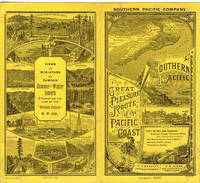
1887réf. 41282N. P.: Crocker & Co. 1887. 1887. RAILROAD CALIFORNIA. First edition. 6 1/4" x 13 3/4" goldenrod colored paper folds to 6 1/4" x 3 3/8" two-sided eight panel timetable with exquisite scenes a map and train schedules for the Northern California lines of the railroad. The timetable has engraved vignettes and ornate lettering by E. Schultze. This is an attractive museum quality timetable and one of the rarest and finest early Southern Pacific railroad pieces that we have handled. It's in near fine condition and 130 years old. Crocker & Co., 1887. unknown
réf. 4047San Francisco:: The Railroad A. H. Printing Co. . Cincinnati O. Illustrated with halftones; ii and 76 pp. 8vo limp tan full simulated leather title in gilt on front cover together with stamped presentation statement; spine expertly rebacked; very small piece lacking from top outer corner. Institutionally common scarce in trade. This is the original edition NOT a print-on-demand book.Philadelphia-born Hiram Sellers Kneedler 1859/60–1941 was a Newspaper editor and publisher who owned various newspapers in Iowa including the The Times in Cherokee and The Boone Republican and who wrote several travel books for the railroads. In 1913 he uprooted his family and drove them all in his 1913 Studebaker to California where he stayed for about 10 years doing various jobs including working on newspapers and becoming Secretary of the Chamber of Commerce for San Bernardino California. He then returned to Eldora Iowa and brought The Ledger. At some point he moved back to California and he died in Los Angeles in 1941.At the time Kneedler wrote this very little was known of this coastal area. It had been sparsely populated and its development stunted by the continuing unrest in Mexico. It was only after Texas came into the United States that serious efforts were made to populate this part of the country and extol its many advantages. [San Francisco:: The Railroad] A. H. Printing Co., ., Cincinnati, O.,. hardcover
réf. 4047San Francisco:: The Railroad A. H. Printing Co. . Cincinnati O. Illustrated with halftones; ii and 76 pp. 8vo limp tan full simulated leather title in gilt on front cover together with stamped presentation statement; spine expertly rebacked; very small piece lacking from top outer corner. Institutionally common scarce in trade. This is the original edition NOT a print-on-demand book.Philadelphia-born Hiram Sellers Kneedler 1859/60–1941 was a Newspaper editor and publisher who owned various newspapers in Iowa including the The Times in Cherokee and The Boone Republican and who wrote several travel books for the railroads. In 1913 he uprooted his family and drove them all in his 1913 Studebaker to California where he stayed for about 10 years doing various jobs including working on newspapers and becoming Secretary of the Chamber of Commerce for San Bernardino California. He then returned to Eldora Iowa and brought The Ledger. At some point he moved back to California and he died in Los Angeles in 1941.At the time Kneedler wrote this very little was known of this coastal area. It had been sparsely populated and its development stunted by the continuing unrest in Mexico. It was only after Texas came into the United States that serious efforts were made to populate this part of the country and extol its many advantages. [San Francisco:: The Railroad] A. H. Printing Co., ., Cincinnati, O.,. hardcover books
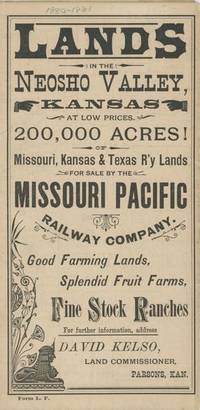
1880réf. 54532N. P. St. Louis: Privately printed for the Missouri Pacific Railway Company n. d. 1880. 1880. First edition. 15" x 26" one sheet folds to fourteen 7 1/2" x 3 5/8" panels Side One : Fourteen panels that provide information on the lands towns population a list of unsold lands owned by the railway company etc. Also information on terms of sale the price of excursion tickets a list of agents empowered to show and sell available lands etc. Side Two : A large map 15" x 22" prepared by Rand McNally & Company shows. Missouri Kansas Indian Territory and Arkansas. The map shows the land grant of the M. K. & T. R'Y CO. now for sale under the management and direction of the Missouri Pacific Railway Company. Also shown are routes of the railway beginning in both St. Louis and Hannibal and progressing westward and south to towns along the route. Minor wear to a few fold points and covers lightly used else a very good copy. Privately printed for the Missouri Pacific Railway Company, n. d. (1880). unknown
1870réf. 188793Koloa Kavai Hawai'i: 29 February 1870. Manuscript sermon by Daniel Dole missionary and educator in the Hawaiian Islands. He was the founder of Punahou School and was active during the period of expanding American Protestant influence in the kingdom. In the sermon Dole cites Matthew 12:30 "He that is not with me is against me; and he that gathereth not with me scattereth abroad" contrasting true discipleship with mere moral respectability and urging active allegiance to Christ through self-denial and the renunciation of worldly attachments. He sharpens his argument through literary contrasts opposing Paine Voltaire and Byron to writers he commends including Bunyan Cecil Edwards Dwight and the Wesleys all prominent Protestant writers and divines. He also includes an anecdote of a young man of literary promise known to him who squandered his gifts in pursuit of sensual pleasure. Dole 1808-1878 was a Congregationalist missionary who settled in Hawai'i in 1841 and founded Punahou School originally Oahu College in Honolulu for the education of missionaries' children an institution that later educated members of the Hawaiian royal family and became one of the most influential schools in the islands. His family remained prominent in Hawaiian public life most notably his son Sanford B. Dole who played a leading role in the overthrow of the Hawaiian monarchy in 1893 and subsequently became president of the Republic of Hawai'i. Provenance: Martin Schøyen. Manuscript on lined paper 210 x 167 mm cursive script in brown ink 12 leaves unnumbered. Old cataloguing annotation in blue ink to head of fist page; journal clipping with gospel hymn "Come this way my father" loosely inserted. A few scattered wormholes 3.5 cm closed tear at foot of first page first leaf lightly damp stained and marked. Very good. unknown
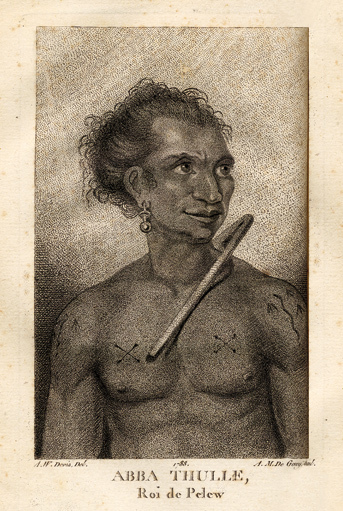
1788réf. 14520Paris, Le Jay et Maradan, 1788 ; 2 tomes in-8 ; demi-chagrin noisette (reliure moderne) ; (4), 282 pp., portrait du capitaine Henri Wilson en frontispice, gravé par Mme Massard d'après I. Russell, grande carte géographique dépliante, 7 planches gravées dont 6 dépliantes ; (4), 274 pp., (3) ff. Errata et Approbation, 8 planches gravées dont 6 dépliantes, soit 17 planches au total ; vocabulaire de la langue Pelew pp. 251-267 du tome II.
1833réf. 14286J. Morlent Le Havre 1833 1 vol. In-8 de XVI 280 pp., demi-basane fauve de l'époque, dos lisse fileté, pièce de titre, couverture conservée.
1955Uniform and handsome in beige cloth. Volume 5 printed in 1955, Volume 4 in 1959, Volume 3 in 1961, Volume 2 in 1964 and Volume 1 in 1969. Umarked with light wear and sound bindings. An excellent first edition example of this magnificent work. Please note: Very heavy. Special shipping considerations may apply.. Book
1740réf. 703979Ulm, Verlag Daniel Bartholomäi und Sohns, 1739-1740. 31 nnr. Bl., Text zweispaltig, 2304 Sp.; 25 nnr. Bl., Sp. 2305-4752, 3 3 nnr. Blätter (Gesamtregister). Schlichte Ganzpergamentbände der Zeit mit handschriftlichen Rückentiteln. Neueres Exlibris eines Vorbesitzers auf Innendeckel, Seiten teils schwach gebräunt, sonst von sehr guter Erhaltung.
1797réf. 11688Guillaume Paris An V -1797 2 vol. 2 vol. in-8 de 12 pp. LVI 344 pp. et 2 ff.n.ch. 309 pp.; demi-basane fauve de l'époque, dos lisse orné, pièces de titre et de tomaison.
réf. Z1-C-044-00098John Benjamins Publishing Company. Used - Very Good. Ships from UK in 48 hours or less usually same day. Your purchase helps support Sri Lankan Children's Charity 'The Rainbow Centre'. Book has been well cared for. 100% money back guarantee. We are a world class secondhand bookstore based in Hertfordshire United Kingdom and specialize in high quality textbooks across an enormous variety of subjects. We aim to provide a vast range of textbooks rare and collectible books at a great price. Our donations to The Rainbow Centre have helped provide an education and a safe haven to hundreds of children who live in appalling conditions. We provide a 100% money back guarantee and are dedicated to providing our customers with the highest standards of service in the bookselling industry. John Benjamins Publishing Company unknown
réf. Z1-S-016-02595World Health Organization. Used - Acceptable. Used - Acceptable. Worn cover. Ships from UK in 48 hours or less usually same day. Your purchase helps support Sri Lankan Children's Charity 'The Rainbow Centre'. Ex-library with wear and barcode page may have been removed. 100% money back guarantee. We are a world class secondhand bookstore based in Hertfordshire United Kingdom and specialize in high quality textbooks across an enormous variety of subjects. We aim to provide a vast range of textbooks rare and collectible books at a great price. Our donations to The Rainbow Centre have helped provide an education and a safe haven to hundreds of children who live in appalling conditions. We provide a 100% money back guarantee and are dedicated to providing our customers with the highest standards of service in the bookselling industry. World Health Organization unknown
1918réf. 61380Portland OR: Shope Brick Co. Columbia Commercial Studio 167 Fourth Ave. ca. 1918. Oblong 4to. 11.5 x 8.25 in. With 41 original linen-backed silver gelatin photographs sized 9.5 x 8 in. nearly all w/ neat type-written captions on versos all w/ photographer’s stamped imprint on verso. Contemporary flexible calf post-binder three nickel-plated screwposts at gutter margin rounded corners yapp edges gilt title stamped on front cover some fraying to the linen-backing at fore-edges minor edgewear some scuffing a few images w/ nearly indistinguishable perforated slices not penetrating linen still an exceptional exemplar w/ former ownership markings of Koch Schmidt on first image margin. An outstanding salesman sample photo album recording the use of Shope’s patented brick facades for homebuilding apartment buildings commercial buildings and interiors in the Pacific Northwest during World War I. The album opens with a 1914 award certificate from the Manufacturers & Land Products Show which remained on permanent exhibit at the Pacific International Exposition Building for over 10 years. This is followed by photographs shot of such buildings as the newly completed Aetna Apartments Printing Office at 21st & Sandy; the Utah-Idaho Motor Co. Maxwell dealership in Pocatello ID; the Golden Rule store in the Morris Block in Lewiston ID; the Miller Wood Fuel Co. in Portland OR with Chief Gasoline pump in front; the King Albert Apartments in Portland OR finished in 1918; together with many splendid examples of PNW Arts & Crafts homes. The featured homes include a stately residence on 49th & Belmont the Dr. Tamiesie House porch piers and tile floor in Laurelhurst now the Sisters of Social Services Home; the Nash home on Sunnyside; Armstrong residence on Council Crest; striking residences in Rose City Park Irvington and Alameda. Also featured are Craftsmen homes in Walla Walla Pocatello Corvallis Spokane and in other areas of Portland. Fourteen of the photographs depict the ornamental Arts & Crafts brick facades for fireplaces with interior shots. The main fireplace in the furnished Dr. Tamiesie home the DeKeater residence the fireplace finished in 1916 for the East Side Business Men’s Club in Portland and others. Founded originally in 1910 in the City of Portland by David Shope 1862-1948 having developed his specialized brick-making machinery for clay & concrete bricks as featured in the final photograph the company’s products quickly proved popular with Arts & Crafts architects in the Pacific Northwest. Shope used a patented process to achieve what he termed the “Red Wire Cut” and “Old Gold Rough Texture” for commercial facades and also used concrete cast stone to achieve special effects and sold his licensed machinery to contractors as well. By 1922 he heavily marketed the fact that the Shope facades were the only ones to mostly survive the 1922 Astoria fire. He also aggressively protected his patents suing competitors on a regular basis. After 1923 he sold out to the Eugene Concrete Pipe Company and returned to Lake City MN where he lived with his daughter Birdie. Gensler 1873-1968 was a German-American photographer in San Francisco CA who operated Columbia Commercial Studio from about 1915 through World War II before moving back to Alameda CA and in two of the photos he has proudly displayed his 1915 Harley-Davidson V-Twin motorcycle in the foreground. We could find no similar album or collection of photographs in any holdings for the Shope Brick Co. Shope Brick Co., [Columbia Commercial Studio, 167 Fourth Ave.], unknown
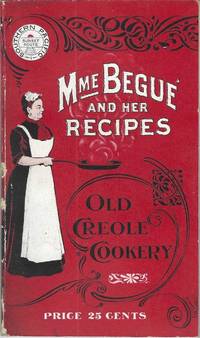
1900réf. 10228San Francisco; Chicago: Southern Pacific Railroad; Printed by Poole Bros 1900. Duodecimo-size booklet 14.75 x 8.5 cm. 80 pages. Blue and brown ink on pink paper. Two photographic portraits Monsieur and Madame Bégué. Illustrations. List of railway agents. Title from cover. In logo at head of title: Southern Pacific Sunset Route. ~ Evident FIRST EDITION. A souvenir anthology of writings including sixty recipes from two landmark New Orleans restaurants offered for sale to customers traveling the Sunset Route San Francisco–New Orleans by the Southern Pacific Railroad Company. A sampling: Mutton Feet à la Créole Liver à la Bégué Jambalaya of Chicken Codish with White Beans Bisque of Crayfish Creamed Cauliflower Onion Salad Eggplant with Rice and Ham Mayonaise of Celery and Shrimps Pineapple with White Wine. ~ The title displayed on the wrappers is misleading: the atmospheric essays and testimonials – arranged by a literary journalist who contributed to Southern Pacific's promotional magazine Sunset Henry Monroe Mayo 1868-1950 – reveal little regarding the eponymous originator of the recipes or the history of the cuisine that brought her fame. Only pages 47-68 contain recipes by Elizabeth née Elisabetha Kettenring Dutreuil Bégué 1831-1906 the proprietary chef of the beloved restaurant in the Vieux Carré – the second oldest such establishment in New Orleans – located on the Rue de la Levée Decatur Street after 1870 downriver from Jackson Square and across from the French Market. An immigrant from southern Germany she had opened a coffee shop with her husband Louis Dutreuil in 1863. After his death in 1875 she married again and with her second husband Hippolyte Bégué 1842-1917 reopened in the same location with the aim of serving one meal per day – a “second breakfast” beginning at 11:00 a.m. – to accommodate laborers in the meat markets and on the docks who started work at dawn. A fuller history by David Shields is available in his The Culinarians Chicago: University or Chicago Press 2017 pages 270-273. By the mid-1880s trade fairs held in the city were bringing tourists as well and Bégué’s became a destination on its own. Madame Bégué died in 1906. The restaurant continued under management of her daughter but was sold in 1914 to relatives of the family Tujague competitors since 1856 on Decatur Street a few doors away. ~ A shorter tribute with recipes pages 69-74 is accorded another restaurateur presumably Victor Béro d. 1904 an immigrant from Belgium who had presided over Victor's Restaurant since 1873. Mayo appears to confuse the "Monsieur Victor" of his time with the founder and namesake of the establishment Victor Martin 1812-1865; cf. Shields page 136 445. ~ The Sunset Route of the Southern Pacific Company was the southernmost of the transport lines to the West Coast originally contemplated by the series of Pacific Railroad Acts between 1862 and 1866. Of the resulting publicly subsidized corporate consortia that would transform western North America – known collectively as the transcontinental railroads – Southern Pacific was already a mammoth system in 1900 including smaller subsidiaries such as the Texas and New Orleans Railroad and extending across territories that would later become New Mexico and Arizona as well as northwards through Nevada Utah and much of California. The in-house Sunset magazine appears to have been printed close to headquarters in San Francisco but like many publications issued by the transportation industry Mme. Bégué and Her Recipes was printed by Poole Brothers of Chicago who advertised as "railway printers" and also produced tickets brochures and mileage tables. ~ Internally clean and sound; in publisher's red wrappers decorated in black and white with an image of Madame Chef in kitchen apron. Wrappers with some rubbing and two small chips to the spine Near very good. Rare. OCLC locates thirteen copies; Uhler 28; New Orleans Culinary History Group page 13; not in Bitting Brown or Cagle. Southern Pacific Railroad]; [Printed by] Poole Bros unknown
1900réf. 10228San Francisco; Chicago: Southern Pacific Railroad; Printed by Poole Bros 1900. Duodecimo-size booklet 14.75 x 8.5 cm. 80 pages. Blue and brown ink on pink paper. Two photographic portraits Monsieur and Madame Bégué. Illustrations. List of railway agents. Title from cover. In logo at head of title: Southern Pacific Sunset Route. ~ Evident FIRST EDITION. A souvenir anthology of writings including sixty recipes from two landmark New Orleans restaurants offered for sale to customers traveling the Sunset Route San Francisco–New Orleans by the Southern Pacific Railroad Company. A sampling: Mutton Feet à la Créole Liver à la Bégué Jambalaya of Chicken Codish with White Beans Bisque of Crayfish Creamed Cauliflower Onion Salad Eggplant with Rice and Ham Mayonaise of Celery and Shrimps Pineapple with White Wine. ~ The title displayed on the wrappers is misleading: the atmospheric essays and testimonials – arranged by a literary journalist who contributed to Southern Pacific's promotional magazine Sunset Henry Monroe Mayo 1868-1950 – reveal little regarding the eponymous originator of the recipes or the history of the cuisine that brought her fame. Only pages 47-68 contain recipes by Elizabeth née Elisabetha Kettenring Dutreuil Bégué 1831-1906 the proprietary chef of the beloved restaurant in the Vieux Carré – the second oldest such establishment in New Orleans – located on the Rue de la Levée Decatur Street after 1870 downriver from Jackson Square and across from the French Market. An immigrant from southern Germany she had opened a coffee shop with her husband Louis Dutreuil in 1863. After his death in 1875 she married again and with her second husband Hippolyte Bégué 1842-1917 reopened in the same location with the aim of serving one meal per day – a “second breakfast” beginning at 11:00 a.m. – to accommodate laborers in the meat markets and on the docks who started work at dawn. A fuller history by David Shields is available in his The Culinarians Chicago: University or Chicago Press 2017 pages 270-273. By the mid-1880s trade fairs held in the city were bringing tourists as well and Bégué’s became a destination on its own. Madame Bégué died in 1906. The restaurant continued under management of her daughter but was sold in 1914 to relatives of the family Tujague competitors since 1856 on Decatur Street a few doors away. ~ A shorter tribute with recipes pages 69-74 is accorded another restaurateur presumably Victor Béro d. 1904 an immigrant from Belgium who had presided over Victor's Restaurant since 1873. Mayo appears to confuse the "Monsieur Victor" of his time with the founder and namesake of the establishment Victor Martin 1812-1865; cf. Shields page 136 445. ~ The Sunset Route of the Southern Pacific Company was the southernmost of the transport lines to the West Coast originally contemplated by the series of Pacific Railroad Acts between 1862 and 1866. Of the resulting publicly subsidized corporate consortia that would transform western North America – known collectively as the transcontinental railroads – Southern Pacific was already a mammoth system in 1900 including smaller subsidiaries such as the Texas and New Orleans Railroad and extending across territories that would later become New Mexico and Arizona as well as northwards through Nevada Utah and much of California. The in-house Sunset magazine appears to have been printed close to headquarters in San Francisco but like many publications issued by the transportation industry Mme. Bégué and Her Recipes was printed by Poole Brothers of Chicago who advertised as "railway printers" and also produced tickets brochures and mileage tables. ~ Internally clean and sound; in publisher's red wrappers decorated in black and white with an image of Madame Chef in kitchen apron. Wrappers with some rubbing and two small chips to the spine Near very good. Rare. OCLC locates thirteen copies; Uhler 28; New Orleans Culinary History Group page 13; not in Bitting Brown or Cagle. Southern Pacific Railroad]; [Printed by] Poole Bros unknown books
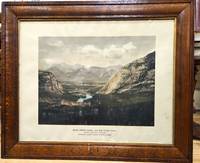
1900réf. P5495Canada: Canadian Pacific Railway c.1900. Very Good . Notes: View of Banff Springs Hotel and Bow River Valley National Park-Rocky Mountains. It is framed in its original frame. The Fairmont Banff Springs formerly and commonly known as the Banff Springs Hotel is a historic hotel in western Canada located in Banff Alberta. Image Size : 404x528 mm 15.91x20.79 Inches Platemark Size : Paper Size : 550x692 mm 21.65x27.24 Inches Coloring: Hand Colored Medium: Offset Lithograph Categories: Views Canada Alberta & British Columbia; Canadian Pacific Railway unknown
1870réf. 44035Omaha: Land Department Union Pacific Railroad Company 1870. 1870. First edition. First edition. 8vo. 8 3/4" x 5 3/4" printed wrappers with map on back cover 44 pp. introduction illustrated maps. The rear cover features a map of portions of Idaho Utah Wyoming Colorado Dakota Nebraska Kansas Missouri and Iowa. States where land grant bonds are available from the Union Pacific Railroad Company. The frontispiece is a map of the United States that shows the Union Pacific Railroad and its connections. A third map shows counties in Nebraska in 1870 and the Union Pacific Railroad lands first 200 miles grants of 1862-64. A description of the Nebraska lands are provided county by county. The available lands are contained in alternate sections of one square mile each within a breadth of twenty miles on either side of the railroad and extend along the entire line. They extend through central Nebraska southern Wyoming and northern Colorado and Utah and include within their limits the splendid agricultural lands of the Platte Valley the great natural pastures of the Laramie Plains and the valleys of Lodge Pole Creek and Bear River and the rich iron and coal fields between the Black Hills and the Wahsatch Mountains. Description advantages water resources climate soil live stock raising farming markets timber minerals information about homesteads advantages of living in colonies etc. Both Adams' Herd and Graff list similar titles but different years and claim their listings to be "rare." A small bump to the top edges light wear to the spine ends else a near fine copy. Land Department Union Pacific Railroad Company, 1870. unknown