6.355 Ergebnisse
19048vo [23 x 15 cm]; xxiv, 424 pp, frontis, 61 illustrations including many full-page, mostly from photos, 3 folding maps, some drawings, index. original pictorial cloth, gilt spine title lettering and gilt picture on front cover, top edge gilted, endpaper bookplate, no tears of maps, near fine and clean. A picture of this book is available upon request by email. An important book by one of the great botanical explorers and naturalists of the nineteenth century, the Italian botanist, spent time at Kew, where he met Charles Darwin, William Joseph Hooker and James Brooke, the Rajah of Sarawak. The latter lead him to spending 3 years from 1865 to 1868 undertaking research in Sarawak, Brunei and other islands off present-day Malaysia and New Guinea, where he discovered many new species of palms, and many other plants such as a phosphorescent fungus that was bright enough to read a newspaper placed by it. Beccari was in Sarawak during 1865-67 where he collected over 800 bird skins including 40 not previously discovered of unrecorded species. He describes nature, the people, Dyaks and their customs in some detail, prior to the major impacts of the twentieth century, and describes his return to Sarawak some 20 years later, where he formed a botanical garden. He discovered the titan arum, the plant with the largest unbranched inflorescence in the world, in Sumatra in 1878. This edition also contains the valuable and detailed appendix on the forests of Borneo, which are currently being logged to extinction. The preface is by naturalist F. H. H. Guillemard who also wrote a book of his travels in the area. The later reprint does not include the maps of the original.
1838Best.-Nr. 9126Ithaca NY: Published by the Author 1838. First edition. 8vo xii 13-371pp. Folding map of Oregon Territory at front and one plate here between pgs 208 and 209. Contemporary sheep with black spine label gilt lettering. Rebacked with original spine laid down. Front pastedown stained mild to moderate foxing throughout. Map with single small tear at fold neat tape repair at edge few spots of foxing. A very good example with attractive fragile map. First edition in contemporary binding of this popular book which went through at least four editions in the 1840s and contained one of the first widely circulated maps to contain reliable information about the Oregon Territory. Parker's journal details his fur trading expedition in the Rockies in 1835 for part of which he was accompanied by Marcus Whitman. The group arrived in Walla Walla in October 1835 and returned East 2 years later via ship around Cape Horn. A cornerstone Pacific Northwest title. Howes P89. Wagner-Camp 70. Washington 89 60. Published by the Author unknown
1944Best.-Nr. 186041944. Bilobran J. United States Navy sailor photograph album documenting naval service in the Southwest Pacific theater during World War II and preserving visual evidence of American naval personnel operating in the Pacific war zone. The album records daily life among U.S. Navy sailors as well as scenes from active military environments during the Pacific campaigns that followed the Japanese attack on Pearl Harbor in December 1941. The photographs include images of sailors aboard naval vessels wartime training and weapons operation and interactions with local populations encountered in Pacific combat zones. Several photographs depict American personnel arriving on the shores of Leyte in the Philippines a location central to the 1944 campaign in which Allied forces began the liberation of the Philippine Islands under the broader command structure of General Douglas MacArthur. Photograph album compiled by U.S. Navy sailor J. Bilobran during service aboard USS Douglas A. Munro in the Southwest Pacific theater during World War II. The album contains 203 black and white silver gelatin photographs mounted on black paper pages along with a pasted pamphlet from a Navy Day program and a hand drawn illustration. The photographs show sailors in uniform aboard naval vessels operating deck guns and handling firearms alongside informal scenes of recreation including dancing drinking and gatherings among crew members. Additional images depict sailors ashore in Pacific locations including Leyte in the Philippines where American forces conducted amphibious operations during the campaign to reclaim the islands from Japanese control. The album also includes photographs of Filipino civilians and guerrilla fighters along with images of Filipino women in traditional clothing illustrating encounters between American military personnel and local communities during wartime operations. Album containing 203 silver gelatin photographs measuring approximately 2.5 x 3.5 inches to 4.5 x 5.5 inches mounted in a brown faux leather photograph album bound with cord and measuring approximately 11.5 x 15.5 inches. Photographs accompanied by a Navy Day program pamphlet and a hand drawn illustration pasted onto the album pages. Minor wear consistent with age; photographs remain clear and well preserved overall. The album offers a substantial visual record of American naval presence in the Southwest Pacific during the Second World War and documents both combat environments and the daily experiences of sailors stationed in the Pacific theater. unknown
1944Best.-Nr. 186041944. Bilobran J. United States Navy sailor photograph album documenting naval service in the Southwest Pacific theater during World War II and preserving visual evidence of American naval personnel operating in the Pacific war zone. The album records daily life among U.S. Navy sailors as well as scenes from active military environments during the Pacific campaigns that followed the Japanese attack on Pearl Harbor in December 1941. The photographs include images of sailors aboard naval vessels wartime training and weapons operation and interactions with local populations encountered in Pacific combat zones. Several photographs depict American personnel arriving on the shores of Leyte in the Philippines a location central to the 1944 campaign in which Allied forces began the liberation of the Philippine Islands under the broader command structure of General Douglas MacArthur. Photograph album compiled by U.S. Navy sailor J. Bilobran during service aboard USS Douglas A. Munro in the Southwest Pacific theater during World War II. The album contains 203 black and white silver gelatin photographs mounted on black paper pages along with a pasted pamphlet from a Navy Day program and a hand drawn illustration. The photographs show sailors in uniform aboard naval vessels operating deck guns and handling firearms alongside informal scenes of recreation including dancing drinking and gatherings among crew members. Additional images depict sailors ashore in Pacific locations including Leyte in the Philippines where American forces conducted amphibious operations during the campaign to reclaim the islands from Japanese control. The album also includes photographs of Filipino civilians and guerrilla fighters along with images of Filipino women in traditional clothing illustrating encounters between American military personnel and local communities during wartime operations. Album containing 203 silver gelatin photographs measuring approximately 2.5 x 3.5 inches to 4.5 x 5.5 inches mounted in a brown faux leather photograph album bound with cord and measuring approximately 11.5 x 15.5 inches. Photographs accompanied by a Navy Day program pamphlet and a hand drawn illustration pasted onto the album pages. Minor wear consistent with age; photographs remain clear and well preserved overall. The album offers a substantial visual record of American naval presence in the Southwest Pacific during the Second World War and documents both combat environments and the daily experiences of sailors stationed in the Pacific theater. unknown books
18008vo [21.5 x 14 cm]; 2 volumes, xxxii, [33] - 487; 344, 105, [vi, ads] pp, 45 engraved plates including frontis's, large folding map (short tear at stub), tables. contemporary half calf, marbled boards, red leather title labels, joints split, one board just holding, worn at edges, corners, bookplate of George Knight, light foxing on some leaves, but overall clean, text blocks tight, a very good set. A picture of th Hill p. 168: "Labillardiere was aboard the expedition under d'Entrecasteaux which was sent out to search for the missing Laperouse. Although unsuccessful in the search, the voyage was of considerable importance due to the scientific observations made and also for surveys of the coasts of Tasmania, New Caledonia, the north coast of New Guinea, and the southwest coast of Australia. Labillardiere's account of the Tongans is among the best contributions to the ethnology of that people." Cox 69: "of considerable importance. . . Labillardiere gives the first scientific description of the New Zealand flax and brought back several New Zealand plants." The plates include plants, birds, native peoples.
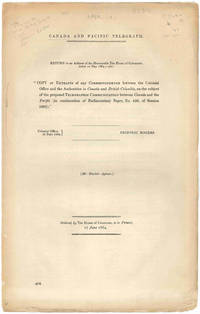
1864Best.-Nr. 47423London. 1864. Founding the Canadian Pacific Telegraph: The Streeter Copy The Thomas W. Streeter copy with his pencil notes on the titlepage. This House of Commons working paper is a continuation of their return dated July 10 1863 on the subject of constructing a telegraph line to British Columbia and the Pacific. The Hudson's Bay Company unsurprisingly was intimately involved in the machinations for the building of the line. They had made an agreement with the Canadian government to build the telegraph line from the Red River to the Pacific themselves but when they failed to do so a group of English bankers proposed to step in and do the job. The papers included herein provide much information on the qualities of the land between Lake Superior and British Columbia and the need for swift communication throughout and across the vast region. Also included is a memorial from the people of the Red River Settlement discussing their urgent need for the telegraph. The Streeter copy sold to Nebenzahl for $30 in 1969 and was still in his stock when the Reese Company bought the last of it in 2013; here it is. Folio. String-tied as issued. A bit tanned some small chips at the edges. Very good. STREETER SALE 3436 this copy. SOLIDAY I:1207. LOWTHER 228. unknown
1864Best.-Nr. 47423London. 1864. Founding the Canadian Pacific Telegraph: The Streeter Copy The Thomas W. Streeter copy with his pencil notes on the titlepage. This House of Commons working paper is a continuation of their return dated July 10 1863 on the subject of constructing a telegraph line to British Columbia and the Pacific. The Hudson's Bay Company unsurprisingly was intimately involved in the machinations for the building of the line. They had made an agreement with the Canadian government to build the telegraph line from the Red River to the Pacific themselves but when they failed to do so a group of English bankers proposed to step in and do the job. The papers included herein provide much information on the qualities of the land between Lake Superior and British Columbia and the need for swift communication throughout and across the vast region. Also included is a memorial from the people of the Red River Settlement discussing their urgent need for the telegraph. The Streeter copy sold to Nebenzahl for $30 in 1969 and was still in his stock when the Reese Company bought the last of it in 2013; here it is. Folio. String-tied as issued. A bit tanned some small chips at the edges. Very good. STREETER SALE 3436 this copy. SOLIDAY I:1207. LOWTHER 228. unknown books
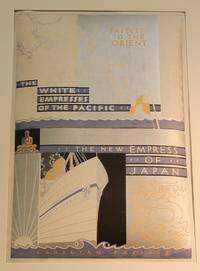
1930Best.-Nr. P2522Montreal: Canadian Pacific c. 1930. Very Good; laid down on acid-free paper for long-term preservation. Image Size : 454x301 mm 17.87x11.85 Inches Platemark Size : Paper Size : 480x328 mm 18.90x12.91 Inches Coloring: Printed in Color Medium: Lithograph Categories: Advertising; Posters; Transportation Ships;20th Century Art Art Nouveau & Deco; Canadian Pacific unknown
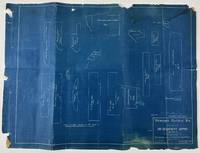
1907Best.-Nr. 13196San Francisco: Chief Engineer's Office 1907. Three blueprints each about 18 x 24 inches. Old folds noticeable chipping to edges occasionally costing minor content near the margins. Good condition. A trio of blueprints detailing the Western Pacific Railroad's standard 20-x-32-foot Desert Depot structure. This standard building plan was created for the depots between San Francisco and Salt Lake City in the Nevada Desert. The blueprints include side views of the building plain views floor plans details of footings overall foundation construction details of prominent structural support and so forth. The layout of the office reveals that each would have a telegraph office at front and center a conductors room at the right of the building three bedrooms and a kitchen. A wonderful relic of the western railroad. Chief Engineer's Office unknown
1907Best.-Nr. 13196San Francisco: Chief Engineer's Office 1907. Three blueprints each about 18 x 24 inches. Old folds noticeable chipping to edges occasionally costing minor content near the margins. Good condition. A trio of blueprints detailing the Western Pacific Railroad's standard 20-x-32-foot Desert Depot structure. This standard building plan was created for the depots between San Francisco and Salt Lake City in the Nevada Desert. The blueprints include side views of the building plain views floor plans details of footings overall foundation construction details of prominent structural support and so forth. The layout of the office reveals that each would have a telegraph office at front and center a conductors room at the right of the building three bedrooms and a kitchen. A wonderful relic of the western railroad. Chief Engineer's Office unknown books
1892Best.-Nr. 64321Portland OR: Wiley B. Allen Press of the Lewis & Dryden Printing Co. 1892. 8vo. viii 462 pp. Photo frontisp. photo plate of Dr. John McLoughlin woodcut-engraved plate facsimile plates 1 large folding 1 large folding map. Embossed plum-coloured pebbled publisher’s cloth illustration of covered wagon in blind on front cover gilt lettering on spine very slight sunning to spine slight bumping head & foot of spine occasional pencil annotations in Miller’s hand still a NF bright copy from the library of Robert Aubrey Miller 1854-1941 w/ ownership markings dated October 25th 1895 & ownership stamp. Miller a noted attorney former Oregon House of Representatives Democratic Rep and from 1893-1897 the registrar at the United States Land Office in Oregon City. Known as Colonel Bob Miller he was the key organizer of the Chautauqua system in the Pacific Northwest and practiced law in Portland until his death manuscript note in pencil on rear flyleaf. First edition of what is considered one of the rarest early histories of Oregon with nearly all of the edition’s copies destroyed in a fire except for those already sent to the bindery or subsequently lost at sea. This work drew upon a vast body of original documents pertaining to early explorations of the Pacific Coast early Territorial government maneuverings a detailed history of the Cayuse War with original documents along with early overland immigration records. Although Soliday and Eberstadt believed there to be no more than 20 surviving copies and no copy at auction or bookseller’s catalogue in over 50 years Worldcat does locate 30 or so physical copies. Brown 1867-1898 was an Oregon pioneer newspaper printer and journalist who has an historian wrote on both Oregon and Native American History and due to illness never completed the unpublished manuscripts held by the University of Oregon. The pencil manuscript note on the 2nd rear flyleaf recorded June 4 1917 how “Mrs. Robert A. Miller Sarelia Griffith Miller 1859-1903 told of her mother Mrs. Susan Margaret Savage Griffith 1838-1909 . . . journals telling of a story of one of the early pioneer women in crossing the plains and being out of provisions having to eat dog meat and this woman said she thought this was awful but she sed we even had to do worse . . . they had recourse to dried salmon that had maggots in it. . . After she ate it she god down on her knees and prayed for more dog.” See: Howes B846; Soliday Descriptive Check List Western Americana 1 1349. Wiley B. Allen, Press of the Lewis & Dryden Printing Co., hardcover
1945Best.-Nr. 64628Los Angeles CA: 40th Infantry Division ca. 1945. Oblong 4to. 120 pp unpaginated. with 200 silver gelatin photographs all mounted and numbered in lower corner w/in negative keyed to indices inserted after the title page occasional creasing to corners. Brick-red publisher’s cloth post-binder two hidden nickel-plated screwposts at gutter margin 40th Infantry Division sunburst emblem patch on front cover in gilt on blue field minor thumbing edgewear slightly shaken occasional fraying to a couple leaves at fore-edge still a VG copy. First edition thus of this 40th Infantry Division regimental souvenir album visually recording the Western National Guard “Sunshine Division’s” participation in the grueling and bloody island hopping campaign during World War II from Guadalcanal to The Philippines often involved in heavy fighting and credited with capturing or killing over 11000 Japanese troops while suffering 715 casualties. These photographs follow the 40th Division’s arrival and activities in Hawaii followed by their movement to Guadalcanal and arrival at Kukum Dock. Photos depict wrecked Japanese ships beached nearby the typical bare-breasted shots of New Britain Indigenous Peoples arrival of nurse units and training on New Britain. As depicted in these images the bloody Philippine Islands campaign opened with multiple regiments from the 40th Division landing at the Lingayen Gulf on Luzon in order to retake the main Philippine Island in January 1945 including views of Tarlac Bamban battle damage artillery pieces war dogs used by segregated African-American patrols on Luzon well-prepared Japanese positions built to repel the American forces machine gunners Japanese casualties and the results of Japanese troops using grenades to commit Hari Kari.The next phase of the campaign involved the 40th Division participating in the Panay & Guimaras Invasion landing at Tigbauan on Panay Island securing Iloilo City and nearby airfields coordinating with Philippine guerrilla forces with photos of the guerrillas views of the landing craft Philippine peoples and guerrillas wounded by Japanese snipers being treated by American forces and the Division artillery. The 40th Division later came together with other forces and moved onto Negros Island from the end of March through August 1945 pushing deep into Negros Island capturing Bacolod and its airfield before continuing on in the heavy surrounding jungle dislodging Japanese troops in the surrounding area. Their artillery and tank battalions proved particularly effective and many of these photographs depict not only the movements and equipment but the aftermath as well. This album does not include the National Guard Division’s participation in the enforcement of the orders to round up and illegally incarcerate Japanese-Americans throughout the West into War Relocation Centers and Internment Camps for the duration of the War. No copies in Worldcat -- this volume should not be confused with the regimental history published in Baton Rouge LA by the Army & Navy Publishing Company -- “40th Infantry Division: the years of World War II 7 December 1941-7 April 1946. 40th Infantry Division, hardcover
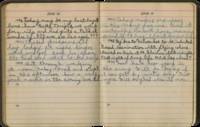
1944Best.-Nr. List3749US Australia and New Guinea 1944. Diary measuring 4 ¼ x 5 ½ inches containing 735 entries. With three letters two of which are facsimiles. Diary boards with debossed text reading "ARMY DAYS" and lock; worn especially at corners excellent. Contents Fine. Letters Fine. Overall Near Fine. A diary belonging to Dale F. Damitz 1920-1944 Company A of the 738th Military Police Battalion covering the time between his last day before leaving for service and about a month before his death in October of 1944. The 738th MPB stationed in the South West Pacific Area during the Second World War is best known during that time for its role in the Battle of Brisbane a two-day riot between US servicemen and Australian servicemen and civilians in which an Australian Gunner was killed and hundreds on both sides were injured. Australia was a critical station for housing troops on duty in the Pacific Theater. The arrival of US military personnel in Australia-80000 in Brisbane alone-overtaxed the capacities of its cities increased crime and strained relations between US troops and Australians. Americans had access to better rations including luxuries such as cigarettes and ice cream; received higher pay than their Australian counterparts; and were often criticized for consorting with Australian women. Though it does not figure in this diary race likely also contributed to animosity between the groups. Despite fairly strict Australian laws around the sale of alcohol drunkenness was rampant. Military police from both countries were tasked with keeping the peace in the major cities. Damitz arrived in Brisbane with the 738th in August 1942 where "Lt. Craddock" informed his company that "where we're going we'll have a chance to catch 200 lb bombs in our pockets" August 30 and "Cpt. Forbes" that he would "get some honor and glory if it costs him the whole company" August 31. Damitz's diary is fairly sparse at this time including during the Battle of Brisbane though he mentions an "air raid" that made "the ground shake" December 1. In Australia-"this land of forgotten men" February 15 1943 consisting of "Just heat and rain day after day. And insects" February 5 1943-Damitz's duties mainly consisted of being what he called "prisoner chaser" patrolling for and guarding "the drunks" who "make you so sick and disgusted you never want a drink again" March 29 1943. Damitz's duties took him across central and southeastern Australia from Adelaide River outside Darwin to Birdum and Alice Springs to Adelaide via Terowie-these along the Stuart Highway a critical military transport route-to Melbourne and then to Brisbane via Sydney. The central Australian route through the Northern Territory and South Australia is "just waste land" February 23 1943 and "flat desert country . Saw a lot of camels and a few abo camps" March 5. Damitz's then went from Brisbane to Adelaide River outside Darwin to Melbourne and back to Brisbane. In Melbourne and Brisbane he is on "prisoner chaser" duty: "Was prisoner chaser today. Got through at five. Went out on town patrol at six thirty. All troops were restricted as there was a big drive on to pick up all AWOL's. got one fellow over the hill." April 21 1943 And: "Was working with the Civilian Police tonight after sly-grog sellers. Caught one. Sure is a lot of excitement and dangerous" June 13 1943. Bootlegging was a persistent issue in Australia exacerbated by the presence of American GIs who were unused to Australia's strict liquor laws. Damitz's company left Brisbane for Milne Bay in New Guinea in November of 1943. The camp is "worse than a pig pen" November 11 and the "bastard of a Col. of the 801st" takes away his tent's floorboards for his own use leaving Damitz in the mud December 17. In a somewhat more upbeat letter to friends back home Damitz reports water "clear as crystal and cold as ice" with "plenty of banana trees and pineapples" and "natives here . called fuzzy-wuzzies. We give them a cigarette to climb the coconut trees and knock down coconuts for us" November 17. They arrived in Oro Bay in March of 1944 where Damitz "Just lays around" March 15 deals with the mud and casts his ballot-"the first time in my life I have voted. Voted straight Republican" July 23-on the controversial absentee ballot. By far Damitz's most persistent topic for the entirety of the diary is his overwhelming boredom the constant feeling of preparing for "something big" October 24 1943 that never materializes and the totalizing apathy that this produces. Damitz had been a reluctant enlistment in the first place-for instance mentioning an award as "another pipe dream of the old man's" June 5 1943-and had not expected to be sent overseas so quickly "it was said no untrained men would leave the states. Some joke!"; June 30 1942. He "Sure is sick of this shit!!!" March 15 1944 and writes throughout 1943: "February 4: Doesn't take long for a guy to get so you don't give a dam for anything. Almost get so you don't care what happens next. February 12: Saw a good movie here in camp last night. Rest of the day was just like any other day here. Often wonder if I'll ever have the happiness I once had April 14: This all seems like a bad dream. Sure wish it was over with. April 30: The months slowly go by. You feel like a condemned man who is waiting for the chair. August 19: Today makes fourteen months in the army. Seems more like years tho. Hate it more every day. November 13: Is raining again today the mud is about a foot deep right inside of the tents. Don't have any kitchen yet. Don't care. December 21: Just laid around all day. Don't have any life or pep anymore. Don't have any ambition to do a dam thing." After nearly two and a half years of "all this B.S." July 30 1943 Damitz's company was sent to the Philippines where he was killed in action a few days into the Battle of Leyte. The diary provides a humanizing look-in Damitz's distinctively hard-boiled writing voice-at US-Australian relations and law enforcement and at everyday life outside of combat for a US battalion infamous in Australian history.
1944Best.-Nr. List3749US Australia and New Guinea 1944. Diary measuring 4 ¼ x 5 ½ inches containing 735 entries. With three letters two of which are facsimiles. Diary boards with debossed text reading "ARMY DAYS" and lock; worn especially at corners excellent. Contents Fine. Letters Fine. Overall Near Fine. A diary belonging to Dale F. Damitz 1920-1944 Company A of the 738th Military Police Battalion covering the time between his last day before leaving for service and about a month before his death in October of 1944. The 738th MPB stationed in the South West Pacific Area during the Second World War is best known during that time for its role in the Battle of Brisbane a two-day riot between US servicemen and Australian servicemen and civilians in which an Australian Gunner was killed and hundreds on both sides were injured. Australia was a critical station for housing troops on duty in the Pacific Theater. The arrival of US military personnel in Australia-80000 in Brisbane alone-overtaxed the capacities of its cities increased crime and strained relations between US troops and Australians. Americans had access to better rations including luxuries such as cigarettes and ice cream; received higher pay than their Australian counterparts; and were often criticized for consorting with Australian women. Though it does not figure in this diary race likely also contributed to animosity between the groups. Despite fairly strict Australian laws around the sale of alcohol drunkenness was rampant. Military police from both countries were tasked with keeping the peace in the major cities. Damitz arrived in Brisbane with the 738th in August 1942 where "Lt. Craddock" informed his company that "where we're going we'll have a chance to catch 200 lb bombs in our pockets" August 30 and "Cpt. Forbes" that he would "get some honor and glory if it costs him the whole company" August 31. Damitz's diary is fairly sparse at this time including during the Battle of Brisbane though he mentions an "air raid" that made "the ground shake" December 1. In Australia-"this land of forgotten men" February 15 1943 consisting of "Just heat and rain day after day. And insects" February 5 1943-Damitz's duties mainly consisted of being what he called "prisoner chaser" patrolling for and guarding "the drunks" who "make you so sick and disgusted you never want a drink again" March 29 1943. Damitz's duties took him across central and southeastern Australia from Adelaide River outside Darwin to Birdum and Alice Springs to Adelaide via Terowie-these along the Stuart Highway a critical military transport route-to Melbourne and then to Brisbane via Sydney. The central Australian route through the Northern Territory and South Australia is "just waste land" February 23 1943 and "flat desert country . Saw a lot of camels and a few abo camps" March 5. Damitz's then went from Brisbane to Adelaide River outside Darwin to Melbourne and back to Brisbane. In Melbourne and Brisbane he is on "prisoner chaser" duty: "Was prisoner chaser today. Got through at five. Went out on town patrol at six thirty. All troops were restricted as there was a big drive on to pick up all AWOL's. got one fellow over the hill." April 21 1943 And: "Was working with the Civilian Police tonight after sly-grog sellers. Caught one. Sure is a lot of excitement and dangerous" June 13 1943. Bootlegging was a persistent issue in Australia exacerbated by the presence of American GIs who were unused to Australia's strict liquor laws. Damitz's company left Brisbane for Milne Bay in New Guinea in November of 1943. The camp is "worse than a pig pen" November 11 and the "bastard of a Col. of the 801st" takes away his tent's floorboards for his own use leaving Damitz in the mud December 17. In a somewhat more upbeat letter to friends back home Damitz reports water "clear as crystal and cold as ice" with "plenty of banana trees and pineapples" and "natives here . called fuzzy-wuzzies. We give them a cigarette to climb the coconut trees and knock down coconuts for us" November 17. They arrived in Oro Bay in March of 1944 where Damitz "Just lays around" March 15 deals with the mud and casts his ballot-"the first time in my life I have voted. Voted straight Republican" July 23-on the controversial absentee ballot. By far Damitz's most persistent topic for the entirety of the diary is his overwhelming boredom the constant feeling of preparing for "something big" October 24 1943 that never materializes and the totalizing apathy that this produces. Damitz had been a reluctant enlistment in the first place-for instance mentioning an award as "another pipe dream of the old man's" June 5 1943-and had not expected to be sent overseas so quickly "it was said no untrained men would leave the states. Some joke!"; June 30 1942. He "Sure is sick of this shit!!!" March 15 1944 and writes throughout 1943: "February 4: Doesn't take long for a guy to get so you don't give a dam for anything. Almost get so you don't care what happens next. February 12: Saw a good movie here in camp last night. Rest of the day was just like any other day here. Often wonder if I'll ever have the happiness I once had April 14: This all seems like a bad dream. Sure wish it was over with. April 30: The months slowly go by. You feel like a condemned man who is waiting for the chair. August 19: Today makes fourteen months in the army. Seems more like years tho. Hate it more every day. November 13: Is raining again today the mud is about a foot deep right inside of the tents. Don't have any kitchen yet. Don't care. December 21: Just laid around all day. Don't have any life or pep anymore. Don't have any ambition to do a dam thing." After nearly two and a half years of "all this B.S." July 30 1943 Damitz's company was sent to the Philippines where he was killed in action a few days into the Battle of Leyte. The diary provides a humanizing look-in Damitz's distinctively hard-boiled writing voice-at US-Australian relations and law enforcement and at everyday life outside of combat for a US battalion infamous in Australian history. books
1902Best.-Nr. 54207Chicago: Published by the Chicago Rock Island & Pacific Railway Company 1902. 1902. First edition thus. 14 1/4" x 10 1/4" printed newspaper 8 pp. triple column illustrated from photographs map of the "Great Rock Island Route System." This is Vol. XXII No. 1. Chicago January 1902. "The Western Trail is published by the Chicago Rock Island & Pacific R'Y - The Great Rock Island Route - as a quarterly and issued in the interests of the above named Company. Its endeavor will be to give its readers in considerable detail facts as to emigration securing homes and the industrial interests of the country traversed by THE GREAT ROCK ISLAND ROUTE in the states of Kansas Colorado and Texas and the Indian and Oklahoma Territories and in a general way show the industrial interests in all the states traversed by this line. Copies for a year will be mailed free." ---- Quoted from The Western Trail. Features include the Seven-Six Ranch of W. D. Wagner a few miles from Dalhart Texas that shows a ranch scene with a wonderful view of a windmill in operation. Articles about towns in Indian Territory New Mexico Colorado Oklahoma and Texas with special coverage on Addington Indian Territory Cloudcroft New Mexico Santa Rosa New Mexico and Burlington Colorado the county seat of Kit Carson County. Also some information on growing crops such as rice and broom corn. All in all an interesting newspaper for its day. This item has had detailed work by a master paper conservator as it has been deacidified a few small portions have been mended with Japanese paper and any tears or paper loss have been infilled. It has been housed in a transparent polyester "Mylar" sleeve to protect against dirt and handling. A very good and serviceable copy. Published by the Chicago, Rock Island & Pacific Railway Company, 1902. unknown
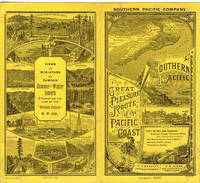
1887Best.-Nr. 41282N. P.: Crocker & Co. 1887. 1887. RAILROAD CALIFORNIA. First edition. 6 1/4" x 13 3/4" goldenrod colored paper folds to 6 1/4" x 3 3/8" two-sided eight panel timetable with exquisite scenes a map and train schedules for the Northern California lines of the railroad. The timetable has engraved vignettes and ornate lettering by E. Schultze. This is an attractive museum quality timetable and one of the rarest and finest early Southern Pacific railroad pieces that we have handled. It's in near fine condition and 130 years old. Crocker & Co., 1887. unknown
Best.-Nr. 4047San Francisco:: The Railroad A. H. Printing Co. . Cincinnati O. Illustrated with halftones; ii and 76 pp. 8vo limp tan full simulated leather title in gilt on front cover together with stamped presentation statement; spine expertly rebacked; very small piece lacking from top outer corner. Institutionally common scarce in trade. This is the original edition NOT a print-on-demand book.Philadelphia-born Hiram Sellers Kneedler 1859/60–1941 was a Newspaper editor and publisher who owned various newspapers in Iowa including the The Times in Cherokee and The Boone Republican and who wrote several travel books for the railroads. In 1913 he uprooted his family and drove them all in his 1913 Studebaker to California where he stayed for about 10 years doing various jobs including working on newspapers and becoming Secretary of the Chamber of Commerce for San Bernardino California. He then returned to Eldora Iowa and brought The Ledger. At some point he moved back to California and he died in Los Angeles in 1941.At the time Kneedler wrote this very little was known of this coastal area. It had been sparsely populated and its development stunted by the continuing unrest in Mexico. It was only after Texas came into the United States that serious efforts were made to populate this part of the country and extol its many advantages. [San Francisco:: The Railroad] A. H. Printing Co., ., Cincinnati, O.,. hardcover
Best.-Nr. 4047San Francisco:: The Railroad A. H. Printing Co. . Cincinnati O. Illustrated with halftones; ii and 76 pp. 8vo limp tan full simulated leather title in gilt on front cover together with stamped presentation statement; spine expertly rebacked; very small piece lacking from top outer corner. Institutionally common scarce in trade. This is the original edition NOT a print-on-demand book.Philadelphia-born Hiram Sellers Kneedler 1859/60–1941 was a Newspaper editor and publisher who owned various newspapers in Iowa including the The Times in Cherokee and The Boone Republican and who wrote several travel books for the railroads. In 1913 he uprooted his family and drove them all in his 1913 Studebaker to California where he stayed for about 10 years doing various jobs including working on newspapers and becoming Secretary of the Chamber of Commerce for San Bernardino California. He then returned to Eldora Iowa and brought The Ledger. At some point he moved back to California and he died in Los Angeles in 1941.At the time Kneedler wrote this very little was known of this coastal area. It had been sparsely populated and its development stunted by the continuing unrest in Mexico. It was only after Texas came into the United States that serious efforts were made to populate this part of the country and extol its many advantages. [San Francisco:: The Railroad] A. H. Printing Co., ., Cincinnati, O.,. hardcover books
1859Best.-Nr. 013021San Francisco: Towne & Bacon 1859. Small faded ink stamp on front wrapper and an old ink accession number. Contained in a cloth clamshell box with a printed paper label. First Edition. Original Printed Wrappers. Very Good. Towne & Bacon Paperback
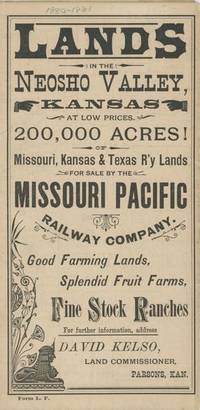
1880Best.-Nr. 54532N. P. St. Louis: Privately printed for the Missouri Pacific Railway Company n. d. 1880. 1880. First edition. 15" x 26" one sheet folds to fourteen 7 1/2" x 3 5/8" panels Side One : Fourteen panels that provide information on the lands towns population a list of unsold lands owned by the railway company etc. Also information on terms of sale the price of excursion tickets a list of agents empowered to show and sell available lands etc. Side Two : A large map 15" x 22" prepared by Rand McNally & Company shows. Missouri Kansas Indian Territory and Arkansas. The map shows the land grant of the M. K. & T. R'Y CO. now for sale under the management and direction of the Missouri Pacific Railway Company. Also shown are routes of the railway beginning in both St. Louis and Hannibal and progressing westward and south to towns along the route. Minor wear to a few fold points and covers lightly used else a very good copy. Privately printed for the Missouri Pacific Railway Company, n. d. (1880). unknown
1870Best.-Nr. 188793Koloa Kavai Hawai'i: 29 February 1870. Manuscript sermon by Daniel Dole missionary and educator in the Hawaiian Islands. He was the founder of Punahou School and was active during the period of expanding American Protestant influence in the kingdom. In the sermon Dole cites Matthew 12:30 "He that is not with me is against me; and he that gathereth not with me scattereth abroad" contrasting true discipleship with mere moral respectability and urging active allegiance to Christ through self-denial and the renunciation of worldly attachments. He sharpens his argument through literary contrasts opposing Paine Voltaire and Byron to writers he commends including Bunyan Cecil Edwards Dwight and the Wesleys all prominent Protestant writers and divines. He also includes an anecdote of a young man of literary promise known to him who squandered his gifts in pursuit of sensual pleasure. Dole 1808-1878 was a Congregationalist missionary who settled in Hawai'i in 1841 and founded Punahou School originally Oahu College in Honolulu for the education of missionaries' children an institution that later educated members of the Hawaiian royal family and became one of the most influential schools in the islands. His family remained prominent in Hawaiian public life most notably his son Sanford B. Dole who played a leading role in the overthrow of the Hawaiian monarchy in 1893 and subsequently became president of the Republic of Hawai'i. Provenance: Martin Schøyen. Manuscript on lined paper 210 x 167 mm cursive script in brown ink 12 leaves unnumbered. Old cataloguing annotation in blue ink to head of fist page; journal clipping with gospel hymn "Come this way my father" loosely inserted. A few scattered wormholes 3.5 cm closed tear at foot of first page first leaf lightly damp stained and marked. Very good. unknown
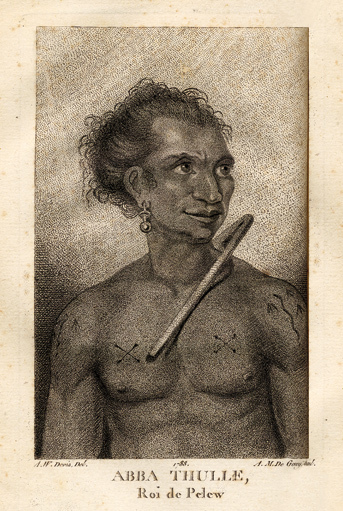
1788Best.-Nr. 14520Paris, Le Jay et Maradan, 1788 ; 2 tomes in-8 ; demi-chagrin noisette (reliure moderne) ; (4), 282 pp., portrait du capitaine Henri Wilson en frontispice, gravé par Mme Massard d'après I. Russell, grande carte géographique dépliante, 7 planches gravées dont 6 dépliantes ; (4), 274 pp., (3) ff. Errata et Approbation, 8 planches gravées dont 6 dépliantes, soit 17 planches au total ; vocabulaire de la langue Pelew pp. 251-267 du tome II.
1833Best.-Nr. 14286J. Morlent Le Havre 1833 1 vol. In-8 de XVI 280 pp., demi-basane fauve de l'époque, dos lisse fileté, pièce de titre, couverture conservée.
1910Best.-Nr. 64760Racine WI & Chicago IL: The W.D. Harney Photogravure Co. Photogravures by Barnes-Crosby Co. 1910. Nine parts. Folio. 14.2 x 11.2 in. 109 leaves unnumbered throughout the fascicles. Photogravure illustrated title page including 81 photogravure plates with over 100 images tinted blue & sepia throughout nearly. Uniformly bound in publisher’s burgundy-coloured stiff softcovers backed in cloth decorative gilt lettering on front covers very slight shelfwear 2 w/ minor chipping to a couple fore-edges 1 image w/o tissue guard still a VG bright set. First edition in original fascicles of this beautifully illustrated sequel to the 1907 Art Work of Seattle & Alaska promoting the natural beauty Native Americans timber wealth agricultural and economic development of Seattle the Puget Sound Olympic Peninsula and surrounding Western Washington. The vivid and picturesque photogravures of images shot primarily by Asahel Curtis include one of his best seires of photos of the Makah Native Americans as well as Skykomish Native Americans Makah whaling boats and whaling practices basket weaving and more. In addition there are many images of the tall timber logging automobiles driving through Mount Rainier National Park Mount Baker National Park views of Mount Perses sites and views of Hoquiam Raymond Centralia Chehalis Everett Port Orchard additional Seattle views the Alaska-Yukon-Pacific International Exposition in 1909 Lake Washington Skagit Snohomish & Thurson Counties the Straits of Juan de Fuca Puget Sound Islands and much more. Asahel Curtis 1874-1941 originally began working with his brother Edward Curtis in his studio in 1895 went to the Klondike in 1897 and by 1901 had set up a business with scenic photographer William P. Romans as Curtis & Romans. He was one of three founders of The Mountaineers organized climbs through the Cascades and by 1917 had become chief guide at Mount Rainier National Park. His studio output was prodigious. The text was written by Bayles 1833-1942 was the local president & owner of Bayles Bros. Fuel Co. in Seattle at the time and an avid booster for the Alaska-Yukon-Pacific Exposition. Walter D. Harney b. 1869 was a noted newspaper and magazine publisher in Oshkosh and Racine Wisconsin who published several of these promotional works on Oregon Spokane and Tacoma eventually moving to King County before World War I himself. The W.D. Harney Photogravure Co., [Photogravures by Barnes-Crosby Co.], paperback
1955Uniform and handsome in beige cloth. Volume 5 printed in 1955, Volume 4 in 1959, Volume 3 in 1961, Volume 2 in 1964 and Volume 1 in 1969. Umarked with light wear and sound bindings. An excellent first edition example of this magnificent work. Please note: Very heavy. Special shipping considerations may apply.. Book