6 911 résultats
1875réf. 27665New York: Evening Post Steam Presses 1875. Original printed wrappers with wrapper title as issued. Stitched. iv 3-133 pp. Wrappers moderately worn else a clean text and Very Good. A comprehensive compilation of the legal documents creating and authorizing the Railroad and its branches and affiliates. OCLC locates five copies under several accession numbers as of March 2018. A shorter version with this title appeared in 1873. Evening Post Steam Presses unknown books
1946réf. 11530Raleigh North Carolina: Hillsborough House 1946. First Edition. Leather bound. Near fine. The Story of the Fifth Bombardment Group Heavy published in 1946. Octavo 104pp. Publisher's faux red leather title embossed on front cover. Light wear to tips some shelf wear solid text block. Free of any marks or notations. Complete with many black and white photographs maps and illustrations. Full title reads: The Story of the Fifth Bombardment Group Heavy. The History of the Bomber Barons of the Thirteenth "Jungle" Air Force as compiled by the 5th Group Historical Officer and released for publication by the 13th Air Force Public Relations Officer. Hillsborough House unknown books
1868réf. 95331868. The Transcontinental Railroad made possible the winning settlement and development of the American West. It led to a revolution in interstate and international trade opening the markets of the west coast and Asia to the east and Europe while bringing products of eastern or European industry to the growing populace west of the Mississippi and beyond. The railroad caused a great production boom and was in a sense America’s first technology corridor. As it encouraged the growth of American trade and business so too did the railroad impact the nation's public discourse and intellectual life by making it possible to come and go across the length of the continent in just over a week. Now for the first time the beauties and riches of the central part of the continent could be accessed any anyone in days. Nothing was the same afterwards. Many people consider the Transcontinental Railroad the greatest technological feat of the 19th century and one of the most consequential major construction projects ever undertaken. Before the advent of the Transcontinental Railroad a journey across the continent to the west coast meant months of careful preparation and acquisition of a conveyance and supplies then a dangerous six month trek over rivers deserts and mountains all the way risking the loss of necessities and encounters with blizzards and Indians. Alternatively a traveler could hazard a three to six month sea voyage around ferociously stormy Cape Horn which proved a graveyard to many ships or sail to Central America and cross the Isthmus of Panama through the jungle in part by pack animal and in part by rail which took five or six weeks risking exposure to any number of deadly diseases in the crossing. So it is no surprise that interest in building a railroad uniting the east and west coasts of the continent began soon after the advent of the locomotive. Early Trains in the US and the Idea to Build a Train Connecting East and West Coasts The first trains began to run in the U.S. in the 1830s along the East Coast and by the 1840s the nation's railway networks extended throughout the East South and Midwest. The annexation of the western territories including California following the Mexican War the almost immediately subsequent discovery of gold in the region in 1848 the resultant Gold Rush starting in 1849 and statehood for California in 1850 brought momentum to the idea of building a railroad across the nation to the Pacific. Meanwhile thousands of immigrants and miners sought their fortune in the West. During the 1850s Congress sponsored numerous survey parties to investigate possible routes for a transcontinental railroad. No particular route emerged as a clear favorite as the project became yet one more point of contention between the North and South before the Civil War with each wanting the railroad to go through their section. Theodore Judah was a civil engineer who helped build the first railroad in California and he became obsessed with the idea of a transcontinental railroad running through Nebraska Wyoming Utah Nevada and California. In 1859 he drew up letters of incorporation for the Central Pacific Railroad Company. Judah surveyed the route creating maps that he used to bolster a presentation of the scheme he made to Congress in October 1861. Many Congressmen were leery of beginning such an expensive venture especially with the Civil War underway but President Abraham Lincoln a long-time supporter of railroads saw in the proposal an important additional opportunity: to help knit California and the West to the Union. He agreed with Judah and on July 1 1862 Lincoln signed the Pacific Railway Act authorizing land grants and government support which amounted to $32000 per mile of track laid to two companies the Central Pacific Railroad and the Union Pacific Railroad. The Central would start at California’s eastern rail point in Sacramento cross the Sierras go through Nevada and into northern Utah where it would meet up with the Union Pacific. The Central Pacific Railroad spiked the first rail on October 26 1863 and its construction crews began building the line east from Sacramento. At the eastern end of the project Gen. Grenville Dodge and his assistant Peter Dey surveyed the potential route the Union Pacific would take. They recommended a line that would follow Nebraska’s Platt River along the North Fork would then cross the Continental Divide at South Pass in Wyoming and continue along to Green River then head into Utah. President Lincoln favored this route and made the decision that the eastern terminus of the Transcontinental Railroad would be Council Bluffs Iowa across the Missouri River from Omaha Nebraska. The Union Pacific Thomas Durant a medical doctor turned businessman gained control of the Union Pacific Railroad Company in July 1863. Though Durant took the office of vice president he was the actual leader of the railroad. In 1864 Congress passed the second Pacific Railway Act which doubled the size of the land grants and allowed the railroads to sell their own bonds. The Union Pacific began to lay tracks at Omaha Nebraska in July 1865. But Durant's management of the actual building of the rail line was sub par and lacked both organization and people with sufficient knowledge and skills to accomplish its ambitious task. So as 1866 dawned Durant hired Grenville Dodge as chief engineer of the railroad Dodge began advising Durant immediately although he would not leave the service until May and Dodge insisted up front that Jack Casement and his brother be hired to lay the track and actually construct the Union Pacific line. John S. Jack Casement had worked as a railroad contractor on the Ohio Railroad prior to the Civil War. During the war he rose to the rank of General and Brigade commander and was admired for his bravery management skills and railroad experience. Jack and his brother Daniel had formed the firm of J.S. & D.T. Casement; “General Jack” was construction leader while Daniel handled financial matters. Jack and Dan Casement Build the Railroad The Casements came to an understanding with Durant and they agreed upon a proposal letter dated February 6 1866. That letter provided that the Casement firm would ""lay and fill the track on the Union Pacific Rail Road for seven hundred fifty dollars per mile on the following terms and conditions. The Rail Road Company to furnish motive power cars wood and water and tracks for boarding cars and pay for delays of over three consecutive days caused by want of material motive power or other default or neglect of Company. The track to be laid in a good and workmanlike manner and filled and surfaced with material taken from the side of the road the whole to be subject to the approval and acceptance of the Engineer of the Company in charge of the work and the track to be accepted on the completion of every twenty miles and approximate estimates to be made by the Engineer in charge and paid monthly. We will lay the track as fast as required not to exceed one mile per day and will at the option of the Company on ten days notice reduce our gang to a force sufficient to lay one half mile per day. We will furnish engineer men and all other help for the trains used in distribution of material and take the materials for track at any point on the Rail Road within one hundred feet of the track and we will furnish oil waste etc for trains in our employ. All trains used in construction or for any purpose by us are to be run subject to the regulations & schedule time of the Company & under the general control of the Superintendent of the Company. We will make no extra charge in cutting and filling in leveling ties unless it exceeds six inches. No extra charge for putting in frogs and switches for all necessary sidings. And we will place the labor of all our men at the disposal of the Company whenever the delays exceed three days and charge for their time as per our payroll. We will commence as soon as the Company requires & will lay track during the whole of the present season and longer if the Company requires.” This proposal was signed “J.S. & D.T. Casement.” Durant responded to the Casements two days later on February 8 1866. His letter stated: “J.S. & D. T. Casement Painesville Ohio. Gentlemen: Your proposition to the Union Pacific Railroad Company under date of Feb. 6 1866 in relation to track-laying is received and has been considered. The Company decides to regard your proposition and this acceptance as the agreement upon the subject. The Company reserves the right to terminate this arrangement in case you do not perform the agreement on your part. Yours truly Thomas C. Durant V. P."" Jack Casement was responsible for all matters relating to building the Union Pacific. He hired the workers many of whom were former military personal gathered the materials and supplies and went into the field. As during the war his post was at the front in the construction camps which he ran like an army at the end of the line where the work was being done or in his car at the tail of the work train. Scrappy and hard-working he oversaw not just the laying but the grading of the track as well. As one of the necessities of his job to get to and from the work sites the Union Pacific presented him with annual passes to use their cars. Jack Casement’s engraved Union Pacific pass for 1868 used by him to manage and supervise work on the Transcontinental Railroad signed by Company President John D. Perry. This pass was retained by Casement’s descendants until recently when we obtained it directly from them. Under Casement’s leadership the Union Pacific laid 1087 miles of track from Fremont Nebraska west to Utah where the Central Pacific and Union Pacific Railroads met to form the transcontinental railroad. His was a magnificent achievement that compares well with the Central Pacific Railroad which laid 690 miles. On April 9 1869 with construction work nearing a conclusion and both the Union Pacific and Central Pacific needing a meeting point Congress established it as Promontory Summit north of the Great Salt Lake in Utah. Less than one month later on the morning of May 10 1869 locomotives from the two railroads met nose-to-nose to signal the joining of the two lines. At 12:57 p.m. local time at a ceremony planned to connect the railroads Leland Stanford Governor of California and president of the Central Pacific and Durant as vice-president of the Union Pacific were to pound in the golden spike with silver hammers. Both men proved unable to hit the spike so Jack Casement stepped up to do the job accompanied by much cheering from the workers surrounding him. Telegraphers announced the completion of the Pacific Railway. Canons boomed in San Francisco and Washington. Bells rang and fire whistles shrieked as people celebrated across the country. The nation was indeed united. unknown books
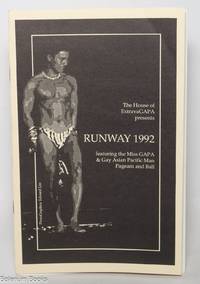
1992réf. 349598San Francisco: GAPA 1992. Pamphlet. 16p 5.5x8.5 inches program booklet featuring short bios of those involved photos ads very good stapled wraps staples rusting. Asian Pacific Islander version of the Court system. GAPA unknown books
1896réf. 6642Hartford: A D Worthington 1896. Edition Unknown. Original publisher's decorated cloth. A very good copy. 8vo. There are plates and folding color maps. A excellent example of a salesman's sample copy with three different binding samples one is stamped sheep offered. An elaborate travel book. Smith comments that the book was : ' . richly illustrated wealthy in detail and better than average travel literature.' The voyage included Hawaii. Samoa New Zealand China etc. Smith #C60. A D Worthington hardcover books
1751réf. 2342048Venezia: Presso Francesco Pitteri Con Licenza de' Superiori e Privilegio 1751. Revised Edition. Hard Cover. Very Good/No Jacket. Revised edition. Rebound with new endpapers. Minor ink notes on flyleaves modern owner bookplate on front endpaper of each volume. 1751 Hard Cover. 12 310; 406 pp. 12mo. Cloth spines gilt titles paper over boards. Italian text. An 18th century guide to Venice by Pietro Antonio Pacifico with engraved illustrations including several fold-outs. Presso Francesco Pitteri, Con Licenza de' Superiori, e Privilegio hardcover books
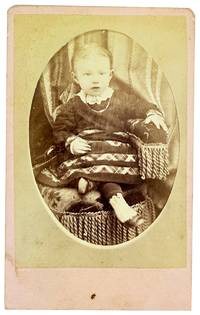
1880réf. 32410N.p.: U.P.R.R. Photograph 1880. Very Good. N.p.: U.P.R.R. Photograph ca. 1880s. Small format albumen carte de visite 8.5x6cm mounted to card measuring 10x6.5cm. Brief smudging else Very Good to Near Fine. Portrait of a seated child about 18 months old. Verso printed in red with an engraved reproduction of the photographer's studio which was housed in a railway car that the photographer S.B. Silvis traveled around on the Union Pacific Railroad line. "Stereoscope & Landscape Views of Notable Points on Line of Pacific R.R. / Always on Hand." We can't find much about Silvis though a notice in Hailey Idaho in late June of 1888 announced that he was in town for a few days to take pictures through the holiday. U.P.R.R. Photograph unknown books
1920réf. 88634Los Angeles 1920. Paperback. Very Good. 20p. Softcover in original stapled wrapper. 17cm. Minor cover soil. While Prince Hall affiliation does not appear to be mentioned in this constitution this came to us with other Prince Hall material. Harry Lewis is listed as chairman of the three member committee which created this constitution and a Harry Lewis is listed as Past Eminent Grand Commander 1914 on the website of the Pacific Prince Hall Grand Commandery of Knights Templar for the State of California. paperback books
1962réf. 72797San Francisco 1962. Paperback. Very Good. 15 15p. cover included in pagination. Wrapper. 28cm. Covers browning around edges. paperback books
1971réf. 72907New York 1971. Paperback. Very Good. viii 70p. Blue wrapper lettered and decorated in silver. Blue plastic comb binding. 28cm. The survey seems designed to show that federal ownership of U.S. railways would not make things better. paperback books
1973réf. 72430New York: Union Pacific Railroad Company 1973. Paperback. Very Good. xii 86p. Wrapper. Plastic comb binding. 28cm. Text printed on one side. Countries surveyed: United States Canada Great britain France West Germany Italy the Netherlands and Japan. Union Pacific Railroad Company paperback books
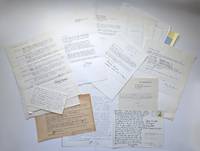
1981réf. 71406Port Townsend WA & various other places 1981. Correspondence Archive. Near Fine. 17 items total: 13 TLS 2 ALS and 2 APCS. Items listed individually below. This collection documents the administrative and social structure of the Port Townsend Washington literary scene during its foundational years. The correspondence centers on Cheryl Van Dyke in her role as manager of The Imprint a bookstore that functioned as a primary hub during Centrum Foundation's annual Writers' Conference at Fort Worden State Park. The letters are often in response to Van Dyke's inquiries regarding bookshop stock to support conference lectures and workshops; they frequently evolve into warm personal exchanges that reveal the close-knit nature of this regional symposium. This material originates from the personal papers of Cheryl Van Dyke a poet and artist whose early collection Cheat Grass was a cornerstone of the emerging Copper Canyon Press catalog. As an essential figure in the region's fine press circles Van Dyke's stewardship of The Imprint made the shop a vital setting where established writers and burgeoning Pacific Northwest voices intersected. Condition is uniformly Very Good to Near Fine showing only occasional light edgewear or minor corner creasing consistent with professional handling. 17 pieces of correspondence. No envelopes present. Organized here chronologically: 1- Hugo Richard "Dick". APCS to Cheryl Van Dyke. Missoula MT. Postmarked December 17 1975. Postcard 3.25" x 5.5". This warm personal note is written addressed and signed in black ink by Hugo. 2- Whalen Philip. TLS to Cheryl Van Dyke. San Francisco CA Zen Center 300 Page St. Dated April 8 1977. Two pages 11" x 8.5" typed on rectos only. Signed by Whalen in black ink at the conclusion. A few later notations in pencil presumably by Van Dyke. 3- Broumas Olga. TLS to Cheryl Van Dyke. Eugene OR. Dated May 22 1977. One page 6" x 9" typed on recto only on toning pulpy paper. With one correction and signed by Broumas in black ink at the conclusion. 4- Hamill Sam. Typed Circular Reproduction sent to Cheryl Van Dyke. An invitation and open call for poetry or prose submissions for two upcoming periodical publications. Port Townsend WA. Dated November 16 1977. One page 11" x 8.5" photomechanically reproduced on recto only. On Copperhead letterhead Copper Canyon Press with the names of Tree Swenson and Jo Cochran also listed at the top. Correction small illustration and signature of Sam Hamill in black also reproductions part of the general circular. 5- Snyder Gary. TLS to Cheryl Van Dyke. n.p. n.d. likely California circa 1978. This one page 11" x 8.5" letter is on the verso side of an open letter and subscription form for the Kuksu Press and its Kyoi/Kuksu literary journal. Signed in black ink at the conclusion by Snyder. 6- Gallagher Tess & Cheryl Van Dyke. TLS to Tess Gallagher from Cheryl Van Dyke initial letter on the recto and ALS to Van Dyke from Gallagher response letter on the verso. Washington state dated April 6 1978 with response undated. One page 5.5" x 8.5" TLS on The Imprint bookstore's letterhead and ALS response in black ink on verso. Signed in blue ink by Cheryl Van Dyke and in black ink by Gallagher at their respective conclusions. 7- Stafford William "Bill". TLS to Cheryl Van Dyke. Lake Oswego OR. Dated April 7 1978. One page 11" x 8.5" on recto only. Additional note in Stafford's hand and signed by him at the conclusion in black ink. 8- Wakoski Diane. TLS to Cheryl Van Dyke. East Lansing MI. Dated June 15 1978. One page 11" x 8.5" on recto only. Signed in black ink at the conclusion by Wakoski. 9- Kumin Maxine. TLS to Cheryl Van Dyke. Princeton NJ. Dated April 11 1979. One page 9" x 6" on Princeton University letterhead on recto only. Signed in blue ink by Kumin at the conclusion with a short note in her hand. 10- Levertov Denise typed and signed by Phyllis Leith Secretary to D.L. TLS to Cheryl Van Dyke. n.p. Dated April 16 1979. One page 11" x 8.5" on recto only. Signed in brown ink by Phyllis Leith secretary to Denise Levertov. 11- McElroy Colleen J. TLS to Cheryl Van Dyke. Seattle WA. Dated April 17 1979. One page 11" x 8.5" on recto only. With one brief additional note in the margin and signed in black ink at the conclusion by McElroy. 12- Halperin Mark. TLS to Cheryl Van Dyke. n.p. Dated April 25 1979. One page 11" x 8.5" on recto only. Signed at the conclusion in blue ink by Halperin. 13- Swenson Tree. APCS to Cheryl Van Dyke. Cedar City UT. Postmarked June 25 1980. The postcard shows an aerial view of Escalante Canyon Utah with a quotation by Joseph Wood Krutch card produced by Beautyway of Flagstaff AZ. A warm and lengthy handwritten personal note in black ink in Swenson's distinctive hand while "on VACATION" and signed affectionately by Tree Swenson at her conclusion. 14- Stafford William. TLS to Cheryl Van Dyke. Lake Oswego OR. Dated April 21 1981. One page 11" x 8.5" on recto only. Signed in black ink at the conclusion by Stafford. 15- Yolen Jane. TLS to Cheryl Van Dyke. n.p. Dated May 5 1981. One page 11" x 8.5" on recto only. Notations in presumably Van Dyke's hand. Signed in blue ink at the conclusion by Jane Yolen. 16- Matthews William. TLS to Cheryl Van Dyke. n.p. Dated May 8 1981. One page 11" x 8.5" on recto only. A few notations in presumably Van Dyke's hand. Signed in black ink at the conclusion by Matthews. 17- Heynen Jim. ALS to "David" and to Cheryl Van Dyke. Norwich Norfolk England. Dated November 22 no year. One page 10" x 8" on recto and verso. All written in black ink. Warm professional and personal content. First message addressed to "David" takes up most of the recto signed by Jim Heynen at the conclusion. The second message addressed to Van Dyke starts near the bottom of the recto and extends all the way to the end of the verso and is signed by Heynen at the conclusion. unknown books
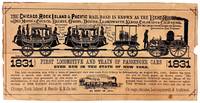
1875réf. 48055Chicago: Chicago Rock Island & Pacific Railroad Co 1875. Good. Chicago: Chicago Rock Island & Pacific Railroad Co. ca. 1875. Small pictorial broadside flyer. 16.5x33cm printed in black. Stock worn toned and chipped with a few instances of soiling extensive splitting along old folds with tape repair to verso. Good only. Promotional broadside for the Chicago Rock Island & Pacific Railroad that operated from roughly 1850-1970 largely in the Midwest. Features a paper-cut illustration that was created on the occasion of the first trip made by steam-powered passenger cars in New York in 1831 before the company's incorporation. This broadside however was not issued until several decades later. The extensive railway inspired the tune "Rock Island Line" covered by country crooners Johnny Cash and Lead Belly. No separately cataloged copies in OCLC as of May 2026. Chicago, Rock Island & Pacific Railroad Co unknown books
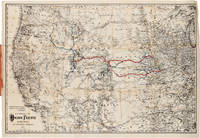
1884réf. 23845New York. 1884. Annual stockholder's report for the famous western railway. With detailed financial statement and other statistics relative to western lands etc. Total surplus earnings for 1883 topped $12700000. The handsome and quite large folding map of the United States west of the Mississippi shows the Union Pacific Route and its connections. Original printed wrappers. Wrappers a bit soiled and worn front wrapper wrinkled with small closed tears titlepage soiled. Still very good. unknown books
1912réf. 65871Boston: The Tudor Press n.d. but ca. 1912. Elaborate Wyoming and Colorado Railroad Promotion Printed in an unspecified number for private distribution by the company this is an elaborately printed and illustrated promotional book issued by the Laramie Hahns Peak & Pacific Railway Company. The line ran southwest from Laramie through Colorado passing through North Park Walden Hebron and Coalmont with projected extensions through Hayden Craig Meeker Grand Junction and into Utah. A prefatory note asserts that "no one connected with the work has any ambition to become a railroad king or to build up a through line with its complications and responsibilities. The builders recognize the most wonderful future in store for this particular country an are opening it up and will serve it with a local system which will assist in its acute development." The text and fine photographic views describe the agricultural and mineral potential of Wyoming northwestern Colorado and northeastern Utah with descriptions of a number of towns. Included are scenes of railroad construction mining operations logging strawberry and alfalfa fields apple and peach orchards cattle and sheep dam construction and numerous town views. The partially colored folding map is drawn on a scale of approximately fourteen miles to the inch and shows an area from just west of the Great Salt Lake to just east of Denver highlighting the route of the railroad from Laramie to Coalmont and identifying deposits of oil coal iron and gold and copper; forests; and agricultural lands. Laid into this copy are two typed letters signed from bookseller Fred Rosenstock of Denver offering this copy to his customer Walter Steenstra in 1961 and attesting to the volume's scarcity. This is only the second copy we have handled. Oblong quarto. Original purple cloth gilt title on front cover. Light wear at spine ends and corners spine lightly sunned light wear and scuffing to boards. 1½-inch closed tear in upper edge of folding map. Very clean internally. Near fine. WYNAR 6652. hardcover books
1869réf. 59062St. Louis: Levison & Blythe 1869. Early Report of the Kansas Pacific A report on the Kansas Pacific Railway Company's earnings and expenses for the year 1868. Includes discussions of Texas cattle shipped from Abilene the need for "speedy settlement" of the company's lands "by an active producing population" a projected extension through New Mexico and Arizona the planned completion of the extension to Denver and the eventual connection with the Union Pacific via the Denver Pacific between Denver and Cheyenne. Reproduces the text of three congressional acts including the joint resolution dated March 3 1869 authorizing the company's name change from "the Union Pacific Railway Company Eastern Division" to the "Kansas Pacific Railway Company." William J. Palmer was a member of the Board of Directors of the Kansas Pacific his own much more complicated and torturous efforts to run a railway line through southern Colorado into New Mexico and thence to the Pacific Ocean still in his future. This report was published in St. Louis and is scarcer than another edition of the report with a New York imprint. Original printed blue wrappers. Wrappers soiled and ink stamp and annotation to front wrapper. Very good. RAILWAY ECONOMICS p.314. LITERATURE RELATING TO THE UNION PACIFIC p.229. EBERSTADT 137:301 New York ed. unknown books
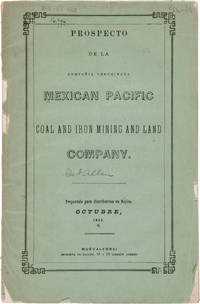
1856réf. 27974Nueva-York: Imprenta de Hallet 1856. Coal Mining in Mexico A Spanish-language prospectus for an American mining and land company on the Pacific coast of Mexico. Original printed wrappers. Rear wrapper detached spine mostly perished library blindstamp on front wrapper and withdrawal stamp on wrapper interior. Foxed. Good overall. SABIN 48572 note. unknown books
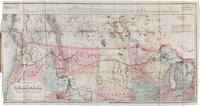
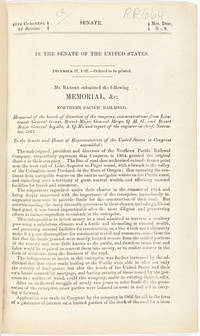
1868réf. 58056Washington: Government Printing Office 1868. With Johnson's Great Map of the Northern Pacific Route This copy is inscribed on the front wrapper: "With Regards of James Tilton C.E." Tilton 1819–78 was then chief engineer of the Washington Division of the Northern Pacific Railroad. Thanks in part to his support for Franklin Pierce's presidential campaign Tilton was appointed the first Surveyor General of Washington Territory and served from 1853-61. Both the Tilton River and Fort Tilton near Fall City Washington are named for him. An important report to Congress by the Northern Pacific Railroad headed by Minnesota railroad magnate James J. Hill for federal aid to support the Railroad's expansion to the West Coast. The petition reviews the railroad's original charter printing with it a memorial from the NPRR's Board of Directors and supporting communications from military figures including Montgomery Meigs and Ulysses S. Grant. Since the early 1850s Edwin Johnson described by Wheat as a "visionary" engineer had been associated with the plan to build a railroad across the northern part of the United States from the Great Lakes to the Pacific Coast. In 1867 he was named chief engineer of the Northern Pacific and this memorial is a work of major importance for the history of the railroad. It includes Johnson's topographical survey of the route to the Pacific a discussion of potential problems that may be encountered and a detailed economic and military survey of the area in justification of construction. The exceptional large folding "Map of the Country from Lake Superior to the Pacific Ocean from the Latest Explorations and Surveys" was produced by the Colton firm in New York. One of the finest maps of the region to date it shows the area from Detroit to the Pacific well into Canada and south to about the 39th parallel. Johnson has drawn the route of the Northern Pacific from Lake Superior to Washington Territory where the line splits with one branch heading toward Fort Vancouver and the other to Puget Sound. Among the details shown on the map are the Pony Express route wagon routes and overland mail routes exploration routes and other proposed railroad routes the locations of Indian tribes mineral deposits military forts and much more. Wheat gives a long description of the map and remarks that "the detail of such a map defies cataloging." Construction on the Northern Pacific Railroad began in 1870 and was completed in 1883. Edwin Johnson did not see its completion dying in 1872. An edition of this report with the supporting documents and map was also privately published in Hartford. A significant early account of railroad expansion in the Northwest. We could find only ten copies listed in OCLC and this is the first copy we have seen in wrappers and with a presentation from an important engineer on the project. Original printed wrappers. Presentation inscription on front wrapper see below. Wrapper edges chipped minor soiling and tanning to wrappers spine partially chipped old vertical fold to pamphlet. Light foxing and tanning and occasional soiling throughout Map with a few small closed tears at cross-folds with no loss. About very good. RAILWAY ECONOMICS pp.242-43. SABIN 55819 Hartford edition. WHEAT TRANSMISSISSIPPI V item 1169 pp.205-09. PHILLIPS MAPS p.916. DECKER 37:266 Hartford ed. MIDLAND NOTES 68:164. OCLC 60578657. unknown books
1882réf. 8157New York. 1882. Further dialogue regarding extension of the time period for the Congressional land grant to the NPRR. 8pp. Printed wrappers front cover detached top right corner chipped a good copy. unknown books
1888réf. 13837Philadelphia. 1888. The Mercantile Trust Company makes claims to security in property of the Railway including holdings in New Orleans. The property is described in detail. Also printed are the articles of the new mortgage and documents of certification of New York and Louisiana. 38pp. Original printed wrappers. Wraps darkened and chipped top margin considerably chipped with no loss of text old fold. A decent copy printed on bad paper. In a folding cloth box leather label. paperback books
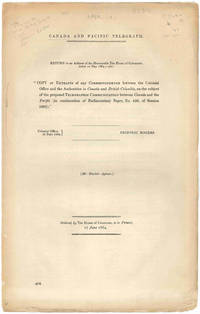
1864réf. 47423London. 1864. Founding the Canadian Pacific Telegraph: The Streeter Copy The Thomas W. Streeter copy with his pencil notes on the titlepage. This House of Commons working paper is a continuation of their return dated July 10 1863 on the subject of constructing a telegraph line to British Columbia and the Pacific. The Hudson's Bay Company unsurprisingly was intimately involved in the machinations for the building of the line. They had made an agreement with the Canadian government to build the telegraph line from the Red River to the Pacific themselves but when they failed to do so a group of English bankers proposed to step in and do the job. The papers included herein provide much information on the qualities of the land between Lake Superior and British Columbia and the need for swift communication throughout and across the vast region. Also included is a memorial from the people of the Red River Settlement discussing their urgent need for the telegraph. The Streeter copy sold to Nebenzahl for $30 in 1969 and was still in his stock when the Reese Company bought the last of it in 2013; here it is. Folio. String-tied as issued. A bit tanned some small chips at the edges. Very good. STREETER SALE 3436 this copy. SOLIDAY I:1207. LOWTHER 228. unknown books
1868réf. 33573Washington. 1868. With Johnson's Great Map of the Northern Pacific Route An application to Congress by the Northern Pacific Railroad headed by Minnesota railroad magnate James J. Hill for federal aid to support the Railroad's expansion to the West Coast. The petition reviews the railroad's original charter and includes an impressive color folding map "Map of the Country from Lake Superior to the Pacific Ocean" which illustrates the railroad's route from Duluth to Seattle and Portland. This map was originally produced to accompany Edwin Johnson's report on the feasibility of the railroad. This is one of the finest maps of the region traversed to be issued up to this time and was produced by Colton in New York not by the government. Wheat devotes several pages to discussing it noting that "the detail of such a map defies cataloging." Above the map appears an elevation chart for the same distance. A fine account of railroad expansion in the Northwest. Rare. Not on OCLC. 39pp. plus large color folding map. Modern maroon cloth gilt maroon morocco label. Minor dust soiling in text. Map bright and clean. Overall very good. MIDLAND NOTES 68-164. WHEAT TRANSMISSISSIPPI 1169. hardcover books
1872réf. 29311Various places. ca. 1872. Views in Hawaii New Zealand and on the Central Pacific Railroad An excellent collection of views quite early for Hawaii and New Zealand. The four views of Honolulu include one wide view of the town a view of a side street with a church steeple in the background the Pali mountain pass and the harbor with several large vessels at anchor. In New Zealand the Supreme Court building in Christchurch and the city of Littleton are displayed. The San Francisco images include the Palace Hotel and the famous Cliff House. Of particular interest are the three views of the Central Pacific Railway. The sections of the track include Capestown the Palisade and Summit Station each with fresh evidence of the line's recent completion. Also in the collection is one image of a railroad along the banks of Salt Lake and three wide views of Salt Lake City one with the Mormon tabernacle completed in 1871 prominently featured. An attractive collection of views each quite displayable. Twelve cards each 17 x 13 inches a.e.g. with manuscript captions in lower margins. Images are 9 x 6½ inches except the two oval images of San Francisco. Some minor soiling on cards some images slightly faded. Very good. Archivally matted protected with a mylar sheet. unknown books
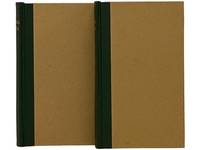
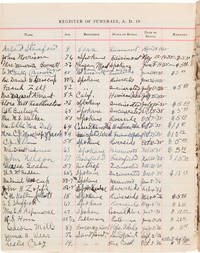
1519réf. 57522Various places mostly Sand Point Id. and Victor Mt. 1915-1938. Preaching in Montana and Idaho During War and Peace Two volumes of an unidentified pastor's register for a variety of locations in Idaho Montana and Washington beginning during the First World War and continuing throughout the entire interwar period. In it the unnamed pastor records his sermons the dates and locations they were given their titles the number of people in the congregation and frequently supplies notes about the service weather or other local events. In addition he has recorded extensive lists of baptisms marriages new church members and funerals throughout the entire period providing valuable demographic and genealogical information. On the rear pastedown of the earlier volume the writer has provided a brief history of his service: he began his ministry in 1893 and spent several years preaching in Alabama before moving to a variety of churches across the country including in Tennessee New York and Texas. The registers begin with a new appointment in Sand Point Idaho in November of 1915. During this period of worldwide tension and struggle the pastor's early entries often allude to the political situation at home or the ongoing war. On November 5 1916 - the day of the 1916 Presidential Election - the topic of his sermon appropriately enough is "Presidents." On December 28th of that year he notes that "Soldiers came home." Since the United States had yet to join in World War I this perhaps refers to new trainees inducted as part of the National Defense Act of 1916 which significantly increased the size of the Army and National Guard. The next year America had joined the war and supplies at home were scarce in the face of international pressures and German submarine patrols. In this environment a sermon was delivered on October 14 1917 titled "Food Conservation." In 1918 he notes a guest lecture by a "Mr. Krikorian" which proved to be "a splendid meeting on the Armenian situation. Collection $409.45." That year saw the beginning of several years of armed conflict between Armenia and Azerbaijan exacerbated by meddling from the Soviets Ottomans and the British. Things didn't improve quickly for Sand Point as September of 1918 saw the first hometown death - a "Memorial service for W.D. Martin - Killed in France. First of Co. A to fall." His loss was dearly felt by his community as evidenced by a turnout of 225: much greater than the average congregation of fifty to eighty for that church. We unfortunately are not privy to the speech our record keeper would have made around Armistice Day November 11 1918; he was unable to preach for six weeks due to catching the Spanish Flu. The pandemic was keenly felt even in Idaho where annotations over the next several months note that the "flu scare is on." His topical lectures for the period end on April 13 1919 with an entry titled "Lecture on the League of Nations." Besides making note of current events in his sermons the preacher at times uses these registers as a journal. Particularly after moving to a new position serving Victor and Stevensville Montana in 1921 he struggles to reckon with the frigid temperatures and seems to have developed an interest in sports often noting local baseball and basketball games. One day in particular his sermon was not well attended because he assumes "many at ball game." Aside from taking notice of "much sickness" during the 1923 measles outbreak current events feature less in the remainder of the register. The Depression doesn't seem to have been strongly felt in his leg of Montana - or at least it is not much reflected in the register except perhaps for slightly decreased congregations in 1930 and 1931 which quickly recovered to record numbers or a 1933 sermon on "Hunger & Thirst." A guest lecturer "Reverend Adams of China" also delivered a speech on that country in 1933 but it is unclear whether or not that was related to the ongoing Uighur uprising or simply a description for a Western audience. The final entry is for a sermon given on Thanksgiving of 1938. An extensive and detailed record of a pastor's work throughout World War I and the entire interwar period augmented by a remarkable wealth of detail on local baptisms funerals and marriages in Idaho and Montana. Quarto. Original three-quarter leather and pebbled black cloth gilt. Leather rubbed both spines perished boards detached and most leaves of first volume loose hinges of second volume cracked but holding. Internally clean and unmarked. The bindings only fair but internally near fine. hardcover books
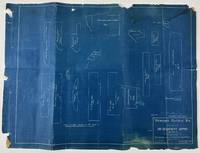
1907réf. 13196San Francisco: Chief Engineer's Office 1907. Three blueprints each about 18 x 24 inches. Old folds noticeable chipping to edges occasionally costing minor content near the margins. Good condition. A trio of blueprints detailing the Western Pacific Railroad's standard 20-x-32-foot Desert Depot structure. This standard building plan was created for the depots between San Francisco and Salt Lake City in the Nevada Desert. The blueprints include side views of the building plain views floor plans details of footings overall foundation construction details of prominent structural support and so forth. The layout of the office reveals that each would have a telegraph office at front and center a conductors room at the right of the building three bedrooms and a kitchen. A wonderful relic of the western railroad. Chief Engineer's Office unknown books