ref. 13597Paris A la Librairie de Guillaumin 1843 in 8 1 volume relié demi veau lisse violine, dos lisse, filets dorés soulignant des faux-nerfs à froid (reliure de l'époque), 505 pages [1]. Et d'un coup d'oeil sur la canalisation de l'isthme de Panama. Rare première édition. Chadenat 2726. Gay: 2677. Sabin: 70391. Bel exemplaire
1936ref. 5953Balboa Panama Canal Zone 1936. Very good. Eighty-four black-and-white or sepia-toned photographs each about 8 x 10 inches many with typed or manuscript captions on verso plus thirty-two typed documents some signed. Moderate edge wear occasional minor marginal chipping to photographs. Mostly minor wear to documents. A striking collection of photographs picturing construction of the Panama Canal during the years of the First World War. Many of the photographs are dated between 1914 and 1916 and almost all capture construction of the Panama Canal mainly around Dry Dock #1 at the Balboa and Pacific Terminals. Many of the photographs are captioned either typed or in manuscript on the verso providing valuable information on the settings of these images. Most of the images were taken from an elevated viewpoint from area towers offering unusual detail of the construction sites in the Balboa area "before flooding" of the canal with some images showing the canal "ready to be flooded;" the images taken at ground level also exhibit the sheer size and depth of the project with human figures dwarfed by the canal walls. A healthy number of images feature local workers of African descent engaged in manual labor on the walls and in the flat bottom of the canal. These workers are managed by a coterie of white subjects. In fact one of the more striking images speaks volumes about the literal separation between the managers and laborers in the Canal Zone. The photograph is a group shot featuring seventeen white managers standing in the foreground in front of a group of twenty-two Black workers. A sampling of the settings and activity revealed in the captions for the photographs include "Dy Dock #1 -- Entrance" "Placing granite in the hollow quoin -- Dry Dock No. 1 Balboa" "General view of Dry Dock #1 -- from the boom of Unloader Tower" "Progress of concrete in south wall as of Oct. 20 1914" "Head wall of Dry Dock #1" "Reinforcing around the suction chamber Dry Dock #1" "Dry Dock looking from the head wall west towards the sea" "D.D. excavation looking eastward toward headwall of the dock from the Coffer Dam" "Reinforcement in and around cross culverts at the west and end of Dry Dock #1" "Dry Dock #1 one month after commencing concrete work in the south wall" "Dry Dock No. 1 Pumping Plant -- Erecting 54-inch Check Valves -- Looking west" "General view of construction progress around pump well and discharge culvert -- Dry Dock" "Dry Dock Gate -- South Leaf -- Heel casting after wedges have been placed and rivets driven" "Reinforced concrete pontoons -- Preparing to pour concrete in No. 2 pontoon" and "Placing the last girder on dock gate Dry Dock No. 1 Balboa." The photographs are accompanied by a group of more than thirty military documents relating to the service of Major William C. Foote in the mid-1930s. Most of the documents concern Major Foote's assignment to the Coast Artillery Corps at Fort Amador in the Canal Zone in Balboa. Both the photographs and documents were found in a large envelope marked "Personal File Major William C. Foote." Finding the Panama Canal photographs along with Major Foote's later paperwork indicate that he probably acquired the photographs while serving in the Canal Zone and the material stayed together all these years. unknown
1936ref. 5953Balboa Panama Canal Zone 1936. Very good. Eighty-four black-and-white or sepia-toned photographs each about 8 x 10 inches many with typed or manuscript captions on verso plus thirty-two typed documents some signed. Moderate edge wear occasional minor marginal chipping to photographs. Mostly minor wear to documents. A striking collection of photographs picturing construction of the Panama Canal during the years of the First World War. Many of the photographs are dated between 1914 and 1916 and almost all capture construction of the Panama Canal mainly around Dry Dock #1 at the Balboa and Pacific Terminals. Many of the photographs are captioned either typed or in manuscript on the verso providing valuable information on the settings of these images. Most of the images were taken from an elevated viewpoint from area towers offering unusual detail of the construction sites in the Balboa area "before flooding" of the canal with some images showing the canal "ready to be flooded;" the images taken at ground level also exhibit the sheer size and depth of the project with human figures dwarfed by the canal walls. A healthy number of images feature local workers of African descent engaged in manual labor on the walls and in the flat bottom of the canal. These workers are managed by a coterie of white subjects. In fact one of the more striking images speaks volumes about the literal separation between the managers and laborers in the Canal Zone. The photograph is a group shot featuring seventeen white managers standing in the foreground in front of a group of twenty-two Black workers. A sampling of the settings and activity revealed in the captions for the photographs include "Dy Dock #1 -- Entrance" "Placing granite in the hollow quoin -- Dry Dock No. 1 Balboa" "General view of Dry Dock #1 -- from the boom of Unloader Tower" "Progress of concrete in south wall as of Oct. 20 1914" "Head wall of Dry Dock #1" "Reinforcing around the suction chamber Dry Dock #1" "Dry Dock looking from the head wall west towards the sea" "D.D. excavation looking eastward toward headwall of the dock from the Coffer Dam" "Reinforcement in and around cross culverts at the west and end of Dry Dock #1" "Dry Dock #1 one month after commencing concrete work in the south wall" "Dry Dock No. 1 Pumping Plant -- Erecting 54-inch Check Valves -- Looking west" "General view of construction progress around pump well and discharge culvert -- Dry Dock" "Dry Dock Gate -- South Leaf -- Heel casting after wedges have been placed and rivets driven" "Reinforced concrete pontoons -- Preparing to pour concrete in No. 2 pontoon" and "Placing the last girder on dock gate Dry Dock No. 1 Balboa." The photographs are accompanied by a group of more than thirty military documents relating to the service of Major William C. Foote in the mid-1930s. Most of the documents concern Major Foote's assignment to the Coast Artillery Corps at Fort Amador in the Canal Zone in Balboa. Both the photographs and documents were found in a large envelope marked "Personal File Major William C. Foote." Finding the Panama Canal photographs along with Major Foote's later paperwork indicate that he probably acquired the photographs while serving in the Canal Zone and the material stayed together all these years. unknown books
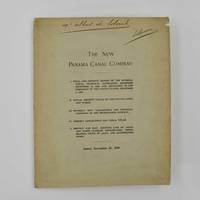
1898ref. 21219591898. New York The Evening Post Job Printing House. Dated December 26 1898. 4to. Original printed wrappers; pp. 38 20 plates after photographs large folding sections in red and black large folding map in red and black; spine with few restorations small marginal flaw to front wrappers wire-stitched as issued with oxidization to wire-stitching; a very good copy of a great rarity presented to one Albert de Colomb with ink inscription to front wrapper.Very rare first edition. The first attempt to build the canal started under the leadership of Ferdinand de Lesseps proved to be a failure and the company collapsed in 1889. 'Although the company reorganized in 1894 it virtually ceased to function by 1898. Any possibility of completing the canal across Panama was gone; its sole hope lay in holding together an enterprise that could be offered for sale' Enyclopaedia Britannica. This rare document was compiled the by the International Technical Commission and assesses the possibility of resuming work which finally after difficult diplomatic negotiations and under the pressure of the United Stated and mainly supported by Roosevelt could be completed in 1914. An estimated 20000 lives were lost during the construction but the canal changed international shipping trade and the flow of goods for ever. unknown
1915ref. 031111Shanghai 1915 Siccawei [Zikawei] Catholic Mission (Tushanwan Orphanage Press) Hardcover 1st Edition
1918ref. 015759Paris Editions de la Sirène 1918 In-8 carré Reliure
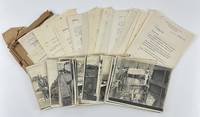
1938ref. 158618N.p.: N.p. 1938. Archive of 64 vintage photographs including 53 matte-finish and eleven glossies documenting reconstruction of the Panama Canal's Dock 15 in Balboa. Most photographs with technical captions and dates from the negative on the rectos. Additionally included with the photographs is a collection of four booklets dated between 1919 and 1943 discussing various aspects of the canal's construction and improvements during that time as well as an original shipping envelope addressed from the Panama Canal Metal Trades Council. With Europe on the verge of war in the early 1930s the US government became increasingly concerned about its ability to move naval warships between oceans. The canal locks would be susceptible to bombing in the event of war the canal defenses were deemed inadequate and the locks already had difficulty accommodating large US battleships. As a result Congress passed a resolution on May 1 1936 authorizing a study of and subsequent improvements to the canal's defenses existing structure and vessel capacity. Originally constructed in 1911 Dock 15 was weakened by gradual earth movement necessitating its replacement. With the exception of the construction of the Madden Dam between 1930 and 1936 the $1220000 reconstruction of Dock 15 was one of the largest canal projects after the close of the construction era. Photographs: 61 photographs 10 x 8 inches 3 photographs 5 x 4 inches. Very Good plus lightly creased overall. Pamphlets: From 8 x 10.5 inches to 9 x 12 inches. Generally Very Good plus to Near Fine some with scattered foxing and edgewear. N.p. unknown
1938ref. 158618N.p.: N.p. 1938. Archive of 64 vintage photographs including 53 matte-finish and eleven glossies documenting reconstruction of the Panama Canal's Dock 15 in Balboa. Most photographs with technical captions and dates from the negative on the rectos. Additionally included with the photographs is a collection of four booklets dated between 1919 and 1943 discussing various aspects of the canal's construction and improvements during that time as well as an original shipping envelope addressed from the Panama Canal Metal Trades Council. With Europe on the verge of war in the early 1930s the US government became increasingly concerned about its ability to move naval warships between oceans. The canal locks would be susceptible to bombing in the event of war the canal defenses were deemed inadequate and the locks already had difficulty accommodating large US battleships. As a result Congress passed a resolution on May 1 1936 authorizing a study of and subsequent improvements to the canal's defenses existing structure and vessel capacity. Originally constructed in 1911 Dock 15 was weakened by gradual earth movement necessitating its replacement. With the exception of the construction of the Madden Dam between 1930 and 1936 the $1220000 reconstruction of Dock 15 was one of the largest canal projects after the close of the construction era. Photographs: 61 photographs 10 x 8 inches 3 photographs 5 x 4 inches. Very Good plus lightly creased overall. Pamphlets: From 8 x 10.5 inches to 9 x 12 inches. Generally Very Good plus to Near Fine some with scattered foxing and edgewear. N.p. unknown books
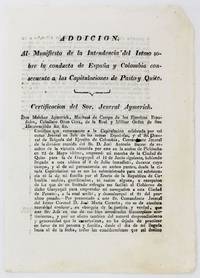
1823ref. 5754Panama: Jose Maria Goytia 1823. Very good plus. Broadsheet handbill 8.5 x 6 inches. Minor creasing. Faint dampstaining at right edge. An extremely rare statement by Spanish general Melchor Aymerich following his final defeat in Ecuador by Antonio José Sucre and subsequent flight to Panama in 1822. Aymerich the "Mariscal de Campo de los Ejercitos Españoles" and "Jeneral en Jefe de las Armas Españolas" states that he and his family traveled lodged and ate at their own expense following his defeat at Pichincha by Sucre and subsequent capitulation. No money or provision of any kind was provided to them by the Republic of Gran Colombia. He continues to declare that they traveled from Quito to Guayaquil and thence to Panama and would soon be departing for Havana. While in Panama he was the guest of the Commandant of the Isthmus Colonel José Maria Carreno and he thanks the Colonel and his family for their generosity and assistance. Although the caption title of this broadsheet states that it is an "Addicion" to a lengthier "Manifiesto" this prior work does not seem to have survived. The present handbill is a very early Panamanian imprint. There is no evidence of there having been printing in Panama during its colonial period and exactly when the first press was introduced there is unclear. OCLC locates a single copy of a call for independence in New Spain published by the present printer José Maria Goytia in 1821 and vanishingly few issues of two newspapers established in 1822. Medina traces an 1822 sermon as printed in Panama and we locate a smattering of other imprints from this period including the present handbill of which OCLC notes a single copy at the John Carter Brown Library; we know of one other at the New York Public Library. Jose Maria Goytia unknown
1823ref. 5754Panama: Jose Maria Goytia 1823. Very good plus. Broadsheet handbill 8.5 x 6 inches. Minor creasing. Faint dampstaining at right edge. An extremely rare statement by Spanish general Melchor Aymerich following his final defeat in Ecuador by Antonio José Sucre and subsequent flight to Panama in 1822. Aymerich the "Mariscal de Campo de los Ejercitos Españoles" and "Jeneral en Jefe de las Armas Españolas" states that he and his family traveled lodged and ate at their own expense following his defeat at Pichincha by Sucre and subsequent capitulation. No money or provision of any kind was provided to them by the Republic of Gran Colombia. He continues to declare that they traveled from Quito to Guayaquil and thence to Panama and would soon be departing for Havana. While in Panama he was the guest of the Commandant of the Isthmus Colonel José Maria Carreno and he thanks the Colonel and his family for their generosity and assistance. Although the caption title of this broadsheet states that it is an "Addicion" to a lengthier "Manifiesto" this prior work does not seem to have survived. The present handbill is a very early Panamanian imprint. There is no evidence of there having been printing in Panama during its colonial period and exactly when the first press was introduced there is unclear. OCLC locates a single copy of a call for independence in New Spain published by the present printer José Maria Goytia in 1821 and vanishingly few issues of two newspapers established in 1822. Medina traces an 1822 sermon as printed in Panama and we locate a smattering of other imprints from this period including the present handbill of which OCLC notes a single copy at the John Carter Brown Library; we know of one other at the New York Public Library. Jose Maria Goytia unknown books
1886ref. 127543Paris, Challamel 1886 In-8 23 x 13,5 cm. Reliure demi-chagrin rouge, dos à nerfs, couverture conservée, VIII-84 pp., 1 panorama en couleurs 80 x 30 cm repliée in fine, table des matières. Joint la 1re épreuve corrigée par A. Garçon. Nombreux documents joints lettres de remerciement diverses, cartes de visite, coupures de presse dont 3 lettres autographes de Ferdinand de Lesseps et 2 de Victor de Lesseps.
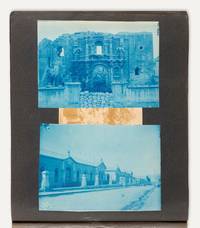
1918ref. List2982Peru and Panama 1918. Approximately 364 photos; album and unmounted photos silver prints cyanotypes and printing-out-paper prints. Photos measure 3 x 4 to 8 x 10 inches with about half measuring 3 x 5 ½ inches. Some with photographer’s hand-stamp or credit in pencil; others with manuscript notations verso or recto; some captions to album pages. Offered in partnership with Daniel / Oliver. Rich and extensive photographic archive of Walton T. Burres of Stockton California showing his time in Peru c. 1904 as an amateur explorer and doctor for the Inca Mining and Rubber Company and his later work in Panama c. 1918 with the Rockefeller Foundation’s International Health Division.The collection consists of a large number of loose photos acquired by the gallery in 2021 and a recently discovered photo album showing some of the same subjects and containing a few duplicate images some printed in different sizes or formats as well as hundreds of previously unseen prints. Together this material makes up the largest extant archive of Burres’s photographic work. Though his work was published at the time both in Peruvian and American publications much of it was lost when he dropped it in a river that he was attempting to ford. Burres was educated at California’s Cooper Medical College the first school of medicine on the West Coast and was a prominent member of the Stockton community before sojourning to Peru around 1900 to help the Inca Mining and Rubber Company address the deadly diseases endemic to the region such as malaria and yellow fever. To encourage economic infrastructure in remote areas the Peruvian government began granting land concessions to any company that would build roads bridges or river ports. As a result the Inca Mining Company an American outfit based in Tirapata purchased the rights to mine gold along the upper Inambari River in 1896 and soon became the richest gold producer in Peru. A large portion of Burres’s Peruvian images document his 1903–1904 excursion from Arequipa 150 miles into “rubber country.” The journeys were well-recounted in U.S. papers and a number of the anecdotes described in print are seen in the present images. There are many dynamic views of Burres and his party trekking through the dense jungle and summiting the high mountains as well as shots of flora fauna and native Peruvians. Burres’s travel companions for this trip included the famed adventurer Harriet Chalmers Adams later dubbed “America’s greatest woman explorer” by the New York Times. Adams and her husband Frank both fellow Stocktonians joined up with Burres during their own multi-year expedition through South America. There are a number of portraits of a woman who bears a striking resemblance to Adams though it is possibly another person. Other Peruvian material includes numerous views of Cusco Arequipa and the surrounding environs including a beautiful interior of a chapel a Martin Chambi-esque detail shot of a stone wall and portraits of local townspeople some identified as Quechua people. There are a number of lush large-format cyanotypes rich printing-out-paper views and many handsome small-format panoramas. These were printed on Inca Mining Company surplus stationary which speaks to the makeshift nature of photo-development under the circumstances. One particularly striking image shows the top of Misti volcano barely visible above the clouds. This image was reproduced in Burres's account of his travels published in 1909 in Outing magazine. The photographs from Burres’s time in Panama document his more serious work as a virologist and health administrator in the area. One interesting photo shows a pair of recently-shot iguanas with a caption noting that “blood of these reptiles was found infected with Haemogregarina.” Another image is that of a new style of privy built from concrete and wire-mesh designed to better keep out rain water. There are also keenly-shot views of main streets and local culture in Los Santos Chiriquí and elsewhere including a number of humanistic group portraits taken at a girl’s school. unknown
1918ref. List2982Peru and Panama 1918. Approximately 364 photos; album and unmounted photos silver prints cyanotypes and printing-out-paper prints. Photos measure 3 x 4 to 8 x 10 inches with about half measuring 3 x 5 ½ inches. Some with photographer’s hand-stamp or credit in pencil; others with manuscript notations verso or recto; some captions to album pages. Offered in partnership with Daniel / Oliver. Rich and extensive photographic archive of Walton T. Burres of Stockton California showing his time in Peru c. 1904 as an amateur explorer and doctor for the Inca Mining and Rubber Company and his later work in Panama c. 1918 with the Rockefeller Foundation’s International Health Division.The collection consists of a large number of loose photos acquired by the gallery in 2021 and a recently discovered photo album showing some of the same subjects and containing a few duplicate images some printed in different sizes or formats as well as hundreds of previously unseen prints. Together this material makes up the largest extant archive of Burres’s photographic work. Though his work was published at the time both in Peruvian and American publications much of it was lost when he dropped it in a river that he was attempting to ford. Burres was educated at California’s Cooper Medical College the first school of medicine on the West Coast and was a prominent member of the Stockton community before sojourning to Peru around 1900 to help the Inca Mining and Rubber Company address the deadly diseases endemic to the region such as malaria and yellow fever. To encourage economic infrastructure in remote areas the Peruvian government began granting land concessions to any company that would build roads bridges or river ports. As a result the Inca Mining Company an American outfit based in Tirapata purchased the rights to mine gold along the upper Inambari River in 1896 and soon became the richest gold producer in Peru. A large portion of Burres’s Peruvian images document his 1903–1904 excursion from Arequipa 150 miles into “rubber country.” The journeys were well-recounted in U.S. papers and a number of the anecdotes described in print are seen in the present images. There are many dynamic views of Burres and his party trekking through the dense jungle and summiting the high mountains as well as shots of flora fauna and native Peruvians. Burres’s travel companions for this trip included the famed adventurer Harriet Chalmers Adams later dubbed “America’s greatest woman explorer” by the New York Times. Adams and her husband Frank both fellow Stocktonians joined up with Burres during their own multi-year expedition through South America. There are a number of portraits of a woman who bears a striking resemblance to Adams though it is possibly another person. Other Peruvian material includes numerous views of Cusco Arequipa and the surrounding environs including a beautiful interior of a chapel a Martin Chambi-esque detail shot of a stone wall and portraits of local townspeople some identified as Quechua people. There are a number of lush large-format cyanotypes rich printing-out-paper views and many handsome small-format panoramas. These were printed on Inca Mining Company surplus stationary which speaks to the makeshift nature of photo-development under the circumstances. One particularly striking image shows the top of Misti volcano barely visible above the clouds. This image was reproduced in Burres's account of his travels published in 1909 in Outing magazine. The photographs from Burres’s time in Panama document his more serious work as a virologist and health administrator in the area. One interesting photo shows a pair of recently-shot iguanas with a caption noting that “blood of these reptiles was found infected with Haemogregarina.” Another image is that of a new style of privy built from concrete and wire-mesh designed to better keep out rain water. There are also keenly-shot views of main streets and local culture in Los Santos Chiriquí and elsewhere including a number of humanistic group portraits taken at a girl’s school. unknown books